Where Antigua's Strangest Histories Are Preserved
Antigua and Barbuda does not have a large circuit of dedicated witchcraft museums, cryptid galleries or commercial cabinets of curiosities. Its strange-heritage landscape is quieter and more fragmented.
Page outline Jump by section
Introduction
The central institution is the Museum of Antigua and Barbuda in St John’s, where tens of thousands of archaeological objects support displays on Indigenous settlement, colonialism, slavery, industry and everyday island life. Beyond it, Betty’s Hope preserves the machinery and landscape of the sugar economy; Nelson’s Dockyard turns an eighteenth-century naval-industrial complex into a working heritage attraction; Green Castle Hill raises unresolved questions about apparently standing stones; and Devil’s Bridge shows how a geological formation can become a vessel for traumatic folklore. Together, these places reveal a national curiosity culture concerned less with manufactured oddities than with disputed landscapes, recovered fragments and difficult histories.[antiguamuseums.net]antiguamuseums.netOpen source on antiguamuseums.net.
The national museum is also an archaeological cabinet
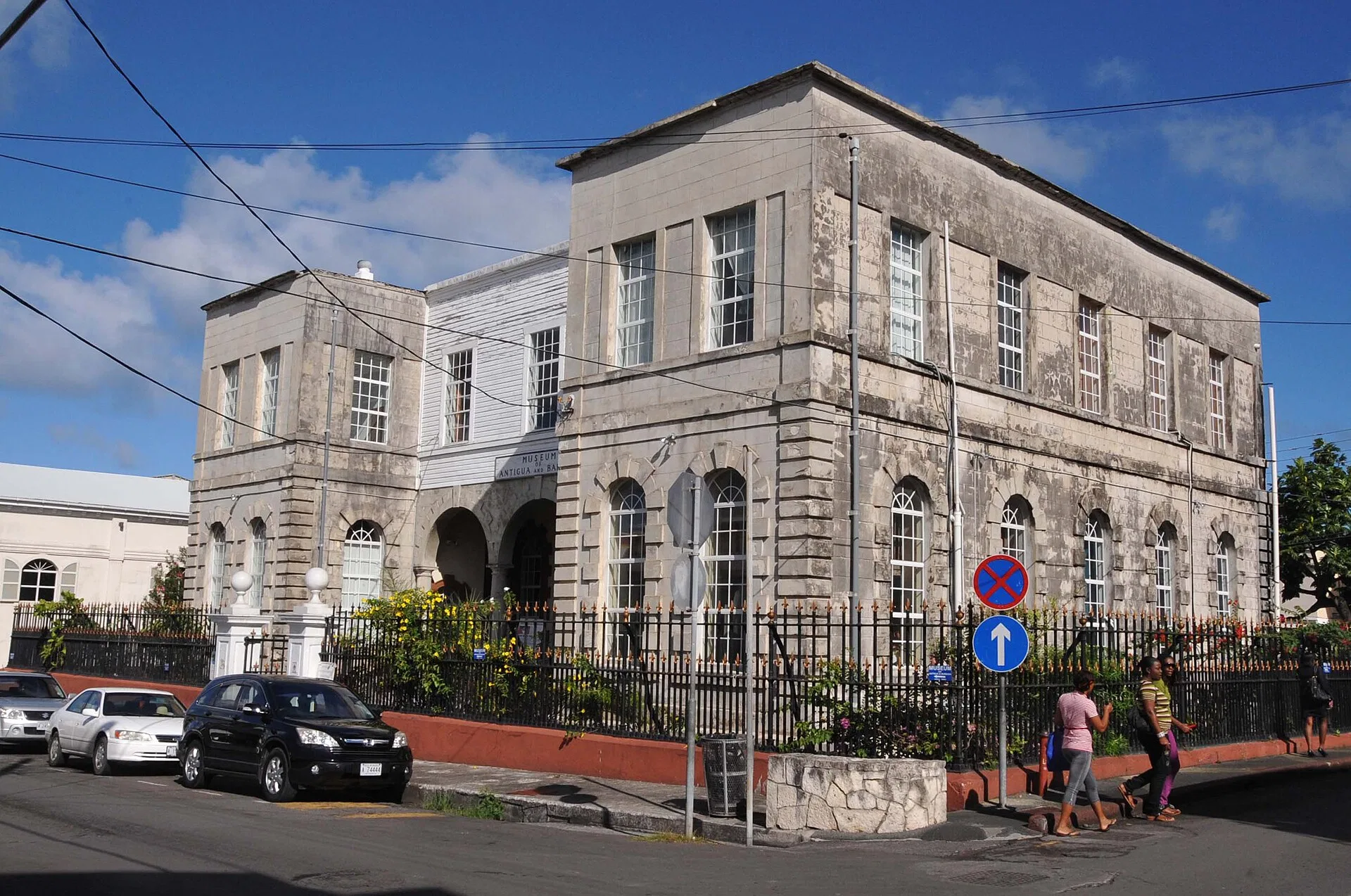
The Museum of Antigua and Barbuda occupies the former courthouse in St John’s, an eighteenth-century building regarded as one of the oldest surviving structures in the capital. Founded in 1985 and managed by the Historical and Archaeological Society, it presents a broad history of the islands through geology, archaeology, social history and material culture.[antiguamuseums.net]antiguamuseums.netabout the museumHistory and membershipThe Museum of Antigua and Barbuda was founded in 1985 and resides in the former St. John's Courthouse, built in 175…
For visitors interested in unusual collections, the important fact is that the public gallery represents only a fraction of the institution’s holdings. The museum says that its archaeological collections contain tens of thousands of artefacts from sites across Antigua, alongside comparative material from elsewhere in the Caribbean. Its publicly accessible research library also holds maps, photographs, books and unpublished studies. This makes the institution more than a compact national-history display: it is the principal repository for the physical debris through which much of Antigua’s past is reconstructed.[antiguamuseums.net]antiguamuseums.netResearchThe Museum is home to an extensive research library that is open to the public. The archaeological collections include tens of th…
The exhibits mix excavated objects with models, reproductions and explanatory panels. Indigenous pottery, tools and reconstructed practices establish that Antigua and Barbuda had long human histories before European colonisation. Plantation models and industrial remains then show how completely sugar production reshaped the islands. More familiar cultural objects, including material connected with cricket, bring the story into the modern period. A detailed visit is therefore less like entering a polished “museum of wonders” and more like reading a dense visual archive assembled from broken ceramics, domestic objects, machinery and reconstructed environments.[Salterton Arts Review]saltertonartsreview.comSalterton Arts Review Museum of Antigua and BarbudaSalterton Arts ReviewMuseum of Antigua and BarbudaMay 15, 2023 — 15 May 2023 — Throughout, the museum combines original artefacts with ex…
Its most curious exhibits are not necessarily spectacular in isolation. Their interest lies in accumulation. A pipe fragment, shell tool or piece of imported pottery may look modest, but grouped with thousands of finds it can reveal trade, diet, migration and changing habits. The museum’s newsletters illustrate the range of this research culture, moving between subjects such as clay tobacco pipes, traditional seedwork, foodways, local neighbourhoods and overlooked colonial records.[antiguamuseums.net]antiguamuseums.netOpen source on antiguamuseums.net.
This is an academically grounded collection rather than an occult, sensational or novelty-led attraction. Its displays may feel modest or crowded to visitors accustomed to large national museums, but that relative informality is part of its character. It functions simultaneously as a local museum, research centre, archaeological store and guardian of objects that might otherwise have disappeared through development, erosion or neglect.
Betty’s Hope turns industrial ruins into evidence
Betty’s Hope is Antigua’s most important open-air plantation museum. Its stone windmills and surviving estate structures are visually dramatic, but the site’s real significance comes from the attempt to interpret the human system that powered them. The plantation became a major Codrington family property in the seventeenth century and remained associated with sugar production for generations. Its prosperity depended on the forced labour of enslaved Africans and their descendants.[Wikipedia]WikipediaBetty's HopeBetty's Hope
The unusual collection here is the landscape itself. Windmill towers, machinery, foundations and archaeological remains form a dispersed industrial assemblage rather than a conventional room of objects. One restored mill makes it easier to understand the engineering of crushing sugar cane, while the interpretation centre links that equipment to the plantation economy and the lives of the people compelled to sustain it.[GetYourGuide]getyourguide.comOpen source on getyourguide.com.
This distinction matters because ruined sugar mills can easily become picturesque roadside curiosities. Antigua has numerous surviving mill towers, and their repeated cylindrical forms have become part of the island’s visual identity. At Betty’s Hope, however, the structures are curated as evidence of wealth extraction, technical organisation and slavery. The machinery is not simply “old equipment”; it is the surviving apparatus of a system in which industrial efficiency and human coercion were inseparable.
Visitors should expect an outdoor, largely self-directed heritage experience rather than a large staffed museum. Conditions, opening arrangements and access to the interpretation centre can vary, so current information should be checked before travelling. The site is nevertheless one of the clearest places in the country to see how archaeological remains can prevent colonial history from being reduced to elegant houses and named owners.
A naval museum inside a working harbour
Nelson’s Dockyard is a different kind of preserved curiosity: an eighteenth- and nineteenth-century naval-industrial complex that still operates as a harbour and marina. Its storehouses, workshops, officers’ buildings, fortifications and related archaeological sites survive within a landscape shaped for the repair and support of British naval vessels. UNESCO inscribed the Antigua Naval Dockyard and Related Archaeological Sites on the World Heritage List in 2016.[UNESCO World Heritage Centre]whc.unesco.orgWorld Heritage Centre Antigua Naval Dockyard and Related Archaeological SitesTheir form and design have not been altered and can be appreciated through archaeology, historical research, consolidation, stabilization…
The Dockyard Museum and wider heritage area contain photographs, documents, architectural remains and maritime objects associated with the site’s use and later restoration. Historic photographs from the museum collection record the dockyard when many buildings were still ruined, allowing visitors to compare abandonment, conservation and modern commercial reuse.[nationalparksantigua.com]nationalparksantigua.comthen and nowthen and now
The unusual experience comes from the overlap of preserved history and present-day luxury. Georgian naval buildings now stand beside modern yachts, restaurants and visitor facilities. This can create the impression of a seamless revival, but the site was not merely an elegant British outpost. Its construction and operation depended heavily on the labour and skills of enslaved Africans. UNESCO identifies that contribution as fundamental to the dockyard’s development and to the imperial system it served.[UNESCO World Heritage Centre]whc.unesco.orgWorld Heritage Centre Antigua Naval Dockyard and Related Archaeological SitesTheir form and design have not been altered and can be appreciated through archaeology, historical research, consolidation, stabilization…
Interpretation is still evolving. The National Parks Authority has identified projects intended to expand the presentation of African history through revised museum displays and guided tours. This is significant because older naval museums often concentrated on admirals, battles, ships and architecture while treating labourers as background figures. At Antigua’s dockyard, the more revealing story lies in the coexistence of military technology, tropical adaptation, coercive labour and modern tourism.[nationalparksantigua.com]nationalparksantigua.comOpen source on nationalparksantigua.com.
Green Castle Hill and the problem of “Antigua’s Stonehenge”
Green Castle Hill is the country’s strongest candidate for a genuinely mysterious archaeological landscape. Unusual upright rock formations stand on its summit and slopes, commanding wide views over western Antigua. They are frequently described as megaliths and have acquired the tourist-friendly nickname “Antigua’s Stonehenge”.[archaeologyantigua.org]archaeologyantigua.orgGreen Castle HillOn the summit and slopes of this hill, are unusual standing rock formations referred to by Antiguans as megaliths. The s…
The nickname should be treated cautiously. The area is associated with a pre-Columbian archaeological site, and evidence of Indigenous activity makes the hill culturally important. What remains uncertain is whether the prominent stones were deliberately erected or substantially altered by people, used as natural landmarks within a ceremonial setting, or produced chiefly by geological processes. The Antigua and Barbuda Archaeology website describes their origin as a matter of continuing speculation rather than settled fact.[archaeologyantigua.org]archaeologyantigua.orgOpen source on archaeologyantigua.org.
Older and popular accounts have proposed astronomical alignments, ritual functions and comparisons with famous Old World monuments. Such ideas are memorable and have helped turn the hill into a local mystery site, but resemblance alone is not proof of construction or purpose. Claims that it was a Caribbean counterpart to Stonehenge are better understood as part of the site’s modern folklore unless supported by detailed excavation, dating and geological analysis.[anbanet.com]anbanet.comGreen Castle Archaeological SiteGreen Castle Archaeological Site
Green Castle Hill therefore offers something more interesting than a simple “ancient mystery”. It shows how a natural formation, a genuine archaeological context and later speculative interpretation can become entangled. The responsible reading is neither to dismiss the place as meaningless rock nor to announce a lost observatory. It is a culturally significant hill with unusual formations whose precise relationship to pre-Columbian activity remains unresolved.
Unlike a formal museum, the hill does not offer controlled galleries, extensive labelling or easy verification on site. Its appeal rests on landscape, ambiguity and the physical effort of reaching the formations. Visitors should approach it as an archaeological and geological site rather than a proven monumental complex.
Devil’s Bridge preserves folklore rather than objects
Devil’s Bridge is a naturally formed limestone arch on Antigua’s exposed Atlantic coast. Waves, erosion and blowholes give the area a violent, theatrical character, making the location feel uncanny even before its stories are heard.
The best-known tradition holds that enslaved Africans died there, sometimes described as people throwing themselves into the sea rather than continuing to endure plantation slavery. Government cultural material presents this as a legend connected with the desperate conditions of enslavement, while local heritage commentary acknowledges that firm documentary or archaeological confirmation has not been established.[Cpoise]cpoise.gov.agCpoise Culture ArchivesCpoise Culture Archives
That uncertainty does not make the story culturally irrelevant. Folklore sites often preserve emotional truths that do not survive in official records. The legend expresses the remembered extremity of slavery and attaches that memory to a dangerous landscape. At the same time, presenting the account as a verified mass-suicide site would go beyond the available evidence.
Devil’s Bridge is therefore best understood as an open-air folklore collection with one central “object”: the landscape itself. Its name, natural violence and transmitted stories have been curated informally through oral tradition, tourism and public heritage interpretation. It demonstrates how a country without a dedicated folklore museum can still preserve uncanny narratives in named places.
The physical danger is real regardless of the legend. Sudden waves and water forced through blowholes can make exposed rock surfaces hazardous. Visitors should not let the dramatic story encourage risky attempts to stand close to the surf.
Where Barbuda fits into the national picture
The country’s principal museum infrastructure is concentrated on Antigua. Barbuda has major archaeological, ecological and historical importance, but its heritage is less consistently presented through permanent public galleries. That imbalance matters: a national museum in St John’s can hold material from across the state, yet the experience of encountering Barbuda’s history on Barbuda remains limited and vulnerable to disruption.
The island’s heritage includes Indigenous sites, caves, the Codrington-era landscape and a distinctive history of communal land use. Hurricane Irma’s destruction in 2017, subsequent rebuilding and continuing disputes over development have made preservation inseparable from questions about who controls land and how Barbudan identity is represented. Recent development controversies have involved claims that construction threatens archaeological, environmental and community heritage, while developers and government authorities have presented projects as economic renewal.[The Times]thetimes.co.ukThe Times The island rebellion to save Princess Diana's haven from developersThe Times The island rebellion to save Princess Diana's haven from developers
For curiosity-minded travellers, this means Barbuda should not be approached as a missing half of a conventional museum itinerary. Its unusual heritage is largely embedded in terrain, settlement history, caves, ruins, oral knowledge and ecological sites. Access and interpretation may depend on local guides rather than institutional displays. This can create a more direct encounter with place, but it also means claims should be checked carefully and visits arranged with respect for local authority, land use and conservation rules.
What visitors should realistically expect
Antigua and Barbuda’s strange collections reward readers who are interested in how evidence becomes heritage. They are not primarily places of theatrical horror, paranormal entertainment or deliberately bizarre collecting.
The strongest experiences fall into four overlapping types:
- Research collections: the Museum of Antigua and Barbuda’s archaeological holdings, library, maps and photographs.
- Industrial landscapes: the windmills, machinery and excavated remains of Betty’s Hope.
- Living heritage complexes: Nelson’s Dockyard, where museum interpretation operates inside a restored and commercially active harbour.
- Contested or folkloric places: Green Castle Hill and Devil’s Bridge, where archaeological fact, natural formation, oral tradition and tourism do not always align neatly.
Credibility varies accordingly. The national museum, archaeological programmes, UNESCO documentation and National Parks interpretation provide the strongest institutional grounding. Green Castle Hill’s pre-Columbian association is credible, but its description as a purpose-built Stonehenge remains unproven. The Devil’s Bridge suicide narrative is meaningful folklore, not an established event with a documented victim list or confirmed chronology. Betty’s Hope and the dockyard are genuine historic sites, although their interpretation must constantly guard against allowing attractive ruins and restored architecture to overshadow enslaved labour.
The country’s most distinctive curiosity is ultimately not a single strange object. It is the survival of an unusually dense material landscape: archaeological fragments beneath developing land, sugar mills scattered across Antigua, naval workshops reused beside modern yachts, enigmatic stones on a hill and a sea arch carrying stories that written archives cannot fully verify. These sites matter because they expose the unsettled boundary between what can be excavated, what can be documented and what a society chooses to remember.
Amazon book picks
Further Reading
Books and field guides related to Where Antigua's Strangest Histories Are Preserved. Use these as the next step if you want deeper reading beyond the article.
The Sugar Barons: Family, Corruption, Empire, and War in the...
The dramatic and largely untold story of the rise and fall of the great Caribbean sugar dynasties.
Empire's Crossroads: A History of the Caribbean from Columbus...
In Empire's Crossroads, Carrie Gibson offers readers a vivid, authoritative and action-packed history of the Caribbean. For Gibson, every...
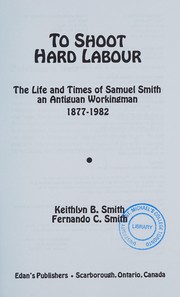
To Shoot Hard Labour: The Life and Times of Samuel Smith, an...
First published 1988. Subjects: Slavery, History, Social conditions.
eBay marketplace picks
Marketplace Samples
Live-tested eBay searches with available results related to this page.
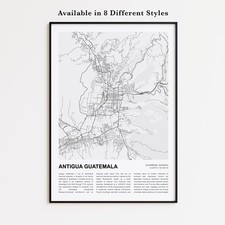
Selected fromAntigua map print oneBay.co.uk.

Endnotes
1.
Source: antiguamuseums.net
Link:https://www.antiguamuseums.net/
2.
Source: antiguamuseums.net
Link:https://www.antiguamuseums.net/portfolios/research/
Source snippet
ResearchThe Museum is home to an extensive research library that is open to the public. The archaeological collections include tens of th...
3.
Source: whc.unesco.org
Title: World Heritage Centre Antigua Naval Dockyard and Related Archaeological Sites
Link:https://whc.unesco.org/en/list/1499/
Source snippet
Their form and design have not been altered and can be appreciated through archaeology, historical research, consolidation, stabilization...
4.
Source: archaeologyantigua.org
Link:https://www.archaeologyantigua.org/index.php/green-castle-hill
Source snippet
Green Castle HillOn the summit and slopes of this hill, are unusual standing rock formations referred to by Antiguans as megaliths. The s...
5.
Source: antiguamuseums.net
Title: about the museum
Link:https://www.antiguamuseums.net/portfolios/about-the-museum/
Source snippet
History and membershipThe Museum of Antigua and Barbuda was founded in 1985 and resides in the former St. John's Courthouse, built in 175...
6.
Source: antiguamuseums.net
Link:https://www.antiguamuseums.net/wp-content/uploads/2013/03/HAS-newsletter-1st-Quarter-2021.pdf
7.
Source: antiguamuseums.net
Title: HAS NEWSLETTER OCTOBER NOVEMBER DECEMBER 2024 167
Link:https://www.antiguamuseums.net/wp-content/uploads/2013/03/HAS-NEWSLETTER-OCTOBER-NOVEMBER-DECEMBER-2024-167.pdf
Published: DECEMBER 2024
8.
Source: antiguamuseums.net
Link:https://www.antiguamuseums.net/wp-content/uploads/2013/03/HAS-NEWSLETTER-3RD-QUARTER-2020-PUB-1.pdf
9.
Source: Wikipedia
Title: Betty’s Hope
Link:https://en.wikipedia.org/wiki/Betty%27s_Hope
10.
Source: getyourguide.com
Link:https://www.getyourguide.com/en-gb/betty-s-hope-historic-sugar-plantation-l175815/
11.
Source: nationalparksantigua.com
Title: then and now
Link:https://www.nationalparksantigua.com/heritage/then-and-now/
12.
Source: nationalparksantigua.com
Link:https://www.nationalparksantigua.com/heritage/
13.
Source: nationalparksantigua.com
Link:https://www.nationalparksantigua.com/heritage/active-projects/
14.
Source: archaeologyantigua.org
Link:https://www.archaeologyantigua.org/index.php/current-research
15.
Source: anbanet.com
Title: Green Castle Archaeological Site
Link:https://www.anbanet.com/antigua/greencastle.html
16.
Source: antiguamuseums.net
Link:https://www.antiguamuseums.net/wp-content/uploads/2013/03/HAS-NEWSLETTER-2nd-QUARTER-2020-PDF.pdf
17.
Source: antiguamuseums.net
Title: July August September 2023 No 162
Link:https://www.antiguamuseums.net/wp-content/uploads/2013/03/July-August-September-2023-No-162.pdf
Published: September 2023
18.
Source: antiguamuseums.net
Link:https://antiguamuseums.net/wp-content/uploads/2013/03/October-November-December-2022-No.-159.pdf
19.
Source: antiguamuseums.net
Link:https://www.antiguamuseums.net/wp-content/uploads/2013/03/HAS-newsletter-4th-Quarter-2021.pdf
20.
Source: antiguamuseums.net
Title: HAS newsletter 1st Quarter 2023 FINAL
Link:https://www.antiguamuseums.net/wp-content/uploads/2013/03/HAS-newsletter-1st-Quarter-2023-FINAL.pdf
21.
Source: antiguamuseums.net
Link:https://www.antiguamuseums.net/wp-content/uploads/2013/03/HAS-newsletter-3rd-Quarter-2022.pdf
22.
Source: antiguamuseums.net
Link:https://www.antiguamuseums.net/wp-content/uploads/2013/03/HAS-newsletter-2nd-Quarter-2021.pdf
23.
Source: antiguamuseums.net
Title: January February March 2024 No.164
Link:https://antiguamuseums.net/wp-content/uploads/2024/05/January-February-March-2024-No.164.pdf
Published: March 2024
24.
Source: getyourguide.com
Link:https://www.getyourguide.com/antigua-antigua-and-barbuda-l215658/museums-exhibitions-tc132/
25.
Source: nationalparksantigua.com
Link:https://www.nationalparksantigua.com/tours/
26.
Source: nationalparksantigua.com
Title: 8th of march project
Link:https://www.nationalparksantigua.com/heritage/8th-of-march-project/
27.
Source: nationalparksantigua.com
Title: building guidelines in the whs nov19
Link:https://www.nationalparksantigua.com/wp-content/uploads/2024/04/building-guidelines-in-the-whs-nov19.pdf
28.
Source: nationalparksantigua.com
Link:https://www.nationalparksantigua.com/wp-content/uploads/2023/12/2020-NDNP-Mangrove-Survey-Report.pdf
29.
Source: nationalparksantigua.com
Link:https://www.nationalparksantigua.com/wp-content/uploads/2024/04/2010-building-guidelines-master-1.pdf
30.
Source: Wikipedia
Title: Museum of Antigua and Barbuda
Link:https://en.wikipedia.org/wiki/Museum_of_Antigua_and_Barbuda
31.
Source: whc.unesco.org
Link:https://whc.unesco.org/en/documents/121855
32.
Source: whc.unesco.org
Link:https://whc.unesco.org/en/decisions/6810
33.
Source: archaeologyantigua.org
Link:https://www.archaeologyantigua.org/index.php/nelson-s-dockyard-seawall-project-underwater-archaeology
34.
Source: archaeologyantigua.org
Title: 9 sites
Link:https://www.archaeologyantigua.org/index.php/9-sites
35.
Source: saltertonartsreview.com
Title: Salterton Arts Review Museum of Antigua and Barbuda
Link:https://saltertonartsreview.com/2023/05/museum-of-antigua-and-barbuda-st-johns/
Source snippet
Salterton Arts ReviewMuseum of Antigua and BarbudaMay 15, 2023 — 15 May 2023 — Throughout, the museum combines original artefacts with ex...
Published: May 15, 2023
36.
Source: thetimes.co.uk
Link:https://www.thetimes.co.uk/article/best-things-to-do-on-antigua-ppxj0tls0
37.
Source: cpoise.gov.ag
Title: Cpoise Culture Archives
Link:https://cpoise.gov.ag/category/culture/page/4/
38.
Source: thetimes.co.uk
Title: The Times The island rebellion to save Princess Diana’s haven from developers
Link:https://www.thetimes.co.uk/article/the-island-rebellion-to-save-princess-dianas-haven-from-developers-gld9w973x
39.
Source: hackney-museum.hackney.gov.uk
Title: hackney.gov.uk Stone Age Hackney: Joseph Exall Greenhill
Link:https://hackney-museum.hackney.gov.uk/2024/09/26/joseph-exall-greenhill/
40.
Source: theatlantisproject.org
Title: Green Castle
Link:https://www.theatlantisproject.org/green-castle/
41.
Source: theatlantisproject.org
Title: Green Castle
Link:https://www.theatlantisproject.org/?p=101
42.
Source: barbmuse.org.bb
Link:https://www.barbmuse.org.bb/Discover/Collections
43.
Source: barbmuse.org.bb
Title: Social History
Link:https://barbmuse.org.bb/Discover/Collections/Social-History-Collection
44.
Source: tripadvisor.com
Title: Museum of Antigua and Barbuda
Link:https://www.tripadvisor.com/Attraction_Review-g147243-d148253-Reviews-Museum_of_Antigua_and_Barbuda-St_John_s_Saint_John_Parish_Antigua_Antigua_and_Barb.html
45.
Source: cpoise.gov.ag
Link:https://cpoise.gov.ag/places/the-museum-of-antigua-and-barbuda/
46.
Source: saltertonartsreview.com
Title: bettys hope antigua
Link:https://saltertonartsreview.com/2023/05/bettys-hope-antigua/
47.
Source: atlasobscura.com
Title: antigua and barbuda
Link:https://www.atlasobscura.com/things-to-do/antigua-and-barbuda
48.
Source: chnet.com
Title: The Museum of Antigua and Barbuda
Link:https://chnet.com/10626/the-museum-of-antigua-and-barbuda.html
Additional References
49.
Source: wmf.org
Link:https://www.wmf.org/projects/museum-of-antigua-and-barbuda
Source snippet
World Monuments FundRevitalizing the Museum of Antigua and BarbudaHoused in one of the oldest buildings in St. John's, the Museum of Anti...
50.
Source: youtube.com
Title: Inside Betty’s Hope: Antigua’s Most Historic Sugar Plantation
Link:https://www.youtube.com/watch?v=YDvRhjEyx5Q
Source snippet
Summer Solstice Pilgrimage Green Castle Hill...
51.
Source: youtube.com
Title: Antigua & Barbuda’s Devil’s Bridge A Must-Visit Destination
Link:https://www.youtube.com/watch?v=CkPKUxWpGts
Source snippet
Visit Antigua & Barbuda's National Parks...
52.
Source: youtube.com
Title: A visit to the Museum of Antigua and Barbuda
Link:https://www.youtube.com/watch?v=4TT6Fj6wTjE
Source snippet
Inside Betty's Hope: Antigua's Most Historic Sugar Plantation...
53.
Source: youtube.com
Title: Summer Solstice Pilgrimage Green Castle Hill
Link:https://www.youtube.com/watch?v=7EBAmTmwxro
Source snippet
Antigua & Barbuda's Devil's Bridge A Must-Visit Destination...
54.
Source: rmg.co.uk
Link:https://www.rmg.co.uk/collections/objects/rmgc-object-142966
55.
Source: caribbeanpropertysearch.com
Link:https://caribbeanpropertysearch.com/antigua-barbuda-points-of-interest/
56.
Source: jstor.org
Link:https://www.jstor.org/stable/j.ctvwvr3cf
57.
Source: facebook.com
Link:https://www.facebook.com/antiguacruiseport/posts/the-museum-of-antigua-and-barbuda-is-a-museum-in-st-johns-antigua-and-barbuda-it/1190103749977000/
58.
Source: visitantiguabarbuda.com
Link:https://www.visitantiguabarbuda.com/?taxonomy=interests&term=cultural