Where Guinea Bissau Keeps Its Strangest Histories
Guinea-Bissau does not have a large, well-publicised circuit of strange museums. Its curiosity culture is smaller, more fragile and more revealing than that. The countrys most distinctive collections concern ritual masks, sacred objects, coded drums, the material remains of enslavement and broken colonial monuments.
Page outline Jump by section
Introduction
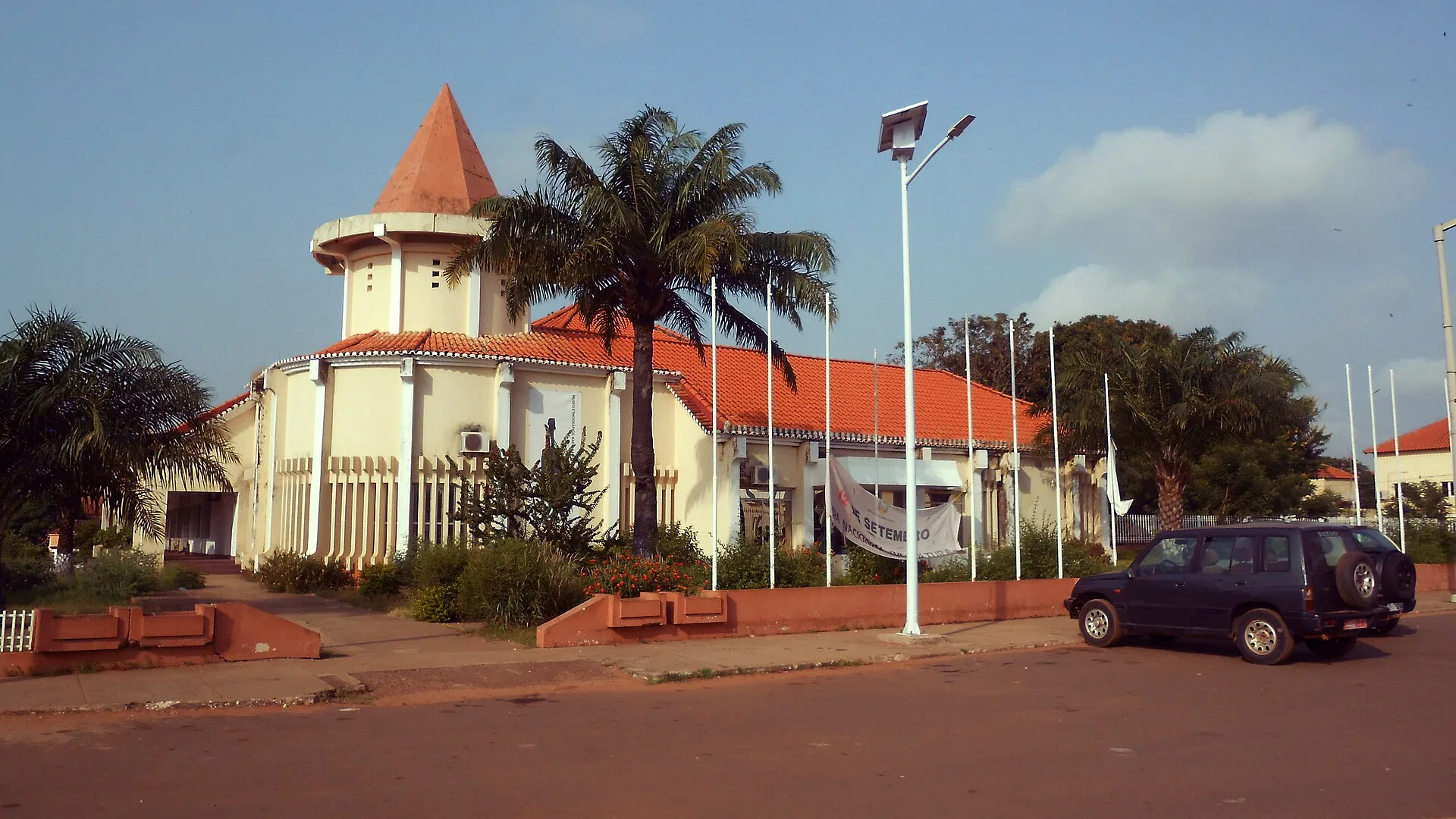
The clearest starting points are the National Ethnographic Museum in Bissau and the slavery memorial at Cacheu. Yet the most memorable story may be what happened around them: a national museum destroyed during civil war and reconstructed partly from damaged contact sheets; sacred objects deliberately left in their communities rather than collected; and toppled Portuguese statues gathered inside a fort without being restored to their old positions. Evidence about opening arrangements is often inconsistent, so visitors should treat these as small, locally managed heritage sites rather than dependable attractions with fixed international-style schedules.[le.ac.uk]journals.le.ac.ukTogether with Albano Mendes and Ramon Sarr, she is author of the book O Museo Etnogrfico Nacional da Guinea-Bissau: Imagens para uma Hi…
A national museum rebuilt from photographs
The National Ethnographic Museum of Guinea-Bissau is the countrys most important conventional collection for anyone interested in masks, ritual material and everyday objects invested with cultural meaning. Founded in 1988, it was intended to represent both the unity of the new nation and the variety of its communities. Its displays combined textiles, tools, religious objects, masks and domestic artefacts with photographs showing how objects were worn or used. That contextual approach mattered: a carved object was not presented merely as an isolated piece of African art, but as part of social life, belief and ceremony.[Oxford University]ox.ac.ukSadly, the Museum was destroyed when it was used to billet Senegalese soldiers supporting the government during the 1998-9 civil war…
The museums own history is more unusual than many of its exhibits. During the 199899 civil war, the building was occupied by Senegalese soldiers supporting the government. Objects were damaged or dispersed, while thousands of photographs and negatives were destroyed. Researchers later found roughly 400 surviving contact printsthe small photographic proof sheets normally used for selecting imagesstored in poor condition. These fragments became the basis for reconstructing both the museums history and the memories attached to its lost collection.[ox.ac.uk]anthro.ox.ac.ukpology at OxfordBlow-up in Bissau: Images and Memories of a National…In 1998/99 a Civil War put an end to the National Ethnograp…
From 2012, museum director Albano Mendes worked with researchers Ramon Sarr and Ana Temudo to digitise the surviving photographs and identify the people, collecting journeys and exhibition practices recorded in them. A 2017 display about the museums first three decades unexpectedly helped bring about its reopening on 15 September that year. The resulting institution was therefore not simply a restored ethnographic museum. It also became a museum about disappearance, war damage, incomplete memory and the effort to rebuild cultural knowledge from visual clues.[ox.ac.uk]anthro.web.ox.ac.ukOpen source on ox.ac.uk.
That history also complicates the idea of collecting sacred material. Accounts of the original fieldwork state that museum staff avoided taking ritual masks or sculptures considered sacred by the communities that possessed them. This was an important distinction between documenting a religious culture and stripping it of significant objects. The collection consequently represents negotiated ethnography rather than a cabinet assembled simply by acquiring whatever appeared visually dramatic.[ResearchGate]researchgate.netOpen source on researchgate.net.
For a visitor, the museums strongest appeal is the relationship between the surviving objects and the photographic record of their use. Its weakness is practical uncertainty. Academic and cultural institutions document the 2017 reopening, but recent visitor information is contradictory; one 2026 travel account reports that the building was closed and viewable only from outside, while online directories offer no dependable timetable. Anyone planning a visit should seek local confirmation in Bissau rather than rely on published opening hours.[instituto-camoes.pt]instituto-camoes.ptOpen source on instituto-camoes.pt.
Cacheus slavery memorial and fallen statues
Cacheu offers Guinea-Bissaus most concentrated landscape of difficult and unsettling heritage. The town was an important Portuguese colonial trading centre connected to the transatlantic traffic in enslaved people. Its slavery memorial, inaugurated in 2016, was created both to preserve that history and to place Cacheu on a wider route of memory tourism linking West Africa, Europe and the Americas.[straitstimes.com]straitstimes.comguinea bissau opens slave memorial with history tourists in mindguinea bissau opens slave memorial with history tourists in mind
The memorial is not an eccentric museum in the comic sense. Its unusual quality comes from the physical severity of its subject and from the attempt to build a public collection where comparatively little material evidence has survived. Displays have been reported to include chains and other objects associated with coercion, labour and the daily systems surrounding enslavement, supported by documents and interpretive material. The institution also contains research, documentation and training facilities concerned with Cacheu, the slave trade, material culture and the ways slavery is remembered.[kalmasoul.com]kalmasoul.comcacheu the journey of slavescacheu the journey of slaves
The most visually peculiar collection lies nearby inside the old fort. After independence, statues celebrating Portuguese military and colonial figures were removed from their public positions. Several ended up within the fort, some broken, decapitated or split across the torso. Rather than functioning as honoured monuments, they now resemble displaced archaeological fragments from a defeated political order. A recent study describes them as statues awaiting a museum, capturing their ambiguous condition: they are displayed, but not fully curated; preserved, but not celebrated; historically important, yet detached from the civic authority they once projected.[uevora.pt]dspace.uevora.ptOpen source on uevora.pt.
This makes the fort an accidental open-air museum of fallen propaganda. The damage should not be treated as a spooky tourist spectacle without context. These figures once helped turn colonial occupation into a heroic public narrative. Their present fragmentation reveals a later decision not to continue that narrative, while their retention prevents the colonial past from simply vanishing.
Access can be informal. Visitor accounts indicate that entry to the fort may require asking the memorials caretaker or arranging a guided visit. This is characteristic of Guinea-Bissaus heritage landscape: the historical value may be considerable even where signage, staffing and published hours remain limited.[Scoot West Africa]scootwestafrica.comvisiting cacheu guinea bissauvisiting cacheu guinea bissau
Masks that are not merely artworks
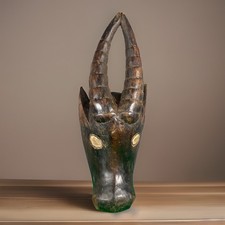
The most recognisable uncanny objects associated with Guinea-Bissau are the animal-shaped masks of the Bijags Islands. Museums outside the country hold masks representing cattle, sharks and other powerful creatures, often with dramatically projecting horns, jaws or fins. Their strangeness to an outsider comes partly from their forms, but treating them as fantasy monsters misses their original purpose.
Cattle masks used in male initiation can represent strength that must be disciplined. The Brooklyn Museum describes the initiate as comparable to a tethered ox: powerful, but required to bring that power under social control. Other museum records explain that different bovine masks and costumes mark stages in initiation. These are therefore not simply disguises or performances for entertainment. They help make changes in age, responsibility and status publicly visible.[brooklynmuseum.org]brooklynmuseum.orgOpen source on brooklynmuseum.org.
Other carved objects are understood as locations of spiritual power. A British Museum record for a Bijags ritual object notes that carvings, drums and stools can serve as places of such power. This makes the normal museum labelmaterial, dimensions, maker and dateonly a partial account. To the community from which an object comes, its importance may depend on consecration, restricted knowledge, ritual use or its relationship to ancestors and spiritual forces.[British Museum]britishmuseum.orgOpen source on britishmuseum.org.
Many major examples are now held abroad. The British Museum, Brooklyn Museum, Smithsonian and Royal Museum for Central Africa all catalogue material from Guinea-Bissau, while Portugals National Museum of Ethnology possesses an important group of Bijags masks, many acquired in the late 1960s and early 1970s. These collections make the objects internationally visible, but they also separate them from the island ceremonies and local systems that gave them meaning.[britishmuseum.org]britishmuseum.orgOpen source on britishmuseum.org.
That contrast is central to understanding the countrys curiosity culture. Abroad, a mask may become a sculptural masterpiece in a glass case. Within Guinea-Bissau, a comparable form may remain part of initiation, restricted ritual or inherited authority. The strange object is therefore not automatically a collectible. Sometimes its most culturally responsible destination is not a museum at all.
Living landscapes rather than folklore displays
Guinea-Bissaus unusual heritage extends beyond movable objects. Sacred forests and islands can act as protected spiritual spaces, combining ecological conservation with belief. Research has found that communities from several cultural groups traditionally regarded particular forests as dwelling places of local deities. These beliefs helped protect areas from ordinary exploitation, although religious change and other social pressures have weakened the sacred status of some sites.[Cambridge University Press & Assessment]cambridge.orgOpen source on cambridge.org.
The Bijags archipelago is the strongest example of a landscape where nature, ritual and heritage remain difficult to separate. The UNESCO Bolama-Bijags Biosphere Reserve covers an archipelago of 88 islands and surrounding marine territory. Local tourism material describes sacred islets, initiation compounds and ritual objects as part of a wider cultural environment rather than as isolated exhibits.[UNESCO]unesco.orgOpen source on unesco.org.
Visitors should therefore resist treating ceremonies, shrines or sacred sites as if they were open-air museum displays. Access may depend on permission, community relationships and restrictions that are not designed around tourism. The absence of a ticket office does not mean that a site is public, while a mask seen during a performance should not be assumed to be a souvenir or a theatrical prop.
A related example is the community drum used in coastal villages. It is described not simply as a musical instrument but as a sacred communication device whose rhythms can announce deaths and mourning ceremonies. Its coded language is intelligible only to trained listeners. In a conventional museum, such a drum might appear silent and decorative; within its community, it can carry messages across distance and mark moments of collective consequence.[Political Anthropology Review]polarjournal.orgOpen source on polarjournal.org.
War collections in the forest
Guinea-Bissaus liberation struggle has also produced small, unusual collections at former military sites. At Guiledje, near the Cantanhez region, a memorial museum preserves the memory of a major turning point in the war against Portuguese rule. Tourism and heritage sources describe former military structures and displays containing wartime material. The site is important because it places objects within the landscape where the conflict occurred rather than relocating everything to the capital.[ad-bissau.org]ad-bissau.orgOpen source on ad-bissau.org.
Guiledje belongs to the tradition of battlefield and bunker museums: weapons, buildings and military debris are interpreted alongside testimony and national memory. Such sites can appear frozen in time, but their meaning is politically active. They explain how Guinea-Bissau narrates independence, sacrifice and the collapse of colonial control.
Another military collection has been associated with the So Jos da Amura fortress in Bissau, which contains the burial place of independence leader Amlcar Cabral. The fortress remains a sensitive military location, and visitor accounts indicate that access may require formal permission. Current UK travel advice also recommends avoiding sensitive military and government sites unless access is clearly authorised. It should not be approached as an abandoned fort open for casual exploration.[gov.uk]GOV.UKSafety and securitySafety and security

What Guinea-Bissaus odd collections reveal
Guinea-Bissaus strange-museum landscape is defined less by abundance than by unstable boundaries. The national ethnographic collection sits between museum and recovered memory. Cacheus broken statues sit between storage, monument and anti-monument. Bijags masks sit between internationally collected art and locally restricted ritual equipment. Sacred forests occupy the border between ecological reserve and spiritual territory, while Guiledje turns a former military position into a national memory site.
This is also a country where absence is part of the collection. War destroyed objects and archives. Colonial-era collecting carried important material overseas. Some religious items were intentionally not collected. Other displays remain difficult to visit or poorly documented. Those gaps should not be filled with invented attractions or exaggerated supernatural claims.
For readers interested in unusual museums, Guinea-Bissau offers something more challenging than a polished cabinet of curiosities. Its most compelling collections ask who has the right to preserve an object, whether sacred material belongs behind glass, how a nation should display the monuments of its former rulers, and how a museum can be rebuilt when much of the original evidence has been lost.
Amazon book picks
Further Reading
Books and field guides related to Where Guinea Bissau Keeps Its Strangest Histories. Use these as the next step if you want deeper reading beyond the article.
The Slave Trade
In a balanced approach to an explosive subject, a history professor portrays the rise, apogee, and decline of the slave trade, exposing i...

The Scramble For Africa
In 1880 the continent of Africa was largely unexplored by Europeans. Less than thirty years later, only Liberia and Ethiopia remained unc...
eBay marketplace picks
Marketplace Samples
Live-tested eBay searches with available results related to this page.
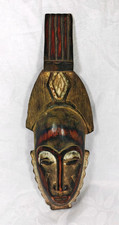
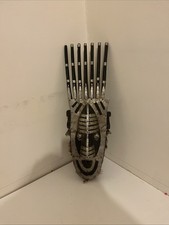
Selected fromAfrican mask art oneBay.co.uk.
Endnotes
1.
Source: isca.ox.ac.uk
Link:https://www.isca.ox.ac.uk/blow-up-in-bissau-images-and-memories-of-a-national-ethnographic-museum-in-bissau
Source snippet
Blow-up in Bissau: Images and Memories of a National...the war destroyed thousands of images and negatives collected since 1986...
2.
Source: journals.openedition.org
Link:https://journals.openedition.org/midas/2376
3.
Source: researchgate.net
Link:https://www.researchgate.net/publication/355824512_The_Lives_and_Deaths_of_an_Ethnographic_Museum_History_Violence_and_Curatorial_Collaborations_in_Guinea-Bissau
4.
Source: gw.near-place.com
Link:https://gw.near-place.com/national-ethnographic-museum-bissau/en
5.
Source: dspace.uevora.pt
Link:https://dspace.uevora.pt/rdpc/bitstream/10174/37695/1/The%20Portuguese%20statues%2C%20on%20display%20awaiting%20a%20museum%2C%20in%20the%20fort%20of%20Cacheu..pdf
6.
Source: africamuseum.be
Title: Persona. Masks of Africa
Link:https://www.africamuseum.be/en/discover/focus_collections/display_object?objectid=30602
7.
Source: run.unl.pt
Title: Run UNLAs Mscaras Bijag do Museu Nacional de Etnologiadc.description
Link:https://run.unl.pt/entities/publication/a8352bc1-de1e-423b-85d6-97f594f94043/full
8.
Source: cambridge.org
Link:https://www.cambridge.org/core/journals/environmental-conservation/article/shifting-values-and-the-fate-of-sacred-forests-in-guineabissau-are-communitymanaged-forests-the-answer/F737693426FF9BBCD1A7CD5FB370CD30
9.
Source: unesco.org
Link:https://www.unesco.org/en/mab/bolama-bijagos
10.
Source: ad-bissau.org
Link:https://ad-bissau.org/
11.
Source: ad-bissau.org
Link:https://ad-bissau.org/guiledje-um-patrimonio-da-guine-bissau
12.
Source: GOV.UK
Title: Safety and security
Link:https://www.gov.uk/foreign-travel-advice/guinea-bissau/safety-and-security
13.
Source: tripadvisor.com
Title: Fortaleza de Sao Jose da Amura
Link:https://www.tripadvisor.com/Attraction_Review-g293801-d9858689-Reviews-Fortaleza_de_Sao_Jose_da_Amura-Bissau.html
14.
Source: travel.state.gov
Title: guinea bissau
Link:https://travel.state.gov/en/international-travel/travel-advisories/guinea-bissau.html?os=io..ref%3Dapp
15.
Source: gov.gw
Title: Arquivos | Guin-Bissau
Link:https://gov.gw/2024/12/02/
16.
Source: gov.gw
Title: Arquivos | Guin-Bissau
Link:https://gov.gw/2024/06/
17.
Source: africa.com
Title: Guinea Bissau | africa.com
Link:https://africa.com/museums/museums-of-guinea-bissau
18.
Source: gov.gw
Title: Hello world! | Guin-Bissau
Link:https://gov.gw/hello-world-2/
19.
Source: tripadvisor.com
Link:https://www.tripadvisor.com/Attraction_Review-g293775-d11960024-Reviews-Sala_Museu_Amilcar_Cabral-Praia_Santiago.html
20.
Source: tripadvisor.com
Title: Museu Nacional
Link:https://www.tripadvisor.com/Attraction_Review-g293801-d480362-Reviews-Museu_Nacional-Bissau.html
21.
Source: africamuseum.be
Title: Persona. Masks of Africa
Link:https://www.africamuseum.be/en/discover/focus_collections/display_group_items?cur_page=2&groupid=354
22.
Source: africamuseum.be
Link:https://www.africamuseum.be/en/discover/origin_collections
23.
Source: ad-bissau.org
Link:https://ad-bissau.org/2011/10
24.
Source: journals.openedition.org
Link:https://journals.openedition.org/midas/3512?lang=pt
25.
Source: journals.openedition.org
Link:https://journals.openedition.org/midas/2909
26.
Source: tripadvisor.ca
Title: Fortaleza de Sao Jose da Amura
Link:https://www.tripadvisor.ca/Attraction_Review-g293801-d9858689-Reviews-Fortaleza_de_Sao_Jose_da_Amura-Bissau.html
27.
Source: researchgate.net
Link:https://www.researchgate.net/publication/362985524_Sacred_Groves_in_the_Global_South_A_Panacea_for_Sustainable_Biodiversity_Conservation
28.
Source: tripadvisor.pt
Title: Fortaleza de Sao Jose da Amura
Link:https://www.tripadvisor.pt/Attraction_Review-g293801-d9858689-Reviews-Fortaleza_de_Sao_Jose_da_Amura-Bissau.html
29.
Source: africa.com
Link:https://africa.com/museums-of-guinea-bissau
30.
Source: tripadvisor.ie
Title: Attraction Review g293801 d480362 Reviews Museu Nacional Bissau
Link:https://www.tripadvisor.ie/Attraction_Review-g293801-d480362-Reviews-Museu_Nacional-Bissau.html
31.
Source: gov.gw
Link:https://gov.gw/
32.
Source: gov.gw
Link:https://gov.gw/project_category/call-center/
33.
Source: gov.gw
Link:https://gov.gw/events/
34.
Source: gov.gw
Link:https://gov.gw/our-history/
35.
Source: gov.gw
Link:https://gov.gw/footers/
36.
Source: gov.gw
Link:https://gov.gw/blog-list/
37.
Source: gov.gw
Link:https://gov.gw/events/lista/?eventDisplay=past&tribe-bar-date=2024
38.
Source: gov.gw
Title: agent tranning
Link:https://gov.gw/project_category/agent-tranning/
39.
Source: gov.gw
Link:https://gov.gw/home/
40.
Source: journals.le.ac.uk
Link:https://journals.le.ac.uk/index.php/mas/article/view/3825
Source snippet
Together with Albano Mendes and Ramon Sarr, she is author of the book O Museo Etnogrfico Nacional da Guinea-Bissau: Imagens para uma Hi...
41.
Source: ox.ac.uk
Link:https://www.ox.ac.uk/research/research-impact/blow-bissau
Source snippet
Sadly, the Museum was destroyed when it was used to billet Senegalese soldiers supporting the government during the 1998-9 civil war...
42.
Source: instituto-camoes.pt
Link:https://www.instituto-camoes.pt/activity/o-que-fazemos/cultura-portuguesa/agenda/bissau-exposicao-e-reabertura-do-museu-etnografico-nacional-30-anos-de-historia
43.
Source: mattsnextsteps.com
Title: The National Ethnographic Museum is small,
Link:https://mattsnextsteps.com/14-best-things-to-do-in-bissau-city-guinea-bissau/
Source snippet
Matt's Next Steps14 Best Things to do in Bissau City (Guinea-Bissau)13 Apr 2026 Visit the National Ethnographic Museum UPDATE: This is...
44.
Source: anthro.ox.ac.uk
Link:https://www.anthro.ox.ac.uk/blow-up-in-bissau-images-and-memories-of-a-national-ethnographic-museum-in-bissau
Source snippet
pology at OxfordBlow-up in Bissau: Images and Memories of a National...In 1998/99 a Civil War put an end to the National Ethnograp...
45.
Source: anthro.web.ox.ac.uk
Link:https://anthro.web.ox.ac.uk/blow-up-in-bissau-images-and-memories-of-a-national-ethnographic-museum-in-bissau
46.
Source: instituto-camoes.pt
Link:https://www.instituto-camoes.pt/sobre/comunicacao/noticias/exposicao-e-reabertura-do-museu-etnografico-nacional-bissau
47.
Source: straitstimes.com
Title: guinea bissau opens slave memorial with history tourists in mind
Link:https://www.straitstimes.com/world/africa/guinea-bissau-opens-slave-memorial-with-history-tourists-in-mind
48.
Source: memorialcacheu.org
Link:https://memorialcacheu.org/
49.
Source: mimesisjournals.com
Link:https://mimesisjournals.com/ojs/index.php/ec/article/view/1960
50.
Source: kalmasoul.com
Title: cacheu the journey of slaves
Link:https://kalmasoul.com/en/tourism/culture/cacheu-the-journey-of-slaves/
51.
Source: memorialcacheu.org
Link:https://memorialcacheu.org/centro-de-estudos-e-pesquisas/
52.
Source: memorialcacheu.org
Title: Memorial Cache CENTRO DE DOCUMENTAO
Link:https://memorialcacheu.org/centro-de-documentacao/
53.
Source: scootwestafrica.com
Title: visiting cacheu guinea bissau
Link:https://scootwestafrica.com/visiting-cacheu-guinea-bissau/
54.
Source: bbds-journal.org
Link:https://bbds-journal.org/index.php/BBDS/article/view/1080
55.
Source: brooklynmuseum.org
Link:https://www.brooklynmuseum.org/objects/148087
56.
Source: si.edu
Link:https://www.si.edu/object/nmafa
57.
Source: britishmuseum.org
Link:https://www.britishmuseum.org/collection/object/E_Af1979
58.
Source: britishmuseum.org
Link:https://www.britishmuseum.org/collection/object/E_Af1960-18-1-a-c
59.
Source: britishmuseum.org
Link:https://www.britishmuseum.org/collection/term/x63818
60.
Source: polarjournal.org
Link:https://polarjournal.org/2024/09/21/guinea-bissau-cultural-heritage-materiality-frontier-and-communication/
61.
Source: kalmasoul.com
Title: Kalma Soul Culture
Link:https://www.kalmasoul.com/en/tourism/culture/
62.
Source: consulmarbissau.com
Link:https://www.consulmarbissau.com/sites/default/files/files/tourist_guide_guinea-bissau_eu_acl2018_en_web.pdf
63.
Source: tripadvisor.co.uk
Title: Tripadvisor FORTALEZA DE SAO JOSE DA AMURA
Link:https://www.tripadvisor.co.uk/Attraction_Review-g293801-d9858689-Reviews-Fortaleza_de_Sao_Jose_da_Amura-Bissau.html
64.
Source: britishmuseum.org
Link:https://www.britishmuseum.org/collection/object/E_Af1957-07-1-a-b
65.
Source: britishmuseum.org
Link:https://www.britishmuseum.org/collection/object/E_Af1989
66.
Source: britishmuseum.org
Link:https://www.britishmuseum.org/collection/term/x70682
68.
Source: memorialcacheu.org
Link:https://memorialcacheu.org/institucional/
69.
Source: memorialcacheu.org
Link:https://memorialcacheu.org/atualidade/
70.
Source: memorialcacheu.org
Link:https://memorialcacheu.org/imprensa/
71.
Source: africa.si.edu
Link:https://africa.si.edu/archives?edan_fq%5B%5D=-culture%3A%22Tsamai+%28African+people%29%22&edan_fq%5B%5D=-topic%3A%22Masks%22&edan_fq%5B%5D=set_name%3A%22African+Postcard+Collection%22
72.
Source: tripadvisor.com.br
Title: Fortaleza de Sao Jose da Amura
Link:https://www.tripadvisor.com.br/Attraction_Review-g293801-d9858689-Reviews-Fortaleza_de_Sao_Jose_da_Amura-Bissau.html
73.
Source: taipeitimes.com
Link:https://www.taipeitimes.com/News/world/archives/2016/09/24/2003655843
74.
Source: prcmarine.org
Link:https://www.prcmarine.org/bijagos/article/10759
75.
Source: ageconsearch.umn.edu
Link:https://ageconsearch.umn.edu/record/92787/?ln=en
Additional References
76.
Source: prm.ox.ac.uk
Link:https://www.prm.ox.ac.uk/node/819581
Source snippet
Mask formerly in the collection of the Ethnographic Museum of Guinea-Bissau.... * Exhibition curated by Ramon Sarr and Ana Temudo, with...
77.
Source: ecoturismo.ibapgbissau.org
Title: Ecoturismo IBAP GBissau G
Link:https://ecoturismo.ibapgbissau.org/documentos/publicacoes/Guias/IBA-%20Guide%20ecotourisme%20EN%20LowDef.pdf
Source snippet
uinea-Bissaus history, the composition of its tBijago art... sacred islets and in the compounds of the initiation sites.... Bijago art...
78.
Source: youtube.com
Title: Welket Bungu’s ‘Cacheu Cuntum’ Honours the History of Guinea-Bissau
Link:https://www.youtube.com/watch?v=iWYvZDnGnPw
Source snippet
Mussolu - Super Camalinba (Official Video)...
79.
Source: facebook.com
Link:https://www.facebook.com/cgtnafrica/posts/imageofafricabolama-is-a-port-town-located-on-the-northeast-side-of-bolama-islan/2858541380862049/
80.
Source: facebook.com
Link:https://www.facebook.com/cgtnafrica/posts/imageofafricacacheu-in-guinea-bissau-was-one-of-the-earliest-european-colonial-s/2858553637527490/
81.
Source: academia.edu
Link:https://www.academia.edu/170072244/Sacred_Groves_Cultural_Ecosystems_and_Conservation
82.
Source: christies.com
Link:https://www.christies.com/en/lot/lot-5556847
83.
Source: maskmuseum.org
Link:https://www.maskmuseum.org/mask/bidjogo-dugnbe-1/
84.
Source: slaveryandremembrance.org
Link:https://www.slaveryandremembrance.org/collections/object/index.cfm?id=OB0054
85.
Source: medium.com
Link:https://medium.com/globetrotters/derelict-city-in-the-jungle-9c4f8660de5a