Where Luxembourg Keeps Its Strangest History
Luxembourg does not have a famous national museum of witchcraft, cryptids or medical horrors. Its strange-collection culture is quieter and more dispersed.
Page outline Jump by section
Introduction
That makes Luxembourg rewarding for visitors who prefer credible historical atmosphere to theatrical claims of the paranormal. You can descend into galleries once used for artillery, mushroom farming and air-raid protection; travel into an iron-ore mine by train; examine an international collection of police headgear; stand beside the tomb of a medieval missionary; or encounter the mermaid-like woman woven into the capital’s foundation legend. Most of these places are formally curated, but some retain the personal, crowded character of a cabinet of curiosities.[luxembourg-city.com]luxembourg-city.comLuxembourg CityPétrusse Casemates Rocks coming to LifeVisiting the Pétrusse casemates is like stepping back in time and listening to the…
Why Luxembourg’s oddities are different
Luxembourg’s unusual museums tend to preserve places and working environments rather than isolated sensational objects. The country’s scale, its heavily fortified capital, its mining history and its experience of occupation have produced collections centred on tunnels, machinery, uniforms, ruins and reconstructed human scenes.
This is not a landscape of staged haunted houses or commercial monster museums. Folklore appears, but usually alongside archaeology or local history. Military displays are concerned with documented events rather than crime spectacle. Mining attractions retain genuine industrial structures. Religious curiosities remain connected to active devotional traditions. Even the National Museum of Natural History presents its collections principally through scientific interpretation; behind its public displays sits a research collection containing millions of specimens rather than a deliberately macabre assortment.[luxembourg-city.com]luxembourg-city.comLuxembourg City National Museum of Natural History (MNHNLBehind the exhibitions of the museum lies in fact a world of scientists studying the collection of millions of specimens and committing t…
This distinction matters when judging credibility. Luxembourg’s strangest attractions are generally unusual because of their setting, density or survival, not because curators claim that an object is cursed, supernatural or inexplicable.
The capital’s underground memory
The Bock and Pétrusse Casemates are the clearest expression of Luxembourg’s curiosity culture. They are not conventional museums filled with cases. They are surviving portions of an immense defensive system carved into and beneath Luxembourg City.
Fortification work developed under several European powers. The underground network eventually extended for about 23 kilometres, of which roughly 17 kilometres survived the dismantling of the fortress ordered after the 1867 Treaty of London. The galleries could not simply be destroyed without threatening the buildings above. During the world wars they served as shelters, while parts had previously or subsequently been used as shooting ranges, wine storage, mushroom farms, performance spaces and venues for public events.[Luxembourg City]luxembourg-city.comLuxembourg CityPétrusse Casemates Rocks coming to LifeVisiting the Pétrusse casemates is like stepping back in time and listening to the…
Visitors now experience selected sections rather than an unrestricted labyrinth. The Bock route passes gun chambers, loopholes, foundations of the old castle, a former prison space and a well descending 47 metres into the rock. The associated archaeological crypt preserves remains connected with the first castle built on the promontory in the tenth century. Interpretation is institutional and archaeological, although the tunnels’ scale and changing uses give them the atmosphere of an enormous subterranean collection.[Luxembourg City]luxembourg-city.comOpen source on luxembourg-city.com.
The Pétrusse Casemates use lighting, sound and modern scenography more overtly. Their history is especially eclectic: after losing their primary military role, the spaces accommodated champagne bottles, mushroom cultivation, concerts and wartime shelters. The presentation is tourist-facing, but the underlying site is authentic. This is heritage turned into spectacle without pretending that the spectacle itself is historical evidence.[Luxembourg City]luxembourg-city.comLuxembourg CityPétrusse Casemates Rocks coming to LifeVisiting the Pétrusse casemates is like stepping back in time and listening to the…
A less regularly accessible curiosity is the archaeological crypt beneath the Saint-Esprit area. Here visitors can trace the same confined space changing from a setting of prayer and penance to one of military use and, eventually, association with Luxembourg’s judicial quarter. Visits are generally tied to specific guided tours rather than ordinary daily admission.[Luxembourg City]luxembourg-city.comOpen source on luxembourg-city.com.
Mines preserved as underground museums
Luxembourg’s most distinctive industrial collections remain in the ground from which their material was extracted. These sites preserve machinery and tools, but their real exhibit is the altered landscape itself.
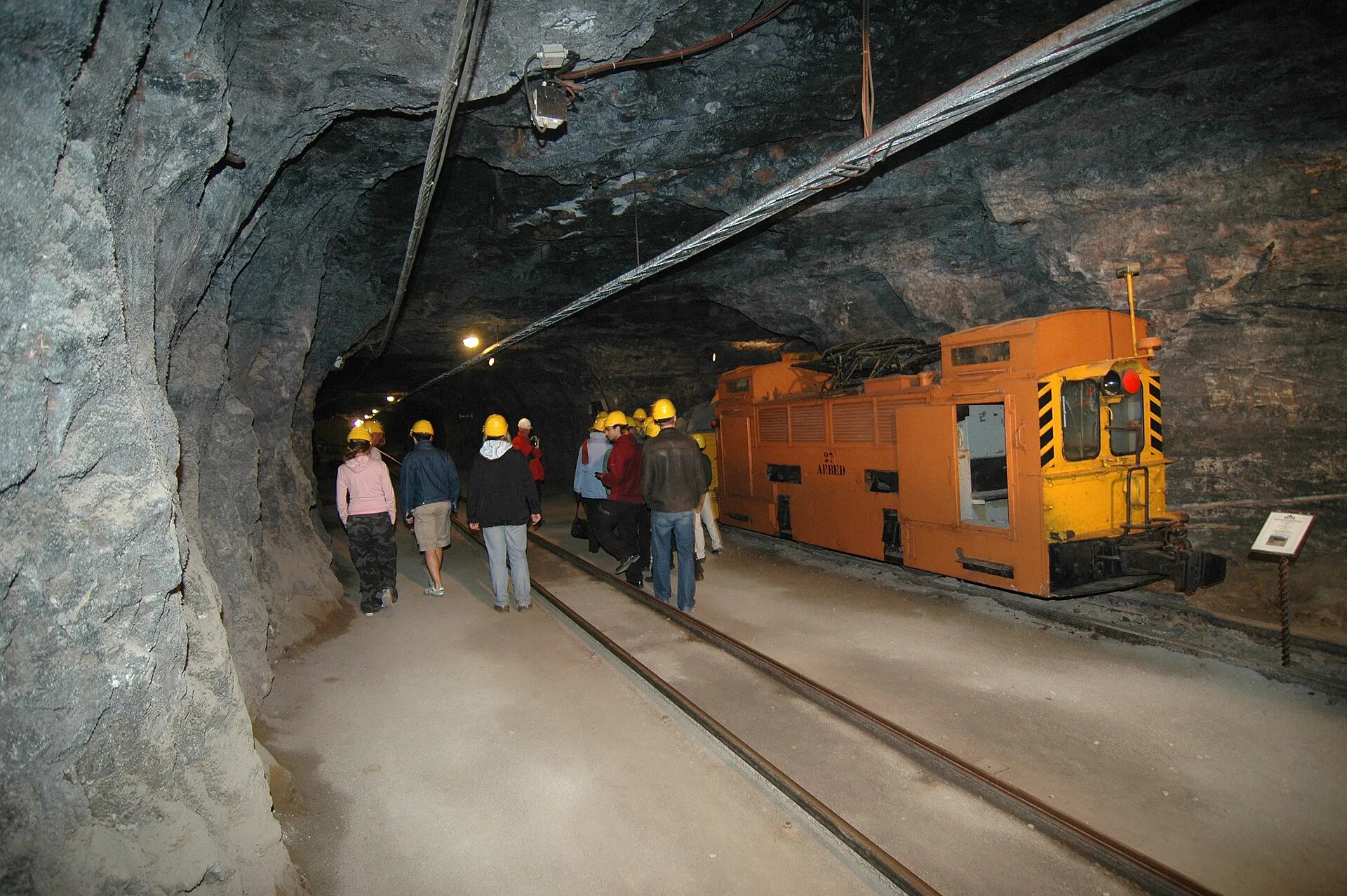
The National Mining Museum at Rumelange documents more than a century of iron-ore mining technology. A standard visit begins on a small mine train, passes through former open workings and enters the mine through a historic tunnel. Visitors then walk through about 1.2 kilometres of underground galleries with a guide. The complete route takes roughly two hours, with a four-kilometre train circuit forming part of the experience.[mnm.lu]mnm.luVisit usThe National Mining Museum in Rumelange … museum is open all year round on prior booking: 8:30 – 12:00 et 14:00 – 18:00. Thursda…
This is unusual because machinery is interpreted where related labour took place. The darkness, humidity and constrained spaces communicate more than a detached display of drills or wagons could. It is nevertheless a controlled heritage attraction, not an abandoned-site adventure: admission operates through scheduled tours, and practical access varies seasonally.[mnm.lu]mnm.luVisit usThe National Mining Museum in Rumelange … museum is open all year round on prior booking: 8:30 – 12:00 et 14:00 – 18:00. Thursda…
The Slate Museum at Haut-Martelange offers a similarly immersive but visually different industrial world. Its grounds contain 22 authentic buildings, including workshops and workers’ spaces, while guided visits descend into former slate galleries. The site traces extraction and processing from the industry’s beginnings around 1790 until production ended in 1986.[ardoise.lu]ardoise.luOpen source on ardoise.lu.
The newer “Johanna” visitor gallery lies about 42 metres underground and is reached by hundreds of steps. Visitors encounter the physical strata, working spaces and conditions of slate extraction rather than merely seeing finished roof tiles. The attraction is formally interpreted and family-oriented, although its preserved workshops, narrow-gauge transport and industrial remains give it the character of a vast archaeological curiosity cabinet.[visitluxembourg.com]visitluxembourg.comOpen source on visitluxembourg.com.
War reconstructed at human scale
The National Museum of Military History in Diekirch is one of Luxembourg’s most visually striking collections. Its central subject is the Battle of the Bulge and the experiences of soldiers and civilians during the winter fighting of 1944–45.
Rather than relying only on weapons arranged in cases, the museum employs numerous life-size dioramas. Figures, vehicles, equipment and reconstructed environments place objects back into specific situations. The broader holdings reportedly exceed 100,000 military artefacts, giving the museum both the density of a specialist collection and the dramatic immediacy of a film set.[Visit Luxembourg]visitluxembourg.comOpen source on visitluxembourg.com.
Dioramas always involve interpretation: curators choose a moment, arrange bodies and decide what a scene should communicate. Here, however, the scenes are intended to explain documented military and civilian experiences rather than manufacture mystery. The museum’s unusual power comes from the uncomfortable closeness of the mannequins and material remains, particularly in a country where the battles occurred within living communities.
Luxembourg’s resistance and deportation collections provide a more explicitly memorial form of difficult heritage. The National Museum of Resistance and Human Rights in Esch-sur-Alzette grew from initiatives by political prisoners, deportees and local organisations after the Second World War. Its institutional history shows a movement from survivor-led commemoration towards professional museum management and exhibitions addressing occupation, persecution, concentration camps and human rights.[mnr.lu]mnr.luOpen source on mnr.lu.
These collections should not be approached as “dark tourism” entertainment. Their artefacts and artworks carry testimony, commemoration and political meaning. They belong within Luxembourg’s strange-history landscape because they preserve extreme experiences and troubling objects, but their purpose is ethical and historical rather than sensational.
Police caps and specialist collecting
The International Gendarmerie and Police Museum in Capellen is closer to the traditional idea of an eccentric specialist collection. Across approximately 250 square metres, it combines the history of Luxembourg’s police and gendarmerie with uniforms, badges, equipment and a notably broad assortment of police caps from around the world.[Visit Luxembourg]visitluxembourg.comVisit LuxembourgInternational Gendarmerie and Police MuseumOn about 250 square metres, you can see a part of the police history collectio…
The collection began in the 1990s with an ambition to obtain at least one patch and one piece of headgear from police or gendarmerie organisations in every country. That collecting principle gives the displays a cabinet-like appeal: a single practical object becomes endlessly variable through national symbols, rank systems, colours and ceremonial traditions.[gendarmerie.lu]gendarmerie.luOpen source on gendarmerie.lu.
It is also an example of heritage sustained partly by enthusiasts. Former officers and volunteers have been closely involved in presenting the material, while the Grand-Ducal Police describes the supporting association as helping to expand the holdings through donations, loans and historical research. Visitors should therefore expect a specialist institutional history museum with a strong collector’s personality, not a crime museum devoted to notorious cases or forensic evidence.[Police Grand-Ducale]police.public.luPolice Grand-Ducale Police museumPolice Grand-Ducale Police museum
Another unusually focused collection is the Photographica Museum in Doennange, which advertises more than 1,500 historic cameras, projectors, film cameras, magic lanterns and related devices. Its appeal lies in the accumulation of obsolete technologies: instruments once regarded as modern become mysterious mechanical objects when separated from familiar digital photography.[Visit Luxembourg]visitluxembourg.comOpen source on visitluxembourg.com.
Rural life as a cabinet of vanished things
The Binsfeld Rural Museum occupies a roughly 300-year-old farmhouse and presents the former life of Ardennes villages through themed scenes, photographs and thousands of everyday objects. More than 50 themes are used to reconstruct domestic work, agriculture and local crafts.[museebinsfeld.lu]museebinsfeld.luMusée rural Binsfeld Rural museum BinsfeldMusée rural Binsfeld Rural museum Binsfeld
What makes the museum curious is not any single supposedly mysterious artefact. It is the concentration of things that ordinary households once depended upon but modern visitors may struggle to identify. Hand tools, kitchen implements, workshop equipment and agricultural devices become mystery objects through technological change.
The reconstructed scenes also demonstrate how folklore museums often work without displaying “folklore” as a separate category. Belief, ritual, seasonal custom and practical life were interwoven. A rural object might be simultaneously a tool, an heirloom and part of a customary practice. Binsfeld’s approach is affectionate and visitor-friendly, but its setting in an old farmhouse keeps the displays connected to the material scale of village life.
Melusina between legend and interpretation
Luxembourg’s best-known supernatural figure is Melusina, the water-associated woman linked to Count Sigfried and the founding of Luxembourg City. In the familiar local account, she agrees to marry him on condition that she be left alone at a specified time. He spies upon her, discovers her fish-like tail and loses her when she vanishes into the waters below the Bock.[Luxembourg City]luxembourg-city.comOpen source on luxembourg-city.com.
The legend is not supported as literal history, nor is it presented by official institutions as proof of a supernatural event. Instead, it overlays an archaeological landscape. The Bock contains verifiable remains of the early fortress, while the story supplies a memorable explanation of origins, secrecy, water and disappearance.
The Lëtzebuerg City Museum incorporates the story into educational interpretation connected with the city’s founding rock. The Bock Casemates also refer to Melusina beside the deep castle well. This places legend inside historical presentation without confusing the two: archaeological remains establish what can be materially investigated, while storytelling preserves the cultural meanings later attached to the site.[Lëtzebuerg City Museum]citymuseum.luLëtzebuerg City Museum Melusine and SiegfriedLëtzebuerg City Museum Melusine and Siegfried
For travellers interested in folklore, this is Luxembourg’s most important case. There is no need for a dedicated monster museum when the national foundation story is already embedded in the city’s rock, river, public art and visitor interpretation.

Sacred objects and living devotion
Echternach offers a different kind of unusual collection: manuscripts, archaeology, a saint’s tomb and an active pilgrimage tradition gathered around the former abbey of Saint Willibrord.
The Abbey Museum displays facsimiles of manuscripts produced by the abbey’s medieval scriptorium and explains the life and veneration of Willibrord, who founded the monastery in 698. The original manuscripts are dispersed among major collections elsewhere, so visitors mainly encounter carefully produced representations rather than a treasury of originals. That limitation is important for understanding the museum’s claims and the provenance of what is displayed.[echternach.lu]echternach.luLe Musée de l’AbbayeLe Musée de l’Abbaye
The adjoining basilica and crypt supply the material centre that facsimiles cannot. Willibrord’s remains are held in a white marble sarcophagus in the Merovingian crypt, which also contains medieval fabric and frescoes. The wider heritage complex includes the annual dancing procession associated with devotion to the saint, recognised by UNESCO as intangible cultural heritage.[visitechternach.lu]visitechternach.lu* Free visit to the Abbey Museum with the Luxembourg PassVisite EchternachMuseum of the Abbey Echternach - Syndicat d'initiative & de tourisme d'EchternachThe Abbey Museum also gives an insight…
This is neither an occult attraction nor a secular museum of religious oddities. The tomb and associated relic culture retain devotional importance. Visitors may examine them historically, artistically or anthropologically, but they are entering a place where belief remains active rather than safely enclosed in a display case.
Natural history beyond the public galleries
Luxembourg’s National Museum of Natural History is the country’s closest equivalent to a traditional scientific cabinet of specimens. Its visitor-facing exhibitions interpret biodiversity, evolution and the natural environment in accessible terms, while its research departments maintain collections numbering in the millions.[Luxembourg City]luxembourg-city.comLuxembourg City National Museum of Natural History (MNHNLBehind the exhibitions of the museum lies in fact a world of scientists studying the collection of millions of specimens and committing t…
Much of the real collecting activity remains behind the scenes. The museum’s herbarium alone preserves more than 100,000 dried and pressed plant and fungal specimens dating from the early nineteenth century onwards. It is not ordinarily open as a walk-in public exhibition, although consultation may be possible by appointment.[mnhn.lu]mnhn.luOpen source on mnhn.lu.
This distinction prevents a common misunderstanding about natural-history museums. The public sees a curated selection designed for explanation; researchers work with much larger series of specimens whose value lies in labels, collection dates, locations and comparison. Luxembourg’s institution is therefore less a hall of exotic oddities than a national scientific archive, with selected specimens used to make that archive understandable.
What visitors should prioritise
For a first exploration of unusual Luxembourg, the most rewarding choices depend on the kind of strangeness being sought:
- For underground atmosphere: choose the Bock or Pétrusse Casemates. They combine authentic fortifications, archaeological remains and several centuries of unexpected reuse.
- For industrial archaeology: visit the National Mining Museum at Rumelange or the Slate Museum at Haut-Martelange. Both preserve working landscapes rather than merely collecting detached machinery.
- For dense object displays: the Police Museum’s international headgear and insignia provide the strongest enthusiast-led cabinet experience.
- For immersive reconstruction: Diekirch’s life-size wartime dioramas are Luxembourg’s most visually dramatic museum displays.
- For folklore: follow Melusina through the Bock, the city museum and the river landscape, while keeping legend separate from archaeological evidence.
- For religious curiosity: Echternach combines manuscript culture, a saint’s tomb and a living pilgrimage tradition.
- For overlooked everyday objects: Binsfeld demonstrates how rapidly ordinary tools can become puzzling relics.
Opening arrangements require particular attention. Mine visits are guided and may be seasonal; underground routes involve steps, cool temperatures and uneven spaces; smaller specialist museums may depend on volunteers or limited hours; and certain crypts are accessible only through selected tours. Official venue information should therefore be checked shortly before travel.[mnm.lu]mnm.luVisit usThe National Mining Museum in Rumelange … museum is open all year round on prior booking: 8:30 – 12:00 et 14:00 – 18:00. Thursda…
Luxembourg’s place in strange museum culture
Luxembourg’s unusual heritage is defined less by eccentric claims than by the survival of enclosed worlds. Its tunnels, mines, crypts, reconstructed battle scenes and specialist collections allow visitors to enter systems that have otherwise vanished: fortress warfare, subterranean labour, rural self-sufficiency, ceremonial policing and medieval devotion.
The country’s strongest sites are unusual without requiring exaggeration. Melusina remains a legend, not an archaeological discovery. Military dioramas are reconstructions, not untouched wartime scenes. Abbey manuscripts are often represented by facsimiles rather than presented as originals. Mine tours take place in authentic workings but under modern safety and interpretive controls.
That evidence-aware balance is Luxembourg’s particular strength. Its curiosity culture does not promise monsters in jars or proof of magic. It preserves the rocks, objects and stories from which mystery grows, while usually giving visitors enough historical context to tell folklore from faith, reconstruction from survival and atmosphere from fact.
Amazon book picks
Further Reading
Books and field guides related to Where Luxembourg Keeps Its Strangest History. Use these as the next step if you want deeper reading beyond the article.
The Monuments Men: Allied Heroes, Nazi Thieves, and the Great...
As Adolf Hitler was attempting to take over the Western world, his armies were hoarding the finest art treasures in Europe. In a race aga...
The Oxford Handbook of Archaeology
This handbook provides an authoritative guide to the full range of archaeological activities past and present. It will give the reader a...
eBay marketplace picks
Marketplace Samples
Live-tested eBay searches with available results related to this page.
Selected fromLuxembourg map print oneBay.co.uk.
Endnotes
1.
Source: luxembourg-city.com
Link:https://www.luxembourg-city.com/en/tours-activities/underground/petrusse-casemates
Source snippet
Luxembourg CityPétrusse Casemates Rocks coming to LifeVisiting the Pétrusse casemates is like stepping back in time and listening to the...
2.
Source: mnm.lu
Link:https://mnm.lu/en/
Source snippet
Visit usThe National Mining Museum in Rumelange … museum is open all year round on prior booking: 8:30 – 12:00 et 14:00 – 18:00. Thursda...
3.
Source: luxembourg-city.com
Title: Luxembourg City National Museum of Natural History (MNHNL)
Link:https://www.luxembourg-city.com/en/place/museum/national-museum-of-natural-history
Source snippet
Behind the exhibitions of the museum lies in fact a world of scientists studying the collection of millions of specimens and committing t...
4.
Source: data.mnhn.lu
Title: L Data portal# MNHNL Data portal
Link:https://data.mnhn.lu/en
Source snippet
Image: Butterflies in the collection... You can browse our specimen collections on the Global Biodiversity Information Facility (GBIF) d...
5.
Source: minetttour.lu
Link:https://www.minetttour.lu/start-off-your-tour/national-mining-museum
Source snippet
National Mining MuseumThe traditional tour starts aboard a mine train which first takes you through old opencast mines and then enters th...
6.
Source: luxembourg-city.com
Link:https://www.luxembourg-city.com/en/about-luxembourg-city/meng-stad-my-city/details/the-bock-and-petrusse-casemates
7.
Source: luxembourg-city.com
Link:https://www.luxembourg-city.com/en/tours-activities/underground
8.
Source: luxembourg-city.com
Link:https://www.luxembourg-city.com/en/place/fortification/archeological-crypt
9.
Source: luxembourg-city.com
Link:https://www.luxembourg-city.com/en/tours-activities/underground/bock-casemates
10.
Source: luxembourg-city.com
Link:https://www.luxembourg-city.com/en/about-luxembourg-city/meng-stad-my-city/details/an-american-in-luxembourg-exploring-the-petrusse-casemates
11.
Source: luxembourg-city.com
Link:https://www.luxembourg-city.com/en/place/fortification/crypte-archeologique-du-saint-esprit
12.
Source: ardoise.lu
Link:https://www.ardoise.lu/?lang=en
13.
Source: erih.net
Link:https://www.erih.net/i-want-to-go-there/site/slate-museum
14.
Source: luxembourg.public.lu
Title: slate museum learning entertainment
Link:https://luxembourg.public.lu/en/visit/arts-and-culture/slate-museum-learning-entertainment.html
15.
Source: mnr.lu
Link:https://mnr.lu/en/historique-du-mnrdh
16.
Source: eurewelcome.lu
Link:https://www.eurewelcome.lu/page/pageObject/6/203/ENG/index.html
17.
Source: gendarmerie.lu
Link:https://www.gendarmerie.lu/histoire.html
18.
Source: police.public.lu
Title: Police Grand-Ducale Police museum
Link:https://police.public.lu/en/votre-police/a-propos-de-la-police/musee.html
19.
Source: chronicle.lu
Title: 46418 spotlight on villages in luxembourg binsfeld
Link:https://chronicle.lu/category/at-home/46418-spotlight-on-villages-in-luxembourg-binsfeld
20.
Source: luxembourg-city.com
Link:https://www.luxembourg-city.com/media/618958d3-31e6-4a81-b3ef-0c30b23fd0be/33619-citypromenade-i-2020-gb-web.pdf
21.
Source: echternach.lu
Title: Le Musée de l’Abbaye
Link:https://echternach.lu/decouvrir-2/musees/musee-dabbaye/
22.
Source: mnhn.lu
Link:https://www.mnhn.lu/science/collections/collections-botaniques/botanique-herbier/
23.
Source: ardoise.lu
Link:https://www.ardoise.lu/besucherinformationen?lang=en
24.
Source: ipt.mnhn.lu
Link:https://ipt.mnhn.lu/ipt/resource?r=mnhnl_occurrences_and_specimens&v=1.23
25.
Source: mnhn.public.lu
Title: lu Musée national d’histoire naturelle
Link:https://mnhn.public.lu/fr.html
26.
Source: gbif.mnhn.lu
Title: lu Palaeontological collections National Museum of Natural History Luxembourg
Link:https://gbif.mnhn.lu/ipt/resource?r=gbif_paleontology
27.
Source: gbif.mnhn.lu
Title: lu Palaeontological collections National Museum of Natural History Luxembourg
Link:https://gbif.mnhn.lu/ipt/resource?r=gbif_paleontology&v=1.97
28.
Source: gbif.mnhn.lu
Title: lu Palaeontological collections National Museum of Natural History Luxembourg
Link:https://gbif.mnhn.lu/ipt/resource?r=gbif_paleontology&request_locale=fr&v=1.83
29.
Source: gbif.mnhn.lu
Link:https://gbif.mnhn.lu/ipt/resource?r=mnhnl_occurrences_and_specimens
30.
Source: gbif.mnhn.lu
Title: lu Palaeontological collections National Museum of Natural History Luxembourg
Link:https://gbif.mnhn.lu/ipt/resource?r=gbif_paleontology&request_locale=fr&v=1.77
31.
Source: gbif.mnhn.lu
Link:https://gbif.mnhn.lu/ipt/resource?r=mnhnl_occurrences_and_specimens&v=1.18
32.
Source: gbif.mnhn.lu
Link:https://gbif.mnhn.lu/ipt/resource?r=mnhnl_occurrences_and_specimens&v=1.3
33.
Source: inpa.public.lu
Title: lu Echternach, Ancienne abbaye St-Willibrord
Link:https://inpa.public.lu/fr/patrimoine/religieux/monasteres_couvents/echternach_abbaye.html
34.
Source: luxembourg-city.com
Title: Sights and Tourist Attractions
Link:https://www.luxembourg-city.com/en/tours-activities/sights/map
35.
Source: luxembourg-city.com
Link:https://www.luxembourg-city.com/media/47c97bd8-6d24-4749-b1f6-31c2cd776daa/1051-lcto-lep-casemates-bock-redesign-web-gb.pdf
36.
Source: luxembourg-city.com
Link:https://www.luxembourg-city.com/en/place/museum/national-museum-of-history-and-art-luxembourg
37.
Source: mnhn.lu
Link:https://www.mnhn.lu/science/category/research-projects/earth-sciences/?lang=en
38.
Source: mnhn.lu
Link:https://www.mnhn.lu/science/scientific-research-center/earth-sciences/paleontology/?lang=en
39.
Source: data.mnhn.lu
Link:https://data.mnhn.lu/en/dataportal/about
40.
Source: chronicle.lu
Link:https://chronicle.lu/directory/museums/police-museum-capellen
41.
Source: mnhn.public.lu
Title: lu Zoologie
Link:https://mnhn.public.lu/fr/collections/specimens/zoologie.html
42.
Source: mnhn.public.lu
Title: lu Paléontologie
Link:https://mnhn.public.lu/fr/collections/specimens/paleontologie.html
43.
Source: mnhn.public.lu
Title: lu Botanique
Link:https://mnhn.public.lu/fr/collections/specimens/botanique.html
44.
Source: mnhn.public.lu
Title: lu Collections
Link:https://mnhn.public.lu/fr/collections.html?lang=de
45.
Source: mnm.lu
Link:https://mnm.lu/en/visits/
46.
Source: youtube.com
Title: Casemates de la Pétrusse- Hidden treasure under Luxembourg City
Link:https://www.youtube.com/watch?v=NQsxSj19jTM
Source snippet
Minett Tour - National Mining Museum Rumelange (GB)...
47.
Source: youtube.com
Title: Minett Tour
Link:https://www.youtube.com/watch?v=7aLiOO3babs
Source snippet
Exploring the Hidden Depths: Bock Casemates - Secrets of Luxembourg's Underground Fortress...
48.
Source: visitluxembourg.com
Link:https://www.visitluxembourg.com/place/international-museum-of-the-police-and-gendarmerie
Source snippet
Visit LuxembourgInternational Gendarmerie and Police MuseumOn about 250 square metres, you can see a part of the police history collectio...
49.
Source: visitechternach.lu
Title: * Free visit to the Abbey Museum with the Luxembourg Pass
Link:https://www.visitechternach.lu/en/plug/culturalheritage/museum-of-the-abbey-echternach
Source snippet
Visite EchternachMuseum of the Abbey Echternach - Syndicat d'initiative & de tourisme d'EchternachThe Abbey Museum also gives an insight...
50.
Source: visitluxembourg.com
Link:https://www.visitluxembourg.com/place/national-museum-of-military-history-diekirch
51.
Source: visitluxembourg.com
Link:https://www.visitluxembourg.com/get-to-know-luxembourg/transforming-experiences/a-slate-story
52.
Source: visitluxembourg.com
Link:https://www.visitluxembourg.com/place/former-slate-quarries-haut-martelange
53.
Source: visitluxembourg.com
Link:https://www.visitluxembourg.com/tour/remembering-the-second-world-war
54.
Source: visitluxembourg.com
Title: musee national d histoire militaire diekirch
Link:https://www.visitluxembourg.com/fr/attraction/musee-national-d-histoire-militaire-diekirch
55.
Source: visitluxembourg.com
Link:https://www.visitluxembourg.com/place/beermuseum-of-the-diekirch-brewery-diekirch
56.
Source: museebinsfeld.lu
Title: Musée rural Binsfeld Rural museum Binsfeld
Link:https://www.museebinsfeld.lu/en/
57.
Source: citymuseum.lu
Title: Lëtzebuerg City Museum Melusine and Siegfried
Link:https://citymuseum.lu/en/event/melusine-and-siegfried/
58.
Source: shop.visitluxembourg.com
Link:https://shop.visitluxembourg.com/en/service-providers/musee-de-labbaye
59.
Source: visitechternach.lu
Title: Visite Echternach Art & culture
Link:https://www.visitechternach.lu/en/discover/art-culture
60.
Source: visitluxembourg.com
Title: Visit Luxembourg St. Willibrord Basilica Echternach
Link:https://www.visitluxembourg.com/place/st-willibrord-basilica-echternach
61.
Source: culture.ec.europa.eu
Title: Echternach Saint Willibrord Heritage (Luxembourg)
Link:https://culture.ec.europa.eu/cultural-heritage/mapping-eu-support-for-cultural-heritage-in-europe/european-heritage-label/european-heritage-label-sites/echternach-saint-willibrord-heritage-luxembourg
62.
Source: visitluxembourg.com
Link:https://www.visitluxembourg.com/place/rural-museum-a-schiewesch-binsfeld
63.
Source: visitluxembourg.com
Link:https://www.visitluxembourg.com/place/mnm-rumelange
64.
Source: visitluxembourg.com
Link:https://www.visitluxembourg.com/guided-tour/guided-mine-tour-train
65.
Source: visitluxembourg.com
Link:https://www.visitluxembourg.com/place/open-air-museum-of-agricultural-machinery
66.
Source: visitluxembourg.com
Link:https://www.visitluxembourg.com/tour/sentier-adrien-ries-eastern-part
67.
Source: visitluxembourg.com
Title: Victor Hugo House
Link:https://www.visitluxembourg.com/place/victor-hugo-house-literary-museum
68.
Source: visitluxembourg.com
Link:https://www.visitluxembourg.com/tour/donkey-challenge-haerebierg
69.
Source: visitluxembourg.com
Link:https://www.visitluxembourg.com/place/the-plomm-childrens-museum
70.
Source: visitluxembourg.com
Link:https://www.visitluxembourg.com/place/general-patton-memorial-museum-ettelbruck
71.
Source: visitluxembourg.com
Title: Abteimuseum Echternach
Link:https://www.visitluxembourg.com/lu/place/abteimuseum-echternach
72.
Source: visitluxembourg.com
Title: National Museum of Natural History
Link:https://www.visitluxembourg.com/place/national-museum-of-natural-history
73.
Source: mchabocka.com
Title: luxembourg myth of melusina and reality of rest
Link:https://mchabocka.com/blog/luxembourg-myth-of-melusina-and-reality-of-rest/
74.
Source: tripadvisor.co.uk
Title: MU SÉE DE L’ARDOISE
Link:https://www.tripadvisor.co.uk/Attraction_Review-g2135834-d2094227-Reviews-Musee_de_l_Ardoise-Haut_Martelange_Diekirch_District.html
75.
Source: facebook.com
Link:https://www.facebook.com/groups/1557952171124129/posts/4108661212719866/
76.
Source: icom-luxembourg.lu
Title: abbey museum
Link:https://icom-luxembourg.lu/en/museums/abbey-museum/
77.
Source: visitechternach.lu
Title: Musée de l’Abbaye Echternach
Link:https://www.visitechternach.lu/fr/fiche/culturalheritage/musee-de-abbaye-echternach
78.
Source: citymuseum.lu
Link:https://citymuseum.lu/en/collection/la-collections-dart-de-la-villa/shop-115-2/
79.
Source: luxembourg-ticket.lu
Title: Musée national d’histoire naturelle
Link:https://www.luxembourg-ticket.lu/en/18/bid%2C50457/start%2C0/index.html
80.
Source: infotourism.be
Link:https://www.infotourism.be/en/do/65/place/17
Additional References
81.
Source: youtube.com
Title: Pétrusse Casemates exploration by an American in Luxembourg
Link:https://www.youtube.com/watch?v=eOdEfe3-Ro8
Source snippet
Petrusse Casemates Luxembourg City tunnels Casemates de la Pétrusse- Hidden treasure under Luxembourg City Laurent Schauls...
82.
Source: youtube.com
Title: Exploring the Hidden Depths: Bock Casemates
Link:https://www.youtube.com/watch?v=3pPoVwPWVTM
Source snippet
"An American in Luxembourg" explores the Bock Casemates...
83.
Source: youtube.com
Title: “An American in Luxembourg” explores the Bock Casemates
Link:https://www.youtube.com/watch?v=tNns7TN5tnU
Source snippet
Pétrusse Casemates exploration by an American in Luxembourg...
84.
Source: biergerpakt.zesummeliewen.lu
Link:https://biergerpakt.zesummeliewen.lu/en/calendrier/guided-tour-at-the-national-mining-museum-in-rumelange/
85.
Source: jstor.org
Link:https://www.jstor.org/stable/pdf/659791.pdf
86.
Source: elbelabe.eu
Link:https://www.elbelabe.eu/en/discover/interesting-places/
87.
Source: questoapp.com
Link:https://questoapp.com/luxembourg/places-to-visit/melusina-statue-luxembourg
88.
Source: instagram.com
Link:https://www.instagram.com/p/DYjEgMdlcWY/
89.
Source: visitwales.com
Link:https://www.visitwales.com/attraction/museum/morbitorium-550371
90.
Source: morbitorium.co.uk
Link:https://www.morbitorium.co.uk/?srsltid=AfmBOoq93IG9EXFl52SIxdh9V1jZoLDDVJvqyA6BtXeQdFPZ9mtrkHle