Where Iraq Preserves Humanity's Oldest Mysteries
Iraq is not known for a conventional “museum of the strange” in the same way as countries with dedicated witchcraft museums, UFO exhibitions, or curiosity cabinets. Instead, its unusual collections are woven into some of the world’s oldest archaeological, religious, and literary traditions.
Page outline Jump by section
Introduction
The centre of Iraq’s strange-history landscape is the Iraq Museum in Baghdad, whose collections span Sumerian, Akkadian, Babylonian, Assyrian and Islamic periods. It is less a museum of oddities in the modern entertainment sense and more a vast archive of human attempts to understand the unknown: demon-protection objects, ritual objects, mysterious inscriptions, early writing, royal treasures and archaeological finds from some of the oldest cities on Earth.[theiraqmuseum.com]theiraqmuseum.comAbout the Museum | The Iraq MuseumAbout the Museum | The Iraq Museum
For visitors interested in unusual collections, Iraq offers something different: not fabricated monsters or theatrical mysteries, but real objects that reveal ancient beliefs about magic, death, prophecy, medicine, religion and the boundary between the natural and supernatural.
Where Iraq’s strangest collections can be found
The Iraq Museum: ancient magic, monsters and forgotten worlds
The Iraq Museum is the country’s most important home for unusual historical objects. Founded in the 1920s with the help of the archaeologist and writer Gertrude Bell, it developed into a major institution for preserving the material history of Mesopotamia. Its collections include objects from thousands of years of civilisation, including sculptures, tablets, jewellery, seals, manuscripts and ritual objects.[theiraqmuseum.com]theiraqmuseum.comAbout the Museum | The Iraq MuseumAbout the Museum | The Iraq Museum
What makes the collection especially fascinating for curiosity-minded visitors is the way many objects sit between history and belief. Ancient Mesopotamian people left behind evidence of attempts to manage invisible forces: protective figures, ritual items, engraved stones and written formulas intended to influence luck, health or spiritual danger.
One example from the wider archaeological record of Iraq is the tradition of magical objects such as amulets and incantation bowls. These were not “occult curiosities” in the modern fictional sense; they were practical religious objects used by ordinary people who believed written words and images could provide protection. Surviving examples include stone amulets associated with figures such as Lamashtu, a Mesopotamian female demon connected with childbirth danger and illness, as well as carved protective objects linked with mythical beings.[British Museum]britishmuseum.orgBritish Museumamulet | British MuseumBritish Museumamulet | British Museum
The mysterious world of demon bowls
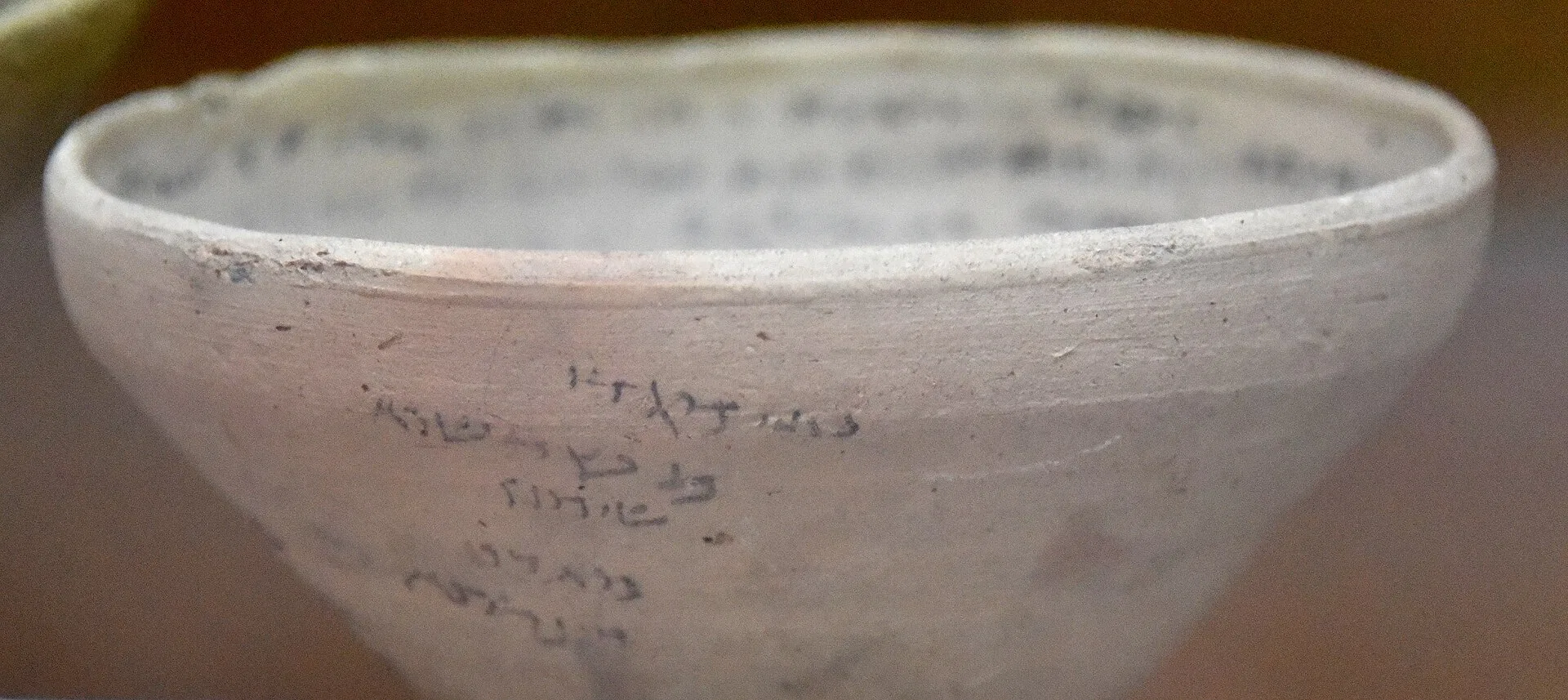
Among the most unusual artefacts connected with Iraq are incantation bowls, sometimes called magic bowls. These simple-looking pottery vessels were produced in late antiquity, especially between roughly the sixth and eighth centuries CE, in communities across Mesopotamia. Their surfaces were covered with spiral inscriptions in languages including Aramaic and Mandaic, often containing protective formulas against illness, misfortune and harmful supernatural beings.[British Museum]britishmuseum.orgBritish Museumincantation bowl | British MuseumBritish Museumincantation bowl | British Museum
The strange appearance of these objects has helped give them a lasting reputation. A modern visitor might see a plain clay bowl covered in mysterious writing, but its original owner may have regarded it as a spiritual defence device. Some examples contain references to demons and protective rituals, showing that ideas about unseen threats were part of everyday life rather than only elite religious practice.[British Museum]britishmuseum.orgBritish Museumincantation bowl | British MuseumBritish Museumincantation bowl | British Museum
Their interpretation requires care. Museums and scholars generally treat them as evidence of historical beliefs and religious practice, not proof that magic worked. Their importance lies in what they reveal about how ancient communities understood sickness, fear, protection and the relationship between humans and the unseen world.
The objects that feel like fantasy but are historically real
Gilgamesh tablets and the world’s oldest epic traditions
Few collections in Iraq feel more connected to myth than the tablets of the Epic of Gilgamesh. The story includes legendary figures, a heroic king, a search for immortality and encounters with extraordinary beings, but the surviving tablets are archaeological documents rather than fantasy literature.
The Sulaymaniyah Museum holds important cuneiform material, including a fragment connected with Tablet V of the Epic of Gilgamesh. Research on this tablet helped scholars better understand missing sections of the ancient poem, including parts of the episode involving Gilgamesh and Enkidu’s journey to the Cedar Forest.[Wikipedia]WikipediaSulaymaniyah MuseumSulaymaniyah Museum
For visitors interested in unusual collections, this is one of Iraq’s most compelling examples because it blurs the line between mythology and archaeology. A story involving monsters and heroic adventures survives not through oral tradition alone, but through fragile pieces of clay impressed with ancient writing.
Ancient creatures, demons and symbolic monsters
Mesopotamian collections contain many beings that appear surprisingly familiar to modern audiences: winged creatures, hybrid animals, protective spirits and terrifying figures. These were not “cryptids” in the modern sense, but symbolic beings that represented divine power, danger or protection.
Objects connected with figures such as Humbaba, the guardian of the Cedar Forest in the Gilgamesh tradition, show how ancient Iraq used imagined creatures to explore ideas about wilderness, kingship and human limits. Small amulets depicting or referencing such beings demonstrate that mythological figures could move from literature into personal protective objects.[British Museum]britishmuseum.orgBritish Museumamulet | British MuseumBritish Museumamulet | British Museum
Unusual archives beyond traditional museums
Yazidi heritage and the recovery of lost memory
Iraq’s strange and distinctive collections are not limited to ancient objects. Modern archives also preserve unusual forms of cultural memory, particularly among communities whose heritage has been threatened by conflict.
A notable example is the rediscovery of photographs documenting Yazidi life in northern Iraq during archaeological work in the 1930s. These images, preserved in a museum archive outside Iraq, became an unexpected historical collection showing ceremonies, homes and everyday life before later destruction and displacement. The archive demonstrates how photographs can become cultural rescue objects, preserving memories of places and traditions that were damaged or lost.[AP News]apnews.comThese images, part of a 2,000-photo archive at the University of Pennsylvania Museum of Archaeology and Anthropology, document daily life…
This type of collection is important within Iraq’s curiosity landscape because it changes the idea of what a “strange collection” can be. A museum curiosity does not have to be a bizarre object; it can also be a forgotten archive that suddenly reveals a hidden world.

What makes Iraq’s unusual collections different
Iraq’s curiosity culture is unusual because the country’s most extraordinary objects are not generally presented as entertainment. They are connected to questions that humans have asked for thousands of years:
- How can people protect themselves from invisible dangers?
- Where is the boundary between myth and history?
- How do societies explain illness, death and uncertainty?
- Why do stories about monsters and heroes survive for millennia?
- How can objects preserve identities after conflict?
The Iraq Museum and related collections also carry a difficult modern history. War, looting and illegal antiquities trafficking have damaged many heritage institutions. The National Museum suffered major losses after the 2003 invasion, with thousands of objects reported stolen, although recovery efforts have returned some items and improved protection measures.[UNESCO]unesco.orgArchaeological museums in Iraq | UNESCODecember 7, 2023…
This history adds another layer to Iraq’s unusual collections: they are not only records of ancient imagination but also survivors of modern upheaval.
Visiting Iraq’s strange-history landscape today
For travellers interested in unusual museums and collections, Iraq offers a more archaeological and cultural experience than a traditional “oddities museum” route.
The most significant places to explore include:
- The Iraq Museum, Baghdad — the essential destination for Mesopotamian archaeology, including objects connected with ancient writing, ritual life and mythology.[sbah.gov.iq]sbah.gov.iqMuseums | SBAHMuseums | SBAH
- Sulaymaniyah Museum, Sulaymaniyah — important for cuneiform collections and discoveries connected with Mesopotamian literature.[Wikipedia]WikipediaSulaymaniyah MuseumSulaymaniyah Museum
- Regional heritage sites and archives — where religious traditions, community histories and archaeological discoveries reveal less familiar aspects of Iraqi culture.[AP News]apnews.comThese images, part of a 2,000-photo archive at the University of Pennsylvania Museum of Archaeology and Anthropology, document daily life…
The most remarkable “curiosities” of Iraq are therefore not staged mysteries but authentic traces of humanity’s oldest attempts to explain the unknown. From demon-protection bowls to legendary epics preserved on clay tablets, Iraq’s collections show a world where history, mythology, religion and everyday life were closely connected.

Amazon book picks
Further Reading
Books and field guides related to Where Iraq Preserves Humanity's Oldest Mysteries. Use these as the next step if you want deeper reading beyond the article.
The Thing about Museums
Preface / Sandra Dudley -- 1. Introduction: museums and things / Sandra Dudley -- Part I: Objects and their creation in the museum. Intro...
The Contribution of Joseph Schumpeter to Economics
This collection constitutes an examination of Schumpeter's legacy that is wider than any yet attempted. As one of the key economists of t...
A History of Iraq
First published 2000. Subjects: History, Historia, Geschichte, Iraq, history, Histoire.
eBay marketplace picks
Marketplace Samples
Live-tested eBay searches with available results related to this page.
Selected fromIraq art print oneBay.co.uk.
Current eBay listing
Erbil Iraq City Map Typography Framed Wall Art Print 12x16 In

Current eBay listing
Baghdad Iraq Coordinates World City Travel Quote Wall Art Print
Current eBay listing
Euphrates River Iraq Art Framed Wall Art Poster Canvas Print Picture
Endnotes
1.
Source: theiraqmuseum.com
Title: About the Museum | The Iraq Museum
Link:https://www.theiraqmuseum.com/pages/about-the-museum.html
2.
Source: sbah.gov.iq
Title: Museums | SBAH
Link:https://sbah.gov.iq/museums/
3.
Source: Wikipedia
Title: Sulaymaniyah Museum
Link:https://en.wikipedia.org/wiki/Sulaymaniyah_Museum
4.
Source: unesco.org
Link:https://www.unesco.org/en/museums/iraq
Source snippet
Archaeological museums in Iraq | UNESCODecember 7, 2023...
Published: December 7, 2023
5.
Source: unesco.org
Title: UNESC O supports Iraq National Museum to protect and preserve its
Link:https://www.unesco.org/en/articles/unesco-supports-iraq-national-museum-protect-and-preserve-its-collection
6.
Source: whc.unesco.org
Link:https://whc.unesco.org/en/tentativelists/6467
7.
Source: unesco.org
Title: re opening national museum bagdad
Link:https://www.unesco.org/en/articles/re-opening-national-museum-bagdad
8.
Source: theiraqmuseum.com
Link:https://www.theiraqmuseum.com/pages/exhibitions-and-publications.html
9.
Source: theiraqmuseum.com
Link:https://www.theiraqmuseum.com/index.html
10.
Source: sbah.gov.iq
Link:https://sbah.gov.iq/
11.
Source: britishmuseum.org
Title: British Museumamulet | British Museum
Link:https://www.britishmuseum.org/collection/object/W
12.
Source: britishmuseum.org
Title: British Museumamulet | British Museum
Link:https://www.britishmuseum.org/collection/object/W
13.
Source: britishmuseum.org
Title: British Museumincantation bowl | British Museum
Link:https://www.britishmuseum.org/collection/object/W
14.
Source: britishmuseum.org
Title: British Museumincantation bowl | British Museum
Link:https://www.britishmuseum.org/collection/object/W
15.
Source: britishmuseum.org
Title: British Museumincantation bowl | British Museum
Link:https://www.britishmuseum.org/collection/object/W
16.
Source: apnews.com
Link:https://apnews.com/article/55a68cc4e5644f868411366755252e3b
Source snippet
These images, part of a 2,000-photo archive at the University of Pennsylvania Museum of Archaeology and Anthropology, document daily life...
17.
Source: britishmuseum.org
Link:https://www.britishmuseum.org/collection/object/W
18.
Source: britishmuseum.org
Link:https://www.britishmuseum.org/collection/object/W
19.
Source: britishmuseum.org
Link:https://www.britishmuseum.org/collection/object/W
20.
Source: britishmuseum.org
Link:https://www.britishmuseum.org/collection/object/W
21.
Source: britishmuseum.org
Link:https://www.britishmuseum.org/collection/search?page=2&place=Iraq&sort=object_name__asc&view=grid
22.
Source: britishmuseum.org
Link:https://www.britishmuseum.org/collection/object/W
23.
Source: britishmuseum.org
Link:https://www.britishmuseum.org/collection/object/W
24.
Source: britishmuseum.org
Link:https://www.britishmuseum.org/collection/object/W
25.
Source: britishmuseum.org
Link:https://www.britishmuseum.org/collection/object/W
26.
Source: centroscavitorino.it
Title: The Iraq Museum in Baghdad
Link:https://www.centroscavitorino.it/en/archaeology-in-conflict-zones/the-iraq-museum-in-baghdad/
27.
Source: collections.penn.museum
Link:https://collections.penn.museum/collections/object/275285
28.
Source: museumofcuriosities.ie
Link:https://museumofcuriosities.ie/about/
Additional References
29.
Source: elbarlament.org
Title: Archiving the Yezidi culture – Iraq and Syria
Link:https://elbarlament.org/projects/archiving-yezidi-culture-iraq-and-syria/
Source snippet
cultures of democracyJanuary 14, 2026 — * # Archiving the Yezidi culture – Iraq and Syria * Country: Iraq and Syria (Al-Hasakah / Northea...
Published: January 14, 2026
30.
Source: youtube.com
Link:http://www.youtube.com/watch?v=szFjxmY7jQA
Source snippet
Iraq Museum Baghdad collection Baghdad Museum, Walking Tour| Iraq 2025 Arab Diaries...
31.
Source: youtube.com
Title: The Entire History of the Akkadians // Ancient Mesopotamia Documentary
Link:http://www.youtube.com/watch?v=Q-mAWItV2q0
Source snippet
The Complete and Concise History of the Sumerians and Early Bronze Age Mesopotamia (7000-2000 BC)...
32.
Source: youtube.com
Title: Iraq’s National Museum reopens in Baghdad
Link:http://www.youtube.com/watch?v=n-ZlQleq3bQ
Source snippet
The Entire History of the Akkadians // Ancient Mesopotamia Documentary...
33.
Source: alriyad.iq
Link:https://www.alriyad.iq/english/our-portfolio/iraq-national-museum
34.
Source: commons.wikimedia.org
Link:https://commons.wikimedia.org/wiki/File%3AClay_tablet_of_Gilgamesh_and_Aga._Old_Babylonian_period%2C_from_southern_Iraq._Sulaymaniyah_Museum%2C_Iraqi_Kurdistan.jpg
35.
Source: commons.wikimedia.org
Link:https://commons.wikimedia.org/wiki/File%3AClay_tablet%2C_Gilgamesh_and_Aga._Old_Babylonian_period%2C_from_southern_Iraq._Sulaymaniyah_Museum%2C_Iraqi_Kurdistan.jpg
36.
Source: commons.wikimedia.org
Link:https://commons.wikimedia.org/wiki/File%3AFragment_of_Tablet_II_of_the_Epic_of_Gilgamesh._Old-Babylonian_period%2C_from_southern_Iraq._Sulaymaniyah_Museum%2C_Iraqi_Kurdistan.jpg
37.
Source: commons.wikimedia.org
Link:https://commons.wikimedia.org/wiki/File%3AReverse_side_of_the_newly_discovered_tablet_V_of_the_Epic_of_Gilgamesh._It_dates_back_to_the_old_Babylonian_period%2C_2003-1595_BCE_and_is_currently_housed_in_the_Sulaymaniyah_Museum%2C_Iraq.jpg
38.
Source: commons.wikimedia.org
Link:https://commons.wikimedia.org/wiki/File%3ATablet_V_of_the_Epic_of_Gligamesh._Newly_discovered._The_Sulaymaniyah_Museum%2C_Iraq..JPG