Within UAE Curiosities
Why UAE Coffee Traditions Became Museum Pieces
Coffee Museum Dubai shows how brewing tools and serving traditions became records of Emirati hospitality and social life.
On this page
- Historic coffee equipment and preparation
- Hospitality rituals across Emirati society
- Everyday objects as cultural collections
Page outline Jump by section
Introduction
Al Ain’s archaeological collections reveal a version of the United Arab Emirates that existed long before skyscrapers, oil wealth and modern cities: a desert world of farming communities, craftsmen, traders and engineers who learned how to build permanent settlements in a difficult environment. The collections at Al Ain Museum bring together objects from ancient sites across the oasis region, including pottery, jewellery, tools, weapons and burial finds that show how people lived, traded and adapted over thousands of years.[alainmuseum.ae]alainmuseum.aeLearn About Us | History & Heritage | Al Ain MuseumLearn About Us | History & Heritage | Al Ain Museum
What makes Al Ain’s archaeology especially unusual within the UAE’s heritage landscape is the way ordinary objects connect to a much larger story. A decorated vessel, copper dagger or gold ornament is not simply an old artefact; it is evidence of agriculture, craft production, social status and long-distance contact across Arabia and the Gulf. The surrounding archaeological landscape — including Hili, Jebel Hafit, Bidaa Bint Saud and the oasis areas — preserves the physical remains of communities that transformed a desert environment into a place where people could settle permanently.[UNESCO World Heritage Centre]whc.unesco.orgUNESCO World Heritage CentreCultural Sites of Al Ain (Hafit, Hili, Bidaa Bint Saud and Oases Areas) - UNESCO World Heritage CentreJune 27…
Bronze Age artefacts and desert settlements
The objects behind Al Ain’s ancient story
Al Ain’s archaeological collections are built around a simple but powerful idea: desert life was never isolated. Thousands of years ago, communities in the region developed technologies and trading links that connected them with wider Bronze Age networks. The finds displayed in Al Ain Museum come from archaeological sites around the oasis and include objects from periods stretching from prehistoric times to the modern era.[Abu Dhabi Culture & Tourism]dct.gov.aeAbu Dhabi Culture & Tourism Al Ain MuseumAbu Dhabi Culture & TourismAl Ain Museum - Department of Culture and Tourism Abu DhabiJanuary 16, 2026…
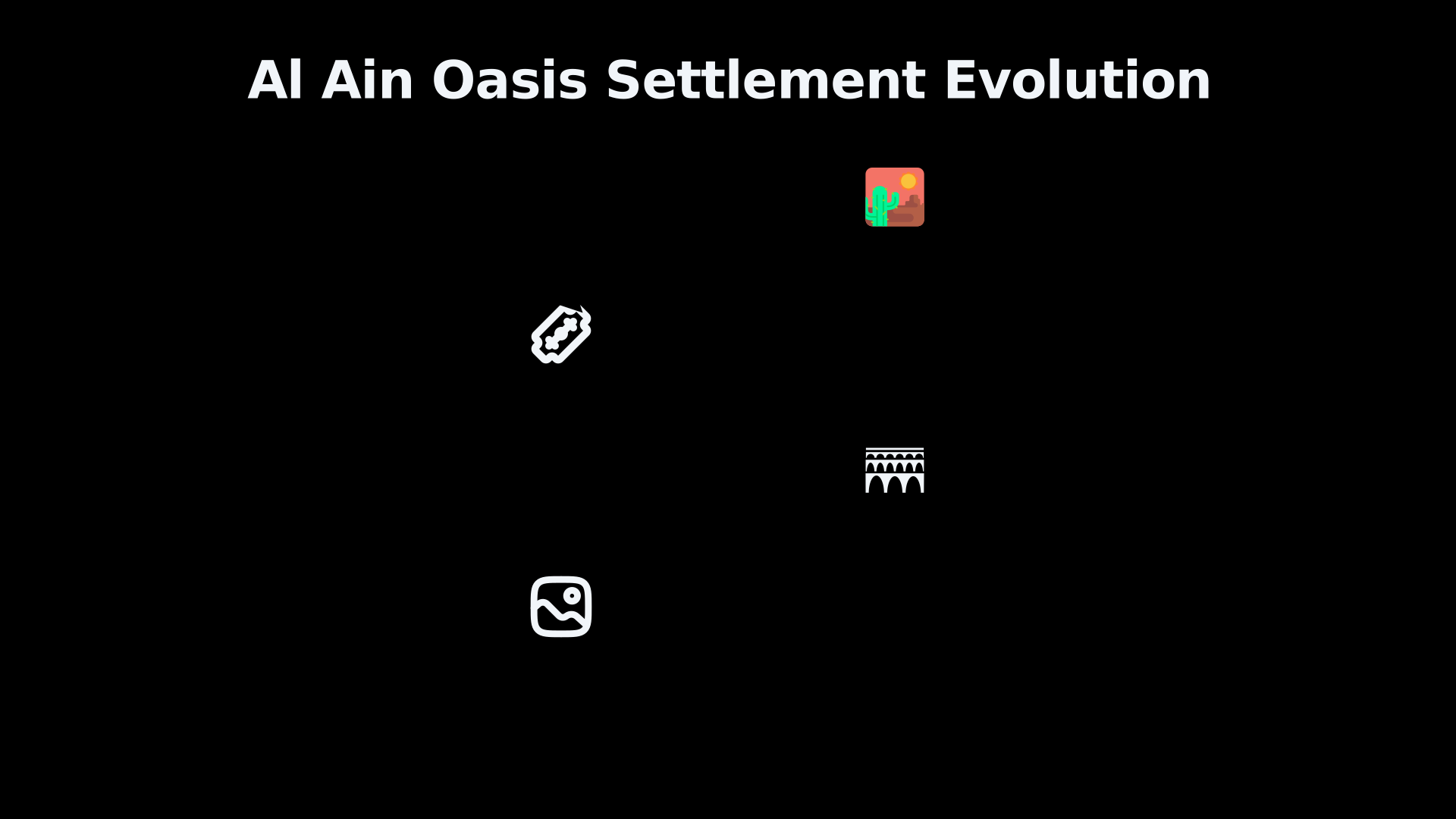
Among the most striking pieces are Bronze Age objects associated with the Umm an-Nar culture, which flourished in parts of southeastern Arabia roughly between 2500 and 2000 BCE. Finds from Hili include decorated stone vessels, ceramics, seals and other objects that point to skilled craft traditions and organised communities. Archaeological evidence from Hili shows that settlements existed alongside large communal tombs, suggesting societies with complex social structures rather than temporary desert camps.[Abu Dhabi Culture & Tourism]dct.gov.aeAbu Dhabi Culture & Tourism Hili Archaeological ParkAbu Dhabi Culture & TourismHili Archaeological Park - Department of Culture and Tourism Abu DhabiJuly 15, 2019…
The famous Hili Grand Tomb provides one of the clearest examples of this complexity. Built around 2000 BCE, the circular stone structure was used for burials connected with nearby settlements and contains carved decoration showing human and animal figures. Rather than being mysterious monuments standing alone in the landscape, these tombs form part of a wider system of settlement, agriculture and exchange.[Abu Dhabi Culture & Tourism]dct.gov.aeAbu Dhabi Culture & Tourism Hili Archaeological ParkAbu Dhabi Culture & TourismHili Archaeological Park - Department of Culture and Tourism Abu DhabiJuly 15, 2019…
What the artefacts reveal about daily life
The value of Al Ain’s collections lies less in individual “treasures” and more in what groups of objects reveal together. Pottery can show food storage and domestic practices; tools indicate craft skills and agriculture; jewellery suggests personal identity and social differences; and imported materials reveal connections beyond the oasis.
The region’s ancient inhabitants also developed ways to manage water and farming in an arid climate. At Hili, archaeological remains provide evidence of early agriculture, including settlement features dating back around 5,000 years. These discoveries challenge the common assumption that ancient desert communities were constantly mobile. Instead, they show a long history of adaptation through farming, water management and planned settlement.[Abu Dhabi Culture & Tourism]dct.gov.aeAbu Dhabi Culture & Tourism Hili Archaeological ParkAbu Dhabi Culture & TourismHili Archaeological Park - Department of Culture and Tourism Abu DhabiJuly 15, 2019…
Fort, oasis and museum storytelling
A collection where the landscape is part of the exhibit
Al Ain Museum is unusual because its story does not stop at display cases. The museum sits within a historic setting connected to Al Ain Oasis and includes Sultan Fort, a mudbrick fort built in 1910. This combination of archaeological objects, historic architecture and living landscape creates a layered heritage experience: visitors move from ancient settlement evidence to later oasis communities and regional history.[alainmuseum.ae]alainmuseum.aeLearn About Us | History & Heritage | Al Ain MuseumLearn About Us | History & Heritage | Al Ain Museum
The museum was founded in 1969 as the UAE’s first purpose-built museum, with the aim of preserving the archaeology and history of Al Ain. Its collections reflect the region’s long timeline, from Stone Age evidence through later periods of local history.[alainmuseum.ae]alainmuseum.aeLearn About Us | History & Heritage | Al Ain MuseumLearn About Us | History & Heritage | Al Ain Museum
Recent archaeological work around the museum itself has added another layer to this story. Excavations during restoration and expansion work uncovered evidence of earlier water systems, including Iron Age aflaj (underground irrigation channels), later wells and other features connected with the development of the oasis landscape. These discoveries show that even the ground beneath a modern museum can contain new evidence about how people shaped desert environments.[aflajdiscoveries.ae]aflajdiscoveries.aeAflaj DiscoveriesAl Ain Museum: an ancient landscape beneath the carpark…

Why the oasis matters as much as the objects
The archaeology of Al Ain cannot be separated from water. The city’s ancient communities survived because they developed ways to capture and distribute scarce resources. The aflaj irrigation systems linked mountain water sources with agricultural land and helped support settlements over long periods.
UNESCO’s recognition of the Cultural Sites of Al Ain highlights this relationship between objects, buildings and environment. The World Heritage area includes Bronze and Iron Age tombs, settlements, wells, irrigation systems and oasis landscapes, showing how communities gradually moved from earlier forms of subsistence towards more permanent settlement.[UNESCO World Heritage Centre]whc.unesco.orgUNESCO World Heritage CentreCultural Sites of Al Ain (Hafit, Hili, Bidaa Bint Saud and Oases Areas) - UNESCO World Heritage CentreJune 27…
For visitors interested in unusual collections, this is what makes Al Ain distinctive. The curiosity comes not from a single strange artefact but from seeing how a collection of everyday objects can reconstruct an entire way of life in one of the world’s harshest environments.
Trade networks behind early objects
Ancient desert communities connected to a wider world
The artefacts of Al Ain also reveal that the desert was part of an international network rather than a remote backwater. Archaeological research at Hili has identified evidence of trade connections with Mesopotamia and other cultures around the Arabian Gulf. Imported materials and specialised objects show that communities in the region participated in wider economic and cultural exchanges during the Bronze Age.[abudhabiculture.ae]abudhabiculture.aeThe Bronze Age Sites of HiliThe Bronze Age Sites of Hili
This trading role helps explain why objects from Al Ain are so varied. A copper object may reflect local production or connections with metal sources elsewhere; decorated vessels may reveal shared artistic traditions; and seals may indicate systems of exchange and administration. The collection therefore tells two stories at once: how people lived locally and how they interacted across a much larger region.
From burial objects to evidence of identity
Some of Al Ain’s most memorable finds come from tombs, where objects were preserved alongside human remains. Gold ornaments from Al Qattara Tomb, decorated vessels from Hili and other burial goods show that ancient communities invested meaning in personal items and funerary traditions.[alainmuseum.ae]alainmuseum.aeAl Ain Museum | Bringing the UAE’s Story to LifeAl Ain Museum | Bringing the UAE’s Story to Life
Archaeologists must interpret these objects carefully. A richly decorated object does not automatically reveal the exact beliefs of its owner, and reconstructions of ancient life depend on comparing many types of evidence: buildings, tools, human remains, environmental data and trade materials. This cautious approach is important because Al Ain’s archaeology is valuable precisely because it allows researchers to ask questions rather than simply display ancient objects as curiosities.
Why Al Ain’s ancient collections matter today
Al Ain’s archaeological collections offer one of the clearest reminders that the UAE’s history did not begin with modern development. They preserve evidence of thousands of years of innovation in farming, architecture, trade and water management.[UNESCO World Heritage Centre]whc.unesco.orgUNESCO World Heritage CentreCultural Sites of Al Ain (Hafit, Hili, Bidaa Bint Saud and Oases Areas) - UNESCO World Heritage CentreJune 27…
Within the wider landscape of unusual collections in the UAE, Al Ain’s archaeology stands out because it turns ordinary objects into historical discoveries. A jar, tool or piece of jewellery becomes a clue to forgotten communities that built settlements, traded across regions and created sustainable systems in the desert.
Rather than presenting the past as a lost mystery, Al Ain’s museums and archaeological sites show something more remarkable: that ancient desert societies already possessed the knowledge, organisation and creativity needed to thrive.[alainmuseum.ae]alainmuseum.aeLearn About Us | History & Heritage | Al Ain MuseumLearn About Us | History & Heritage | Al Ain Museum
Amazon book picks
Further Reading
Books and field guides related to Why UAE Coffee Traditions Became Museum Pieces. Use these as the next step if you want deeper reading beyond the article.
The World Atlas of Coffee
Coffee has never been better, or more interesting, than it is today. Coffee producers have access to more varieties and techniques than e...
The Taste of Empire
A history of the British Empire told through twenty meals eaten around the world In The Taste of Empire, acclaimed historian Lizzie Colli...
Coffee: A Dark History
Rating: 3.5/5 from 42 Google Books ratings
Wild, a coffee trader and historian delivers a rollicking history of the most valuable legally traded commodity in the world after oil, a...
eBay marketplace picks
Marketplace Samples
Live-tested eBay searches with available results related to this page.
Selected fromMiddle East collectible oneBay.co.uk.


Endnotes
1.
Source: alainmuseum.ae
Title: Learn About Us | History & Heritage | Al Ain Museum
Link:https://www.alainmuseum.ae/en/the-museum
2.
Source: alainmuseum.ae
Title: Al Ain Museum | Bringing the UAE’s Story to Life
Link:https://www.alainmuseum.ae/en
3.
Source: whc.unesco.org
Link:https://whc.unesco.org/en/list/1343/
Source snippet
UNESCO World Heritage CentreCultural Sites of Al Ain (Hafit, Hili, Bidaa Bint Saud and Oases Areas) - UNESCO World Heritage CentreJune 27...
4.
Source: abudhabiculture.ae
Title: The Bronze Age Sites of Hili
Link:https://abudhabiculture.ae/en/Cultural-Resources/Publications/The-Bronze-Age-Sites-of-Hili
5.
Source: aflajdiscoveries.ae
Title: Aflaj Discoveries
Link:https://www.aflajdiscoveries.ae/publications/al-ain-museum-an-ancient-landscape-beneath-the-carpark
Source snippet
Al Ain Museum: an ancient landscape beneath the carpark...
6.
Source: aflajdiscoveries.ae
Title: Aflaj Discoveries
Link:https://www.aflajdiscoveries.ae/ar/discoveries/al-ain-museum
Source snippet
Al Ain Museum...
8.
Source: whc.unesco.org
Link:https://whc.unesco.org/fr/list/1343/
9.
Source: whc.unesco.org
Link:https://whc.unesco.org/en/list/1343/maps/
10.
Source: whc.unesco.org
Link:https://whc.unesco.org/en/decisions/4295/
12.
Source: whc.unesco.org
Link:https://whc.unesco.org/fr/list/1343/cartes/
14.
Source: alainmuseum.ae
Title: Plan Your Experience
Link:https://www.alainmuseum.ae/en/visit
15.
Source: alainmuseum.ae
Link:https://www.alainmuseum.ae/en/al-ain
16.
Source: aflajdiscoveries.ae
Title: Aflaj Discoveries
Link:https://www.aflajdiscoveries.ae/publications/the-origin-and-development-of-the-oasis-landscape-of-al-ain-uae
17.
Source: aflajdiscoveries.ae
Title: Aflaj Discoveries
Link:https://www.aflajdiscoveries.ae/discoveries/al-ain-museum?c632ca1e_page=1
18.
Source: aflajdiscoveries.ae
Title: Aflaj Discoveries
Link:https://www.aflajdiscoveries.ae/publications/the-oman-border-fence-project-2021-a-journey-through-the-hydraulic-agricultural-and-funerary-landscapes-of-al–ayn?4a7721e1_page=2
19.
Source: abudhabiculture.ae
Link:https://abudhabiculture.ae/en/abu-dhabi-museums/al-ain-museum
20.
Source: abudhabiculture.ae
Link:https://abudhabiculture.ae/en/cultural-sites/historic-buildings-and-cultural-landscapes/al-ain-oases
21.
Source: abudhabiculture.ae
Link:https://abudhabiculture.ae/en/cultural-heritage/tangible/cultural-landscapes-and-oases/al-ain-oases
22.
Source: abudhabiculture.ae
Link:https://abudhabiculture.ae/en/Cultural-Heritage/Tangible/UNESCO-World-Heritage-Site/Hili-Sites
23.
Source: abudhabiculture.ae
Link:https://abudhabiculture.ae/en/cultural-heritage/tangible/archaeology/umm-an-nar
24.
Source: abudhabiculture.ae
Link:https://abudhabiculture.ae/en/cultural-resources/publications/aflaj-al-ain
25.
Source: abudhabiculture.ae
Link:https://abudhabiculture.ae/en/Cultural-Heritage/Tangible/UNESCO-World-Heritage-Site/Bidaa-Bint-Saud
26.
Source: dct.gov.ae
Title: Abu Dhabi Culture & Tourism Al Ain Museum
Link:https://dct.gov.ae/en/what.we.do/culture/museums/al.ain.national.muesum.aspx
Source snippet
Abu Dhabi Culture & TourismAl Ain Museum - Department of Culture and Tourism Abu DhabiJanuary 16, 2026...
Published: January 16, 2026
27.
Source: dct.gov.ae
Title: Abu Dhabi Culture & Tourism Hili Archaeological Park
Link:https://dct.gov.ae/en/what.we.do/culture/tangible.intangible.heritage/hili.archaeological.park.aspx
Source snippet
Abu Dhabi Culture & TourismHili Archaeological Park - Department of Culture and Tourism Abu DhabiJuly 15, 2019...
Published: July 15, 2019
28.
Source: dct.gov.ae
Link:https://dct.gov.ae/en/media.centre/news/major.new.abu.dhabi.archaeological.discoveries.reveal.sites.and.artefacts.from.iron.age.and.pre.islamic.period.aspx
29.
Source: dct.gov.ae
Title: Bida bint Saud
Link:https://dct.gov.ae/en/what.we.do/culture/tangible.intangible.heritage/bida.bint.saud.aspx
30.
Source: culturalmap.gov.ae
Link:https://culturalmap.gov.ae/en/facilities/jebel-hafeet-tombs
31.
Source: culturalmap.gov.ae
Link:https://culturalmap.gov.ae/en/facilities/al-ain-museum
32.
Source: culturalmap.gov.ae
Link:https://culturalmap.gov.ae/en/facilities/hili-archeoligical-park
33.
Source: visitalain.ae
Link:https://visitalain.ae/en/experiences/culture/al-ain-national-museum
34.
Source: visitalain.ae
Link:https://visitalain.ae/en/experiences/history/bidaa-bint-saud
35.
Source: visitabudhabi.ae
Link:https://visitabudhabi.ae/en/things-to-do/culture/heritage/bidaa-bint-saud
36.
Source: visitabudhabi.ae
Title: bidaa bint saud
Link:https://visitabudhabi.ae/pl/things-to-do/culture/heritage/bidaa-bint-saud
Additional References
37.
Source: camelmaps.org
Link:https://camelmaps.org/place/7786/
Source snippet
🏛️ Cultural Sites of Al Ain (Hafit, Hili, Bidaa Bint Saud and Oases Areas): Jebel Hafit Desert Park — camelMapsApril 10, 2026 — 🏛️ CULTUR...
Published: April 10, 2026
38.
Source: youtube.com
Title: Arabic coffee – Emirati Gahwa | Intangible cultural heritage
Link:https://www.youtube.com/watch?v=-ErVbR_Sk8I
Source snippet
Old Dubai City Tour - Al Fahidi, Coffee Museum, Souks, Abra Ride, Vegetarian Emirati Brunch...
39.
Source: youtube.com
Title: Exploring the Coffee Museum Dubai | A Journey Through Coffee History and Culture
Link:https://www.youtube.com/watch?v=Lx1235fY3Wg
Source snippet
Going to Dubai Coffee Museum! Al Fahidi Historical District...
40.
Source: youtube.com
Title: Going to Dubai Coffee Museum! Al Fahidi Historical District
Link:https://www.youtube.com/watch?v=HueWxif4SRw
Source snippet
Dubai's Coffee Traditions And Emirati Fine Dining Culture...
41.
Source: youtube.com
Title: Dubai’s Coffee Traditions And Emirati Fine Dining Culture
Link:https://www.youtube.com/watch?v=HdjgcRPGyjg
Source snippet
Arabic coffee – Emirati Gahwa | Intangible cultural heritage...
42.
Source: researchgate.net
Link:https://www.researchgate.net/publication/382529489_Rewriting_the_end_of_the_Early_Bronze_Age_in_the_United_Arab_Emirates_through_the_anthropological_and_artefactual_evaluation_of_two_collective_Umm_an-Nar_graves_at_Hili_eastern_region_of_Abu_Dhabi
43.
Source: arsprogetti.org
Link:https://arsprogetti.org/project.asp?idproject=657
44.
Source: mediaoffice.abudhabi
Link:https://www.mediaoffice.abudhabi/en/arts-culture/department-of-culture-and-tourism-abu-dhabi-discovers-first-major-iron-age-cemetery-in-al-ain-region/
45.
Source: mediaoffice.abudhabi
Link:https://www.mediaoffice.abudhabi/en/arts-culture/department-of-culture-and-tourism-abu-dhabi-reveals-new-archaeological-discoveries-in-the-emirate/
46.
Source: mediaoffice.abudhabi
Link:https://www.mediaoffice.abudhabi/en/arts-culture/department-of-culture-and-tourism-abu-dhabi-to-reopen-al-ain-museum-to-public-on-24-october-following-extensive-redevelopment/