Where Haiti Keeps Its Strangest Stories
Haiti does not have a large, clearly signposted circuit of “weird museums” in the commercial tourist sense.
Page outline Jump by section
Introduction
The most important visitor-facing sites include the Bureau National d’Ethnologie, the National Pantheon Museum and the Ogier-Fombrun Museum. Alongside them stands the extraordinary Marianne Lehmann collection of roughly 3,000 Vodou-related objects, internationally exhibited but never securely established as a conventional permanent public museum in Haiti. Political instability, earthquake damage and armed violence have repeatedly disrupted access, conservation and even the physical survival of collections. Anyone planning a visit must therefore treat older opening information as provisional rather than dependable.[gouv.ht]bne.gouv.htle public à connaitre un fragment desBureau National d'États CivilsBureau National d'Ethnologie: AccueilBureau d'Ethnologie marque une étape décisive dans la construction de…
Haiti’s closest thing to a museum of the uncanny
The Bureau National d’Ethnologie in Port-au-Prince is the clearest starting point for readers interested in Haitian folklore, ritual objects and unusual belief traditions. Founded in 1941 by the Haitian writer and ethnologist Jacques Roumain, the institution is responsible for studying, preserving and presenting both material and intangible heritage. Its displays have included Vodou artefacts and artworks, information drawn from anthropological research and material relating to Indigenous Taíno and African cultural history. Visitor accounts indicate that much of the interpretation has traditionally been in French.[gouv.ht]bne.gouv.htle public à connaitre un fragment desBureau National d'États CivilsBureau National d'Ethnologie: AccueilBureau d'Ethnologie marque une étape décisive dans la construction de…
What makes the collection unusual is not simply the appearance of individual objects. Vodou drums, vessels, figures, ritual designs and devotional artworks belong to a living religious world rather than an extinct “primitive” culture. They can carry sacred, social or protective meanings that are lost when they are displayed only as exotic curiosities. The Bureau’s importance lies in placing such material within Haitian intellectual and historical frameworks rather than treating it as evidence of superstition.
This distinction matters because Haiti has long been represented abroad through distorted images of sorcery, zombies and sinister ceremonies. A responsible ethnographic display can show that Vodou is a complex religious tradition shaped by African inheritances, Catholic imagery, the experience of slavery and Haiti’s own history. A poor display, by contrast, can reproduce the horror-film stereotype. The Bureau’s declared mission of research and cultural conservation gives it greater authority than tourist attractions built around theatrical shocks, although the quality and extent of visitor interpretation may vary.[gouv.ht]bne.gouv.htle public à connaitre un fragment desBureau National d'États CivilsBureau National d'Ethnologie: AccueilBureau d'Ethnologie marque une étape décisive dans la construction de…
The Bureau should not be assumed to operate like a polished European museum with predictable hours, multilingual labels and a complete online catalogue. Haiti’s present security crisis has weakened public institutions and made movement around Port-au-Prince exceptionally dangerous. Access must be confirmed through current official or locally reliable information, not through an old travel listing.[un.dk]un.dkhaiti explained why the crisis is deepening and what comes nextHaiti explained: why the crisis is deepeningHaiti is entering 2026 facing one of the most complex crises in its recent history. On Wednes…
The Marianne Lehmann collection
The most famous unusual collection assembled in Haiti is the Marianne Lehmann collection. Lehmann, who was born in Switzerland and settled in Haiti, began collecting Vodou and Vodou-related objects in the 1970s. Over several decades the collection grew to about 3,000 pieces, ranging from decorated bottles and ritual vessels to flags, mirrors, crosses, sculpted figures and large, unsettling human-shaped objects associated with secret societies.[smb.museum]smb.museumStaatliche Museen zu BerlinVodou - Art and Cult from Haiti18 May 2010 — Despite being poorly sheltered, the Lehmann collection survived t…
Its best-known objects are the so-called Bizango figures. These may be constructed from wood, cloth, rope, mirrors, chains, animal material and repurposed manufactured objects. Some have skull-like heads, staring mirrored eyes or bodies bound in cords. Seen without explanation, they resemble props from a supernatural film. Within their cultural setting, however, they are linked to secretive forms of social authority, protection, judgement and spiritual power. Researchers have emphasised that their meaning changes as they move from ritual settings into private collections, international exhibitions and the art market.[digitalcommons.conncoll.edu]digitalcommons.conncoll.eduOpen source on conncoll.edu.
The collection raises difficult questions about ownership and consent. Some objects may originally have been made for restricted or initiated audiences rather than for public display. Others entered circulation when religious communities or individual owners needed money, abandoned a shrine or replaced ritual material. Once placed under museum lighting, an object may be presented as sculpture even though practitioners understand it as spiritually active, dangerous, protective or incomplete without ceremony.
International museums have used the collection to challenge crude images of Haitian religion. A major 2010 Berlin exhibition presented about 350 objects and concentrated particularly on Bizango material that had rarely been visible outside initiated circles. Exhibitions in Europe and Canada helped establish the collection as an important record of Haitian religious creativity, but they also shifted the centre of interpretation away from Haiti itself.[Staatliche Museen zu Berlin]smb.museumStaatliche Museen zu BerlinVodou - Art and Cult from Haiti18 May 2010 — Despite being poorly sheltered, the Lehmann collection survived t…
For years there were plans to create a permanent museum in Haiti, yet the collection was largely stored under private conditions rather than housed in a purpose-built, reliably accessible institution. It survived the 2010 earthquake with comparatively little damage despite inadequate shelter, after which Smithsonian-linked conservation specialists assisted with its care. Sources have repeatedly described the proposed museum as an ambition rather than a completed public attraction. It is therefore misleading to present the collection as a conventional museum that travellers can simply visit.[theguardian.com]theguardian.comThe Guardian An unlikely crusader fights to save the voodoo soul of HaitiThe Guardian An unlikely crusader fights to save the voodoo soul of Haiti
Revolutionary relics that feel like curiosities
The Musée du Panthéon National Haïtien, commonly known as MUPANAH, is primarily a national history museum rather than an oddity museum. Even so, it contains some of Haiti’s most memorable relics: objects whose power comes from their direct connection to slavery, revolution, monarchy, dictatorship and death.
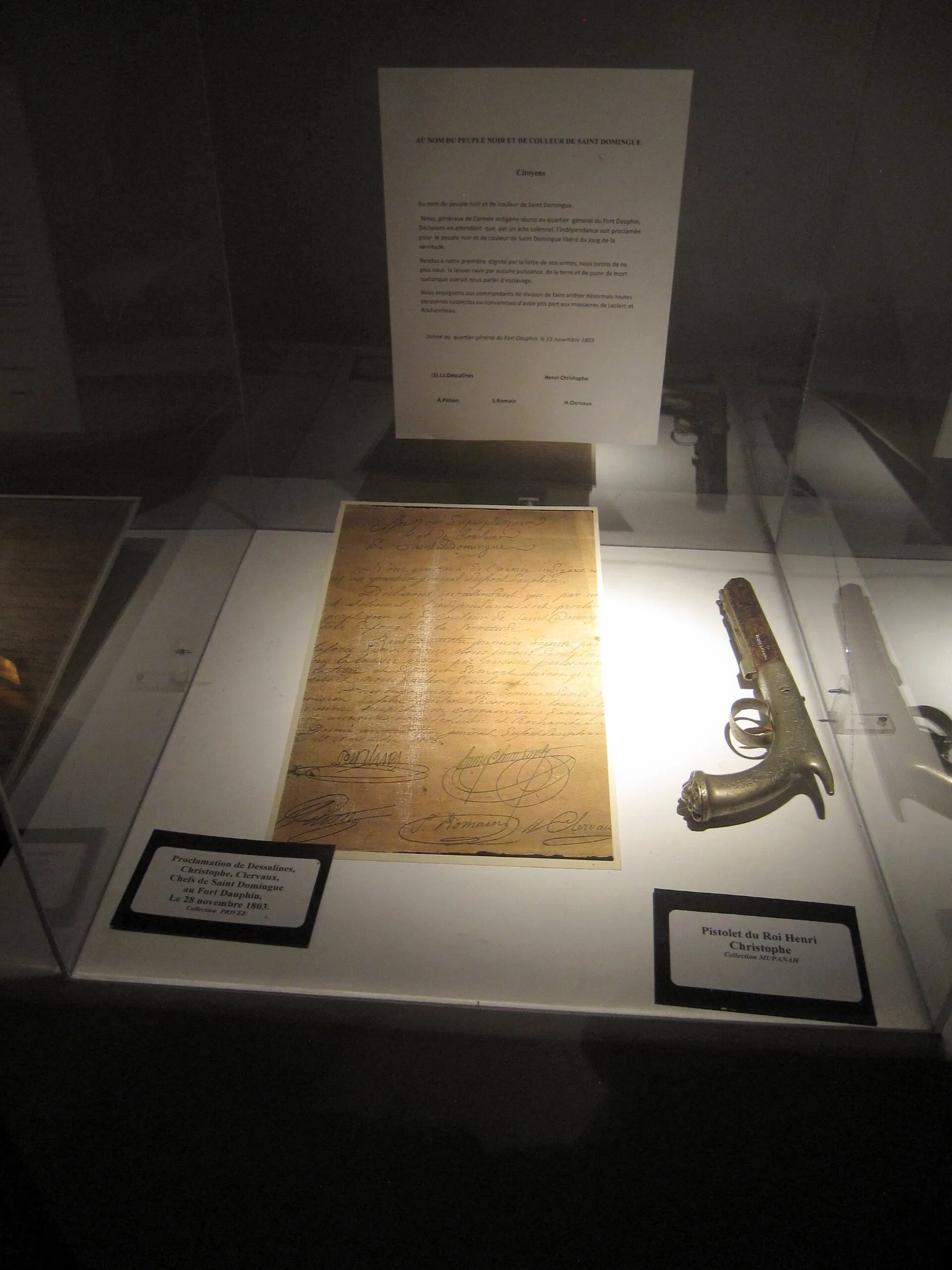
Among the best-known exhibits are the bell associated with the announcement of Haitian independence and the silver firearm traditionally identified as the weapon with which King Henri Christophe killed himself in 1820. Displays have also included chains used in slavery, royal regalia, possessions associated with revolutionary leaders, documents from later presidents and objects connected with François Duvalier’s dictatorship. Beneath the museum lies a national pantheon commemorating Haiti’s founding figures.[visithaiti.com]visithaiti.comVisit Haiti The Museum of the Haitian National PantheonVisit Haiti The Museum of the Haitian National Pantheon
For a curiosity-minded visitor, the appeal lies in the unusually concentrated material drama. A suicide weapon, an independence bell and instruments of enslavement do not merely illustrate a timeline; they resemble secular relics. Their authenticity and provenance should still be approached critically. Famous national objects often acquire simplified stories, and popular travel accounts may repeat identifications without discussing the documentary chain that links an artefact to a historical owner.
The museum’s partly subterranean design adds to the atmosphere. Its memorial spaces, symbolic remains and revolutionary objects make it closer to a national reliquary than a neutral chronological gallery. Yet its purpose is official and commemorative, not sensational. It asks visitors to encounter Haiti’s foundation as a struggle over bondage, sovereignty and historical memory.[Wikipedia]WikipediaMusée du Panthéon National HaïtienMusée du Panthéon National Haïtien
As with other Port-au-Prince institutions, present-day access cannot be treated as routine. Even where a museum itself remains intact, road control, fuel shortages, armed clashes and rapidly changing local conditions can make a nominally open site inaccessible in practice.[europa.eu]euaa.europa.euEuropean Union Agency for Asylum EUAA COI Query ResponseEuropean Union Agency for Asylum EUAA COI Query Response
A sugar plantation preserved as machinery and evidence
The Musée Ogier-Fombrun at Montrouis offers a different kind of unusual collection. It occupies a restored eighteenth-century sugar plantation and preserves machinery, architectural remains and archaeological objects associated with Indigenous life, European colonisation, slavery and sugar production.
The site’s most striking features include a long aqueduct, a large wooden waterwheel, equipment for processing sugar and an old animal-powered mill. These are not strange because they are supernatural. They are strange because they make an otherwise abstract colonial system physically visible. Water, animal power, furnaces and human labour were combined to turn cane into a profitable export, while enslaved people bore the violence of the system.[Wikipedia]WikipediaOgier-Fombrun MuseumOgier-Fombrun Museum
Unlike a glass-case museum, Ogier-Fombrun allows the plantation landscape itself to function as the main artefact. The preserved mechanisms show how industrial ingenuity and extreme exploitation existed together. This makes it especially valuable for readers interested in dark heritage: places where attractive architecture or ingenious machines cannot be separated from coercion and death.
The museum was created after architect Gérard Fombrun acquired and restored the plantation complex, opening it to the public in the 1990s. It is therefore a privately shaped heritage project rather than an untouched colonial survival. Visitors should expect interpretation assembled through restoration, collecting and reconstruction, not a site frozen exactly as it appeared before the Haitian Revolution.[Wikipedia]WikipediaOgier-Fombrun MuseumOgier-Fombrun Museum
Zombies: famous folklore, elusive museum objects
No discussion of Haiti’s strange cultural reputation can ignore the zombie. Yet travellers should be cautious: Haiti does not appear to have a securely documented, major public “zombie museum” built around bodies, powders or authenticated cases. The strongest museum material lies instead in ethnographic displays, archives and Vodou collections that help explain how the idea developed.
The Haitian zombie is very different from the infectious, flesh-eating creature of modern cinema. In many scholarly interpretations, it represents a person stripped of will, identity and social freedom. That makes it inseparable from the history of slavery. The most frightening element is not a corpse attacking the living, but a human being condemned to labour without autonomy — a return to bondage even after death.[purdue.edu]docs.lib.purdue.edue-Pubs Haitian Zombie, Myth, and Modern Identitye-Pubs Haitian Zombie, Myth, and Modern Identity
Stories of magical powders and apparent revival have encouraged medical speculation, but the evidence is disputed and vulnerable to sensational retelling. Individual cases have been explained through combinations of mistaken identity, poisoning, mental illness, social exclusion, trauma and community belief. None of these possibilities justifies treating Haitian religion as a catalogue of secret toxins or proven supernatural techniques.
Recent overseas exhibitions have tried to recover the zombie from Hollywood. The Musée du Quai Branly-Jacques-Chirac in Paris, for example, combined Haitian religious objects, secret-society imagery, archival evidence and film history to distinguish local ideas of spiritual and social death from the global entertainment monster. Such exhibitions are useful, but they also demonstrate a central problem: some of the best-funded interpretation of Haitian supernatural culture is found outside Haiti.[Le Monde.fr]lemonde.frLe Monde.fr Paris' Musée du Quai Branly reveals the legend of the Haitian undeadLe Monde.fr Paris' Musée du Quai Branly reveals the legend of the Haitian undead
Art collections where spirits remain visible
Haitian art museums and archives are not automatically “strange museums”, but many collections occupy the border between art history, religious imagery and visionary experience. Paintings by artists such as Hector Hyppolite and works by later generations frequently depict spirits, ceremonies, dreams, sacred symbols and scenes in which the human and supernatural worlds overlap.
The Centre d’Art in Port-au-Prince has played a foundational role since 1944 as a gallery, museum, school and archive. Its holdings include thousands of artworks and documents. The institution helped bring artists working outside formal academic traditions to national and international attention, including painters whose religious imagery was too often marketed abroad as mysterious or “primitive”.[Haitian Art Society]haitianartsociety.orgOpen source on haitianartsociety.org.
In July 2025, police and museum staff evacuated much of the Centre’s collection after armed groups threatened and vandalised the area. Reports described thousands of artworks and archival documents being moved to a secret location during a dangerous operation. The episode shows that Haiti’s unusual collections are not merely underfunded tourist resources; they are endangered cultural records requiring emergency rescue.[washingtonpost.com]washingtonpost.comThe Washington Post Facing gunfire, Haitian police rescue thousands of artworksThe Washington Post Facing gunfire, Haitian police rescue thousands of artworks
The destruction of the Hôtel Oloffson that same month deepened the sense of cultural loss. Although it was a hotel rather than a museum, the building had functioned as a gathering place for artists, musicians, journalists and Vodou-influenced performance. Its celebrated Day of the Dead events and weekly music nights made it a living cabinet of Haitian cultural memory. Its burning removed an important informal heritage space that had preserved atmosphere, stories and performance rather than a catalogued collection.[The Guardian]theguardian.comThe Guardian How destruction of Hotel Oloffson is symbol of Haiti's gang crisisWith over a million people displaced and more than 5,600 deaths in 2024 alone, the situation in Haiti has deteriorated significantly sinc…

How to judge claims about Haiti’s unusual collections
Haiti attracts exaggerated stories, particularly when religion, death or secrecy is involved. A useful credibility test is to ask who controls the interpretation and what kind of evidence is actually being offered.
Institutional collections such as the Bureau National d’Ethnologie and MUPANAH have formal conservation and educational roles, although their displays may still reflect older academic assumptions or state narratives.
Private collections such as the Marianne Lehmann holdings may preserve objects that public institutions lacked the money to acquire. They can be immensely valuable, but provenance, access and the religious status of objects may be complicated.
Living religious objects should not be treated automatically as abandoned folk art. A flag, bottle, drum or figure may have devotional, protective or restricted meanings beyond its appearance in a showcase.
Tourist stories about curses, secret powders or authenticated zombies need stronger evidence than repetition in guidebooks or entertainment media. Folklore is culturally important even when a literal supernatural claim cannot be verified.
Overseas exhibitions may provide excellent conservation and research, but they can also separate Haitian objects from practitioners and local audiences. The most responsible exhibitions make this tension visible rather than presenting museum ownership as neutral.[researchgate.net]researchgate.netResearch Gate Displaying sacred Haitian Vodou objectsResearch Gate Displaying sacred Haitian Vodou objects
What visitors can realistically expect
Haiti’s strange-history landscape is rich but fragmented. It is not currently suited to spontaneous museum-hopping. The strongest experiences come from institutions where religion, revolution, art and material history overlap, but opening arrangements, staffing, transport and security can change without warning.
The Bureau National d’Ethnologie offers the most direct museum context for Vodou and folklore. MUPANAH provides the country’s most powerful collection of revolutionary and political relics. Ogier-Fombrun turns plantation technology into a physical record of colonial exploitation. The Marianne Lehmann collection remains globally important but should not be advertised as an ordinary walk-in attraction without direct confirmation of current access.
The continuing national crisis makes practical caution unavoidable. In 2026, insecurity remained severe, large numbers of people were displaced, and restrictions affecting travel to Port-au-Prince were still in place. Museum information published before the latest phase of violence may describe collections accurately while being dangerously outdated about access.[worldbank.org]worldbank.orgOpen source on worldbank.org.
Haiti’s most unusual collections matter precisely because they resist the familiar foreign image of the country as a place of inexplicable magic. Properly interpreted, they reveal something more compelling: a culture in which sacred objects, revolutionary relics, industrial ruins, paintings and oral traditions preserve memories of slavery, survival, spiritual authority and independence. The real curiosity is not whether the objects are “occult”. It is how much history they continue to carry, and how precariously that history is now being protected.
Amazon book picks
Further Reading
Books and field guides related to Where Haiti Keeps Its Strangest Stories. Use these as the next step if you want deeper reading beyond the article.
The Black Jacobins
'James is a titan of twentieth-century politics and culture' Sunday Times 'The Black Jacobins is not only a groundbreaking historical wor...
The Serpent and the Rainbow
A Harvard scientist's astonishing journey into the secret societies of Haitian voodoo, zombis, and magic.
Avengers of the New World
The first and only successful slave revolution in the Americas began in 1791 when thousands of brutally exploited slaves rose up against...
The Uses of Haiti
""The Uses of Haiti "tells the truth about uncomfortable matters-uncomfortable, that is, for the structures of power and the doctrinal fr...
eBay marketplace picks
Marketplace Samples
Live-tested eBay searches with available results related to this page.
Selected fromHaitian art print oneBay.co.uk.
Current eBay listing
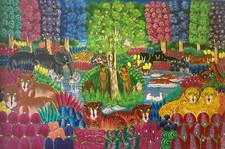
Haitian Art Exhibition Brooklyn Museum Vintage Poster Print 24x36
Current eBay listing
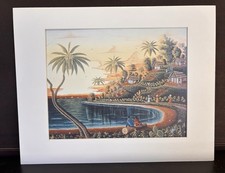
J. Frantz Adam and Eve Vintage Haitian Art - J0001, Poster Print Art
Endnotes
1.
Source: un.dk
Title: haiti explained why the crisis is deepening and what comes next
Link:https://un.dk/haiti-explained-why-the-crisis-is-deepening-and-what-comes-next/
Source snippet
Haiti explained: why the crisis is deepeningHaiti is entering 2026 facing one of the most complex crises in its recent history. On Wednes...
2.
Source: escholarship.org
Link:https://escholarship.org/uc/item/47r5v0z3
Source snippet
The Collection and Circulation of Haiti's Sacred Objects in...by PD Boucicaut · 2025 — Amidst its prohibition, a substantial...
3.
Source: reuters.com
Link:https://www.reuters.com/business/aerospace-defense/us-extends-flight-restrictions-haiti-capital-until-early-september-2026-03-04/
Source snippet
The FAA cited the inability of Haitian security forces to control the threat and noted an expanded area of gang influence that endangers...
4.
Source: digitalcommons.conncoll.edu
Link:https://digitalcommons.conncoll.edu/cgi/viewcontent.cgi?article=1002&context=anthrofacpub
5.
Source: universes.art
Link:https://universes.art/en/specials/2010/vodou
6.
Source: Wikipedia
Title: Musée du Panthéon National Haïtien
Link:https://en.wikipedia.org/wiki/Mus%C3%A9e_du_Panth%C3%A9on_National_Ha%C3%AFtien
7.
Source: Wikipedia
Title: Ogier-Fombrun Museum
Link:https://en.wikipedia.org/wiki/Ogier-Fombrun_Museum
8.
Source: Wikipedia
Title: Musée Ogier-Fombrun
Link:https://fr.wikipedia.org/wiki/Mus%C3%A9e_Ogier-Fombrun
9.
Source: docs.lib.purdue.edu
Title: e-Pubs Haitian Zombie, Myth, and Modern Identity
Link:https://docs.lib.purdue.edu/cgi/viewcontent.cgi?article=1602&context=clcweb
10.
Source: news.artnet.com
Title: haitian museum police rescue artworks from gangs 2669538
Link:https://news.artnet.com/art-world/haitian-museum-police-rescue-artworks-from-gangs-2669538
11.
Source: researchgate.net
Title: Research Gate Displaying sacred Haitian Vodou objects
Link:https://www.researchgate.net/publication/264440655_The_museum_as_visitor_experience_Displaying_sacred_Haitian_Vodou_objects
12.
Source: Wikipedia
Link:https://en.wikipedia.org/wiki/Haiti
13.
Source: researchgate.net
Link:https://www.researchgate.net/publication/328673080_Producing_Collecting_and_Exhibiting_Bizango_Sculptures_from_Haiti_Transatlantic_Vodou_on_the_International_Art_Scene
14.
Source: researchgate.net
Link:https://www.researchgate.net/publication/398840178_The_Cultural_Tradition_of_Zombification_in_Haiti_An_Example_of_Film_White_Zombie
15.
Source: haiti.org
Link:https://www.haiti.org/haiti-at-a-glance/
16.
Source: bne.gouv.ht
Title: le public à connaitre un fragment des
Link:https://www.bne.gouv.ht/
Source snippet
Bureau National d'États CivilsBureau National d'Ethnologie: AccueilBureau d'Ethnologie marque une étape décisive dans la construction de...
17.
Source: visithaiti.com
Link:https://visithaiti.com/things-to-do/visit-a-museum-dedicated-to-vodou/
Source snippet
Visit HaitiVisit a museum dedicated to VodouEthnology, a museum dedicated to Vodou culture in Haiti, Inside, you'll find Vodou artifacts...
18.
Source: smb.museum
Link:https://www.smb.museum/en/exhibitions/detail/vodou/
Source snippet
Staatliche Museen zu BerlinVodou - Art and Cult from Haiti18 May 2010 — Despite being poorly sheltered, the Lehmann collection survived t...
Published: May 2010
19.
Source: euaa.europa.eu
Title: European Union Agency for Asylum EUAA COI Query Response
Link:https://www.euaa.europa.eu/sites/default/files/publications/2026-04/2026_04_EUAA_COI_Query_Response_Q14_Haiti_Security_Situation_in_Port_au_Prince.pdf
20.
Source: meg.ch
Title: livre 2
Link:https://www.meg.ch/en/boutique/livre-2
21.
Source: theguardian.com
Title: The Guardian An unlikely crusader fights to save the voodoo soul of Haiti
Link:https://www.theguardian.com/world/2001/sep/08/martinhodgson
22.
Source: cooperhewitt.org
Title: marianne lehmann vodou collection
Link:https://www.cooperhewitt.org/tag/marianne-lehmann-vodou-collection/
23.
Source: visithaiti.com
Title: Visit Haiti The Museum of the Haitian National Pantheon
Link:https://visithaiti.com/art-culture/museum-haitian-national-pantheon/
24.
Source: uncommoncaribbean.com
Title: musee du pantheon national haitien
Link:https://www.uncommoncaribbean.com/haiti/musee-du-pantheon-national-haitien/
25.
Source: pmc.ncbi.nlm.nih.gov
Title: Pub Med Central The undead in culture and science
Link:https://pmc.ncbi.nlm.nih.gov/articles/PMC5914483/
26.
Source: lemonde.fr
Title: Le Monde.fr Paris’ Musée du Quai Branly reveals the legend of the Haitian undead
Link:https://www.lemonde.fr/en/culture/article/2024/10/15/paris-musee-du-quai-branly-reveals-the-legend-of-the-haitian-undead_6729468_30.html
27.
Source: lemonde.fr
Link:https://www.lemonde.fr/en/culture/article/2024/10/16/philippe-charlier-curator-of-the-exhibition-zombies-is-death-not-an-end-the-zombie-is-a-very-relevant-figure-today_6729500_30.html
28.
Source: haitianartsociety.org
Link:https://haitianartsociety.org/le-centre-d-art
29.
Source: washingtonpost.com
Title: The Washington Post Facing gunfire, Haitian police rescue thousands of artworks
Link:https://www.washingtonpost.com/world/2025/07/17/haiti-police-gangs-art-museum/
30.
Source: theguardian.com
Title: The Guardian How destruction of Hotel Oloffson is symbol of Haiti’s gang crisis
Link:https://www.theguardian.com/world/2025/jul/18/destruction-hotel-oloffson-symbol-haiti-gang-crisis
Source snippet
With over a million people displaced and more than 5,600 deaths in 2024 alone, the situation in Haiti has deteriorated significantly sinc...
31.
Source: worldbank.org
Link:https://www.worldbank.org/ext/en/country/haiti
32.
Source: nawao.ch
Title: Lehmann Collection
Link:https://www.nawao.ch/seiten/kunst/a_kunst_03_e.html
33.
Source: facebook.com
Link:https://www.facebook.com/groups/haitianartsociety/posts/9021724621196404/
34.
Source: reliefweb.int
Link:https://reliefweb.int/report/haiti/haiti-intensification-clashes-bel-air-port-au-prince-affecting-medical-services-and-civilians-medecins-sans-frontieres-msf-dg-echo-echo-daily-flash-12-january-2026
35.
Source: visithaiti.com
Link:https://visithaiti.com/haiti-up-close/haitian-zombies-insider-insights/
36.
Source: monster.fandom.com
Title: Haitian Zombie
Link:https://monster.fandom.com/wiki/Haitian_Zombie
37.
Source: chateau-vodou.com
Title: the collection
Link:https://www.chateau-vodou.com/en/the-collection/
38.
Source: GOV.UK
Link:https://www.gov.uk/foreign-travel-advice/haiti
39.
Source: kids.nationalgeographic.com
Link:https://kids.nationalgeographic.com/geography/countries/article/haiti
Additional References
40.
Source: post.moma.org
Title: The sacred narrative of Vodou is preserved within museum
Link:https://post.moma.org/the-silence-of-sanctuary-how-the-museum-served-as-a-safe-space-for-haitian-vodou-art/
Source snippet
How the Museum Served as a Safe Space for Haitian Vodou Art4 Feb 2026 — During the 20th century, art museums served as venues for Hai...
41.
Source: tripadvisor.com
Title: The Bureau of Ethnology
Link:https://www.tripadvisor.com/Attraction_Review-g147307-d10415942-Reviews-The_Bureau_of_Ethnology-Port_au_Prince_Ouest_Department_Haiti.html
Source snippet
The Bureau of Ethnology - All You SHOULD Know Before...28 Jun 2016 — Better known as the Bureau D'Ethnologie, this museum foc...
42.
Source: youtube.com
Title: Haitian Arts: Life in Strikes & Stitches | Arts Break | NPT
Link:https://www.youtube.com/watch?v=nm9qOoFv6M4
Source snippet
Kafou: Haiti, Art and Vodou - African Spirit - Nottingham Contemporary Gallery...
43.
Source: youtube.com
Title: “Vodou Spirits in Haitian Art” by Donald Cosentino
Link:https://www.youtube.com/watch?v=bRoAxOmagGc
Source snippet
Haitian History and Symbolism in Myrlande Constant's DRAPO...
44.
Source: apnews.com
Link:https://apnews.com/article/bb08a45c646bf5bada9759721de1b342
45.
Source: facebook.com
Link:https://www.facebook.com/UN.News.Centre/videos/around-30000-people-have-had-to-flee-their-homes-in-the-haitian-capital-port-au-/1061365457069277/
46.
Source: facebook.com
Link:https://www.facebook.com/TheHaitianTimes/posts/haiti-submits-vodou-v%C3%A8v%C3%A8-design-tradition-for-unesco-heritage-recognition-haiti-/1520841710049104/
47.
Source: instagram.com
Link:https://www.instagram.com/reel/DRx1jNmjs5e/
48.
Source: reddit.com
Link:https://www.reddit.com/r/AskHistorians/comments/1an7ke7/how_did_the_concept_of_the_zombie_originate_in/
49.
Source: instagram.com
Link:https://www.instagram.com/p/DZpivE0kRnk/?hl=en