Where Palau Keeps Its Strangest Stories
Palau does not have a large circuit of specialist museums devoted to witchcraft, cryptids, medical oddities or the occult.
Page outline Jump by section
Introduction
What makes these collections unusual is not theatrical presentation. Palau’s strongest curiosities are objects whose meaning is difficult to read without explanation: wooden panels that encode cautionary tales, beads that carry social value far beyond their material, enormous stone discs quarried for use as money on another island, and rusting possessions recovered from one of the Pacific war’s most destructive battlefields. The country rewards visitors who approach its odd heritage as a mixture of material fact, oral history and living custom rather than as a conventional cabinet of freakish objects.

Where Palau’s unusual collections are found
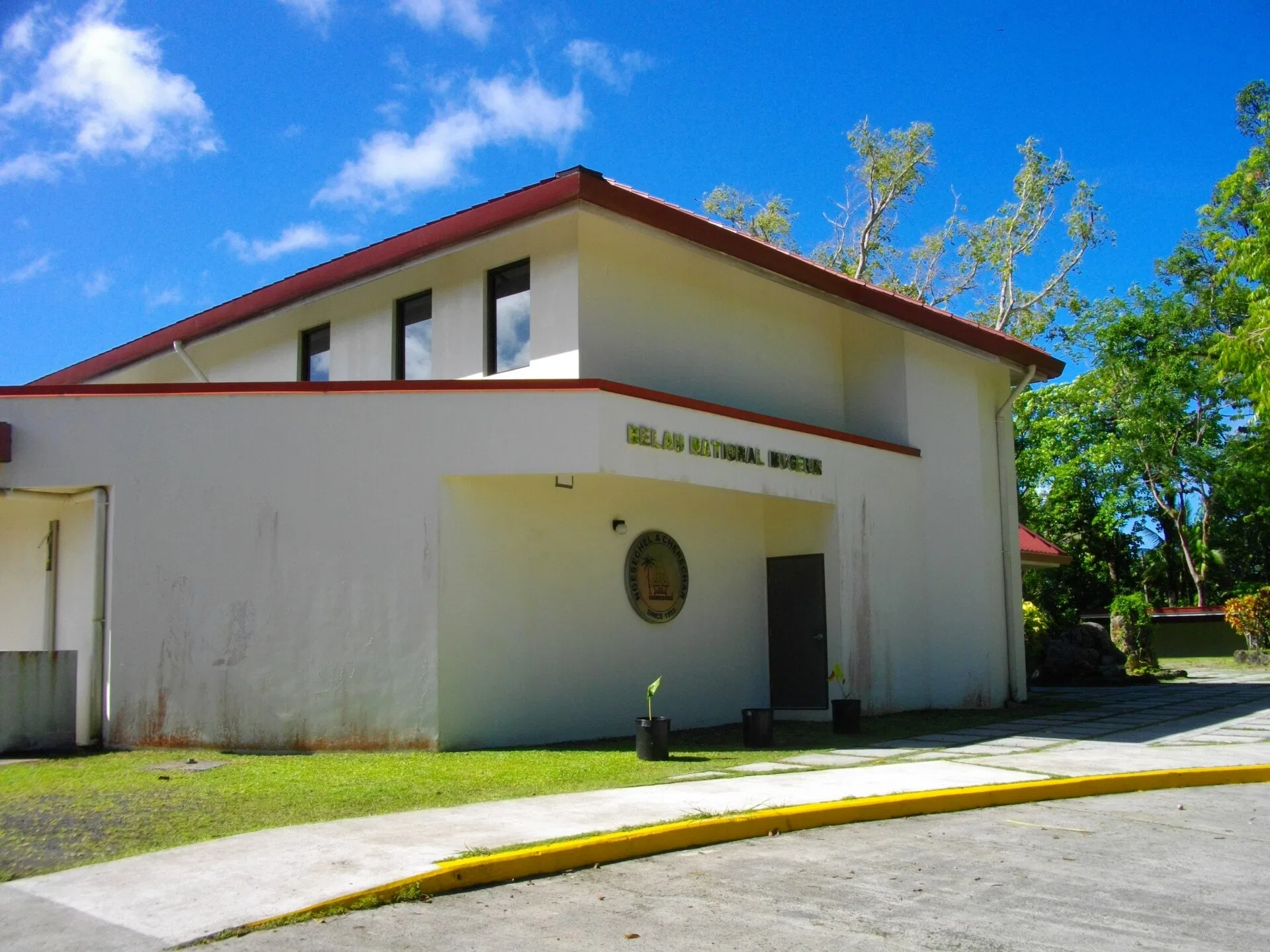
Most visitors looking for curious or mysterious material should begin in Koror, where Palau’s two principal museums offer complementary interpretations of the country. The Belau National Museum is a national, non-profit institution established in 1955 and describes itself as the oldest museum in Micronesia. Its displays and grounds combine cultural artefacts, archives, natural-history material, reconstructed architecture, memorials and rotating exhibitions. The Etpison Museum, opened in 1999, is a privately established museum with a more compact, visitor-oriented presentation of traditional money, birth ceremonies, canoes, fish traps, shells, photographs and carved storyboards.[palaunationalmuseum.pw]palaunationalmuseum.pwBelau National MuseumBelau National MuseumThe Belau National Museum periodically highlights special Events, People, and Projects in its M…
Beyond Koror, the country’s unusual heritage is frequently preserved in place rather than gathered indoors. Archaeological quarries, stone monuments, deserted village remains, caves, defensive tunnels and war-damaged bunkers function as open-air collections. This dispersed pattern matters: in Palau, taking an object out of its landscape can remove much of the story that gives it significance.
The strongest visitor-facing examples are:
- Belau National Museum: the broadest and most formally curated introduction to Palauan history, art, architecture, archives and natural heritage.
- Etpison Museum: a smaller private museum particularly useful for traditional money, storyboards, rare shells and everyday technologies.
- Peleliu’s war collections and battlefield: relic displays set within a landscape still marked by caves, artillery positions, wreckage and damaged fortifications.
- Stone-money quarry sites: archaeological places where limestone was extracted and shaped into huge discs for transport to Yap.
- Monuments and ancient stone landscapes: including monoliths, platforms, pathways, terraces, rock art and burial sites whose meanings range from archaeologically documented to traditionally interpreted.[UNESCO World Heritage Centre]whc.unesco.orgWorld Heritage Centre Yapease Quarry SitesUNESCO World Heritage CentreYapease Quarry Sites - UNESCO World Heritage CentreAugust 26, 2004 — In Palau two sites namely Uet el Daob ma…
Carved legends at the Belau National Museum
The Belau National Museum is not a “weird museum” in the commercial sense. Its unusual power comes from the way apparently decorative objects reveal a densely coded world of genealogy, social conduct, fertility, danger and ancestral memory. A visitor may see canoes, photographs, currency, natural specimens and colonial-era material, but the most distinctive feature is the relationship between the collections and the reconstructed traditional meeting house in the museum grounds.[palaunationalmuseum.pw]palaunationalmuseum.pwBelau National MuseumBelau National MuseumThe Belau National Museum periodically highlights special Events, People, and Projects in its M…
Traditional meeting houses were not simply functional buildings. Their decorated beams and gable surfaces could carry painted or carved scenes of mythical beings, historical events, humorous episodes and warnings about misconduct. Modern Palauan storyboards developed from this architectural tradition, turning narrative scenes into portable carved panels. The British Museum dates the revival of storyboard carving to the 1930s, when artists adapted imagery associated with meeting-house interiors into a renewed art form.[Bowers Museum]bowers.orghistory and symbolism in palauan storyboardshistory and symbolism in palauan storyboards
This makes a storyboard closer to a visual archive than a generic souvenir. Individual figures, animals and actions may compress a long oral narrative into a sequence that an informed viewer can interpret. Stories can deal with supernatural encounters, dangerous appetites, social obligations or the consequences of breaking accepted rules. Some are comic or erotic; others preserve explanations for ceremonies and institutions.
One documented museum image shows a beam illustrating a story connected with childbirth, ritual steaming and the public presentation of a mother after her first child. The scene demonstrates why Palauan carved narratives should not be treated as quaint folklore detached from real life. They can encode practical knowledge, gendered ritual, social status and ideas about bodily transformation.[Penn Museum]penn.museumOpen source on penn.museum.
The museum’s reconstructed meeting house is therefore both exhibit and interpretive problem. It presents an architectural form associated with political deliberation and communal authority, yet it is also a modern reconstruction intended to preserve skills and explain traditions to new audiences. The first museum example was built in 1969, destroyed by fire in 1979 and later rebuilt using traditional methods. Its value lies less in being an untouched ancient structure than in showing how heritage can be recreated without pretending that continuity has been effortless.[Wikipedia]WikipediaBelau National MuseumBelau National Museum
Visitors should also look beyond the carved narratives. The museum has maintained photographic, audiovisual and research collections, including images from periods of German and Japanese rule. Such archives can be stranger and more revealing than prominent display objects: photographs and recordings preserve vanished streets, ceremonies, voices and colonial encounters that cannot be reconstructed from artefacts alone. The museum has also participated in digitisation and documentation projects, including work on traditional environmental knowledge and craft processes.[PalauGov]palaugov.pwPalau Gov1 Ministry of Community & Cultural AffairsPalau Gov1 Ministry of Community & Cultural Affairs
Money that is more than money
Palau’s museum displays complicate the ordinary idea of currency. The Etpison Museum advertises exhibits on several traditional money types, while the Belau National Museum has displayed bead money and material connected with customary exchange. These objects are unusual because their value cannot be understood simply by asking what they were worth in cash. Ownership, ancestry, ceremonial use, rarity and remembered transactions could matter as much as appearance.[Etpison Museum]etpisonmuseum.orgEtpison MuseumEtpison MuseumThe Etpison Museum collection includes displays on foreign influence, traditional money types, the famous 1st…
Bead money is visually modest compared with giant stone discs, but it can be culturally more difficult for an outsider to interpret. Old beads may circulate through families and ceremonies as stores of wealth and status. A museum can display their physical form, yet the most important part of their history may be intangible: who possessed them, how they were transferred and what obligations accompanied the exchange. This is a recurring challenge in Palauan museums. The object in the case is only one component of the collection; oral knowledge supplies the rest.
The most spectacular monetary curiosity associated with Palau was created primarily for Yap. Yapese expeditions travelled roughly 400 kilometres across open sea to quarry crystalline limestone in Palau’s Rock Islands. Workers cut the stone into large discs, usually with a central hole, then transported it back by raft and canoe. UNESCO’s description of the proposed transnational heritage sites links quarries in Palau with stone-money banks in Yap, treating them as parts of one maritime production and exchange system.[UNESCO World Heritage Centre]whc.unesco.orgWorld Heritage Centre Yapease Quarry SitesUNESCO World Heritage CentreYapease Quarry Sites - UNESCO World Heritage CentreAugust 26, 2004 — In Palau two sites namely Uet el Daob ma…
The discs are often presented as an early curiosity of economics because some were too large to move conveniently and could change ownership while remaining physically in place. Yet reducing them to a clever anecdote about “money without movement” misses the hazardous labour, navigation and political negotiation behind them. Their worth was connected to size and workmanship, but also to the difficulty of the voyage and the history attached to an individual stone.
The quarry sites in Palau are particularly important because they reveal the industrial side of an object more commonly photographed after its arrival in Yap. Caves and rock shelters preserve cut surfaces, abandoned pieces and evidence of extraction. Later commercial intervention changed the system: nineteenth-century trader David O’Keefe provided ship transport that made it easier to quarry and move large stones, altering the relationship between danger, labour and value.[UNESCO World Heritage Centre]whc.unesco.orgWorld Heritage Centre Yapese Disk Money Regional SitesWorld Heritage Centre Yapese Disk Money Regional Sites
These places are archaeological sites, not novelty attractions. Their most unusual feature is the connection between two island societies: Palau supplied the geology, while Yap supplied the monetary system that transformed the stone into recognised wealth. They are therefore best understood as a cross-border collection spread across caves, abandoned workings, oral histories and stone banks rather than contained within one museum.
The Etpison Museum’s compact cabinet of curiosities
The Etpison Museum offers the closest Palauan equivalent to a small, eclectic cabinet of curiosities. Its collection brings together traditional money, canoes, fishing equipment, ceremonial material, archaeological subjects, rare shells, photographs, natural history and carvings by master storyboard artists. This mixture is not random. It presents Palau through the objects used to navigate, exchange wealth, obtain food, perform ceremonies and turn oral tradition into images.[Etpison Museum]etpisonmuseum.orgEtpison MuseumEtpison MuseumThe Etpison Museum collection includes displays on foreign influence, traditional money types, the famous 1st…
The shell collection is especially suited to curious-minded visitors. Shells can be viewed simultaneously as biological specimens, decorative forms, trade goods and evidence of an intimate relationship with the sea. Their appeal may be visual, but the broader exhibit places them alongside fishing technologies and endemic wildlife rather than isolating them as exotic trophies.
The museum’s treatment of the first-child birth ceremony is another example of how an unusual collection can address bodily and social transformation without becoming a medical museum. The subject connects physical recovery, family prestige, public presentation and inherited practice. It is a living cultural tradition rather than an extinct curiosity, so visitors should resist treating ceremonial objects or images as evidence of an exotic past.
Storyboards provide the museum’s strongest link to folklore. Portable carvings helped move narratives from the architecture of traditional meeting houses into homes, galleries and tourist markets. This commercial life creates an interesting tension. A panel can be a serious work by a recognised carver, a vessel for a specific legend and a saleable souvenir at the same time. The categories do not necessarily cancel one another, but quality and explanation vary. A well-curated display should identify the story, maker and cultural context rather than presenting every carving as interchangeable “tribal art”.
The museum is private and visitor-facing, with a gallery and shop selling artwork, photographs and higher-end souvenirs. That commercial dimension is visible rather than hidden. It can help sustain artists and cultural interpretation, though buyers should still ask who made a piece and whether its narrative is documented.[Etpison Museum]etpisonmuseum.squarespace.comOpen source on squarespace.com.
Peleliu’s battlefield objects
Peleliu contains Palau’s most unsettling collections. The island was heavily fortified by Japanese forces before the American invasion of 1944, with caves, tunnels, concrete positions and natural fissures incorporated into an extensive defensive system. The battle left a dense material record that includes damaged buildings, weapons, ammunition, helmets, bottles, personal effects and military machinery.[nationalww2museum.org]nationalww2museum.orgThe National WWII Museum The Battle of Peleliu: The Forgotten HellThe National WWII Museum The Battle of Peleliu: The Forgotten Hell
Unlike a conventional military museum, Peleliu’s battlefield cannot be cleanly separated from its relics. Bunkers and caves remain part of the collection. Shell damage is visible on structures, while objects recovered from the landscape retain an immediate relationship to the places where soldiers fought and died. This gives the island considerable historical force, but it also makes interpretation and conservation difficult. Metal corrodes, vegetation reclaims sites and unregulated removal can strip objects of their archaeological context.
A small war museum has been described inside a damaged former Japanese bunker, with helmets, weapons and personal belongings reportedly recovered from the battlefield. Documentation of its management and regular opening arrangements is limited, so it should not be treated as reliably accessible without local confirmation.[Traces of War]tracesofwar.comOpen source on tracesofwar.com.
A separate temporary memorial museum opened in September 2024 for the eightieth anniversary of the battle. Its displays included corroded weapons, artillery shells, soldiers’ personal items, maps, books and films, along with material about Australian war correspondent Damien Parer, who was killed while filming on Peleliu. Because it was announced as temporary, visitors should not assume that the same exhibition remains open in its original form.[Island Times News]islandtimes.orgtemporary peleliu wwii memorial museum opens on 80th anniversary of battleIsland Times NewsTemporary Peleliu WWII Memorial Museum Opens on 80th…17 Sept 2024 — Inside, visitors can view a collection of war art…
This uncertainty is part of the reality of small-island museum culture. Collections may depend on anniversaries, local initiatives, volunteer labour and buildings never designed for long-term conservation. Peleliu’s relics are historically authentic, but their interpretation can range from carefully contextualised memorial material to loosely arranged battlefield finds.
The most responsible visits treat the island as a grave-marked cultural landscape rather than a source of collectable souvenirs. Removing ammunition, fragments or personal objects destroys evidence and may also be dangerous. A corroded shell casing behind glass tells one story; the same object found in a cave beside other material may help explain how that position functioned.
Stone monuments between archaeology and legend
Palau’s monumental stone sites offer mystery without requiring supernatural invention. Badrulchau, on Babeldaob, contains groups of large stone uprights and other structural remains. Regional heritage studies describe monoliths reaching roughly two metres in height, associated with platforms and a wider cultural landscape. The stones are usually interpreted as architectural elements connected with an important meeting-house complex rather than as inexplicable megaliths left by an unknown civilisation.[UNESCO World Heritage Centre]whc.unesco.orgThe Badrulchau monolith assemblages (Ngarchelong state) are in two main groups of up to… The monoliths are up to 2 m tall and.4 x…
That archaeological interpretation does not eliminate traditional narratives. Monumental sites often accumulate stories about powerful ancestors or extraordinary construction, especially when later generations no longer use the original buildings. The useful distinction is not “science versus myth”, but material evidence versus the different forms of meaning attached to it. Archaeology can investigate quarrying, construction and occupation; oral tradition can preserve remembered authority, identity and moral significance.
Other sites broaden Palau’s stone landscape beyond standing monoliths. UNESCO’s tentative-list material identifies prehistoric terraced hills, traditional villages with stone paths and house platforms, quarry sites, rock shelters, burials and a carved stone coffin. The Rock Islands World Heritage property also contains abandoned stonework settlements, middens, burial caves and rock art recording approximately three millennia of island life.[UNESCO World Heritage Centre]whc.unesco.orgWorld Heritage Centre Tet el Bad (Stone CoffinWorld Heritage Centre Tet el Bad (Stone Coffin
These remains form a dispersed archaeological cabinet: instead of opening drawers, the visitor moves through paths, caves and forested platforms. Their strangeness comes from partial survival. A foundation may outlast the building it supported; a quarry may preserve the negative scars of objects carried hundreds of kilometres away; a burial cave may retain cultural significance even when little is visible to an untrained eye.
Access and interpretation vary. Some sites are recognised heritage attractions, while others may require permission, a guide or specialist knowledge. Sacred or funerary locations should not be treated as adventure props. The absence of railings and display cases does not make archaeological material ownerless or available for handling.
How credible are Palau’s curious collections?
Palau’s main museums are credible cultural institutions, but their exhibits serve different purposes. The Belau National Museum has the strongest national, archival and research role. It preserves objects while also recording oral knowledge, craft practice, environmental information and historical imagery. Its rotating displays mean that a specific object mentioned in an older account may not always be on view.[Belau National Museum]palaunationalmuseum.pwBelau National MuseumBelau National MuseumThe Belau National Museum periodically highlights special Events, People, and Projects in its M…
The Etpison Museum is privately run and more explicitly connected with tourism and retail. That does not make it inauthentic. Its value lies in accessible presentation, a wide-ranging collection and close attention to visual culture, especially carving, photography and traditional technologies. Visitors should simply recognise that an object can be simultaneously educational, artistic and commercial.[Etpison Museum]etpisonmuseum.orgEtpison MuseumEtpison MuseumThe Etpison Museum collection includes displays on foreign influence, traditional money types, the famous 1st…
Peleliu requires greater caution. The battlefield itself is well documented and historically protected, but information about individual displays, small collections and opening arrangements is fragmented. Labels and provenance may be uneven. Claims about where a loose object was found are strongest when backed by excavation records, collection documentation or a clearly identified donor, and weaker when based only on local repetition.
Legends present a different question of credibility. A storyboard does not need to be a literal record of an event to be culturally truthful. Its reliability should be judged according to what is being claimed. It may be strong evidence that a community transmitted a particular moral tale or ceremonial explanation, but not independent proof that every supernatural episode occurred as described.
The least reliable material is likely to be tourist retelling detached from named artists, elders, institutions or documented sites. Palau’s stories are sometimes simplified into decorative motifs for sale. Good interpretation restores specificity: which story is shown, who carved it, where the version was recorded, and whether it represents widespread tradition or one local telling.
Planning a curiosity-focused visit
A practical unusual-heritage itinerary begins with both Koror museums. The Belau National Museum provides the historical framework needed to understand traditional architecture, exchange systems, foreign rule and Palau’s relationship with its environment. The Etpison Museum then offers a closer look at money, shells, ceremonial life, storyboards and material culture in a compact setting.
The Belau National Museum currently publishes admission information and opening arrangements on its official website, including closure on Sunday, but details can change. The Etpison Museum maintains an official site describing its collections, though travellers should confirm current hours directly rather than relying on old guidebook listings.[Belau National Museum]palaunationalmuseum.pwBelau National MuseumBelau National MuseumThe Belau National Museum periodically highlights special Events, People, and Projects in its M…
Peleliu usually requires more planning than a city museum visit. Transport, guide availability and access to particular memorial displays can vary. A guided battlefield visit is especially valuable because many caves, bunkers and fragments are difficult to interpret safely without local knowledge.
Stone-money quarries and archaeological landscapes should also be approached through authorised local guiding where possible. Their significance is rarely obvious from appearance alone, and some locations involve customary land rights, fragile remains or culturally sensitive places.
For readers seeking a dramatic museum of monsters, witchcraft or paranormal claims, Palau will appear restrained. For those interested in how objects acquire power through stories, ceremony, ownership and place, it is unusually rich. Its most memorable collections are not sensational oddities but things that refuse to fit a single category: money that is also ancestry, art that is also oral literature, architecture that is also political memory, and battlefield debris that remains inseparable from the ground in which it was found.
Why Palau matters in the history of curiosities
Palau demonstrates that a country’s curiosity culture need not depend on a large number of formal museums. Its unusual heritage is distributed across national and private collections, reconstructed buildings, family traditions, commercial carving, archives, cave quarries, monolith fields and war-scarred landscapes.
The recurring theme is movement between forms. Oral stories become painted beams and portable storyboards. Limestone leaves Palauan caves and becomes money in Yap. Ceremonial wealth enters a museum case but retains value through remembered relationships. Military equipment changes from weapon to wreckage, archaeological evidence and memorial object. A meeting house can be destroyed, rebuilt and still transmit architectural knowledge.
This makes Palau especially valuable for understanding the limits of the conventional museum label. Its strangest collections are often living, dispersed or incomplete. They ask visitors not merely to look at an object, but to consider what has been removed from view: the speaker who told the story, the voyage that created value, the ceremony that activated an heirloom, the vanished building above a stone platform or the human life behind a corroded possession.
Amazon book picks
Further Reading
Books and field guides related to Where Palau Keeps Its Strangest Stories. Use these as the next step if you want deeper reading beyond the article.
Sea People
A blend of Jared Diamond’s Guns, Germs, and Steel and Simon Winchester’s Pacific, a thrilling intellectual detective story that looks dee...
The Pacific Islands: An Encyclopedia
An encyclopaedia of information on major aspects of Pacific life, including the physical environment, peoples, history, politics, economy...
The archaeology of Micronesia
First published 2003. Subjects: Anthropology, Antiquities, Civilization, History, Material culture.
eBay marketplace picks
Marketplace Samples
Live-tested eBay searches with available results related to this page.
Selected fromPalau collectible oneBay.co.uk.
Endnotes
1.
Source: Wikipedia
Title: Etpison Museum
Link:https://en.wikipedia.org/wiki/Etpison_Museum
2.
Source: whc.unesco.org
Title: World Heritage Centre Yapease Quarry Sites
Link:https://whc.unesco.org/en/tentativelists/1932/
Source snippet
UNESCO World Heritage CentreYapease Quarry Sites - UNESCO World Heritage CentreAugust 26, 2004 — In Palau two sites namely Uet el Daob ma...
Published: August 26, 2004
3.
Source: whc.unesco.org
Title: World Heritage Centre Ouballang ra Ngebedech (Ngebedech Terraces)
Link:https://whc.unesco.org/en/tentativelists/1930/
Source snippet
UNESCO World Heritage CentreOuballang ra Ngebedech (Ngebedech Terraces) - UNESCO World Heritage CentrePrehistoric terraced hills are a pr...
4.
Source: whc.unesco.org
Link:https://whc.unesco.org/document/10060
Source snippet
The Badrulchau monolith assemblages (Ngarchelong state) are in two main groups of up to... The monoliths are up to 2 m tall and.4 x...
5.
Source: Wikipedia
Title: Belau National Museum
Link:https://en.wikipedia.org/wiki/Belau_National_Museum
6.
Source: bowers.org
Title: history and symbolism in palauan storyboards
Link:https://bowers.org/index.php/collection/collections-blog/history-and-symbolism-in-palauan-storyboards
7.
Source: penn.museum
Link:https://www.penn.museum/sites/expedition/the-palauan-storyboards/
8.
Source: palaugov.pw
Title: Palau Gov1 Ministry of Community & Cultural Affairs
Link:https://www.palaugov.pw/wp-content/uploads/2020/12/Ministry-of-Community-Cultural-Affairs.pdf
9.
Source: whc.unesco.org
Title: World Heritage Centre Yapese Disk Money Regional Sites
Link:https://whc.unesco.org/en/tentativelists/1994/
10.
Source: whc.unesco.org
Link:https://whc.unesco.org/en/intassistance/2509/
11.
Source: whc.unesco.org
Title: World Heritage Centre Tet el Bad (Stone Coffin)
Link:https://whc.unesco.org/en/tentativelists/1933/
12.
Source: whc.unesco.org
Title: World Heritage Centre UNESCO World Heritage Centre
Link:https://whc.unesco.org/en/decisions/4783/
13.
Source: whc.unesco.org
Link:https://whc.unesco.org/fr/listesindicatives/6826
14.
Source: whc.unesco.org
Link:https://whc.unesco.org/en/tentativelists/5173/
15.
Source: whc.unesco.org
Link:https://whc.unesco.org/en/intassistance/1800
17.
Source: whc.unesco.org
Link:https://whc.unesco.org/fr/listesindicatives/1931
18.
Source: palaugov.pw
Link:https://www.palaugov.pw/wp-content/uploads/EO-451-Reorganizing-the-MHRCTD.pdf
19.
Source: palaugov.pw
Title: Business License Registry as of 10 20 2025.xlsx
Link:https://www.palaugov.pw/wp-content/uploads/Business-License-Registry-as-of-10-20-2025.xlsx
20.
Source: Wikipedia
Title: List of museums in Palau
Link:https://en.wikipedia.org/wiki/List_of_museums_in_Palau
21.
Source: Wikipedia
Link:https://en.wikipedia.org/wiki/Palau
22.
Source: unesco.org
Link:https://www.unesco.org/en/mab/ngaremeduu
23.
Source: youtube.com
Title: Etpison Museum Tour
Link:https://www.youtube.com/watch?v=HjPs7CMG1Qc
Source snippet
KLEA BELAU: Palau Through the Eyes of Charlie Gibbons...
24.
Source: palaunationalmuseum.pw
Link:https://palaunationalmuseum.pw/
Source snippet
Belau National MuseumBelau National MuseumThe Belau National Museum periodically highlights special Events, People, and Projects in its M...
25.
Source: etpisonmuseum.org
Link:https://www.etpisonmuseum.org/
Source snippet
Etpison MuseumEtpison MuseumThe Etpison Museum collection includes displays on foreign influence, traditional money types, the famous 1st...
26.
Source: islandtimes.org
Title: temporary peleliu wwii memorial museum opens on 80th anniversary of battle
Link:https://islandtimes.org/temporary-peleliu-wwii-memorial-museum-opens-on-80th-anniversary-of-battle/
Source snippet
Island Times NewsTemporary Peleliu WWII Memorial Museum Opens on 80th...17 Sept 2024 — Inside, visitors can view a collection of war art...
27.
Source: ultimatediving.co.uk
Link:https://www.ultimatediving.co.uk/experience/micronesia/palau/belau-national-musuem.aspx
28.
Source: etpisonmuseum.squarespace.com
Link:https://etpisonmuseum.squarespace.com/
29.
Source: nationalww2museum.org
Title: The National WWII Museum The Battle of Peleliu: The Forgotten Hell
Link:https://www.nationalww2museum.org/war/articles/battle-peleliu-forgotten-hell
30.
Source: nps.gov
Title: National Park Service List of NHLs by State
Link:https://www.nps.gov/subjects/nationalhistoriclandmarks/list-of-nhls-by-state.htm?gsid=c222e4fc-140e-4771-ae49-fca32989f885
31.
Source: tracesofwar.com
Link:https://www.tracesofwar.com/sights/8395/Peleliu-War-Museum.htm
32.
Source: palaunationalmuseum.pw
Title: General Information
Link:https://palaunationalmuseum.pw/general-information/
33.
Source: nps.gov
Link:https://www.nps.gov/kala/learn/historyculture/collections.htm
34.
Source: traveladventures.org
Link:https://www.traveladventures.org/continents/oceania/belau-national-museum.html
35.
Source: doi.gov
Link:https://www.doi.gov/node/17206
36.
Source: doi.gov
Link:https://www.doi.gov/museum/about-interior-museum-program
37.
Source: palaunationalmuseum.pw
Link:https://palaunationalmuseum.pw/collections/
38.
Source: wanderlog.com
Title: Etpison Museum, Koror, Palau
Link:https://wanderlog.com/place/details/285232/etpison-museum
39.
Source: wanderlog.com
Title: Etpison Museum, Koror, Palau
Link:https://wanderlog.com/pt/place/details/285232/etpison-museum
40.
Source: sg.trip.com
Title: etpison museum 61247602
Link:https://sg.trip.com/travel-guide/attraction/koror/etpison-museum-61247602/?curr=SGD&locale=en-SG
Additional References
41.
Source: nps.gov
Link:https://www.nps.gov/articles/000/3d-documentation-and-visualization-techniques-for-cultural-resources-and-museum-collections.htm
42.
Source: doi.gov
Link:https://www.doi.gov/museum/icr-faqs
43.
Source: doi.gov
Link:https://www.doi.gov/museum
44.
Source: doi.gov
Link:https://www.doi.gov/museum/laws-and-regulations
45.
Source: doi.gov
Link:https://www.doi.gov/museum/professional-resources
46.
Source: doi.gov
Link:https://www.doi.gov/museum/online-exhibits-and-educational-material
47.
Source: npgallery.nps.gov
Link:https://npgallery.nps.gov/NRHP/AssetDetail/e38e7768-8d33-4209-900e-5865ed81c9df
48.
Source: youtube.com
Title: KLEA BELAU: Palau Through the Eyes of Charlie Gibbons
Link:https://www.youtube.com/watch?v=cXB7aVunAVM
Source snippet
History of Republic of Palau | Belau National Museum...
49.
Source: facebook.com
Link:https://www.facebook.com/NMCB4/posts/nmcb4-seabees-in-palau-hiked-bloody-nose-ridge-collected-trash-from-the-beach-an/1311626704336329/
50.
Source: lonelyplanet.com
Link:https://www.lonelyplanet.com/articles/first-time-guide-to-palau