Within Uncanny Uzbekistan
How Forbidden Art Survived in the Desert
Nukus became an unlikely refuge for suppressed Soviet modernism, regional folk art and archaeology from ancient Khorezm.
On this page
- How Igor Savitsky built the collection
- What visitors find beyond the avant garde
- Myth, secrecy and the museum's real history
Page outline Jump by section
Introduction
The Savitsky Museum in Nukus is one of the world’s most improbable art museums. In a remote desert city in north-western Uzbekistan, far from Moscow and the Soviet Union’s traditional cultural centres, it became the unlikely refuge for thousands of works by artists whose careers had been destroyed by Stalinist cultural policy. Today the museum is internationally celebrated not simply because it holds an exceptional collection of Russian and Central Asian avant-garde art, but because it preserved paintings that might otherwise have disappeared altogether. At the same time, it is much more than a gallery of “forbidden art”. Visitors also encounter Karakalpak folk traditions, archaeological finds from ancient Khorezm and material that places the modern paintings within a much deeper regional history.[The Guardian]theguardian.comThe GuardianThe lost Louvre of Uzbekistan: the museum that hid art banned by Stalin | Art | The GuardianMay 21, 2019…
How Igor Savitsky Built the Collection
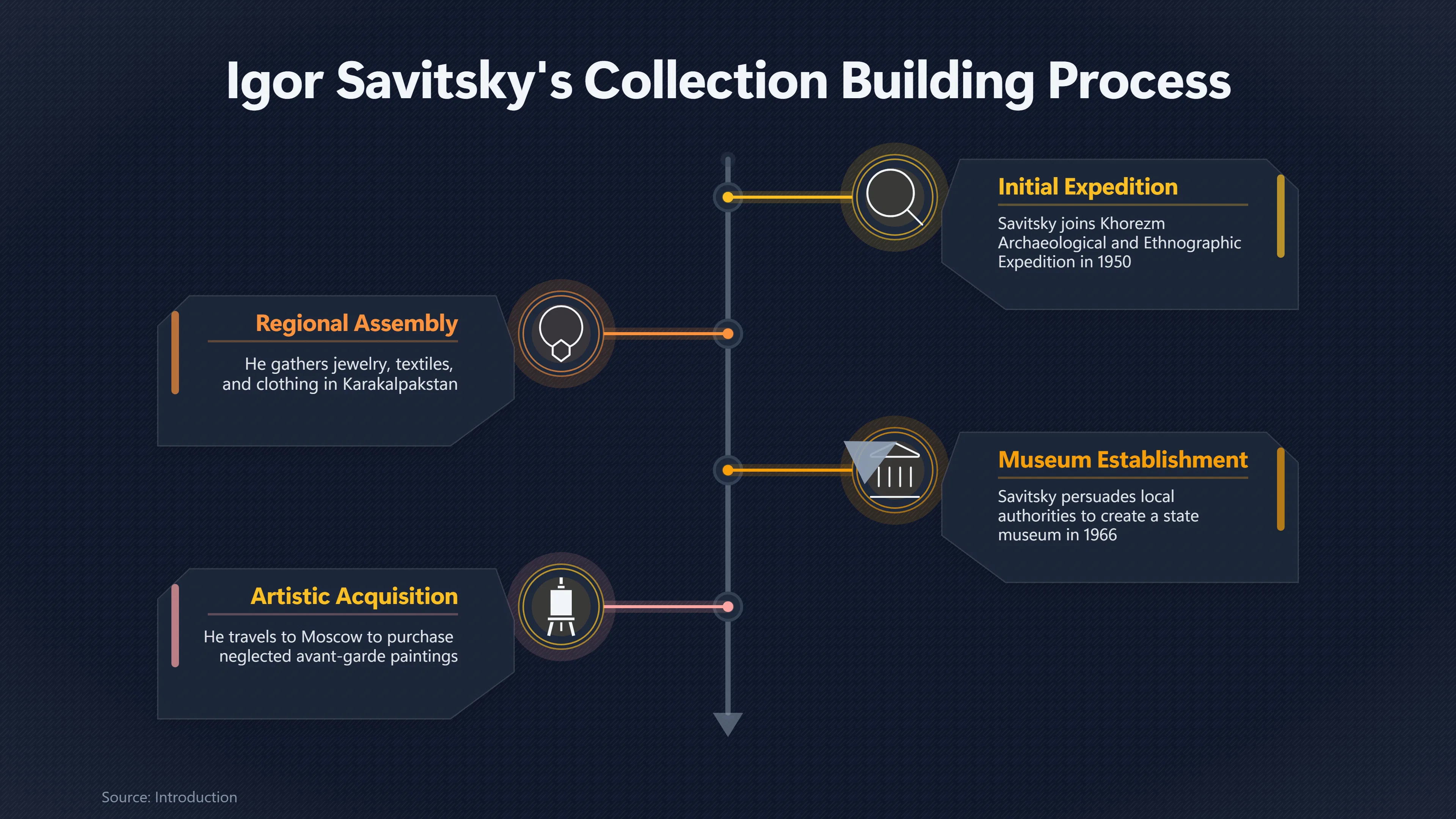
The museum owes its existence to Igor Savitsky (1915–1984), an artist, archaeologist and collector who first travelled to Karakalpakstan with the Khorezm Archaeological and Ethnographic Expedition in 1950. Fascinated by the region’s history and traditional culture, he remained in Nukus, assembling collections of jewellery, textiles, clothing and archaeological material before persuading local authorities to establish a state museum in 1966. He became its founding director and used that position to expand its scope far beyond regional ethnography.[Wikipedia]WikipediaIgor SavitskyIgor Savitsky
Savitsky recognised that an entire generation of Soviet artists had fallen into obscurity after the Communist Party imposed Socialist Realism as the only acceptable artistic style during the 1930s. Experimental movements such as Cubism, Constructivism, Futurism and other forms of modernism were denounced as “formalist” or decadent. Many artists lost their livelihoods, some were imprisoned or executed during Stalin’s purges, and countless paintings remained hidden in family homes or studio attics for decades.[The Guardian]theguardian.comThe GuardianThe lost Louvre of Uzbekistan: the museum that hid art banned by Stalin | Art | The GuardianMay 21, 2019…
Using museum funds and personal determination, Savitsky travelled repeatedly to Moscow and other cities, locating artists’ relatives and purchasing works that official museums ignored. His collection eventually included paintings by both Russian avant-garde artists and Central Asian modernists whose achievements had been similarly neglected. Many families were willing to sell because they believed the works would otherwise never be appreciated publicly.[The Guardian]theguardian.comThe Guardian Savitsky's secret hoard | | The GuardianThe Guardian Savitsky's secret hoard | | The Guardian
Why Nukus Became an Unlikely Safe Haven
The museum’s location is central to its story. Nukus was geographically isolated from the Soviet Union’s principal cultural institutions and attracted relatively little attention from central officials. This isolation gave Savitsky considerably more freedom than curators working in Moscow or Leningrad.
Popular accounts often describe the museum as a secret operation that completely fooled the Soviet authorities. The reality is more nuanced. Savitsky directed a public state museum with official approval, and regional authorities knew he was building collections. However, the remoteness of Karakalpakstan, combined with limited scrutiny and Savitsky’s skill in presenting the museum as a regional cultural institution, allowed him to acquire and preserve works that might have encountered far greater resistance elsewhere. The survival story therefore reflects both individual determination and the unusual administrative circumstances of the Soviet periphery, rather than a single dramatic act of concealment.[wikipedia.org]WikipediaNukus Museum of ArtNukus Museum of Art
This distinction matters because it explains why the collection survived. Rather than existing entirely outside the Soviet system, the museum occupied an unusual space within it, exploiting geographical distance and local priorities to preserve art that official cultural policy had marginalised.
What Visitors Find Beyond the Avant-Garde
Although international publicity often focuses on the “forbidden art”, the museum presents a much broader picture of cultural survival.
Alongside modern paintings, visitors encounter:
- Extensive collections of Karakalpak textiles, embroidery, jewellery and traditional costume.
- Folk art documenting the cultural heritage of the Karakalpak people.
- Archaeological artefacts recovered from ancient Khorezm, including ceramics, sculpture and objects from desert fortresses.
- Works by twentieth-century Uzbek and Central Asian artists whose careers developed alongside, but often independently from, Russian artistic movements.[Wikipedia]WikipediaNukus Museum of ArtNukus Museum of Art
This combination is one reason the museum feels unlike a conventional modern-art gallery. Instead of separating archaeology, ethnography and fine art into different institutions, the Savitsky Museum presents them together. Visitors move between ancient desert civilisations, regional craft traditions and radical twentieth-century painting within a single collection, revealing multiple layers of cultural history that survived in the same remote landscape.
The juxtaposition also challenges the idea that the museum exists solely because of Soviet censorship. Savitsky was equally committed to preserving local heritage that he believed rapid modernisation threatened to erase. His collecting philosophy therefore linked endangered artistic traditions across many centuries rather than focusing exclusively on political repression.[Wikipedia]WikipediaIgor SavitskyIgor Savitsky
Myth, Secrecy and the Museum’s Real History
The Savitsky Museum has acquired an almost legendary reputation. It is frequently described as the “Louvre of the Desert” or the museum that hid banned art from Stalin. These descriptions capture the remarkable importance of the collection but sometimes simplify its history.
Several popular myths deserve clarification.
It was not a hidden private collection. The museum was an official public institution established by the Karakalpak authorities, even if its location shielded it from close supervision.
Not every work was literally banned. Some artists had certainly been persecuted, while others were simply excluded from official exhibitions or forgotten as artistic tastes changed. The collection therefore preserves a wider spectrum of neglected Soviet modernism than the phrase “forbidden art” alone suggests.[Wikipedia]WikipediaNukus Museum of ArtNukus Museum of Art
Only a fraction of the holdings can be displayed at any one time. The museum contains tens of thousands of objects across art, archaeology and ethnography, meaning many paintings remain in storage or rotate through exhibitions. This contributes to the institution’s reputation as a place whose full treasures remain largely unseen.[Wikipedia]WikipediaNukus Museum of ArtNukus Museum of Art
The museum also continues to evolve. New exhibition spaces and conservation facilities have expanded its ability to care for the collection, while international exhibitions have introduced many of its artists to audiences that had never encountered them during the Soviet period.[Wikipedia]WikipediaNukus Museum of ArtNukus Museum of Art

Why the Museum Matters in Uzbekistan’s Curiosity Landscape
Among Uzbekistan’s unusual collections, the Savitsky Museum stands apart because its greatest curiosity is not an eccentric object but an improbable act of cultural preservation. Instead of displaying monsters, hoaxes or occult relics, it demonstrates how geography, personal conviction and historical circumstance combined to save an artistic tradition that political orthodoxy had tried to erase.
Its location in Nukus remains fundamental to that story. The same remoteness that once placed the museum on the margins of Soviet cultural life ultimately became its greatest protection. For visitors interested in Uzbekistan’s stranger heritage, the museum offers something rarer than spectacle: a collection whose survival is itself the most remarkable exhibit.
Amazon book picks
Further Reading
Books and field guides related to How Forbidden Art Survived in the Desert. Use these as the next step if you want deeper reading beyond the article.
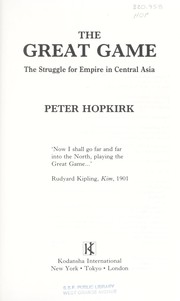
The Great Game
Describes the nineteenth-century struggle between Britain and Russia for control of Central Asia
The Silk Roads
The No. 1 Sunday Times and international bestseller - a major reassessment of world history in light of the economic and political renais...
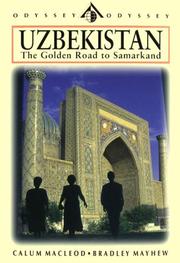
Uzbekistan
First published 1996. Subjects: Description and travel, Uzbekistan, description and travel, Civilization, Guidebooks.
The Whisperers: Private Life in Stalin's Russia
Drawing on a huge range of sources - letters, memoirs, conversations - Orlando Figes tells the story of how Russians tried to endure life...
eBay marketplace picks
Marketplace Samples
Live-tested eBay searches with available results related to this page.
Selected fromavant garde art print oneBay.co.uk.
Current eBay listing
Pop Avant Garde Collage Art Canvas Print - A4 Canvas Print. #8
Current eBay listing
Pop Avant Garde Collage Art Canvas Print - A4 Canvas Print. #1
Endnotes
1.
Source: Wikipedia
Title: Nukus Museum of Art
Link:https://en.wikipedia.org/wiki/Nukus_Museum_of_Art
2.
Source: Wikipedia
Title: Igor Savitsky
Link:https://en.wikipedia.org/wiki/Igor_Savitsky
3.
Source: karakalpakstan.travel
Link:https://karakalpakstan.travel/index.php?id=savitsky-museum
4.
Source: karakalpakstan.travel
Link:https://karakalpakstan.travel/media-and-resources/media-and-resources-31/
5.
Source: theguardian.com
Link:https://www.theguardian.com/artanddesign/2019/may/21/lost-louvre-uzbekistan-savitsky-museum-banned-art-stalin
Source snippet
The GuardianThe lost Louvre of Uzbekistan: the museum that hid art banned by Stalin | Art | The GuardianMay 21, 2019...
Published: May 21, 2019
6.
Source: theguardian.com
Title: The Guardian Savitsky’s secret hoard | | The Guardian
Link:https://www.theguardian.com/theguardian/2001/jan/01/features11.g22
7.
Source: theguardian.com
Title: A different take on Uzbekistan’s Louvre | Letters | The Guardian
Link:https://www.theguardian.com/world/2019/may/23/a-different-take-on-uzbekistan-louvre
Source snippet
[Input] The Savitsky Museum, Nukus, Uzbekistan. Photograph: Thomas Lehne/lotuseaters/Alamy Stock Photo View image in fullscreen The Savit...
8.
Source: lonelyplanet.com
Title: Savitsky Museum | Nukus, Uzbekistan | Attractions
Link:https://www.lonelyplanet.com/points-of-interest/savitsky-museum/1385477
9.
Source: mcmullenmuseum.bc.edu
Link:https://mcmullenmuseum.bc.edu/forbidden/
Additional References
10.
Source: museum-ludwig.de
Link:https://www.museum-ludwig.de/en/ausstellungen/archiv/2021/russian-avant-garde-at-the-museum-ludwig-original-and-fakequestions-research-explanations
Source snippet
Museum Ludwig, KölnSeptember 26, 2020 — Image: Natalja Gontscharowa, The Orange Vendor, 1916, Oil on canvas, 131 x 97 cm, Museum Ludwig...
Published: September 26, 2020
11.
Source: euronews.com
Link:https://www.euronews.com/culture/2025/10/28/the-louvre-in-the-desert-inside-the-savitsky-museum-in-karakalpakstan
Source snippet
October 28, 2025 — 'THE LOUVRE IN THE DESERT': INSIDE THE SAVITSKY MUSEUM IN KARAKALPAKSTAN Image: Savitsky Museum Savitsky Museum - Copy...
Published: October 28, 2025
12.
Source: chestnutjournal.com
Title: Located in Nukus, which is the capit
Link:https://chestnutjournal.com/2024/ubiquitously-uzbekistan-the-nukus-museum-of-art/
Source snippet
Ubiquitously Uzbekistan – The Nukus Museum of ArtJune 14, 2024 — June 14, 2024 UBIQUITOUSLY UZBEKISTAN – THE NUKUS MUSEUM OF ART The Kara...
Published: June 14, 2024
13.
Source: uzembassy.org.tr
Link:https://www.uzembassy.org.tr/news/5384?language=en
14.
Source: arnoldsche.com
Link:https://arnoldsche.com/en/vergriffen/homage-to-savitsky/
15.
Source: mv.helsinki.fi
Link:https://www.mv.helsinki.fi/home/tphuttun/mosaiikki/en1/ss1_en.htm
16.
Source: ceeres.uchicago.edu
Link:https://ceeres.uchicago.edu/blog/improbable-museum-igor-savitskys-collection-russian-avant-garde-and-karakalpak-art-soviet
17.
Source: rferl.org
Link:https://www.rferl.org/a/savitsky_avant-garde_art_collection_makes_buzz_in_west_unease_in_uzbekistan/3544853.html
18.
Source: youtube.com
Title: Saving works of art from destruction
Link:https://www.youtube.com/watch?v=mbDipNv17CI
Source snippet
How Igor Savitsky saved art despite the Soviets Resistance...
19.
Source: youtube.com
Title: Keepers of the Lost Art
Link:https://www.youtube.com/watch?v=pxu357CRKk8
Source snippet
Uncertain future for Uzbekistan's avant-garde museum...