What Makes Ecuador's Strangest Collections Matter?
Ecuador does not have a single national museum of the strange. Its curiosity culture is spread across archaeological museums, religious collections, municipal displays and tourist attractions where human remains, sacred objects, natural specimens and disputed claims sit beside conventional history.
Page outline Jump by section
Introduction
These places reward curiosity, but they need careful reading. Some objects remain spiritually important to living communities rather than merely being exotic specimens. Others have been distorted by colonial collecting, sensational tourism or modern pseudoscience. Ecuadors strangest collections therefore matter not only because of what they display, but because they reveal who has been allowed to interpret unusual objectsand how museums are now reconsidering inherited stories about them.

Where to find Ecuadors strongest curiosity collections
The countrys unusual material is concentrated in several distinct types of institution. Large public museums provide the best-supported interpretation, while smaller local and devotional collections often offer the most eccentric visitor experience.
Pumapungo Museum in Cuenca is the clearest starting point. It is a major public museum and archaeological complex rather than a niche horror attraction, but its ethnographic galleries have long been associated with ceremonial heads made by Shuar and Achuar peoples. Its displays place them within Amazonian ritual life instead of treating them simply as macabre trophies. The museum has also received a specimen returned to Ecuador by the Vatican after examination and conservation by the National Institute of Cultural Heritage.[patrimoniocultural.gob.ec]patrimoniocultural.gob.ecDecember 20, 2019 Cuenca, 20 de diciembre de 2019.- La tzantza devuelta al Ecuador en el 2018 por el Vaticano lleg al Museo Pumapungo…
The Municipal Museum of Guano, near Riobamba, contains Ecuadors best-known naturally preserved human body. The museum was developed beside the church where the remains were discovered, giving visitors a compact local-history experience built around one extraordinary object rather than an extensive mummy collection. Scientific work supported by Ecuadors heritage authorities has treated the body as evidence for studying health, disease and burial conditions after the Spanish conquest.[gob.ec]patrimoniocultural.gob.ecEn el marco de su visita al Ecuador, Phillippe Charlier acordar la firma de un convenio de cooperacin tcnica entre el museo del Quai B…
The Fray Enrique Mideros Museum in Baos combines religious art, offerings to the Virgin of Holy Water, old household objects and preserved animals. The provincial tourism authority describes the collection as unusually varied, with votive gifts presented in thanks for perceived miracles alongside taxidermy and devotional material. It is less academically ordered than a national museum, but precisely that mixture gives it the atmosphere of a traditional cabinet of curiosities.[goecuador.net]goecuador.netFray Enrique Mideros Museum in Baños de Agua SantaFray Enrique Mideros Museum in Baños de Agua Santa
Quitos historic museums and convent collections offer a different kind of strangeness. The former San Juan de Dios hospital, now the Museum of the City, interprets illness, care and death within the history of the capital. Its displays have included funerary customs, occupations connected with death and temporary exhibitions examining the boundary between the living and the dead. Nearby religious museums preserve intense colonial images of suffering, saints, miracles and the afterlife, objects that were made for devotion rather than for detached museum viewing.[gob.ec]archivo.fundacionmuseosquito.gob.ecEspacio: Museo de la Ciudad | Fundacin Museos de la CiudadEspacio: Museo de la Ciudad | Fundacin Museos de la Ciudad
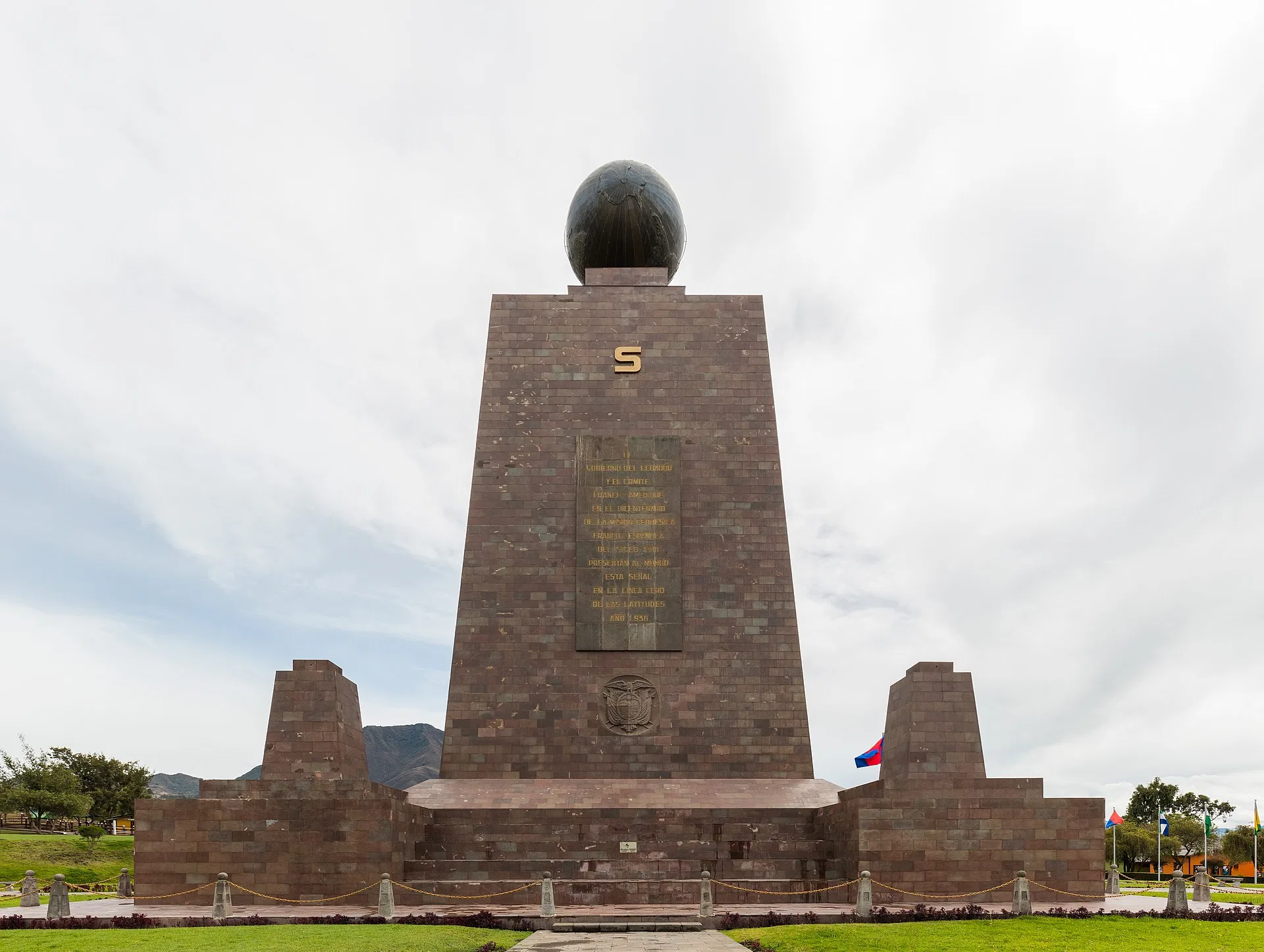
The Intian Solar Museum and the Middle of the World complex, north of Quito, represent curiosity culture at its most commercial. They combine ethnographic displays, geographic symbolism and participatory demonstrations associated with latitude zero. They are enjoyable tourist attractions, but visitors should distinguish the cultural exhibits and the genuine history of equatorial measurement from staged claims about draining water, weakened muscles or eggs becoming uniquely easy to balance on the equator.[tripadvisor.co.uk]tripadvisor.co.ukOpen source on tripadvisor.co.uk.
The ceremonial heads at Pumapungo
The objects commonly described in English as shrunken heads are among the most famousand most misunderstooditems associated with Ecuador. The more appropriate name is tsantsa, retained here because it is the Shuar term and identifies a specific ceremonial object rather than a generic gruesome curiosity.
They were made historically by Shuar and Achuar communities of the upper Amazon. The skull was removed and the remaining skin was reduced and shaped through a specialised process. Their significance was connected to warfare, ritual power and relations between the living, the dead and dangerous spiritual forces. Early outside accounts were frequently written by missionaries, travellers or collectors who did not understand the language or ceremonial setting, leaving major gaps in the historical record.[ox.ac.uk]prm.ox.ac.ukShrunken heads | Pitt Rivers MuseumShrunken heads | Pitt Rivers Museum
European and North American demand transformed these objects. Once collectors began paying for them, genuine ceremonial remains were separated from their communities and mixed with commercial imitations made from human bodies, monkeys, sloths or other animal material. Museum catalogues often preserved the collectors story but little reliable information about the deceased person or the exact circumstances of acquisition. Scientific authentication is therefore difficult and ethically charged: the question is not merely whether an object is real, but whether it should be treated as an artefact, ancestral remains or both.[psu.edu]matson.psu.eduMatson Museum of Anthropology TsantsasMatson Museum of Anthropology Tsantsas
Research on specimens held in Ecuador has used genetic testing and medical imaging to distinguish human ceremonial remains from replicas and to identify physical evidence of traditional preparation. A genetic study of 14 examples from Ecuadorian national collections found that most of the sampled maternal lineages were consistent with Indigenous American populations. Researchers examining another specimen from Guayaquil used computed tomography to investigate construction features without cutting into it. These methods can clarify biological origin and manufacture, but they cannot reconstruct consent, identity or ceremonial history when documentation has been lost.[sciencedirect.com]sciencedirect.comOpen source on sciencedirect.com.
Pumapungo is important because it offers an Ecuadorian setting in which these remains can be interpreted alongside the cultures from which they came. Even so, no display is neutral. Shuar representatives have increasingly challenged museum practices that turn ancestors into symbols of savagery or spectacle, and international institutions have removed specimens from exhibition or faced calls for repatriation. The return of a ceremonial head from Mercer University to Ecuador in 2021 illustrates the broader movement from possession towards authentication, dialogue and restitution.[museumsassociation.org]museumsassociation.orgshuar people seek repatriation of shrunken heads in uk collectionsshuar people seek repatriation of shrunken heads in uk collections
For visitors, the responsible approach is to avoid treating the gallery as a freak show. The most revealing questions concern colonial trade, spiritual meaning, museum authority and the difficulty of separating authentic ceremonial remains from objects manufactured for outsiders.
The Guano mummy: local attraction and research subject
The body known as the Guano mummy was found within the ruins of a church in Chimborazo province. It survived through natural rather than elaborate artificial preservation, probably because local environmental and burial conditions slowed decomposition. The remains are traditionally associated with a Franciscan friar, although interpretation has depended on historical, archaeological and forensic investigation rather than folklore alone.[gob.ec]patrimoniocultural.gob.ecEn el marco de su visita al Ecuador, Phillippe Charlier acordar la firma de un convenio de cooperacin tcnica entre el museo del Quai B…
The museum built to house the body is small and municipal, making it quite different from the large mummy museums found elsewhere in Latin America. Its attraction rests on rarity: Ecuadors climate and burial traditions have not produced the extensive publicly displayed mummy collections associated with places such as Guanajuato in Mexico or the high Andes of Peru and Chile.
Scientific attention has changed the meaning of the display. Ecuadors National Institute of Cultural Heritage has described the remains as an exceptional case of natural preservation and as a source of evidence about disease before and after European colonisation. Forensic investigation can examine bone, soft tissue, dental condition and traces of infection, potentially turning a local oddity into a record of lived health and mortality.[patrimoniocultural.gob.ec]patrimoniocultural.gob.ecEn el marco de su visita al Ecuador, Phillippe Charlier acordar la firma de un convenio de cooperacin tcnica entre el museo del Quai B…
The museum nevertheless raises familiar ethical questions. A preserved body is not simply an archaeological object. Clear interpretation should explain who the individual may have been, why the remains survived, what scientists can genuinely establish and which elements remain local tradition. A claim sometimes repeated in tourism materialthat this is Ecuadors only mummyshould be read as promotional shorthand for the countrys only famous museum-displayed natural mummy, not as proof that no other preserved human remains have ever been found within Ecuador.[huecasdelecuador.com]huecasdelecuador.comGuano: la nica momia del Ecuador te esperaGuano: la nica momia del Ecuador te espera
Miracles, relics and devotional oddities
Ecuadors colonial churches and convent museums contain objects that can appear uncanny to secular visitors: wounded Christ figures, sorrowful Virgins, relics, penitential imagery, miniature limbs, photographs of accidents and gifts offered after answered prayers. These are not occult collections in the usual sense. They belong to a Catholic culture in which material objects mediate relationships among worshippers, saints, suffering, healing and memory.
The Fray Enrique Mideros Museum in Baos is one of the most accessible examples. It preserves gifts associated with devotion to the Virgin of Holy Water, whose shrine attracts people seeking protection or giving thanks for survival and recovery. Votive offerings are effectively physical testimonies: an object records the devotees belief that divine help acted in a particular event. The same collection reportedly contains historical utensils and mounted animals, producing an unusually eclectic visitor experience in which sacred gratitude, local history and natural curiosity overlap.[goecuador.net]goecuador.netFray Enrique Mideros Museum in Baños de Agua SantaFray Enrique Mideros Museum in Baños de Agua Santa
Quitos convent and church museums are generally more formal, but their imagery can be more intense. Colonial religious art sought emotional force rather than restraint. Painted blood, exposed wounds, skulls and scenes of martyrdom were used to direct attention towards sin, mortality and salvation. Within their original setting, such objects were active devotional instruments; placing them behind museum glass changes them into art-historical evidence while never entirely removing their sacred function.
Collections of relics deserve similar care. A relic is not merely an old bone or fragment displayed because it looks strange. Within Catholic practice, bodily remains and objects associated with holy people can serve as points of contact with sacred history. Their credibility depends on documented provenance, church authentication and faith tradition, not on scientific proof of miraculous power. Where documentation is weak, museums should distinguish established ownership history from devotional attribution.
Death and healing in Quitos old hospital
The Museum of the City occupies Quitos former San Juan de Dios hospital, a building where medical care, religious charity and death were intertwined for centuries. That setting gives its historical displays a physical immediacy that a purpose-built museum cannot reproduce. Reconstructed spaces and interpretive material address how patients were treated, who provided care and how medicine reflected the social hierarchy of colonial and republican Quito.[archivo.fundacionmuseosquito.gob.ec]archivo.fundacionmuseosquito.gob.ecEspacio: Museo de la Ciudad | Fundacin Museos de la CiudadEspacio: Museo de la Ciudad | Fundacin Museos de la Ciudad
The museum has also treated death as a cultural process rather than only a biological event. Recent and temporary programming has examined funeral objects, remembrance, cemetery practices and occupations connected with dying. A 2025 exhibition approached the boundary between life and death through an anthropological lens, presenting funerary culture as a field of labour, ritual and memory.[quitoinforma.quito.gob.ec]quitoinforma.quito.gob.ecOpen source on gob.ec.
This is a valuable counterpoint to displays of mummies or ceremonial remains. Instead of isolating a dead body as an extraordinary specimen, the old hospital encourages visitors to consider the systems around death: care, belief, mourning, burial and commemoration. It also shows that Ecuadorian curiosity culture is not limited to spectacular objects. Sometimes the unusual collection is an archive of ordinary mortality preserved within the place where it happened.
The equator as science theatre
Few Ecuadorian attractions illustrate the boundary between education and showmanship as clearly as the museums around latitude zero. The Middle of the World complex commemorates the eighteenth-century French Geodesic Mission, whose measurements in the territory of modern Ecuador helped investigate the shape of the Earth. The monument, museum displays and painted line turn an abstract geographic coordinate into a photographable destination.[Wikipedia]WikipediaCiudad Mitad del MundoCiudad Mitad del Mundo
The private Intian attraction adds reconstructed Indigenous dwellings, ethnographic objects and guided demonstrations. Its most famous activities include balancing an egg and observing water drain in different directions after a container is moved across a marked line. These are memorable performances, but the usual explanations are scientifically unsound.
The Coriolis effect produced by the Earths rotation is real, yet it is far too weak to determine the direction of water draining from a small portable basin. The direction is controlled primarily by the container, the way the water was poured and residual motion. Eggs can be balanced away from the equator, while claims of sudden muscular weakness at latitude zero have no accepted physical basis.[skepticalinquirer.org]skepticalinquirer.orgecuadorian equatorial pseudoscienceecuadorian equatorial pseudoscience
Even the painted lines require qualification. Modern satellite positioning shows that the monumental line at the Middle of the World is displaced from the geographic equator. Claims that a nearby tourist site marks the exact coordinate also vary according to the measurement and location used. This does not make the attractions worthless; it makes them examples of science theatre, where performance, national identity and visitor participation are more important than experimental control.[skepticalinquirer.org]skepticalinquirer.orgecuadorian equatorial pseudoscienceecuadorian equatorial pseudoscience
Visitors can enjoy the demonstrations while treating them as tricks rather than proofs. The more substantial story lies in the history of geodesy, the challenge of measuring the planet before satellites and Ecuadors successful transformation of an invisible line into a national tourism symbol.
The Father Crespi mystery
No survey of Ecuadorian oddity collecting is complete without Carlo Crespi Croci, an Italian Salesian missionary who lived in Cuenca and accumulated thousands of objects brought or sold to him by local people. His collection reportedly ranged from recognised archaeological and ethnographic material to roughly worked metal sheets covered with unfamiliar figures and scripts.
Crespis collection later became entangled with stories of lost civilisations, ancient Mediterranean visitors, underground libraries and the Cueva de los Tayos cave system. Alternative-history writers presented certain plates as evidence of Egyptian, Sumerian or other Old World writing in pre-Columbian Ecuador. These claims have never gained credible archaeological acceptance, and the most spectacular items were often poorly documented, visually crude or impossible to trace after thefts, dispersal and Crespis death.[ancient-origins.net]ancient-origins.nettrail father crespi collection part i 006526trail father crespi collection part i 006526
The useful distinction is between the collection and the mythology surrounding it. Crespi appears to have possessed many genuine Ecuadorian objects; thousands considered archaeologically valuable were inventoried and transferred to the Central Bank of Ecuador. That does not authenticate every metal plate or the sweeping claims made about them. A mixed collection can contain legitimate antiquities, recent Indigenous or popular art, tourist-made pieces, gifts and deliberate fabrications at the same time.[Wikipedia]WikipediaCarlo Crespi CrociCarlo Crespi Croci
There is no dependable public Crespi mystery museum where visitors can inspect a complete, intact hoard. Much of the legend survives through old photographs, books, online retellings and claims about missing objects. That absence is part of the fascination, but it also prevents proper testing. Without secure excavation records, material analysis and a documented chain of custody, resemblance to an ancient script is not evidence of contact with a lost civilisation.
The Crespi story matters because it demonstrates how a curiosity cabinet can become a mythology machine. Once objects lose their original context, gaps are easily filled by dramatic narratives. Ecuadors genuine archaeological depth then becomes raw material for claims that are more commercially exciting than historically credible.
How to visit without losing the context
Ecuadors unusual collections are best approached as different kinds of evidence rather than as a ranked list of macabre attractions.
At Pumapungo, the key issue is the changing interpretation of Indigenous human remains and the responsibilities museums have towards descendant communities. At Guano, it is the relationship between a naturally preserved body, local identity and forensic study. In Baos and Quitos religious museums, it is the continuing power of devotional objects that were never intended to be mere curios. At the equator attractions, it is the difference between genuine geographical history and staged pseudoscience. In the Crespi case, it is the danger of treating missing provenance as proof of mystery.
Public access, opening hours and individual displays can change, especially in municipal museums, convents and institutions undergoing conservation. Human remains may also be withdrawn from view for ethical or scientific reasons. Visitors should therefore check current institutional information rather than relying exclusively on travel blogs or older photographs.
The countrys strangest heritage is not strange because Ecuador lacks serious scholarship. It is strange because sacred remains, colonial collecting, scientific investigation, religious devotion, folklore and tourist performance repeatedly occupy the same display space. The best museums make those layers visible. The weakest allow an extraordinary object to float free of its history, ready to be mistaken for a monster, miracle or proof of a civilisation that never existed.
Amazon book picks
Further Reading
Books and field guides related to What Makes Ecuador's Strangest Collections Matter?. Use these as the next step if you want deeper reading beyond the article.
A History of Zimbabwe
The first single-volume history of Zimbabwe with detailed coverage from pre-colonial times to the present, this book examines Zimbabwe's...
A History of African Archaeology
First published 1990. Subjects: History, Antiquities, Archaeology, Archéologie, Antiquités.
eBay marketplace picks
Marketplace Samples
Live-tested eBay searches with available results related to this page.
Selected fromAfrican archaeology decor oneBay.co.uk.
Endnotes
1.
Source: patrimoniocultural.gob.ec
Link:https://www.patrimoniocultural.gob.ec/tzantza-ecuatoriana-que-reposaba-en-el-vaticano-llega-a-pumapungo/
Source snippet
December 20, 2019 Cuenca, 20 de diciembre de 2019.- La tzantza devuelta al Ecuador en el 2018 por el Vaticano lleg al Museo Pumapungo...
Published: December 20, 2019
2.
Source: patrimoniocultural.gob.ec
Link:https://www.patrimoniocultural.gob.ec/museo-y-sitio-arqueologico-pumapungo/
Source snippet
Museo y Sitio Arqueolgico Pumapungo Instituto Nacional de Patrimonio CulturalQuito - Ecuador...
3.
Source: patrimoniocultural.gob.ec
Link:https://www.patrimoniocultural.gob.ec/philippe-charlier-forense-con-reconocimiento-mundial-analizara-la-momia-de-guano/
Source snippet
En el marco de su visita al Ecuador, Phillippe Charlier acordar la firma de un convenio de cooperacin tcnica entre el museo del Quai B...
4.
Source: riobamba.com.ec
Link:https://riobamba.com.ec/es-ec/chimborazo/guano/museos/momia-guano-a6lbsd632
Source snippet
* La Alcalda de Guano, con la inversin del Instituto Nacional de Patrimonio Cultural, construy un museo a un lado de la iglesia donde...
5.
Source: patrimoniocultural.gob.ec
Link:https://www.patrimoniocultural.gob.ec/la-momia-de-guano-investigacion-cientifica-del-inpc-sera-presentada-en-teleamazonas/
6.
Source: goecuador.net
Title: Fray Enrique Mideros Museum in Baños de Agua Santa
Link:https://goecuador.net/tourist-attraction/fray-enrique-mideros-museum-in-banos-de-agua-santa
7.
Source: archivo.fundacionmuseosquito.gob.ec
Title: Espacio: Museo de la Ciudad | Fundacin Museos de la Ciudad
Link:https://archivo.fundacionmuseosquito.gob.ec/museo-de-la-ciudad/
8.
Source: quitoinforma.quito.gob.ec
Link:https://quitoinforma.quito.gob.ec/2025/09/17/entre-mausoleos-y-recuerdos-el-museo-de-la-ciudad-presenta-umbrales-de-las-vidas-que-no-vemos/
9.
Source: quitoinforma.quito.gob.ec
Link:https://quitoinforma.quito.gob.ec/2025/01/01/entre-el-cierre-del-ano-y-el-inicio-de-2026-le-presentamos-la-agenda-cultural-de-la-fundacion-museos-de-la-ciudad/
10.
Source: quitoinforma.gob.ec
Link:https://www.quitoinforma.gob.ec/2020/10/29/reviva-las-tradiciones-culturales-del-dia-de-los-difuntos-en-los-museos-de-la-ciudad/
11.
Source: Wikipedia
Title: Ciudad Mitad del Mundo
Link:https://en.wikipedia.org/wiki/Ciudad_Mitad_del_Mundo
12.
Source: prm.ox.ac.uk
Title: Shrunken heads | Pitt Rivers Museum
Link:https://www.prm.ox.ac.uk/shrunken-heads
13.
Source: pmc.ncbi.nlm.nih.gov
Link:https://pmc.ncbi.nlm.nih.gov/articles/PMC9348654/
14.
Source: nature.com
Link:https://www.nature.com/articles/s40494-021-00518-z
15.
Source: sciencedirect.com
Link:https://www.sciencedirect.com/science/article/abs/pii/S0379073821001997
16.
Source: den.mercer.edu
Link:https://den.mercer.edu/decades-after-shrunken-head-was-brought-to-mercer-professors-return-it-to-ecuador/
17.
Source: huecasdelecuador.com
Title: Guano: la nica momia del Ecuador te espera
Link:https://www.huecasdelecuador.com/ec/guano/historia-museos/guano-la-unica-momia-del-ecuador-te-espera/
18.
Source: Wikipedia
Title: Schiehallion experiment
Link:https://en.wikipedia.org/wiki/Schiehallion_experiment
19.
Source: ancient-origins.net
Title: trail father crespi collection part i 006526
Link:https://www.ancient-origins.net/opinion-guest-authors/trail-father-crespi-collection-part-i-006526
20.
Source: fosvis.files.wordpress.com
Link:https://fosvis.files.wordpress.com/2015/04/the-crespi-ancient-artifact-collection-of-cuenca-ecuador-compiled-by-glen-w-chapman-nov-1998.pdf
21.
Source: fosvis.wordpress.com
Title: Fosvis The Crespi collection | Fosvis
Link:https://fosvis.wordpress.com/the-crespi-collection/
22.
Source: Wikipedia
Title: Carlo Crespi Croci
Link:https://it.wikipedia.org/wiki/Carlo_Crespi_Croci
23.
Source: Wikipedia
Title: Carlo Crespi Croci
Link:https://en.wikipedia.org/wiki/Carlo_Crespi_Croci
24.
Source: quitoinforma.gob.ec
Link:https://www.quitoinforma.gob.ec/2025/10/29/ferado-arte-historia-ciencia-ambiente-y-diversas-experiencias-se-viven-en-los-museos-de-la-ciudad/
25.
Source: quitoinforma.gob.ec
Link:https://www.quitoinforma.gob.ec/2024/11/06/veladas-nocturnas-talleres-y-exposiciones-en-los-museos-de-quito/
26.
Source: quitoinforma.gob.ec
Link:https://www.quitoinforma.gob.ec/2023/10/31/museo-de-la-ciudad-invita-a-reflexionar-sobre-la-ritualidad-y-los-difuntos/
27.
Source: quitoinforma.gob.ec
Link:https://www.quitoinforma.gob.ec/2023/10/26/museos-ofrecen-una-programacion-especial-para-el-feriado-de-difuntos/
28.
Source: quitoinforma.gob.ec
Title: El feriado de difuntos se disfruta en los museos de Quito! Quito Informa
Link:https://www.quitoinforma.gob.ec/2022/10/27/el-feriado-de-difuntos-se-disfruta-en-los-museos-de-quito/
29.
Source: repositorio.ame.gob.ec
Link:https://repositorio.ame.gob.ec/conoce-de-cerca-las-culturas-canari-e-inca-el-museo-y-parque-etno-botanico-pumapungo/
30.
Source: quitoinforma.gob.ec
Link:https://www.quitoinforma.gob.ec/2020/10/23/disfrute-las-actividades-de-los-museos-para-el-feriado-de-difuntos/
31.
Source: johnandmarylivingitupinecuador.wordpress.com
Title: chirije ufos part 4
Link:https://johnandmarylivingitupinecuador.wordpress.com/2012/11/01/chirije-ufos-part-4/
32.
Source: Wikipedia
Title: Shrunken head
Link:https://en.wikipedia.org/wiki/Shrunken_head
33.
Source: Wikipedia
Title: Museum of Witchcraft and Magic
Link:https://en.wikipedia.org/wiki/Museum_of_Witchcraft_and_Magic
34.
Source: patrimoniocultural.gob.ec
Link:https://www.patrimoniocultural.gob.ec/gestion-de-areas-arqueologicas-paleontologicas-y-patrimonio-subacuatico/
35.
Source: tripadvisor.com
Title: See shrunken heads + the equator
Link:https://www.tripadvisor.com/ShowUserReviews-g7377590-d315753-r158076625-Intinan_Museum-San_Antonio_de_Pichincha_Quito_Pichincha_Province.html
36.
Source: tripadvisor.com
Link:https://www.tripadvisor.com/ShowUserReviews-g7377590-d315753-r212942104-Intinan_Museum-San_Antonio_de_Pichincha_Quito_Pichincha_Province.html
37.
Source: tripadvisor.co
Title: Attractions g294308 Activities c49 t30 Quito Pichincha Province
Link:https://www.tripadvisor.co/Attractions-g294308-Activities-c49-t30-Quito_Pichincha_Province.html
38.
Source: museosquito.gob.ec
Link:https://museosquito.gob.ec/espacios/museo-nacional-del-ecuador/
39.
Source: youtube.com
Title: I visited the town of Guano outside Riobamba, Ecuador to see a famous mummy
Link:https://www.youtube.com/watch?v=GvWuejuGAaY
Source snippet
Pumapungo | The Last Outpost of the Inca in Ecuador & Ancient Elongated Skulls...
40.
Source: youtube.com
Title: Pumapungo | The Last Outpost of the Inca in Ecuador & Ancient Elongated Skulls
Link:https://www.youtube.com/watch?v=ynyFHGN45Z0
Source snippet
Exploring the Pumapungo Museum: A Journey Through Ecuador's History...
41.
Source: tripadvisor.co.uk
Link:https://www.tripadvisor.co.uk/Attraction_Review-g7377590-d315753-Reviews-Intinan_Equator_Museum-San_Antonio_de_Pichincha_Quito_Pichincha_Province.html
42.
Source: skepticalinquirer.org
Title: ecuadorian equatorial pseudoscience
Link:https://skepticalinquirer.org/exclusive/ecuadorian-equatorial-pseudoscience/
43.
Source: gadventures.com
Title: busted top 3 equator line tricks debunked
Link:https://www.gadventures.com/blog/busted-top-3-equator-line-tricks-debunked/
44.
Source: matson.psu.edu
Title: Matson Museum of Anthropology Tsantsas
Link:https://matson.psu.edu/tsantsas/
45.
Source: collection.sciencemuseumgroup.org.uk
Title: tsantsa with long hair
Link:https://collection.sciencemuseumgroup.org.uk/objects/co104381/tsantsa-with-long-hair
46.
Source: science.org
Title: shrunken heads long charged ritual meaning finally get scientific attention
Link:https://www.science.org/content/article/shrunken-heads-long-charged-ritual-meaning-finally-get-scientific-attention
47.
Source: museumsassociation.org
Title: shuar people seek repatriation of shrunken heads in uk collections
Link:https://www.museumsassociation.org/museums-journal/news/2025/10/shuar-people-seek-repatriation-of-shrunken-heads-in-uk-collections/
48.
Source: lordslibrary.parliament.uk
Link:https://lordslibrary.parliament.uk/human-body-parts-for-sale-on-display-and-in-collections-law-policy-and-campaigns-for-repatriation/
49.
Source: practicalvagabonds.com
Title: ecuador equator intinan museum
Link:https://practicalvagabonds.com/ecuador-equator-intinan-museum/
50.
Source: dspace.ucuenca.edu.ec
Link:https://dspace.ucuenca.edu.ec/items/d8d3a144-8498-4d36-966a-84ca551dd867
51.
Source: ancientoriginsunleashed.com
Title: on the trail of the father crespi 330
Link:https://www.ancientoriginsunleashed.com/p/on-the-trail-of-the-father-crespi-330
52.
Source: simposio-arqueologia.uazuay.edu.ec
Link:https://simposio-arqueologia.uazuay.edu.ec/contactenos
53.
Source: research.usfq.edu.ec
Link:https://research.usfq.edu.ec/es/publications/correlative-tomography-and-authentication-features-of-a-shrunken-/
54.
Source: epn.edu.ec
Link:https://www.epn.edu.ec/museo/
55.
Source: puce.edu.ec
Title: Museo Weilbauer
Link:https://www.puce.edu.ec/centro-cultural/museo-weilbauer/
56.
Source: museu.ms
Title: Museo Pumapungo
Link:https://museu.ms/museum/details/16990/museo-pumapungo-ministerio-de-cultura-y-patrimonio
Additional References
57.
Source: descubrecuador.com
Title: Descubr Ecuador Museo y Parque Arqueolgico Pumapungo
Link:https://www.descubrecuador.com/item/museo-y-parque-arqueologico-pumapungo/
Source snippet
* Centro de Avifauna: Es un ncleo zoolgico que posee alrededor de 115 ejemplares de 30 especies de aves silvestres de las regiones del...
58.
Source: youtube.com
Title: Exploring the Pumapungo Museum: A Journey Through Ecuador’s History
Link:https://www.youtube.com/watch?v=NRfaArnROCE
Source snippet
Ecuador At The Equator - Water Demonstration - Coriolis Effect...
59.
Source: youtube.com
Title: Is the Equator Water Trick Actually Real? (Intian Museum)
Link:https://www.youtube.com/watch?v=ubg2Q_UFM2M
Source snippet
I visited the town of Guano outside Riobamba, Ecuador to see a famous mummy...
60.
Source: researchgate.net
Link:https://www.researchgate.net/publication/369878169_Reflexiones_en_torno_al_Proyecto_Tsantsas_repensando_las_colecciones_de_objetos_Shuar_a_nivel_nacional_e_internacional
61.
Source: atlasobscura.com
Link:https://www.atlasobscura.com/things-to-do/ecuador/museums
62.
Source: atlasobscura.com
Link:https://www.atlasobscura.com/things-to-do/bolivia
63.
Source: atlasobscura.com
Link:https://www.atlasobscura.com/things-to-do/quito-ecuador/museums
64.
Source: instagram.com
Link:https://www.instagram.com/bramroza/
65.
Source: pichinchaesturismo.com
Link:https://pichinchaesturismo.com/es-ec/pichincha/quito/museos/capilla-hombre-casa-museo-guayasamin-aa0e12808
66.
Source: facebook.com
Link:https://www.facebook.com/groups/AllBugsGoToKevin/posts/1467616550760789/