Within Curious Peru
Inside Peru's Most Unsettling Medical Collection
Lima's preserved brains show how clinical collections can educate the public without becoming mere shock attractions.
On this page
- The Museo del Cerebro and its hospital origins
- What preserved brains reveal about disease
- Where education ends and spectacle begins
Page outline Jump by section
Introduction
Peru’s most unusual medical collection is not designed to frighten visitors. Instead, it uses real human specimens to explain how disease changes the brain and why neurological disorders matter. The Museo del Cerebro (Brain Museum) in Lima, operated by the National Institute of Neurological Sciences, is one of the country’s most distinctive scientific collections, bringing together thousands of preserved human brains accumulated through decades of hospital practice and neuropathological research. Rather than presenting death as spectacle, the museum places preserved organs within a clinical and educational framework, making it an unusual example of a curiosity that remains firmly rooted in medicine, public health and teaching rather than entertainment.[cultura.pe]museos.cultura.peMuseos Museo del Cerebro | MuseosMuseos Museo del Cerebro | Museos
Within Peru’s wider landscape of unusual collections—which includes archaeological mummies, colonial catacombs and ritual burials—the Brain Museum occupies a different niche. Every specimen originated within a functioning neurological hospital, allowing visitors to see the physical evidence of diseases that are usually understood only through scans, diagrams or textbook illustrations.[repositorio.minsa.gob.pe]repositorio.minsa.gob.peRefugio de incurables 1669 - 2004: Instituto Nacional de Ciencias Neurológicas…
The Museo del Cerebro and its hospital origins
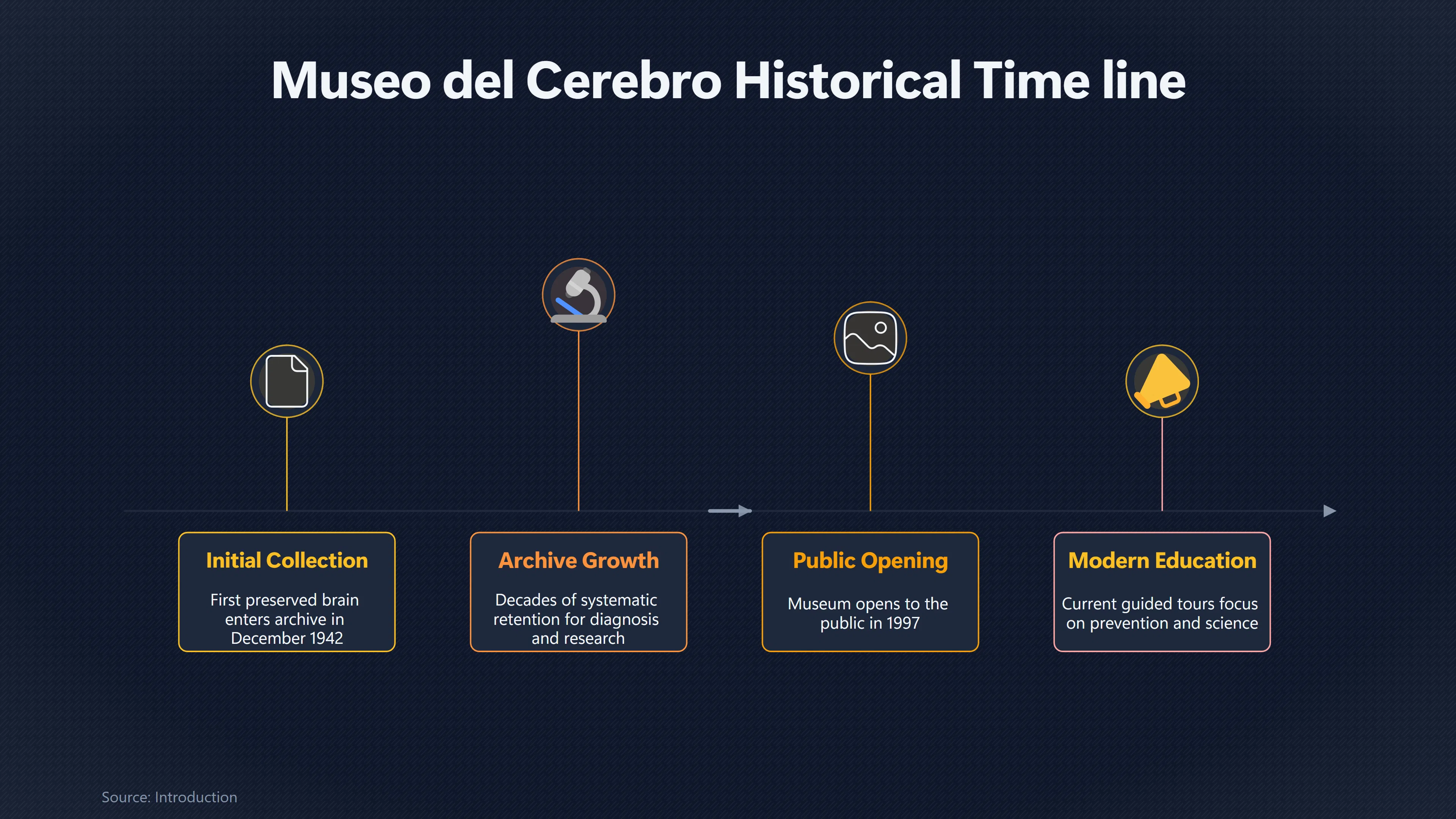
The museum forms part of the National Institute of Neurological Sciences in Lima, housed within the historic Santo Toribio de Mogrovejo Hospital complex in the Barrios Altos district. It opened as a public museum in 1997, although the collection itself began much earlier. The first preserved brain entered the institute’s neuropathology collection in December 1942, when hospital specialists started systematically retaining specimens for diagnosis, teaching and research. Over more than eight decades, that archive has grown into one of Latin America’s most specialised collections of human brain pathology.[cultura.pe]museos.cultura.peMuseos Museo del Cerebro | MuseosMuseos Museo del Cerebro | Museos
Today the museum serves several audiences simultaneously. Medical students use it to understand neurological disease directly from preserved tissue. School groups encounter anatomy and public health in a more tangible way than classroom models allow. Researchers also benefit from the associated “cerebroteca” or brain bank, where thousands of catalogued specimens remain available for scientific study rather than public exhibition.[gob.pe]gob.peCómo acceder a una visita guiada al Museo del CerebroServicio - Instituto Nacional de Ciencias Neurológicas - Plataforma del Estado Peruano…
Unlike many curiosity museums built around rare or bizarre objects, this collection grew naturally from clinical practice. Its exhibits exist because physicians documented disease over many decades, not because anyone intended to create a tourist attraction.
What preserved brains reveal about disease
The museum’s displays are organised to explain how neurological illness physically alters the brain rather than simply presenting preserved organs.
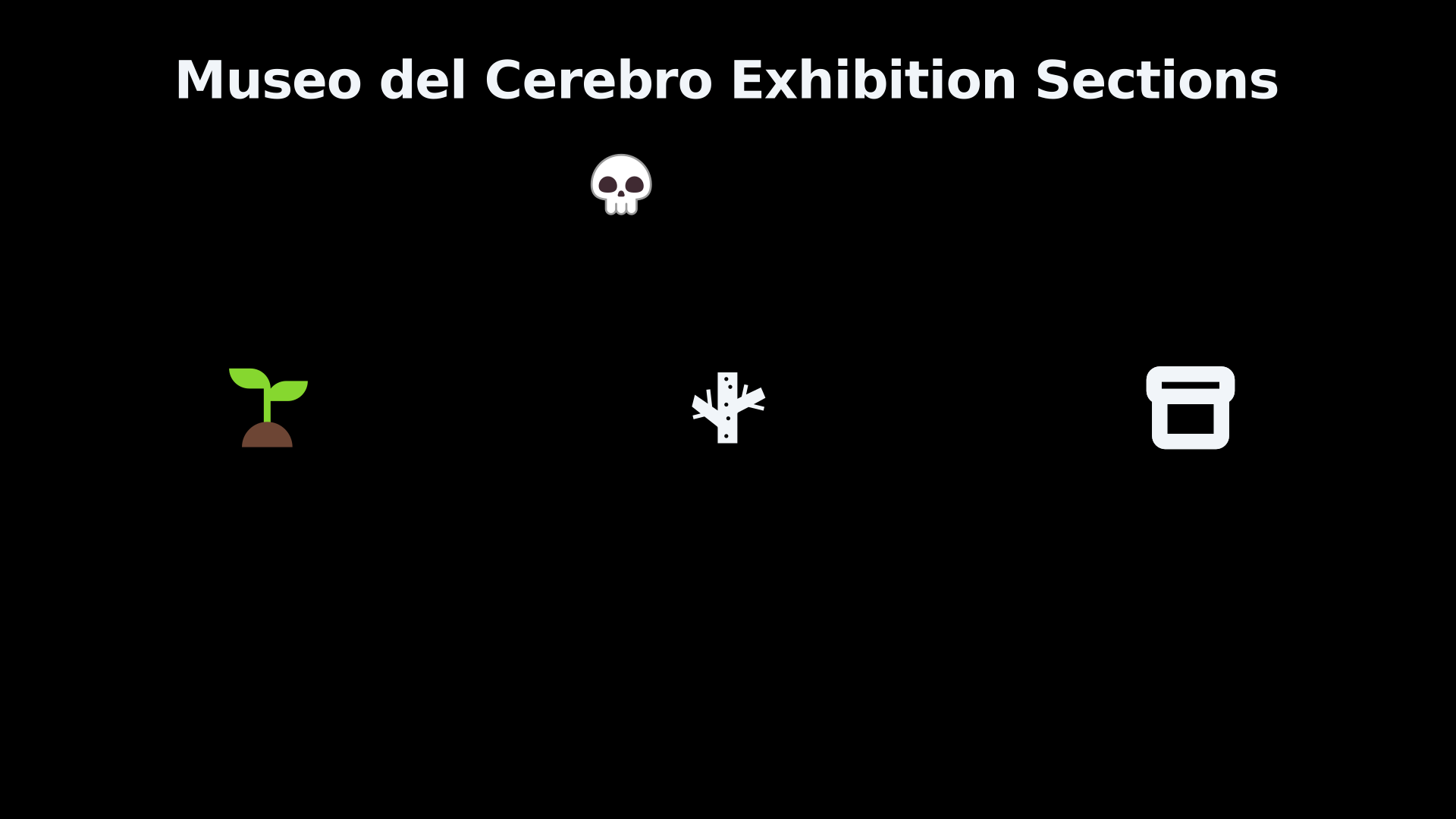
Visitors typically move through four connected sections:
- Normal anatomy, introducing the major structures of the healthy brain.
- Embryology, illustrating congenital abnormalities affecting development.
- Neurological pathology, where diseases are grouped into infectious, vascular, tumour-related and degenerative conditions.
- The brain bank, demonstrating how preserved specimens continue to support research long after patients have died.[gob.pe]gob.peCómo acceder a una visita guiada al Museo del CerebroServicio - Instituto Nacional de Ciencias Neurológicas - Plataforma del Estado Peruano…
One reason the collection remains scientifically valuable is that many of its specimens represent diseases with particular historical or regional importance in Peru. Examples include:
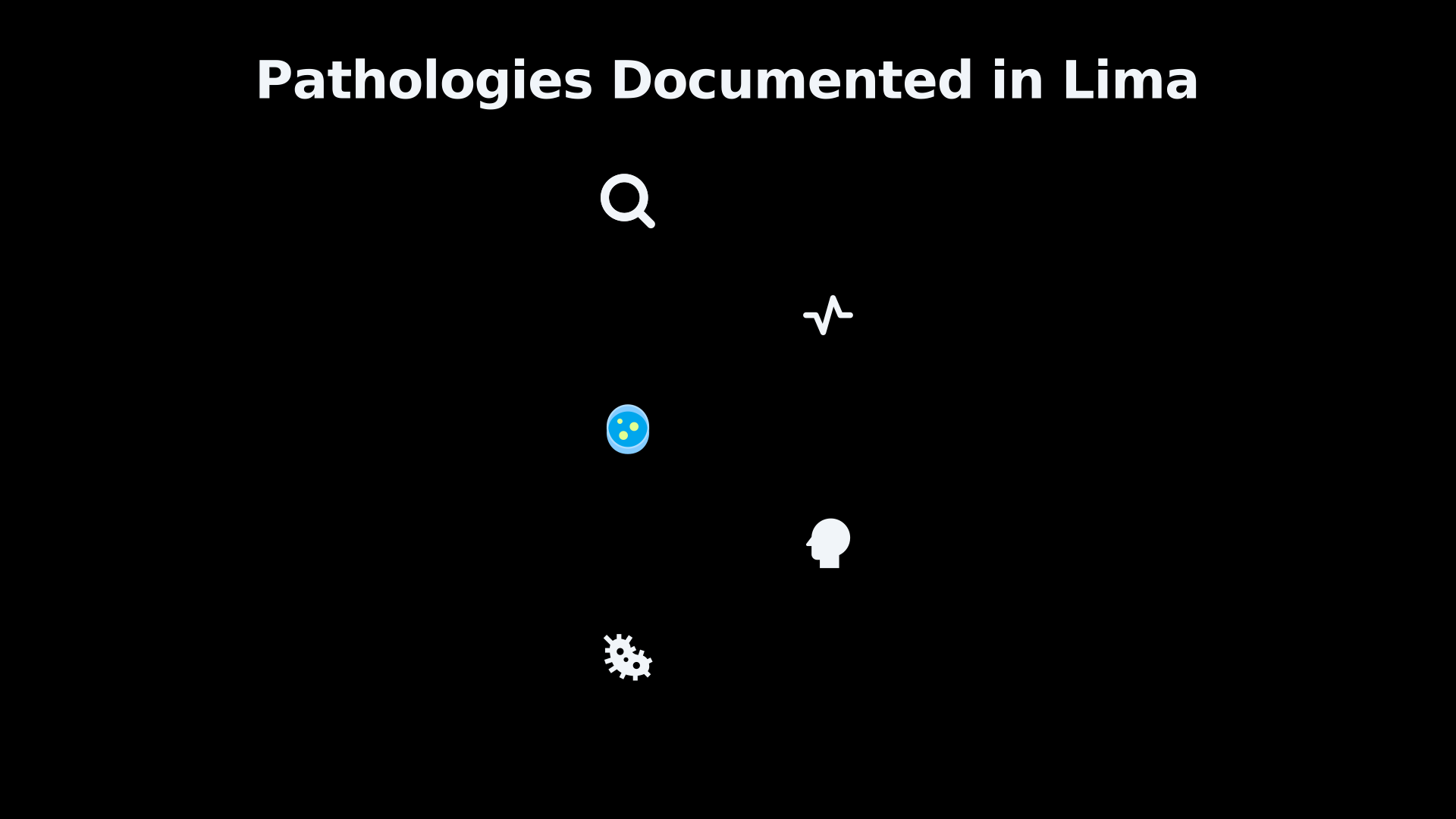
- Neurocysticercosis, a parasitic infection that has long been a major public health concern in parts of Latin America.
- Tuberculosis affecting the nervous system, illustrating severe infectious complications.
- Stroke and aneurysms, showing how bleeding or blocked blood vessels permanently damage brain tissue.
- Primary and metastatic brain tumours, allowing visitors to compare different patterns of disease.
- Degenerative disorders, including Alzheimer’s disease and other forms of dementia.[Gob.pe]gob.peCómo acceder a una visita guiada al Museo del CerebroServicio - Instituto Nacional de Ciencias Neurológicas - Plataforma del Estado Peruano…
Seeing these conditions in preserved tissue changes how visitors understand them. A textbook may describe an aneurysm or tumour, but an actual specimen makes the extent of destruction immediately visible. The museum therefore uses preserved human remains to communicate prevention as much as pathology, repeatedly linking lifestyle, hygiene and early diagnosis to neurological health.[Gob.pe]gob.peNoticias - Ministerio de Salud - Plataforma del Estado Peruano…
Where education ends and spectacle begins
Because the museum contains real human organs, it inevitably raises ethical questions familiar to medical museums around the world.
The collection avoids many of the features associated with commercial “body exhibitions”. The specimens were assembled through hospital pathology services over decades, are interpreted by health professionals and remain connected to the institute’s educational and research mission. Labels focus on diagnosis and disease mechanisms rather than dramatic stories about individual patients. Guided visits reinforce this educational approach by explaining how each specimen contributes to understanding neurological illness.[gob.pe]gob.peCómo acceder a una visita guiada al Museo del CerebroServicio - Instituto Nacional de Ciencias Neurológicas - Plataforma del Estado Peruano…
Nevertheless, the museum’s growing reputation as one of Lima’s strangest attractions creates an unavoidable tension. Many visitors arrive because they have heard about thousands of preserved brains, while the institution consistently frames the experience as an opportunity to promote prevention and public awareness rather than morbid curiosity. Recent Ministry of Health publicity has deliberately presented the museum as a place to learn about protecting the brain rather than a collection of medical oddities.[Gob.pe]gob.peNoticias - Ministerio de Salud - Plataforma del Estado Peruano…
This distinction is important within Peru’s wider curiosity landscape. Archaeological mummies tell stories about ancient beliefs, while the Brain Museum documents modern disease. Both display human remains, but they ask fundamentally different questions: one explores cultural history, the other examines biological evidence.
Visiting the collection
The Museo del Cerebro operates differently from a conventional city museum. Because it remains part of a functioning medical institution, visits are organised through the National Institute of Neurological Sciences and are normally conducted as guided tours rather than informal self-guided exploration. Official guidance explains admission procedures, visitor limits and booking arrangements, reflecting the museum’s continued role within an active healthcare environment.[Gob.pe]gob.peCómo acceder a una visita guiada al Museo del CerebroServicio - Instituto Nacional de Ciencias Neurológicas - Plataforma del Estado Peruano…
Visitors should therefore expect a structured educational experience rather than a theatrical exhibition. The emphasis remains on anatomy, disease prevention and neurological science, making it one of Peru’s most unusual collections precisely because it preserves clinical purpose alongside public access.
Why it matters in Peru’s landscape of strange collections
Among Peru’s many remarkable displays of human remains—from high-altitude Inca sacrifices to colonial catacombs—the Brain Museum stands apart because every preserved specimen belongs to the history of modern medicine. Its collection documents decades of neurological disease, changing diagnostic practice and scientific research within Peru itself.
That makes the museum more than an unsettling curiosity. It demonstrates how preserved human tissue can become a public educational resource without losing its clinical meaning. In a country better known internationally for archaeological discoveries, the Museo del Cerebro reminds visitors that the history of medicine can be just as compelling, provided it is presented with care, scientific context and respect for the people whose remains continue to advance knowledge.
Amazon book picks
Further Reading
Books and field guides related to Inside Peru's Most Unsettling Medical Collection. Use these as the next step if you want deeper reading beyond the article.
The Body: A Guide for Occupants
NATIONAL BESTSELLER NEW YORK TIMES BESTSELLER INTERNATIONAL BESTSELLER A NEW YORK TIMES EDITORS' CHOICE NAMED ONE OF THE BEST BOOKS OF 20...
The Emperor of All Maladies
"This edition includes a new interview with the author"--P. [4] of cover.
eBay marketplace picks
Marketplace Samples
Live-tested eBay searches with available results related to this page.
Selected fromscience museum decor oneBay.co.uk.


Endnotes
1.
Source: museos.cultura.pe
Title: Museos Museo del Cerebro | Museos
Link:https://museos.cultura.pe/index.php/museos/museo-del-cerebro
2.
Source: gob.pe
Title: Cómo acceder a una visita guiada al Museo del Cerebro
Link:https://www.gob.pe/111891-como-acceder-a-una-visita-guiada-al-museo-del-cerebro
Source snippet
Servicio - Instituto Nacional de Ciencias Neurológicas - Plataforma del Estado Peruano...
3.
Source: gob.pe
Link:https://www.gob.pe/institucion/minsa/noticias/1399595-el-museo-mas-inesperado-de-lima-un-viaje-al-interior-del-cerebro-que-todos-deberian-hacer
Source snippet
Noticias - Ministerio de Salud - Plataforma del Estado Peruano...
4.
Source: repositorio.minsa.gob.pe
Link:https://repositorio.minsa.gob.pe/handle/MINSA/79776?locale-attribute=es&show=full
Source snippet
Refugio de incurables 1669 - 2004: Instituto Nacional de Ciencias Neurológicas...
5.
Source: incn.gob.pe
Title: Instituto Nacional de Cultura del PerúNeuropatología – INCN
Link:https://www.incn.gob.pe/servicios/apoyo-al-diagnostico-especializado/neuropatologia/
6.
Source: gob.pe
Title: Interesante exposición muestra cerebros con patologías neurológicas severas
Link:https://www.gob.pe/institucion/minsa/noticias/38572-interesante-exposicion-muestra-cerebros-con-patologias-neurologicas-severas
Source snippet
Noticias - Ministerio de Salud - Plataforma del Estado Peruano...
7.
Source: gob.pe
Title: Primer Museo de Neuropatologías cuenta con más de 2 800 cerebros
Link:https://www.gob.pe/institucion/minsa/noticias/40887-primer-museo-de-neuropatologias-cuenta-con-mas-de-2-800-cerebros
Source snippet
Noticias - Ministerio de Salud - Plataforma del Estado Peruano...
8.
Source: gob.pe
Title: Cómo acceder a una visita guiada al Museo del Cerebro
Link:https://www.gob.pe/institucion/instituto-nacional-de-ciencias-neurologicas/pages/111891-como-acceder-a-una-visita-guiada-al-museo-del-cerebro
Source snippet
Servicio - Instituto Nacional de Ciencias Neurológicas - Plataforma del Estado Peruano...
9.
Source: gob.pe
Link:https://www.gob.pe/institucion/instituto-nacional-de-ciencias-neurologicas/normas-legales/6389478-374-2024-dg-incn
Source snippet
www.gob.peResolución Directoral N.° 374-2024-DG-INCN - Normas y documentos legales - Instituto Nacional de Ciencias Neurológicas - Plataf...
10.
Source: gob.pe
Link:https://www.gob.pe/institucion/instituto-nacional-de-ciencias-neurologicas/normas-legales/6389205-372-2024-dg-incn
11.
Source: museos.cultura.pe
Title: pe Museo del Cerebro | Museos
Link:https://museos.cultura.pe/node/1276
12.
Source: incn.gob.pe
Title: museo del cerebro reabrio sus puertas para visitas guiadas
Link:https://www.incn.gob.pe/2022/09/30/museo-del-cerebro-reabrio-sus-puertas-para-visitas-guiadas/
13.
Source: gob.pe
Link:https://www.gob.pe/institucion/minsa/noticias/343711-quieres-conocer-los-100-anos-de-historia-del-hospital-victor-larco-herrera-via-web
14.
Source: incn.gob.pe
Title: museo del cerebro de aniversario
Link:https://www.incn.gob.pe/2020/08/26/museo-del-cerebro-de-aniversario/
15.
Source: gob.pe
Title: www.gob.pe Cerebroteca abre sus puertas al público
Link:https://www.gob.pe/institucion/minsa/noticias/39939-cerebroteca-abre-sus-puertas-al-publico
16.
Source: incn.gob.pe
Link:https://www.incn.gob.pe/museo-del-cerebro/
17.
Source: incn.gob.pe
Link:https://www.incn.gob.pe/
18.
Source: museos.cultura.pe
Link:https://museos.cultura.pe/index.php/node/282
19.
Source: museos.cultura.pe
Link:https://museos.cultura.pe/index.php/museos-publicos-y-privados
20.
Source: mucen.bcrp.gob.pe
Title: bcrp.gob.pe Visita
Link:https://mucen.bcrp.gob.pe/mucen/visita
21.
Source: iperu.org
Title: Museo del Cerebro
Link:https://www.iperu.org/museo-del-cerebro
Additional References
22.
Source: youtube.com
Title: Ethical issues, study and display of human remains | Ancient History
Link:https://www.youtube.com/watch?v=5Q-AnHMQ1k8
Source snippet
Brain Museum Lima Peru Museo del Cerebro Miles de cerebros históricos expuestos en insólito museo: Así los identificas Latina Noticias...
23.
Source: youtube.com
Link:https://www.youtube.com/watch?v=fa06gaX7kNY
Source snippet
The Cabinet of Death: Tales of Conservation and Stories from the Mütter Abditory...
24.
Source: youtube.com
Title: The Cabinet of Death: Tales of Conservation and Stories from the Mütter Abditory
Link:https://www.youtube.com/watch?v=Zkm77zI40bc
Source snippet
Ethical issues, study and display of human remains | Ancient History...
25.
Source: youtube.com
Title: Do Human Remains Belong in Museum Collections?
Link:https://www.youtube.com/watch?v=3iCK-DfdIMY
Source snippet
Empires of the Dead: Inca Mummies and the Peruvian Ancestors of American Anthropology...
26.
Source: youtube.com
Title: Which Ethics? A Framework for Legacy Collections of Human Remains
Link:https://www.youtube.com/watch?v=Sq7ynYw0kYA
Source snippet
Do Human Remains Belong in Museum Collections?...
27.
Source: deperu.com
Link:https://www.deperu.com/cultural/museos/museo-del-cerebro-4403
28.
Source: audiala.com
Title: instituto nacional de ciencias neurologicas
Link:https://audiala.com/en/peru/lima/instituto-nacional-de-ciencias-neurologicas