What Remains of Sudan's Strangest Collections?
Sudan does not have a well-documented museum of witchcraft, cryptids or paranormal phenomena.
Page outline Jump by section
Introduction
That picture has changed drastically since war began in April 2023. Major museums have been looted, burned or damaged, and many cannot currently be treated as functioning visitor attractions. The Sudan National Museum was systematically ransacked; regional museums in Darfur suffered devastating losses; and the Natural History Museum was reportedly destroyed. Preservation work now involves documenting missing objects, stabilising buildings and recreating lost collections digitally. Sudan’s curiosity culture therefore survives partly in ruins, archives and online catalogues rather than reliable public displays.[unesco.org]core.unesco.orgLooting and plundering of major heritage sites on the Tentative List such as Kerma, Sai Island…. Capacity building for strengthening t…
The National Museum’s world of mummies and rescued temples
Before the war, the Sudan National Museum in Khartoum was the country’s clearest answer to an archaeological cabinet of curiosities. Its collection traced human life along the Nile from prehistory through the kingdoms of Kerma, Kush, Napata and Meroë, followed by medieval Christian states and later Islamic periods. Visitors encountered monumental statues, pottery, jewellery, funerary objects and inscriptions in the still only partly understood Meroitic script. Upstairs, medieval wall paintings offered an unexpected vision of Christian Nubia far removed from the popular stereotype of Sudan as an exclusively Islamic historical landscape.[modern-sudan.com]modern-sudan.comModern Sudan CollectiveSudan National MuseumThe National Museum was officially inaugurated on May 28, 1971. It housed an extensive archae…
The most uncanny exhibits were the human remains. The museum held embalmed bodies dating to around 2500 BC, described by heritage authorities and museum specialists as among the earliest and most archaeologically important mummies known. These were not theatrical “curse of the mummy” attractions. They were archaeological human remains, preserved and studied as evidence of ancient burial practices, health, social status and beliefs about death. Their display nevertheless raised the same ethical question faced by museums worldwide: when does scientific interpretation become the public exhibition of a dead person?[museumsassociation.org]museumsassociation.orgreports of large scale looting at sudan national museumMuseums AssociationReports of 'large-scale looting' at Sudan National Museum4 Sept 2024 — The Nubian collection includes embalmed mummies…
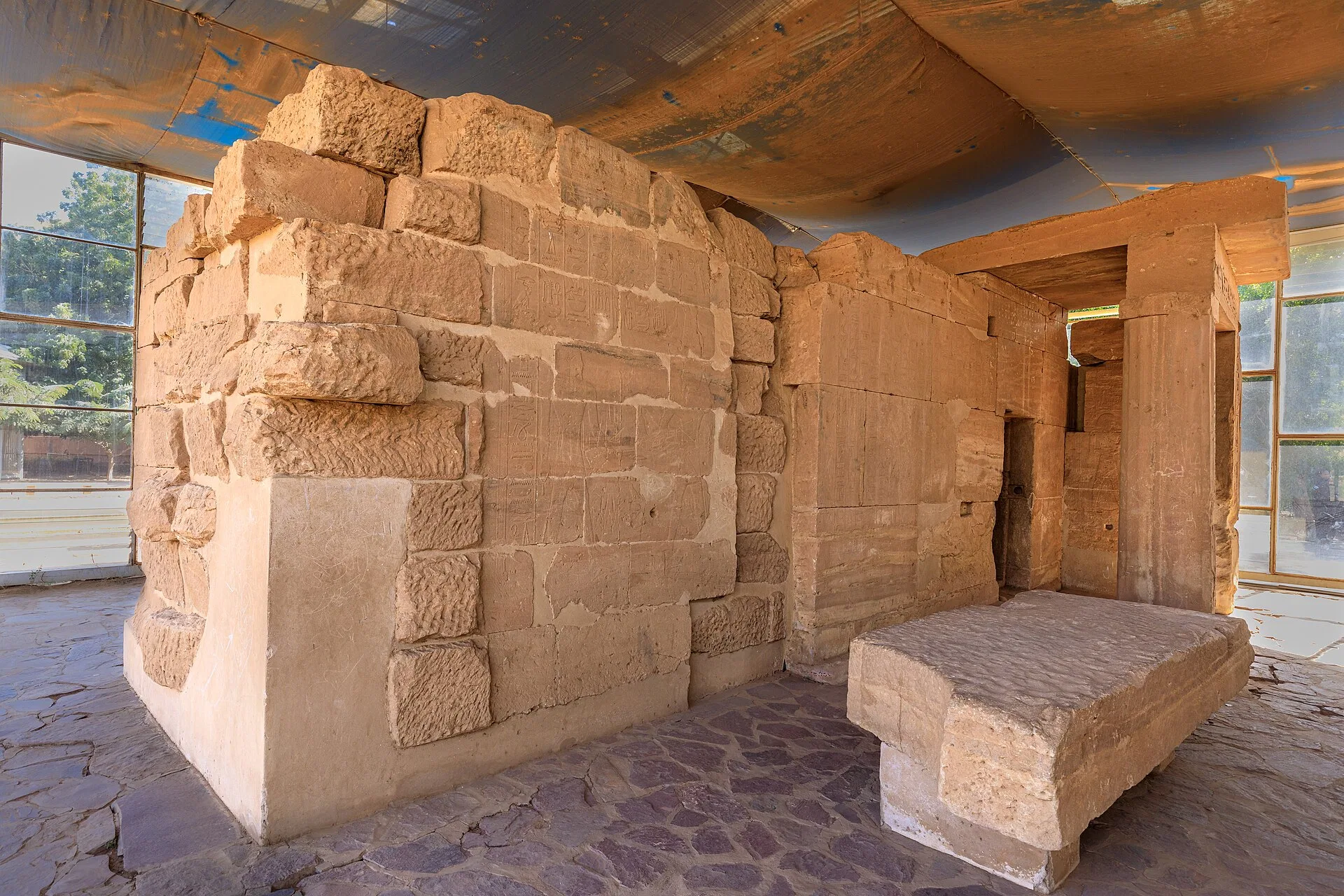
The museum garden was equally unusual. It contained whole temples and architectural remains rescued during the international campaign to save Nubian monuments threatened by the construction of the Aswan High Dam. Among them was the temple of Buhen, built during the reign of the Egyptian pharaoh Hatshepsut in the second millennium BC. Rather than displaying portable fragments in cases, the museum allowed visitors to walk among relocated sacred buildings—an outdoor collection created because the temples’ original landscapes were being flooded.[Reuters]reuters.comOpen source on reuters.com.
Today, this material must be discussed largely in the past tense. A preliminary assessment in March 2025 found destroyed galleries, collapsed museum infrastructure and systematic looting. Portable valuables, including gold objects, were particularly vulnerable, while massive stone sculptures and temples often survived because they could not easily be moved. Reports from the damaged building described smashed cases and at least one exposed mummy in an opened storage container. Recovery teams were still counting losses rather than preparing normal visitor access.[unesco.org]unesco.orgA preliminary damage assessment, conducted on 28 March 2025, confirmed the destruction of exhibition galleries, systematic looting of inv…
Khalifa House: relics from a revolutionary state
Khalifa House in Omdurman was perhaps Sudan’s most atmospheric historic collection. Built in the late nineteenth century, it served as the residence and administrative headquarters of Khalifa Abdallahi, successor to the religious leader Muhammad Ahmad, who proclaimed himself the Mahdi and led an uprising that overthrew Turco-Egyptian rule. The resulting Mahdist state governed much of Sudan from 1885 until its defeat by Anglo-Egyptian forces in 1898.
The building was converted into a museum under colonial rule in 1928, making its interpretation inherently complicated. It preserved the material culture of a movement celebrated by many Sudanese as anti-imperial resistance, but it also reflected decades of British framing of the Mahdist period as fanaticism, disorder and military threat. Modern restoration work sought to present the house less as a trophy room of colonial victory and more as a place where Sudanese communities could explore the period’s competing memories.[sudanmemory.org]sudanmemory.orgOpen source on sudanmemory.org.
Its collection had the dense, miscellaneous quality of a historical curiosity house. Displays included suits of chain mail, swords, spears, firearms, banners, coins, photographs, household utensils, beds and possessions associated with the Khalifa. The museum also held equipment connected with government and communication, including an early printing press retained and used by the Mahdist administration. In the courtyards were larger objects, among them the surviving cupola from the original tomb of the Mahdi and an early motor vehicle associated with Sudan’s transport history.[Sudanow Magazine]sudanow-magazine.netOpen source on sudanow-magazine.net.
The strangest items were not supernatural relics but objects caught between devotion, national mythology and battlefield collecting. Weapons associated with commanders could function simultaneously as personal possessions, military evidence and symbols of resistance. Displays relating to the Battle of Omdurman included industrial firearms alongside handmade armour and banners, making the technological imbalance behind the Mahdist defeat physically visible.
The museum underwent conservation and reinterpretation between 2018 and 2021 as part of the Western Sudan Community Museums project. Its collections were photographed, storage was improved and staff received conservation training. Those preparations could not protect it fully from the later conflict. UNESCO subsequently reported thefts from Khalifa House, and assessments described damage to the building and losses from its historically important collection.[britishcouncil.org]cultural-protection-fund.britishcouncil.orgOpen source on britishcouncil.org.
Regional museums where archaeology met living tradition
Sudan’s smaller museums were often less polished than the national institution, but their mixed collections made them especially relevant to unusual-museum travellers. The Sheikan Museum in El Obeid, the South Darfur Museum in Nyala and Khalifa House formed a network along an old route between western Sudan and the Nile capital. Their displays brought archaeological finds into the same institutions as household objects, oral histories, photographs, weapons, crafts and material connected with pastoral life.[cultural-protection-fund.britishcouncil.org]cultural-protection-fund.britishcouncil.orgOpen source on britishcouncil.org.
The South Darfur Museum held archaeological objects from sites across Sudan together with an extensive ethnographic collection and photographs of historical figures. Such combinations can appear eccentric to visitors accustomed to strict divisions between archaeology, social history and art. In Sudan, however, they reflected the practical role of regional museums: preserving ancient material while also recording clothing, tools, ceremonies, livelihoods and memories that remained part of living communities.[sudanmemory.org]sudanmemory.orgOpen source on sudanmemory.org.
The community-museum programme attempted to move these institutions away from static presentations of anonymous “tribal” objects. Local pastoralists, craftspeople, musicians and elders were involved in recording traditions and explaining how objects were used. Film archives associated with the project include material on camel breeding, religious education, landscape, farming and regional identity. The result was closer to a collaborative archive of living practices than a conventional glass-case museum.[sslh.info]sslh.infoOpen source on sslh.info.
This distinction matters when encountering ritual or ceremonial material. Jewellery, wedding equipment, protective ornaments or objects associated with religious education should not automatically be labelled “magic” because they look mysterious to outsiders. Their meaning depends on local testimony, use and belief. The strongest Sudanese museum projects treated communities as interpreters of their own material culture rather than presenting unusual objects merely as exotic curiosities.
War has again altered what survives. UNESCO confirmed reports of stolen material from Nyala, while later assessments described the museums of Nyala and El Geneina as almost completely destroyed. By late 2025, officials estimated that about 700 objects were missing from museums in Darfur, part of a nationwide count of roughly 4,000 unaccounted-for antiquities. These figures were still provisional and may change as inventories continue.[unesco.org]unesco.orgOpen source on unesco.org.
The Ethnographic Museum and the problem of the “exotic”
Khartoum’s Ethnographic Museum offered the country’s broadest collection of everyday cultural objects. Its galleries represented different regions and environments through musical instruments, boats, food preparation equipment, clothing, crafts, wedding material and objects associated with religious schooling. Older displays included geographic groupings and dioramas intended to show how particular communities lived.[Cambridge University Press & Assessment]cambridge.orgarchaeology and cultural heritage in wartime sudan 20232025archaeology and cultural heritage in wartime sudan 20232025
Among its more memorable holdings were grave sculptures from communities in what is now South Sudan, camel and cattle decorations, bridal accessories, beadwork and a large wooden war drum associated with the ruler of Yambio. These objects could easily be marketed as “strange”, but the museum’s history illustrates why that label requires care. Much of the collection was formed during the colonial and early postcolonial periods, when ethnographic museums often reduced diverse peoples to fixed visual types.
A planned renovation was intended to reopen the previously inaccessible building, protect it from flooding and involve communities from Darfur and Kordofan in documenting their own heritage. The approach recognised that an ethnographic object is not self-explanatory: a drum, bridal mat or camel ornament becomes meaningful only when connected to the people who made, used and remembered it.[cultural-protection-fund.britishcouncil.org]cultural-protection-fund.britishcouncil.orgOpen source on britishcouncil.org.
The war interrupted that work. The museum suffered vandalism and looting, and reports described extensive damage to cultural institutions across Khartoum. Its present public status should therefore be checked through current heritage authorities rather than assumed from older travel guides.[Cambridge University Press & Assessment]cambridge.orgarchaeology and cultural heritage in wartime sudan 20232025archaeology and cultural heritage in wartime sudan 20232025
Lost scientific collections and political curiosities
Not all of Sudan’s unusual collections were archaeological. Khartoum’s Natural History Museum preserved zoological and scientific specimens used for teaching and research. Such museums commonly contain taxidermy, skeletons, preserved animals and comparative specimens: material that can feel like a traditional cabinet of natural curiosities even when its purpose is academic. UNESCO’s project records now describe the museum as completely destroyed during the war, making it one of the starkest losses in Sudan’s scientific heritage.[UNESCO Core Data Portal]core.unesco.orgLooting and plundering of major heritage sites on the Tentative List such as Kerma, Sai Island…. Capacity building for strengthening t…
The Republican Palace Museum occupied a converted church within the presidential complex. Its collection included portraits, photographs, official objects and vehicles used by successive rulers and visiting dignitaries. This mixture of sacred architecture, state memorabilia and ceremonial transport made it an unusual political museum, charting changes of regime through the possessions and imagery of power rather than through archaeology alone.
By September 2025, the interior was reportedly filled with charred debris, while antique cars outside had smashed windows and damaged fittings. The destruction transformed what had been a curated procession of presidents and governments into another damaged site awaiting assessment.[Reuters]reuters.comOpen source on reuters.com.
Sudan also possessed specialist archives and laboratories that were never tourist attractions but belonged to the wider culture of collecting. Archaeological stores, photographic archives, university collections and bioarchaeology laboratories preserved excavated human remains and research records. During the conflict, videos circulated that falsely described ancient remains from a research collection as recent victims of political violence. The episode showed how decontextualised museum material can be turned into misinformation when labels, records and professional custody collapse.[AP News]apnews.comShe says two regional museums in El Geneina and Nyala were almost completely destroyed, while in Khartoum, the National Museum - which he…
Folklore, religion and what Sudan does not display
There is little reliable evidence for a permanent Sudanese museum devoted specifically to witchcraft, spirits, monsters, occultism or UFOs. That absence does not mean Sudan lacks rich supernatural traditions. Beliefs concerning spirit possession, healing, saints, protective objects, dreams and sacred places form part of the country’s diverse religious and folkloric life. They have generally been preserved through community practice, oral history, religious institutions and ethnographic research rather than commercial museums designed for strange tourism.
Visitors should therefore be cautious about treating devotional or protective objects as occult curios. An amulet may be a living religious item; a ceremonial instrument may belong to a healing or communal practice; and a ruler’s tomb may function as a place of reverence rather than an exhibit. The category of “weird museum” can be useful for finding unexpected material, but it can also flatten distinctions between faith, folklore, scholarship and entertainment.
Sudan’s most compelling uncanny heritage comes instead from the collision of different kinds of evidence: preserved bodies beside scientific records, temples removed from drowned landscapes, undeciphered writing, battlefield relics turned into national symbols, and everyday cultural objects once classified by outsiders but now increasingly interpreted by their communities.
Can these places be visited?
Older guidebooks and travel pages should not be relied upon for present access. The Sudan National Museum, Khalifa House, the Ethnographic Museum, the Republican Palace Museum and several regional institutions have suffered serious damage, theft or occupation since 2023. Even where a building remains standing, unexploded ordnance, unstable structures, missing infrastructure and continuing insecurity may make public entry impossible. UNESCO’s response has concentrated on emergency stabilisation, inventories, anti-trafficking work and institutional recovery rather than normal tourism.[UNESCO]unesco.orgFighting Against the Illicit Trafficking of Sudanese Cultural PropertyFighting Against the Illicit Trafficking of Sudanese Cultural Property
The most dependable access to many collections is currently digital. Sudan Memory and Safeguarding Sudan’s Living Heritage preserve photographs, catalogue descriptions, films and community testimony connected with museums across the country. These platforms cannot reproduce the physical experience of standing inside Khalifa House or beside a reconstructed temple, but they retain essential information about objects that may be damaged, dispersed or missing.[sudanmemory.org]sudanmemory.orgOpen source on sudanmemory.org.
For future travellers, the practical rule is simple: regard every Sudanese museum listing as historical until current, institution-specific confirmation shows that it has reopened. Sudan’s unusual collections remain culturally important, but at present they are also evidence from an active heritage emergency.

Why Sudan’s strange collections matter
Sudan’s museums complicate familiar stories about north-east Africa. They show that monumental Nile civilisations were not confined to modern Egypt; that powerful Christian kingdoms flourished in medieval Nubia; that Islamic, African and Mediterranean histories overlapped; and that objects from pastoral communities deserve interpretation as living heritage rather than anonymous “tribal art”.
Their recent destruction has also changed the meaning of collecting. A mummy or ceremonial sword is no longer simply an intriguing exhibit. It may be a missing object sought by international authorities, a fragment awaiting conservation or the only surviving material witness to a community’s history. UNESCO has warned that illicit trafficking from Sudan has reached an exceptional level, prompting cooperation with police, customs officials and neighbouring states.[UNESCO]unesco.orgOpen source on unesco.org.
Sudan’s curiosity landscape is therefore not a conventional trail of quirky attractions. It is a network of ancient bodies, rescued monuments, revolutionary relics, ethnographic objects, scientific specimens and digital records whose survival is uncertain. What makes it extraordinary is not manufactured mystery, but the depth of the histories held inside objects—and the urgency of preserving enough context for those objects to remain more than displaced curiosities.
Amazon book picks
Further Reading
Books and field guides related to What Remains of Sudan's Strangest Collections?. Use these as the next step if you want deeper reading beyond the article.
A History of Zimbabwe
The first single-volume history of Zimbabwe with detailed coverage from pre-colonial times to the present, this book examines Zimbabwe's...
A History of African Archaeology
First published 1990. Subjects: History, Antiquities, Archaeology, Archéologie, Antiquités.
eBay marketplace picks
Marketplace Samples
Live-tested eBay searches with available results related to this page.
Selected fromAfrican archaeology decor oneBay.co.uk.
Endnotes
1.
Source: core.unesco.org
Link:https://core.unesco.org/en/project/3210523081
Source snippet
Looting and plundering of major heritage sites on the Tentative List such as Kerma, Sai Island.... Capacity building for strengthening t...
2.
Source: unesco.org
Link:https://www.unesco.org/en/culture-emergencies/heritage-emergency-fund/urgent-safeguarding-response-damaged-collections-sudan-national-museum
Source snippet
A preliminary damage assessment, conducted on 28 March 2025, confirmed the destruction of exhibition galleries, systematic looting of inv...
Published: March 2025
3.
Source: modern-sudan.com
Link:https://www.modern-sudan.com/sudan-national-museum
Source snippet
Modern Sudan CollectiveSudan National MuseumThe National Museum was officially inaugurated on May 28, 1971. It housed an extensive archae...
Published: May 28, 1971
4.
Source: theartnewspaper.com
Title: heritage authorities express sorrow sudan national museum looted ransacked
Link:https://www.theartnewspaper.com/2025/04/01/heritage-authorities-express-sorrow-sudan-national-museum-looted-ransacked
Source snippet
'We are crying': heritage authorities express sorrow after...1 Apr 2025 — Sudan's National Museum housed one of the most significant arc...
5.
Source: reuters.com
Link:https://www.reuters.com/world/africa/sudan-preservationists-struggle-restore-countrys-shattered-cultural-treasures-2025-09-30/
6.
Source: sudanmemory.org
Link:https://www.sudanmemory.org/cms/137/
7.
Source: cultural-protection-fund.britishcouncil.org
Link:https://cultural-protection-fund.britishcouncil.org/projects/western-sudan-community-museums-nyala-el-obaid-omdurman
8.
Source: cambridge.org
Link:https://www.cambridge.org/core/journals/antiquity/article/archaeology-and-cultural-heritage-in-wartime-sudan-20232025/DF3E9D9EC1C8D76146648B96D49DE131
9.
Source: sudanow-magazine.net
Link:https://sudanow-magazine.net/page.php?Id=1232&subId=20
10.
Source: unesco.org
Link:https://www.unesco.org/en/articles/sudan-unesco-raises-alarm-reports-illicit-trafficking-cultural-heritage
11.
Source: sudanmemory.org
Link:https://www.sudanmemory.org/cms/139/
12.
Source: sudanmemory.org
Link:https://www.sudanmemory.org/search/-/-/1/RELEVANCE/DC%3Awesternsudancommunitymuseums.films/
13.
Source: cultural-protection-fund.britishcouncil.org
Link:https://cultural-protection-fund.britishcouncil.org/projects/safeguarding-living-heritage-sudan
14.
Source: cambridge.org
Title: archaeology and cultural heritage in wartime sudan 20232025
Link:https://www.cambridge.org/core/services/aop-cambridge-core/content/view/DF3E9D9EC1C8D76146648B96D49DE131/S0003598X25101749a.pdf/archaeology_and_cultural_heritage_in_wartime_sudan_20232025.pdf
15.
Source: unesco.org
Title: Fighting Against the Illicit Trafficking of Sudanese Cultural Property
Link:https://www.unesco.org/en/articles/fighting-against-illicit-trafficking-sudanese-cultural-property-and-strengthening-institutional?hub=180364
16.
Source: unesco.org
Title: sudan unesco calls protection world heritage site island meroe
Link:https://www.unesco.org/en/articles/sudan-unesco-calls-protection-world-heritage-site-island-meroe
17.
Source: unesco.org
Title: renewing commitment sudans national museum
Link:https://www.unesco.org/en/articles/renewing-commitment-sudans-national-museum
18.
Source: unesco.org
Title: international museum day 2026
Link:https://www.unesco.org/en/articles/international-museum-day-2026?hub=66683
19.
Source: unesco.org
Title: Sudan: UNESCO steps up its actions as the conflict enters its third
Link:https://www.unesco.org/en/articles/sudan-unesco-steps-its-actions-conflict-enters-its-third-year?hub=701
20.
Source: unesco.org
Link:https://www.unesco.org/ar/articles/alswdan-alywnskw-tdq-naqws-alkhtr-bd-wrwd-tqaryr-n-alatjar-ghyr-almshrw-baltrath-althqafy
21.
Source: unesco.org
Title: Sudán: La UNESCO alerta sobre los riesgos de tráfico ilícito del
Link:https://www.unesco.org/es/articles/sudan-la-unesco-alerta-sobre-los-riesgos-de-trafico-ilicito-del-patrimonio-cultural?hub=701
22.
Source: unesco.org
Link:https://www.unesco.org/en/articles/call-unesco-and-partners-fight-against-illicit-trafficking-sudanese-cultural-property
23.
Source: core.unesco.org
Link:https://core.unesco.org/fr/project/3210523081
24.
Source: sudanmemory.org
Link:https://www.sudanmemory.org/search/-/-/1/RELEVANCE/DC%3Apittriversmuseum.godfreylienhardt/
25.
Source: sudanmemory.org
Link:https://www.sudanmemory.org/search/-/-/1/RELEVANCE/MD_SUDANMEMORY_INSTITUTION_LANG_EN%3APitt%2BRivers%2BMuseum%3B%3BMD2_SUDANMEMORY_TOPIC%3Aethnographyandanthropology%3B%3BMD2_SUDANMEMORY_TOPIC%3Awomen/
26.
Source: sudanmemory.org
Link:https://www.sudanmemory.org/search/-/MD_SUDANMEMORY_COUNTRYLOCATION_LANG_EN%3AUganda%3B%2BSouth%2BSudan%3B%2BDemocratic%2BRepublic%2Bof%2Bthe%2BCongo/320/RELEVANCE/-/
27.
Source: sudanmemory.org
Link:https://www.sudanmemory.org/search/-/-/1/RELEVANCE/DC%3Apittriversmuseum.wilfredpatrickthesiger/
28.
Source: sudanmemory.org
Link:https://www.sudanmemory.org/image/SNR-0000543/1/-/
29.
Source: sudanmemory.org
Title: SNR 0000308
Link:https://www.sudanmemory.org/%21image/SNR-0000308/57/
30.
Source: sudanmemory.org
Link:https://www.sudanmemory.org/search/-/-/1/RELEVANCE/DC%3Apittriversmuseum.richardbutcha/
31.
Source: sudanmemory.org
Title: SNR 0000220
Link:https://www.sudanmemory.org/image/SNR-0000220/24/
32.
Source: sudanmemory.org
Title: SNR 0000481
Link:https://www.sudanmemory.org/image/SNR-0000481/44/
33.
Source: sudanmemory.org
Link:https://www.sudanmemory.org/image/SNR-0000309/7/-/
34.
Source: sudanmemory.org
Link:https://www.sudanmemory.org/cms/138/
35.
Source: theartnewspaper.com
Link:https://www.theartnewspaper.com/2026/03/11/mummies-and-other-human-remains-held-in-uk-museums-raise-serious-ethical-questions-warn-scholars
36.
Source: sudanow-magazine.net
Link:https://sudanow-magazine.net/page.php?Id=1983&subId=9
37.
Source: archaeology.wiki
Title: Meet the Mummies!
Link:https://www.archaeology.wiki/blog/2014/05/26/mummies-exhibition-at-the-british-museum-now-open/
38.
Source: sudanmemory.org
Title: SNR 0000481
Link:https://www.sudanmemory.org/image/SNR-0000481/19/
39.
Source: apnews.com
Link:https://apnews.com/article/fa3849af561dd96f0612e395e75b84d8
Source snippet
She says two regional museums in El Geneina and Nyala were almost completely destroyed, while in Khartoum, the National Museum - which he...
40.
Source: museumsassociation.org
Title: reports of large scale looting at sudan national museum
Link:https://www.museumsassociation.org/museums-journal/news/2024/09/reports-of-large-scale-looting-at-sudan-national-museum/
Source snippet
Museums AssociationReports of 'large-scale looting' at Sudan National Museum4 Sept 2024 — The Nubian collection includes embalmed mummies...
41.
Source: theguardian.com
Link:https://www.theguardian.com/world/article/2024/sep/09/sudan-national-museum-khartoum-artefacts-looted
Source snippet
Its collection of more than 100,000 items includes embalmed mummies dating from 2,500BC, making them among the oldest and archaeologicall...
42.
Source: apnews.com
Link:https://apnews.com/article/82998ed2a655113e86b938e705656889
43.
Source: sslh.info
Link:https://www.sslh.info/en
44.
Source: theguardian.com
Link:https://www.theguardian.com/world/2025/mar/31/sudan-war-national-museum-khartoum-rsf-paramilitaries-looting-ancient-treasures-kush-nubia-pharoahs
45.
Source: theguardian.com
Title: sudan officials fear for historical artefacts threatened by fighting
Link:https://www.theguardian.com/world/2023/jun/05/sudan-officials-fear-for-historical-artefacts-threatened-by-fighting
46.
Source: sslh.online
Link:https://www.sslh.online/en
47.
Source: sudanembassy.org
Link:https://sudanembassy.org/tourism/
48.
Source: tripadvisor.com
Title: Ethnographic Museum
Link:https://www.tripadvisor.com/Attraction_Review-g293835-d480746-Reviews-Ethnographic_Museum-Khartoum_Khartoum_State.html
49.
Source: sudan-streets.openalfa.com
Link:https://sudan-streets.openalfa.com/sheikan
Additional References
50.
Source: youtube.com
Link:https://www.youtube.com/watch?v=HITUJJAmiTY
Source snippet
Sudan's National Museum Left in Ruins After Two Years of Conflict...
51.
Source: youtube.com
Title: Sudan’s National Museum Left in Ruins After Two Years of Conflict
Link:https://www.youtube.com/watch?v=bTQssrQV4VM
Source snippet
Restoration begins at Sudan's National Museum after war damage...
52.
Source: youtube.com
Title: Restoration begins at Sudan’s National Museum after war damage
Link:https://www.youtube.com/watch?v=6_Wkv_ebgOw
Source snippet
Sudan's history faces erasure due to the ongoing civil war...
53.
Source: youtube.com
Title: Sudan’s history faces erasure due to the ongoing civil war
Link:https://www.youtube.com/watch?v=HmMKG_rZWpg
Source snippet
Sudan's archaeological treasures in danger...
54.
Source: ashmolean.org
Link:https://www.ashmolean.org/ancient-egypt-and-sudan
55.
Source: facebook.com
Link:https://www.facebook.com/RFI.English/posts/as-sudans-war-ravages-museums-and-historic-sites-urgent-efforts-are-under-way-to/1310569564432419/
56.
Source: cultureincrisis.org
Link:https://cultureincrisis.org/projects/community-museums-of-western-sudan-omdurman-el-obeid-nyala
57.
Source: projectkhthon.com
Link:https://www.projectkhthon.com/research/sudan/culturalgenocide
58.
Source: cultureincrisis.org
Link:https://cultureincrisis.org/projects/western-sudan-community-museums
59.
Source: britishmuseum.org
Link:https://www.britishmuseum.org/our-work/departments/egypt-and-sudan