Within Timor Leste Curiosities
How Timor Leste's Textiles Store Stories
Timor-Leste's tais textiles preserve inherited patterns, skills, and social meanings through living weaving traditions.
On this page
- Patterns, weaving, and identity
- Tais in ceremonies and daily life
- Collecting, ownership, and provenance questions
Page outline Jump by section
Introduction
Tais textiles are among Timor-Leste’s most unusual “collections” because they are not simply objects stored in museums. They are living archives: woven records of ancestry, community identity, social relationships, ceremony, and survival. A piece of tais can preserve knowledge about where it was made, who wove it, which community traditions shaped its patterns, and what role it played in important moments such as marriage, mourning, welcoming guests, and public celebrations.[UNESCO ICH]ich.unesco.orgICHTais, traditional textileUNESCO ICHTais, traditional textile - UNESCO Intangible Cultural Heritage…
For visitors interested in unusual heritage collections, tais offers a different kind of curiosity from a cabinet of rare objects. The archive is carried through hands, looms, colours, and designs rather than kept only behind glass. Its importance lies in the relationship between material and memory: the textile is valuable not only because it exists, but because the skills and meanings woven into it continue to be practised. UNESCO recognised tais as a traditional textile of Timor-Leste requiring urgent safeguarding, highlighting both its cultural importance and the pressures threatening its transmission.[UNESCO ICH]ich.unesco.orgICHTais, traditional textileUNESCO ICHTais, traditional textile - UNESCO Intangible Cultural Heritage…
Patterns, weaving, and identity
How cloth becomes a record of place and belonging
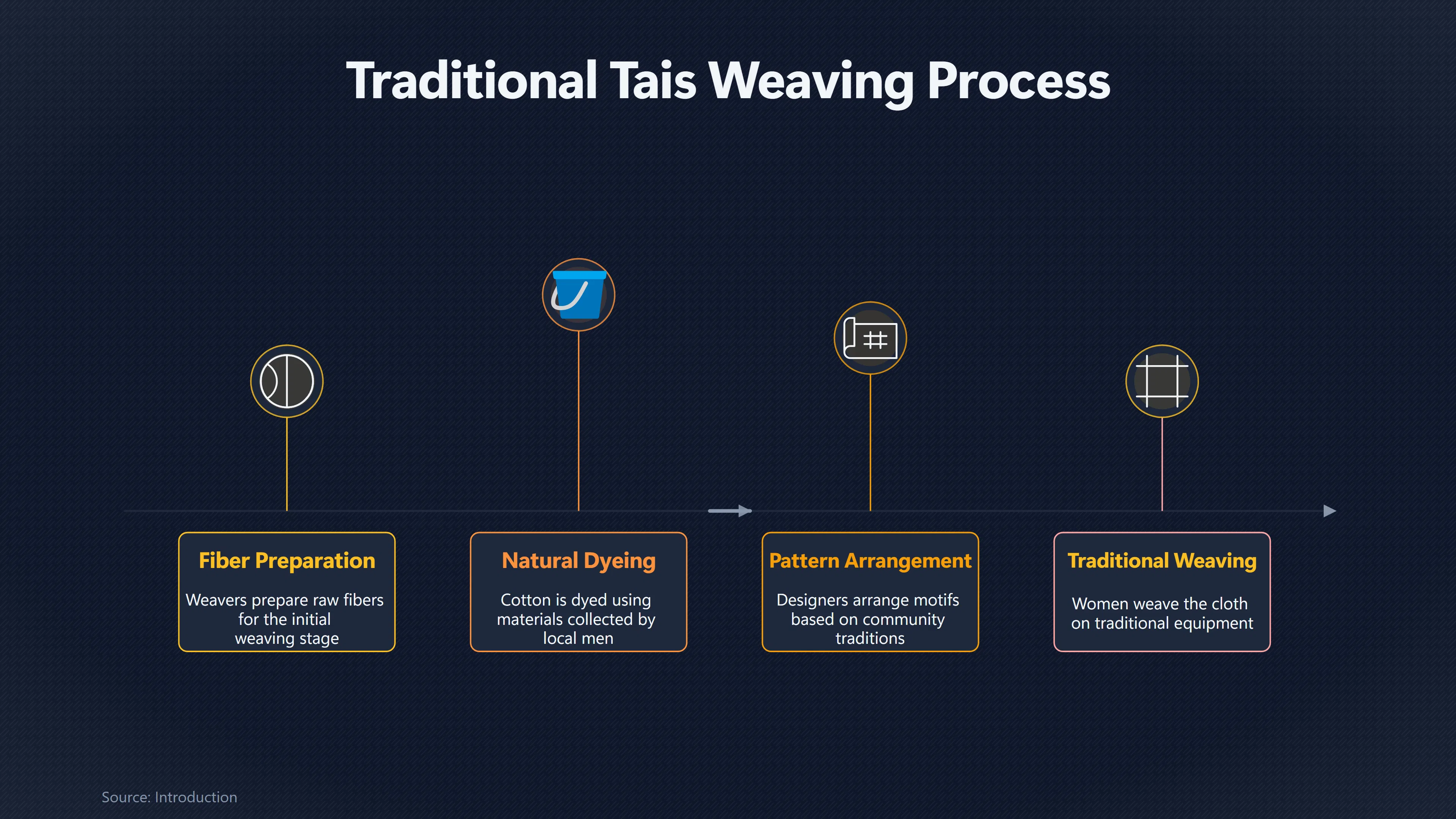
Tais is traditionally handwoven by women in Timor-Leste, with knowledge passed between generations through family and community teaching. The process involves preparing fibres, dyeing cotton, arranging patterns, and weaving on traditional equipment. While men may contribute by collecting dye materials or making tools, the weaving tradition has historically been strongly associated with women’s knowledge and social roles.[UNESCO]unesco.orgTais, Traditional Textile | Intangible HeritageTais, Traditional Textile | Intangible Heritage - UNESCO Multimedia Archives…
The archive stored in tais is not written in words. It appears through colours, motifs, and weaving styles that vary between communities. UNESCO notes that colours and designs can express cultural identity and social position, with differences reflecting ethnic and regional traditions. A textile therefore acts almost like a visual record of origin: a knowledgeable observer may recognise connections between a cloth and the community traditions behind it.[UNESCO]unesco.orgTais, Traditional Textile | Intangible HeritageTais, Traditional Textile | Intangible Heritage - UNESCO Multimedia Archives…
This makes tais unusual within the wider idea of heritage collections. A conventional archive often separates an object from the person who created it. A tais textile retains the memory of its making. The weaver’s skill, the choice of materials, the inherited design knowledge, and the social context of its use are all part of the “collection”. Preserving the cloth alone does not preserve the entire tradition.
The challenge of preserving a living archive
The survival of tais depends on maintaining a chain of knowledge rather than simply protecting old examples. UNESCO’s safeguarding work identified several pressures: changing clothing preferences among younger generations, competition from industrial textiles, limited income for weavers, and declining numbers of people learning traditional techniques.[UNESCO ICH]ich.unesco.orgICHTais, traditional textileUNESCO ICHTais, traditional textile - UNESCO Intangible Cultural Heritage…
This creates an unusual conservation problem. A museum can protect an old textile from damage, but it cannot by itself keep a weaving tradition alive. Safeguarding requires supporting the people who continue to make tais. Programmes connected with organisations such as the Alola Foundation have focused on improving opportunities for weavers, supporting natural dye knowledge, and creating markets while maintaining traditional skills.[Alola Foundation]alolafoundation.orgAlola FoundationAlola Esperanca | Export Quality Tais Products – "Strong Women Strong Nation"May 19, 2026…
The tension is similar to debates around many living cultural traditions: when a traditional craft enters tourism and international markets, does wider recognition help preserve it, or does commercial demand risk changing its meaning? In the case of tais, both forces exist. New markets can provide income and encourage younger people to learn weaving, but simplified designs or mass production can weaken the connection between textile and community history.
Tais in ceremonies and daily life
Textiles that connect families, ancestors, and communities
Tais is not only decorative clothing. It has long been connected with important social events and relationships. Traditional uses include ceremonies, festivals, welcoming occasions, marriage exchanges, and funerary practices. In these settings, the textile operates as a social object: it helps express respect, obligation, connection, and continuity between families.[UNESCO ICH]ich.unesco.orgICHTais, traditional textileUNESCO ICHTais, traditional textile - UNESCO Intangible Cultural Heritage…
Marriage traditions show why tais functions as an archive of relationships rather than merely an item of clothing. A textile exchanged between families carries value beyond its materials because it represents labour, skill, and inherited knowledge. The cloth records a relationship being created or strengthened. UNESCO describes tais as having an important role in marriage exchanges and as a valued object connecting families.[UNESCO ICH]ich.unesco.orgICHTais, traditional textileUNESCO ICHTais, traditional textile - UNESCO Intangible Cultural Heritage…
The same principle applies to ceremonial use. A tais worn at a public event may communicate identity and belonging, while a textile used within family rituals can carry memories of earlier generations. Unlike an ordinary manufactured garment, its meaning comes from the chain of people and events connected to it.
From resistance memory to national identity
Tais has also become connected with modern Timorese identity. During and after the struggle for independence, traditional cultural forms gained renewed importance as expressions of continuity and resilience. Contemporary exhibitions have presented tais not only as craft but as part of stories about women’s experiences, survival, and cultural preservation. For example, exhibitions featuring the LO’UD cooperative from Los Palos have linked weaving with women’s resilience during the period of Indonesian occupation.[Courier Mail]couriermail.com.auCourier Mail Timor, Tais and culture at free exhibitionCurated by East Timor Women Australia (ETWA), the gallery includes contributions from international and Australian photographers and feat…
This does not mean every textile carries a political message. Rather, tais has become part of a broader national conversation about what belongs to Timor-Leste and how cultural memory is maintained after decades of disruption. The textile’s significance comes from its ability to connect older traditions with a modern independent nation.
Collecting, ownership, and provenance questions
Why tais does not fit easily into a museum case
Tais raises important questions about what counts as a collection. A rare object in a museum usually has a clear chain of ownership: who collected it, when it entered a collection, and how it should be displayed. Traditional textiles can be more complicated because their value may depend on ongoing relationships with families, communities, and ceremonies.
A museum or gallery can display the visual qualities of tais, but removing a textile from its social setting may change its meaning. A cloth created for a ceremony is not identical to a decorative item made for sale. The difference lies not only in appearance but in purpose, ownership, and the story attached to it.
This makes provenance — the history of an object’s ownership and movement — especially important. Collectors, museums, and buyers need to consider whether a textile was obtained ethically, whether its makers received recognition or benefit, and whether its cultural meaning has been accurately represented.
The rise of contemporary tais collections
Today, many efforts to preserve tais combine cultural protection with economic support. The Alola Foundation’s Alola Esperansa initiative, for example, works with weavers across Timor-Leste to support handicraft production while promoting traditional techniques and natural dye practices.[Alola Foundation]alolafoundation.orgAlola FoundationAlola Esperanca | Export Quality Tais Products – "Strong Women Strong Nation"May 19, 2026… Government-supported initiatives have also focused on strengthening networks of weavers and protecting tais as part of national cultural identity.[Government of Timor-Leste]timor-leste.gov.tlernment of Timor-LesteSecretary of State for Equality attends the launch of the “Rede Soru Na’in” Tais Weavers’ Association shop « Gov…
These collections are different from historical archives because they are still being created. A newly woven tais can become part of a continuing tradition rather than a reproduction of a lost past. This is what makes the textile heritage of Timor-Leste distinctive: the “archive” is not closed. It is constantly being added to by new generations of makers.
Why tais matters in Timor-Leste’s curiosity landscape
Tais textiles show why unusual heritage collections do not always involve strange objects, mysteries, or forgotten artefacts. In Timor-Leste, one of the country’s most remarkable archives exists through a living practice. The mystery is not hidden inside the object; it is found in how threads preserve knowledge that might otherwise disappear.
For visitors, collectors, and researchers, tais offers a different understanding of what a museum-worthy object can be. A textile can be an archive without being locked away, a historical record without written documents, and a cultural collection without a permanent building. Its importance comes from the continuing relationship between makers, communities, and the stories woven into every piece.[UNESCO ICH]ich.unesco.orgICHTais, traditional textileUNESCO ICHTais, traditional textile - UNESCO Intangible Cultural Heritage…
Amazon book picks
Further Reading
Books and field guides related to How Timor Leste's Textiles Store Stories. Use these as the next step if you want deeper reading beyond the article.
Southeast Asia
A lively and easy to read guide to Southeast Asia written by one of the world's pre-eminent historians of the area.
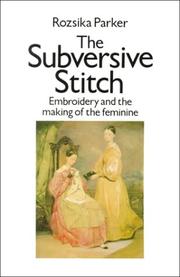
The subversive stitch
First published 1984. Subjects: Women in art, Femininity, Embroidery, History.
The Art of Southeast Asia
With a wealth of information about the history, traditions, and religious beliefs of Southeast Asia, Philip Rawson throughly and authorit...
The Fabric of Civilization
From Neanderthal string to 3D knitting, an "expansive" global history that highlights "how textiles truly changed the world" (Wall Street...
eBay marketplace picks
Marketplace Samples
Live-tested eBay searches with available results related to this page.
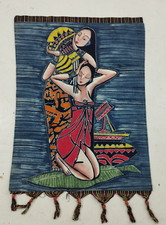
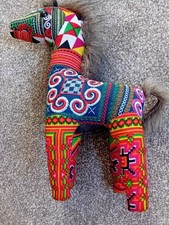
Selected fromethnic fabric art oneBay.co.uk.
Endnotes
1.
Source: ich.unesco.org
Title: ICHTais, traditional textile
Link:https://ich.unesco.org/en/USL/tais-traditional-textile-01688?USL=01688
Source snippet
UNESCO ICHTais, traditional textile - UNESCO Intangible Cultural Heritage...
2.
Source: unesco.org
Title: Tais, Traditional Textile | Intangible Heritage
Link:https://www.unesco.org/archives/multimedia/document-5636
Source snippet
Tais, Traditional Textile | Intangible Heritage - UNESCO Multimedia Archives...
3.
Source: ich.unesco.org
Title: ICHTais, traditional textile
Link:https://ich.unesco.org/en/assistances/tais-traditional-textile-01563?cote_new=01563
Source snippet
UNESCO ICHTais, traditional textile - UNESCO Intangible Cultural Heritage...
4.
Source: ich.unesco.org
Link:https://ich.unesco.org/en/decisions/16.COM/8.A.6
5.
Source: ich.unesco.org
Title: tais traditional textile 01563
Link:https://ich.unesco.org/en/assistances/tais-traditional-textile-01563
6.
Source: ich.unesco.org
Title: tais traditional textile 01842
Link:https://ich.unesco.org/en/assistances/tais-traditional-textile-01842
7.
Source: ich.unesco.org
Title: el tais tejido tradicional 01688
Link:https://ich.unesco.org/es/USL/el-tais-tejido-tradicional-01688?USL=01688&lang=en
8.
Source: unesco.org
Link:https://www.unesco.org/creativity/en/policy-monitoring-platform/building-capacity-local-weavers-product-diversification-and-promotion-tais-weaving
9.
Source: ich.unesco.org
Title: tais traditional textile 01688
Link:https://ich.unesco.org/en/USL/tais-traditional-textile-01688?USL=01688&lang=en
10.
Source: tais.tl
Link:https://tais.tl/history
11.
Source: alolafoundation.org
Link:https://www.alolafoundation.org/alola-esperanca-timor-leste/
Source snippet
Alola FoundationAlola Esperanca | Export Quality Tais Products – "Strong Women Strong Nation"May 19, 2026...
Published: May 19, 2026
12.
Source: alolafoundation.org
Title: Alola Foundation Economic Empowerment | Alola Foundation
Link:https://www.alolafoundation.org/economic-empowerment/
13.
Source: couriermail.com.au
Title: Courier Mail Timor, Tais and culture at free exhibition
Link:https://www.couriermail.com.au/news/northern-territory/free-timorese-tais-exhibition-opens-at-tactile-arts/news-story/b05e5e17724759edfac3ff14cb1bcdce
Source snippet
Curated by East Timor Women Australia (ETWA), the gallery includes contributions from international and Australian photographers and feat...
14.
Source: timor-leste.gov.tl
Link:https://timor-leste.gov.tl/?lang=en&n=1&p=33506
Source snippet
ernment of Timor-LesteSecretary of State for Equality attends the launch of the “Rede Soru Na’in” Tais Weavers’ Association shop « Gov...
15.
Source: uicc.org
Title: alola foundation
Link:https://www.uicc.org/membership/alola-foundation
Source snippet
May 29, 2026 — ALOLA FOUNDATION Membership category - Associate Member Contact Information [http://www.alolafoundation.org](http://www.alolafoundation.org) 6 703 323 8...
Published: May 29, 2026
16.
Source: alolafoundation.org
Link:https://www.alolafoundation.org/overview/
Source snippet
"Strong Women Strong Nation"September 23, 2025 — Strong Women Strong Nation Support Now Fundasaun ALOLA is a not for profit non-governmen...
Published: September 23, 2025
17.
Source: awm.gov.au
Title: Timor-Leste Commission: tais, culture and resistance | Australian War Memorial
Link:https://www.awm.gov.au/articles/blog/tais-timorleste
18.
Source: timor-leste.gov.tl
Title: Tais (traditional weave) National Day « Government of Timor-Leste
Link:https://timor-leste.gov.tl/?lang=en&p=31596
19.
Source: unesco-ichcap.org
Link:https://www.unesco-ichcap.org/board.es?act=view&bid=A112&list_no=13982&mid=a10501020000&nPage=28&tag=
20.
Source: timorlestenationalgeographic.wordpress.com
Link:https://timorlestenationalgeographic.wordpress.com/2014/10/15/tais/
21.
Source: alolafoundation.org
Link:https://www.alolafoundation.org/history/
22.
Source: alolafoundation.org
Link:https://www.alolafoundation.org/
23.
Source: metmuseum.org
Link:https://www.metmuseum.org/art/collection/search/320855
24.
Source: build.timoraid.org
Title: cultural preservation
Link:https://build.timoraid.org/index.php/cultural-preservation/
25.
Source: build.timoraid.org
Link:https://build.timoraid.org/index.php/about/
26.
Source: davidpalazon.art
Link:https://www.davidpalazon.art/tais
Additional References
27.
Source: youtube.com
Title: Intangible Cultural Heritage of Timor-Leste, [Uma Lulik]({{ ‘sacred-houses/’ | relative_url }}) and Tais
Link:https://www.youtube.com/watch?v=XANqbogwxDE
Source snippet
Tais, Culture & Resilience - Textile & Photographic Exhibition 2024...
28.
Source: timorleste.un.org
Link:https://timorleste.un.org/en/219460-weaving-womens-economic-empowerment-sustainable-development-and-cultural-preservation-timor
29.
Source: timorleste.un.org
Link:https://timorleste.un.org/en/275057-words-rio-%E2%80%9Ccrafting-tais-helped-me-earn-my-familys-love-and-support-transgender-weaver%E2%80%9D
30.
Source: cgd.pt
Link:https://www.cgd.pt/Institucional/Patrimonio-Historico-CGD/Estudos/Pages/Tais-Timor-Leste.aspx
31.
Source: rezerva.tl
Link:https://rezerva.tl/guide/arts-and-crafts
32.
Source: etwa.org.au
Link:https://www.etwa.org.au/
33.
Source: undp.org
Link:https://www.undp.org/timor-leste/blog/oe-cusse-women-reinventing-art-tais-weaving
34.
Source: thetextileatlas.com
Link:https://www.thetextileatlas.com/craft-stories/tais-cloth-timor-leste
35.
Source: dspace.uevora.pt
Link:https://dspace.uevora.pt/rdpc/handle/10174/22043
36.
Source: dspace.uevora.pt
Link:https://dspace.uevora.pt/rdpc/handle/10174/20265