Where Moldova Keeps Its Strangest Stories
Moldova does not have a famous national museum of witchcraft, cryptids or medical horrors.
Page outline Jump by section
Introduction
The strongest unusual collections are therefore not sensational “weird museums”. They preserve things that Moldova’s larger historical narratives often struggle to contain: minority identities, domestic ritual, religious belief, deportation, war, Soviet technology and the transformation of everyday objects into heritage. Some are professionally curated state museums; others are family projects, tourism businesses or institutions operating in Transnistria, the breakaway region beyond Moldovan government control. That distinction matters. Visitors should expect an uneven but memorable curiosity landscape in which evidence, folklore, nostalgia and commercial storytelling frequently share the same display case.
Where Moldova’s curiosity culture is strongest
Moldova’s unusual collections cluster around four kinds of place.
First are national and regional museums whose conventional titles conceal unexpectedly eclectic holdings. Natural history, archaeology and ethnography are often combined, producing rooms in which fossils, reconstructed animals, household tools, textiles and ritual objects form one broad story of the land and its people.
Second are community museums built to preserve identities threatened by migration, political change or cultural assimilation. The most important examples are in Gagauzia, Moldova’s autonomous southern region, where objects of village life also support a distinct minority history.
Third are private or tourism-led collections based on a single obsession: bottles, bread, wine or local household artefacts. These can be less formally interpreted, but they often offer the most intimate encounters.
Finally, Transnistria has its own network of military, railway and Soviet-memory museums. They belong geographically within Moldova’s internationally recognised borders but operate under the institutions and historical narratives of the separatist authorities. Their collections are culturally important, yet their interpretation must be read as politically situated rather than neutral. Current British travel advice warns against all travel to Transnistria because it lies outside Moldovan government control, borders wartime Ukraine and offers extremely limited consular support.[GOV.UK]GOV.UKMoldova travel adviceJanuary 4, 2013 — 10 Dec 2025 — Warning FCDO advises against all travel to parts of Moldova. 20 July 2026. FCDO advises against all trave…
Fossils, dioramas and an old-fashioned cabinet of nature
The National Museum of Ethnography and Natural History in Chișinău is the best starting point for Moldova’s curiosity culture. It is not marketed as an oddities museum, but its combination of natural specimens and human artefacts gives it the atmosphere of a large, institutional cabinet of curiosities.
The museum brings together palaeontology, zoology, archaeology, traditional clothing, carpets, tools and other evidence of life in the historical region of Bessarabia. Published visitor and reference descriptions repeatedly single out its fossil material and large reconstructed skeletons, while the wider collection is reported to contain well over 100,000 objects.[mapy.com]mapy.comNational Museum of Ethnography and Natural HistoryIt houses rich collections on the nature and culture of Bessarabia, including unique pa…
What makes the institution unusual is not any single “monster” specimen. It is the curatorial survival of a nineteenth- and early twentieth-century museum model in which nature, human history and folk culture were treated as connected parts of one environment. A visitor can move from extinct fauna to regional costume without the sharp departmental boundaries common in larger Western museums.
That arrangement also reveals an older idea of ethnography. Village interiors, agricultural implements and ceremonial textiles are not presented merely as decorative folk art; they are evidence of how communities organised labour, belief, family and status. The museum is academically grounded, although some older displays may feel dense or traditional in style rather than interactive. For readers looking for the closest Moldovan equivalent to a classical wonder-room, this is the most credible choice.
Bread preserved as ritual rather than food
In the southern village of Văleni, the Bread Museum turns an apparently ordinary food into a collection of symbolic objects. Its exhibits include shaped loaves, rings, birds and ceremonial breads associated with weddings and other stages of community life. Around 20 forms of bread product are described in tourism sources, some made according to traditional recipes and preserved for display.[himoldova.md]himoldova.mdMuseum of BreadBagels, large and small kalatches and pigeons of dough- that is all only a small part of this rare museum exhibits. It rep…
The museum grew from the work of baker Vera Caminschi and forms part of a guesthouse and local tourism enterprise. It is therefore not a detached research institution. It is a private, visitor-facing interpretation of regional custom in which baking demonstrations, hospitality and heritage presentation overlap.
That commercial setting does not make the collection false. Ceremonial bread has long carried meanings extending far beyond nutrition: fertility, welcome, prosperity, religious blessing and the public recognition of marriage. The value of the museum lies in showing that the shape of a loaf can function like a text. Its birds, coils and braided forms encode relationships and expectations that written labels alone cannot fully convey.
Visitors should nevertheless understand what they are seeing. These are examples of living or recently revived practice, not archaeological breads miraculously preserved from antiquity. The museum’s strongest claim is cultural continuity, supported by local knowledge and demonstration, rather than scientific conservation.
The giant bottle and the logic of obsessive collecting
Near Tîrnauca, in Transnistria, a private museum of alcoholic-drink bottles takes the single-theme collection to monumental proportions. The building itself resembles a giant bottle and contains more than 10,000 examples reportedly gathered from over 100 countries. The displays include numbered editions, souvenirs and containers shaped like weapons, trains, light bulbs, nesting dolls and famous people.[himoldova.md]himoldova.mdOpen source on himoldova.md.
The alcohol is almost secondary. The real subject is packaging as miniature sculpture: how manufacturers turn a container into propaganda, humour, luxury branding, national symbolism or novelty merchandise. Seen together, the bottles form an unintended archive of political imagery, consumer taste and industrial design.
This is a private collection rather than a scholarly survey of alcohol history. Its strength is abundance and visual surprise; its weakness is that provenance and interpretation may vary from object to object. Rare-looking bottles should not automatically be assumed to be rare in a museum-grade sense, and unusual shapes do not necessarily indicate age or historical importance.
The collection nevertheless deserves a place in Moldova’s curiosity landscape because it demonstrates the classic collector’s impulse: an ordinary category pursued until repetition becomes spectacle. The giant-bottle architecture completes the transformation from hobby into roadside attraction.
Access currently presents a far larger issue than curatorial quality. Tîrnauca is in Transnistria, and British government advice issued in July 2026 warns against all travel to the region. The museum may remain publicly promoted, but that does not override official security guidance.[GOV.UK]GOV.UKMoldova travel adviceJanuary 4, 2013 — 10 Dec 2025 — Warning FCDO advises against all travel to parts of Moldova. 20 July 2026. FCDO advises against all trave…
Wine cellars as underground national collections
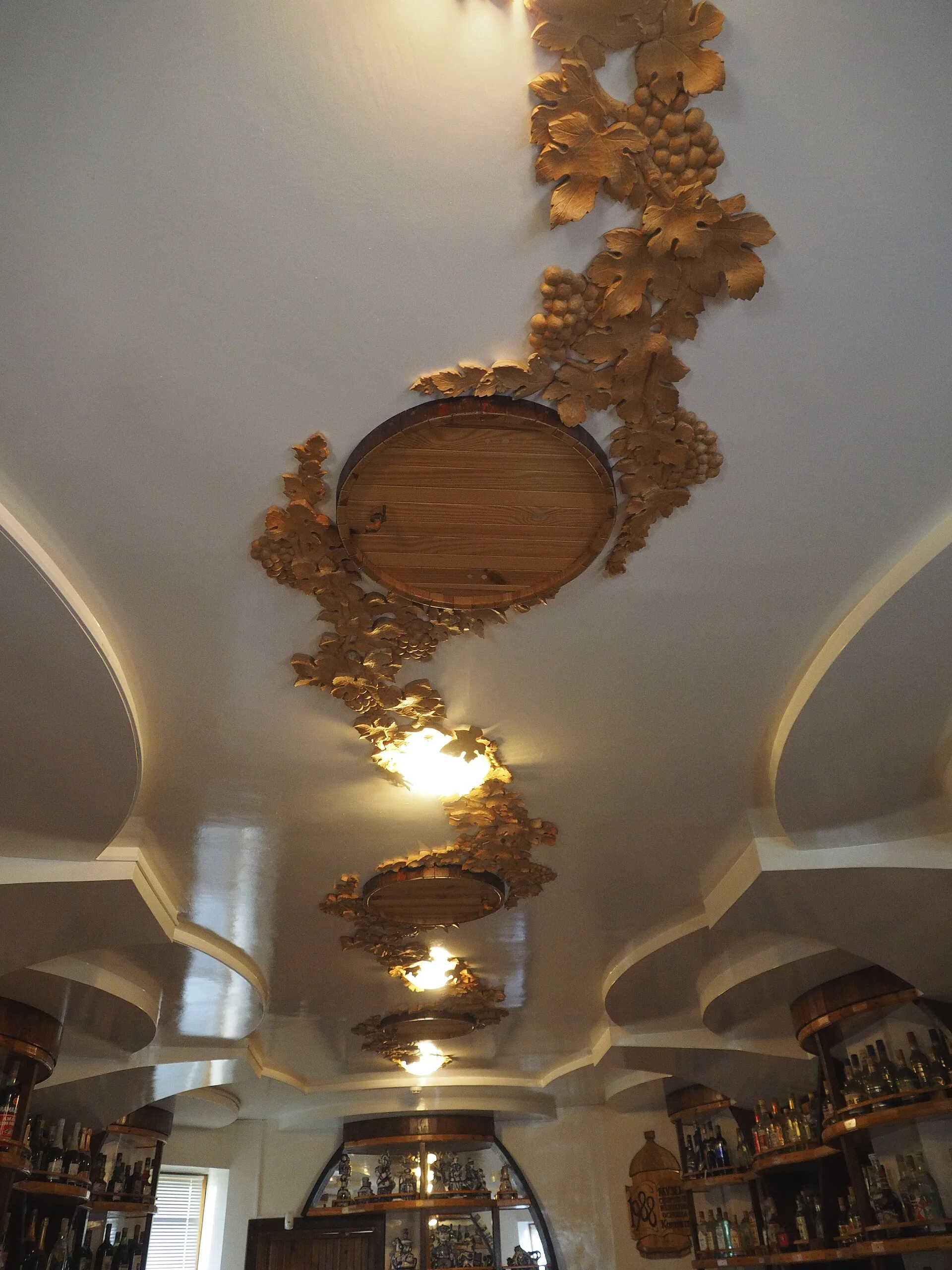
Moldova’s most extraordinary public-facing collections may not call themselves museums at all. The underground galleries at Cricova and Mileștii Mici contain vast organised holdings of bottled wine inside former limestone workings. Their scale, controlled environment, ceremonial rooms and guided interpretation place them somewhere between industrial heritage sites, living archives and commercial attractions.
UNESCO’s Tentative List describes both complexes as subterranean galleries more than 50 metres below ground, reorganised into named “streets” with tasting halls and visitor facilities. The tunnels preserve wine while also presenting the history and prestige of Moldovan winemaking.[UNESCO World Heritage Centre]whc.unesco.orgOpen source on unesco.org.
At Mileștii Mici, the collection is famous principally for quantity: galleries extending across a huge underground network and containing well over a million bottles. At Cricova, the visitor experience is more overtly theatrical, with formal chambers, limestone corridors, stained glass, prominent collections and spaces used for state hospitality. Contemporary reporting describes roughly 70 kilometres of working tunnels at Cricova, along with an Orthodox chapel, presidential holdings and historically associated bottles.[The Times]thetimes.co.ukThe Times Going underground: the charity run around a former Soviet wine cellarThe Times Going underground: the charity run around a former Soviet wine cellar
Some of the stories attached to individual bottles and celebrity visitors have become part of winery mythology. Anecdotes involving Soviet leaders, astronauts or confiscated wartime collections are repeated frequently in tours and travel writing, but the evidential basis is not always made visible to visitors. The cellars should therefore be appreciated on two levels:
- The verifiable achievement: enormous adapted quarry systems, stable storage conditions, active wine production and organised bottle holdings.
- The heritage performance: ceremonial rooms, famous names and stories that connect the wine industry to Soviet, diplomatic and national history.
The result is more than a cellar tour. It is Moldova’s wine identity made architectural: a national product preserved underground on such a scale that storage becomes spectacle.
Gagauzia’s museums of minority memory
The National Gagauz Museum of History and Ethnography in Beșalma is one of Moldova’s most culturally distinctive collections. It is devoted to the Gagauz, a largely Orthodox Christian, Turkic-speaking people concentrated in the country’s south. The museum was founded in 1966 by the poet, artist and teacher Dmitry Karachoban and has grown into a collection of more than 15,000 objects associated with Gagauz domestic life, clothing, work and history.[DiscoverGagauzia]discovergagauzia.mdOpen source on discovergagauzia.md.
Its unusualness lies less in bizarre artefacts than in rarity of purpose. Tourism and local sources describe it as the principal museum devoted specifically to Gagauz culture, giving household implements and family documents a significance that exceeds their material value. An ethnographic cinema preserves documentary images of customs and village life, while guides connect displayed objects with inherited testimony.[Moldpres]moldpres.mdGagauz village that keeps tradition and cultural identity aliveGagauz village that keeps tradition and cultural identity alive
The museum is a reminder that “folk” displays are never merely picturesque. Selecting a costume, loom, photograph or farm tool decides which version of a community survives publicly. In Beșalma, collecting is closely tied to cultural recovery and self-definition.
The privately founded museum in Avdarma takes a more biographical approach. Its objects and personal stories address war, famine, deportation and village endurance. Rather than presenting history only through government decisions, it builds the past from family possessions and local memory.[ENRS]enrs.euOpen source on enrs.eu.
These museums are credible as repositories of community heritage, but oral testimony and commemorative interpretation should be distinguished from independently verified historical reconstruction. Their strength is precisely that they preserve perspectives that state-centred museums might flatten or omit.
Deportation, repression and objects from the Gulag
The Museum of Victims of Political Repressions and Deportations, associated with Moldova’s National Museum of History, represents the darkest branch of the country’s unusual collections. Its displays bring together roughly 700 photographs, documents, letters from Siberia, personal belongings, confiscation records, witness memoirs and material concerning people persecuted for political or religious reasons. Some exhibits derive from former Soviet security-service archives.[nationalmuseum.md]nationalmuseum.mdOpen source on nationalmuseum.md.
There is nothing playful about these objects. Their strangeness comes from forced displacement: letters and possessions that should have belonged to ordinary family life were carried into exile or separated from their owners by the machinery of repression.
The museum also illustrates why curating Soviet history in Moldova is difficult. Deportation, famine, wartime occupation, Romanian administration, Soviet rule and post-Soviet identity remain politically sensitive. Academic research on Moldovan memory institutions has noted that exhibitions dealing with repression operate in a fragmented and contested environment, where curators risk being accused either of simplifying suffering or of taking sides in present-day identity disputes.[dspace.ut.ee]dspace.ut.eeMemory of Stalinist deportations in MoldovaMemory of Stalinist deportations in Moldova
For visitors, the most reliable approach is to separate three layers:
- The object: an original letter, photograph, list or possession.
- The documented event: arrest, confiscation, removal or exile supported by archival evidence.
- The interpretive frame: how the exhibition connects that event to national identity, occupation, communism or contemporary politics.
This distinction does not diminish the testimony. It helps preserve its force by making clear what is directly evidenced and what remains part of a broader historical argument.

Railway carriages filled with war and Soviet memory
Bender contains museum displays whose physical setting is as interesting as their contents. A railway museum complex occupies carriages near the station and presents the development of the local rail junction. Its subject includes transport history, railway labour and the strategic role of the network in war and regional development.[pridnestrovie-tourism.com]pridnestrovie-tourism.comOpen source on pridnestrovie-tourism.com.
A related military collection in Bender has been described as occupying a disused train and containing uniforms, medals, official documents, shells, rifles, helmets and Soviet equipment. Among the more eccentric reported objects is a hand-operated calculating device marked with Soviet insignia.[Atlas Obscura]atlasobscura.comAtlas Obscura Bendery Military Museum in BenderAtlas Obscura Bendery Military Museum in Bender
These are classic examples of how a container can become part of the interpretation. Military objects inside a carriage evoke mobilisation, troop movement and the railway’s role in projecting state power. The experience is closer to entering a preserved historical environment than viewing detached cases in a purpose-built gallery.
The political framing requires caution. Transnistrian institutions commonly organise twentieth-century history around Soviet commemorative language, especially the victory narrative of the Second World War and the region’s own account of the 1992 conflict. Official tourism descriptions emphasise awards, weapons, personal belongings and military glory.[tourismpmr.org]tourismpmr.orgOpen source on tourismpmr.org.
The artefacts may be authentic while the exhibition remains selective. Absence is as important as presence: visitors should notice which civilian experiences, political controversies or alternative national accounts are given little space.
As with the bottle museum, present British advice against all travel to Transnistria makes these sites unsuitable as ordinary itinerary recommendations despite their relevance to Moldova’s museum landscape.[GOV.UK]GOV.UKMoldova travel adviceJanuary 4, 2013 — 10 Dec 2025 — Warning FCDO advises against all travel to parts of Moldova. 20 July 2026. FCDO advises against all trave…
The unfinished nuclear bunker that is not quite a museum
Object 1180 near Olișcani in the Șoldănești district is frequently promoted as one of Moldova’s most dramatic Cold War remnants. The abandoned complex consists of deep cylindrical shafts intended for a protected Soviet command facility. Moldovan reporting describes two cylinders about 36 metres across and roughly 60 metres deep, often summarised as a 13-storey underground structure. Construction was never completed before the Soviet collapse, and much equipment was subsequently removed.[One Man, One Map]oneman-onemap.commoldova nuclear bunkermoldova nuclear bunker
The bunker belongs within Moldova’s curiosity culture because it attracts the same audience as a military or technological museum. Yet it should not be confused with a fully curated heritage institution. Accounts describe an abandoned, stripped and potentially hazardous site rather than a consistently managed public museum.
Commercial excursions and tourism pages sometimes advertise access, but availability does not establish safety, conservation standards or official supervision. Deep shafts, unstable structures, darkness and residual industrial hazards make casual exploration inappropriate. The bunker’s most responsible interpretation is as an unfinished archaeological object of the Cold War: a monument to anticipated catastrophe and wasted strategic ambition.
Its emptiness is part of its meaning. Unlike a command bunker preserved with maps and control panels, Object 1180 presents the shell of a system that never became operational. What survives is not secret machinery but scale, concrete and the physical logic of nuclear fear.
Village rooms where ordinary objects become curiosities
Away from the major institutions, Moldova has numerous small ethnographic museums whose collections were assembled locally. The Museum of Ethnography and History in Ciuciuleni, for example, occupies 12 rooms and displays crafts, tools, military material and religious objects, many reportedly donated or gathered by residents.[Moldova Travel]moldova.travelOpen source on moldova.travel.
Such museums can appear modest, but they represent an important mode of collecting. A national museum chooses exceptional or representative objects; a village museum often preserves what happened to survive in nearby houses. That produces uneven but highly specific collections: icons beside agricultural tools, embroidered cloth beside wartime relics, and family photographs whose meaning depends heavily on local explanation.
Interpretive standards vary. Dates may be broad, provenance may rest on donor memory, and English-language labelling may be limited. Visitors interested in material culture may nevertheless find these rooms more revealing than polished city exhibitions because objects remain close to the social world that produced them.
Small house museums also preserve another kind of evidence: the collector or founder. In institutions such as Beșalma’s museum or Transnistria’s Casa Caraman, the history of the person who gathered the objects can become inseparable from the collection. Transnistrian tourism material describes Casa Caraman as a traditional clay house containing thousands of police-related and domestic exhibits across several rooms, an example of the eccentric local museum built through accumulation rather than formal acquisition policy.[pridnestrovie-tourism.com]pridnestrovie-tourism.com9 unusual museums of pridnestrovie worth visiting9 unusual museums of pridnestrovie worth visiting

What Moldova does not appear to have
Reliable current evidence does not support claims that Moldova has a major permanent public museum devoted specifically to witchcraft, vampires, UFOs, cryptids, spiritualism, mummies or medical anomalies. Searches may produce generic tourism lists, temporary exhibitions or unrelated institutions abroad, but not a clearly documented Moldovan equivalent to the established witchcraft or occult museums found elsewhere in Europe.
Moldovan folklore certainly contains supernatural beliefs, protective customs and religious practices. Those subjects may appear indirectly through ethnographic objects, icons, textiles, domestic ritual and oral history. They are usually interpreted within village culture or religion rather than isolated as a commercial “museum of the paranormal”.
This absence is informative. Moldova’s strange-heritage landscape is shaped less by imported gothic branding than by the material remains of real historical disruption: abandoned Soviet infrastructure, deportation records, minority archives, ceremonial food and collections created from disappearing village life.
The country also lacks a clearly established network of polished commercial oddity attractions. Several distinctive collections depend on individual founders, guesthouses, wineries or local authorities. Opening arrangements can therefore change, websites may lag behind reality and advance contact may be necessary.
How to judge the collections
Moldova’s unusual museums make more sense when their different curatorial models are kept separate.
State and national museums usually offer the strongest conservation, cataloguing and scholarly context. The National Museum of Ethnography and Natural History and the National Museum of History are the safest choices for documented artefacts and structured interpretation.[nationalmuseum.md]nationalmuseum.mdOpen source on nationalmuseum.md.
Community museums preserve minority and village memory, often using oral history and donated objects. They can provide exceptionally rich cultural context, but dates and provenance may depend partly on inherited testimony.
Private collections such as the Bread Museum or Bottle Museum are driven by founder enthusiasm and tourism. Their displays can be vivid and genuine without meeting the research standards of a national institution.
Commercial heritage sites such as Cricova and Mileștii Mici combine authentic industrial infrastructure with hospitality, branding and national promotion. Their scale is real; some celebrity anecdotes and prestige narratives should be treated as tour storytelling unless documentary support is shown.
Transnistrian museums contain significant Soviet, railway and military material, but their political and legal setting cannot be separated from their interpretation. They also currently fall within an area to which the UK Foreign, Commonwealth & Development Office advises against all travel.[GOV.UK]GOV.UKMoldova travel adviceJanuary 4, 2013 — 10 Dec 2025 — Warning FCDO advises against all travel to parts of Moldova. 20 July 2026. FCDO advises against all trave…
Abandoned sites such as Object 1180 are not automatically museums. Lack of barriers or the existence of a commercial tour does not guarantee safe or lawful access.
Why these collections matter
Moldova’s curiosity culture is most compelling when ordinary things become evidence of extraordinary pressure. A decorated loaf records the rules of marriage and hospitality. A village tool becomes proof of a vanishing way of life. A letter from Siberia restores an individual voice to a mass deportation. A railway carriage becomes a theatre of military memory. A bottle collection turns consumer packaging into folk sculpture. A quarry becomes an underground archive large enough to embody an entire national industry.
These collections also expose competing ideas about what heritage is for. Some protect scientific and archaeological knowledge. Some defend minority identity. Some commemorate suffering. Others sell tours, wine or accommodation while preserving traditions that might otherwise disappear. In Transnistria, museums can also reinforce a political story of Soviet continuity and military legitimacy.
Moldova is therefore not a destination of flamboyant monster museums or manufactured supernatural attractions. Its unusual collections are more grounded and, in many cases, more consequential. They show how a small country preserves fragments of nature, belief, labour and political trauma when the boundaries of language, territory and national memory remain unsettled.
Amazon book picks
Further Reading
Books and field guides related to Where Moldova Keeps Its Strangest Stories. Use these as the next step if you want deeper reading beyond the article.
The Museum Experience
As the first book to take a "visitor's eye view" of the museum visit, The Museum Experience revolutionized the way museum professionals u...
A History of the World in 100 Objects
This book takes a dramatically original approach to the history of humanity, using objects which previous civilisations have left behind...
eBay marketplace picks
Marketplace Samples
Live-tested eBay searches with available results related to this page.
Selected fromMoldova travel poster oneBay.co.uk.

Endnotes
1.
Source: GOV.UK
Title: Moldova travel advice
Link:https://www.gov.uk/foreign-travel-advice/moldova
Source snippet
January 4, 2013 — 10 Dec 2025 — Warning FCDO advises against all travel to parts of Moldova. 20 July 2026. FCDO advises against all trave...
Published: January 4, 2013
2.
Source: GOV.UK
Title: Regional risks
Link:https://www.gov.uk/foreign-travel-advice/moldova/regional-risks
Source snippet
Moldova travel adviceFCDO advises against all travel to Transnistria. Transnistria is outside the control of the Moldovan government. The...
3.
Source: mapy.com
Link:https://mapy.com/en/?id=11991462&source=osm
Source snippet
National Museum of Ethnography and Natural HistoryIt houses rich collections on the nature and culture of Bessarabia, including unique pa...
4.
Source: kupi.com
Link:https://www.kupi.com/en/explore/moldova/chisinau/national-museum-of-ethnography-and-natural-history
Source snippet
National Museum of Ethnography and Natural HistoryLocated in Chișinău, it is the oldest museum in the country and carefully preserves...
5.
Source: himoldova.md
Link:https://www.himoldova.md/en/md/museum-of-bread/
Source snippet
Museum of BreadBagels, large and small kalatches and pigeons of dough- that is all only a small part of this rare museum exhibits. It rep...
6.
Source: moldpres.md
Link:https://www.moldpres.md/eng/tourism/discover-moldova-with-moldpres-local-traditions-preserved-at-only-bread-museum-in-valeni
Source snippet
Here, local traditions are preserved through a unique collection of wedding breads and rituals...
7.
Source: himoldova.md
Link:https://www.himoldova.md/en/md/bottle-museum/
8.
Source: pridnestrovie-tourism.com
Link:https://pridnestrovie-tourism.com/en/museum-of-alcoholic-beverages-bottle/
9.
Source: tourismpmr.org
Link:https://tourismpmr.org/en/registry/muzej-alkogolnyh-napitkov-butylka/
10.
Source: whc.unesco.org
Link:https://whc.unesco.org/en/tentativelists/6789/
11.
Source: discovergagauzia.md
Link:https://discovergagauzia.md/en/attractions/gagauz-museum-of-history-and-ethnography/
12.
Source: moldpres.md
Title: Gagauz village that keeps tradition and cultural identity alive
Link:https://www.moldpres.md/eng/tourism/discover-moldova-with-moldpres-besalma-gagauz-village-that-keeps-tradition-and-cultural-identity-alive
13.
Source: enrs.eu
Link:https://enrs.eu/news/avdarma-museum-a-microcosm-of-history-and-resilience-in-gagauzia
14.
Source: nationalmuseum.md
Link:https://www.nationalmuseum.md/en/news/arhive/museum_of_victims_of_political_repressions_and_deportations/
15.
Source: dspace.ut.ee
Title: Memory of Stalinist deportations in Moldova
Link:https://dspace.ut.ee/bitstreams/c0b65fce-d39c-4722-8392-fd5d48c933ad/download
16.
Source: pridnestrovie-tourism.com
Link:https://pridnestrovie-tourism.com/en/museum-complex-of-glory-of-railway-workers/
17.
Source: tourismpmr.org
Link:https://tourismpmr.org/en/registry/muzej-boevoj-slavy-g-bendery/
18.
Source: moldpres.md
Link:https://www.moldpres.md/eng/tourism/discover-moldova-with-moldpres-story-of-bad-reputation-bunker-from-oliscani-one-of-biggest-bunkers-from-former-soviet-union-
19.
Source: moldova.travel
Link:https://moldova.travel/en/adventure-travel/codru-route/
20.
Source: moldova.travel
Link:https://moldova.travel/en/experience/muzee-en/
21.
Source: pridnestrovie-tourism.com
Title: 9 unusual museums of pridnestrovie worth visiting
Link:https://pridnestrovie-tourism.com/en/news/9-unusual-museums-of-pridnestrovie-worth-visiting/
22.
Source: nationalmuseum.md
Link:https://www.nationalmuseum.md/en/
23.
Source: nationalmuseum.md
Link:https://www.nationalmuseum.md/en/press_releases/albums/the_epic_of_a_railroad_bender_tighina_galati/
24.
Source: nationalmuseum.md
Link:https://www.nationalmuseum.md/en/exhibitions/page_1/
25.
Source: assets.publishing.service.gov.uk
Link:https://assets.publishing.service.gov.uk/media/620fb5b88fa8f54915f4374d/FCDO__TA__058_-_Moldova_Travel_Advice_Ed1.pdf
26.
Source: moldpres.md
Link:https://www.moldpres.md/eng/society/moldovan-pm-says-first-stalinist-deportations-from-bessarabia-painful-history-that-citizens-must-know
27.
Source: state.gov
Link:https://www.state.gov/reports/2023-country-reports-on-human-rights-practices/moldova
28.
Source: travel.state.gov
Link:https://travel.state.gov/en/international-travel/travel-advisories/moldova.html
29.
Source: around.md
Title: zabroshki i neobychnye mesta moldovy
Link:https://around.md/en/blog/zabroshki-i-neobychnye-mesta-moldovy
30.
Source: smartraveller.gov.au
Link:https://www.smartraveller.gov.au/destinations/europe/moldova
31.
Source: GOV.UK
Title: arrested or in prison in the republic of moldova
Link:https://www.gov.uk/guidance/arrested-or-in-prison-in-the-republic-of-moldova
32.
Source: gagauzia.travel.blog
Title: want to know more about gagauz culture go to a museum
Link:https://gagauzia.travel.blog/2019/06/24/want-to-know-more-about-gagauz-culture-go-to-a-museum/
33.
Source: himoldova.md
Link:https://www.himoldova.md/en/md/national-museum-of-ethnography-and-natural-history/
34.
Source: secbcm.gov.md
Link:https://secbcm.gov.md/eng/national-museum-of-ethnography-and-natural-history
35.
Source: thetimes.co.uk
Title: The Times Going underground: the charity run around a former Soviet wine cellar
Link:https://www.thetimes.co.uk/article/christmas-appeal-hhc-moldova-wine-cellar-3x3vg9p3r
36.
Source: atlasobscura.com
Title: Atlas Obscura Bendery Military Museum in Bender
Link:https://www.atlasobscura.com/places/bendery-military-museum-transnistria
37.
Source: atlasobscura.com
Link:https://www.atlasobscura.com/things-to-do/moldova/collections
38.
Source: oneman-onemap.com
Title: moldova nuclear bunker
Link:https://www.oneman-onemap.com/en/2018/07/01/moldova-nuclear-bunker/
39.
Source: tripadvisor.com
Title: Bottle Museum
Link:https://www.tripadvisor.com/Attraction_Review-g19737057-d23485565-Reviews-Bottle_Museum-Tirnauca_Transnistria.html
40.
Source: atlasobscura.com
Link:https://www.atlasobscura.com/things-to-do/moldova
41.
Source: ireland.ie
Link:https://www.ireland.ie/en/dfa/overseas-travel/advice/moldova/
42.
Source: moldovaillinoishc.com
Link:https://moldovaillinoishc.com/moldova/tourism/
43.
Source: safetravel.govt.nz
Link:https://www.safetravel.govt.nz/destinations/moldova
Additional References
44.
Source: livetheworld.com
Link:https://www.livetheworld.com//post/explore-the-national-museum-of-ethnography-of-moldova-372u
Source snippet
Live the WorldExplore the National Museum of Ethnography of MoldovaOur Ethnography Museum contains rich collections of ethnographic, zool...
45.
Source: youtube.com
Title: The Country That Doesn’t Exist – Exploring Transnistria
Link:https://www.youtube.com/watch?v=vfFc7Rc_E_o
Source snippet
Moldova Bottle Museum Tirnauca Музей "Бутылка" переживает туристический спад Azattyq TV - Азаттық - Азаттык...
46.
Source: youtube.com
Title: The incredible Milestii Mici Underground Cellars in Moldova
Link:https://www.youtube.com/watch?v=ZTrQnRBjD0Y
Source snippet
Visit Moldova: National Museum of Ethnography and Natural History...
47.
Source: facebook.com
Link:https://www.facebook.com/MoldovaTravelMoldovaTravel/posts/hailamineacasamuseum-of-bread-where-valeni-village-cahul-districtin-valeni-villa/1191797761020586/
48.
Source: facebook.com
Link:https://www.facebook.com/groups/2159744544240961/posts/3670431553172245/
49.
Source: facebook.com
Link:https://www.facebook.com/groups/2159744544240961/posts/3015327648682642/
50.
Source: facebook.com
Link:https://www.facebook.com/visitmoldovaturism/videos/milestii-mici-winery/4215202758756821/
51.
Source: facebook.com
Link:https://www.facebook.com/groups/2159744544240961/posts/3666126766936057/
52.
Source: prospect.md
Link:https://www.prospect.md/en/history/?sort=alphaasc&tag=unusual-museum
53.
Source: jewishgen.org
Link:https://www.jewishgen.org/databases/romania/MoldovanVictimsSovietOppression1941-1951.html