Why Does Austria Preserve Such Strange Things?
Austria’s strangest collections are not confined to novelty museums. They range from a surviving Renaissance chamber of wonders in Innsbruck to preserved pathological specimens, royal sarcophagi, witch-trial displays, poisonous animals, forged paintings and intentionally useless inventions.
Page outline Jump by section
Introduction
The strongest sites do more than place odd objects in cases. Ambras Castle shows how European rulers once tried to collect the whole world. Vienna’s Narrenturm turns disturbing human remains into evidence about disease and medical history. Riegersburg uses witchcraft to examine persecution rather than prove magic. Smaller institutions explore subjects that mainstream museums traditionally avoided, including abortion, funeral work and art forgery. The result is an unusually varied landscape in which wonder, scholarship, spectacle and tourism often overlap.

Where Austria’s curiosity culture began
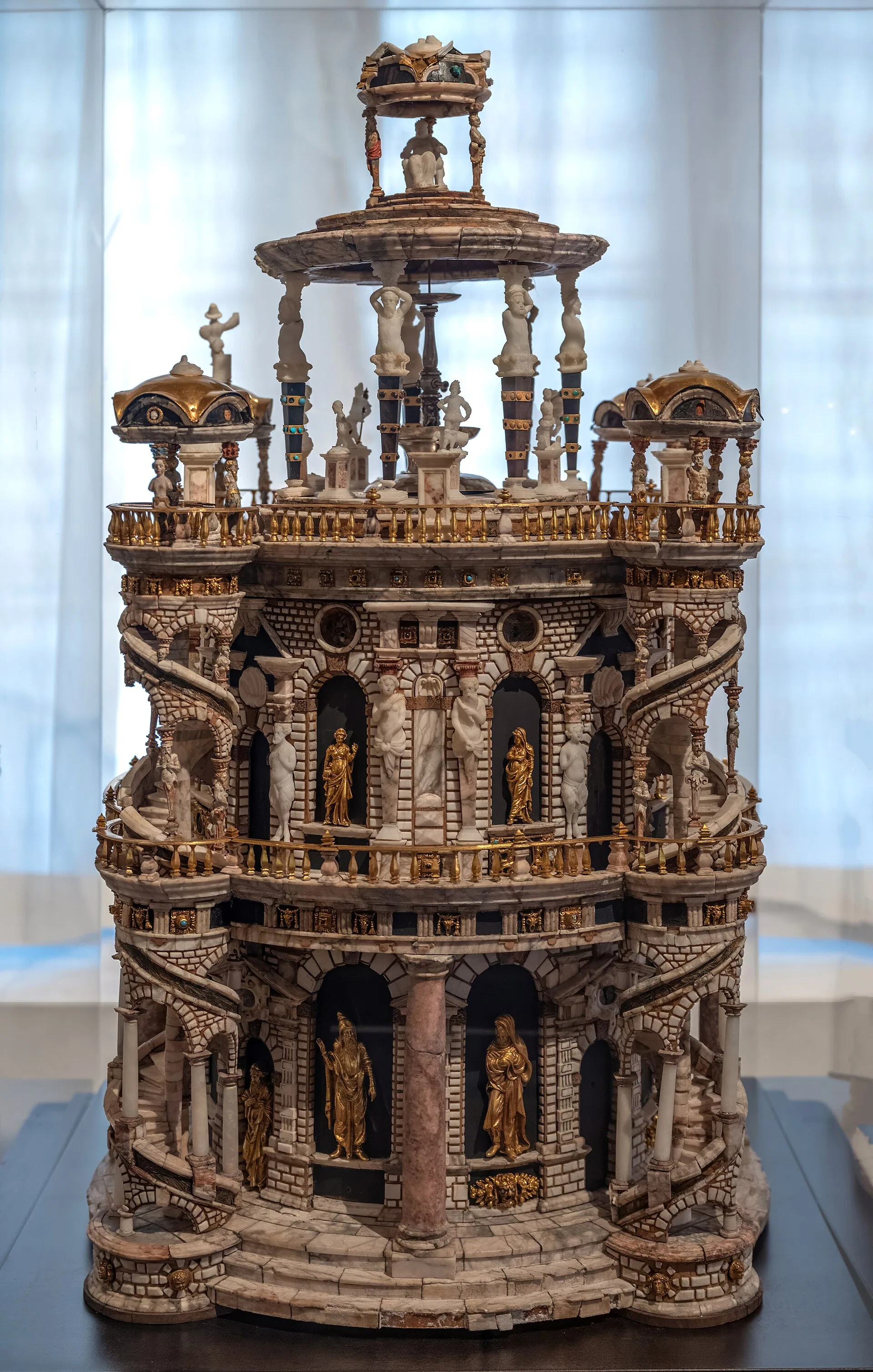
Austria’s most important cabinet of curiosity survives at Ambras Castle above Innsbruck. Archduke Ferdinand II assembled artworks, scientific instruments, weapons, precious materials, natural specimens and objects imported from beyond Europe during the sixteenth century. The collection was intended to represent the breadth of contemporary knowledge, with rarity and exceptional workmanship valued as highly as conventional beauty. The castle describes it as the only Renaissance chamber of art and wonders still housed in its original building.[schlossambras-innsbruck.at]schlossambras-innsbruck.atinfo(at)schlossambras-innsbruck.at…
Visitors should not expect a modern “weird museum” full of explanatory panels about mysteries. Ambras is a serious historic collection whose unusualness lies in its original logic. Coral, rhinoceros horn, intricate turning, mechanical devices, portraits of people once presented as wonders of nature and objects from distant societies were placed within a single system of princely knowledge. The present arrangement, reconstructed in 1974 from surviving inventories, helps explain how art, natural history, technology and human difference were once collected without the boundaries used by modern museums.[schlossambras-innsbruck.at]schlossambras-innsbruck.atinfo(at)schlossambras-innsbruck.at…
That history also carries uncomfortable questions. Objects labelled “exotic” entered European collections through unequal networks of trade, diplomacy and imperial power. Portraits of unusual bodies could preserve individual likenesses, yet they also encouraged viewers to treat people as specimens. Ambras therefore matters not just because it is atmospheric, but because it exposes the origins of the museum itself: an institution created to organise the world, display status and decide what counted as normal, rare or marvellous.
The related Kunstkammer in Vienna’s Kunsthistorisches Museum extends this tradition into the late medieval and Baroque periods. It presents virtuoso carvings, precious vessels, scientific objects, automata and improbable combinations of natural and manufactured materials across a large institutional collection. These are not alleged supernatural artefacts. Their wonder comes from craftsmanship, scarcity and the intellectual ambition of rulers who believed a collection could function as a miniature universe.[KHM.at]khm.atKunstkammer Wien (Chamber of ArtThe Renaissance and Baroque Chambers of Art and Wonders were encyclopaedic universal collections that aimed to capture the entire spectru…
Why Vienna’s strangest museums revolve around the body
Vienna’s most powerful unusual collection is the pathological-anatomical collection in the Narrenturm, a circular former hospital building erected in 1784 for psychiatric patients. A pathological museum was founded in the Vienna General Hospital in 1796, and the collection was moved into the tower in 1971. It became part of the Natural History Museum Vienna in 2012 and reopened after renovation in 2020.[nhm.at]nhm.atNaturhistorisches Museum WienJohann Kundrat (1845-1893), who had likewise studied under Rokitansky, brought parts of the specimen collection from Graz when he became…
The public display includes preserved organs and bones, wax models, historical instruments, books, photographs and material explaining inflammation, infection, tumours, congenital conditions and the development of pathology. The wider holdings contain nearly 50,000 objects, although only a carefully selected portion is shown. The specimens were accumulated for medical documentation, teaching and research, not as carnival curiosities; some remain scientifically useful because they preserve evidence of rare diseases and conditions no longer commonly encountered in Austria.[nhm.at]nhm.atNaturhistorisches Museum WienJohann Kundrat (1845-1893), who had likewise studied under Rokitansky, brought parts of the specimen collection from Graz when he became…
This distinction matters. The collection can be emotionally difficult, and its historic origins raise questions about consent and the treatment of hospital patients. Yet the renovated exhibition is structured by medical categories and social history rather than shock value. It is best understood as a specialist research collection that has opened part of itself to the public. Photography is prohibited in the exhibition and study areas, reinforcing the difference between clinical interpretation and casual spectacle.[nhm.at]nhm.atNaturhistorisches Museum WienJohann Kundrat (1845-1893), who had likewise studied under Rokitansky, brought parts of the specimen collection from Graz when he became…
Vienna also has a smaller Museum of Contraception and Abortion, founded by gynaecologist Christian Fiala. Its rooms trace the history of birth control, pregnancy testing and abortion through devices, medicines, documents and public-health material. The subject is unusual partly because reproductive history was long omitted from mainstream museums, despite its enormous effect on everyday life. The institution is privately founded and openly educational in purpose, so it should not be mistaken for a neutral state museum; nevertheless, its collection offers concrete evidence of dangerous methods, changing medical knowledge and the social consequences of restricted reproductive information.[Muvs]muvs.orgOpen source on muvs.org.
Death as history, ritual and tourist culture
Vienna’s association with death is more substantial than a marketing slogan. The city contains medical specimens, monumental cemeteries, decorated imperial coffins, historic funeral equipment and church crypts in unusually close proximity. Recent tourism promotion has played on this reputation, but the underlying material culture is real: death was displayed through Habsburg ceremony, Catholic devotion, medical study and the municipal organisation of burial.[Financial Times]ft.comFinancial Times Death in ViennaFinancial Times Death in Vienna
The Funeral Museum at Vienna Central Cemetery is the clearest introduction. Located beneath a former mortuary building, it preserves more than 250 original objects and extensive archival imagery relating to undertakers, mourning customs, transport, uniforms, burial administration and fears of premature interment. Its setting inside an active cemetery prevents the displays from becoming detached theatrical props. They belong to the practical history of how a major city managed its dead.[Bestattungsmuseum Einspaltig]bestattungsmuseum.atEinspaltig BestattungsmuseumEinspaltig Bestattungsmuseum
The museum also illustrates the commercial side of contemporary curiosity culture. Its shop sells funeral-themed building sets, cemetery honey and merchandise built around Viennese black humour. That might appear flippant, but it reflects a local habit of combining respect for the dead with jokes about mortality. The humorous products are not the museum’s whole purpose; they are a visitor-facing extension of a serious municipal collection.[Bestattungsmuseum]shop.bestattungsmuseum.atOpen source on bestattungsmuseum.at.
In central Vienna, the Imperial Crypt beneath the Capuchin Church presents death as dynastic theatre. Generations of Habsburg rulers lie in metal sarcophagi ranging from severe simplicity to elaborate displays of skulls, crowns, drapery and imperial emblems. The burials also formed part of a wider practice in which some Habsburg bodies, hearts and internal organs were interred in separate religious locations. The Heart Crypt at the Augustinian Church received Habsburg hearts between 1654 and 1878, while the principal coffins remained with the Capuchins.[vienna.info]wien.infovienna.info Imperial Crypt: Last resting place of the Habsburgsvienna.info Imperial Crypt: Last resting place of the Habsburgs
St Michael’s Church offers a different encounter. Its crypt is accessible only through guided tours and contains coffins, burial chambers and naturally preserved remains associated with the parish’s historic cemetery. The church currently advertises regular English-language tours, making this one of the more controlled ways to see Vienna’s subterranean death heritage. It is a religious burial place first and a visitor attraction second, so the experience is more restrained than a horror-themed crypt tour.[Michaelerkirche]michaelerkirche.atGuided tours of the cryptGuided tours of the crypt
Witchcraft without pretending the legends are true
Riegersburg Castle in Styria houses Austria’s most prominent permanent witchcraft display. The Witch Museum developed from the highly successful 1987 Styrian provincial exhibition “Witches and Sorcerers”, which attracted about 360,000 visitors. A reduced version continued at the castle from 1988.[Burg Riegersburg]dieriegersburg.atOpen source on dieriegersburg.at.
Its proper subject is persecution rather than proof of supernatural power. The exhibits place accusations of witchcraft within early modern law, religion, fear, social tension and the machinery of trials. That makes Riegersburg different from commercial occult attractions that present magical claims as fact. Visitors encounter reconstructions and interpretive displays in a dramatic castle setting, but the historical value lies in the documented consequences of belief: interrogation, denunciation, punishment and the creation of supposed witches by judicial institutions.
The setting does, however, encourage a degree of theatrical tourism. A fortress on a volcanic hill already feels like the stage for a legend, and displays about witches can easily blur folklore with history. The useful way to read the museum is to separate three layers: surviving evidence about prosecutions; later stories attached to the castle and region; and modern presentation designed to make the material memorable. The museum is credible when explaining trials and cultural beliefs, not when treated as evidence that magical events occurred.
Austria does not appear to have a large national museum devoted to cryptids, UFOs or ceremonial magic comparable with specialist collections elsewhere. Its uncanny heritage is instead embedded in regional museums, castles, religious sites and folklore interpretation. That absence is revealing. Austrian strange-history tourism is generally strongest where unusual beliefs intersect with documented institutions—courts, churches, hospitals or aristocratic collections—rather than where paranormal claims stand alone.
Museums built around a single improbable idea
Several Austrian institutions turn one tightly defined subject into a complete visitor experience. Their quality varies, but the best are clear about whether they are educational, commercial or deliberately comic.
World of Poisons, near Salzburg, combines a small zoo with a museum about venom and poison. Visitors see living venomous or poisonous animals alongside exhibits and presentations explaining toxins. Its unusualness is obvious, but its interpretive basis is zoological and toxicological rather than sensational. The facility describes itself as a hybrid museum and Austria’s smallest zoo, while Salzburg’s official tourism service presents it as an educational attraction centred on animals and toxic substances.[weltdergifte.com]weltdergifte.comOpen source on weltdergifte.com.
The Museum of Mushrooms in Carinthia uses lifelike models and ecological displays to explain fungi, habitats and their role in forest systems. It is less macabre than the poison collection, but it belongs within Austria’s curiosity landscape because it elevates an easily overlooked class of organisms into the subject of an entire museum. The institution, founded in 1991, claims the largest number of lifelike mushroom exhibits in Europe; that promotional superlative is difficult to verify independently, but the collection itself is established and public.[pilzmuseum.at]pilzmuseum.atOpen source on pilzmuseum.at.
Vienna’s Museum of Art Fakes concentrates on forged and falsified artworks rather than displaying copies as genuine masterpieces. It explores the techniques, personalities and deceptions behind art fraud, making the act of fakery itself the object of interpretation. The museum is small and privately run, and its own website advises visitors to check for short-notice changes to opening hours. Its value lies less in aesthetic splendour than in showing how provenance, expert authority and a convincing story can shape what the art market accepts as authentic.[Fälschermuseum]faelschermuseum.comOpen source on faelschermuseum.com.
The Nonseum in Herrnbaumgarten, Lower Austria, is openly devoted to useless inventions and the “sense in nonsense”. Displays have included single socks, historical buttonholes and devices that solve problems no sensible person has. The organisation behind it began developing public nonsense events in the 1980s, opened the museum in 1994 and helped brand Herrnbaumgarten as an eccentric village destination.[weinviertel.at]weinviertel.atOpen source on weinviertel.at.
The Nonseum is commercial and tourist-led, but not fraudulent. The joke is declared in advance. Its exhibits parody the authority of museums by giving absurd inventions labels, categories and careful presentation. That makes it a useful counterpoint to Ambras: both institutions honour rare and ingenious objects, but one expresses princely ambitions to contain universal knowledge while the other gently mocks the idea that every invention or collected item must be useful.

Crime, evidence and the dangers of spectacle
The Vienna Crime Museum occupies an old house in Leopoldstadt and traces the history of crime, policing and justice from the Middle Ages onwards. Its collection includes legal records, material relating to investigations, political violence, crime-scene imagery and objects associated with convicted or executed people.[Wiener Kriminalmuseum]wien.kriminalmuseum.atWiener Kriminalmuseum About the museumWiener Kriminalmuseum About the museum
This is one of Austria’s most confrontational museums because the distance between evidence and entertainment can become narrow. Historic weapons, photographs and bodily remains may attract visitors seeking true-crime thrills, but they also document changing police methods, punishment and public attitudes towards offenders. A responsible visit requires remembering that many exhibits concern real victims and accused people, not fictional mysteries.
The museum’s presentation is more traditional and object-dense than that of newer institutions. That can feel atmospheric, but it may also provide less interpretive distance than contemporary visitors expect around graphic material. It is best approached as a historic crime collection with unevenly modernised display methods, rather than as a definitive account of criminology or justice.
How credible are Austria’s strange museums?
Austria’s unusual collections fall into several distinct types, and judging them by the same standard creates confusion.
Academic and scientific collections such as the Narrenturm use unusual material as evidence. Their authority comes from cataloguing, institutional stewardship, medical expertise and continuing research. Ethical questions remain, especially around human remains, but the exhibits are not presented as supernatural mysteries.
Historic princely collections such as Ambras and the Vienna Kunstkammer are credible records of past collecting systems. Their labels may use modern scholarship, yet the original categories reflected Renaissance beliefs, social hierarchies and European expansion. The “wonder” belongs to the history of knowledge, not necessarily to the objects themselves.
Folklore and persecution displays such as Riegersburg interpret belief and its consequences. They are most reliable when grounded in trial history and weakest when atmosphere encourages visitors to mistake legend for documentation.
Private specialist museums such as the contraception, art-fake and poison museums often exist because larger public institutions neglected a subject. Their independence can produce focused, memorable displays, although their curatorial viewpoint may be closely connected to a founder, campaign or business model.
Comic attractions such as the Nonseum are intentionally artificial. Credibility is almost beside the point because the institution makes no secret of its absurdity. The useful question is whether the joke is inventive and well curated, not whether the exhibits solve real problems.
What makes Austria distinctive
Austria’s strange-museum landscape is unusually rooted in institutions of authority. Its curiosities were preserved by archdukes, doctors, courts, monasteries, municipal undertakers and specialist collectors. Even its most eccentric attractions tend to imitate, question or reinterpret those formal systems.
Three themes recur. First is the urge to classify: the Renaissance collector arranging the world in cabinets, the pathologist cataloguing disease and the police museum organising criminal evidence. Second is mortality, visible in pathology collections, coffins, crypts, cemeteries and funeral humour. Third is the tension between belief and documentation, especially in displays about witchcraft, relics and unusual bodies.
For visitors, the most rewarding route is therefore not simply a hunt for the “weirdest” object. Ambras explains where the culture of collecting came from. The Narrenturm shows its scientific power and ethical difficulty. Riegersburg demonstrates how destructive beliefs became legal history. The Funeral Museum and imperial crypts reveal how death could be administered, ritualised and commercialised. The Nonseum then turns the whole collecting impulse into a joke.
Austria’s oddest museums matter because they preserve more than curiosities. They show how successive generations decided which bodies, objects, beliefs and inventions deserved attention—and how museums can transform fear, wonder, authority and even nonsense into public culture.
Amazon book picks
Further Reading
Books and field guides related to Why Does Austria Preserve Such Strange Things?. Use these as the next step if you want deeper reading beyond the article.
Cabinets of Curiosities
"Maurie`s' tour of strange objects is entertaining and fascinating." --Antiques And The Arts Weekly
Atlas Obscura
Je čas vylézt z ulity a vyrazit po nevyšlapaných cestičkách. Vydejte se za zázraky přírody, bizarními lidskými a přírodními výtvory i na...
eBay marketplace picks
Marketplace Samples
Live-tested eBay searches with available results related to this page.
Selected fromAustria travel poster oneBay.co.uk.
Endnotes
1.
Source: schlossambras-innsbruck.at
Link:https://www.schlossambras-innsbruck.at/en/exhibitions/the-chamber-of-art-and-wonders
Source snippet
info(at)schlossambras-innsbruck.at...
2.
Source: schlossambras-innsbruck.at
Link:https://www.schlossambras-innsbruck.at/en/collection-research
Source snippet
direktion(at)schlossambras-innsbruck.at...
3.
Source: repository.khm.at
Title: Das Nachlassinventar Erzherzog Ferdinands II
Link:https://repository.khm.at/viewer/Nachlassinventar/Ferdinand/1596/
Source snippet
Kunsthistorisches Museum WienIt provides information on the layout of the individual buildings (Ambras Castle, Ruhelust, Imperial Palace...
4.
Source: khm.at
Title: Kunstkammer Wien (Chamber of Art)
Link:https://www.khm.at/en/research/collections/kunstkammer-wien-chamber-of-art
Source snippet
The Renaissance and Baroque Chambers of Art and Wonders were encyclopaedic universal collections that aimed to capture the entire spectru...
5.
Source: khm.at
Title: Kunstkammer Wien (Chamber of Art)
Link:https://www.khm.at/en/visit/collections/kunstkammer-wien/curatorial-staff/?juHash=0cfc4ea4f2d8cb788cb022c0862e4a6770015c0b&juSecure=1&jumpurl=uploads%2Ftx_khmpersons%2FCV_B_Goldmann.pdf&locationData=956%3Atx_khmpersons_records%3A45&mimeType=application%2Fpdf
Source snippet
The world of beauty, intellect, curiosities, and wonders is presented across twenty thematically designed spaces.... Even when, from the...
6.
Source: nhm.at
Title: Naturhistorisches Museum Wien
Link:https://www.nhm.at/en/narrenturm
Source snippet
Johann Kundrat (1845-1893), who had likewise studied under Rokitansky, brought parts of the specimen collection from Graz when he became...
7.
Source: nhm.at
Title: Naturhistorisches Museum Wien
Link:https://www.nhm.at/en/tours__activities/narrenturm
Source snippet
NarrenturmThe Collection of Anatomical Pathology in the 'Narrenturm' is part of the Natural History Museum Vienna but located away from t...
8.
Source: muvs.org
Link:https://muvs.org/en/
9.
Source: muvs.org
Title: Museum of Contraception and Abortion
Link:https://muvs.org/en/museum/beginning/
10.
Source: muvs.org
Title: opening tickets
Link:https://muvs.org/en/museum/opening-tickets/
11.
Source: bestattungsmuseum.at
Title: Einspaltig Bestattungsmuseum
Link:https://www.bestattungsmuseum.at/besucherinfo/standort
12.
Source: bestattungsmuseum.at
Title: Einspaltig Bestattungsmuseum
Link:https://www.bestattungsmuseum.at/besucherinfo/das-museum
13.
Source: shop.bestattungsmuseum.at
Link:https://shop.bestattungsmuseum.at/en/
14.
Source: shop.bestattungsmuseum.at
Link:https://shop.bestattungsmuseum.at/en/frequently-asked-questions/
15.
Source: michaelerkirche.at
Title: Guided tours of the crypt
Link:https://www.michaelerkirche.at/en/tours-crypt/
16.
Source: salzburg.info
Link:https://www.salzburg.info/en/sights/museums/welt-der-gifte
17.
Source: pilzmuseum.at
Link:https://www.pilzmuseum.at/english/
18.
Source: weinviertel.at
Link:https://www.weinviertel.at/en/excursions/nonseum-en
19.
Source: nonseum.at
Link:https://www.nonseum.at/nonseum/
20.
Source: nonseum.at
Title: was bisher geschah
Link:https://www.nonseum.at/was-bisher-geschah/
21.
Source: wien.kriminalmuseum.at
Title: Wiener Kriminalmuseum About the museum
Link:https://wien.kriminalmuseum.at/en/about-the-museum-2/
22.
Source: shop.bestattungsmuseum.at
Title: 13 Uhr
Link:https://shop.bestattungsmuseum.at/en/category/tickets/Ticket-fuer-eine-Fuehrung-im-Bestattungsmuseum-13-00-Uhr/5.9.2026/Keine/13-Uhr
23.
Source: nhm.at
Title: Naturhistorisches Museum Wien
Link:https://www.nhm.at/veranstaltungskalender/nhm_narrenturm_guided_tour_6
24.
Source: nhm.at
Title: Naturhistorisches Museum Wien
Link:https://www.nhm.at/en/monthly_program/program_detail?termin_id=1776814267243
25.
Source: nhm.at
Title: Naturhistorisches Museum Wien
Link:https://www.nhm.at/events_calendar/nhm_narrenturm_guided_tour
26.
Source: nhm.at
Title: Naturhistorisches Museum Wien
Link:https://www.nhm.at/veranstaltungskalender/nhm_narrenturm_guided_tour_in_the_study_collection
27.
Source: nhm.at
Title: Naturhistorisches Museum Wien
Link:https://www.nhm.at/en/press/__440
28.
Source: nonseum.at
Title: Impressum & Datenschutz – Nonseum
Link:https://www.nonseum.at/datenschutz-hinweis/
29.
Source: austria.info
Title: The most beautiful sights in Vienna
Link:https://www.austria.info/en-gb/highlights/vienna-sights/
30.
Source: b2b.austria.info
Title: museum culture news austria
Link:https://b2b.austria.info/ro/media/newsroom/museum-culture-news-austria/
31.
Source: austria.info
Link:https://www.austria.info/en-gb/inspiration/museums-and-galleries/
32.
Source: austria.info
Link:https://www.austria.info/en-gb/inspiration/sights-in-austria/
33.
Source: visit.austria.info
Link:https://visit.austria.info/6187Di1WW
34.
Source: austria.info
Title: The Vienna Hofburg and its museums
Link:https://www.austria.info/en-gb/locations/hofburg-palace/
35.
Source: austria.info
Link:https://www.austria.info/en-us/cities-and-places/vienna/
36.
Source: b2b.austria.info
Title: info City meets Nature
Link:https://b2b.austria.info/ko/media/story-ideas/culture-meets-nature-city-trips-austria/
37.
Source: austria.info
Title: The Imperial Habsburg Collections in Vienna
Link:https://www.austria.info/en-gb/recommendations/365-days/imperial-habsburg-collections/
38.
Source: austria.info
Link:https://www.austria.info/en-gb/highlights/secret-tips/
39.
Source: shop.nhm.at
Title: entrance narrenturm
Link:https://shop.nhm.at/en/entrance_narrenturm
40.
Source: nhm.at
Title: Naturhistorisches Museum Wien
Link:https://www.nhm.at/forschung/anthropologie/pathologisch-anatomische_sammlung_im_narrenturm
41.
Source: shop.nhm.at
Title: themenfuehrung narrenturm
Link:https://shop.nhm.at/en/themenfuehrung_narrenturm
42.
Source: shop.nhm.at
Title: eintritt narrenturm
Link:https://shop.nhm.at/eintritt_narrenturm
43.
Source: nhm.at
Title: Naturhistorisches Museum Wien
Link:https://www.nhm.at/fuehrungen__aktivitaeten/narrenturm
44.
Source: schlossambras-innsbruck.at
Link:https://www.schlossambras-innsbruck.at/en/press/general-information
45.
Source: schlossambras-innsbruck.at
Link:https://www.schlossambras-innsbruck.at/en/discovering-the-castle/sites-in-the-castle/the-lower-castle
46.
Source: schlossambras-innsbruck.at
Link:https://www.schlossambras-innsbruck.at/en
47.
Source: schlossambras-innsbruck.at
Link:https://www.schlossambras-innsbruck.at/en/visit-tickets
48.
Source: schlossambras-innsbruck.at
Link:https://www.schlossambras-innsbruck.at/en/about-us
49.
Source: schlossambras-innsbruck.at
Link:https://www.schlossambras-innsbruck.at/en/visit-tickets/guided-tours-programme/offers/ambras-highlights
50.
Source: schlossambras-innsbruck.at
Title: Discovering the castle Daily, 10 a.m. to 5 p.m. Closed in november Tickets 16
Link:https://www.schlossambras-innsbruck.at/en/discovering-the-castle
51.
Source: schlossambras-innsbruck.at
Link:https://www.schlossambras-innsbruck.at/en/press
52.
Source: schlossambras-innsbruck.at
Link:https://www.schlossambras-innsbruck.at/en/das-schloss-entdecken/orte-im-schloss/the-upper-castle
53.
Source: schlossambras-innsbruck.at
Title: ambraser highlights
Link:https://www.schlossambras-innsbruck.at/en/visit-tickets/guided-tours-programme/ambraser-highlights/3410/11
54.
Source: khm.at
Link:https://www.khm.at/en/artworks/tartolt-84928
55.
Source: khm.at
Title: Aufsatz, Schnitzarbeit, Filigranarbeit, Heiliges Grab
Link:https://www.khm.at/en/artworks/aufsatz-schnitzarbeit-filigranarbeit-heiliges-grab-391171
56.
Source: khm.at
Title: Kompaß aus Gipsspat, Sonnenuhr, Uhr, wissenschaftliches Instrument, Meßgerät
Link:https://www.khm.at/en/artworks/kompass-aus-gipsspat-sonnenuhr-uhr-wissenschaftliches-instrument-messgeraet-504896
57.
Source: khm.at
Title: Handstein, Grotte, Kreuzigungsgruppe
Link:https://www.khm.at/en/artworks/handstein-grotte-kreuzigungsgruppe-504831
58.
Source: khm.at
Title: Kette, Glaskette
Link:https://www.khm.at/en/artworks/kette-glaskette-505102
59.
Source: khm.at
Title: Heiliges Grab, Mikroschnitzerei, Schnitzerei, Holzarbeit
Link:https://www.khm.at/en/artworks/heiliges-grab-mikroschnitzerei-schnitzerei-holzarbeit-390940
60.
Source: khm.at
Link:https://www.khm.at/en/exhibitions/collection-of-historic-musical-instruments
61.
Source: khm.at
Link:https://www.khm.at/en/artworks/schuettelkasten-91439
62.
Source: khm.at
Title: Flasche aus Perlmutt
Link:https://www.khm.at/en/artworks/flasche-aus-perlmutt-90106
63.
Source: khm.at
Link:https://www.khm.at/kunstwerke/schuettelkasten-91439
64.
Source: khm.at
Title: The Kunsthistorisches Museum
Link:https://www.khm.at/en/
65.
Source: khm.at
Title: Kunstkammer – a world of beauty and splendour
Link:https://www.khm.at/en/visit/collections/kunstkammer-wien/selected-masterpieces
66.
Source: khm.at
Title: Imperial Armoury – Armor & ceremonial weapons
Link:https://www.khm.at/en/visit/collections/imperial-armoury/history-of-the-collection
67.
Source: khm.at
Title: Kunstkammer – a world of beauty and splendour
Link:https://www.khm.at/en/exhibitions/kunstkammer
68.
Source: khm.at
Title: The Kunsthistorisches Museum – a Gesamtkunstwerk
Link:https://www.khm.at/en/exhibitions/the-kunsthistorisches-museum-gesamtkunstwerk
69.
Source: khm.at
Link:https://www.khm.at/en/visit/exhibitions/2008/additions/
70.
Source: khm.at
Link:https://www.khm.at/en/visit/exhibitions/past-exhibitions/2005/masterpieces-from-the-habsburg-cabinets-of-art-and-wonders/
71.
Source: khm.at
Link:https://www.khm.at/en/visit/exhibitions/the-emperors-gold
72.
Source: khm.at
Link:https://www.khm.at/en/visit/exhibitions/vitrine-extra-5/
73.
Source: khm.at
Link:https://www.khm.at/en/visit/exhibitions/past-exhibitions/2008/arcimboldo
74.
Source: khm.at
Link:https://www.khm.at/en/visit/exhibitions/lucian-freud
75.
Source: bestattungsmuseum.at
Title: am Wiener Zentralfriedhof
Link:https://www.bestattungsmuseum.at/en/
77.
Source: bestattungsmuseum.at
Title: am Wiener Zentralfriedhof
Link:https://www.bestattungsmuseum.at/
78.
Source: bestattungsmuseum.at
Title: Sonderausstellung im Bestattungsmuseum Wien – Trauerkultur des 19. Jahrhunderts
Link:https://www.bestattungsmuseum.at/ausstellung
79.
Source: bestattungsmuseum.at
Link:https://www.bestattungsmuseum.at/besucherinfo
80.
Source: bestattungsmuseum.at
Title: Auf einen Blick
Link:https://www.bestattungsmuseum.at/besucherinfo/auf-einen-blick
81.
Source: bestattungsmuseum.at
Link:https://www.bestattungsmuseum.at/en/besucherinfo
82.
Source: bestattungsmuseum.at
Title: Auf einen Blick
Link:https://www.bestattungsmuseum.at/en/besucherinfo/auf-einen-blick
83.
Source: shop.bestattungsmuseum.at
Link:https://shop.bestattungsmuseum.at/en/detail/019102cf626e73e8b9a98e7128756f39
84.
Source: shop.bestattungsmuseum.at
Title: at Wien
Link:https://shop.bestattungsmuseum.at/en/category/books/Wien-Es-lebe-der-Zentralfriedhof
85.
Source: shop.bestattungsmuseum.at
Title: Buechersackerl Ich lese bis ich verwese
Link:https://shop.bestattungsmuseum.at/en/category/fashion-accessories/Buechersackerl-Ich-lese-bis-ich-verwese
86.
Source: shop.bestattungsmuseum.at
Title: Historischer Leichenwagen aus Klemmbausteinen
Link:https://shop.bestattungsmuseum.at/en/category/models/Historischer-Leichenwagen-aus-Klemmbausteinen
87.
Source: bestattungsmuseum.at
Link:https://www.bestattungsmuseum.at/en/presse
88.
Source: nonseum.at
Link:https://www.nonseum.at/
89.
Source: nonseum.at
Link:https://www.nonseum.at/kontakt/
90.
Source: nonseum.at
Link:https://www.nonseum.at/die-erfindung/
91.
Source: nonseum.at
Link:https://www.nonseum.at/der-vvg/
92.
Source: nonseum.at
Title: 1984 bis 2016
Link:https://www.nonseum.at/1984-bis-2016/
93.
Source: nonseum.at
Link:https://www.nonseum.at/herrnbaumgartner-winzer-und-heurigenbetriebe-im-uberblick/
94.
Source: nonseum.at
Link:https://www.nonseum.at/tage-der-offenen-kellertur/
95.
Source: nonseum.at
Title: 1984 bis 2016
Link:https://www.nonseum.at/1984-bis-2016/3/
96.
Source: nonseum.at
Link:https://www.nonseum.at/grundgedanke/
97.
Source: ft.com
Title: Financial Times Death in Vienna
Link:https://www.ft.com/content/6708104e-9312-4a54-987b-c2a9837b4fa5
98.
Source: wien.info
Title: vienna.info Imperial Crypt: Last resting place of the Habsburgs
Link:https://www.wien.info/en/art-culture/imperial-sights/imperial-crypt-341952
99.
Source: wien.info
Link:https://www.wien.info/en/see-do/sights-from-a-to-z/st-michaels-church-359648
100.
Source: dieriegersburg.at
Link:https://www.dieriegersburg.at/en/museen/
101.
Source: weltdergifte.com
Link:https://weltdergifte.com/
102.
Source: weltdergifte.com
Title: Welt der Gifte Home
Link:https://weltdergifte.com/en/
103.
Source: faelschermuseum.com
Link:https://www.faelschermuseum.com/
104.
Source: wien.info
Link:https://www.wien.info/en/see-do/sights-from-a-to-z/crime-museum-343762
105.
Source: atlasobscura.com
Title: riegersburg castle
Link:https://www.atlasobscura.com/places/riegersburg-castle
106.
Source: atlasobscura.com
Title: welt der gifte
Link:https://www.atlasobscura.com/places/welt-der-gifte
107.
Source: atlasobscura.com
Title: museum of contraception and abortion
Link:https://www.atlasobscura.com/places/museum-of-contraception-and-abortion
108.
Source: tripadvisor.com
Title: Welt der Gifte
Link:https://www.tripadvisor.com/Attraction_Review-g190441-d21045754-Reviews-Welt_der_Gifte-Salzburg_Austrian_Alps.html
109.
Source: tripadvisor.com
Link:https://www.tripadvisor.com/Attraction_Review-g2613210-d3172755-Reviews-Nonseum-Herrnbaumgarten_Lower_Austria.html
110.
Source: Wikipedia
Title: Museum of Contraception and Abortion
Link:https://en.wikipedia.org/wiki/Museum_of_Contraception_and_Abortion
111.
Source: Wikipedia
Title: Imperial Crypt
Link:https://en.wikipedia.org/wiki/Imperial_Crypt
112.
Source: visitingvienna.com
Title: michaelerkirche crypt tour
Link:https://www.visitingvienna.com/sights/michaelerkirche-crypt-tour/
113.
Source: facebook.com
Link:https://www.facebook.com/weltdergifte/
114.
Source: wien.info
Title: Magnificently curious: Vienna’s unusual museums
Link:https://www.wien.info/en/art-culture/museums-exhibitions/unusual-museums-362400
115.
Source: wien.info
Title: Museum of Contraception and Abortion
Link:https://www.wien.info/en/museum-of-contraception-and-abortion-129784
116.
Source: culturalheritageonline.com
Link:https://culturalheritageonline.com/places/nonseum-museum-of-useless-things-and-wrong-inventions/
117.
Source: salzburgerland.com
Title: Die Welt der Gifte
Link:https://www.salzburgerland.com/de/magazin/die-welt-der-gifte/
118.
Source: viennapass.de
Title: imperial crypt
Link:https://www.viennapass.de/en/sights/imperial-crypt
119.
Source: secretvienna.org
Link:https://secretvienna.org/wiener-kriminalmuseum/
120.
Source: kupi.com
Link:https://www.kupi.com/en/explore/austria/salzburg/world-of-poisons
121.
Source: hausdernatur.at
Link:https://www.hausdernatur.at/en/exhibitions.html
122.
Source: instagram.com
Link:https://www.instagram.com/weltdergifte/
123.
Source: kidvoyage.com
Title: welt der gifte
Link:https://kidvoyage.com/things-to-do/austria/salzburg/welt-der-gifte
124.
Source: introducingvienna.com
Title: Imperial Crypt
Link:https://www.introducingvienna.com/imperial-crypt
Additional References
125.
Source: youtube.com
Title: Die Riegersburg, Steiermark
Link:https://www.youtube.com/watch?v=4zhN4hejCr8
Source snippet
10 Awesome Death-Related Museums Around the World...
126.
Source: atlasobscura.com
Link:https://www.atlasobscura.com/things-to-do/austria/museums?page=2
127.
Source: brill.com
Link:https://brill.com/display/book/9789004691162/BP000015.xml?language=en&srsltid=AfmBOopvr2Oyha1tnb5pUgv9mKnxR1zFVRKSj9XePQ1G3QiRc9_1yuhj
128.
Source: instagram.com
Link:https://www.instagram.com/p/DQbnluKiNdn/
129.
Source: viennawalks.com
Link:https://www.viennawalks.com/e/index.php?page=detail2&tour=96
130.
Source: st-michaelis.de
Link:https://www.st-michaelis.de/en/michel-visit/guided-tours
131.
Source: dark-tourism.com
Link:https://www.dark-tourism.com/index.php/115-imperial-crypt-vienna
132.
Source: facebook.com
Link:https://www.facebook.com/groups/cemeteriesofeurope/posts/1896975061187433/
133.
Source: museumlollandfalster.dk
Link:https://museumlollandfalster.dk/en/museum-obscurum/
134.
Source: Wikipedia
Link:https://en.wikipedia.org/wiki/Museum_of_Art_Fakes