Within Central African Curiosities
When a Museum Collection Can Still Be Heard
Carved harps, drums and Aka recordings show how musical heritage can be split between objects, sound archives and living communities.
On this page
- Carved harps and drums as sculpture
- Aka polyphony and ceremonial performance
- Recordings, objects and archives abroad
Page outline Jump by section
Introduction
The Central African Republic’s most remarkable musical heritage is not preserved in a single museum gallery. Instead, it is scattered across carved instruments in Bangui, historic field recordings held by international archives, and living performance traditions that continue in forest communities. This makes the country’s musical collections unusual from a heritage perspective: visitors may see an instrument in a museum, hear its sound in an overseas archive, and discover that its deepest meaning still survives in ceremonies rather than display cases.
For anyone interested in unusual collections, this creates a different kind of museum experience. The story is not simply about rare objects, but about how sound, craftsmanship and cultural memory have become separated by conflict, collecting history and international research, while remaining connected through documentation and living practice.
When a Museum Collection Can Still Be Heard
Unlike paintings or sculptures, musical instruments were created to produce sound. A carved harp or ceremonial drum loses part of its meaning when it sits silently behind glass. In the Central African Republic, this challenge is especially visible because the surviving collections are split between physical artefacts and extensive sound recordings made during twentieth-century ethnomusicological expeditions.
The Barthélémy Boganda National Museum has long included traditional musical instruments among its ethnographic collections, alongside masks, hunting equipment and ritual objects. These instruments represent many of the country’s cultural groups rather than a single musical tradition. Damage and looting during the civil conflict disrupted access to much of the collection, making documentation and conservation as important as public display.[Wikipedia]WikipediaBoganda National MuseumBoganda National Museum
At the same time, researchers working in Central Africa made thousands of recordings that captured the sounds of these instruments in use. Those recordings now survive in archives and digital collections far beyond the country’s borders, creating an unusual situation in which the soundscape has often proved easier to access than the original objects.
Carved harps and drums as sculpture
Many traditional Central African instruments are striking works of carving in their own right. Their makers shaped wood not only for appearance but also for resonance, balance and durability, meaning that artistic decoration and acoustic design are inseparable.
Among the instruments associated with communities in the Central African Republic are:
- Carved harps, whose wooden frames often display carefully shaped necks, resonators and decorative carving while remaining functional musical tools.
- Ceremonial drums, carved from single tree trunks, whose proportions determine their distinctive sound as much as their visual appearance.
- Musical bows and simple string instruments, built from readily available natural materials yet capable of complex musical expression.
- Horn and flute ensembles, fashioned from bamboo, roots, antelope horns and other local materials, demonstrating remarkable craftsmanship despite their seemingly modest appearance.[Smithsonian Folkways Recordings]folkways.si.eduOpen source on si.edu.
For museum visitors, these instruments occupy an unusual space between sculpture, engineering and ceremonial object. They are aesthetically impressive even before their musical purpose is understood, but their full significance only emerges when linked to recordings or performances.

Aka polyphony and ceremonial performance
The country’s best-known musical heritage is not an object at all but a living tradition. The polyphonic singing of the Aka people was inscribed by UNESCO on the Representative List of the Intangible Cultural Heritage of Humanity because of its exceptional complexity and its central role in community life.[ICH UNESCO]ich.unesco.orgICH UNESCOPolyphonic singing of the Aka Pygmies of Central AfricaUNESCO Intangible Cultural Heritage…
Rather than existing as concert music, Aka polyphony accompanies important moments including hunting rituals, funerals and the establishment of new forest camps. Every participant contributes independent vocal lines that combine into continuously changing textures through improvisation rather than written notation.[ICH UNESCO]ich.unesco.orgICH UNESCOPolyphonic singing of the Aka Pygmies of Central AfricaUNESCO Intangible Cultural Heritage…
Although the voices attract most attention, the performances are also linked to specific instruments. UNESCO identifies the use of percussion, a local drum, a harp-like instrument and a single-string musical bow, each associated with particular occasions rather than serving as interchangeable accompaniment. These instruments are therefore best understood as components of ritual practice rather than museum specimens alone.[ICH UNESCO]ich.unesco.orgICH UNESCOPolyphonic singing of the Aka Pygmies of Central AfricaUNESCO Intangible Cultural Heritage…
This relationship between object and performance explains why even an expertly preserved instrument cannot fully represent Aka musical culture without the songs, dances and social setting that give it meaning.
Recordings, objects and archives abroad
A distinctive feature of Central African musical heritage is that some of its richest documentation is now held outside the country.
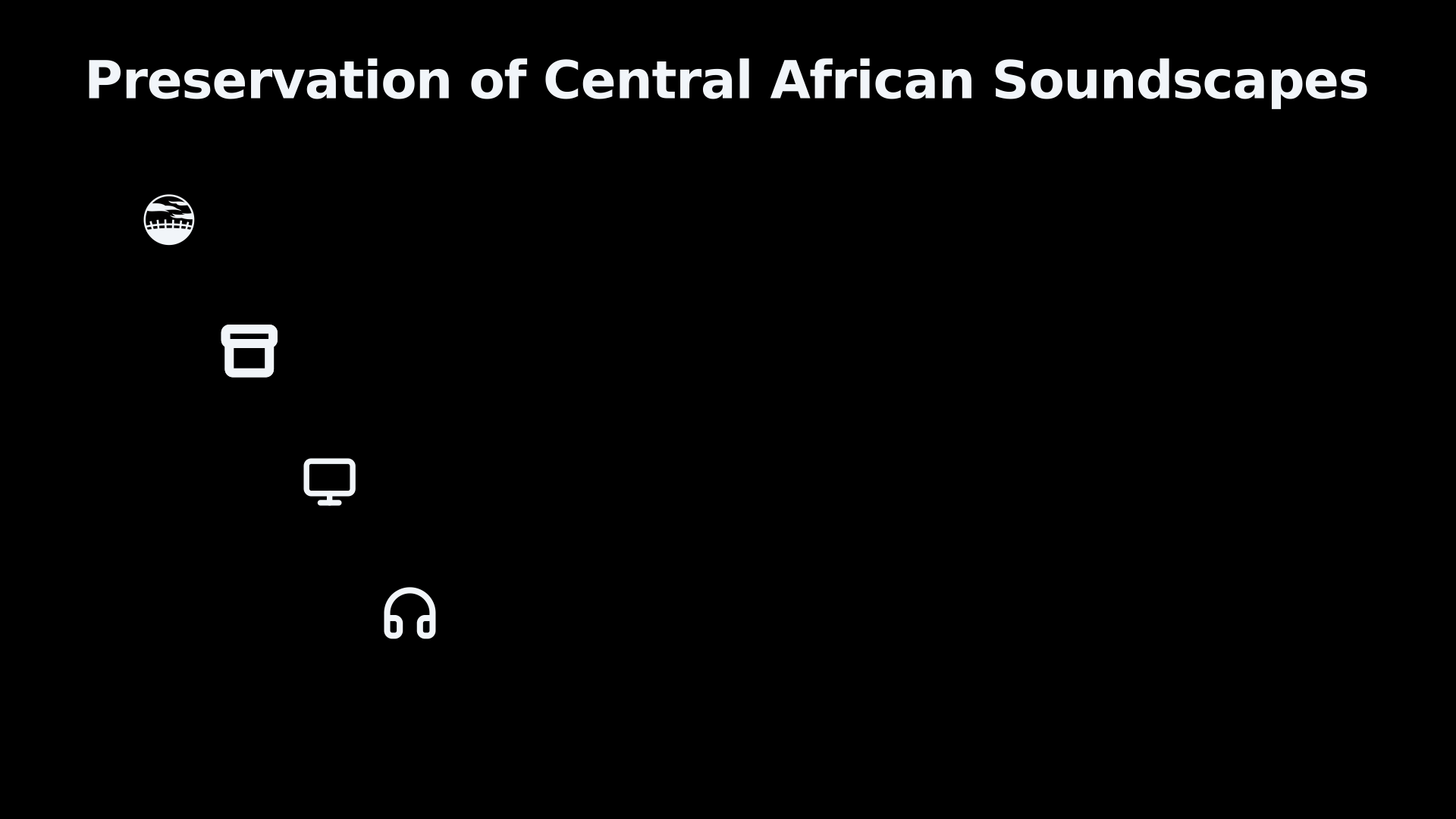
Beginning in the 1960s and 1970s, ethnomusicologist Simha Arom and other researchers made extensive field recordings across the Central African Republic. Their work documented Aka vocal traditions as well as Banda instrumental ensembles using carved drums, horns, flutes and other locally made instruments. Many of these recordings were released through UNESCO’s Collection of Traditional Music and are now distributed digitally by Smithsonian Folkways, allowing listeners worldwide to hear performances that were originally captured in remote communities.[Smithsonian Folkways Recordings]folkways.si.eduOpen source on si.edu.
Other recordings, photographs and documentation are preserved in specialist research archives such as the CNRS Centre for Research in Ethnomusicology in France. These collections combine audio, images and field notes, preserving details about performers, instruments and ceremonial contexts that might otherwise have disappeared.[archives.crem-cnrs.fr]archives.crem-cnrs.frCollection: CNRSMH_E_1994_010_001 - CREM-CNRS - Sound archives of the CNRS and the Musee de l'Homme. Research Centre of Ethnomusicology…
This international dispersal has advantages and drawbacks. Overseas archives have often provided stable long-term preservation and digitisation, making historically important recordings publicly accessible. At the same time, the physical instruments, archival recordings and descendant communities are frequently separated by thousands of kilometres, making it difficult to experience them together.
Why this matters in Central African Republic’s curiosity landscape
For readers exploring unusual collections, the Central African Republic offers a reminder that the most intriguing archive may not consist of shelves of rare objects but of sounds that remain connected to living communities.
A carved harp in Bangui, a field recording preserved in Paris or Washington, and an Aka ceremony performed today are all parts of the same cultural record. None is complete without the others. The object reveals craftsmanship, the recording preserves sound, and the community maintains the knowledge that gives both their meaning.
That combination makes the country’s dispersed musical heritage one of its most distinctive cultural collections: a museum that extends beyond its walls, where the archive can still be heard as well as seen.
Amazon book picks
Further Reading
Books and field guides related to When a Museum Collection Can Still Be Heard. Use these as the next step if you want deeper reading beyond the article.
The Anthropology of Music
In this highly praised and seminal work, Alan Merriam demonstrates that music is a social behavior—one worthy and available to study thro...
How Musical is Man?
This important study in ethnomusicology is an attempt by the author -- a musician who has become a social anthropologist -- to compare hi...
The Garland Handbook of African Music
The Garland Handbook of African Music is comprised of essays from The Garland Encyclopedia of World Music: Volume 1, Africa, (1997). Revi...
eBay marketplace picks
Marketplace Samples
Live-tested eBay searches with available results related to this page.
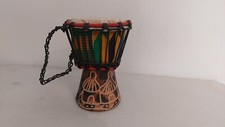
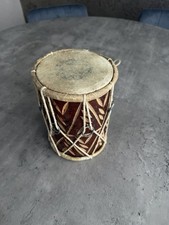
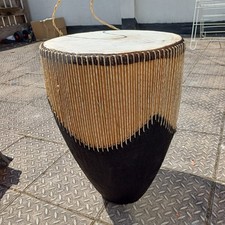
Selected fromAfrican drum decor oneBay.co.uk.
Endnotes
1.
Source: Wikipedia
Title: Boganda National Museum
Link:https://en.wikipedia.org/wiki/Boganda_National_Museum
2.
Source: ich.unesco.org
Title: ICH UNESCOPolyphonic singing of the Aka Pygmies of Central Africa
Link:https://ich.unesco.org/en/RL/polyphonic-singing-of-the-aka-pygmies-of-central-africa-00082?RL=00082
Source snippet
UNESCO Intangible Cultural Heritage...
3.
Source: unesco.org
Title: Oral Traditions of the Pygmies Aka | Intangible Heritage
Link:https://www.unesco.org/archives/multimedia/document-3750
Source snippet
Oral Traditions of the Pygmies Aka | Intangible Heritage - UNESCO Multimedia Archives...
4.
Source: archives.crem-cnrs.fr
Link:https://archives.crem-cnrs.fr/archives/collections/CNRSMH_E_1994_010_001/
Source snippet
Collection: CNRSMH_E_1994_010_001 - CREM-CNRS - Sound archives of the CNRS and the Musee de l'Homme. Research Centre of Ethnomusicology...
5.
Source: archives.crem-cnrs.fr
Link:https://archives.crem-cnrs.fr/archives/collections/CNRSMH_I_1966_009/
Source snippet
Research Centre of Ethnomusicology (CREM), University of Paris 10March 24, 2025 — IMAGE COLLECTION: SÉLECTION DE MUSIQUES DE RÉPUBLIQUE...
Published: March 24, 2025
6.
Source: data.unesco.org
Link:https://data.unesco.org/explore/dataset/ich001/api/?flg=ar-001
7.
Source: ich.unesco.org
Title: los cantos polifonicos de los pigmeos aka de centroafrica 00082
Link:https://ich.unesco.org/es/RL/los-cantos-polifonicos-de-los-pigmeos-aka-de-centroafrica-00082
8.
Source: ich.unesco.org
Title: les chants polyphoniques des pygmees aka de centrafrique 00082
Link:https://ich.unesco.org/fr/RL/les-chants-polyphoniques-des-pygmees-aka-de-centrafrique-00082
9.
Source: ich.unesco.org
Link:https://ich.unesco.org/en/projects/action-plan-for-the-safeguarding-and-revitalization-of-the-oral-tradition-of-the-aka-pygmies-of-the-central-african-republic-00014?projectID=00014&project_id=00014
10.
Source: archives.crem-cnrs.fr
Link:https://archives.crem-cnrs.fr/archives/collections/CNRSMH_E_1974_009_028/
11.
Source: archives.crem-cnrs.fr
Link:https://archives.crem-cnrs.fr/archives/collections/CNRSMH_E_1988_012_002/
12.
Source: folkways.si.edu
Link:https://folkways.si.edu/central-african-republic-banda-polyphony/world/music/album/smithsonian
13.
Source: folkways.si.edu
Link:https://folkways.si.edu/unesco
14.
Source: folkways.si.edu
Link:https://folkways.si.edu/aka-pygmy-music/world/music/album/smithsonian
15.
Source: folkways.si.edu
Title: unesco collection week 50 recording the music of the central african republic
Link:https://folkways.si.edu/news-and-press/unesco-collection-week-50-recording-the-music-of-the-central-african-republic
16.
Source: folkways.si.edu
Title: unesco spanish
Link:https://folkways.si.edu/unesco-spanish
17.
Source: africacommons.net
Link:https://africacommons.net/collections/33455/boganda-national-museum/
Additional References
18.
Source: fatshimetrie.org
Link:https://fatshimetrie.org/en/international/2024/06/07/treasures-found-the-captivating-story-of-fatshimetrie-at-the-national-museum-of-the-central-african-republic/
Source snippet
June 7, 2024 — TREASURES FOUND: THE CAPTIVATING STORY OF FATSHIMETRIE AT THE NATIONAL MUSEUM OF THE CENTRAL AFRICAN REPUBLIC...
Published: June 7, 2024
19.
Source: commons.wikimedia.org
Title: * Musical instruments in the Royal Museu
Link:https://commons.wikimedia.org/wiki/Category%3AEthnographic_collections_of_the_Royal_Museum_for_Central_Africa
Source snippet
wikimedia.orgCategory:Ethnographic collections of the Royal Museum for Central Africa - Wikimedia CommonsDecember 10, 2024 — CATEGORY:ETH...
Published: December 10, 2024
20.
Source: youtube.com
Link:https://www.youtube.com/watch?v=qZJaBuigPmU
Source snippet
The Aka Voices Vol.1 – Deep Forest Awakening | Pygmy Polyphony & Hindewhu...
21.
Source: youtube.com
Title: The Polyphonic Singing of the Aka Pygmies of Central Africa
Link:https://www.youtube.com/watch?v=yKLxFmnYO_I
Source snippet
Central African Republic: planned rehabilitation of the Barthélemy Boganda Museum...
22.
Source: researchgate.net
Link:https://www.researchgate.net/publication/240815283_Les_instruments_de_musique_de_Centrafrique_au_musee_de_l%27Homme_Collections_et_collecteurs
23.
Source: africabib.org
Link:https://www.africabib.org/rec.php?RID=120919494
24.
Source: mim.org
Link:https://mim.org/galleries/geographic-galleries/
25.
Source: persee.fr
Link:https://www.persee.fr/doc/jafr_0399-0346_1993_num
26.
Source: youtube.com
Title: Pygmies Musical Tribute
Link:https://www.youtube.com/watch?v=964yf3ygkYs
Source snippet
CENTRAL AFRICAN REPUBLIC: Nzombi (Music for the return from a hunt) (extract)...
27.
Source: mim.org
Title: Instrument Journeys: Harps from Central Africa | Musical Instrument Museum
Link:https://mim.org/instrument-journeys-harps-from-central-africa/