Within Curious Rwanda
Why Are Rwanda's Royal Cattle Museum Objects?
At Nyanza, long-horned royal cattle turn breeding, praise poetry and ceremony into a living account of Rwanda's former monarchy.
On this page
- How the royal herd became living heritage
- Names, praise songs and ceremonial care
- What visitors experience at Nyanza
Page outline Jump by section
Introduction
The long-horned royal cattle at Rwanda’s King’s Palace Museum in Nyanza are unusual because they function as a living museum collection rather than as conventional livestock. Instead of preserving royal culture behind glass cases, the museum preserves it through carefully bred animals, ceremonial care, performance and oral tradition. Visitors encounter descendants of the royal herd within the reconstructed palace grounds, where specialist handlers continue practices associated with Rwanda’s former monarchy, including praise poetry, flute music and ritual grooming. The result is one of Africa’s most distinctive examples of living heritage: a collection whose significance lies as much in behaviour, memory and performance as in the animals themselves.[royalnyanza.com]royalnyanza.comKing’s Palace Museum – Royal NyanzaKing’s Palace Museum – Royal Nyanza
Unlike a zoo or agricultural display, the cattle are interpreted as cultural artefacts that embody ideas of kingship, beauty, prestige and continuity. Their presence helps explain how an animal can become a museum object without losing its living role, making the King’s Palace Museum one of Rwanda’s most distinctive heritage attractions.[royalnyanza.com]royalnyanza.comKing’s Palace Museum – Royal NyanzaKing’s Palace Museum – Royal Nyanza
How the royal herd became living heritage
The cattle displayed at Nyanza descend from the royal herd once associated with Rwanda’s monarchy. Historically, these long-horned animals were not valued primarily for milk or meat. Instead, they represented authority, wealth and royal prestige, with the finest animals maintained around the king’s court as symbols of status. Their appearance—the sweeping horns, elegant necks and calm bearing—became inseparable from the image of the royal household itself.[royalnyanza.com]royalnyanza.comKing’s Palace Museum – Royal NyanzaKing’s Palace Museum – Royal Nyanza
When the monarchy ended in the early 1960s, many court traditions disappeared. The King’s Palace Museum, opened in its present form in 2008, sought to preserve more than buildings by recreating the cultural environment of the former court. From 2011 onwards, royal long-horned cattle were reintroduced to the palace complex so that visitors could experience an essential element of royal life rather than merely read about it. The museum therefore preserves an entire cultural practice, combining reconstructed architecture with a living herd maintained according to traditional customs.[Rwanda Heritage]rwandaheritage.gov.rwRwanda Heritage Museum and Heritages Sites Management Division (copy 1Rwanda Heritage Museum and Heritages Sites Management Division (copy 1
This approach reflects a broader heritage philosophy in which intangible traditions—knowledge, performance and ritual—are inseparable from physical objects. The cattle are museum exhibits precisely because they remain living participants in those traditions.
Names, praise songs and ceremonial care
One of the most distinctive aspects of the collection is that each animal is treated as an individual rather than as anonymous livestock. Caretakers know the cattle by name and perform songs and poetic praise that celebrate their appearance, especially the length and symmetry of their horns, the elegance of their necks and the dignity of their movement. These performances are not staged inventions for tourists but museum interpretations of documented royal practices.[AP News]apnews.comTraditionally symbols of royalty, wealth, and status, these cows are no longer used for milk or meat but are celebrated for their beauty…
Handlers also brush the cattle, decorate them for ceremonial occasions and use music to keep them calm. Modern museum staff explain that these traditions express affection and respect while demonstrating the close relationship once expected between royal herdsmen and the king’s cattle. According to museum interpretation, the performances prepare the animals for public appearances in much the same way that similar rituals once accompanied royal ceremonies.[AP News]apnews.comTraditionally symbols of royalty, wealth, and status, these cows are no longer used for milk or meat but are celebrated for their beauty…
Selective breeding also forms part of the collection’s preservation. Museum staff and associated livestock specialists seek to maintain the characteristics historically admired in the royal herd, particularly the exceptionally long horns and the rich brown colouring traditionally associated with maturity, prestige and royal identity. Conservation therefore extends beyond individual animals to the preservation of an entire heritage bloodline.[AP News]apnews.comTraditionally symbols of royalty, wealth, and status, these cows are no longer used for milk or meat but are celebrated for their beauty…
Why the cattle are museum objects rather than livestock
The cattle occupy an unusual position somewhere between livestock, ceremonial regalia and cultural artefacts.
Several characteristics distinguish them from an ordinary agricultural herd:
- They are preserved primarily for cultural meaning rather than commercial production.
- Their historical value depends on royal traditions as much as their physical appearance.
- Their interpretation includes oral performance, music and ceremonial handling.
- They are displayed within a reconstructed royal environment designed to explain their historical role.
- Visitors are encouraged to understand the relationship between monarchy, cattle breeding and national identity rather than farming alone.[royalnyanza.com]royalnyanza.comKing’s Palace Museum – Royal NyanzaKing’s Palace Museum – Royal Nyanza
This makes the collection an example of a “living museum”, where preservation depends on continuing practices instead of static display cases.
What visitors experience at Nyanza
For most visitors, the cattle enclosure is the highlight of the King’s Palace Museum. Guides explain the animals’ place within royal society before demonstrating aspects of their traditional care. Depending on the day’s programme, visitors may see handlers singing to the herd, gently brushing individual animals or leading them through ceremonial movements that emphasise their impressive horns.[royalnyanza.com]royalnyanza.comKing’s Palace Museum – Royal NyanzaKing’s Palace Museum – Royal Nyanza
The experience works because the cattle are presented within their original cultural setting rather than in isolation. Behind the reconstructed thatched royal residence, the herd occupies dedicated enclosures beside traditional structures used for preparing milk and other palace activities. Nearby, visitors can also tour the twentieth-century royal residence, allowing them to connect the living herd with the wider history of Rwanda’s monarchy without losing sight of the cattle’s central role.[royalnyanza.com]royalnyanza.comKing’s Palace Museum – Royal NyanzaKing’s Palace Museum – Royal Nyanza
The museum experience is therefore part historical reconstruction, part cultural performance and part encounter with living animals. Rather than encouraging spectacle, guides focus on explaining why these cattle mattered to the royal court and why their preservation continues to matter today.
A collection shaped by memory rather than nostalgia
The royal cattle are presented as cultural heritage rather than as a call for the restoration of monarchy. Official interpretation frames them as an important element of Rwanda’s historical identity that can be appreciated regardless of modern political institutions. The emphasis is on preserving knowledge of court traditions, animal husbandry, architecture and ceremonial practice for future generations.[Rwanda Heritage]rwandaheritage.gov.rwRwanda Heritage Museum and Heritages Sites Management Division (copy 1Rwanda Heritage Museum and Heritages Sites Management Division (copy 1
Recent reporting has also noted that the cattle continue to serve as cultural ambassadors beyond the museum itself. Their distinctive appearance appears in tourism promotion, educational programmes and traditional dance, where dancers’ extended arm movements intentionally echo the sweeping curves of the animals’ horns. In this way, the collection extends beyond the palace enclosure into Rwanda’s wider cultural life while remaining rooted in the carefully curated herd at Nyanza.[AP News]apnews.comTraditionally symbols of royalty, wealth, and status, these cows are no longer used for milk or meat but are celebrated for their beauty…
Why the royal cattle matter within Rwanda’s curiosity landscape
Among Rwanda’s unusual heritage attractions, the royal cattle stand apart because they challenge conventional ideas about what belongs in a museum. There are no rare fossils, mysterious relics or cabinets of oddities. Instead, the museum preserves a relationship between people, animals, ceremony and memory that would disappear if reduced to photographs or written descriptions alone.
For travellers interested in unusual collections, the King’s Palace Museum demonstrates that a living herd can function as a museum collection when breeding, ritual, oral tradition and historical interpretation are preserved together. It is an uncommon example of a museum where the most important exhibits breathe, respond to music and continue traditions that once defined an entire royal court.[royalnyanza.com]royalnyanza.comKing’s Palace Museum – Royal NyanzaKing’s Palace Museum – Royal Nyanza
Amazon book picks
Further Reading
Books and field guides related to Why Are Rwanda's Royal Cattle Museum Objects?. Use these as the next step if you want deeper reading beyond the article.
A Thousand Hills
In the tradition of Ishmael Beah's bestselling "A Long Way Gone" and Greg Mortenson's "Three Cups of Tea," this book recounts the thrilli...
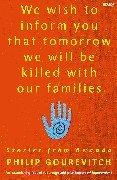
We wish to inform you that tomorrow we will be killed with ou...
Rating: 4.1/5 from 12 Google Books ratings
First published 1998. Subjects: Ethnic relations, Genocide, History, Human rights, Personal narratives.
The Art of Not Being Governed
From the acclaimed author and scholar James C. Scott, the compelling tale of Asian peoples who until recently have stemmed the vast tide...
The Horse, the Wheel, and Language
Roughly half the world's population speaks languages derived from a shared linguistic source known as Proto-Indo-European. But who were t...
eBay marketplace picks
Marketplace Samples
Live-tested eBay searches with available results related to this page.
Selected fromAfrican art oneBay.co.uk.

Endnotes
1.
Source: royalnyanza.com
Title: King’s Palace Museum – Royal Nyanza
Link:https://royalnyanza.com/what_to_dos/kings-palace-museum/
2.
Source: rwandaheritage.gov.rw
Title: Rwanda Heritage Museum and Heritages Sites Management Division (copy 1)
Link:https://www.rwandaheritage.gov.rw/en/museum-and-heritages-sites-management-division-1
3.
Source: apnews.com
Link:https://apnews.com/article/e5f4e8dd6387031d7dd7d3ae47afed9c
Source snippet
Traditionally symbols of royalty, wealth, and status, these cows are no longer used for milk or meat but are celebrated for their beauty...
4.
Source: support.irembo.gov.rw
Title: irembo.gov.rw How to apply for Visiting Inyambo: Irembo Gov
Link:https://support.irembo.gov.rw/en/support/solutions/articles/47001256063-how-to-apply-for-visiting-inyambo
5.
Source: support.irembo.gov.rw
Title: irembo.gov.rw FA Q’s about Visiting Inyambo: Irembo Gov
Link:https://support.irembo.gov.rw/en/support/solutions/articles/47001256064-faq-s-about-visiting-inyambo
6.
Source: rwandaheritage.gov.rw
Link:https://www.rwandaheritage.gov.rw/en/mandate
7.
Source: rwandaheritage.gov.rw
Link:https://www.rwandaheritage.gov.rw/en/translate-to-english-ahantu-ndangamurage/ndangamateka
Additional References
8.
Source: roverpublications.com
Link:https://roverpublications.com/amp/2026/06/30/rwandas-royal-inyambo-cattle-kept-in-tradition-through-music-poetry-and-care/
Source snippet
June 30, 2026 — RWANDA’S ROYAL INYAMBO CATTLE KEPT IN TRADITION THROUGH MUSIC, POETRY AND CARE By sebastine on June 30, 2026 At the King’...
Published: June 30, 2026
9.
Source: ground.news
Title: In Rwanda, a royal herd of cattle is treated to poetry and cultural reverence
Link:https://ground.news/article/in-rwanda-a-royal-herd-of-cattle-is-treated-to-poetry-and-cultural-reverence
Source snippet
• Updated 3 days ago IN RWANDA, A ROYAL HERD OF CATTLE IS TREATED TO POETRY AND CULTURAL REVERENCE CARETAKERS SING A...
10.
Source: africanews.com
Title: Rwanda’s royal cattle pampered with poetry and music
Link:https://www.africanews.com/amp/2026/06/28/rwandas-royal-cattle-pampered-with-poetry-and-music/
Source snippet
Rwanda's royal cattle pampered with poetry and musicJune 28, 2026 — RWANDA'S ROYAL CATTLE PAMPERED WITH POETRY AND MUSIC By...
Published: June 28, 2026
11.
Source: youtube.com
Title: From royal courts to modern Rwanda: The story of iconic Inyambo cows
Link:https://www.youtube.com/watch?v=zl5Z7JNW19Y
Source snippet
Rwanda: Royal Herd of Cattle Treated to Poetry and Music | World Of Africa | WION...
12.
Source: youtube.com
Title: Rwanda’s royal cattle pampered with poetry and music
Link:https://www.youtube.com/watch?v=kvHSk7tyGEE
Source snippet
I found a Secret Palace in Rwanda... and the cows DANCE! / Rwanda's King's Palace...
13.
Source: mid-day.com
Title: They were just
Link:https://www.mid-day.com/news/world-news/article/rwandas-sacred-inyambo-cows-become-living-emblems-of-cultural-pride-23637190
Source snippet
Rwanda’s sacred Inyambo cows become living emblems of cultural prideJune 28, 2026 — RWANDA’S ROYAL INYAMBO COWS CELEBRATED WITH POETRY, M...
Published: June 28, 2026
14.
Source: africanews.com
Link:https://www.africanews.com/2026/06/28/rwandas-royal-cattle-pampered-with-poetry-and-music/
Source snippet
Rwanda's royal cattle pampered with poetry and music | AfricanewsJune 28, 2026 — RWANDA'S ROYAL CATTLE PAMPERED WITH POETRY AND MUSIC A h...
Published: June 28, 2026
15.
Source: visitrwanda.com
Link:https://visitrwanda.com/tourism/interests/culture-heritage/
16.
Source: inkl.com
Link:https://www.inkl.com/news/in-rwanda-a-royal-herd-of-cattle-is-treated-to-poetry-and-cultural-reverence
17.
Source: safaribando.com
Link:https://www.safaribando.com/rwanda/kings-palace-museum