Where Montenegro Keeps Its Strangest Treasures
Montenegro does not have a large, clearly branded circuit of witchcraft museums, cryptid displays or medical-oddity collections.
Page outline Jump by section
Introduction
The best strange-history experiences are therefore not always the country’s largest museums. They are objects and sites where collecting, devotion, military power, tourism and disputed storytelling overlap. Some are professionally curated and publicly accessible; others are working religious treasures, fragile archaeological objects or neglected historic structures rather than conventional visitor attractions. Understanding that difference is essential. Montenegro rewards curious travellers, but it also requires them to distinguish a genuine collection from tourist folklore, and a preserved historic object from a place that is merely photogenic or abandoned.
Where Montenegro’s strangest collections are found
The strongest concentration lies between Kotor, Tivat and Cetinje. Kotor supplies the eccentric private collection, Tivat the industrial and military oddity, and Cetinje the country’s densest cluster of historic museums, sacred objects and state symbolism. Northern towns such as Pljevlja add archaeological rarities that are less visible to ordinary tourists.
This geography reflects Montenegro’s history. The Adriatic coast accumulated maritime objects, imported art and cosmopolitan curiosities. Cetinje, the former royal capital, became a storehouse for national memory, diplomatic gifts, religious treasures and royal possessions. Inland regional museums preserve material from prehistoric settlements, Roman burials and local traditions. The result is not a unified “museum of the strange”, but a network of small institutions and singular objects whose unusual qualities emerge once their stories are explained.[narodnimuzej.me]en.narodnimuzej.meOpen source on narodnimuzej.me.
Kotor’s Cats Museum: eccentric collecting meets tourist identity
The Cats Museum in Kotor is Montenegro’s clearest example of a modern curiosity museum. It occupies a small space in the old town and displays antique books, prints, manuscripts, coins, medals, postcards, advertisements, newspapers and assorted memorabilia connected with cats. The institution says the collection developed after a large donation of period images from the Countess of Montereale Mantica.[Cats Museum]catsmuseum.orgCats MuseumHome - Cats MuseumThe works include: antique books, prints, manuscripts, coins, medals, advertising and vintage postcards, vin…
Visitors should expect a compact collector-led display, not a large zoological or social-history museum. Its appeal lies in accumulation: cats recur as symbols of domestic life, satire, advertising, superstition and sentimental culture. Many objects are minor in isolation, but together they create something close to an old-fashioned cabinet of curiosities organised around a single animal.
The museum is also interesting because it helped strengthen Kotor’s contemporary identity as a “city of cats”. Its own account openly acknowledges that the idea initially seemed bizarre and that cats subsequently became a major theme in the city’s tourist merchandise. That makes it more than an eccentric room of feline pictures. It is a case study in how a private collection can reshape a destination’s commercial image.[Cats Museum]catsmuseum.orgWe chose Kotor for its geographical position and tranquillity as well as because it is fairly populated by cats…. The Cats Museum was…
Claims that cats have always carried a unique, formal civic meaning in Kotor should nevertheless be treated cautiously. The city certainly has a conspicuous street-cat population, and cats now dominate souvenirs and visitor photography, but the museum itself describes this identity as something actively cultivated rather than simply inherited unchanged from the distant past. The collection is genuine; some of the broader folklore surrounding Kotor’s cats is partly modern tourism culture.
A Cold War submarine among the superyachts
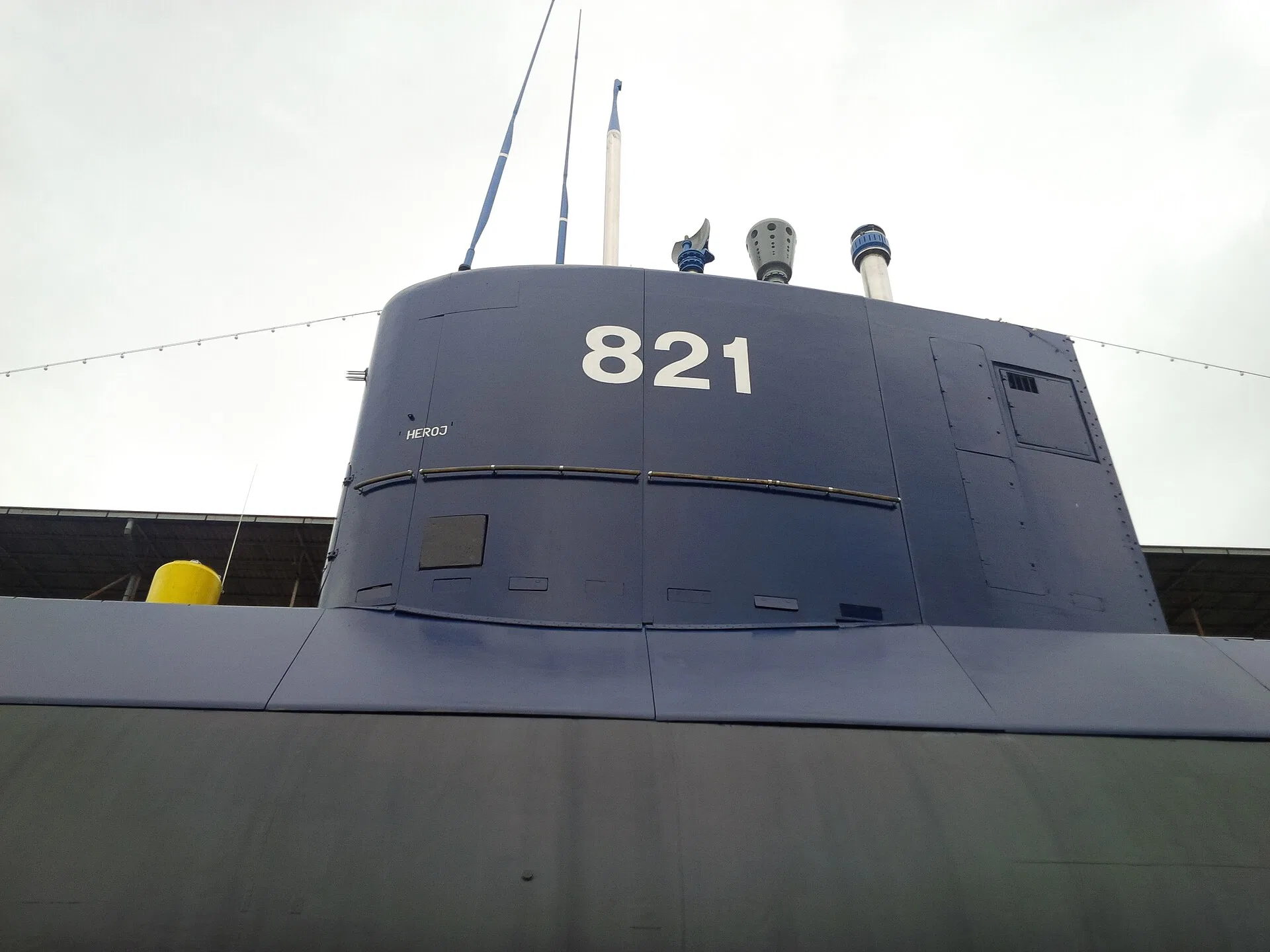
At Tivat’s Naval Heritage Collection, the most memorable exhibit is not inside a glass case. It is the former Yugoslav Navy submarine P-821 Heroj, a diesel-electric patrol vessel launched in 1967. Visitors can enter its narrow interior, passing crew quarters, machinery, control equipment and torpedo spaces. A smaller submarine, P-912 Una, is also associated with the collection.[leightontravels.com]leightontravels.comLeighton Travels!Touring the Hero P-821 Submarine in TivatMay 18, 2025 — 18 May 2025 — Hero P-821 was built in 1967 in Split, Croatia, the lead vessel of a series of submarines known as the Hero…
The setting gives the object much of its strange power. The submarine stands at Porto Montenegro, now known for luxury yachts, restaurants and high-end property. A vessel designed for secrecy, coastal defence and underwater surveillance has become a public exhibit within one of the Adriatic’s most polished leisure developments.
This is a commercial visitor attraction, but the submarine itself is an authentic military artefact rather than a themed reconstruction. Its cramped passages provide a physical understanding of submarine life that photographs and display panels cannot reproduce. Unlike many military museums, which present weapons at a safe distance, the Tivat collection allows visitors to step inside the machine and experience how little space separated sailors from engines, batteries and torpedoes.
Access arrangements and opening days can vary, particularly outside the main season, so the collection is best treated as an attraction whose current timetable should be checked directly rather than assumed from older visitor reports.[Tripadvisor]tripadvisor.comOpen source on tripadvisor.com.
Cetinje’s enormous relief map
One of Montenegro’s most unusual state-owned exhibits is the relief map of Montenegro beside the Biljarda museum complex in Cetinje. Created during the Austro-Hungarian occupation in the First World War, it turned the mountainous country into a three-dimensional military planning object. UNESCO’s description of Cetinje’s historic core identifies the relief as one of the city’s significant monuments.[unesco.org]whc.unesco.orgWorld Heritage Centre Cetinje Historic CoreWorld Heritage Centre Cetinje Historic Core
The map is unusual because it sits somewhere between cartography, sculpture, intelligence tool and war relic. Valleys, lakes, passes and mountain chains are rendered as physical terrain rather than conventional lines on paper. For modern visitors, it resembles an immense model landscape. For the occupying army, the same object represented routes, obstacles and strategic control.
Its location within Cetinje’s museum district adds another interpretive layer. The former royal capital contains institutions built to express Montenegrin sovereignty and identity, yet this particular exhibit was made by a foreign military power occupying the country. It preserves not only geography but the gaze of an army attempting to master that geography.
The relief is frequently described online with inconsistent measurements and technical details. Its broad origin and military purpose are well established, but precise claims about scale, construction personnel or methods should be checked against current museum interpretation rather than repeated from travel blogs or social media.
Sacred relics between museum and pilgrimage
Cetinje also contains Montenegro’s most powerful collection of objects whose status cannot be reduced to “museum exhibits”. The Cetinje Monastery treasury is associated with the right hand of John the Baptist and a fragment traditionally identified as part of the True Cross. The National Museum holds the icon known as Our Lady of Philermos, an image deeply connected with the Knights Hospitaller and the later Order of Malta.[unesco.org]whc.unesco.orgWorld Heritage Centre Cetinje Historic CoreWorld Heritage Centre Cetinje Historic Core
These objects are unusual not because they are deliberately macabre or eccentric, but because their claimed identities, journeys and forms of custody span centuries of religious and political upheaval. The Philermos icon travelled through Rhodes, Malta, Russia and Yugoslavia before becoming publicly known in Montenegro. The Order of Malta records that it had disappeared during the Second World War and was later found in Montenegro.[Sovereign Military Order of Malta]orderofmalta.intOpen source on orderofmalta.int.
The icon’s traditional association with Saint Luke belongs to devotional legend, not secure art-historical proof. Scholarly discussion generally treats the surviving image as a medieval Byzantine work and examines whether it is a fragment of a larger composition. Its fame depends as much on centuries of veneration, military patronage and reputed miracles as on the painted panel itself.[Academia]academia.eduOpen source on academia.edu.
Its ownership and appropriate location remain culturally sensitive. A 2025 Maltese discussion renewed calls for the icon to return to Malta, at least temporarily, reflecting its central place in the history of the Order of St John. Montenegro, meanwhile, treats it as one of Cetinje’s most important treasures. The disagreement illustrates how sacred collections differ from ordinary museum property: they can simultaneously be artworks, diplomatic objects, national possessions and living devotional symbols.[Times of Malta]timesofmalta.comTimes of Malta A call to return Malta's lost iconTimes of Malta A call to return Malta's lost icon
Visitors should not assume that every relic is displayed like an archaeological artefact with unrestricted access and neutral labelling. Some remain embedded in worship and pilgrimage. Dress, behaviour, photography rules and opening conditions may reflect religious practice rather than standard museum procedure.
The Roman glass cup that may not be on display
The Heritage Museum in Pljevlja preserves one of Montenegro’s most remarkable archaeological objects: a late Roman cage cup, commonly called the Pljevlja diatretum. Cage cups were made with an inner glass vessel and an outer openwork shell connected to it by small glass bridges. Their fragility and technical complexity make complete surviving examples exceptionally rare.[Montenegro]montenegro.travelMontenegro WIld Beauty I Archaeological sitesVisit the Pljevlja Homeland Museum to see over 1,200 items excavated from graves h…
The Pljevlja cup is made from colourless glass with a cobalt-blue decorative cage and inscription. It was recovered from a Roman-period burial area near Pljevlja alongside a much larger body of grave goods, including jewellery, vessels, coins and weapons. The object turns a regional museum into the guardian of an internationally significant example of luxury Roman glassmaking.[Montenegro]montenegro.travelMontenegro WIld Beauty I Archaeological sitesVisit the Pljevlja Homeland Museum to see over 1,200 items excavated from graves h…
The practical complication is access. Several museum summaries and older reports state that the cup is not part of the normal permanent display and may be viewed only by prior arrangement. Public information is inconsistent, with some general listings implying that it is displayed while more detailed accounts describe restricted viewing. Travellers should therefore contact the museum before making a special journey.[instagram.com]instagram.comFact No 7 DiatretaFact No 7 Diatreta
This uncertainty is itself typical of Montenegro’s curiosity landscape. A country may possess an extraordinary object without presenting it as a heavily promoted attraction. Conservation, security, staffing and limited exhibition facilities can matter more than tourist demand.
Money as a national curiosity
Cetinje’s Money Museum is less uncanny than a prison or sacred relic, but it belongs in Montenegro’s unusual-collection story because it turns the country’s complicated political history into a sequence of currencies, notes, coins and financial systems. It is operated by the Central Bank of Montenegro and occupies a building associated with the country’s early banking history.[CBCG]cbcg.meMoney MuseumMoney Museum
The permanent exhibition, “Money in Montenegro”, includes rare denominations from different periods and uses multimedia material to explain how currency changed as states, rulers and economic systems changed. The museum also incorporates historic film, including footage connected with Montenegro’s declaration as a kingdom in 1910 and later socialist-era development.[CBCG]cbcg.mePermanent ExhibitionsPermanent Exhibitions
Its real interest lies in the instability of the category “Montenegrin money”. The territory has passed through royal, Yugoslav, socialist and post-Yugoslav systems, while modern Montenegro uses the euro despite not being a member of the eurozone. The museum therefore presents money not simply as payment, but as evidence of sovereignty, political alignment and national aspiration.
Unlike the private Cats Museum, this is an institutional, educational collection with conventional curatorial authority. It is a good counterweight to Montenegro’s more romantic attractions because it shows how an apparently dry object category can reveal repeated changes of regime and identity.
Jusovača: a prison ruin, not yet a settled prison museum
Jusovača in Podgorica is often included in lists of unusual or dark places, but it should not be described casually as a functioning prison museum. The complex originated under Ottoman rule and later served as a Montenegrin state prison. It has long stood in a neglected or unstable condition, with visitors reporting ruined cells, overgrowth and uncontrolled access rather than a managed exhibition.[wordpress.com]wanderella.wordpress.comOpen source on wordpress.com.
Its appeal is easy to understand. The surviving walls and cells offer a direct encounter with the physical history of punishment, confinement and state authority. Yet the absence of formal interpretation creates problems. An abandoned prison can invite dramatic speculation while saying little about who was held there, under what laws, in which periods, or how conditions changed.
Campaigns and planning exercises have proposed transforming Jusovača into an arts or cultural centre. A public consultation on revitalisation was announced in 2020, and earlier civic initiatives also argued for preservation and adaptive reuse. These proposals demonstrate public recognition of the site’s value, but they do not by themselves make it an established museum.[Wanderella]wanderella.wordpress.comOpen source on wordpress.com.
For readers interested in dark tourism, Jusovača is a useful example of the boundary between heritage and ruin. Its significance is real; its visitor infrastructure and curatorial status are uncertain. Entering unstable structures without official supervision may also present obvious safety and legal risks.
Lapidariums, grave goods and stones with afterlives
Several Montenegrin museums preserve collections that become strange through accumulation rather than sensational subject matter. Kotor’s Lapidarium brings together carved stone fragments, inscriptions and architectural pieces collected from the town and surrounding region. The collection began to take shape in the early twentieth century and now occupies a restored historic church space.[muzejikotor.me]muzejikotor.meOpen source on muzejikotor.me.
A lapidarium can resemble an archaeological afterlife for buildings. Door surrounds, memorial stones, coats of arms and inscriptions are removed from their original settings and reorganised as evidence. Visitors do not see a reconstructed medieval city; they see fragments that survived demolition, reuse, earthquake damage and urban change.
Regional museums provide similar encounters with grave goods. In Pljevlja, more than a thousand objects from excavated burials document Roman wealth, personal adornment and funerary practice. Elsewhere, archaeological collections in Budva, Kotor, Berane and Nikšić preserve material ranging from prehistoric tools to Roman mosaics and Illyrian equipment.[Montenegro]montenegro.travelOpen source on montenegro.travel.
These are conventional archaeological institutions, not mystery museums. Their relevance to curiosity culture lies in the objects themselves: miniature glass vessels, carved funerary stones, extinct-animal remains, ancient jewellery and ritual deposits. Responsible interpretation depends on excavation records and conservation, not claims of unexplained origins.
What Montenegro largely does not have
Reliable evidence does not support presenting Montenegro as a major destination for dedicated UFO museums, cryptid collections, occult archives, witchcraft museums, medical cabinets or permanent torture exhibitions. Such themes may appear in local legends, temporary events or commercial storytelling, but they do not currently form a well-documented national museum circuit.
That absence matters. It prevents ordinary archaeological or religious material from being artificially marketed as paranormal. Montenegro’s genuinely unusual heritage is stronger when described accurately:
- a collector’s museum that helped commercialise Kotor’s cats;[catsmuseum.org]catsmuseum.orgCats MuseumHome - Cats MuseumThe works include: antique books, prints, manuscripts, coins, medals, advertising and vintage postcards, vin…
- a real submarine opened to the public in a luxury marina;
- a First World War military landscape model;[whc.unesco.org]whc.unesco.orgWorld Heritage Centre Cetinje Historic CoreWorld Heritage Centre Cetinje Historic Core
- sacred objects with transnational and contested histories;
- an exceptionally rare Roman glass vessel with uncertain routine access;
- a prison complex caught between abandonment and proposed cultural reuse;
- archaeological fragments preserved in regional museums and lapidariums.
The country’s strange-history landscape is therefore object-led rather than genre-led. Its curiosities are embedded inside national museums, monasteries, municipal collections and historic sites rather than gathered under labels such as “the unexplained” or “the macabre”.

How to visit with realistic expectations
Montenegro’s museums are often small, seasonal or dependent on local staffing. Current opening hours should be checked directly, especially for regional institutions, religious treasuries and specialist exhibits. Objects described in tourism material may be in storage, available only during guided visits or temporarily removed for conservation.
The most rewarding approach is to treat Kotor, Tivat and Cetinje as a connected curiosity route. Kotor offers the private and playful Cats Museum alongside archaeological stone collections. Tivat provides the physical intensity of the submarine. Cetinje combines money, royal history, military cartography and sacred treasures within a compact historic centre. Pljevlja is a more specialised journey for travellers particularly interested in Roman archaeology and the cage cup.
Credibility also varies by setting. The Money Museum, National Museum and municipal archaeological institutions are formal public bodies. The Cats Museum is a private thematic collection whose value lies in its period material and cultural influence rather than academic zoology. Monastery relics are interpreted through faith as well as history. Jusovača remains a historic prison site without the stable interpretation expected of a mature prison museum.
Montenegro’s most unusual collections are compelling precisely because they sit at these boundaries. They show how an animal becomes a city brand, how a weapon becomes heritage, how an occupation map becomes a national monument, how an excavated cup becomes almost too precious to display, and how a sacred image can belong simultaneously to art history, pilgrimage and international dispute.
Amazon book picks
Further Reading
Books and field guides related to Where Montenegro Keeps Its Strangest Treasures. Use these as the next step if you want deeper reading beyond the article.
The Balkans: Nationalism, War, and the Great Powers,
From the bestselling author of McMafia and DarkMarket comes this unique and lively history of Balkan geopolitics since the early nineteen...
A History of the World in 100 Objects
This book takes a dramatically original approach to the history of humanity, using objects which previous civilisations have left behind...
MIDDLE SEA: A HISTORY OF THE MEDITERRANEAN
First published 2006. Subjects: Mediterranean region, history, History, Civilization.
eBay marketplace picks
Marketplace Samples
Live-tested eBay searches with available results related to this page.
Selected fromMontenegro travel poster oneBay.co.uk.
Endnotes
1.
Source: en.narodnimuzej.me
Link:https://en.narodnimuzej.me/
2.
Source: muzejikotor.me
Link:https://muzejikotor.me/en/mpi-muzeji-kotor/
Source snippet
> This invaluable edifice was revitalized and adapted as a single exhibition museum space for the rich collection of stone monuments from...
3.
Source: montenegro.travel
Link:https://www.montenegro.travel/en/explore-montenegro/culture-and-tours/archaeological-sites
Source snippet
Montenegro WIld Beauty I Archaeological sitesVisit the Pljevlja Homeland Museum to see over 1,200 items excavated from graves h...
4.
Source: kupi.com
Link:https://www.kupi.com/en/explore/montenegro/tivat/naval-heritage-collection
5.
Source: montenegro.com
Link:https://montenegro.com/en/blog/p-821-heroj-submarine-tivat
6.
Source: tripadvisor.com
Link:https://www.tripadvisor.com/Attraction_Review-g3733792-d7113887-Reviews-Maritime_Heritage_Museum-Tivat_Municipality.html
7.
Source: whc.unesco.org
Title: World Heritage Centre Cetinje Historic Core
Link:https://whc.unesco.org/en/tentativelists/5561
8.
Source: montenegro.travel
Link:https://www.montenegro.travel/en/explore-montenegro/culture-and-tours/sacral-objects
9.
Source: academia.edu
Link:https://www.academia.edu/36456704/The_Icon_of_the_Madonna_of_Fil%C3%A9rimos_Rethinking_its_History_and_Iconography
10.
Source: Wikipedia
Title: Heritage Museum Pljevlja
Link:https://en.wikipedia.org/wiki/Heritage_Museum_Pljevlja
11.
Source: instagram.com
Title: Fact No 7 Diatreta
Link:https://www.instagram.com/p/CHUm9goB9eN/
12.
Source: cbcg.me
Title: Money Museum
Link:https://www.cbcg.me/en/currency/money-museum
13.
Source: cbcg.me
Title: About the Museum
Link:https://www.cbcg.me/en/currency/money-museum/about-the-museum
14.
Source: cbcg.me
Title: Permanent Exhibitions
Link:https://www.cbcg.me/en/currency/money-museum/permanent-exhibitions
15.
Source: instagram.com
Title: “The Abandoned Jusovaca Prison”
Link:https://www.instagram.com/p/BKncrGCA4Tu/
16.
Source: muzejikotor.me
Link:https://muzejikotor.me/en/home/lapidarium/
17.
Source: montenegro.travel
Link:https://www.montenegro.travel/en/explore-montenegro/culture-and-tours/the-most-popular-museums
18.
Source: montenegro.travel
Link:https://www.montenegro.travel/en/unique-montenegro/cities-of-montenegro/old-towns-of-montenegro
19.
Source: montenegro.travel
Link:https://www.montenegro.travel/en/unique-montenegro/cities-of-montenegro/charming-mountain-towns
20.
Source: cbcg.me
Title: Exhibition “25 Years of the CBCG” Opens at the CBCG Money Museum
Link:https://cbcg.me/en/public-relations/news/press-releases/exhibition-25-years-of-the-cbcg-opens-at-the-cbcg-money-museum?id=3026
21.
Source: montenegro.org
Title: National Museum of Montenegro | Montenegro
Link:https://montenegro.org/national-museum-of-montenegro/
22.
Source: montenegro.org
Title: The World’s Best Cat Museum
Link:https://montenegro.org/the-cat-museum-kotor/
23.
Source: montenegro.org
Title: A look inside Cetinje Monastery | Montenegro
Link:https://montenegro.org/a-look-inside-cetinje-monastery/
24.
Source: cbcg.me
Title: Free entrance to the CBCG Money Museum from tomorrow
Link:https://www.cbcg.me/en/public-relations/news/press-releases/free-entrance-to-the-cbcg-money-museum-from-tomorrow?id=1866
25.
Source: whc.unesco.org
Link:https://whc.unesco.org/en/documents/141368
26.
Source: montenegro.travel
Link:https://www.montenegro.travel/en/plan-your-stay-in-montenegro/where-to-stay/4074-museum-of-contemporary-art-of-montenegro
27.
Source: montenegro.travel
Link:https://www.montenegro.travel/en/explore-montenegro/culture-and-tours/intangible-cultural-treasures
28.
Source: montenegro.travel
Title: Museums and Galleries of Podgorica
Link:https://www.montenegro.travel/en/plan-your-stay-in-montenegro/where-to-stay/3733-museums-and-galleries-of-podgorica
29.
Source: montenegro.travel
Link:https://www.montenegro.travel/en/unique-montenegro/cities-of-montenegro
30.
Source: montenegro.travel
Link:https://www.montenegro.travel/en/inspiration-for-a-dream-trip/en167/top-10-attractions-of-montenegro
31.
Source: montenegro.travel
Link:https://www.montenegro.travel/uploads/tourism_events/Tivat/Rubix_Festival_2023.pdf
32.
Source: cbcg.me
Link:https://www.cbcg.me/en/currency/money-museum/contact
33.
Source: cbcg.me
Title: Virtual tour
Link:https://www.cbcg.me/en/currency/money-museum/virtual-tour
34.
Source: instagram.com
Link:https://www.instagram.com/je_suis_bronya_marie/
35.
Source: Wikipedia
Title: Our Lady of Philermos
Link:https://en.wikipedia.org/wiki/Our_Lady_of_Philermos
36.
Source: academia.edu
Link:https://www.academia.edu/67360141/Development_of_Dark_Tourism_Destinations_in_Central_and_Eastern_Europe
37.
Source: narodnimuzej.me
Link:https://narodnimuzej.me/
38.
Source: en.narodnimuzej.me
Title: o nama 2
Link:https://en.narodnimuzej.me/o-nama-2/
39.
Source: en.narodnimuzej.me
Link:https://en.narodnimuzej.me/ikona-bogorodice-filermske/
40.
Source: narodnimuzej.me
Title: njegosev mauzolej
Link:https://narodnimuzej.me/njegosev-mauzolej/
41.
Source: muzejikotor.me
Link:https://muzejikotor.me/en/home/perast-museum/
42.
Source: muzejikotor.me
Link:https://muzejikotor.me/en/contacts/
43.
Source: tripadvisor.com
Title: Podmornica P-821 Heroj
Link:https://www.tripadvisor.com/Attraction_Review-g3733792-d10687816-Reviews-Podmornica_P_821_Heroj-Tivat_Municipality.html
44.
Source: youtube.com
Title: Our Lady of the Rocks | Montenegro’s Floating Church Surprise
Link:https://www.youtube.com/watch?v=oYJkEGkI34M
Source snippet
Montenegro Top Attractions - Lipa Cave...
45.
Source: youtube.com
Title: Montenegro Top Attractions
Link:https://www.youtube.com/watch?v=89nmRbT6j4s
Source snippet
Cats Museum Kotor Montenegro Visit to Kotor's Cat Park & Cat Museum | Lost in Old Town | Montenegro Picking Towns...
46.
Source: catsmuseum.org
Link:https://www.catsmuseum.org/
Source snippet
Cats MuseumHome - Cats MuseumThe works include: antique books, prints, manuscripts, coins, medals, advertising and vintage postcards, vin...
47.
Source: catsmuseum.org
Link:https://www.catsmuseum.org/sample/
Source snippet
Cats MuseumSample - Cats MuseumThe works include: antique books, prints, manuscripts, coins, medals, advertising and vintage postcards, v...
48.
Source: catsmuseum.org
Link:https://www.catsmuseum.org/cats-museum-cattaro/
Source snippet
We chose Kotor for its geographical position and tranquillity as well as because it is fairly populated by cats.... The Cats Museum was...
49.
Source: leightontravels.com
Title: Leighton Travels!Touring the Hero P-821 Submarine in Tivat
Link:https://leightontravels.com/2025/05/18/touring-the-hero-p-821-submarine-in-tivat/
Source snippet
May 18, 2025 — 18 May 2025 — Hero P-821 was built in 1967 in Split, Croatia, the lead vessel of a series of submarines known as the Hero...
Published: May 18, 2025
50.
Source: montenegrofortravellers.com
Title: maritime heritage museum tivat
Link:https://www.montenegrofortravellers.com/en/review/maritime-heritage-museum-tivat
51.
Source: montenegrofortravellers.com
Link:https://www.montenegrofortravellers.com/en/place/reljef-crne-gore-relief-map-montenegro-cetinje
52.
Source: orderofmalta.int
Link:https://www.orderofmalta.int/news/pilgrimage-to-the-madonna-of-philermo-in-montenegro/
53.
Source: timesofmalta.com
Title: Times of Malta A call to return Malta’s lost icon
Link:https://timesofmalta.com/article/a-call-return-malta-lost-icon.1114761
54.
Source: montenegrofortravellers.com
Link:https://www.montenegrofortravellers.com/en/place/muzej-novca-museum-money-cetinje
55.
Source: wanderella.wordpress.com
Link:https://wanderella.wordpress.com/2015/10/21/one-abandoned-prison-200-years-of-montenegrin-crime-and-punishment/
56.
Source: tripadvisor.co.uk
Link:https://www.tripadvisor.co.uk/ShowUserReviews-g304088-d27660592-r946298719-Jusovaca_Prison-Podgorica_Podgorica_Municipality.html
57.
Source: montenegroembassy.orderofmalta.int
Link:https://montenegroembassy.orderofmalta.int/en/news/the-sovereign-military-order-of-malta-issues-a-stamp-dedicated-to-our-lady-of-philermos-patroness-of-the-order-of-malta/
58.
Source: tripadvisor.co.uk
Title: Attraction Review g304076 d24895223 Reviews Relief Map Of Montenegro Cetinje
Link:https://www.tripadvisor.co.uk/Attraction_Review-g304076-d24895223-Reviews-Relief_Map_Of_Montenegro-Cetinje.html
59.
Source: montenegrofortravellers.com
Title: The Cats Museum in Kotor | Montenegro For Travellers
Link:https://www.montenegrofortravellers.com/en/place/cats-museum-kotor
60.
Source: montenegrofortravellers.com
Title: Cetinjski manastir, Cetinje Monastery | Montenegro For Travellers
Link:https://www.montenegrofortravellers.com/en/node/5090
61.
Source: en.tripadvisor.com.hk
Title: Attractions g635648 Activities c49 Montenegro
Link:https://en.tripadvisor.com.hk/Attractions-g635648-Activities-c49-Montenegro.html
62.
Source: tripadvisor.co.uk
Title: Attractions g635648 Activities c49 Montenegro
Link:https://www.tripadvisor.co.uk/Attractions-g635648-Activities-c49-Montenegro.html
63.
Source: littlecitysparrowblog.wordpress.com
Link:https://littlecitysparrowblog.wordpress.com/
64.
Source: montenegrofortravellers.com
Link:https://www.montenegrofortravellers.com/en/place/podmornica-heroj-p-821-submarine-museum-tivat
65.
Source: montenegrofortravellers.com
Link:https://www.montenegrofortravellers.com/en/place/maritime-heritage-museum-tivat
66.
Source: alamy.com
Link:https://www.alamy.com/montenegro-adriatic-coast-bay-of-kotor-porto-montenegro-naval-collection-museum-the-p-821-heroj-submarine-image563717369.html
67.
Source: alamy.com
Link:https://www.alamy.com/montenegro-adriatic-coast-bay-of-kotor-porto-montenegro-naval-collection-museum-the-p-821-heroj-submarine-image563717359.html
68.
Source: um.edu.mt
Link:https://www.um.edu.mt/library/oar/handle/123456789/132658
69.
Source: montenegrohostel.com
Link:https://www.montenegrohostel.com/index.php/museums-of-montenegro
70.
Source: orderofmalta.int
Title: The icon of Our Lady of Philermos
Link:https://www.orderofmalta.int/about-the-order-of-malta/the-icon-of-our-lady-of-philermos/
71.
Source: ordendemaltacuba.org
Title: our lady of philermos
Link:https://ordendemaltacuba.org/our-spirituality/our-lady-of-philermos/
72.
Source: visitpljevlja.com
Title: pljevlja diatretum
Link:https://visitpljevlja.com/travel-stories/pljevlja-diatretum
73.
Source: tib.oeaw.ac.at
Link:https://tib.oeaw.ac.at/subprojects/montenegro
74.
Source: tib.oeaw.ac.at
Link:https://tib.oeaw.ac.at/sub_projects/montenegro
Additional References
75.
Source: youtube.com
Title: Relief Map Montenegro, Cetinje, Montenegro
Link:https://www.youtube.com/watch?v=Jz4gdotFs4k
Source snippet
Our Lady of the Rocks | Montenegro’s Floating Church Surprise...
76.
Source: 3dvirtualheritage.me
Link:https://3dvirtualheritage.me/en/cultural-monuments/relief-map-of-montenegro
77.
Source: traveltomontenegro.com
Link:https://traveltomontenegro.com/en/destinations/cities/cetinje
78.
Source: clink.co.uk
Link:https://www.clink.co.uk/
79.
Source: undp.org
Link:https://www.undp.org/montenegro/projects/creative-montenegro
80.
Source: evendo.com
Link:https://evendo.com/locations/montenegro/moraca/attraction/jusovaca-prison
81.
Source: muzejpljevlja.com
Link:https://muzejpljevlja.com/municipium-s-past-present-and-future/?lang=lat
82.
Source: morbitorium.co.uk
Link:https://www.morbitorium.co.uk/?srsltid=AfmBOoqJDr8Qmc2HzuG8dCxi6OzqbTbG8rKLNFKbL1kVWoe0BphUXgjn
83.
Source: museumlollandfalster.dk
Link:https://museumlollandfalster.dk/en/museum-obscurum/
84.
Source: lnmm.gov.lv
Link:https://lnmm.gov.lv/en/museum-of-decorative-arts-and-design