Within Congo Curiosities
Why Congolese Power Figures Are Often Misunderstood
Objects labelled as witchcraft or fetish often served legal, healing, protective and ceremonial roles within Congolese communities.
On this page
- What power figures were used for
- How masks worked in performance
- How colonial labels distorted meaning
Page outline Jump by section
Introduction
Congolese power figures and masks are among the most recognisable objects in African museum collections, yet they are also among the most frequently misunderstood. Visitors often encounter statues studded with nails or carved masks displayed behind glass and assume they represent “witchcraft”, fear or mysterious magic. In reality, these objects originally belonged to complex systems of law, healing, protection, initiation and community life. Their meanings depended not simply on their appearance, but on the people who activated them, the ceremonies in which they appeared and the social responsibilities they embodied. Over the past century, colonial collecting practices and the widespread use of labels such as “fetish” detached many of these objects from their original context, encouraging interpretations that continue to shape popular imagination today.[Smithsonian Institution]si.eduSmithsonian Institution Male figure | Smithsonian InstitutionSmithsonian Institution Male figure | Smithsonian Institution

What power figures were really used for
One of the best-known ritual objects from the Kongo cultural world is the power figure often called an nkisi (plural minkisi). Museums frequently describe these as “power figures”, but specialists increasingly note that even this translation captures only part of their role. Earlier European collectors routinely called them “fetishes”, a term now recognised as misleading because it reduced sophisticated religious and legal practices to superstition.[Smithsonian Institution]si.eduSmithsonian Institution Male figure | Smithsonian InstitutionSmithsonian Institution Male figure | Smithsonian Institution
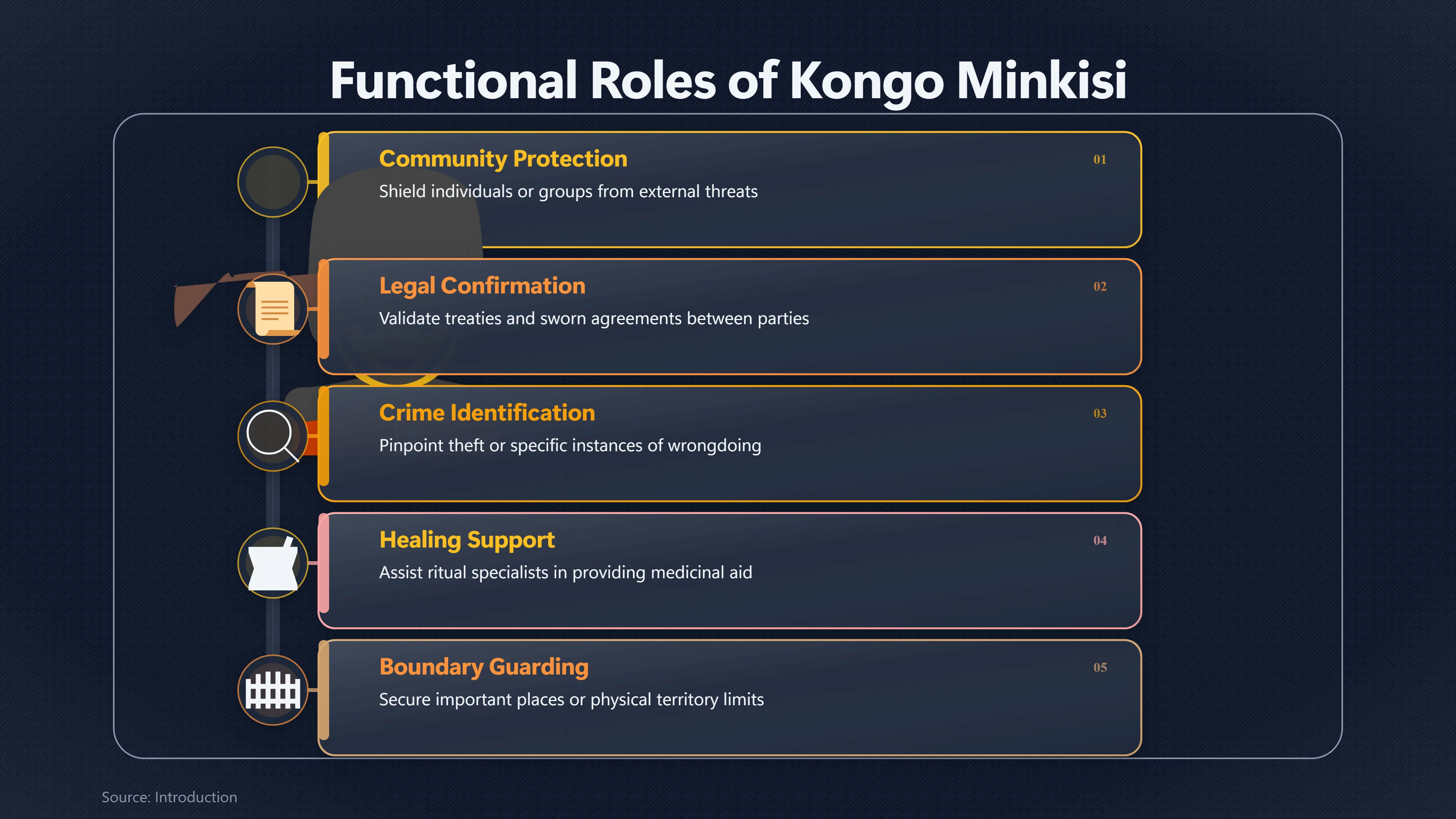
Rather than functioning as idols that people worshipped, many minkisi were understood as containers through which spiritual forces could be directed by trained ritual specialists. A specialist prepared medicines and symbolic materials inside cavities, often concealed behind mirrors or resin-filled compartments. These substances could be used to:
- protect individuals or communities;
- confirm treaties and sworn agreements;
- identify theft or wrongdoing;
- support healing;
- settle disputes;
- guard important places or boundaries.
The dramatic appearance of many surviving figures reflects these practical roles. Metal blades or nails were often added during the life of an object to record oaths, petitions or interventions rather than to signify violence alone. Each insertion could represent a new legal case, promise or appeal for justice.[si.edu]si.eduSmithsonian Institution Male figure | Smithsonian InstitutionSmithsonian Institution Male figure | Smithsonian Institution
This distinction matters because many museum visitors still interpret the nails as evidence of “black magic”. In their original setting, however, they often symbolised accountability, enforcement and communal order as much as supernatural power.
How masks worked in performance
Congolese masks were rarely intended to be viewed as isolated artworks. The carved face was only one element within a much larger performance involving costume, music, dance, specialist knowledge and carefully controlled participation.
Among Yaka communities in what is now the Democratic Republic of the Congo, for example, certain masks formed part of male initiation ceremonies. Smithsonian research describes these masks as appearing in choreographed performances representing ancestors and culture heroes, promoting growth, healing and the transition of boys into recognised adulthood. Their designs also referred symbolically to fertility, seasonal cycles and relationships between male and female principles.[National Museum of African Art]africa.si.eduNational Museum of African Art Cap mask | National Museum of African ArtNational Museum of African Art Cap mask | National Museum of African Art
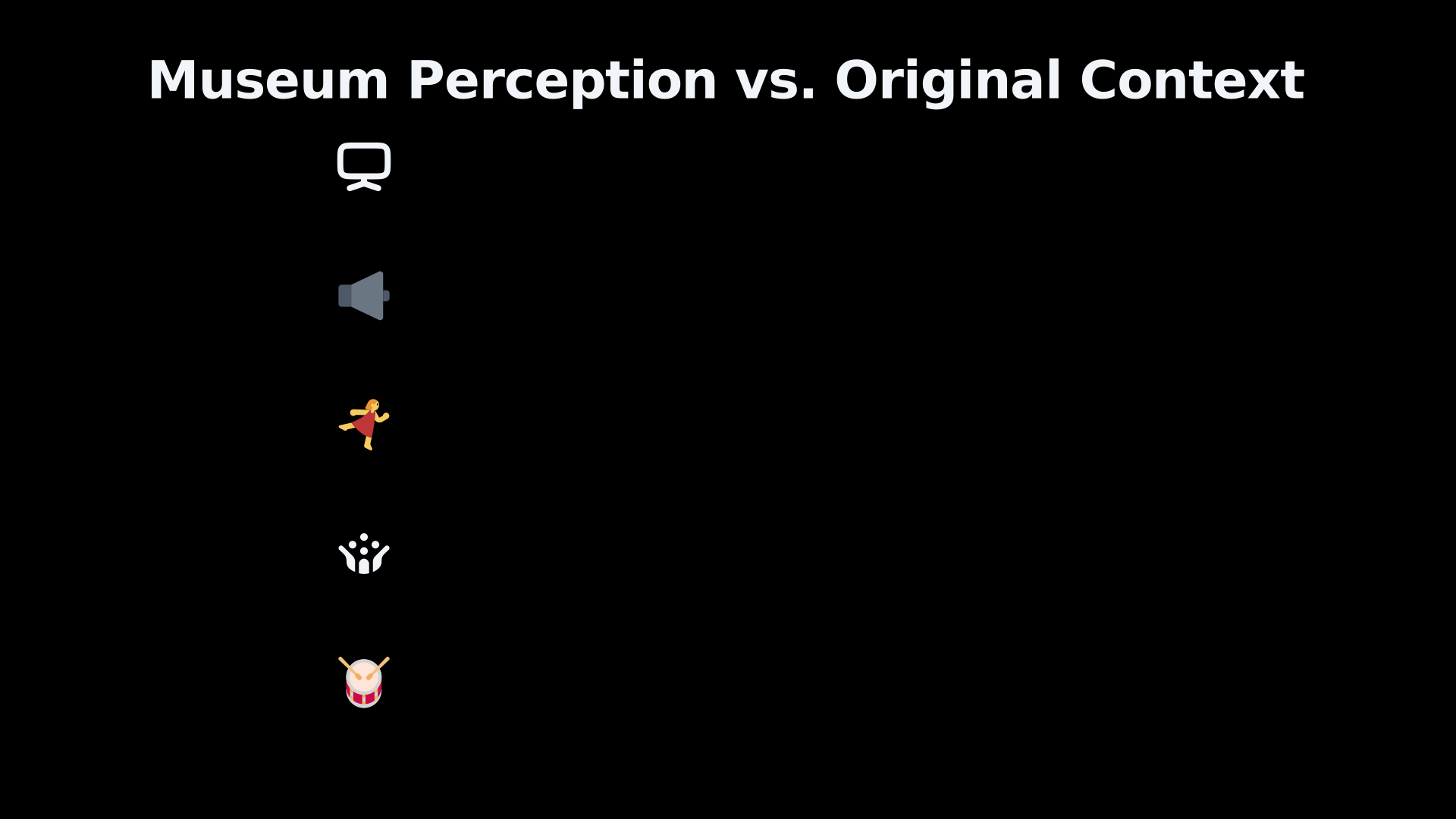
Seen inside a museum case, however, most of that experience disappears. Visitors observe:
- a carved wooden face instead of a complete costume;
- stillness instead of movement;
- silence instead of music;
- an anonymous object instead of trained performers;
- sculpture instead of a social event.
The result is a profound change in meaning. What originally functioned as an event becomes displayed as an object, encouraging viewers to judge it primarily on appearance rather than purpose.
This transformation explains why many Congolese masks appear mysterious or unsettling in museums. Their visual forms were never intended to communicate independently of the performances that gave them life.
How colonial labels distorted meaning
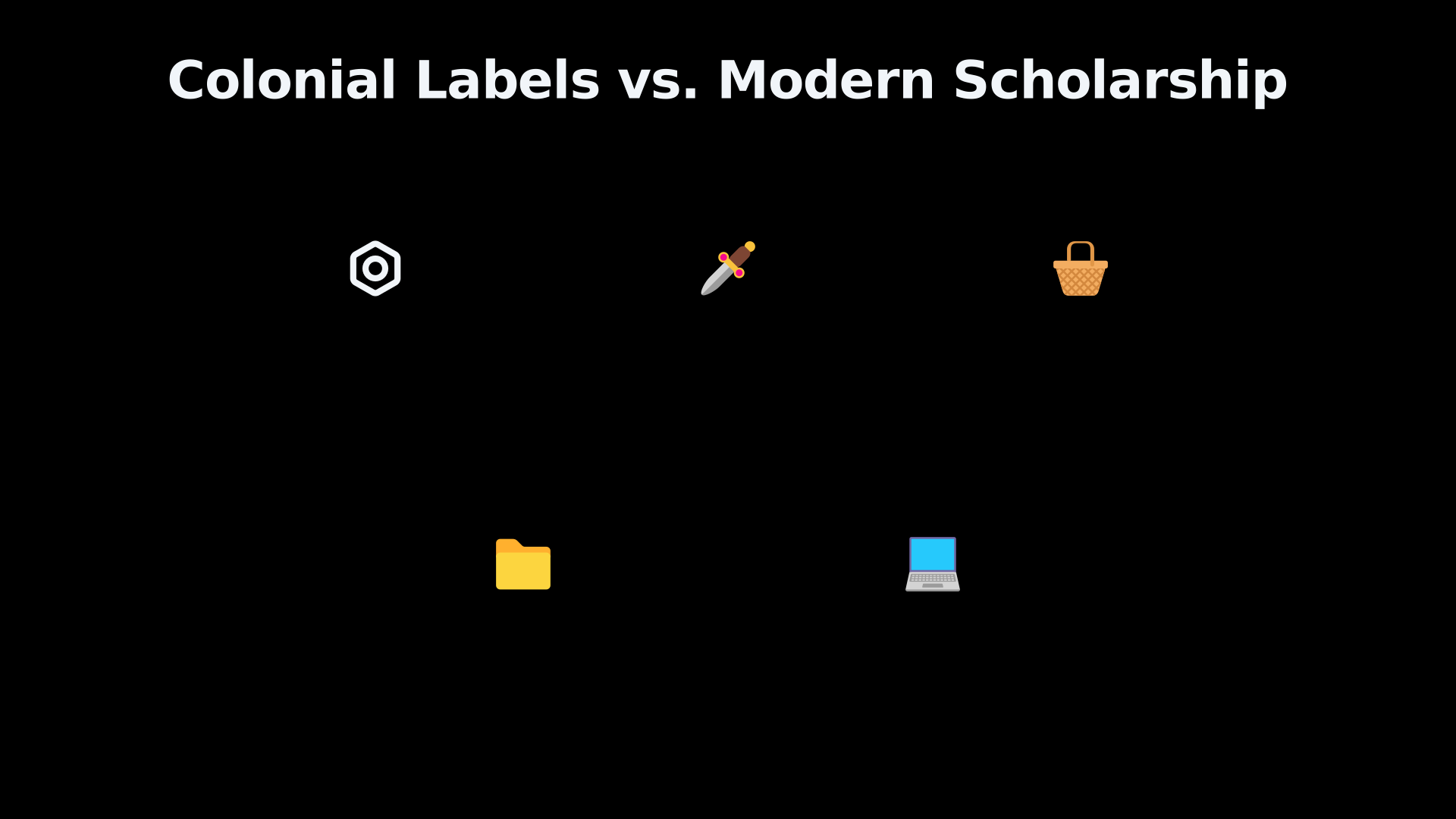
Few words have influenced public understanding more than “fetish”. European traders, missionaries and colonial officials used the term broadly for African religious objects they neither fully understood nor respected. It implied irrational devotion to physical things and blurred together healing, religion, law, ancestor traditions and spiritual practice into a single category of supposed superstition.
Modern museums increasingly acknowledge that this vocabulary is historically loaded. The Smithsonian notes that there is no true English equivalent for nkisi and explicitly explains that terms such as “fetish” or even “power figure” fail to capture its full meaning. A nkisi could be a carved figure, but it could equally be a basket, pot or other container prepared and activated by a ritual specialist. The sculpture itself was only one possible physical form.[Smithsonian Institution]si.eduSmithsonian Institution Male figure | Smithsonian InstitutionSmithsonian Institution Male figure | Smithsonian Institution
Colonial collecting also separated objects from the specialists who understood them. Once removed from shrines, villages and ceremonial settings, many entered museums with only fragmentary documentation. Catalogues often recorded who purchased an object while preserving little information about:
- who commissioned it;
- who used it;
- which community maintained it;
- how long it remained active;
- the circumstances under which it left its original setting.
These gaps continue to affect interpretation today, even in major museum collections.
Why museum displays can still mislead
Museums now devote far more attention to cultural context than they did a century ago, but displaying ritual objects remains difficult.
Power figures often survive because their wooden bodies endured, while many of the organic materials that originally empowered them have deteriorated or were deliberately removed. Some figures therefore appear incomplete, making them resemble sculptures rather than ritual technologies. The Metropolitan Museum of Art explains that religious specialists originally combined carefully selected materials—including earths, seeds, feathers, minerals and animal substances—to direct spiritual forces towards healing, protection or other specific purposes. Without those components, viewers may mistake the remaining carving for the entire object.[The Metropolitan Museum of Art]metmuseum.orgThe Metropolitan Museum of Art Power Figure: Male (NkisiThe Metropolitan Museum of ArtPower Figure: Male (Nkisi) - Kongo peoples - The Metropolitan Museum of Art…
Similarly, masks displayed on walls invite comparison with paintings or decorative carvings. Their original significance depended on movement, costume and controlled participation rather than static visual appreciation.
The challenge for museums is therefore not simply conservation but interpretation: helping visitors understand that many Congolese ritual objects were designed to do something rather than merely to be looked at.
Why these misunderstandings matter today
The way Congolese ritual objects have been interpreted continues to influence debates over restitution, collecting and public display.
Many objects became famous in Europe and North America because collectors valued their dramatic appearance while paying less attention to the systems of knowledge that produced them. Contemporary museums increasingly seek to restore that missing context through collaboration with African scholars and communities, revised exhibition labels and more careful language about spiritual traditions.
For visitors interested in unusual museums and curious collections, this shift changes the experience entirely. The fascination no longer lies simply in apparently sinister statues covered with nails or striking carved masks. It lies in recognising how objects once central to justice, healing and initiation were transformed into museum curiosities through colonial collecting, and how today’s institutions are working to explain those histories more accurately. Understanding that transformation reveals that the greatest mystery is often not what the objects originally meant, but how easily those meanings were lost once they entered museum collections.
Amazon book picks
Further Reading
Books and field guides related to Why Congolese Power Figures Are Often Misunderstood. Use these as the next step if you want deeper reading beyond the article.
The Anthropology of Art: A Reader
This anthology provides a single-volume overview of the essential theoretical debates in the anthropology of art. Drawing together signif...
The Power of Images: Studies in the History and Theory of Res...
This book was ground-breaking for its time because of Freedberg's insistence on a new? approach to the study of images that focused on wr...
eBay marketplace picks
Marketplace Samples
Live-tested eBay searches with available results related to this page.
Selected fromAfrican art print oneBay.co.uk.
Endnotes
1.
Source: si.edu
Title: Smithsonian Institution Male figure | Smithsonian Institution
Link:https://www.si.edu/object/nmafa
2.
Source: metmuseum.org
Title: The Metropolitan Museum of Art Power Figure: Male (Nkisi)
Link:https://www.metmuseum.org/art/collection/search/311035
Source snippet
The Metropolitan Museum of ArtPower Figure: Male (Nkisi) - Kongo peoples - The Metropolitan Museum of Art...
3.
Source: africa.si.edu
Title: National Museum of African Art Featured Artwork | National Museum of African Art
Link:https://africa.si.edu/collection/selected-artwork/1427
4.
Source: africa.si.edu
Title: National Museum of African Art Cap mask | National Museum of African Art
Link:https://africa.si.edu/collection/object/nmafa
5.
Source: africa.si.edu
Title: National Museum of African Art Cap mask | National Museum of African Art
Link:https://africa.si.edu/collection/object/nmafa
6.
Source: africa.si.edu
Link:https://africa.si.edu/collection/object/nmafa
7.
Source: africa.si.edu
Link:https://africa.si.edu/collection/object/nmafa
8.
Source: africa.si.edu
Link:https://africa.si.edu/collection/object/nmafa
9.
Source: si.edu
Link:https://www.si.edu/object/male-figure%3Anmafa
10.
Source: si.edu
Title: cap mask:nmafa 70 34 3
Link:https://www.si.edu/object/cap-mask%3Anmafa
11.
Source: artgallery.yale.edu
Link:https://artgallery.yale.edu/collections/objects/84444
Additional References
12.
Source: smarthistory.org
Title: – Power Figure (Nkisi Nkondi), Kongo peoples
Link:https://smarthistory.org/nkisi-nkondi-kongo-people/
Source snippet
Shawnya L. Harris and Dr. Peri Klemm Artwork Details These fascinating spiritual figures became prime targets for the ire of Christian mi...
13.
Source: umma.umich.edu
Title: power figure 2005 1 191
Link:https://umma.umich.edu/objects/power-figure-2005-1-191/
Source snippet
Art 2. The Collection POWER FIGURE Yombe Image ARTWORK DETAILS Power Figure 2nd half of 19th century Yombe wood, mirror, glass, hide, fib...
14.
Source: nps.gov
Title: NKIS I SARABANDA
Link:https://www.nps.gov/afbg/learn/historyculture/nkisi-sarabanda.htm
Source snippet
National Park Service)November 5, 2015 — African Burial Ground National Monument New York NKISI SARABANDA - SIGNATURE OF THE SPIRIT Image...
Published: November 5, 2015
15.
Source: youtube.com
Title: Kongo “Power and Majesty” exhibition at Metropolitan Museum of Art, NY
Link:https://www.youtube.com/watch?v=F0Hx74tsjx0
Source snippet
The God Behind African Masks: What the West Never Understood...
16.
Source: khanacademy.org
Link:https://www.khanacademy.org/humanities/ap-art-history/africa-apah/central-africa-apah/a/nkisi-nkondi
17.
Source: uen.pressbooks.pub
Link:https://uen.pressbooks.pub/arth2720/chapter/kongo-power-figures/
18.
Source: youtube.com
Title: NKISI NKONDI, a Divine Sculpture
Link:https://www.youtube.com/watch?v=MgJyu9ZrnOg
Source snippet
Kongo "Power and Majesty" exhibition at Metropolitan Museum of Art, NY...
19.
Source: youtube.com
Title: Power Figure: Male (Nkisi)
Link:https://www.youtube.com/watch?v=H9iy5TTALBQ
Source snippet
The Art of Examination: Role of the Doctor and the Nkisi Nkondi...
20.
Source: youtube.com
Title: The Art of Examination: Role of the Doctor and the Nkisi Nkondi
Link:https://www.youtube.com/watch?v=xY5IK9KV6v4
Source snippet
NKISI NKONDI, a Divine Sculpture...
21.
Source: youtube.com
Title: The God Behind African Masks: What the West Never Understood
Link:https://www.youtube.com/watch?v=UpNtFAv2k0k