What Makes China's Strangest Museums So Unusual?
China’s strangest museums are not usually built around imported ideas of the paranormal. Their most distinctive subjects come from the country’s own history: gigantic ritual masks, sacrificed horses, imperial eunuchs, medicinal animal specimens, erotic antiques, contested relics and museums whose collections proved less ancient than advertised.
Page outline Jump by section
Introduction
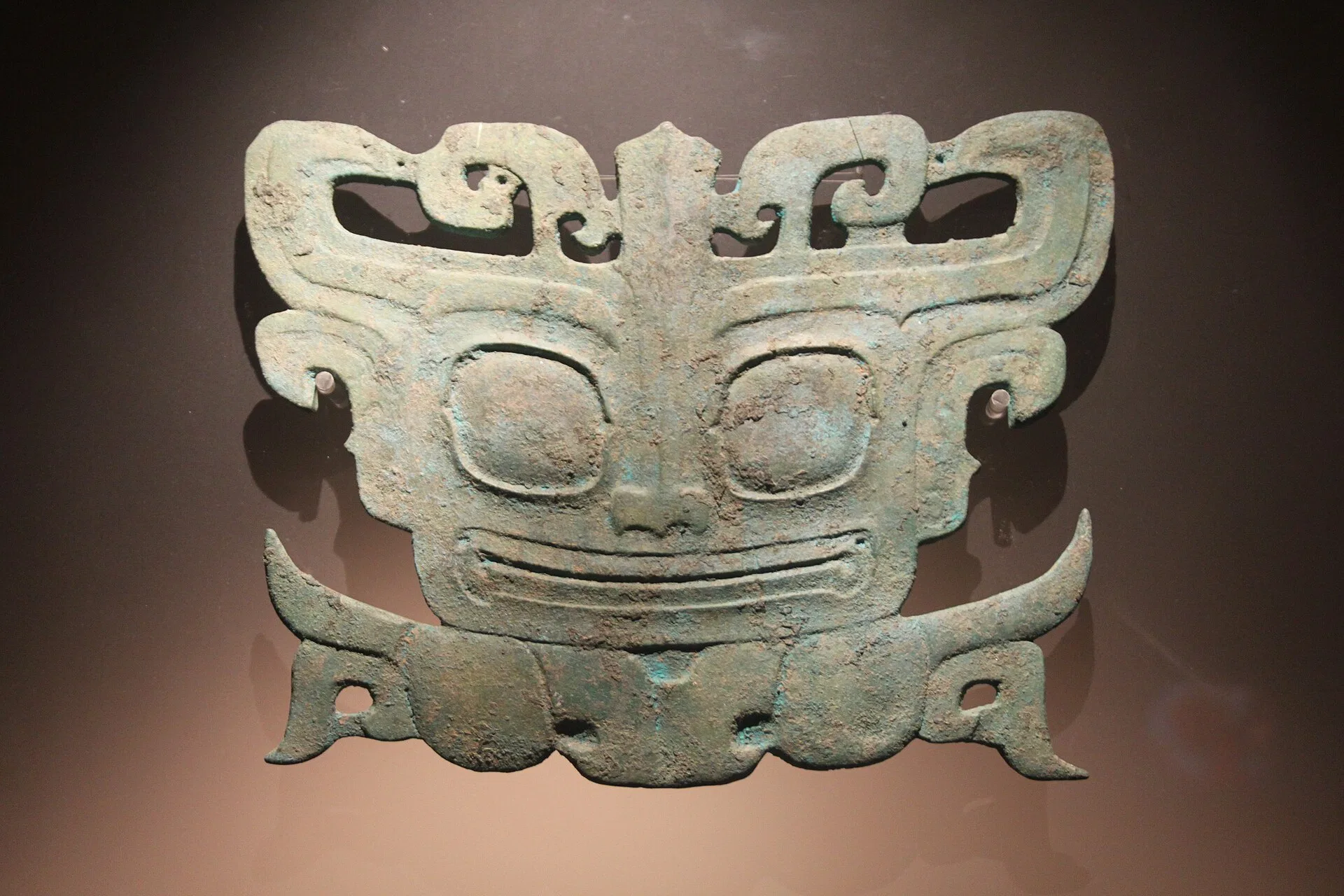
The strongest places are often serious institutions displaying genuinely unusual material rather than attractions deliberately marketed as “weird”. Sanxingdui Museum presents bronze faces so unfamiliar that they have inspired alien speculation, although archaeologists treat them as products of an ancient regional civilisation. Beijing’s Eunuch Culture Exhibition Hall preserves an imperial servant’s cemetery. Medical museums place dried plants, minerals and animal substances beside historical instruments and pharmacy equipment. Elsewhere, preserved burial pits make ancient death rituals physically immediate. Visitors should nevertheless check current access carefully: smaller Chinese museums may change names, relocate, restrict foreign bookings or disappear while old travel pages remain online.[time.com]time.comSanxingdui MuseumSince their discovery almost a century ago, these Bronze Age artifacts have sparked speculation about extraterrestrial origins due to the…
Where the genuinely strange collections are
China had 6,833 officially registered museums by August 2024, according to the National Cultural Heritage Administration. That scale matters because unusual collections are scattered through archaeological parks, universities, historic pharmacies, memorial sites and small local exhibition halls rather than gathered into a recognised “oddities museum” category. Beijing alone continued adding both formally registered museums and less formal exhibition spaces in 2024, while a 2025 city museum pass covered 140 venues. The result is a landscape in which highly specialised institutions can exist alongside immense national museums, but their quality, accessibility and interpretation vary widely.[scio.gov.cn]english.scio.gov.cnState Council of ChinaNational Cultural Heritage Administration | english.scio.gov…25 Sept 2024 — As of the end of August this year, 6…
For readers seeking the uncanny, the most rewarding categories are:
- Archaeological mysteries, where unfamiliar objects invite dramatic theories but retain a firm scholarly setting.
- Burial and bodily history, including sacrificial pits, tomb museums and institutions concerned with people whose bodies or social identities were tightly controlled.
- Traditional medicine collections, where materials that resemble natural-history curiosities are interpreted as ingredients in a living medical system.
- Private or commercial museums, which can preserve subjects avoided by public institutions but may be unstable or weakly documented.
- Forgery scandals, where the museum itself becomes the strange object: a stage on which authenticity, private wealth and local prestige collide.
These categories overlap. A horse burial is simultaneously an archaeological site, a death display and evidence of religious ideas about status after death. A medicinal specimen can be a botanical sample, a commodity, a teaching object and a devotional or cultural symbol. China’s most memorable strange museums therefore reward visitors who look beyond spectacle and ask why the objects were assembled.
Sanxingdui: ancient ritual, not ancient aliens
Sanxingdui Museum in Sichuan is China’s clearest example of a legitimate archaeological collection acquiring a Fortean afterlife. Its enormous bronze heads, protruding eyes, gold-covered masks, sacred-tree forms and towering human figure look dramatically different from the better-known art of ancient central China. That visual difference has encouraged claims about extraterrestrials and lost civilisations, especially online. The museum itself, however, presents the objects as evidence of the sophisticated Bronze Age civilisation of the ancient Shu region, not visitors from space. Scholars regard the discoveries as important precisely because they broaden the established picture of early Chinese civilisation.[TIME]time.comSanxingdui MuseumSince their discovery almost a century ago, these Bronze Age artifacts have sparked speculation about extraterrestrial origins due to the…
The museum opened beside the archaeological site in 1997 and gained a major new building in July 2023. The expanded complex contains more than 1,500 relics, with hundreds displayed publicly for the first time when the extension opened. Among its showpieces are an approximately 3.7-metre bronze tree and a standing figure about 2.6 metres tall. Digital modelling, artificial intelligence and three-dimensional printing help explain how fragmented discoveries may originally have appeared. Visitors can therefore see both spectacular objects and the interpretive work required to reconstruct them.[TIME]time.comSanxingdui MuseumSince their discovery almost a century ago, these Bronze Age artifacts have sparked speculation about extraterrestrial origins due to the…
What makes Sanxingdui valuable within China’s strange-history landscape is the tension between appearance and evidence. The faces genuinely are extraordinary; the mystery is not manufactured. Yet “nobody knows everything about this culture” does not mean “any explanation is equally plausible”. Ritual use, political authority, regional mythology and communication with divine or ancestral powers provide evidence-based lines of interpretation. Alien stories are modern folklore attached to the collection, revealing how easily unfamiliar ancient art can be reframed through science-fiction imagery.
Sanxingdui is therefore a useful model for visiting any alleged mystery-object display: separate the archaeological object, the museum’s interpretation and the later legend. All three may be culturally interesting, but they do not carry equal evidential weight.
Tombs, sacrificed horses and controlled bodies
Some of China’s most unsettling museums preserve death arrangements in place. The Linzi Museum of Chinese Ancient Chariots in Shandong was built around an excavated chariot-and-horse burial associated with the ancient state of Qi. Visitors encounter the burial pit as an archaeological structure rather than a collection of detached objects in glass cases. Horses and vehicles had been placed together as signs of rank and, according to archaeological interpretation, as provisions for a powerful person’s journey beyond death.[The Past]the-past.comThe Past Chinese Museums: the lure of the EastThe Past Chinese Museums: the lure of the East
The setting intensifies the experience. The pit was found during modern road construction, and the preserved excavation lies close to the transport infrastructure that exposed it. Displays combine the burial remains with material on the development of wheeled vehicles. This is not a horror attraction: it is a public archaeological museum. Its strangeness comes from seeing animal sacrifice translated into an orderly museum environment, where the individual bodies also become evidence about state power, warfare, technology and belief.[Trip.com]trip.comlinzi chinese ancient vehicle museum 86766linzi chinese ancient vehicle museum 86766
Beijing’s Eunuch Culture Exhibition Hall offers a different encounter with bodies and authority. It is centred on the tomb of Tian Yi, a powerful eunuch who served during the Ming dynasty. The protected complex covers roughly 4,000 square metres and includes stone carvings, memorial structures and the graves of several eunuchs. Older descriptions refer to displays explaining court service and castration, although reports suggest that the interpretation has changed over time and that some once-noted material is no longer shown.[com.cn]r.visitbeijing.com.cnVisit BeijingMuseumTianyi Tomb is the largest eunuch tomb complex in the Beijing region. Covering an area of 4,000 square meters, built i…
The museum matters because eunuchs are often reduced to lurid court anecdotes. The tomb instead places them within an institutional system. Eunuchs could be servants, intermediaries, administrators, military figures or intimate agents of imperial power. Their status rested on bodily alteration that separated them from conventional family succession while sometimes granting exceptional access to the ruler. The cemetery turns this history into something spatial and personal: visitors are not merely reading about a court category but standing in a funerary landscape created for people whose bodies had determined their political possibilities.
Access information for the site has been inconsistent across English-language sources, and its name appears in several forms. It is better treated as a small heritage site with an associated exhibition than as a large conventional museum. Current opening arrangements should be confirmed through Beijing’s official tourism channels rather than assumed from older travel accounts.
Medicine cabinets on an institutional scale
Traditional Chinese medicine museums can look like vast cabinets of curiosity to an unprepared visitor. Shelves and cases may contain roots, fungi, minerals, shells, horns, preserved animals and substances whose purpose is not obvious from appearance alone. Yet these are not random oddities. They are teaching collections organised around the history, identification, preparation and use of medicinal materials.
The Museum of Chinese Medicine at Beijing University of Chinese Medicine holds more than 2,800 types of medicinal specimens and over 5,000 individual pieces. Its historical holdings include medical objects, thread-bound books and thousands of volumes of specialist literature. Because it belongs to a university, its centre of gravity is academic and educational rather than theatrical. Strange-looking specimens are presented as part of a formal medical and pharmaceutical tradition.[Beijing University of Chinese Medicine]english.bucm.edu.cnBeijing University of Chinese MedicineThe Museum of Chinese MedicineThe Chinese Materia Medica Section contains more than 2,800 types of…
The Shanghai University of Traditional Chinese Medicine also operates a museum combining specimen displays with the history of the university and the wider medical tradition. Public visitor information describes a dedicated specimen hall and regular opening hours, although booking and access rules should still be checked before travelling. In Beijing, another museum devoted to local medicine-making techniques uses reconstructed workspaces, rare specimens, virtual reality and holographic displays to explain how ingredients were processed.[Meet in Shanghai]meet-in-shanghai.netOpen source on meet-in-shanghai.net.
For visitors, the central question is not simply “what is that object?” but “what system of knowledge made it collectable?” These museums classify natural substances according to inherited texts, sensory qualities, preparation methods and claimed therapeutic functions. Some practices remain widely used; others are disputed, regulated or questioned by modern biomedical research and wildlife-conservation concerns. A responsible museum visit should therefore distinguish four things that exhibition language may blend together: historical use, current professional practice, cultural importance and scientifically demonstrated effectiveness.
The most interesting tension is between the old curiosity cabinet and the modern laboratory. A dried creature in a jar may resemble a Victorian oddity, yet in a university museum it can function as a reference specimen used to teach identification and prevent substitution. The visual strangeness is real, but its institutional purpose is usually more rigorous than a simple “weird medicine” label suggests.

Private museums, taboo subjects and vanished collections
Private collections can address subjects that state institutions handle cautiously, but they are also more vulnerable to rent, policy changes, weak visitor numbers and disputes with local authorities. China’s best-known example is the collection assembled by sociologist Liu Dalin on the history of sexuality.
The museum began in Shanghai but struggled to attract visitors and faced restrictions on public advertising. It later moved to the water town of Tongli. The collection included erotic paintings, ceramics, wedding objects, fertility symbols and other artefacts intended to argue that sexuality had a long cultural history in China rather than being merely obscene. Contemporary reporting described the institution as both scholarly and provocative, operating in the uncertain space between historical education, tourism and anti-pornography controls.[china.org.cn]china.org.cnOpen source on china.org.cn.
The Tongli museum is no longer open. Later visitor sources describe it as permanently closed there, while reports of subsequent moves are inconsistent. A related collection was reported in 2018 at a tourist development in the Maoshan area, but dependable current public-access information is difficult to establish. It should not be presented as a straightforward attraction without direct confirmation.[atlasobscura.com]atlasobscura.comAtlas Obscura Professor Dalin's Museum of Sex in SuzhouAtlas Obscura Professor Dalin's Museum of Sex in Suzhou
Its unstable history is part of its significance. The collection demonstrates how an unusual museum may be important even when it fails as a permanent tourist venue. It preserved material associated with private life, bodily education, marriage customs and erotic art, while its repeated relocations exposed the limits placed on public discussion of those subjects. It also warns readers against trusting “weird museum” lists copied from old guidebooks: a colourful description can circulate online for years after the doors have closed.
When the oddity is that the artefacts are fake
China’s museum boom has created opportunities for preservation and public education, but it has also produced notorious authenticity scandals. In 2013, the privately run Jibaozhai Museum in Hebei was closed after experts and online observers challenged large parts of its collection. Reports described supposedly ancient objects carrying glaringly anachronistic features, including modern simplified characters and a vase decorated with cartoon-like figures. The museum had reportedly displayed tens of thousands of objects.[Artnet News]news.artnet.comNews Thousands of Fake Artifacts Force Closure of ChineseNews Thousands of Fake Artifacts Force Closure of Chinese
The following year, police closed the Lucheng Museum in Liaoning after investigators reportedly concluded that roughly a third of its approximately 8,000 exhibits were not genuine. These were not exhibitions deliberately examining forgery. They were museums presenting questionable objects as authentic cultural relics.[The Guardian]theguardian.comThe Guardian Chinese museum closed down over 'fake' exhibits | ChinaThe Guardian Chinese museum closed down over 'fake' exhibits | China
Such cases are more than amusing stories about bad fakes. A museum building, display case and printed label create authority. Once an object enters that setting, many visitors assume that experts have verified it. Private collections assembled during a rapid museum-building period could convert personal wealth or local ambition into apparent historical legitimacy, even where provenance and professional cataloguing were inadequate.
They also expose a productive distinction between a museum of hoaxes and a hoax museum. The former openly explains deception and teaches visitors how evidence is tested. The latter unintentionally asks the public to trust fabricated history. China has fascinating potential material for exhibitions about forgery, the antiquities trade and authentication, but the closed private museums became cautionary exhibits without intending to be.
Visitors assessing a little-known collection should look for basic signs of credibility: named archaeological contexts, acquisition histories, recognised institutional partnerships, specialist catalogues and clear acknowledgement of uncertainty. Grand claims, huge numbers of “treasures” and vague labels are reasons for scrutiny, not proof of importance.
Folklore is often embedded, not separated
China does not have a prominent nationwide network of witchcraft or paranormal museums comparable to the specialist institutions found in parts of Europe and North America. Supernatural culture is more often distributed across temples, archaeological collections, local folklore displays, religious art and exhibitions about literature.
The National Museum of China, for example, has mounted an exhibition devoted to the writer Pu Songling and his celebrated tales of strange encounters. Such material belongs to literary and folk culture rather than paranormal investigation. Ghosts, animal spirits, uncanny transformations and encounters with the otherworld are interpreted through manuscripts, art and historical storytelling, not presented as scientifically verified phenomena.[en.chnmuseum.cn]en.chnmuseum.cnOpen source on chnmuseum.cn.
Religious museums and temple displays may likewise contain guardian figures, underworld judges, protective objects, relics and images of demons. Their meaning depends on ritual and moral systems that cannot be reduced to “occult objects”. A fierce supernatural figure may protect worshippers rather than threaten them; an image of punishment after death may teach ethical conduct; a charm may belong to domestic devotion rather than ceremonial magic.
This embedded quality is crucial to understanding China’s curiosity culture. The unusual object is rarely isolated from the social structure that gave it force. Masks belong to ritual worlds, tomb goods to beliefs about death and status, medicinal specimens to systems of treatment, and supernatural stories to literature and moral imagination. A visitor who treats everything merely as a bizarre spectacle misses the collection’s organising logic.
How to visit without being misled
China’s unusual collections range from major archaeological museums to fragile private ventures. Their practical reliability differs accordingly. Large institutions such as Sanxingdui and university medicine museums generally provide clearer official information, while small tomb exhibitions and privately assembled attractions may have limited English guidance or irregular access.
Before making a special journey:
- Check an official venue or government tourism page. Third-party listings may preserve obsolete locations and opening hours.
- Confirm whether advance booking requires local identification or a particular app. Procedures for foreign visitors can change.
- Look for the institution’s full status. A “museum” may be a protected tomb, university teaching collection, commercial exhibition or privately operated gallery.
- Separate the object from its publicity. Archaeological uncertainty is not evidence for aliens, and historical medical use is not automatic proof of clinical effectiveness.

- Treat closure reports seriously. Professor Liu Dalin’s former Tongli sex museum is a clear example of an attraction that remains prominent in old travel writing despite no longer being publicly accessible there. Atlas Obscura
The most rewarding strange-museum route through China would combine different types of evidence rather than chase a list of novelty attractions: Sanxingdui for an archaeological mystery burdened with modern myths; Linzi for the physical reality of ritual animal burial; Tian Yi’s tomb for imperial bodily politics; and a traditional medicine museum for the transformation of natural substances into an organised scholarly collection.
Why China’s curiosity culture matters
China’s unusual museums show that strangeness is produced as much by interpretation as by the object itself. A bronze mask becomes “alien” when removed from archaeology and placed inside modern speculative folklore. A sacrificed horse becomes a historical document when excavated and conserved. A dried animal becomes a reference specimen in a medical university. A fake vase becomes persuasive when enclosed in glass and given a confident dynastic label.
The country’s museum expansion has created extraordinary opportunities to encounter regional civilisations, specialist knowledge and difficult forms of heritage. It has also made questions of authenticity, institutional authority and commercialisation more urgent. The strangest collections are therefore not simply places to find grotesque or mysterious things. They are places where visitors can watch China negotiate what deserves preservation, which beliefs receive official interpretation, how uncomfortable subjects enter public view and how confidently a museum should claim to know what its objects mean.
Amazon book picks
Further Reading
Books and field guides related to What Makes China's Strangest Museums So Unusual?. Use these as the next step if you want deeper reading beyond the article.
The Cambridge Illustrated History of China
In this sumptuously illustrated history, now in its second edition, Patricia Buckley Ebrey traces the origins of Chinese culture from pre...
The Silk Roads: A New History of the World
The No. 1 Sunday Times and international bestseller - a major reassessment of world history in light of the economic and political renais...
eBay marketplace picks
Marketplace Samples
Live-tested eBay searches with available results related to this page.
Selected fromChinese art print oneBay.co.uk.
Endnotes
1.
Source: time.com
Title: Sanxingdui Museum
Link:https://time.com/6992401/sanxingdui-museum/
Source snippet
Since their discovery almost a century ago, these Bronze Age artifacts have sparked speculation about extraterrestrial origins due to the...
2.
Source: english.scio.gov.cn
Link:https://english.scio.gov.cn/pressroom/node_9013567.html
Source snippet
State Council of ChinaNational Cultural Heritage Administration | english.scio.gov...25 Sept 2024 — As of the end of August this year, 6...
3.
Source: english.beijing.gov.cn
Link:https://english.beijing.gov.cn/government/reports/202503/t20250304_4024414.html
Source snippet
on the Work of the Government 2025 (Part II) - Beijing4 Mar 2025 — Extended opening hours were piloted in 20 museums, and 15 formally reg...
4.
Source: english.beijing.gov.cn
Title: Beijing.gov.cn120 Yuan Pass Covers 140 Museums
Link:https://english.beijing.gov.cn/consuminginbeijing/onedayinbeijing/museums/updatesofmuseums/202511/t20251112_4278336.html
Source snippet
北京市人民政府12 Nov 2025 — The new edition features 140 venues across six categories: history, technology, education on the history o...
5.
Source: the-past.com
Title: The Past Chinese Museums: the lure of the East
Link:https://the-past.com/feature/chinese-museums-the-lure-of-the-east/
6.
Source: trip.com
Title: linzi chinese ancient vehicle museum 86766
Link:https://www.trip.com/travel-guide/attraction/zibo/linzi-chinese-ancient-vehicle-museum-86766/
7.
Source: china.org.cn
Link:https://www.china.org.cn/english/travel/234805.htm
8.
Source: english.beijing.gov.cn
Link:https://english.beijing.gov.cn/beijinginfo/culture/culturaltreasures/cityofmuseums/list/202604/t20260424_4608877.html
9.
Source: meet-in-shanghai.net
Link:https://www.meet-in-shanghai.net/en/traditional-chinese-medicine-health-preservation/shanghai-university-of-traditional-chinese-medicine-museum-of-traditional-chinese-medicine-882509/
10.
Source: china.org.cn
Link:https://www.china.org.cn/english/MATERIAL/74085.htm
11.
Source: news.artnet.com
Title: News Thousands of Fake Artifacts Force Closure of Chinese
Link:https://news.artnet.com/art-world/thousands-of-fake-artifacts-force-closure-of-chinese-museum-26150
12.
Source: en.chnmuseum.cn
Link:https://en.chnmuseum.cn/
13.
Source: english.beijing.gov.cn
Link:https://english.beijing.gov.cn/specials/beijingmagazine/list/202406/P020240626413901991825.pdf
14.
Source: english.beijing.gov.cn
Title: beijing.gov.cn Visit Beijing
Link:https://english.beijing.gov.cn/specials/ticketing/index.html
15.
Source: english.beijing.gov.cn
Link:https://english.beijing.gov.cn/latest/news/202512/t20251218_4348753.html
16.
Source: enghunan.gov.cn
Link:https://enghunan.gov.cn/hneng/News/Localnews/202507/t20250713_33736661.html
17.
Source: stats.gov.cn
Link:https://www.stats.gov.cn/sj/ndsj/2025/indexeh.htm
18.
Source: moc.gov.tw
Title: News Content2.aspx
Link:https://www.moc.gov.tw/en/News_Content2.aspx?n=506&s=18409
19.
Source: tlvm.nmtl.gov.tw
Link:https://tlvm.nmtl.gov.tw/en/Theme/ExhibitionArticleCont?Exbid=197
20.
Source: trip.com
Title: guangdong chinese medicine museum 15415596
Link:https://www.trip.com/travel-guide/attraction/guangzhou/guangdong-chinese-medicine-museum-15415596/
21.
Source: sa.trip.com
Title: zibo 536 130248721
Link:https://sa.trip.com/moments/detail/zibo-536-130248721?locale=en-SA
22.
Source: english.scio.gov.cn
Title: content 74777567
Link:https://english.scio.gov.cn/in-depth/2019-05/13/content_74777567.htm
23.
Source: en.cppcc.gov.cn
Link:https://en.cppcc.gov.cn/3rdsessionof14thcppccwhattheysay.html
24.
Source: english.gov.cn
Title: content WS67c65028c6d0868f4e8f0469
Link:https://english.www.gov.cn/news/202503/04/content_WS67c65028c6d0868f4e8f0469.html
25.
Source: en.chnmuseum.cn
Link:https://en.chnmuseum.cn/Portals/0/web/exhibition/exhibitions/161120Chines-Epic/en.html
26.
Source: r.visitbeijing.com.cn
Link:https://r.visitbeijing.com.cn/museum/422
Source snippet
Visit BeijingMuseumTianyi Tomb is the largest eunuch tomb complex in the Beijing region. Covering an area of 4,000 square meters, built i...
27.
Source: english.bucm.edu.cn
Link:https://english.bucm.edu.cn/museum.html
Source snippet
Beijing University of Chinese MedicineThe Museum of Chinese MedicineThe Chinese Materia Medica Section contains more than 2,800 types of...
28.
Source: scmp.com
Title: no sex please
Link:https://www.scmp.com/article/428068/no-sex-please
30.
Source: theculturemap.com
Title: The Culture Map Suzhou and the Sex Museum in Tong-Li
Link:https://theculturemap.com/suzhou-and-sex-museum/
31.
Source: theguardian.com
Title: The Guardian Chinese museum closed down over ‘fake’ exhibits | China
Link:https://www.theguardian.com/world/2014/may/22/chinese-museum-closed-down-fake-exhibits-lucheng
32.
Source: lifumuseum.cmu.edu.tw
Title: cmu.edu.tw Lifu Museum of Chinese Medicine
Link:https://lifumuseum.cmu.edu.tw/web/en/
33.
Source: atlasobscura.com
Title: the worlds only tiananmen square museum may be closing
Link:https://www.atlasobscura.com/articles/the-worlds-only-tiananmen-square-museum-may-be-closing
34.
Source: atlasobscura.com
Title: zaffis museum paranormal
Link:https://www.atlasobscura.com/places/zaffis-museum-paranormal
35.
Source: atlasobscura.com
Title: the clink prison museum london england
Link:https://www.atlasobscura.com/places/the-clink-prison-museum-london-england
36.
Source: Wikipedia
Link:https://en.wikipedia.org/wiki/Sanxingdui
37.
Source: journals.eco-vector.com
Link:https://journals.eco-vector.com/2410-0145/article/view/65952
Additional References
38.
Source: youtube.com
Title: How Sotheby’s Found a Vanished Chinese Collector
Link:https://www.youtube.com/watch?v=X_KYpUrhhKU
Source snippet
Bronze masks of Sanxingdui: Are they linked to alien civilizations?...
39.
Source: herzogdemeuron.com
Link:https://www.herzogdemeuron.com/projects/296-tai-kwun-centre-for-heritage-art/
40.
Source: everydaytourist.ca
Link:https://everydaytourist.ca/globe-trekking-international-travel/around-the-world-in-25-weird-museums
41.
Source: beijingservice.com
Link:https://www.beijingservice.com/attractions/beijing-gallery-of-the-eunuch-culture.htm
42.
Source: en.sinopharm.com
Link:https://en.sinopharm.com/2023-03/28/c_18576.htm
43.
Source: facebook.com
Link:https://www.facebook.com/CGChinaSP/videos/can-you-believe-this-is-actually-projection-the-shanghai-natural-history-museum-/1188794956485360/
44.
Source: tripadvisor.com
Link:https://www.tripadvisor.com/Attraction_Review-g679674-d1979608-Reviews-China_Ancient_Chariots_Museum-Zibo_Shandong.html
45.
Source: facebook.com
Link:https://www.facebook.com/groups/archeologyandcivilizations/posts/24157418150591715/
46.
Source: welt.de
Link:https://www.welt.de/178718608
47.
Source: dartmoor-prison.co.uk
Link:https://www.dartmoor-prison.co.uk/