Where Nicaragua Keeps Its Strangest Stories
Nicaragua does not have a large circuit of purpose-built museums devoted to occultism, monsters or medical horrors.
Page outline Jump by section
Introduction
The strongest starting point is León’s Museum of Myths, Legends and Traditions, where oversized figures representing supernatural characters occupy cells once associated with imprisonment and torture. Elsewhere, the strangeness comes less from theatrical presentation than from the objects themselves: lines of human footprints hardened in volcanic deposits, reconstructed graves, carved animal-human beings and thousands of insects arranged for identification. These collections matter because they show how Nicaragua preserves the uncanny at the meeting point of oral tradition, Indigenous archaeology, volcanic landscape, political memory and small-scale collecting.[mapanicaragua.com]mapanicaragua.comMapa Nacional de Turismo Municipality of LéonImage: The-carreta-nahua-_leon_cultura6 Museum of Myths, Legends and Traditions Colonel Joaquín de Arrechavala: This unique museum, found…
León’s prison of legends
The Museum of Myths, Legends and Traditions in León is Nicaragua’s clearest example of a deliberately strange visitor attraction. It presents stories from León and elsewhere in the country through large handmade figures, painted scenes and displays devoted to supernatural beings, traditional festivities and popular characters. Current official tourism information describes five rooms, four of them covering legends, traditions, history and culture, while the national tourism map promotes the visit as both a historical tour and an introduction to León’s myths.[Mapa Nacional de Turismo]mapanicaragua.comMapa Nacional de Turismo Atractivos Turísticos de LeónImage: Museo de Leyendas y Tradiciones “Coronel Joaquín de Arrechavala”… Experiencia: Observación, recorrido histórico, información so…
Among the figures commonly associated with the museum are ghostly women, demonic dogs and other beings found across Nicaraguan oral storytelling. The displays are closer to folk theatre than to a modern ethnographic exhibition: the characters are rendered as brightly painted, often rough-edged effigies rather than presented through restrained cases and scholarly labels. That homemade quality is part of the appeal. Visitors enter a physical version of stories traditionally transmitted through families, street performance, religious festivals and local warnings about dangerous roads, rivers or night-time encounters.[getyourguide.com]getyourguide.comMuseum of Traditions and Legends, Leon, Leon, NicaraguaLeon León's Museum of Traditions and Legends brings Nicaragua's myths…
What makes the museum unusually powerful, however, is its building. The collection occupies the former prison commonly known as La XXI, a twentieth-century detention site associated with the Somoza era. Surviving cells and murals dealing with abuse and punishment sit alongside the folkloric figures. It is therefore possible to move almost immediately from a supernatural tale to imagery concerning real political violence.[Wikipedia]WikipediaMuseum of Traditions and LegendsMuseum of Traditions and Legends
That combination can feel disjointed, but it also gives the museum a significance beyond novelty. The monsters of oral tradition and the violence of the prison are not presented as identical kinds of truth. One belongs primarily to folklore; the other belongs to documented history and memory. Yet both concern fear, authority, punishment and stories that communities continue to retell. The result is less a polished museum narrative than a dense local memory-space in which fantasy, civic identity and trauma coexist.
The museum should not be treated as proof that Nicaragua’s legendary creatures are believed in literally by all visitors or residents. These figures operate variously as entertainment, moral warning, cultural inheritance and regional identity. Interpretation is often strongest with a knowledgeable guide, particularly because written information and English-language provision may be limited. Official tourism sources continue to list the museum, but opening conditions and guided access should be checked locally.[Mapa Nacional de Turismo]mapanicaragua.comMapa Nacional de Turismo Tourist Attractions of LeónMapa Nacional de Turismo Tourist Attractions of León
Footprints preserved by a volcano
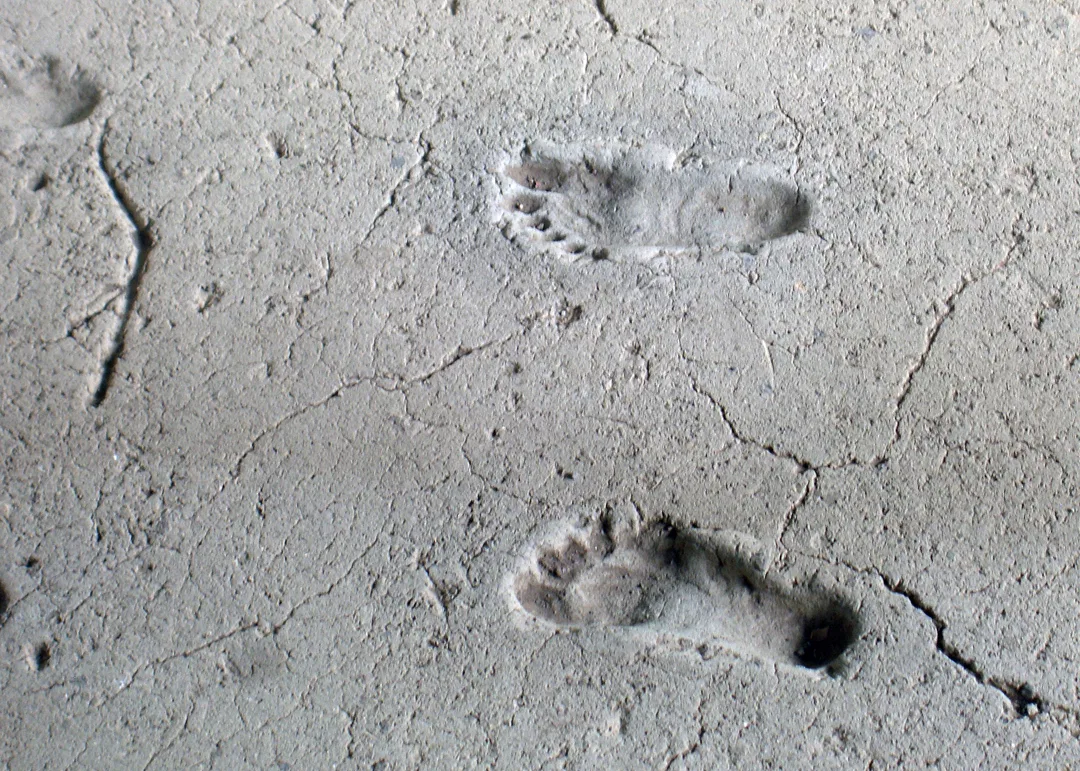
The Acahualinca Footprints Museum in Managua preserves something stranger than a reconstructed legend: trails of human and animal footprints impressed in wet volcanic material and sealed within layers of later deposits. The tracks are exposed in protected excavation pits, allowing visitors to stand beside a brief sequence of ordinary movement that survived for roughly two millennia.[IUGS]iugs-geoheritage.orgIUGSThe Human Footprints of AcahualincaThe Acahualinca Footprints are a unique record of the Holocene stratigraphic, volcanic, tectonic a…
Older tourist accounts often describe the tracks as more than 6,000 or even 10,000 years old and portray their makers as fleeing an eruption. Both claims require caution. A detailed geological study linked the footprint-bearing layer to volcanic deposits dating to approximately 2,100 years ago. The spacing and form of the human prints are also more consistent with walking than a panicked escape.[oceanrep.geomar.de]oceanrep.geomar.de969 Schmincke 2009 WalkingThroughVolcanicMudThe Artzeit pubid13136969 Schmincke 2009 WalkingThroughVolcanicMudThe Artzeit pubid13136
The dating history is part of what makes Acahualinca intellectually interesting. Earlier estimates were based on material beneath the footprints and produced a much greater age. Later analysis of the volcanic sequence supported the younger chronology. Some archaeological summaries still acknowledge the competing dates, while recent geoheritage assessments emphasise the site’s broader importance as an unusually accessible record of human movement, volcanic activity and changing ground conditions during the Holocene.[Faculty of Arts]antharky.ucalgary.caOpen source on ucalgary.ca.
The museum is therefore not simply a display of “fossilised footsteps”. It is effectively a preserved slice of landscape. The surrounding layers record repeated eruptions, and the tracks capture people moving through a lakeside environment before later volcanic material buried the surface. Their appeal lies partly in their immediacy: pottery and statues may appear remote from their makers, but a line of footprints invites visitors to imagine pace, direction, group size and the physical weight of individual bodies.
Associated exhibition material has included pottery and objects recovered from other archaeological sites around Managua. The National Museum also displays examples connected with the early study of the footprints and credits its founder, the naturalist and archaeologist Diocleciano Chaves, with recognising their importance.[Faculty of Arts]antharky.ucalgary.caOpen source on ucalgary.ca.
Acahualinca illustrates a recurring problem in unusual heritage tourism: the most dramatic version of a story is often the least secure. “Families fleeing a volcanic catastrophe 10,000 years ago” is more marketable than “people walking across wet volcaniclastic mud around 2,100 years ago”. The second version is nevertheless more compelling in scientific terms, because it connects a human moment with a precisely studied sequence of eruptions rather than turning the footprints into a disaster legend.
Burial vessels, stone beings and private collections
Nicaragua’s archaeological museums are conventional in subject but frequently unusual in atmosphere. Many grew from regional discoveries, private preservation efforts or objects found during farming and construction. Their collections bring together funerary pottery, carved figures, jewellery, grinding stones and objects whose precise function or origin may remain uncertain.
El Ceibo on Ometepe
El Ceibo, on Ometepe Island, combines a private pre-Columbian collection with a museum of coins and currency. Its archaeological displays include ceramics, stone tools, funerary urns, ornaments and material associated with the island’s extensive rock-art landscape. Visitor accounts and local information describe a reconstructed burial context as well as rooms arranged around pottery phases and aspects of pre-Hispanic society.[Ometepe Island Info]ometepeislandinfo.comOmetepe Island Info Museo El CeiboOmetepe Island Info Museo El Ceibo
The unusual character of El Ceibo lies partly in its origin. Much of the material was preserved locally rather than assembled through an old national collecting programme. Objects reportedly surfaced on agricultural land or were held by island families before entering the collection. This gives the museum a strong connection to Ometepe, but it also raises questions familiar to many privately founded archaeological museums: how fully was each object documented, under what circumstances was it removed, and how confidently can its original setting be reconstructed?[Condé Nast Traveler]cntraveler.comCondé Nast Traveler Nicaragua's New DayCondé Nast Traveler Nicaragua's New Day
Visitors should therefore distinguish between the authenticity of an artefact and the certainty of its interpretation. A genuine burial vessel may have lost information when removed from the ground without controlled excavation. Claims about distant cultural influences or trade links can be plausible without proving that people from every suggested region personally travelled to Ometepe. Decorative resemblance, imported material and later collecting histories all require careful separation.
The adjoining numismatic collection adds an eccentric change of scale. After ancient urns and stone objects, visitors encounter coins, notes and medals charting political and economic change. This pairing of archaeology and currency is not thematically seamless, but it reflects the personality of a collection-based museum rather than a single-purpose national institution. Current visitor information continues to describe both sections as operating, although access arrangements and prices may change.[Tripadvisor]tripadvisor.co.ukTripadvisor MUSEUM EL CEIBOTripadvisor MUSEUM EL CEIBO
Juigalpa’s forest of stone figures
The Gregorio Aguilar Barea Archaeological Museum in Juigalpa is notable for its large collection of pre-Hispanic stone sculpture. Sources describe more than 120 basalt figures, including human, divine and animal-human forms associated with the Chontales region. Many stand together near the museum, creating the impression of an assembly of weathered beings rather than isolated masterpieces in glass cases.[nicaragua.com]nicaragua.commuseo arqueologico gregorio aguilar bareamuseo arqueologico gregorio aguilar barea
These figures are often called idols or deities in tourism writing, but such labels can imply more certainty than the evidence allows. Without complete excavation records or surviving explanations from their makers, the exact identities and uses of individual carvings may remain debated. Their hybrid features might relate to ancestry, status, ritual transformation or supernatural beings, but resemblance alone does not establish a fixed mythology.
The museum is most valuable when approached as a regional archaeological cabinet. Alongside the monumental sculptures are smaller artefacts and natural-history material, including taxidermy. This mixture makes it feel closer to an older municipal museum, where archaeology, local identity and specimens from the surrounding environment share one roof. Recent cultural listings describe it as open to the public, usually with weekly closure days, but practical details should be confirmed before travelling.[Postcard]postcard.incGregorio Aguilar BareaGregorio Aguilar Barea
Sébaco’s local archaeology
The Cihuacóatl Museum of Archaeology and History in Sébaco offers a quieter version of the same regional collecting tradition. Its displays focus on ceramics, stones, statues and evidence of pre-Hispanic settlement in the Sébaco area. Official tourism information continued to identify it as a major municipal cultural attraction in 2026.[Mapa Nacional de Turismo]mapanicaragua.comMapa Nacional de Turismo Municipality of SébacoMapa Nacional de Turismo Municipality of Sébaco
Its significance is less about one spectacular mystery object than about keeping locally recovered material near the landscape that produced it. Museums of this type help prevent regional archaeology from becoming visible only in Managua or overseas collections. They can also preserve oral information about where objects were found, although the scholarly value of that information depends on how carefully it was recorded.
Together, El Ceibo, Juigalpa and Sébaco reveal a Nicaraguan curiosity tradition built around accumulation. Urns, statues and carved fragments gain their effect through number and proximity. The visitor is confronted not with a single national story, but with many local attempts to organise a past whose beliefs are only partly recoverable.
Insect cabinets and scientific curiosity
Not all of Nicaragua’s strange collections concern ghosts or ancient burials. The country also has entomological holdings assembled for research and education. These are cabinets of real biological oddity: pinned beetles, butterflies, moths and agricultural insects arranged so that differences in form can be compared at close range.
The León Entomological Museum grew around the work of entomologist Jean-Michel Maes and the effort to document Nicaragua’s insect fauna. Institutional descriptions present the collection as a reference resource supporting national inventories rather than merely a decorative butterfly exhibition.[gob.ni]inc.gob.niApoya al estudio entomológico del país convirtiéndose en una herramienta básica para el proyecto de inventario de la fauna entomológica d…
The Agricultural University also maintains an entomological collection focused on insects associated with Nicaragua’s farming, livestock and forest systems. Its purpose is primarily academic: specimens help researchers identify species, pests, pollinators and ecological relationships. This makes it less obviously tourist-led than León’s folklore museum or El Ceibo. Public access may depend on university arrangements rather than regular museum opening hours.[ecdysis.org]ecdysis.orgUniversidad Nacional Agraria, Museo de EntomologíaUniversidad Nacional Agraria, Museo de Entomología
Such collections belong within Nicaragua’s curiosity landscape because they continue the tradition of the natural-history cabinet. An insect drawer turns abundance into order: creatures that might otherwise appear as an indistinguishable swarm are separated by species, locality and anatomy. The result can be beautiful, unsettling and scientifically useful at the same time.
Historical research on Nicaraguan entomology also shows that the country’s early natural-history museums exchanged knowledge with major overseas institutions, including the Smithsonian, the British Museum and Chicago’s Field Museum. Those links placed local collecting within an international network, although they also invite familiar questions about where specimens ultimately reside and who controls access to the information they contain.[lacalera.una.edu.ni]lacalera.una.edu.niOpen source on edu.ni.

Folklore beyond museum walls
Nicaragua’s unusual heritage cannot be understood entirely through formal museums. Many legendary figures remain more visible in festivals, performances, masks, murals and spoken stories than in permanent exhibitions. Masaya, León and numerous smaller towns preserve traditions in which frightening or mischievous beings appear alongside Catholic imagery, Indigenous inheritance and popular theatre. The national cultural institute explicitly treats oral literature, myths and legends as part of the country’s inherited cultural map.[Instituto Nicaragüense de Cultura]inc.gob.niInstituto Nicaragüense de Cultura
This living context changes how a visitor should read the figures in León’s museum. A giant supernatural character is not necessarily a relic of a vanished belief system. It may still appear in children’s stories, street celebrations, jokes or moral warnings. Different people can understand the same character devotionally, sceptically or playfully.
Local tourism pages continue to record legends attached to caves, old trees, roads and settlements. Nagarote, for example, promotes stories connected with a goblin cave and mystical religious traditions, while Ciudad Antigua lists familiar supernatural tales among its local heritage. These places do not necessarily offer permanent collections, but they show that Nicaragua’s legendary geography extends well beyond a single museum.[Mapa Nacional de Turismo]mapanicaragua.comMapa Nacional de Turismo Municipio de NagaroteMapa Nacional de Turismo Municipio de Nagarote
For strange-history travellers, this means that the most meaningful “exhibit” may sometimes be a festival figure, a painted wall or a guide’s account tied to a particular landscape. That material should still be approached critically. Oral tradition changes through repetition, and tourism promotion can simplify local variants into easily recognised national characters. Variation is not evidence that the tradition is false; it is part of how folklore works.
How credible are the displays?
Nicaragua’s unusual collections vary greatly in curatorial style. The Acahualinca footprints have been subjected to geological and archaeological investigation, although outdated dates and dramatic escape narratives remain in circulation. The National Museum and university insect collections are research-oriented institutions. Regional archaeological museums preserve important material but may combine professionally documented objects with pieces whose excavation histories are incomplete. The León folklore museum is primarily interpretive and artistic: its figures represent stories rather than scientific claims.
A useful way to judge them is to ask what kind of truth each display is offering:
- Physical evidence: Footprints, pottery, bones, stone figures and insect specimens can be genuine objects while still permitting disagreement over age, purpose or interpretation.
- Reconstruction: A recreated grave or costumed supernatural figure is an interpretation, not an untouched survival from the past.
- Oral tradition: Legends record social fears, values and identities even when their supernatural events cannot be verified.
- Political memory: Prison cells and torture imagery concern documented human history and should not be reduced to spooky scenery.
- Tourism language: Claims such as “oldest”, “mysterious” or “sacred” deserve checking against archaeological or institutional evidence.
Provenance is especially important in archaeological collections. An object recovered during controlled excavation retains information about its position, neighbouring material and date. An equally authentic object found accidentally and moved without records may be visually impressive but less informative. Private and municipal museums can preserve artefacts that might otherwise have been sold or destroyed, yet preservation alone does not replace documentation.
What visitors should expect
Nicaragua’s strongest curiosity sites are generally small, locally run and unevenly interpreted. They should not be expected to resemble large European or North American museums with extensive English panels, climate-controlled galleries and online booking systems.
The most rewarding approach is to allow time for explanation. At the León folklore museum, a guide can identify characters and separate prison history from legendary narrative. At archaeological museums, asking where an object was found and whether it came from an excavation can reveal more than an elaborate supernatural interpretation. At Acahualinca, the geological layers surrounding the footprints are as important as the prints themselves.
Practical information should be confirmed shortly before visiting. Official tourism maps continue to list the principal sites, but opening hours, admission arrangements, language provision and photography rules may change. Some scientific collections are working research facilities rather than conventional walk-in attractions.[visitanicaragua.com]visitanicaragua.comVisita Nicaragua What should a tourist do in Managua? – Visit NicaraguaVisita Nicaragua What should a tourist do in Managua? – Visit Nicaragua
Why Nicaragua’s curiosity culture matters
Nicaragua’s strange collections are compelling precisely because they do not form a neat “weird museum” industry. They emerged from different needs: preserving oral tradition, saving artefacts uncovered on farms, protecting a rare geological site, documenting political repression and building scientific reference collections.
The country’s most memorable museum experience may therefore involve several kinds of unease at once. A playful monster stands inside a former prison cell. A human journey survives only as pressure marks in volcanic mud. A stone figure looks supernatural but has lost the story that once explained it. A drawer of brilliant insects is also a record of environmental knowledge.
These places do not prove legends, solve every archaeological question or remove the problems of provenance and interpretation. Their value lies in showing how Nicaragua gives material form to things that are otherwise difficult to hold onto: spoken fears, vanished rituals, brief human movements, political suffering and the extraordinary variety of the natural world.
Amazon book picks
Further Reading
Books and field guides related to Where Nicaragua Keeps Its Strangest Stories. Use these as the next step if you want deeper reading beyond the article.
Lonely Planet Nicaragua
Lonely Planet Nicaragua is your passport to the most relevant, up-to-date advice on what to see and skip, and what hidden discoveries awa...
Culture and Customs of Nicaragua
First published 2008. Subjects: Civilization, Nicaragua, history, America, civilization.
Nicaragua: Living in the Shadow of the Eagle
Nicaragua: Living in the Shadow of the Eagle details the country's unique history, culture, economics, politics, and foreign relations. I...
eBay marketplace picks
Marketplace Samples
Live-tested eBay searches with available results related to this page.
Selected fromNicaragua map print oneBay.co.uk.
Endnotes
1.
Source: iugs-geoheritage.org
Link:https://iugs-geoheritage.org/geoheritage_sites/the-human-footprints-of-acahualinca/
Source snippet
IUGSThe Human Footprints of AcahualincaThe Acahualinca Footprints are a unique record of the Holocene stratigraphic, volcanic, tectonic a...
2.
Source: getyourguide.com
Link:https://www.getyourguide.com/en-gb/museum-of-traditions-and-legends-leon-l218791/
Source snippet
Museum of Traditions and Legends, Leon, Leon, NicaraguaLeon León's Museum of Traditions and Legends brings Nicaragua's myths...
3.
Source: Wikipedia
Title: Museum of Traditions and Legends
Link:https://en.wikipedia.org/wiki/Museum_of_Traditions_and_Legends
4.
Source: oceanrep.geomar.de
Title: 969 Schmincke 2009 WalkingThroughVolcanicMudThe Artzeit pubid13136
Link:https://oceanrep.geomar.de/6771/1/969_Schmincke_2009_WalkingThroughVolcanicMudThe_Artzeit_pubid13136.pdf
5.
Source: Wikipedia
Title: Ancient footprints of Acahualinca
Link:https://en.wikipedia.org/wiki/Ancient_footprints_of_Acahualinca
6.
Source: Wikipedia
Title: El Ceibo Museums
Link:https://en.wikipedia.org/wiki/El_Ceibo_Museums
7.
Source: nicaragua.com
Title: museo arqueologico gregorio aguilar barea
Link:https://www.nicaragua.com/blog/museo-arqueologico-gregorio-aguilar-barea/
8.
Source: postcard.inc
Title: Gregorio Aguilar Barea
Link:https://www.postcard.inc/places/gregorio-aguilar-barea-juigalpa
9.
Source: tripadvisor.com
Link:https://www.tripadvisor.com/Attraction_Review-g6368968-d20311771-Reviews-Museo_De_Arqueologia_E_Historia_Cihuacoatl-Sebaco_Matagalpa_Department.html
10.
Source: unsm-ento.unl.edu
Link:https://unsm-ento.unl.edu/workers/JMaes.htm
11.
Source: ecdysis.org
Title: Universidad Nacional Agraria, Museo de Entomología
Link:https://ecdysis.org/collections/misc/collprofiles.php?collid=52
12.
Source: lacalera.una.edu.ni
Link:https://lacalera.una.edu.ni/index.php/CALERA/article/view/331/395
13.
Source: aghn.edu.ni
Title: hallazgos arqueologicos en nejapa y su relacion con las huellas de acahualinca
Link:https://www.aghn.edu.ni/2024/03/hallazgos-arqueologicos-en-nejapa-y-su-relacion-con-las-huellas-de-acahualinca/
14.
Source: nicaragua.com
Title: Acahualinca Footprints Museum, Managua | Nicaragua.com
Link:https://www.nicaragua.com/attractions/museums/acahualinca-footprints/
15.
Source: tripadvisor.com
Link:https://www.tripadvisor.com/Attraction_Review-g424970-d657324-Reviews-Museum_of_Legends_and_Traditions_Museo_de_Tradiciones_y_Leyendas-Leon_Leon_Departm.html
16.
Source: tripadvisor.com
Link:https://www.tripadvisor.com/Attraction_Review-g424970-d657324-Reviews-or50-Museum_of_Legends_and_Traditions_Museo_de_Tradiciones_y_Leyendas-Leon_Leon_De.html
17.
Source: Wikipedia
Title: Unusual articles
Link:https://en.wikipedia.org/wiki/Wikipedia%3AUnusual_articles
18.
Source: Wikipedia
Title: Huellas de Acahualinca
Link:https://es.wikipedia.org/wiki/Huellas_de_Acahualinca
19.
Source: nicaragua.com
Link:https://www.nicaragua.com/attractions/museums/traditions-and-legends/
20.
Source: booking.com
Link:https://www.booking.com/reviews/ni/hotel/museo-el-ceibo.html
21.
Source: tripadvisor.es
Link:https://www.tripadvisor.es/Attraction_Review-g294478-d3891851-Reviews-Museo_Sitio_Huellas_de_Acahualinca-Managua_Managua_Department.html
22.
Source: mapanicaragua.com
Title: Mapa Nacional de Turismo Municipality of Léon
Link:https://www.mapanicaragua.com/en/municipality-of-leon/
Source snippet
Image: The-carreta-nahua-_leon_cultura6 Museum of Myths, Legends and Traditions Colonel Joaquín de Arrechavala: This unique museum, found...
23.
Source: cntraveler.com
Link:https://www.cntraveler.com/story/nicaragua-joel-gaitan-locals-guide
Source snippet
Gaitan shares insights into his heritage, favorite places, and artistic inspirations. He highlights Nicaragua's rich culture, mentioning...
24.
Source: inc.gob.ni
Link:https://www.inc.gob.ni/museos/1000/
Source snippet
Apoya al estudio entomológico del país convirtiéndose en una herramienta básica para el proyecto de inventario de la fauna entomológica d...
25.
Source: mapanicaragua.com
Title: Mapa Nacional de Turismo Atractivos Turísticos de León
Link:https://www.mapanicaragua.com/atractivos-turisticos-de-leon/
Source snippet
Image: Museo de Leyendas y Tradiciones “Coronel Joaquín de Arrechavala”... Experiencia: Observación, recorrido histórico, información so...
26.
Source: lonelyplanet.com
Title: Lonely Planet Museo de Leyendas y Tradiciones
Link:https://www.lonelyplanet.com/points-of-interest/museo-de-leyendas-y-tradiciones/1037164
Source snippet
Lonely PlanetMuseo de Leyendas y Tradiciones - AttractionsLeón's most entertaining and eclectic museum is housed in La XXI (the 21st Garr...
27.
Source: mapanicaragua.com
Title: Mapa Nacional de Turismo Tourist Attractions of León
Link:https://www.mapanicaragua.com/en/tourist-attractions-of-leon/
28.
Source: antharky.ucalgary.ca
Link:https://antharky.ucalgary.ca/caadb/nicaragua/acahualinca
29.
Source: museonacional.inc.gob.ni
Link:https://museonacional.inc.gob.ni/
30.
Source: ometepeislandinfo.com
Title: Ometepe Island Info Museo El Ceibo
Link:https://ometepeislandinfo.com/Museo-El-Ceibo
31.
Source: cntraveler.com
Title: Condé Nast Traveler Nicaragua’s New Day
Link:https://www.cntraveler.com/stories/2011-08-08/nicaragua-s-new-day
32.
Source: tripadvisor.co.uk
Title: Tripadvisor MUSEUM EL CEIBO
Link:https://www.tripadvisor.co.uk/Attraction_Review-g1443289-d2078689-Reviews-Museum_El_Ceibo-Moyogalpa_Isla_de_Ometepe_Rivas_Department.html
33.
Source: lonelyplanet.com
Link:https://www.lonelyplanet.com/points-of-interest/museo-arqueologico-gregorio-aguilar-barea/1324110
34.
Source: mapanicaragua.com
Title: Mapa Nacional de Turismo Municipality of Sébaco
Link:https://www.mapanicaragua.com/en/municipality-of-sebaco/
35.
Source: inc.gob.ni
Title: Instituto Nicaragüense de Cultura
Link:https://www.inc.gob.ni/mapa-del-arte-y-cultura-de-nicaragua/
36.
Source: mapanicaragua.com
Title: Mapa Nacional de Turismo Municipio de Nagarote
Link:https://www.mapanicaragua.com/municipio-de-nagarote/
37.
Source: mapanicaragua.com
Title: Mapa Nacional de Turismo Municipio de Ciudad Antigua
Link:https://www.mapanicaragua.com/municipio-de-ciudad-antigua/
38.
Source: visitanicaragua.com
Title: Visita Nicaragua What should a tourist do in Managua? – Visit Nicaragua
Link:https://www.visitanicaragua.com/en/What-should-a-tourist-do-in-Managua%3F/
39.
Source: mapanicaragua.com
Title: Municipio de Léon
Link:https://www.mapanicaragua.com/municipio-de-leon/
40.
Source: mapanicaragua.com
Title: Municipio de Ticuantepe
Link:https://www.mapanicaragua.com/municipio-de-ticuantepe/
41.
Source: mapanicaragua.com
Link:https://www.mapanicaragua.com/diriomo/
43.
Source: mapanicaragua.com
Title: Municipio de Chinandega
Link:https://www.mapanicaragua.com/municipio-de-chinandega/
44.
Source: mapanicaragua.com
Title: Tourist Attractions of Managua
Link:https://www.mapanicaragua.com/en/tourist-attractions-of-managua/
45.
Source: mapanicaragua.com
Title: Attractions touristiques de Managua
Link:https://www.mapanicaragua.com/fr/attractions-touristiques-de-managua/
46.
Source: inc.gob.ni
Link:https://www.inc.gob.ni/agenda-de-actividades-culturales-instituto-de-las-culturas-de-pueblos-y-juventudes/
47.
Source: mapanicaragua.com
Title: Ciudades Patrimoniales de Nicaragua
Link:https://www.mapanicaragua.com/ciudades-patrimoniales/
48.
Source: mapanicaragua.com
Title: Heritage Cities of Nicaragua
Link:https://www.mapanicaragua.com/en/heritage-cities/
49.
Source: mapanicaragua.com
Title: Villes du patrimoine du Nicaragua
Link:https://www.mapanicaragua.com/fr/villes-patrimoniales/
50.
Source: mapanicaragua.com
Title: Architecture de León
Link:https://www.mapanicaragua.com/fr/architecture-de-lion/
51.
Source: mapanicaragua.com
Title: Architektur von León
Link:https://www.mapanicaragua.com/de/L%C3%B6wenarchitektur/
52.
Source: mapanicaragua.com
Title: Reserva de biósfera Isla de Ometepe
Link:https://www.mapanicaragua.com/reserva-de-biosfera-isla-de-ometepe/
53.
Source: mapanicaragua.com
Title: What should a tourist do in León?
Link:https://mapanicaragua.com/en/what-should-a-tourist-do-in-leon/
54.
Source: visitanicaragua.com
Title: Nicaragua on “Erick’s List” – Visit Nicaragua
Link:https://www.visitanicaragua.com/en/Nicaragua-on-Erick%27s-list/
55.
Source: mapanicaragua.com
Title: Que doit faire un touriste à Managua?
Link:https://www.mapanicaragua.com/fr/que-doit-faire-un-touriste-%C3%A0-managua/
56.
Source: mapanicaragua.com
Title: Cerro Cumaica Nature Reserve
Link:https://www.mapanicaragua.com/en/Cerro-Cumaica-Nature-Reserve-Cerro-Alegre/
57.
Source: mapanicaragua.com
Title: Solentiname Archipelago National Monument
Link:https://www.mapanicaragua.com/en/solentiname-archipelago-national-monument/?undefined=undefined
58.
Source: mapanicaragua.com
Title: Monumento nacional Archipiélago de Solentiname
Link:https://www.mapanicaragua.com/monumento-nacional-archipielago-de-solentiname/
59.
Source: mapanicaragua.com
Title: Indio Maíz Biological Reserve
Link:https://www.mapanicaragua.com/en/Indian-Corn-Biological-Reserve/
60.
Source: visitanicaragua.com
Title: ¿Qué debe de hacer un turista en Managua? – Visita Nicaragua
Link:https://www.visitanicaragua.com/que-debe-de-hacer-un-turista-en-managua/
61.
Source: visitanicaragua.com
Title: Que doit faire un touriste à Managua? – Visitez le Nicaragua
Link:https://www.visitanicaragua.com/fr/Que-doit-faire-un-touriste-%C3%A0-Managua-%3F/
62.
Source: visitanicaragua.com
Title: Archaeological and Petroglyph Sites
Link:https://www.visitanicaragua.com/en/archaeological-and-petroglyph-sites-managua/
63.
Source: visitanicaragua.com
Title: Sitios Arqueológicos y de Petroglifos
Link:https://www.visitanicaragua.com/sitios-arqueologicos-y-de-petroglifos-managua/
64.
Source: visitanicaragua.com
Title: Sites archéologiques et pétroglyphes – Managua – Visit Nicaragua
Link:https://www.visitanicaragua.com/fr/sites-arch%C3%A9ologiques-et-p%C3%A9troglyphes-de-Managua/
65.
Source: visitanicaragua.com
Link:https://www.visitanicaragua.com/en/leon/
66.
Source: visitanicaragua.com
Title: Managua Department
Link:https://www.visitanicaragua.com/en/managua/
67.
Source: visitanicaragua.com
Link:https://www.visitanicaragua.com/en/history/acahualinca-footprints/
68.
Source: visitanicaragua.com
Link:https://www.visitanicaragua.com/managua/
69.
Source: visitanicaragua.com
Title: Dipartimento di Managua
Link:https://www.visitanicaragua.com/it/managua/
70.
Source: visitanicaragua.com
Link:https://www.visitanicaragua.com/de/managua/
71.
Source: visitanicaragua.com
Title: The Ceibo Museum
Link:https://visitanicaragua.com/en/The-Ceibo-Museum/
72.
Source: inc.gob.ni
Link:https://www.inc.gob.ni/portal-normativo-patrimonio-cultural-nicaraguense/
73.
Source: museonacional.inc.gob.ni
Link:https://museonacional.inc.gob.ni/home/index
74.
Source: inc.gob.ni
Link:https://www.inc.gob.ni/historia-del-inc/
75.
Source: inc.gob.ni
Link:https://www.inc.gob.ni/mapa-sitios-historicos/
76.
Source: inc.gob.ni
Link:https://www.inc.gob.ni/arte-popular-y-tradiciones/
77.
Source: inc.gob.ni
Link:https://www.inc.gob.ni/mapa-interactivo/
78.
Source: inc.gob.ni
Link:https://www.inc.gob.ni/departamento-de-danza/
79.
Source: inc.gob.ni
Title: patrimonio cultural
Link:https://www.inc.gob.ni/patrimonio-cultural/
80.
Source: lonelyplanet.com
Link:https://www.lonelyplanet.com/points-of-interest/museos-el-ceibo/1324449
81.
Source: lonelyplanet.com
Title: Museo Entomológico | León, Nicaragua | Attractions
Link:https://www.lonelyplanet.com/points-of-interest/museo-entomologico/1037151
82.
Source: antharky.ucalgary.ca
Link:https://antharky.ucalgary.ca/caadb/archaeological-sites/nicaragua
83.
Source: nicaraguaeduca.mined.gob.ni
Link:https://nicaraguaeduca.mined.gob.ni/wp-content/uploads/2023/04/Huellas-de-Acahualinca-3.pdf
Additional References
84.
Source: youtube.com
Title: We Found PARADISE in Nicaragua! | Ometepe Island Complete Guide
Link:https://www.youtube.com/watch?v=d4Czexoy1OI
Source snippet
"Museum of Myths and Legends" Leon Nicaragua Explorando el Museo de Mitos y Leyendas de León, Nicaragua | La 21: Historia y Misterios El...
85.
Source: youtube.com
Title: Leon, Nicaragua: Exploring the Myth and Legends Museum and Former Prison
Link:https://www.youtube.com/watch?v=G2YJQiG3qAU
Source snippet
Why You MUST VISIT Ometepe Island Nicaragua - Central America's BEST ISLAND...
86.
Source: youtube.com
Title: Managua Deserves a Second Chance: The Truth About Nicaragua’s Capital!
Link:https://www.youtube.com/watch?v=X7cq16btHjU
Source snippet
We Found PARADISE in Nicaragua! | Ometepe Island Complete Guide...
87.
Source: youtube.com
Title: Museum of Myths & Legends 🇳🇮 Nicaragua
Link:https://www.youtube.com/watch?v=tkrhLhuMFDw
Source snippet
Leon, Nicaragua: Exploring the Myth and Legends Museum and Former Prison...
88.
Source: researchgate.net
Link:https://www.researchgate.net/publication/329362316_Insectos_de_Nicaragua_Volumen_I_Proyrcto_BOSAWAS_MARENA_Managua_Nicaragua_pp
89.
Source: toursnicaragua.com
Link:https://toursnicaragua.com/nicaragua-tours/culture-and-history/lost-civilizations/
90.
Source: facebook.com
Link:https://www.facebook.com/InturEsteli/posts/archaeology-in-nicaraguaarchaeology-is-a-collaboration-between-history-and-anthr/1371483453203427/
91.
Source: facebook.com
Link:https://www.facebook.com/MiBarrioLindoAcahualinca/
92.
Source: bio-nica.info
Link:https://www.bio-nica.info/topic/
93.
Source: atlasobscura.com
Link:https://www.atlasobscura.com/things-to-do/leon-nicaragua