Within Uncanny Uzbekistan
How Uzbekistan Museums Imprisonment and Repression
Bukhara's zindan and Tashkent's repression museum show two different ways Uzbekistan turns imprisonment into public memory.
On this page
- Inside Bukhara's preserved zindan
- How Tashkent memorialises state repression
- Where reconstruction ends and evidence begins
Page outline Jump by section
Introduction
Uzbekistan presents imprisonment and political terror through two very different kinds of visitor experience. In Bukhara, a preserved historic prison allows visitors to walk through the architecture of punishment in the former Emirate of Bukhara, with reconstructed cells and displays explaining earlier judicial practices. In Tashkent, the Museum of Victims of Repressions uses documents, photographs and memorial displays to tell the story of political persecution under Russian imperial and Soviet rule. Together they show how imprisonment can become museum heritage in two distinct ways: one preserves the physical setting of incarceration, while the other commemorates the people whose lives were destroyed by state repression. Rather than treating prisons simply as tourist curiosities, both sites ask visitors to think about justice, memory and the politics of remembering difficult history.[bukharamuseums.uz]bukharamuseums.uzБУХОРО ДАВЛАТ МУЗЕЙ-ҚЎРИҚХОНАСИ…
Inside Bukhara’s preserved prison
The former prison in Bukhara, commonly known as the Zindan, is one of Uzbekistan’s most unusual historic museums because the building itself is the principal exhibit. Dating largely from the eighteenth century and located behind the Ark fortress, it preserves the layout of a prison used during the final centuries of the Emirate of Bukhara. Visitors move through debtors’ cells, punishment rooms and an underground pit-like dungeon built of fired brick, giving a rare sense of how incarceration was organised before the Soviet period.[bukharamuseums.uz]bukharamuseums.uzБУХОРО ДАВЛАТ МУЗЕЙ-ҚЎРИҚХОНАСИ…
Unlike many prison museums that focus on famous inmates, the Zindan concentrates on the legal system that produced imprisonment. The museum explains judicial practice in the Emirate from the late seventeenth to the early twentieth century and includes displays of weapons used by Bukharan soldiers. The emphasis is therefore broader than prison life alone: incarceration is presented as one element within a historical system of law and punishment.[bukharamuseums.uz]bukharamuseums.uzБУХОРО ДАВЛАТ МУЗЕЙ-ҚЎРИҚХОНАСИ…
The site also contains the shrine of Kuchkar Ata, regarded in local tradition as the patron saint of prisoners. This unexpected combination of prison architecture and religious pilgrimage illustrates how punishment, belief and local folklore intersected in historic Bukhara. Rather than presenting the prison purely as a place of cruelty, the museum acknowledges that imprisoned people also occupied a religious landscape shaped by hopes of mercy and protection.[bukharamuseums.uz]bukharamuseums.uzБУХОРО ДАВЛАТ МУЗЕЙ-ҚЎРИҚХОНАСИ…
Although travellers often encounter dramatic stories about infamous “bug pits” and spectacular executions in Bukhara, historians caution against treating every popular tale as established fact. Many modern descriptions blend documented judicial practice with nineteenth-century travel writing and later tourist folklore. The preserved architecture is authentic, but individual anecdotes should be approached more carefully than the building itself.
How Tashkent memorialises state repression
If Bukhara preserves the place of imprisonment, Tashkent’s Museum of Victims of Repressions preserves the memory of those imprisoned, deported or executed by the state.
Opened in 2002 within the Shahidlar Xotirasi (Memory of the Martyrs) memorial complex, the museum was created to document successive waves of political repression affecting what is now Uzbekistan. Its galleries extend well beyond the Stalinist terror, beginning with Russian imperial conquest, continuing through the destruction of reform movements, collectivisation, the Great Purge of 1937-38, post-war repression and the politically charged “Cotton Affair” prosecutions of the 1980s.[Uzbekistan Travel]uzbekistan.travelTravel| Uzbekistan TravelTravel| Uzbekistan Travel
Visitors encounter archival documents, photographs, personal possessions and reconstructed prison-related exhibits rather than preserved prison cells. Models of labour camps and prisons, together with a reconstructed prison transport van, illustrate how political prisoners were moved through the Soviet security system. The museum also identifies prominent intellectuals, writers and scholars who became victims of repression, placing individual biographies alongside wider political events.[Wikipedia]WikipediaMuseum of Victims of Political Repression in TashkentMuseum of Victims of Political Repression in Tashkent
The institution functions as more than an exhibition space. According to official descriptions, it also conducts archival research, develops publications and expands its collections as new historical material becomes available. Its role therefore combines public remembrance with ongoing historical investigation.[Uzbekistan Travel]uzbekistan.travelTravel| Uzbekistan TravelTravel| Uzbekistan Travel

Where reconstruction ends and evidence begins
These two museums illustrate different challenges in displaying traumatic history.
The Bukhara prison offers an authentic historic structure, but much of what visitors imagine inside it depends upon reconstruction and interpretation. Empty cells do not explain everyday prison life by themselves, so museums inevitably rely on later descriptions, historical records and selective reconstruction. The result can be powerful, but visitors should distinguish between surviving architecture and reconstructed narratives.
The Tashkent museum faces the opposite problem. Most Soviet political repression left relatively few visitor-friendly physical spaces in Uzbekistan. Instead, the museum depends on archives, official documents, photographs and memorial interpretation. Its strength lies in documentary evidence rather than immersive reconstruction.[Uzbekistan Travel]uzbekistan.travelTravel| Uzbekistan TravelTravel| Uzbekistan Travel
Political memory also shapes interpretation. The museum frames repression within the broader story of Uzbekistan’s national independence and emphasises those who struggled for freedom before becoming victims of imperial or Soviet rule. This perspective reflects the country’s post-independence memorial policy and differs from museums elsewhere that concentrate primarily on the institutions of the Soviet security services themselves.[Uzbekistan Travel]uzbekistan.travelTravel| Uzbekistan TravelTravel| Uzbekistan Travel
Why these museums matter within Uzbekistan’s curiosity landscape
Neither museum is “strange” in the sense of displaying bizarre objects or sensational oddities. Their distinctiveness comes from the way they transform difficult histories into public collections.
The Zindan preserves the physical environment of historical punishment, making visitors confront the architecture of confinement itself. The Museum of Victims of Repressions preserves memory instead of buildings, using documentary evidence to reconstruct lives disrupted by political violence. Seen together, they demonstrate how Uzbekistan presents imprisonment across very different historical periods: one rooted in the justice system of the Emirate of Bukhara, the other in the political terror of the Russian imperial and Soviet eras.
Within Uzbekistan’s wider landscape of unusual museums, these institutions stand alongside collections devoted to censored art, archaeological burial customs and environmental catastrophe. Rather than celebrating curiosity for its own sake, they show how museums can turn prisons and repression into places of historical reflection, reminding visitors that the most unsettling collections are often those built around real human suffering rather than manufactured spectacle.
Amazon book picks
Further Reading
Books and field guides related to How Uzbekistan Museums Imprisonment and Repression. Use these as the next step if you want deeper reading beyond the article.
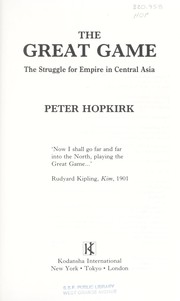
The Great Game
Describes the nineteenth-century struggle between Britain and Russia for control of Central Asia
The Gulag Archipelago
Solzhenitsyn spent eleven years in labour camps and in exile. This book is his masterwork, based on his own experiences as well as the te...
Gulag: A History
Rating: 4.5/5 from 6 Google Books ratings
First published 2003. Subjects: Politics and government, Concentration camps, Prisons, Forced labor, History.

The House of Government: A Saga of the Russian Revolution
First published 2017. Subjects: Communists, Apartment dwellers, State-sponsored terrorism, Buildings, structures, Victims of state-sponso...
eBay marketplace picks
Marketplace Samples
Live-tested eBay searches with available results related to this page.
Selected fromhistoric prison poster oneBay.co.uk.
Endnotes
1.
Source: bukharamuseums.uz
Link:https://www.bukharamuseums.uz/uz/katalog/item/zindan
Source snippet
БУХОРО ДАВЛАТ МУЗЕЙ-ҚЎРИҚХОНАСИ...
2.
Source: uzbekistan.travel
Title: Travel| Uzbekistan Travel
Link:https://uzbekistan.travel/en/o/museum-victims-repressions/
3.
Source: Wikipedia
Title: Museum of Victims of Political Repression in Tashkent
Link:https://en.wikipedia.org/wiki/Museum_of_Victims_of_Political_Repression_in_Tashkent
4.
Source: uzbekistan.travel
Title: muzej pamyati zhertv repressij
Link:https://uzbekistan.travel/ru/o/muzej-pamyati-zhertv-repressij/
5.
Source: uzbekistan.travel
Link:https://uzbekistan.travel/tr/o/siyasi-baski-kurbanlari-devlet-muzesi/
6.
Source: uzbekistan.travel
Link:https://uzbekistan.travel/fr/o/le-musee-national-la-memoire-des-victimes-de-la-repression/
7.
Source: uzbekistan.travel
Title: historical memory keepers
Link:https://uzbekistan.travel/en/o/historical-memory-keepers/
8.
Source: bukharamuseums.uz
Title: Bukhara State Museum-Preserve
Link:https://www.bukharamuseums.uz/ru/meropriyatiya/novosti/item/ark-eng
9.
Source: bukhara-museum.org
Title: The Bukhara museum -About Bukhara Museum
Link:https://www.bukhara-museum.org/about/
Source snippet
Since 1945, the museum has been situated in the Ark citadel, the former residence of the Bukharan emirs. And that’s where...
10.
Source: bukhara-museum.org
Link:https://www.bukhara-museum.org/information/contact-information/
11.
Source: history-museum.uz
Link:https://history-museum.uz/site/about
Additional References
12.
Source: buxdu.uz
Title: Museum of Repression Victims | BSU-Bukhara State University
Link:https://buxdu.uz/en/19-other-sections/98/98-museum-of-repression-victims/
Source snippet
March 13, 2025 — MUSEUM * Home * Museum * Museum of Repression Victims Image: buxdu.uz-Buxoro Davlat Universiteti O‘qituvchi KHAMRAEV AZA...
Published: March 13, 2025
13.
Source: buxdu.uz
Title: Museum of Repression Victims | BSU-Bukhara State University
Link:https://buxdu.uz/en/166-museum/98/museum-of-repression-victims/
Source snippet
Home 2. Museum 3. Museum of Repression Victims MUSEUM OF REPRESSION VICTIMS 13.03.2025 According to Resolution No. 936 of the Cabinet of...
14.
Source: buxdu.uz
Title: Museum opening | BSU-Bukhara State University
Link:https://buxdu.uz/en/166-muzey/8135/8135-museum-opening/
Source snippet
December 9, 2025 — MUSEUM * Home * Museum * Museum opening Image: buxdu.uz-Buxoro Davlat Universiteti Image: buxdu.uz-Buxoro Davlat Unive...
Published: December 9, 2025
15.
Source: gov.uz
Title: Image: THE MUSEUM OF “MEMORIAL OF REPRESSI
Link:https://gov.uz/en/jizzax/news/view/24008
Source snippet
THE MUSEUM OF "MEMORIAL OF REPRESSION VICTIMS"October 10, 2024 — THE MUSEUM OF "MEMORIAL OF REPRESSION VICTIMS" 2024-10-10 09:45:00 / NEW...
Published: October 10, 2024
16.
Source: youtube.com
Title: Ark of Bukhara -Learn facts and explore the iconic citadel built in 5th century!
Link:https://www.youtube.com/watch?v=0Bv-4cMfasM
Source snippet
The most beautiful day in Tashkent - from the historic Martyrs' Square to the tallest tower and museum...
17.
Source: youtube.com
Title: The most beautiful day in Tashkent
Link:https://www.youtube.com/watch?v=c3cuOgz-GKI
Source snippet
Tashkent, Uzbekistan's Hidden History: Earthquake, Parks & Soviet Secrets...
18.
Source: youtube.com
Title: Inside the Ark Fortress: Bukhara’s Ancient Citadel | Uzbekistan Travel Vlog 4K
Link:https://www.youtube.com/watch?v=EZvattguv1Y
Source snippet
Ark of Bukhara -Learn facts and explore the iconic citadel built in 5th century...
19.
Source: youtube.com
Title: The Best of Bukhara (Uzbekistan) – With a Dark Twist
Link:https://www.youtube.com/watch?v=-ojfnBN7au4
Source snippet
Inside the Ark Fortress: Bukhara's Ancient Citadel | Uzbekistan Travel Vlog 4K...
20.
Source: muzey-xotira.uz
Link:https://muzey-xotira.uz/en/en_about-museum/
21.
Source: urdu.uz
Link:https://www.urdu.uz/en/site/active?id=184