Where Uzbekistan Keeps Its Strangest Histories
Uzbekistan does not have a large, clearly labelled network of “weird museums” devoted to monsters, witchcraft or medical oddities.
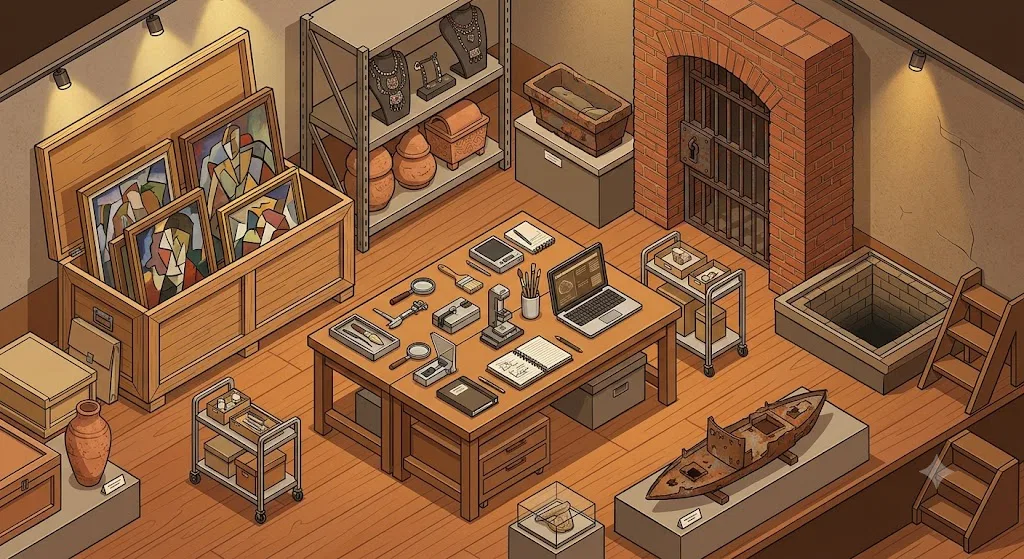
Page outline Jump by section
Introduction
The strongest destinations are therefore not novelty attractions. They are public institutions and preserved sites where unsettling histories, vanished belief systems and improbable collections meet. The Savitsky Museum in Nukus is the essential example, combining suppressed Soviet art with archaeological and ethnographic material from Karakalpakstan. Bukhara’s former prison turns judicial history into a sombre visitor experience, while Moynaq’s museum and ship graveyard preserve the physical remains of the Aral Sea disaster. Together, these places reveal how Uzbekistan displays difficult material: usually through state museums, regional heritage institutions and historic monuments rather than privately run cabinets of curiosities.
The desert museum built around forbidden art
The State Museum of Arts of Karakalpakstan in Nukus, generally known as the Savitsky Museum, is Uzbekistan’s most internationally famous unusual collection. It holds about 100,000 objects divided between visual art, Karakalpak folk art and material from ancient Khorezm. Its holdings include one of the world’s most important concentrations of twentieth-century Russian and Central Asian avant-garde painting.[Karakalpakstan]karakalpakstan.travelSavitsky MuseumSavitsky Museum - KarakalpakstanThe museum is located in the centre of Nukus. Its collection includes about 100,000 exhibit…
The collection was assembled by Igor Savitsky, an artist and collector who began working in Karakalpakstan during the Soviet period. He acquired works by painters who had been marginalised, censored or forgotten as official Soviet culture turned against experimental modernism. The familiar popular story describes him secretly rescuing forbidden art and hiding it beyond Moscow’s attention. That account captures part of the drama, but it can be overstated: Savitsky was running a public museum and worked with regional authorities, even if Nukus’s remoteness gave him unusual freedom to preserve material that would have been vulnerable elsewhere.[theguardian.com]theguardian.comThe Guardian The lost Louvre of Uzbekistan: the museum that hid artThe GuardianThe lost Louvre of Uzbekistan: the museum that hid art…May 21, 2019 — 21 May 2019 — This museum in a bleak outpost has one…
What makes the museum stranger than a conventional modern-art gallery is the collision of collections. A visitor can encounter fractured Soviet experiments in colour and form, then move into Karakalpak jewellery, textiles and ceremonial objects, followed by archaeological finds from ruined settlements in the surrounding desert. The museum’s ancient holdings include terracotta figures associated with pre-Islamic religion, containers made to hold human remains and objects recovered from the fortified landscape of Khorezm.[Karakalpakstan]karakalpakstan.travelState Museum of Arts of the Republic of Karakalpakstan…The State Museum of Arts of the Republic of Karakalpakstan named…
This combination matters. The paintings are often marketed as “forbidden art”, but the museum is also an archive of a region whose material culture has frequently been overshadowed by the better-known monuments of Samarkand, Bukhara and Khiva. Its strangeness lies not only in the art’s survival, but in the fact that such an internationally significant collection developed in Nukus, far from the Soviet Union’s main artistic centres.
The museum is active and public, although access to particular galleries can change. Recent visitor information has reported parts of the archaeological and applied-art displays closed during renovation, so travellers interested in specific objects should check the current exhibition arrangement rather than assuming the whole collection will be visible.[Caravanistan]caravanistan.comsavitsky museumIgor Savitsky Museum31 Jul 2024 — Opening hours are Tuesday to Sunday 9-18, but Thurday only closes at 19, and Saturday and S…
Ancient death customs behind museum glass
Some of Uzbekistan’s most uncanny museum objects come from the pre-Islamic cultures of Khorezm. Among the most striking are ossuaries: containers used for the cleaned bones of the dead. Examples associated with Zoroastrian funerary practice are held in the Savitsky Museum’s archaeological collection, including material connected with the desert sites around ancient Khorezm.[Karakalpakstan]karakalpakstan.travelState Museum of Arts of the Republic of Karakalpakstan…The State Museum of Arts of the Republic of Karakalpakstan named…
These objects can be misunderstood when presented simply as macabre containers. Their purpose belonged to a religious system concerned with protecting sacred elements from pollution. In some Zoroastrian traditions, a corpse was not placed directly into earth or fire. After exposure and decomposition, the remaining bones could be gathered and preserved. The surviving containers are therefore not “horror exhibits” in their original context but devotional and funerary objects.
The surrounding landscape gives them greater force. Karakalpakstan contains the remains of fortified towns, burial grounds and religious structures scattered across dry plains. One of the most visually arresting sites is the circular funerary monument at Chilpyk, commonly interpreted as a place connected with Zoroastrian exposure rites. It is an archaeological monument rather than a museum, and specific reconstructions of its use should be treated cautiously, but it helps visitors understand why bone containers and related artefacts appear in regional collections.[Condé Nast Traveler]cntraveler.comThe piece highlights the area’s tapestry of archaeology, architecture, and craft, such as woodworking, ceramics, and yurt-making, that su…
Uzbekistan’s museum stores also preserve amulet cases once worn by Uzbek, Tajik and Karakalpak communities. These pieces blur the modern distinction between jewellery and protective magic: decoration, status, written sacred material and belief in spiritual protection could be contained in the same object. Collections in Tashkent and Samarkand have been used in specialist research on amulets dating mainly from the late nineteenth and early twentieth centuries.[Národní muzeum]publikace.nm.czOpen source on nm.cz.
Visitors should not expect a dedicated national museum of magic. Such objects usually appear within applied-art, ethnographic or regional-history displays, where their protective or ritual functions may receive less attention than their craftsmanship. They remain important evidence that Uzbekistan’s unusual collections often hide in plain sight inside conventional museum categories.
Inside the Emir’s prison in Bukhara
Bukhara’s former prison is one of the country’s clearest examples of a historic site turned into a museum of punishment. Built during the era of the Emirate of Bukhara, the complex stands near the Ark fortress and now houses displays on legal and judicial history. Its surviving spaces include ordinary cells, rooms associated with debtors and punishment, and a deep brick-lined dungeon.[silkadv.com]silkadv.comZindan in BukharaZindan in Bukhara
The visitor experience is physical rather than collection-heavy. The confined rooms, thick walls and underground pit communicate imprisonment more directly than long cases of artefacts could. Displays include models or mannequins representing prisoners, as well as objects presented as instruments of confinement or punishment.[VisitSilkRoad]visitsilkroad.orgOpen source on visitsilkroad.org.
That theatrical element requires a little caution. Figures staged in cells can create an immediate, memorable impression, but they are reconstructions rather than untouched scenes. The most credible part of the museum is the building itself and its documented function within the Emirate’s justice system. Individual stories about torture or particularly notorious prisoners may be repeated by guides and tourist sources without equally strong documentation.
The prison is nevertheless more than a gloomy attraction. It reveals how political authority operated in pre-Soviet Bukhara and how later museum interpretation has converted a place of fear into a heritage stop. Unlike commercial “dungeon experiences” in some European cities, it remains primarily a historic monument with a modest museum presentation. Most visits are relatively short, but the site works best when seen alongside the Ark, where government, courtly life and punishment can be understood as parts of the same political system.

Political repression as a national memory display
Tashkent’s Museum of Victims of Repression addresses a more recent system of imprisonment and state violence. Opened in 2002, it stands within a memorial complex near the Tashkent television tower and commemorates people persecuted under Russian imperial and Soviet rule, particularly during Stalinist repression. Its displays use photographs, documents, personal possessions, prison imagery and models of detention sites.[Uzbekistan Travel]uzbekistan.travelmuseum victims repressionsmuseum victims repressions
This is an official state museum, not a preserved prison. Its atmosphere comes from accumulated evidence: portraits of the arrested, records of destroyed careers, stories of execution or exile and representations of the machinery used to transport and confine prisoners. A prison vehicle is among the museum’s most frequently noted exhibits, while models evoke camps and cells that cannot be visited directly.[Wikipedia]WikipediaMuseum of Victims of Political Repression in TashkentMuseum of Victims of Political Repression in Tashkent
The museum is unusual because it places archival material about terror inside an ornate national memorial setting. It does not aim for the raw appearance of an abandoned detention centre. Instead, suffering is organised into a formal story of martyrdom, national independence and resistance to outside domination.
That framing is important when judging the interpretation. The persecution documented by the museum is real and extensively supported by historical records, but memory museums also reflect the political priorities of the period in which they are founded. Scholars studying post-Soviet commemoration in Uzbekistan have therefore examined not only whom the museum remembers, but how repression is incorporated into a modern national narrative. The displays should be read both as evidence about state violence and as an example of how independent Uzbekistan publicly interprets its twentieth-century past.
Moynaq’s stranded ships and museum of a vanished sea
Moynaq offers Uzbekistan’s most powerful open-air collection of modern ruins. The town once stood beside the Aral Sea and supported a fishing and fish-processing economy. As Soviet irrigation projects diverted the rivers feeding the sea, the water withdrew, leaving former harbour areas surrounded by desert.
A group of rusting fishing vessels now rests below the town’s memorial viewpoint. Often called a ship graveyard, it is partly a curated landscape rather than a completely untouched accident: several vessels were gathered into a more concentrated display area. Nearby, the Regional History and Aral Sea Museum uses photographs, paintings and local material to show Moynaq before and after the environmental collapse.[uzbek-travel.com]uzbek-travel.comOpen source on uzbek-travel.com.
The result sits uneasily between museum, memorial and disaster-tourism attraction. Visitors can walk among the hulls, climb the former shoreline and look across sand where water once stretched towards the horizon. The scene is visually dramatic, but reducing it to an “eerie ship cemetery” misses its human meaning. The exhibits record the loss of employment, food production, local identity and a whole relationship with the sea.
The site’s credibility rests on this combination of physical remains and documented change. The ships are not mythical objects, artistic installations or fabricated ruins. They are industrial artefacts displaced by an environmental catastrophe. Yet tourism inevitably changes their meaning: vessels once used for work are now arranged, photographed and marketed as symbols of ecological failure.
Moynaq is remote, and museum opening arrangements can be less predictable than at major institutions in Tashkent or Samarkand. The outdoor ships are the most continuously accessible element, but travellers should verify local hours before relying on access to the indoor museum.
Locomotives, machines and Soviet technological spectacle
Tashkent’s Museum of Railway Equipment is a less sombre but equally distinctive collection. Opened in 1989 to mark a century of railway development in the region, it displays steam locomotives, diesel engines, carriages and engineering equipment outdoors near the city’s main railway station.[Advantour]advantour.comOpen source on advantour.com.
Its appeal comes from scale and proximity. Rather than viewing miniature models behind glass, visitors move among full-sized machines built to cross the Soviet Union’s immense distances. The museum has the atmosphere of an organised locomotive yard, making it especially appealing to industrial-history enthusiasts and families.
The collection also exposes a neglected side of Silk Road tourism. Uzbekistan is usually presented through caravans, tiled monuments and medieval trade, but the railway transformed movement across Central Asia just as decisively. These engines represent the industrial systems that connected cotton-producing regions, military centres and Soviet cities.
Beyond the museum world, Uzbekistan preserves one of the region’s most extraordinary examples of scientific architecture: the giant solar furnace near Parkent. An array of mirrors concentrates sunlight onto a vast reflector, producing temperatures above 3,000°C for materials research. The complex has recently been presented internationally as a major work of late-Soviet design and engineering. It is a functioning research site rather than a conventional museum, so public access should never be assumed, but it belongs to the same landscape of technological curiosities as Tashkent’s locomotives and space-age modernist buildings.[Wallpaper*]wallpaper.com*Jump on our tour of modernist architecture in Tashkent, UzbekistanThe article highlights ten iconic modernist structures that exemplify late-Soviet ambition fused with Uzbek cultural elements. These incl…
What Uzbekistan’s strange collections reveal
Uzbekistan’s unusual heritage is strongest when it is not forced into the mould of a novelty museum. The country’s most memorable collections emerge from serious institutions preserving objects that survived censorship, political violence, religious change, industrial modernisation or ecological collapse.
The Savitsky Museum is the indispensable destination because it combines an extraordinary collecting story with art, archaeology and regional identity. Bukhara’s prison and Tashkent’s repression museum approach confinement from different historical and curatorial directions: one relies on an authentic building and reconstructed scenes, while the other uses archives and memorial symbolism. Moynaq turns abandoned machinery and a vanished shoreline into an environmental record. Smaller ethnographic and applied-art collections preserve amulets, funerary objects and protective jewellery whose stranger meanings may only become clear with careful interpretation.
For visitors, the main practical lesson is to look beyond museum titles. Uzbekistan’s cabinets of curiosity are dispersed across art museums, archaeological galleries, prison monuments, local-history institutions and open-air industrial sites. They are generally public and state-run rather than private or commercial, and their presentation can be uneven. Labels may emphasise national history, artistry or tourism while leaving questions of belief, provenance and political framing less fully explored. That unevenness is itself revealing: Uzbekistan’s strange-history landscape is not a manufactured trail of oddities, but a set of serious collections whose most uncanny stories survive beneath conventional categories.
Amazon book picks
Further Reading
Books and field guides related to Where Uzbekistan Keeps Its Strangest Histories. Use these as the next step if you want deeper reading beyond the article.
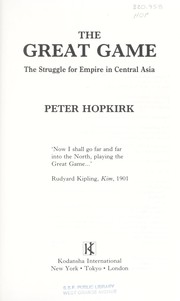
The Great Game: The Struggle for Empire in Central Asia
Describes the nineteenth-century struggle between Britain and Russia for control of Central Asia
The Silk Roads: A New History of the World
The No. 1 Sunday Times and international bestseller - a major reassessment of world history in light of the economic and political renais...

The Lost Heart of Asia
First published 1994. Subjects: Description and travel, Travel, Journeys, Thubron, Colin, 1939- -- Travel -- Asia, Central., Asia, centra...
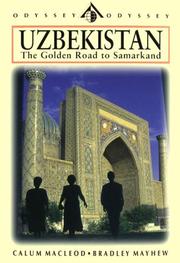
Uzbekistan: The Golden Road to Samarkand
First published 1996. Subjects: Description and travel, Uzbekistan, description and travel, Civilization, Guidebooks.
eBay marketplace picks
Marketplace Samples
Live-tested eBay searches with available results related to this page.
Selected fromUzbek art print oneBay.co.uk.

Endnotes
1.
Source: karakalpakstan.travel
Title: Savitsky Museum
Link:https://karakalpakstan.travel/museums-and-exhibitions/savitsky-museum/
Source snippet
Savitsky Museum - KarakalpakstanThe museum is located in the centre of Nukus. Its collection includes about 100,000 exhibit...
2.
Source: karakalpakstan.travel
Link:https://karakalpakstan.travel/media-and-resources/media-and-resources-31/
Source snippet
State Museum of Arts of the Republic of Karakalpakstan...The State Museum of Arts of the Republic of Karakalpakstan named...
3.
Source: visitsilkroad.org
Link:https://visitsilkroad.org/destination/nukus-savitsky-museum/
Source snippet
Nukus Savitsky MuseumThe museum also has some archaeological displays from the Ellik Kala fortresses, including Zoroastrian...
4.
Source: caravanistan.com
Title: savitsky museum
Link:https://caravanistan.com/uzbekistan/karakalpakstan/nukus/savitsky-museum/
Source snippet
Igor Savitsky Museum31 Jul 2024 — Opening hours are Tuesday to Sunday 9-18, but Thurday only closes at 19, and Saturday and S...
5.
Source: advantour.com
Link:https://www.advantour.com/uzbekistan/nukus/nukus-museum.htm
6.
Source: silkadv.com
Title: Zindan in Bukhara
Link:https://silkadv.com/en/content/zindan-0
7.
Source: Wikipedia
Title: Bukhara Prison
Link:https://en.wikipedia.org/wiki/Bukhara_Prison
8.
Source: visitsilkroad.org
Link:https://visitsilkroad.org/destination/zindon-torture-chamber/
9.
Source: uzbekistan.travel
Title: museum victims repressions
Link:https://uzbekistan.travel/en/o/museum-victims-repressions/
10.
Source: advantour.com
Link:https://www.advantour.com/uzbekistan/tashkent/museum-of-repression.htm
11.
Source: Wikipedia
Title: Museum of Victims of Political Repression in Tashkent
Link:https://en.wikipedia.org/wiki/Museum_of_Victims_of_Political_Repression_in_Tashkent
12.
Source: uzbek-travel.com
Link:https://uzbek-travel.com/about-uzbekistan/monuments/ship-cemetery/
13.
Source: advantour.com
Link:https://www.advantour.com/uzbekistan/tashkent/railway-museum.htm
14.
Source: wallpaper.com
Title: *Jump on our tour of modernist architecture in Tashkent, Uzbekistan
Link:https://www.wallpaper.com/architecture/modernist-architecture-in-uzbekistan
Source snippet
The article highlights ten iconic modernist structures that exemplify late-Soviet ambition fused with Uzbek cultural elements. These incl...
15.
Source: Wikipedia
Title: Nukus Museum of Art
Link:https://en.wikipedia.org/wiki/Nukus_Museum_of_Art
16.
Source: karakalpak.com
Link:https://www.karakalpak.com/external.html
17.
Source: uzbek-travel.com
Link:https://uzbek-travel.com/about-uzbekistan/monuments/victims-of-repressions-memorial/
18.
Source: uzbek-travel.com
Link:https://uzbek-travel.com/about-uzbekistan/monuments/savitsky-museum/
19.
Source: uzbek-travel.com
Link:https://uzbek-travel.com/about-uzbekistan/monuments/train-museum/
20.
Source: aral.uz
Link:https://aral.uz/doc/Book_Heritage_of_Karakalpakstan_UNESCOeng.pdf
21.
Source: caravanistan.com
Title: moynaq aral sea
Link:https://caravanistan.com/uzbekistan/karakalpakstan/moynaq-aral-sea/
22.
Source: theguardian.com
Title: The Guardian The lost Louvre of Uzbekistan: the museum that hid art
Link:https://www.theguardian.com/artanddesign/2019/may/21/lost-louvre-uzbekistan-savitsky-museum-banned-art-stalin
Source snippet
The GuardianThe lost Louvre of Uzbekistan: the museum that hid art...May 21, 2019 — 21 May 2019 — This museum in a bleak outpost has one...
Published: May 21, 2019
23.
Source: museumstudiesabroad.org
Title: lysenko savitsky preserving soviet avant garde
Link:https://museumstudiesabroad.org/lysenko-savitsky-preserving-soviet-avant-garde/
Source snippet
Museum Studies AbroadLysenko, Savitsky, and Preserving the Soviet Avant-Garde19 May 2024 — In the remote Nukus Museum of Uzbekistan, a va...
Published: May 2024
24.
Source: cntraveler.com
Link:https://www.cntraveler.com/story/uzbekistan-craft-heritage
Source snippet
The piece highlights the area’s tapestry of archaeology, architecture, and craft, such as woodworking, ceramics, and yurt-making, that su...
25.
Source: publikace.nm.cz
Link:https://publikace.nm.cz/en/periodicals/annals-of-the-naprstek-museum/43-1/amulet-as-jewel-jewel-as-amulet-uzbek-tajik-and-karakalpak-amulet-cases-using-the-example-of-museum-collections
26.
Source: theguardian.com
Link:https://www.theguardian.com/artanddesign/2025/apr/28/cosmic-metros-ufo-circus-tops-mesmerising-architecture-tashkent
27.
Source: tripadvisor.com
Link:https://www.tripadvisor.com/Attraction_Review-g303936-d553794-Reviews-Zindan-Bukhara_Bukhara_Province.html
28.
Source: facebook.com
Title: The Savitsky Museum
Link:https://www.facebook.com/advantour/videos/the-savitsky-museum-the-louvre-in-the-desert/1512703286676800/
29.
Source: atmoph.com
Title: museum of victims of repression
Link:https://atmoph.com/kr/views/pages/museum_of_victims_of_repression
30.
Source: frugaltravellers.com
Link:https://frugaltravellers.com/moynaq/
31.
Source: orexca.com
Link:https://www.orexca.com/uzbekistan/bukhara/zindan.htm
32.
Source: nomadsland.travel
Title: Savitsky Museum
Link:https://www.nomadsland.travel/en/before-you-go/uzbekistan/museum/savitsky-museum
Additional References
33.
Source: lithub.com
Title: visiting a secret museum in the middle of the uzbek desert
Link:https://lithub.com/visiting-a-secret-museum-in-the-middle-of-the-uzbek-desert/
Source snippet
Literary HubVisiting a Secret Museum in the Middle of the Uzbek Desert24 Jul 2018 — The world's second-largest collection of Russian avan...
34.
Source: youtube.com
Title: The Aral Sea: The Soviet Secret That Destroyed the World’s 4th Largest Lake
Link:https://www.youtube.com/watch?v=shnFHWMp2V0
Source snippet
Tashkent Railway Museum Tour 4K | Steam & Diesel Locomotives...
35.
Source: youtube.com
Title: Tashkent Railway Museum Tour 4K | Steam & Diesel Locomotives
Link:https://www.youtube.com/watch?v=fd49IRJT9Pw
Source snippet
Tashkent, Uzbekistan's Hidden History: Earthquake, Parks & Soviet Secrets...
36.
Source: youtube.com
Title: Moynaq: The Ghost Town of Uzbekistan | Exploring the World
Link:https://www.youtube.com/watch?v=N9eq_XYz6uo
Source snippet
The Aral Sea: The Soviet Secret That Destroyed the World's 4th Largest Lake...
37.
Source: youtube.com
Title: How Igor Savitsky saved art despite the Soviets Resistance
Link:https://www.youtube.com/watch?v=FTyFPNCDx0w
Source snippet
Moynaq: The Ghost Town of Uzbekistan | Exploring the World...
38.
Source: researchgate.net
Link:https://www.researchgate.net/publication/348749572_Uzbek_mythology_and_shamanism
39.
Source: tripadvisor.com
Link:https://www.tripadvisor.com/ShowUserReviews-g815335-d8338037-r490307938-The_Regional_History_and_Aral_Sea_Museum-Muynak_Republic_of_Karakalpakstan.html
40.
Source: pnrjournal.com
Link:https://www.pnrjournal.com/index.php/home/article/download/1870/1604/2317
41.
Source: facebook.com
Link:https://www.facebook.com/groups/365469836311503/posts/499382752920210/
42.
Source: tripadvisor.com
Link:https://www.tripadvisor.com/Attraction_Review-g815335-d8338037-Reviews-The_Regional_History_and_Aral_Sea_Museum-Muynak_Republic_of_Karakalpakstan.html