Where Costa Rica Keeps Its Strangest Stories
Costa Rica does not have a single famous museum of witchcraft, monsters or medical horrors.
Page outline Jump by section
Introduction
The most rewarding places therefore sit on the boundary between museum, archaeological site, scientific repository, memorial and living religious shrine. Their unusualness rarely comes from theatrical horror. It comes from contrasts: prison cells repurposed for play, enigmatic monuments placed back into archaeological context, preserved animals whose presentation belongs to an earlier museum age, and folk beliefs that remain culturally powerful without having acquired a permanent occult museum of their own.
Where Costa Rica’s strangest collections are found
Costa Rica’s principal museums are concentrated around San José and the Central Valley, but its most distinctive curiosity sites are scattered much more widely. The capital holds the strongest cluster of scientific, military and penal-history collections. Cartago offers devotional heritage centred on a reputedly miraculous image. The southern Diquís region contains the country’s best-known archaeological mystery, while Escazú preserves a reputation for healers and witches chiefly through stories, local identity and tourism rather than through a formal museum.[visitcostarica.com]visitcostarica.comVisit Costa RicaMuseums in Costa RicaThe Museum of Numismatics room boasts the largest collection worldwide of Costa Rican coins and bank…
For visitors, this means that “strange Costa Rica” is not a neat trail of commercial oddity museums. It is better understood as a group of serious institutions and living traditions that become unusual when viewed closely. Some are openly accessible attractions; others are working research or government collections whose public access may be limited, occasional or mainly digital.
The stone spheres: mystery without the fantasy
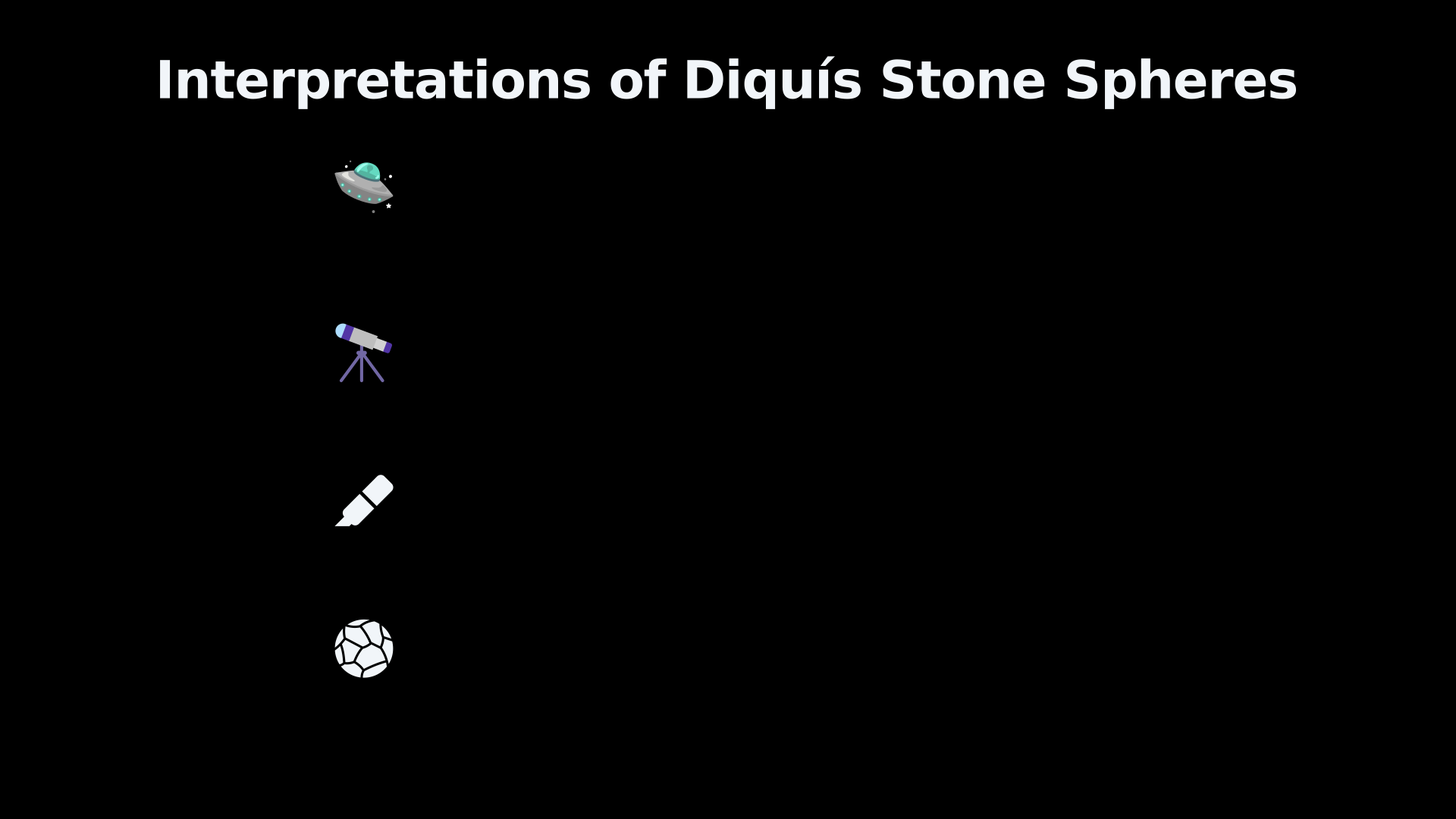
The pre-Columbian stone spheres of the Diquís are Costa Rica’s most internationally recognised archaeological curiosities. Hundreds have been recorded in the south of the country, varying greatly in size and workmanship. Their striking roundness has encouraged tales about lost civilisations, astronomical codes and even extraterrestrial involvement, but the strongest evidence places them within complex Indigenous chiefdom societies rather than any vanished super-technology.
Four archaeological areas—Finca 6, Batambal, El Silencio and Grijalba-2—were inscribed on UNESCO’s World Heritage List in 2014. Together they preserve settlements, mounds, paved areas and spheres, allowing the objects to be interpreted as parts of organised political and ceremonial landscapes rather than as isolated puzzles. Finca 6 is especially important because it retains spheres in linear arrangements in their original archaeological setting. El Silencio contains the largest single sphere so far identified.[go.cr]museocostarica.go.crworld heritage sitesMuseo Nacional de Costa RicaWorld Heritage sites4 Mar 2024 — El Silencio, Batambal, Finca 6, and Grijalba preserve stone spheres and othe…
What visitors actually see at Finca 6
Finca 6 is the clearest visitor-facing introduction to the spheres. Its museum and archaeological grounds explain the societies that made them, the damage caused when banana plantations cleared and altered sites, and the continuing work of archaeologists trying to reconstruct the original landscape. Some spheres remain in situ, which is crucial: many examples elsewhere were removed to gardens, civic spaces and private properties, stripping them of the relationships that might help explain their function.[Museo Nacional de Costa Rica]museocostarica.go.crMuseo Nacional de Costa RicaRecorra los sitios con esferas « Novedades «March 9, 2021 — 9 Mar 2021 — Finca 6, único con alineamientos de…
The mystery is real, but narrower than tourist mythology suggests. Archaeologists understand broadly who produced the spheres and the social world in which they appeared. What remains uncertain is their precise meaning in each location. They may have marked status, approaches to important structures, territorial organisation or ceremonial space. Claims that they are impossibly perfect, globally unique or proof of alien intervention go beyond the available evidence.
This restraint makes Finca 6 one of Costa Rica’s best examples of responsible mystery curation. The site does not remove all uncertainty, but it replaces vague speculation with a more interesting question: what did monumental stonework communicate inside a hierarchical Indigenous society?
La Salle and the uncanny side of natural history
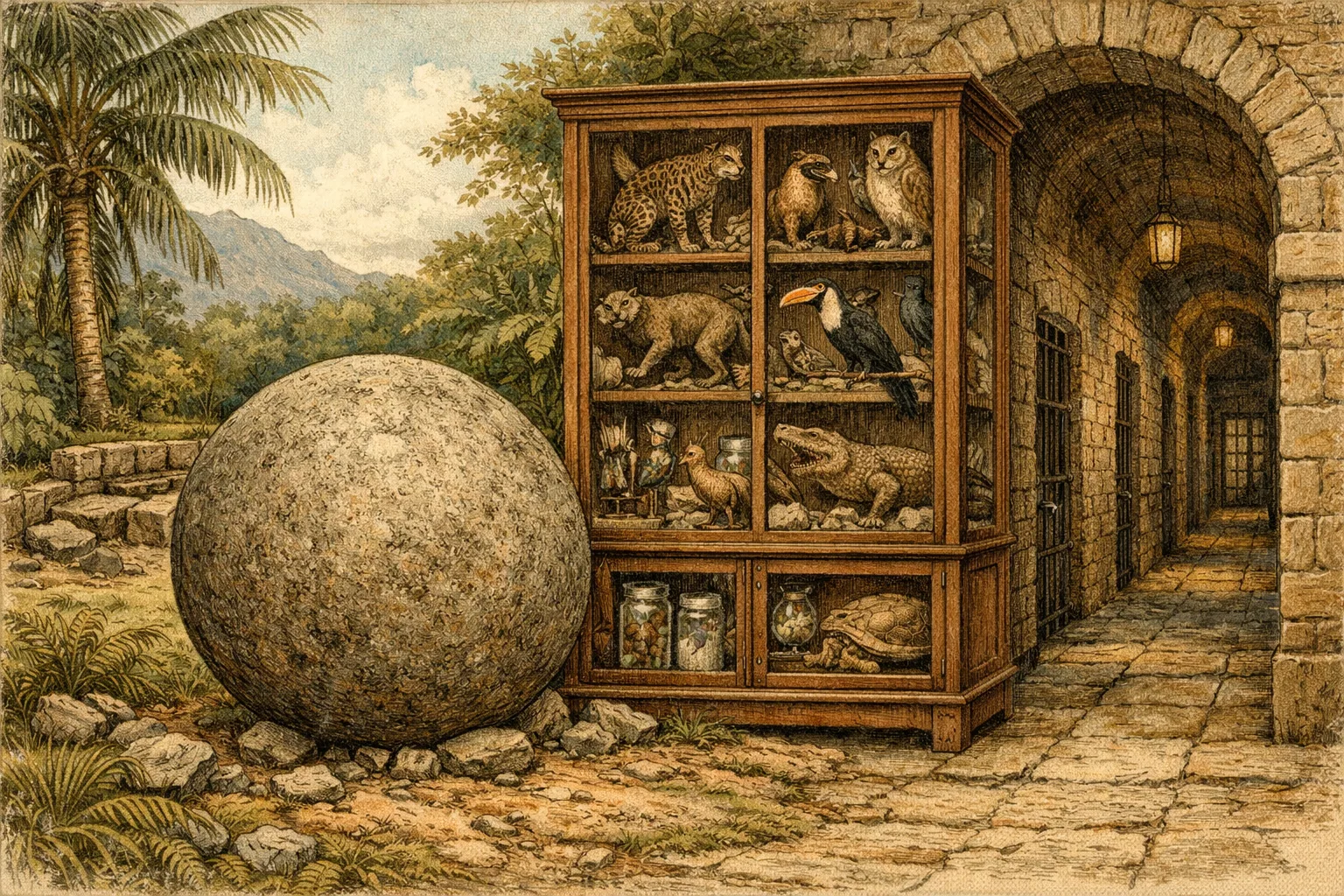
San José’s La Salle Natural Sciences Museum is probably the closest Costa Rica comes to a classic cabinet of curiosities. Its rooms contain a very large assemblage of zoological, geological and archaeological material, including extensive displays of mounted mammals, birds, reptiles, fish, shells, insects and skeletons. The institution describes itself as an active natural-science museum, while visitor guides commonly emphasise the sheer scale of its preserved-animal collection.[Museo La Salle, Costa Rica]museolasalle.ed.crOpen source on ed.cr.
What makes La Salle unusual is not merely the number of specimens. Much of the museum retains the dense, object-filled atmosphere of older natural-history displays, in which numerous animals are arranged for comparison rather than isolated within spacious modern installations. Some mounts show their age or have an awkward appearance, giving parts of the museum an unintentionally uncanny quality. That should not obscure their scientific and historical value: old taxidermy collections can preserve evidence of species distribution, collecting practices and changing ideas about how nature ought to be displayed.
The museum’s mixture of educational purpose and time-capsule presentation makes it particularly memorable. It is neither a comic “bad taxidermy” attraction nor a polished biodiversity centre designed around immersive screens. It is a substantial institutional collection whose visual language belongs partly to an earlier museum tradition. Its official website and recent public communications indicate that it remains open to visitors, although opening times and admission arrangements should be checked before travelling.[Instagram]instagram.comPhotos by Museo La Salle Costa Rica (@museolasallecrPhotos by Museo La Salle Costa Rica (@museolasallecr
A children’s museum built inside a prison
One of San José’s most dramatic museum transformations is the Costa Rican Centre of Science and Culture, whose fortress-like building formerly housed the Central Penitentiary. The prison operated for much of the twentieth century before closing in 1979. The cultural complex opened in 1994, with the Children’s Museum becoming its best-known institution.[Wikipedia]WikipediaCosta Rican Center of Science and CultureCosta Rican Center of Science and Culture
The contrast is immediately striking. A building created for confinement, surveillance and punishment now contains colourful interactive exhibits intended for exploration and play. Yet the prison history has not disappeared completely. In 2017 the complex opened a dedicated Penitentiary Museum, using 24 museum spaces to interpret the violence, deprivation and injustice experienced by former inmates, as well as the later rescue and reuse of the building.[museocr.org]museocr.orgOpen source on museocr.org.
This is more than an architectural curiosity. The site demonstrates how Costa Rica turns a difficult institution into a public lesson about social change. Families may arrive principally for science displays, but the building itself remains an artefact. Corridors, heavy walls and prison architecture give the visit a historical layer that a purpose-built children’s museum could not reproduce.
The official visitor information promotes both the interactive museum and more than a century of the former penitentiary’s heritage. Anyone interested specifically in penal history should confirm which historical areas are included in the ticket available on the day, since access, exhibitions and seasonal programming can differ across the complex.[museocr.org]museocr.orgOpen source on museocr.org.
Crime objects and the limits of public access
Costa Rica’s Judicial Investigation Department preserves a criminal museum and evidence collection associated with the custody of objects from concluded legal proceedings. The relevant office was created under the department’s 1974 organic law to receive, safeguard and dispose of evidence after cases had passed through the courts. This gives the collection a fundamentally different character from a privately assembled crime museum: its objects originated within the judicial system rather than being gathered primarily for entertainment.[sitiooij.poder-judicial.go.cr]sitiooij.poder-judicial.go.crDepósito de ObjetosDepósito de Objetos
Older tourism accounts describe a Criminology or Criminal Museum containing weapons, evidence and material connected with notable offences. The Judicial Investigation Department has also staged public museum fairs, including an event in 2016 that attracted thousands of visitors. However, current public-facing information is less straightforward than those older travel descriptions imply. The department maintains an official virtual museum, while its evidence and criminal-museum office is also a working administrative unit.[sitiooij.poder-judicial.go.cr]sitiooij.poder-judicial.go.crMuseo VirtualMuseo Virtual
Visitors should therefore not assume that this operates like a normal walk-in attraction with guaranteed daily galleries. The official virtual museum is the most dependable public entry point. Any physical visit should be arranged or verified directly with the judicial authorities.
The collection matters because it raises questions that commercial crime museums often avoid. Who owns an object once used as court evidence? When does it become heritage? How should institutions display material connected with victims without reducing real violence to spectacle? Its governmental setting makes those questions more visible, even when physical access is restricted.
Barracks, bullet marks and national memory
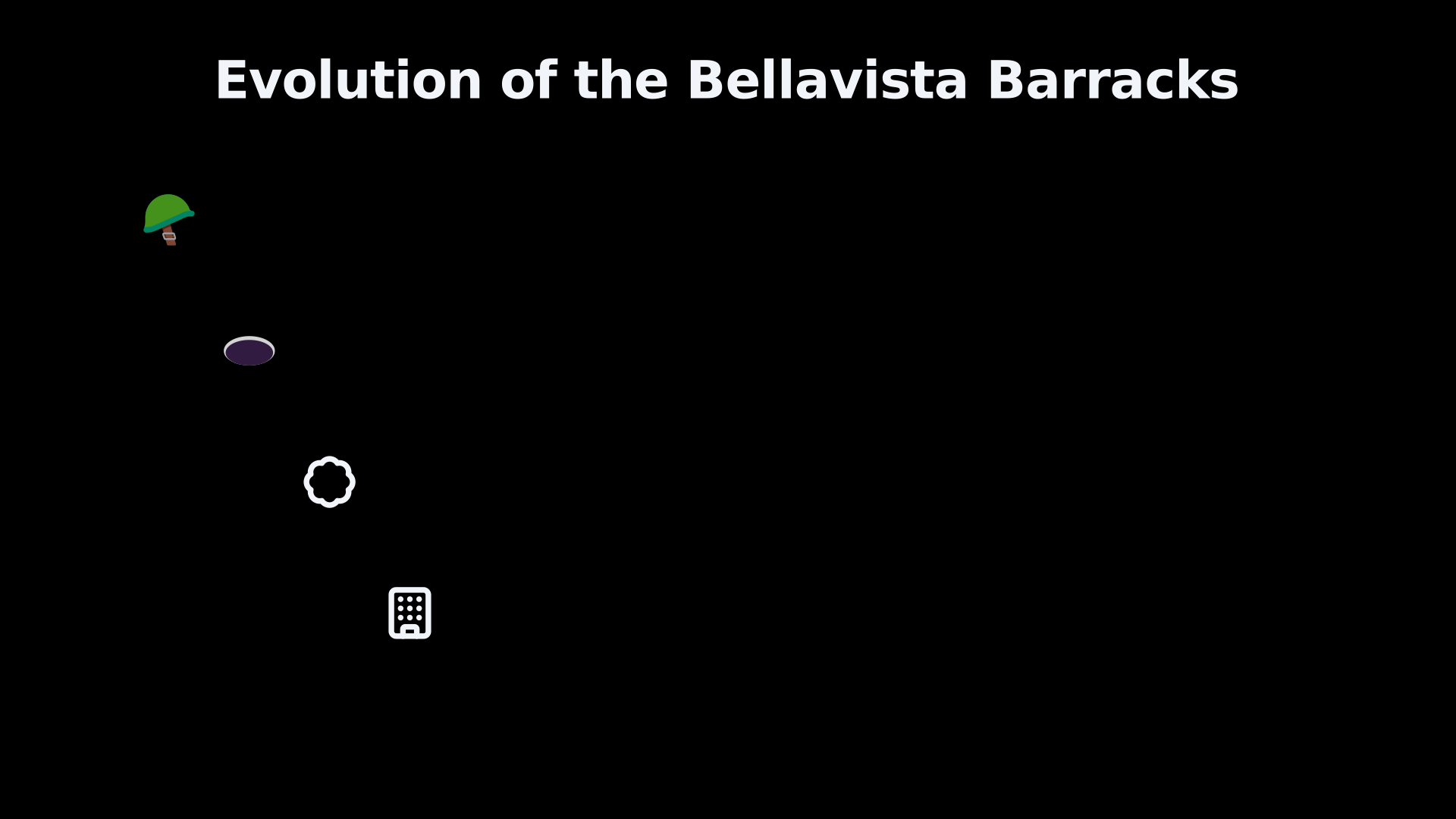
The National Museum of Costa Rica occupies the former Bellavista military barracks in San José. The building’s martial appearance already makes it an unusual home for archaeological, historical and natural collections, but its most evocative features are the physical traces of political violence. Bullet impacts associated with armed confrontations, particularly the 1948 civil war, have been preserved in parts of the structure.
These marks are not incidental decoration. Research on the building’s conversion has described controversy over the treatment of bullet holes during restoration, including the covering of some scars connected with earlier disturbances. Public debate helped establish that such damage should be preserved as historical evidence rather than erased for architectural neatness.[ReVista]revista.drclas.harvard.edufrom barracks to museum the intersection of memory and forgettingfrom barracks to museum the intersection of memory and forgetting
The barracks became especially symbolic after Costa Rica abolished its standing army following the 1948 conflict. Turning a military stronghold into the national museum was therefore a deliberate change in meaning: a site of armed authority became a place for public history and cultural preservation. The bullet scars complicate the country’s peaceful international image by showing that demilitarisation emerged from conflict rather than from an uninterrupted national tradition.
For curiosity-minded visitors, Bellavista is less about a single bizarre exhibit than about the building as an object. Its walls preserve a contested record of coups, rebellion, civil war, restoration choices and the politics of deciding which damage a nation wishes to remember.
Devotional curiosities at Cartago
The Basilica of Our Lady of the Angels in Cartago belongs to a different kind of collection culture: the living world of pilgrimage, reputed miracles and devotional objects. Its central image is a small dark representation of the Virgin Mary and infant Jesus, traditionally said to have been discovered by a local girl and to have repeatedly returned to the place where it was found after being moved. The image, popularly known as La Negrita, became Costa Rica’s most important Marian icon.[entercostarica.com]entercostarica.comOpen source on entercostarica.com.
The basilica is not an oddity museum. It is an active sacred site, and its objects should be approached as articles of faith rather than supernatural props. Its relevance to Costa Rica’s curiosity culture lies in the material ways belief is preserved: the tiny image, the associated spring, pilgrimage practices and offerings made in gratitude for favours or healing.
Such offerings—often called ex-votos in museum and religious studies—turn personal experiences into physical records. Miniature body parts, written testimonies, medals and other tokens can represent illnesses survived, dangers escaped or prayers believed to have been answered. Their value is not dependent on scientifically proving a miracle. As a collection, they document what people feared, hoped for and understood as divine intervention.
The annual pilgrimage around 2 August draws large numbers of worshippers to Cartago. Visitors interested in unusual religious collections should remember that the basilica’s primary purpose is devotional. Behaviour appropriate to a church and pilgrimage shrine matters more than the expectations applied to a conventional museum.[Wikipedia]WikipediaBasilica of Our Lady of the Angels, CartagoBasilica of Our Lady of the Angels, Cartago
Escazú’s witches: a tradition without a museum
Escazú, now part of the greater San José urban area, is widely known as Costa Rica’s “city of witches”. The reputation is usually connected with folk healers, herbal practitioners and people believed capable of curing illness, protecting clients from curses, locating stolen property or influencing relationships. Accounts also contain more conventional supernatural figures, secret gatherings and transformations into animals.[ARA Tours Costa Rica]aratours.comARA Tours Costa Rica Escazú: The Folklore GuardianARA Tours Costa Rica Escazú: The Folklore Guardian
There is an important distinction between this folklore and a documented historical witchcraft institution. Escazú does not appear to have a major permanent public museum devoted exclusively to witches. Its reputation is carried through oral tradition, local storytelling, seasonal tourism, art and civic identity. That makes it culturally significant, but it also makes individual tales difficult to verify.
Some explanations connect the “witch” label with respected healers whose knowledge was regarded with suspicion or awe. Others embellish the tradition with caves, nocturnal rituals and supernatural powers. These layers should not be flattened into a claim that Escazú was literally an organised centre of occult practice. The available evidence better supports a long-lived regional identity built around healing traditions and supernatural storytelling.
For visitors, Escazú is therefore a folklore landscape rather than a museum destination. The unusual collection is intangible: repeated tales, family memories, performances and place-based associations. It belongs naturally beside Costa Rican legends of ghostly women, frightening roadside apparitions and enchanted animals, but it should not be marketed as proven paranormal history.
Scientific collections that reward curiosity
University collections add another dimension to Costa Rica’s unusual museums. The University of Costa Rica’s Insect Museum functions as both a biodiversity repository and a public educational resource. Its work has included species identification, guided visits, workshops and public exhibition, alongside the preservation of specimens used in research.[kerwa.ucr.ac.cr]kerwa.ucr.ac.crUna fuente de diversos conocimientos entomológicosUna fuente de diversos conocimientos entomológicos
In a country celebrated for living wildlife, seeing insects arranged in drawers or display cases changes the scale of attention. Minute differences in wings, mouthparts and body form become visible when specimens are placed side by side. The result can feel like a traditional cabinet of nature, but it is anchored in taxonomy—the scientific naming and classification of organisms—rather than novelty collecting.
Costa Rica’s relationship with unusual animals also extends into popular culture. Research into velvet worms, rare invertebrates that capture prey using jets of sticky material, found a notably high level of Costa Rican artistic and folkloric references relative to population. This is a useful reminder that curiosity culture does not always require monsters. A genuine animal can be strange enough to inspire cartoons, stories, advertising and public fascination.[arXiv]arxiv.orgOpen source on arxiv.org.
Access to university museums and research collections can depend on teaching schedules, advance arrangements or guided programmes. They should be treated as academic institutions first and visitor attractions second.
What Costa Rica does not have
Claims about Costa Rican oddity museums should be approached cautiously. Search results and travel blogs sometimes repeat references to crime museums without clarifying current access, or describe archaeological spheres in language that implies an unsolved technological impossibility. Folklore attractions may also blur the difference between community tradition and documented historical practice.
There is little strong evidence for a major, continuously operating Costa Rican museum devoted specifically to UFOs, cryptids, ritual magic, mummies, anatomical pathology or manufactured hoaxes. That absence should not be disguised by stretching ordinary museums into categories they do not fit. Costa Rica’s strongest strange collections concern archaeology, natural history, imprisonment, judicial evidence, devotional practice and folklore.
This gives the country a distinctive profile. Its curiosity culture is generally institutional rather than sideshow-like, and reflective rather than sensational. Even its most mysterious objects—the Diquís spheres—are increasingly interpreted through settlement archaeology and Indigenous history. The strange element remains, but responsible curation places it within evidence.

How to explore responsibly
A practical route through Costa Rica’s unusual collections begins in San José. The La Salle Natural Sciences Museum offers the most concentrated old-style cabinet atmosphere. The former Central Penitentiary combines interactive family exhibits with a dedicated account of incarceration. The National Museum adds military architecture, bullet scars and the symbolic conversion of barracks into a cultural institution.
From the capital, Cartago provides the clearest encounter with living devotional material, while Escazú offers folklore without a formal museum framework. Travellers heading towards the southern Pacific region can make Finca 6 the centrepiece of a deeper journey into the stone-sphere landscapes.
Three distinctions improve every visit:
- Mystery is not absence of knowledge. The exact purposes of the stone spheres remain debated, but their archaeological and cultural setting is well established.
- Folklore is not failed history. Escazú’s witch stories matter because communities have preserved and reshaped them, not because every supernatural claim can be verified.
- A collection is not always an attraction. Judicial evidence stores and university repositories may have limited access because preservation, research and legal responsibilities come before tourism.
Why these collections matter
Costa Rica’s strange museums and curiosities reveal a country negotiating several versions of itself. It is internationally associated with wildlife and peace, yet its collections preserve stuffed animals, prison suffering, criminal evidence and bullet-marked walls. It promotes archaeological wonders, but its strongest institutions resist turning those wonders into pseudohistory. It has a vigorous supernatural tradition, but much of that tradition remains in stories and shrines rather than commercial horror displays.
The most memorable sites are therefore places of transformation. Stones removed as landscaping ornaments are restored to archaeological meaning. A penitentiary becomes a centre for children and science while retaining a museum of confinement. Barracks become a national museum without completely concealing their battle damage. Private petitions for healing accumulate into collective devotional memory.
Costa Rica’s curiosity culture is not primarily about collecting freakish objects. It is about preserving things whose meanings remain unsettled: objects suspended between evidence and belief, beauty and discomfort, entertainment and remembrance.
Amazon book picks
Further Reading
Books and field guides related to Where Costa Rica Keeps Its Strangest Stories. Use these as the next step if you want deeper reading beyond the article.
The Rough Guide to Costa Rica
This in-depth coverage of Costa Rica's local attractions, sights, and restaurants takes you to the most rewarding spots-from San José to...
National Geographic Traveler - Costa Rica
This dazzling, fully updated guidebook, written by a Central America travel expert, covers all the main cities, towns, and regions of Cos...
1491: New Revelations of the Americas Before Columbus
Mann shows how a new generation of researchers equipped with novel scientific techniques have come to previously unheard-of conclusions a...
National Geographic Traveler: Costa Rica
First published 2021. Subjects: America, history.
eBay marketplace picks
Marketplace Samples
Live-tested eBay searches with available results related to this page.
Selected fromCosta Rica map print oneBay.co.uk.
Endnotes
1.
Source: ticotimes.net
Title: why is escazu the city of witches
Link:https://ticotimes.net/2023/10/26/why-is-escazu-the-city-of-witches
Source snippet
Exploring Escazú: Costa Rica's Witch Town and Its Spooky...26 Oct 2023 — Known as the city of witches, Folks believed they had special p...
2.
Source: whc.unesco.org
Link:https://whc.unesco.org/en/list/1453/
Source snippet
UNESCO World Heritage CentrePrecolumbian Chiefdom Settlements with Stone Spheres of...Finca 6 is the only site retaining stone spheres i...
3.
Source: whc.unesco.org
Link:https://whc.unesco.org/en/decisions/6130/
Source snippet
UNESCO World Heritage CentreDecision 38 COM 8B.44 Precolumbian chiefdom...Finca 6 is the only site retaining stone spheres in linear arr...
4.
Source: unesco.org
Title: project young leaders diquis concludes creation youth association
Link:https://www.unesco.org/en/articles/project-young-leaders-diquis-concludes-creation-youth-association
Source snippet
The project 'Young Leaders of the Diquís' concludes with...22 Dec 2021 — Young people from southern Costa Rica have formed a youth...
5.
Source: instagram.com
Title: Photos by Museo La Salle Costa Rica (@museolasallecr)
Link:https://www.instagram.com/p/DYvKPiniQKY/
6.
Source: Wikipedia
Title: Costa Rican Center of Science and Culture
Link:https://en.wikipedia.org/wiki/Costa_Rican_Center_of_Science_and_Culture
7.
Source: museocr.org
Title: Museo de los Niños
Link:https://museocr.org/nuevo/museo_historia.php
8.
Source: museocr.org
Link:https://museocr.org/nuevo/cccc.php
9.
Source: museocr.org
Title: De la oscuridad a la luz
Link:https://museocr.org/de-la-oscuridad-a-la-luz/
10.
Source: museocr.org
Link:https://museocr.org/
11.
Source: museocr.org
Title: Tu Visita
Link:https://museocr.org/ninos/tu-visita/
12.
Source: sitiooij.poder-judicial.go.cr
Title: Depósito de Objetos
Link:https://sitiooij.poder-judicial.go.cr/index.php/oficinas/secretaria-general/deposito-de-objetos
13.
Source: sitiooij.poder-judicial.go.cr
Title: Museo Virtual
Link:https://sitiooij.poder-judicial.go.cr/index.php/institucion/historia/museo-virtual
14.
Source: sitiooij.poder-judicial.go.cr
Title: La Feria del Museo Criminal atrajo a miles de personas
Link:https://sitiooij.poder-judicial.go.cr/index.php/comunicacion/noticias/boletin-oij-actualidad-policial/item/3457-la-feria-del-museo-criminal-atrajo-a-miles-de-personas
15.
Source: entercostarica.com
Link:https://www.entercostarica.com/attractions/hidden-treasures/basilica-of-our-lady-of-angels
16.
Source: Wikipedia
Title: Basilica of Our Lady of the Angels, Cartago
Link:https://en.wikipedia.org/wiki/Basilica_of_Our_Lady_of_the_Angels%2C_Cartago
17.
Source: kerwa.ucr.ac.cr
Title: Una fuente de diversos conocimientos entomológicos
Link:https://www.kerwa.ucr.ac.cr/items/362ecbec-21c0-4fa2-a460-d764d97e85b4
18.
Source: arxiv.org
Link:https://arxiv.org/abs/1605.06706
19.
Source: Wikipedia
Title: Unusual articles
Link:https://en.wikipedia.org/wiki/Wikipedia%3AUnusual_articles
20.
Source: Wikipedia
Title: Judicial Investigation Department
Link:https://en.wikipedia.org/wiki/Judicial_Investigation_Department
21.
Source: Wikipedia
Title: Museo La Salle
Link:https://en.wikipedia.org/wiki/Museo_La_Salle
22.
Source: whc.unesco.org
Link:https://whc.unesco.org/document/152714
23.
Source: whc.unesco.org
Link:https://whc.unesco.org/en/list/1453/maps/
24.
Source: unesco.org
Link:https://www.unesco.org/en/articles/costa-rican-youth-strengthens-their-leadership-capacities-protection-and-sustainable-use-world
25.
Source: whc.unesco.org
Title: org45 COM 7B.113
Link:https://whc.unesco.org/en/decisions/8221/
26.
Source: unesco.org
Title: young people southern costa rica are trained leaders world heritage protection
Link:https://www.unesco.org/en/articles/young-people-southern-costa-rica-are-trained-leaders-world-heritage-protection
27.
Source: whc.unesco.org
Link:https://whc.unesco.org/document/217924
28.
Source: whc.unesco.org
Link:https://whc.unesco.org/uploads/nominations/1453.pdf
29.
Source: instagram.com
Title: DMA2g V u TZF
Link:https://www.instagram.com/p/DMA2gV_uTZF/?hl=en
30.
Source: instagram.com
Title: C4W7Sy SOAm H
Link:https://www.instagram.com/reel/C4W7SySOAmH/
31.
Source: instagram.com
Link:https://www.instagram.com/reel/DBAe8XaRmcu/?hl=en-gb
32.
Source: instagram.com
Link:https://www.instagram.com/p/C6_6cOWpssG/
33.
Source: museocr.org
Link:https://museocr.org/nuevo/museo_noticias.php
34.
Source: boleteria.museocr.org
Link:https://boleteria.museocr.org/
35.
Source: museocr.org
Link:https://www.museocr.org/nuevo/index.php
36.
Source: museocr.org
Title: Programas Sociales
Link:https://museocr.org/programas-sociales/
37.
Source: ucr.ac.cr
Link:https://www.ucr.ac.cr/
38.
Source: kerwa.ucr.ac.cr
Link:https://www.kerwa.ucr.ac.cr/server/api/core/bitstreams/05e321a9-7d26-44ff-a824-450a4558ace0/content
39.
Source: ucr.ac.cr
Link:https://www.ucr.ac.cr/acerca-u/campus/visitar-en-la-u.html
40.
Source: sitiooij.poder-judicial.go.cr
Title: poder-judicial.go.cr Ciencias Forenses
Link:https://sitiooij.poder-judicial.go.cr/index.php/oficinas/departamento-de-ciencias-forenses
41.
Source: sitiooij.poder-judicial.go.cr
Title: poder-judicial.go.cr Super User
Link:https://sitiooij.poder-judicial.go.cr/index.php/oficinas/departamento-de-ciencias-forenses/itemlist/user/42-superuser?start=2570
42.
Source: sitiooij.poder-judicial.go.cr
Title: poder-judicial.go.cr Unidad del Comportamiento Criminal
Link:https://sitiooij.poder-judicial.go.cr/index.php/oficinas/oficina-de-planes-y-operaciones/unidad-del-comportamiento-criminal
43.
Source: sitiooij.poder-judicial.go.cr
Title: boletin oij actualidad policial
Link:https://sitiooij.poder-judicial.go.cr/index.php/comunicacion/noticias/boletin-oij-actualidad-policial?start=680
44.
Source: sitiooij.poder-judicial.go.cr
Title: poder-judicial.go.cr Inspecciones Oculares
Link:https://sitiooij.poder-judicial.go.cr/index.php/oficinas/departamento-de-investigaciones-criminales/inspecciones-oculares
45.
Source: sitiooij.poder-judicial.go.cr
Title: poder-judicial.go.cr Patología Forense
Link:https://sitiooij.poder-judicial.go.cr/index.php/oficinas/departamento-de-medicina-legal/patologia-forense
46.
Source: sitiooij.poder-judicial.go.cr
Title: poder-judicial.go.cr Análisis Criminal
Link:https://sitiooij.poder-judicial.go.cr/index.php/oficinas/oficina-de-planes-y-operaciones/unidad-de-analisis-criminal
47.
Source: ticotimes.net
Title: visit top costa rica museums on your next trip
Link:https://ticotimes.net/2026/01/04/visit-top-costa-rica-museums-on-your-next-trip
48.
Source: ticotimes.net
Title: witches and other legends live on in escazu
Link:https://ticotimes.net/2012/01/26/witches-and-other-legends-live-on-in-escazu
49.
Source: youtube.com
Title: The Mysterious Stone Spheres of Costa Rica | Ancient Architects
Link:https://www.youtube.com/watch?v=k0Og6vqa6YY
Source snippet
National Museum of Costa Rica | Museo Nacional de Costa Rica...
50.
Source: youtube.com
Title: National Museum of Costa Rica | Museo Nacional de Costa Rica
Link:https://www.youtube.com/watch?v=Tc5OJHBMw7Y
Source snippet
The Miracle Of The Virgin Mary - Basilica De Los Angeles - Costa Rica...
51.
Source: visitcostarica.com
Link:https://www.visitcostarica.com/things-to-do/culture/museums
Source snippet
Visit Costa RicaMuseums in Costa RicaThe Museum of Numismatics room boasts the largest collection worldwide of Costa Rican coins and bank...
52.
Source: museocostarica.go.cr
Title: world heritage sites
Link:https://www.museocostarica.go.cr/jardin_relaciones-ser-humano-naturaleza/jardin_sitios-patrimonio-mundial/world-heritage-sites/
Source snippet
Museo Nacional de Costa RicaWorld Heritage sites4 Mar 2024 — El Silencio, Batambal, Finca 6, and Grijalba preserve stone spheres and othe...
53.
Source: museocostarica.go.cr
Link:https://www.museocostarica.go.cr/novedades/recorra-los-sitios-con-esferas/
Source snippet
Museo Nacional de Costa RicaRecorra los sitios con esferas « Novedades «March 9, 2021 — 9 Mar 2021 — Finca 6, único con alineamientos de...
Published: March 9, 2021
54.
Source: museolasalle.ed.cr
Link:https://www.museolasalle.ed.cr/
55.
Source: revista.drclas.harvard.edu
Title: from barracks to museum the intersection of memory and forgetting
Link:https://revista.drclas.harvard.edu/from-barracks-to-museum-the-intersection-of-memory-and-forgetting/
56.
Source: aratours.com
Title: ARA Tours Costa Rica Escazú: The Folklore Guardian
Link:https://aratours.com/en/blog/transfer-tips/541-escazu-the-folklore-guardian-2
57.
Source: revistas.ucr.ac.cr
Link:https://revistas.ucr.ac.cr/index.php/rrbt/article/download/6738/8999/38947
58.
Source: revistas.ucr.ac.cr
Link:https://revistas.ucr.ac.cr/index.php/rrbt/article/download/6735/8984/38942
59.
Source: revistas.ucr.ac.cr
Title: ucr.ac.cr Bernal Morera-Brenes
Link:https://revistas.ucr.ac.cr/index.php/rbt/article/download/19486/26912
60.
Source: revistas.ucr.ac.cr
Link:https://www.revistas.ucr.ac.cr/index.php/rbt/article/view/64701/63966
61.
Source: revistas.ucr.ac.cr
Link:https://revistas.ucr.ac.cr/index.php/rbt/article/download/64701/63965?inline=1
62.
Source: museocostarica.go.cr
Title: AI 2019 Inf 05 informe final evaluacion riesgos sitios arqueologicos pm
Link:https://www.museocostarica.go.cr/wp-content/uploads/Transparencia/Informes%7CGesti%C3%B3n/2019/auditoria/AI-2019-Inf-05-informe-final-evaluacion-riesgos-sitios-arqueologicos-pm.pdf
63.
Source: museocostarica.go.cr
Link:https://www.museocostarica.go.cr/wp-content/uploads/Investigaciones/Arqueolog%C3%ADa/Diquis/Articulos-descarga/memoria-i-congreso-iberoamericano-patrimonio-cultural-2016.pdf
64.
Source: museocostarica.go.cr
Link:https://www.museocostarica.go.cr/wp-content/uploads/Investigaciones/Arqueolog%C3%ADa/Diquis/Articulos-descarga/sitios-arqueologicos-con-esferas-2013.pdf
65.
Source: museocostarica.go.cr
Title: legado en piedra nueva exhibicion
Link:https://www.museocostarica.go.cr/novedades/noticias/legado-en-piedra-nueva-exhibicion/
66.
Source: museocostarica.go.cr
Title: documental sitios cacicales con esferas
Link:https://www.museocostarica.go.cr/novedades/documental-sitios-cacicales-con-esferas/
67.
Source: museocostarica.go.cr
Title: dia de los museos
Link:https://www.museocostarica.go.cr/novedades/dia-de-los-museos/
68.
Source: museocostarica.go.cr
Title: simposio metalurgia temprana
Link:https://www.museocostarica.go.cr/novedades/simposio-metalurgia-temprana/
69.
Source: livetheworld.com
Title: national museum of costa rica
Link:https://www.livetheworld.com/activities/costa-rica/national-museum-of-costa-rica
70.
Source: culturalheritageonline.com
Title: National Museum of Costa Rica
Link:https://culturalheritageonline.com/places/national-museum-of-costa-rica/
71.
Source: academiatica.com
Link:https://www.academiatica.com/blog/tag/history/
72.
Source: revistapanorama.com
Title: San José: A must see route
Link:https://revistapanorama.com/en/san-jose-a-must-see-route/
73.
Source: wekatabti.wordpress.com
Title: the national museum of costa rica
Link:https://wekatabti.wordpress.com/2016/01/28/the-national-museum-of-costa-rica/
Additional References
74.
Source: youtube.com
Title: Who Made the Giant Stone Spheres of Costa Rica?
Link:https://www.youtube.com/watch?v=4gbdTqhEAm8
Source snippet
The Mysterious Stone Spheres of Costa Rica | Ancient Architects...
75.
Source: atlasobscura.com
Link:https://www.atlasobscura.com/things-to-do/spain/witchcraft
76.
Source: facebook.com
Link:https://www.facebook.com/groups/2181129945608119/posts/3052621938458911/
77.
Source: travelgumbo.com
Link:https://www.travelgumbo.com/basilica-of-our-lady-of-the-angels-cartago-costa-rica/
78.
Source: joeljimenezr.com
Link:https://joeljimenezr.com/castle/
79.
Source: tripadvisor.com
Link:https://www.tripadvisor.com/Attraction_Review-g18270865-d19985967-Reviews-Criminology_Museum-San_Jose_Province_of_Alajuela.html
80.
Source: facebook.com
Link:https://www.facebook.com/manusha.dilhani.2025/posts/discover-the-stunning-basilica-of-our-lady-of-the-angels-in-cartago-costa-rica-t/122231116766364244/
81.
Source: govisitcostarica.com
Link:https://www.govisitcostarica.com/travelInfo/museums/la-salle-natural-sciences-museum.asp
82.
Source: facebook.com
Link:https://www.facebook.com/groups/costaricatravel/posts/8183091641737943/
83.
Source: reddit.com
Link:https://www.reddit.com/r/costarica/comments/1f6yy1c/la_salle_costa_ricas_capital_museum_of_natural/