Where Does Libya Keep Its Strangest Heritage?
Libya does not have a well-documented network of dedicated museums of witchcraft, cryptids, UFOs or medical oddities.
Page outline Jump by section
Introduction
The clearest starting point is Libya’s National Museum in Tripoli, reopened in December 2025 after fourteen years of closure. Beyond it, the most distinctive collections are scattered among site museums and remote heritage landscapes. Reliable visitor information remains uneven, however, and access can change with security conditions, conservation work and local administration.[reuters.com]reuters.comLibya's Red Castle museum opens for first time since fall of GaddafiManaged by the Tripoli-based Government of National Unity (GNU), the museum's renovation began in March 2023 as part of efforts to rebuil…

Where Libya’s strangest collections are found
Libya’s unusual heritage is not concentrated in a single “museum of curiosities”. It is distributed across three overlapping types of place.
First are national and regional archaeological museums, where excavated objects are arranged into a broad historical story. These include the National Museum in Tripoli and smaller institutions at Germa, Ghadames, Qasr Libya and other ancient sites. Secondly, there are museums built around the object or place itself, most strikingly the painted tomb complex at Janzur. Finally, there are vast open-air archives such as the Tadrart Acacus rock-art landscape, where the “collection” consists of images and archaeological traces preserved across cliffs, shelters and desert valleys rather than inside display cases.[livius.org]livius.orggerma archaeological museumGerma, Archaeological Museum7 Aug 2020 — Small museum with a collection of Garamantian art. Many Roman objects, documenting intensi…
This matters because a visitor searching for an eccentric attraction may otherwise overlook Libya’s real oddities. They are rarely labelled as supernatural or sensational. Their power comes from proximity to death, lost environments and difficult questions: why was a child’s body preserved thousands of years ago, what did painted tomb scenes mean to the families who commissioned them, and how should museums display human remains whose conservation has been endangered by war?
The National Museum’s ancient dead
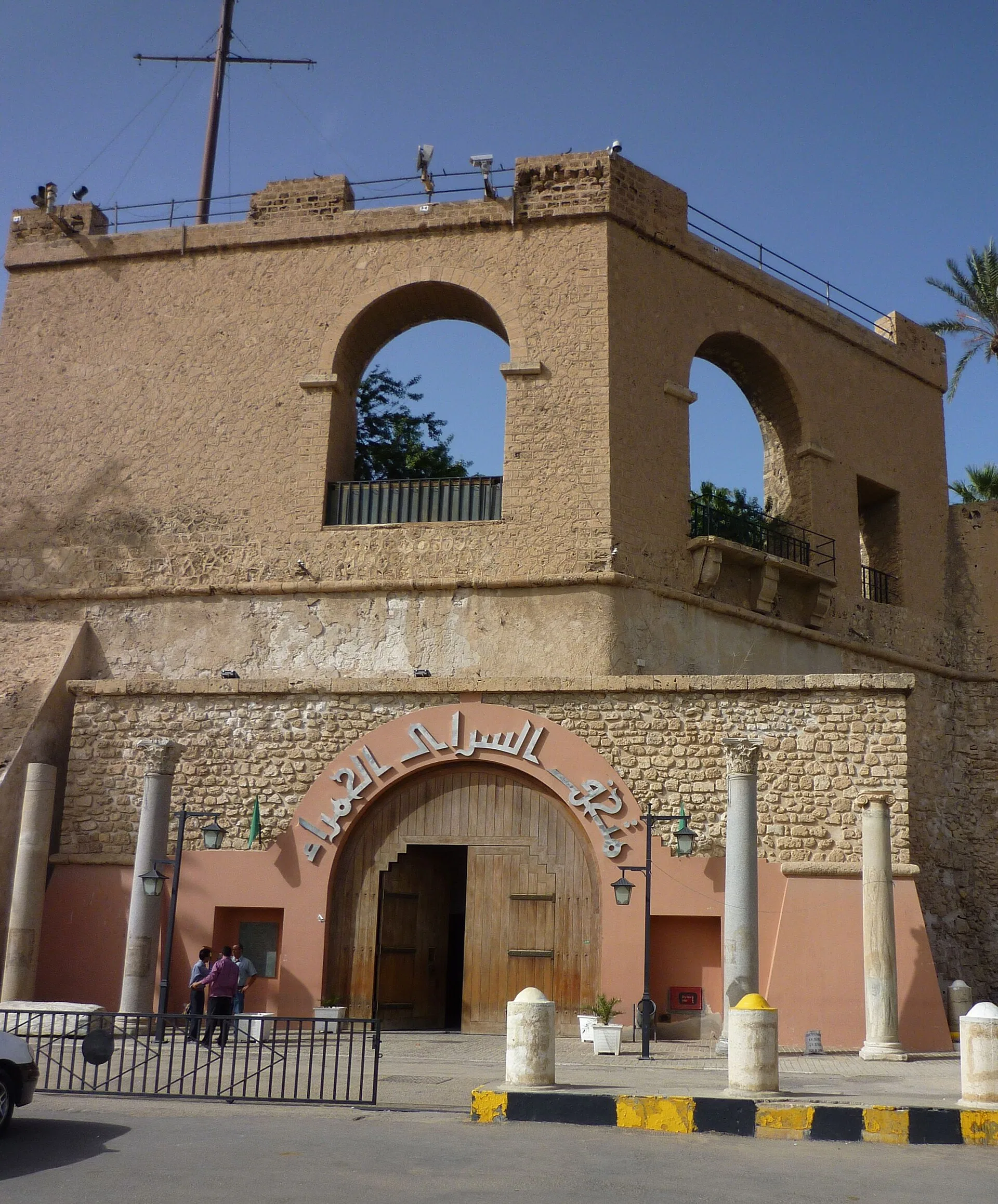
The National Museum occupies Tripoli’s Red Castle, a historic complex that has housed museum displays since the Italian colonial period. The modern institution reopened on 12 December 2025 after closing during the 2011 uprising and subsequent instability. Reports on the refurbishment describe approximately 10,000 square metres of galleries, dozens of exhibition rooms and a collection spanning prehistoric Libya, ancient Mediterranean cultures, Islamic history, natural history and the modern state. Initial access was directed towards organised school groups, with wider public opening expected to follow, so independent visitors should still verify current arrangements rather than assume ordinary daily admission.[theartnewspaper.com]theartnewspaper.comArt Newspaper Reopening of Libya's national museum celebrated as 'newArt Newspaper Reopening of Libya's national museum celebrated as 'new
Its most unusual exhibits are prehistoric mummified human remains from Libya’s desert regions. The best known is the body of a young child discovered at Uan Muhuggiag, a rock shelter in the Acacus Mountains. It is generally dated to roughly 5,400 years ago, placing it well before the best-known traditions of Egyptian artificial mummification. The remains are therefore important not because they prove that Libya “invented mummies”, but because they show that complex funerary treatment and preservation occurred among prehistoric Saharan communities with their own beliefs and practices. Archaeological work at Uan Muhuggiag and nearby sites has also contributed evidence about early pastoral societies, burial and adaptation to a Sahara that was once considerably wetter.[smithsonianmag.com]smithsonianmag.comSmithsonian Magazine Fourteen Years After Gaddafi's Fall, Libya Reopens ItsSmithsonian Magazine Fourteen Years After Gaddafi's Fall, Libya Reopens Its
The mummy is both an extraordinary object and a conservation warning. Accounts produced around the museum’s reopening reported that years of unstable electricity, inadequate storage and limited specialist resources had contributed to deterioration. That changes how the display should be understood. It is not simply a grisly showpiece; it is a fragile human body whose scientific value and dignity depend on careful temperature control, documentation and ethical interpretation.[Young Pioneer Tours]youngpioneertours.comYoung Pioneer Tours The National Museum of LibyaYoung Pioneer Tours The National Museum of Libya
The museum also presents Roman mosaics, inscriptions, sculpture, coins, weapons and objects connected with Libya’s Greek, Punic, Roman, Byzantine, Ottoman and Islamic histories. These are conventional archaeological categories, but their combination can feel like an enormous cabinet of civilisations: prehistoric burials, animal imagery, imperial portraits and domestic objects gathered from landscapes thousands of kilometres apart. The collection’s deeper oddity is geographical. It compresses Mediterranean ports, mountain cities and Saharan settlements into one national story.[dailysabah.com]dailysabah.comDaily Sabah Libya reopens national museum, showcases ancientDaily Sabah Libya reopens national museum, showcases ancient
Janzur’s museum inside a cemetery
Around ten kilometres west of central Tripoli, the Janzur Museum is one of Libya’s most distinctive small museums because it was created around an ancient burial complex. Rather than removing every significant feature to a distant gallery, the site allows visitors to encounter painted tomb chambers close to their original setting. The cemetery was discovered in the twentieth century and contains a group of tombs dating broadly from the Roman period, alongside pottery, lamps and glass vessels recovered from the burials.[livius.org]livius.orgThe burial room itself measures 2.5 x 2.2 meters; the ceiling and walls were covered with a white overlay on which the painting was added…
The main attraction is the funerary painting. Walls and ceilings were coated with plaster and decorated with scenes whose subjects include animals, hunting, domestic objects and symbolic imagery. The tombs are often loosely described as Punic, but interpretation is more complicated. Their architecture and painted decoration reflect a locally rooted society living within a region shaped by Libyan, Punic and Roman traditions. Treating them as evidence of a single, neatly bounded civilisation would flatten the cultural mixture that makes them interesting.[Livius]livius.orgThe burial room itself measures 2.5 x 2.2 meters; the ceiling and walls were covered with a white overlay on which the painting was added…
For visitors interested in death museums or funerary collections, Janzur is arguably Libya’s closest equivalent. It is not a theatrical display of skeletons or coffins. Its impact comes from standing within a family landscape of commemoration, surrounded by images chosen for the dead. The museum is archaeological and publicly oriented, but online information about opening hours is limited and often old. Access should therefore be confirmed locally.
Mosaics full of beasts, myths and marvels
The museum at Qasr Libya preserves a remarkable group of early Christian mosaics recovered from churches at the ancient settlement known in late antiquity as Theodorias. The collection is small compared with the National Museum, but unusually concentrated: floors that once formed part of sacred architecture are displayed as a dense visual catalogue of animals, plants, buildings, people, inscriptions and symbolic scenes.[Livius]livius.orgQasr Libya, MuseumQasr Libya, Museum
What makes the mosaics curious is their mixture of devotion and visual abundance. Early Christian art is sometimes imagined as austere, yet these floors teem with earthly life. Birds, fish, wild animals, architectural forms and personifications appear within ordered decorative schemes. Some images can be read through Christian symbolism; others may reflect inherited Roman artistic conventions, local landscapes or the patrons’ pleasure in representing the created world. The result resembles a stone bestiary more than a modern religious display.
The most responsible way to view the collection is not as a book of secret codes. Individual creatures can carry symbolic associations, but meanings changed across time and place, and not every animal was necessarily placed there as a theological cipher. The museum’s value lies in showing how belief, decoration and everyday observation were woven together in a late antique North African community.[Livius]livius.orgQasr Libya, MuseumQasr Libya, Museum
The desert as an open-air image archive
In south-western Libya, the Tadrart Acacus contains thousands of prehistoric rock paintings and engravings distributed through sandstone massifs, caves and shelters. UNESCO lists the landscape for the exceptional range of images recording changes in human life and environment over many millennia. Scenes include large wild animals, cattle, hunting, dancing and human figures, offering evidence of periods when the present desert supported very different ecosystems and ways of life.[UNESCO World Heritage Centre]whc.unesco.orgWorld Heritage Centre Rock-Art Sites of Tadrart AcacusUNESCO World Heritage CentreRock-Art Sites of Tadrart Acacus - UNESCO World Heritage Centre# Rock-Art Sites of Tadrart Acacus###### Rock…
For a curiosity-focused traveller, the Acacus functions like a vast, uncatalogued museum of vanished worlds. Images are encountered in the landscape that produced them, rather than detached behind glass. This makes the experience unusually immediate, but it also removes many of the protections and explanations offered by a conventional gallery. Dating, authorship and precise meaning are not always certain, while modern viewers can easily project stories of gods, aliens or lost civilisations onto images that archaeologists interpret more cautiously.
The Acacus has faced serious conservation pressures, including vandalism, insecurity, uncontrolled access and the practical difficulty of protecting art spread across a remote desert region. UNESCO continues to monitor its condition, and the site remains on the List of World Heritage in Danger. It should therefore be understood as a vulnerable archaeological archive, not an adventure playground or a source of portable souvenirs.[UNESCO World Heritage Centre]whc.unesco.orgWorld Heritage Centre Rock-Art Sites of Tadrart AcacusWorld Heritage Centre Rock-Art Sites of Tadrart Acacus
Its most important connection with Libya’s indoor museums is Uan Muhuggiag. The rock shelter’s burials and preserved human remains show that the Acacus is more than an art gallery in the wilderness. It is a combined archive of images, bodies, settlements and environmental change. Objects removed to Tripoli gain conservation and public visibility, but lose some of their relationship with the cliffs, valleys and burial places from which they came.
Germa and the forgotten Saharan kingdom
The small archaeological museum at Germa preserves material connected with the Garamantes, the society that developed towns, agriculture and long-distance trade in the Fezzan. Older descriptions of the museum emphasise locally excavated art and numerous Roman objects, evidence that this Saharan kingdom was connected to Mediterranean trade rather than sealed off from it.[Livius]livius.orggerma archaeological museumGerma, Archaeological Museum7 Aug 2020 — Small museum with a collection of Garamantian art. Many Roman objects, documenting intensi…
The Garamantes occupy an unusual position in popular history. They have sometimes been presented as mysterious desert warriors known mainly through hostile Roman writing. Archaeology has produced a more substantial picture of settlements, cemeteries, farming systems and trade networks. Germa’s museum matters because it replaces the vague romance of a “lost desert civilisation” with ordinary but revealing things: ceramics, ornaments, imported goods and funerary objects. These fragments demonstrate how urban life could be sustained in an environment often assumed to be empty.[Livius]livius.orggerma archaeological museumGerma, Archaeological Museum7 Aug 2020 — Small museum with a collection of Garamantian art. Many Roman objects, documenting intensi…
For strange-history readers, the attraction is not a single sensational artefact but the correction of an old misconception. The Sahara was crossed, cultivated and politically organised. The museum’s collections make that lost human geography visible, although dependable current information about opening and conservation conditions remains scarce.
Ghadames and the collected life of an oasis
Ghadames Museum combines archaeology, local culture and natural history associated with one of Libya’s best-known oasis towns. Published descriptions mention objects relating to the area’s Amazigh heritage, wildlife and the Roman-period settlement of Cydamus, including architectural fragments. This makes it less an oddity museum than a compact collection of everything that helped an isolated oasis community define its place in the desert.[FindTourGuide]findtourguide.comFind Tour Guide Ghadames Museum Travel GuideFind Tour Guide Ghadames Museum Travel Guide
The wider old town is just as important as the museum. Ghadames preserves an extraordinary built environment of covered passageways, pale exterior walls and richly decorated domestic interiors. Here the boundary between collection and historic setting becomes blurred: household decoration, architecture and inherited customs are better understood in preserved homes and streets than as detached objects in cases.
Ghadames also demonstrates why visitor claims require caution. Tourism pages may describe admission prices, opening patterns or particular exhibits as though they were stable, but conditions can change quickly. The old town’s removal from UNESCO’s danger list in 2025 indicated improved conservation circumstances, yet this should not be read as a guarantee that every museum space operates to a fixed international timetable.[UNESCO]unesco.orgLibya | UNESCOLast update:22 September 2025… The amount granted has enabled Libya to secure, rehabilitate and restore two local…
How credible is Libya’s curiosity culture?
Libya’s unusual collections are predominantly archaeological, academic or state-managed rather than commercial. There is little robust evidence for established public museums devoted specifically to witchcraft, occult practice, cryptids, UFOs, crime or medical deformity. Websites that imply a larger or more accessible museum circuit often rely on old entries, repeated travel copy or information gathered before the country’s prolonged instability.
The strongest attractions have identifiable excavations, collections or heritage bodies behind them:
- The National Museum is a major state institution with a broad national collection, recently renovated and reopened.
- Janzur is an archaeological site museum preserving painted tombs and funerary material.
- Qasr Libya is a specialist mosaic collection attached to an early Christian archaeological site.
- Germa and Ghadames are regional museums interpreting Saharan societies and oasis history.
- Tadrart Acacus is a protected archaeological landscape rather than a conventional museum.
Credibility does not eliminate disagreement. Labels such as “Punic tomb”, “oldest mummy” or “lost civilisation” can be useful shorthand, but they may conceal dating debates, cultural mixture or exaggerated popular claims. A good visit depends on distinguishing the physical evidence from the stories later built around it.
War, looting and the hidden collection
No account of Libya’s museums is complete without the objects that are absent. Conflict after 2011 exposed archaeological sites, storerooms and collections to theft, illicit excavation and interrupted conservation. Museum staff concealed or relocated important pieces, while international organisations supported emergency documentation, repairs and the protection of local museums and oasis heritage. Libya’s antiquities law treats archaeological objects as protected cultural property and gives state authorities powers over excavation, recording and museum display, although enforcement across remote or politically divided areas remains difficult.[unesco.org]unesdoc.unesco.orgOpen source on unesco.org.
The reopening of the National Museum was accompanied by renewed attention to repatriation. Libyan authorities reported the recovery of objects smuggled abroad and negotiations concerning further returns. These recovered pieces form an unusual collection in their own right: objects whose recent biographies include excavation, disappearance, seizure, court proceedings and eventual return. Their stories connect Libya’s museums to the international antiquities market and to wider debates about provenance—the documented history of an object’s ownership and movement.[Reuters]reuters.comLibya's Red Castle museum opens for first time since fall of GaddafiManaged by the Tripoli-based Government of National Unity (GNU), the museum's renovation began in March 2023 as part of efforts to rebuil…
This is also why apparently mysterious artefacts should be approached carefully. An object sold without a secure excavation record may be looted, misidentified or forged. Removing it from its original context destroys much of the evidence needed to understand what it was, where it belonged and whether claims made about it are credible.
What visitors should realistically expect
Libya offers genuinely unusual collections, but not a straightforward oddity-museum itinerary. The most rewarding route links Tripoli’s prehistoric and classical galleries with funerary art at Janzur, Christian mosaics in the east, oasis collections at Ghadames and Germa, and the immense rock-art landscape of the Acacus.
Practical certainty is limited. Opening information can be incomplete, websites may be outdated, photography restrictions may apply, and journeys outside major cities require careful planning. The National Museum’s reopening is a major improvement, but access elsewhere should be checked through current local cultural or tour contacts rather than assumed from an old directory entry.
The country’s strange-history landscape is ultimately defined by depth rather than spectacle. Its most memorable objects are not invented monsters or theatrical hoaxes, but a prehistoric child preserved from a greener Sahara, tomb walls painted for ancient families, church floors crowded with animals and remote cliffs carrying images made by people whose worlds have disappeared. These collections matter because they make Libya’s past feel unfamiliar without needing to make it fantastical.

Amazon book picks
Further Reading
Books and field guides related to Where Does Libya Keep Its Strangest Heritage?. Use these as the next step if you want deeper reading beyond the article.
The Oxford History of Ancient Egypt
The Oxford History of Ancient Egypt describes the emergence and development of the distinctive civilization of the ancient Egyptians, fro...

A History of Modern Libya
First published 2006. Subjects: Libya, history, Libya, politics and government, Liberia, economic conditions.
The Sahara: A Cultural History
The Sahara is the quintessence of isolation, epitomizing both remoteness and severity of environment unlike any other place on the face o...
eBay marketplace picks
Marketplace Samples
Live-tested eBay searches with available results related to this page.
Selected fromsahara art print oneBay.co.uk.


Endnotes
1.
Source: reuters.com
Title: Libya’s Red Castle museum opens for first time since fall of Gaddafi
Link:https://www.reuters.com/world/africa/libyas-red-castle-museum-opens-first-time-since-fall-gaddafi-2025-12-13/
Source snippet
Managed by the Tripoli-based Government of National Unity (GNU), the museum's renovation began in March 2023 as part of efforts to rebuil...
Published: March 2023
2.
Source: unesco.org
Link:https://www.unesco.org/en/node/184133
Source snippet
Libya | UNESCOLast update:22 September 2025... The amount granted has enabled Libya to secure, rehabilitate and restore two local...
Published: September 2025
3.
Source: livius.org
Title: germa archaeological museum
Link:https://www.livius.org/museum/germa-archaeological-museum/
Source snippet
Germa, Archaeological Museum7 Aug 2020 — Small museum with a collection of Garamantian art. Many Roman objects, documenting intensi...
4.
Source: Wikipedia
Title: Ghadames Museum
Link:https://en.wikipedia.org/wiki/Ghadames_Museum
5.
Source: livius.org
Link:https://www.livius.org/articles/place/janzur/
Source snippet
The burial room itself measures 2.5 x 2.2 meters; the ceiling and walls were covered with a white overlay on which the painting was added...
6.
Source: whc.unesco.org
Title: World Heritage Centre Rock-Art Sites of Tadrart Acacus
Link:https://whc.unesco.org/en/list/287/
Source snippet
UNESCO World Heritage CentreRock-Art Sites of Tadrart Acacus - UNESCO World Heritage Centre# Rock-Art Sites of Tadrart Acacus###### Rock...
7.
Source: cambridge.org
Title: University Press & Assessment Libyan Studies: Volume 21
Link:https://www.cambridge.org/core/journals/libyan-studies/volume/758FD13976818F4134A5BD4D81B7C3C7
8.
Source: cambridge.org
Link:https://www.cambridge.org/core/journals/libyan-studies/article/abs/cultural-landscape-and-local-knowledge-a-new-vision-of-saharan-archaeology/751879A3046F3CF24C84F330AB2DFCFD
9.
Source: temehu.com
Link:https://www.temehu.com/Cities_sites/museum-of-janzur.htm
10.
Source: Wikipedia
Link:https://en.wikipedia.org/wiki/Janzour_Museum
11.
Source: livius.org
Title: Qasr Libya, Museum
Link:https://www.livius.org/museum/qasr-libya-museum/
12.
Source: whc.unesco.org
Link:https://whc.unesco.org/document/153111
13.
Source: whc.unesco.org
Title: World Heritage Centre Rock-Art Sites of Tadrart Acacus
Link:https://whc.unesco.org/en/list/287/documents/
14.
Source: whc.unesco.org
Title: World Heritage Centre UNESCO World Heritage Centre
Link:https://whc.unesco.org/en/decisions/7650/
15.
Source: whc.unesco.org
Link:https://whc.unesco.org/document/167062
16.
Source: findtourguide.com
Title: Find Tour Guide Ghadames Museum Travel Guide
Link:https://www.findtourguide.com/destinations/libya/ghadames-3023/ghadames-museum-3817
17.
Source: unesdoc.unesco.org
Link:https://unesdoc.unesco.org/ark%3A/48223/pf0000368822
18.
Source: security-legislation.ly
Link:https://security-legislation.ly/latest-laws/law-no-3-of-1995-on-protecting-antiquities-museums-ancient-cities-and-historical-buildings/
19.
Source: whc.unesco.org
Link:https://whc.unesco.org/en/tentativelists/7013/
20.
Source: cambridge.org
Link:https://www.cambridge.org/core/journals/libyan-studies/article/abs/megalithic-architecture-and-funerary-practices-in-the-late-prehistory-of-wadi-tanezzuft-libyan-sahara/99CF0DD6D881411C1039931498E6CE22
21.
Source: cambridge.org
Link:https://www.cambridge.org/core/services/aop-cambridge-core/content/view/CC6EB5817D4229668BEAF153778B3B42/S0263718900001400a.pdf/rock-art-and-archaeological-context-the-case-of-the-tadrart-acacus-libya1.pdf
22.
Source: cambridge.org
Title: Neo-Punic Tombs near Leptis Magna | Libyan Studies | Cambridge Core
Link:https://www.cambridge.org/core/journals/libyan-studies/article/abs/neopunic-tombs-near-leptis-magna/F859F05164A15D15D98EDD3C1D62EA85
23.
Source: cambridge.org
Link:https://www.cambridge.org/core/journals/libyan-studies/article/cyrenaican-church-floor-mosaics-of-the-justinianic-period-decoration-or-meaning/4ACC41F49256FB917C0A1F5ACE2053FE
24.
Source: cambridge.org
Link:https://www.cambridge.org/core/journals/libyan-studies/article/abs/cyrenaican-church-floor-mosaics-of-the-justinianic-period-decoration-or-meaning/4ACC41F49256FB917C0A1F5ACE2053FE
25.
Source: cambridge.org
Link:https://www.cambridge.org/core/journals/libyan-studies/article/abs/janzur-anchorage-trade-industry-and-development-on-the-tripolitanian-littoral/03E9DFA17D5989BF390B3DD443226452
26.
Source: whc.unesco.org
Link:https://whc.unesco.org/en/documents/109792
27.
Source: whc.unesco.org
Link:https://whc.unesco.org/en/documents/100863
28.
Source: whc.unesco.org
Link:https://whc.unesco.org/en/statesparties/ly/documents/
29.
Source: whc.unesco.org
Link:https://whc.unesco.org/en/documents/109822
30.
Source: whc.unesco.org
Link:https://whc.unesco.org/en/documents/109842
31.
Source: whc.unesco.org
Link:https://whc.unesco.org/en/documents/109808
32.
Source: whc.unesco.org
Link:https://whc.unesco.org/en/statesparties/ly/
33.
Source: whc.unesco.org
Link:https://whc.unesco.org/en/list/287/gallery/
34.
Source: whc.unesco.org
Link:https://whc.unesco.org/en/list/287/maps/
35.
Source: whc.unesco.org
Link:https://whc.unesco.org/en/decisions/8711/
36.
Source: whc.unesco.org
Link:https://whc.unesco.org/en/decisions/8641/
37.
Source: whc.unesco.org
Link:https://whc.unesco.org/en/decisions/8707
38.
Source: whc.unesco.org
Link:https://whc.unesco.org/en/decisions/8708
39.
Source: whc.unesco.org
Link:https://whc.unesco.org/en/decisions/8709
40.
Source: whc.unesco.org
Link:https://whc.unesco.org/en/decisions/8493/
41.
Source: whc.unesco.org
Link:https://whc.unesco.org/en/decisions/8490/
42.
Source: Wikipedia
Title: Museum of Libya
Link:https://en.wikipedia.org/wiki/Museum_of_Libya
43.
Source: Wikipedia
Title: Red Castle Museum
Link:https://en.wikipedia.org/wiki/Red_Castle_Museum
44.
Source: Wikipedia
Title: Archaeology museum
Link:https://en.wikipedia.org/wiki/Archaeology_museum
45.
Source: temehu.com
Title: museums of libya
Link:https://www.temehu.com/Cities_sites/museums-of-libya.htm
46.
Source: temehu.com
Link:https://www.temehu.com/Cities_sites/museum-of-qasr-libya.htm
47.
Source: temehu.com
Link:https://www.temehu.com/Cities_sites/museum-of-germa.htm
48.
Source: temehu.com
Title: museum of conflict
Link:https://www.temehu.com/Cities_sites/museum-of-conflict.htm
49.
Source: cambridge.org
Link:https://www.cambridge.org/core/journals/international-journal-of-cultural-property/article/antiquities-trafficking-in-conflict-countries-a-crimemapping-approach/0E2A8097D346BD3B2F5C5C3CC7CFCCF0
50.
Source: archaeology.org
Title: Digs & Discoveries
Link:https://archaeology.org/issues/january-february-2012/digs-discoveries/libyas-forgotten-history/
51.
Source: newarab.com
Title: libyas national museum inside daring plan save its past
Link:https://www.newarab.com/features/libyas-national-museum-inside-daring-plan-save-its-past
Source snippet
The New ArabLibya's National Museum: Inside the daring plan to save its...12 Jan 2026 — The renovated facility now features 48 exhibitio...
52.
Source: theartnewspaper.com
Title: Art Newspaper Reopening of Libya’s national museum celebrated as ‘new
Link:https://www.theartnewspaper.com/2025/12/17/reopening-of-libyas-national-museum-celebrated-as-a-new-beginning
53.
Source: smithsonianmag.com
Title: Smithsonian Magazine Fourteen Years After Gaddafi’s Fall, Libya Reopens Its
Link:https://www.smithsonianmag.com/smart-news/fourteen-years-after-gaddafis-fall-libya-reopens-its-national-museum-to-much-fanfare-180987901/
54.
Source: youngpioneertours.com
Title: Young Pioneer Tours The National Museum of Libya
Link:https://www.youngpioneertours.com/the-national-museum-of-libya/
55.
Source: dailysabah.com
Title: Daily Sabah Libya reopens national museum, showcases ancient
Link:https://www.dailysabah.com/arts/libya-reopens-national-museum-showcases-ancient-treasures/news
56.
Source: vici.org
Link:https://vici.org/image.php?id=31307
57.
Source: bhjournal.au
Link:https://www.bhjournal.au/ojs/index.php/bhjournal/article/view/51
58.
Source: theartnewspaper.com
Title: manhattan district attorneys office returns looted statues robin symes
Link:https://www.theartnewspaper.com/2023/07/17/manhattan-district-attorneys-office-returns-looted-statues-robin-symes
Additional References
59.
Source: theguardian.com
Link:https://www.theguardian.com/world/2025/dec/16/libya-national-museum-reopens
Source snippet
Dr. Mustafa Turjman, former head of the Department of Antiquities, emphasized the museum’s unifying role, bringing together Libya's easte...
60.
Source: youtube.com
Link:https://www.youtube.com/watch?v=WUAxEdL_Ftc
Source snippet
Libya Red Castle Museum Tripoli reopened Tripoli, Libya: The Best Places to Visit (Red Castle, Old Medina, Roman Arch & Sea Views) Animat...
61.
Source: youtube.com
Title: US returns smuggled ancient artifacts to Libya
Link:https://www.youtube.com/watch?v=2Uuwr3F615Q
Source snippet
Tripoli, Libya: The Best Places to Visit (Red Castle, Old Medina, Roman Arch & Sea Views)...
62.
Source: facebook.com
Link:https://www.facebook.com/ForbesMENA.English/posts/libya-a-land-rich-in-its-ancient-history-holds-a-heritage-that-spans-across-eras/1218842256918332/
63.
Source: facebook.com
Link:https://www.facebook.com/cgtnafrica/posts/after-14-years-the-libya-national-museum-in-tripoli-has-reopened-its-doors-marki/1341608904672157/
64.
Source: instagram.com
Link:https://www.instagram.com/reel/DXXpbSPjD09/
65.
Source: facebook.com
Link:https://www.facebook.com/groups/archeologyandcivilizations/posts/2952375114855993/
66.
Source: facebook.com
Link:https://www.facebook.com/timesofmalta/posts/libyas-first-and-only-museum-of-modern-art/827840706058748/
67.
Source: facebook.com
Link:https://www.facebook.com/aljazeera/posts/libyas-national-museum-in-tripoli-has-reopened-for-the-first-time-in-more-than-a/1311639737677044/
68.
Source: ebsco.com
Link:https://www.ebsco.com/research-starters/anthropology/libyan-garamantes