Why Romania's Museums Make Ordinary Things Uncanny
Romania’s strangest collections are not gathered into one neat national “museum of the uncanny”. Instead, they are scattered across medieval pharmacies, private houses filled with thousands of spoons, painted graveyards, former political prisons, mineral displays and commercial illusion rooms.
Page outline Jump by section
Introduction
The most rewarding sites are often those that preserve ordinary objects in extraordinary numbers or settings: natural gold that resembles animals and plants, decorated eggs carrying regional symbols, pharmaceutical ingredients once associated with alchemy, and household goods from the communist period. Romania also has highly commercial attractions built around Dracula or sensory tricks, but these need to be distinguished from historically curated museums. The country’s unusual heritage is therefore less about monsters in glass cases than about the way real objects acquire supernatural, political or emotional meaning.
Where Romania’s most unusual collections are found
Romania’s offbeat museums fall broadly into four groups. Some are established public institutions with catalogued collections and professional interpretation. Others are personal collections opened by families or collectors. A third group consists of memorial sites where the building itself is the most disturbing exhibit. Finally, there are tourist-led attractions that use the language of museums while concentrating on spectacle, photography or legend.
This distinction matters because the visitor experience varies enormously. A historic pharmacy may present original containers, books and laboratory equipment with archaeological care. A spoon or egg museum may feel more intimate, with the collector’s personality still visible in the arrangement. A former prison demands time and emotional attention. A Dracula-themed display, by contrast, may deliberately mix fiction, local history and entertainment.
The Pharmacy Museum: medicine on the edge of magic
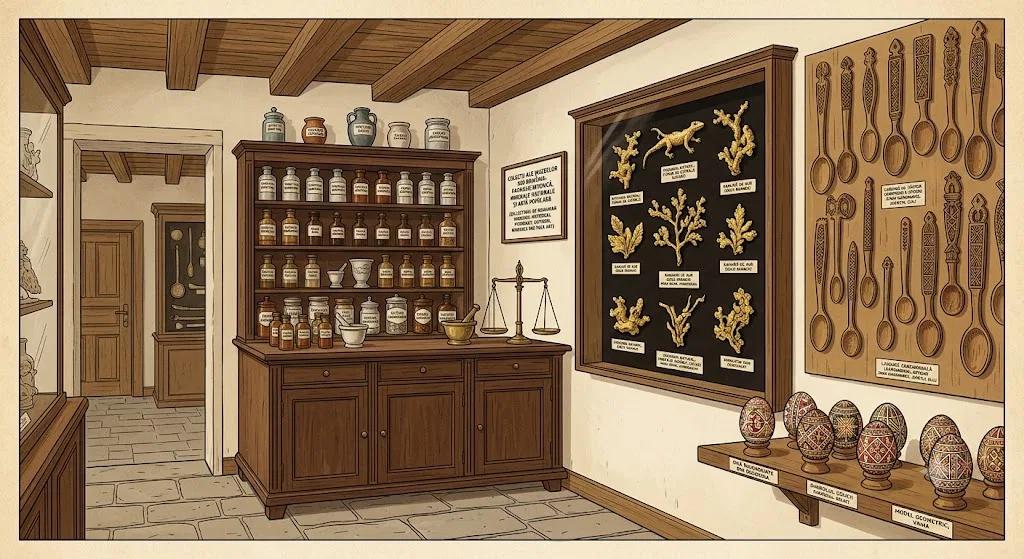
The Pharmacy Museum in Cluj-Napoca is one of Romania’s strongest examples of a collection that appears uncanny without needing invented supernatural claims. It occupies the city’s oldest documented pharmacy, in a building associated with pharmaceutical work from the sixteenth century. The National Museum of Transylvanian History describes a collection of roughly 2,500 cultural objects, including pharmaceutical vessels, laboratory equipment, documents, books and preserved medicinal materials.[MNIT]mnit.roThe collection is exhibited in the oldest pharmacy in Cluj, attested in the 16th century. The collection includes about 2500 cultural…
Visitors encounter a historical world in which medicine, chemistry and inherited remedies were not yet separated as cleanly as they are today. Mortars, balances, labelled jars and underground working spaces show how substances were processed and combined. Some objects now look like occult equipment, but the museum’s value lies precisely in resisting that easy interpretation: these were tools of professional pharmacy, even when the underlying theories of the body differed sharply from modern medicine.
The setting makes the collection more powerful than a conventional display of medical instruments. Rather than presenting old remedies in neutral cases, it reconstructs the environment in which pharmacists received customers, stored ingredients and prepared treatments. The result is part medical-history museum, part preserved workplace and part cabinet of substances whose original meanings are no longer obvious.
It is an appropriate place to think about the border between healing and magic in Transylvania. That border existed culturally, but visitors should not assume that every unfamiliar ingredient was regarded as a spell or that historical pharmacy was simply disguised witchcraft. The collection is professionally administered and is best understood as evidence of changing medical knowledge.
Gold that looks alive
The Gold Museum at Brad, in Hunedoara County, turns geology into something resembling a natural curiosity cabinet. Its defining objects are pieces of native gold: gold occurring in natural formations rather than shaped by a jeweller. Some specimens have acquired popular names because their contours resemble leaves, animals, maps or other recognisable forms.
This resemblance is the source of the museum’s unusual appeal. Visitors are not merely looking at valuable metal; they are invited to see accidental sculpture produced by geological processes. Promotional descriptions mention formations compared with lizards, flags and other figures, while the wider displays include minerals from Romania and abroad.[romaniatravel.guide]romaniatravel.guideThe gold Museum of BradGolden Museum is unique in its own way because it houses some of the most spectacular native gold exhibits such as: Dacian flag, golden l…
The collection grew from the mining culture of the Apuseni Mountains, one of Europe’s historically important gold-bearing regions. That background prevents the museum from becoming only a room of glittering oddities. The specimens also document extraction, mineral classification and local labour. Their strange shapes sit at the intersection of scientific collecting and the human tendency to recognise meaningful images in random forms.
Claims that the museum is “unique in the world” or possesses an unmatched global collection appear frequently in tourism publicity and should be treated cautiously. Its importance does not depend on a record. The real distinction is the concentration of unusually shaped natural-gold specimens within a region whose identity was deeply tied to mining.
Private collections where ordinary objects become extraordinary
Romania has a notable tradition of collectors turning a single everyday object into the organising principle of an entire museum. These places can be eccentric, but they are also serious records of craftsmanship, trade and regional identity.
The Museum of Romanian Records
The privately founded Museum of Romanian Records in Bucharest is collection culture on an industrial scale. Its holdings include tens of thousands of corkscrews and pressing irons, alongside trivets, cameras, typewriters, telephones, gramophones, calculating machines and smaller specialist collections. The institution’s own pages emphasise both the huge principal holdings and the many secondary collections preserved in the same building.[museumofromanianrecords.com]museumofromanianrecords.comTrivete si sobeMuzeul Recordurilor Româneşti®The main purpose of the trivets is to prevent contact between a heated object, like a pressing iron, and th…
The museum’s fascination comes from repetition. One corkscrew is a utensil; thousands of corkscrews reveal changes in engineering, advertising, materials, humour and drinking customs. The same is true of irons and trivets. Objects usually discarded as obsolete domestic equipment become evidence of design history when arranged in long sequences.
This is a private, collector-led institution rather than a national historical museum. Its displays favour abundance and visual comparison, although many objects also have documented dates, manufacturers or technological significance. It is best suited to visitors who enjoy typologies: seeing how countless makers solved the same small practical problem in different ways.
The Wooden Spoon Collection
In Câmpulung Moldovenesc, the collection associated with history teacher Ion Ţugui transforms the wooden spoon into a miniature ethnographic archive. Romania’s national museum directory describes more than 6,000 spoons of different sizes, uses and woods, with many local examples accompanied by pieces from abroad. It also records associated textiles, ceramics, sewing objects and coins.[Ghidul Muzeelor]ghidulmuzeelor.cimec.roGhidul MuzeelorWooden Spoon Collection "Ioan and Elisabeta Ţugui"Collection of over 6,000 wooden spoons was collected by former history t…
The spoons are unusual not because they are bizarre in themselves, but because the collection exposes how much social information can be carried by a humble tool. Shape can indicate whether a spoon was intended for cooking, eating, dairy work, ceremonial display or shepherding. Decoration reveals regional carving styles, while different woods reflect local resources and specialised knowledge.
The museum retains the atmosphere of a personal collection and is cared for through the collector’s family. That intimacy is part of its charm, but practical access may be less standardised than at a large municipal museum. Visitors should verify arrangements rather than assuming the continuous opening pattern of a major institution.
The Egg Museum at Vama
The Egg Museum in Vama, Bukovina, preserves decorated eggs from Romania and many other countries. Its official site describes it as the country’s most varied and numerous collection of dyed and ornamented eggs.[muzeuloului-vama.com]muzeuloului-vama.comOpen source on muzeuloului-vama.com.
The strongest displays are those connected to Bukovina’s Easter traditions. Patterns may draw on geometric forms, plants, Christian symbolism and the decorative vocabulary seen in regional textiles or church art. The egg is fragile, perishable and closely connected to ritual time, making its preservation in large numbers inherently unusual.
This is not an occult collection, although the symbols can invite mystical interpretations. The objects belong primarily to religious observance, domestic artistry and folk practice. Their meaning comes from technique and inherited visual language rather than from claims that they possess magical powers. The museum also demonstrates how a living custom can be commercialised for tourism without necessarily losing its local significance.
Death displayed without conventional solemnity
The Merry Cemetery at Săpânţa is not a museum in the administrative sense, but it functions as an evolving open-air collection of painted biographies. Its carved oak crosses use vivid colour, pictures and epitaphs to summarise the lives, occupations, habits and sometimes weaknesses of the dead. Tourism material describes the markers as poetic and pictorial memorials rather than anonymous grave monuments.[Romania Tourism]romaniatourism.comOpen source on romaniatourism.com.
The tradition is associated with woodcarver Stan Ioan Pătraş, who began creating the distinctive memorials in the twentieth century. Later craftspeople continued the style. The repeated blue backgrounds give the cemetery visual unity, while each cross remains an individual portrait.
Descriptions often reduce the site to “funny gravestones”, but the humour is more complicated. Some epitaphs are affectionate, some blunt and some concerned with work, drinking, family tensions, accidents or untimely death. The cemetery does not deny grief. Instead, it brings a person’s public character into the memorial landscape.
Visitors should also be cautious about repeated online claims that the cemetery is a UNESCO World Heritage Site. Such descriptions appear in tourism promotion, but the cemetery does not appear as an individual property on UNESCO’s World Heritage List. Its cultural importance is real without the need for an inaccurate badge of international designation.
Săpânţa matters within Romania’s curiosity culture because it is simultaneously sacred ground, folk-art environment, community archive and tourist attraction. Unlike a reconstructed folklore display, it remains a functioning cemetery.
Former prisons where the building is the collection
Romania’s most disturbing museums are not theatrical horror attractions. They are preserved sites of political imprisonment, interrogation and ideological violence.
Sighet Memorial
The Memorial to the Victims of Communism and of the Resistance at Sighetu Marmaţiei occupies a former prison. Its cells have been converted into themed rooms covering political repression, forced collectivisation, resistance, deportation and prison life in Romania and elsewhere in Central and Eastern Europe.[memorialsighet.ro]memorialsighet.roOpen source on memorialsighet.ro.
Here, architecture and evidence reinforce each other. Narrow cells, corridors and punishment spaces give physical scale to documents, photographs and testimony. The institution is not selling a haunted-prison experience, even though the surroundings can feel oppressive. Its purpose is commemorative, educational and archival.
Sighet is especially important because it demonstrates the difference between “dark tourism” and responsible memorialisation. The site is visitor-facing, but the suffering represented there is neither fictional nor merely atmospheric. Reports on Romania’s communist prisons have also noted the continuing struggle to preserve such buildings and to establish a fuller public reckoning with political repression.[El País]elpais.comSobrevivientes como Niculina Moica y otros activistas siguen luchando para transformar estos lugares en museos y testimonios de las atroc…
Piteşti and the limits of spectacle
The former prison at Piteşti is associated with one of the most notorious programmes of coercive “re-education” in communist Romania. Any interpretation of the site needs to prioritise victims, documentation and historical explanation over macabre detail.
Romania’s prison memorials belong in a guide to strange collections because they preserve objects, spaces and testimonies that ordinary museums cannot replicate. Yet they should not be grouped casually with optical-illusion rooms or novelty collections. Their emotional and civic function is fundamentally different.
Dracula: history, fiction and a powerful museum brand
No account of Romania’s unusual visitor culture can avoid Dracula, but the subject requires careful separation of evidence from tourism.
Bran Castle is a real medieval fortress and a genuine museum, with collections connected to its architectural and royal history. It is also internationally marketed through Count Dracula. The castle’s own visitor material now openly explores myths, horror stories and symbols alongside the building’s documented past.[Bran Castle]bran-castle.comOpen source on bran-castle.com.
The difficulty is that three different figures are routinely merged:
- Count Dracula, the fictional vampire in Bram Stoker’s 1897 novel.
- Vlad III, the fifteenth-century Wallachian ruler later known as Vlad the Impaler.
- Bran Castle, a Transylvanian fortress promoted as “Dracula’s Castle”.
The popular association is largely a product of later tourism and screen culture. The castle can therefore be read as both a historical museum and a case study in the commercial manufacture of place-based legend. Its “Dracula” identity is culturally real because millions of people recognise it, but that does not make the fictional story a historical record.
This tension has encouraged restaurants, tours, temporary horror displays and souvenir collections across Romania. Some are playful and transparent; others blur folklore, fiction and history so thoroughly that visitors may leave with less understanding than they arrived with. The best approach is to enjoy the Gothic theatre while treating claims about Vlad, vampires and particular buildings as separate questions.

Commercial museums and curated illusion
Bucharest’s Museum of Senses represents a newer type of attraction: the experience museum. Located inside the AFI Cotroceni shopping centre, it offers optical illusions, distorted rooms, mirrors and interactive installations designed for participation and photography. Its official information presents it as an all-year commercial attraction with daily opening and group or party packages.[museumofsenses.ro]museumofsenses.roMuseum of Senses BucharestMuseum of Senses Bucharest
It is unusual, but it is not a collection museum in the traditional sense. Visitors should expect staged environments rather than historically significant artefacts. Its “museum” identity rests on organised discovery and sensory demonstration, not conservation.
That distinction does not make it fraudulent. It simply places the Museum of Senses closer to an interactive science attraction or entertainment venue than to the Pharmacy Museum or Sighet Memorial. It is most appealing to families, groups and visitors seeking a playful indoor experience.
The former Romanian Kitsch Museum occupied a more analytically interesting middle ground. Opened in Bucharest in 2017, it displayed communist-era ornaments, religious objects, Dracula merchandise and other examples of taste considered excessive, sentimental or embarrassing. Contemporary reporting described objects such as a life-sized Dracula and familiar decorative products from late communist domestic life.[AP Photos]apimagesblog.comAP Photos Romanian Kitsch Museum opens in BucharestAP Photos Romanian Kitsch Museum opens in Bucharest
However, the museum is no longer a reliable current attraction. Multiple listings report that it closed indefinitely and that its former location ceased operating as a museum.[Atlas Obscura]atlasobscura.comAtlas Obscura Romanian Kitsch MuseumAtlas Obscura Romanian Kitsch Museum Its closure is worth recording because it shows how vulnerable small, personality-driven curiosity museums can be. Their collections may attract international attention yet disappear quickly when premises, ownership or funding change.
How folklore appears in Romanian museums
Romania does not appear to have a single major, permanent national museum devoted exclusively to witchcraft, vampires, cryptids or UFOs. Folklore is instead distributed across ethnographic museums, village collections, seasonal customs, religious sites and commercially themed attractions.
Large institutions such as the ASTRA museum complex at Sibiu preserve buildings, tools, workshops and domestic environments connected with traditional rural life. Although not a “weird museum”, such collections provide the material setting needed to understand beliefs about protection, illness, death, household ritual and the supernatural. Without that context, folklore is easily reduced to decorative monsters or generic witch imagery.
This dispersed model has advantages. Beliefs remain attached to textiles, houses, agricultural practice, religious calendars and family customs rather than being isolated in a sensational gallery. It also makes unusual material harder to locate. Visitors interested in charms, ritual objects or supernatural traditions may need to explore regional ethnographic displays rather than searching for a museum explicitly labelled as occult.
The same caution applies to claims about haunted forests, magical ponds and vampire graves. Such places may be important in storytelling and tourism, but they are not automatically curated collections. A legend becomes museum evidence only when its history, circulation and interpretation are documented.
What makes Romania’s curiosity culture distinctive
Romania’s most memorable strange collections rarely depend on fabricated monsters. Their power comes from scale, survival and setting.
A spoon becomes extraordinary when thousands of variations reveal regional craft. A painted egg becomes an archive of symbols. Natural gold begins to resemble sculpture. Pharmacy jars evoke an age when medicine and inherited belief occupied overlapping worlds. A prison cell preserves the physical structure of state violence. A painted grave turns a villager’s life into public folk art.
The country’s curiosity culture is also unusually divided between institutions and individuals. National and regional museums preserve archaeological, ethnographic and medical material, while private collectors build concentrated worlds around corkscrews, irons, spoons or decorated eggs. Commercial operators then repackage illusion, communism or Dracula for shorter tourist experiences.
For visitors, the most useful question is not simply whether a place is “weird”. It is what kind of truth the collection offers. Some sites preserve documented artefacts. Some preserve memory. Some continue devotional or communal practice. Others present folklore, fiction or sensory play. Romania’s strange museums become far more interesting once those categories are allowed to remain distinct.
Amazon book picks
Further Reading
Books and field guides related to Why Romania's Museums Make Ordinary Things Uncanny. Use these as the next step if you want deeper reading beyond the article.
Dracula
Presents the classic gothic horror tale of the powerful, centuries-old vampire that follows his bloodthirsty trail from the mountains of...
The Golden Bough
The work of Sir James G. Frazer (1854-1941) ranged widely across classics, cultural history, folklore and literary criticism as well as a...
Eastern Europe
This edition includes Kaliningrad for the first time, alongside Albania and Macedonia and covers all of Eastern Europe. Regional itinerar...
The Romanian: Story of an Obsession
"Rather than retreat, Benderson embarks on a wildly romantic obsession: he absorbs everything he can about Romanian culture and discovers...
eBay marketplace picks
Marketplace Samples
Live-tested eBay searches with available results related to this page.
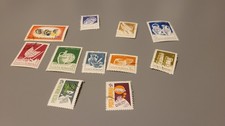
Selected fromRomanian collectible oneBay.co.uk.
Endnotes
1.
Source: mnit.ro
Link:https://mnit.ro/en/-/
Source snippet
The collection is exhibited in the oldest pharmacy in Cluj, attested in the 16th century. The collection includes about 2500 cultural...
2.
Source: romaniatravel.guide
Title: The gold Museum of Brad
Link:https://romaniatravel.guide/en/poi/museum/the-gold-museum-of-brad/46692389/
Source snippet
Golden Museum is unique in its own way because it houses some of the most spectacular native gold exhibits such as: Dacian flag, golden l...
3.
Source: museumofromanianrecords.com
Title: Trivete si sobe
Link:https://museumofromanianrecords.com/trivete-si-sobe/
Source snippet
Muzeul Recordurilor Româneşti®The main purpose of the trivets is to prevent contact between a heated object, like a pressing iron, and th...
4.
Source: museumofromanianrecords.com
Title: Other Collections
Link:https://museumofromanianrecords.com/other-collections/
Source snippet
Muzeul Recordurilor Româneşti®The Muzeul Recordurilor Româneşti is not only home to the largest collections of corkscrews, pressing irons...
5.
Source: muzeuloului-vama.com
Link:https://muzeuloului-vama.com/
6.
Source: memorialsighet.ro
Link:https://www.memorialsighet.ro/memorial-en/
7.
Source: bran-castle.com
Link:https://www.bran-castle.com/en/
8.
Source: museumofsenses.ro
Title: Museum of Senses Bucharest
Link:https://museumofsenses.ro/en/
9.
Source: romania.travel
Title: explore the carpathian garden
Link:https://www.romania.travel/uploads/downloads/Brosura_MT_engleza_comp.pdf
10.
Source: romania.travel
Title: Wow Facts
Link:https://www.romania.travel/en/category/wowfacts
11.
Source: bran-castle.com
Link:https://www.bran-castle.com/en/dracula/
12.
Source: memorialsighet.ro
Link:https://www.memorialsighet.ro/opening-hours-of-the-sighet-memorial-museum/
13.
Source: ghidulmuzeelor.cimec.ro
Link:https://ghidulmuzeelor.cimec.ro/idEN.asp?-colectia-de-linguri-de-lemn-ioan-si-elisabeta-tugui-campulung-moldovenesc-suceava=&k=2014
Source snippet
Ghidul MuzeelorWooden Spoon Collection "Ioan and Elisabeta Ţugui"Collection of over 6,000 wooden spoons was collected by former history t...
14.
Source: romaniatourism.com
Link:https://romaniatourism.com/press-sapanta-maramures-romania.html
15.
Source: elpais.com
Link:https://elpais.com/cultura/2024-10-15/los-horrores-de-las-carceles-comunistas-de-rumania-buscan-abrirse-un-hueco-en-el-patrimonio-universal-de-la-unesco.html
Source snippet
Sobrevivientes como Niculina Moica y otros activistas siguen luchando para transformar estos lugares en museos y testimonios de las atroc...
16.
Source: draculascastle.ro
Title: BRA N CASTLE
Link:https://draculascastle.ro/
17.
Source: apimagesblog.com
Title: AP Photos Romanian Kitsch Museum opens in Bucharest
Link:https://apimagesblog.com/blog/2017/5/5/romanian-kitsch-museum-opens-in-bucharest
18.
Source: atlasobscura.com
Title: Atlas Obscura Romanian Kitsch Museum
Link:https://www.atlasobscura.com/places/the-romanian-kitsch-museum-bucharest-romania
19.
Source: atlasobscura.com
Title: museum of pharmacy
Link:https://www.atlasobscura.com/places/museum-of-pharmacy
20.
Source: atlasobscura.com
Title: memorial of the victims of communism and of the resistance
Link:https://www.atlasobscura.com/places/memorial-of-the-victims-of-communism-and-of-the-resistance
21.
Source: atlasobscura.com
Title: museum of romanian records
Link:https://www.atlasobscura.com/places/museum-of-romanian-records
22.
Source: Wikipedia
Title: Merry Cemetery
Link:https://en.wikipedia.org/wiki/Merry_Cemetery
23.
Source: Wikipedia
Title: Bran Castle
Link:https://en.wikipedia.org/wiki/Bran_Castle
24.
Source: draculacastlebran.ro
Title: Bran Castle
Link:https://draculacastlebran.ro/en/
25.
Source: tripadvisor.com
Title: The Gold Museum
Link:https://www.tripadvisor.com/Attraction_Review-g3733894-d10487419-Reviews-The_Gold_Museum-Brad_Hunedoara_County_Western_Romania_Transylvania.html
26.
Source: tripadvisor.com
Title: Muzeul Oului
Link:https://www.tripadvisor.com/Attraction_Review-g1996487-d3214300-Reviews-or30-Muzeul_Oului-Vama_Suceava_County_Northeast_Romania.html
27.
Source: tripadvisor.co.uk
Title: MUSEU M OF ROMANIAN RECORDS
Link:https://www.tripadvisor.co.uk/Attraction_Review-g294458-d27978275-Reviews-Museum_Of_Romanian_Records-Bucharest.html
28.
Source: draculas-castle.com
Title: bran castle history between historical reality and dracula legends
Link:https://draculas-castle.com/bran-castle-history-between-historical-reality-and-dracula-legends/
29.
Source: cherylhoward.com
Title: romanian kitsch museum
Link:https://cherylhoward.com/romanian-kitsch-museum/
30.
Source: pipeaway.com
Title: romanian kitsch museum
Link:https://www.pipeaway.com/romanian-kitsch-museum/
31.
Source: clujtourism.ro
Title: pharmacy museum
Link:https://clujtourism.ro/en/portfolio/pharmacy-museum/
Additional References
32.
Source: theguardian.com
Link:https://www.theguardian.com/world/2014/sep/24/romania-trial-prison-camp-alexandru-visinescu
Source snippet
The case, brought forward by the Institute for the Investigation of Communist Crimes and the Memory of the Romanian Exile (IICCMER), is p...
33.
Source: gohunedoara.com
Link:https://www.gohunedoara.com/en/list/viziteaza-in-hunedoara/locuri-frumoase/brad/vizitati-muzeul-aurului-cu-o-colectie-unica-in-lume/
Source snippet
Go HunedoaraThe Museum of GoldIn addition, the Gold Museum in Brad also boasts an extremely rich mineralogical collection, with over 800...
34.
Source: youtube.com
Title: Gold Museum in Brad, Romania
Link:https://www.youtube.com/watch?v=r7c9qndjbnQ
Source snippet
Museum of Wooden Spoons Cimpulung Moldovenesc MUZEUL LINGURILOR DE LEMN (Câmpulung Moldovenesc, Bucovina, România) Lucian Ionescu...
35.
Source: youtube.com
Title: The Pharmacy History Collection
Link:https://www.youtube.com/watch?v=kDQ-tSkvomk
Source snippet
Communist Consumer Museum in Timișoara, Romania...
36.
Source: youtube.com
Title: Happy In Death? The Special Cemetery In Romania
Link:https://www.youtube.com/watch?v=YNo1UTEFTwI
Source snippet
The Pharmacy History Collection - Pharmacy Museum - Cluj-Napoca...
37.
Source: academia.edu
Link:https://www.academia.edu/288942/Myths_and_Magic_In_Romanian_Traditional_Culture
38.
Source: tripadvisor.com
Link:https://www.tripadvisor.com/Attraction_Review-g1028706-d318588-Reviews-Merry_Cemetery-Sapanta_Maramures_County_Northwest_Romania_Transylvania.html
39.
Source: bucharest-tickets.com
Link:https://www.bucharest-tickets.com/museum-of-senses/
40.
Source: getyourguide.com
Link:https://www.getyourguide.com/bucharest-l111/bucharest-museum-of-senses-entry-ticket-t494889/
41.
Source: evendo.com
Link:https://evendo.com/locations/romania/bucovina/shop/vama-egg-museum