Within Curious Comoros
Why Is Comoros Famous for the Coelacanth?
The coelacanth is a real deep-sea rarity whose rediscovery made Comorian waters central to one of zoology's greatest stories.
On this page
- From fossil mystery to living fish
- Why Comorian waters matter
- Living fossil myths and scientific reality
Page outline Jump by section
Introduction
Comoros is famous for the coelacanth because the volcanic waters around the islands transformed one of zoology’s greatest surprises into a lasting part of the country’s identity. Although the first living coelacanth recognised by modern science was discovered off South Africa in 1938, it was the repeated catches by Comorian fishers that turned an astonishing single specimen into a scientifically understood species. For decades, the archipelago became the world’s best-known place to study this elusive deep-sea fish, and preserved specimens from Comorian waters found their way into museums and research collections across the globe.[Natural History Museum]nhm.ac.ukOpen source on nhm.ac.uk.
Within Comoros’ landscape of unusual heritage, the coelacanth occupies a special place. It looks like the sort of prehistoric sea monster that belongs in folklore, yet its fame rests on careful scientific investigation rather than myth. That combination of striking appearance, genuine rarity and remarkable history makes it one of the country’s most distinctive natural curiosities.
Why did Comoros become the coelacanth’s global home?
The rediscovery of the coelacanth is often remembered as a South African story, but Comoros quickly became the centre of the next chapter. After the first specimen was identified, ichthyologist J. L. B. Smith searched unsuccessfully for another until 1952, when a fisherman from the Comoro Islands provided the crucial second specimen. Local fishers already knew the animal, catching it occasionally while fishing in deep water at night, demonstrating that the species had never vanished from local experience even though it had disappeared from scientific knowledge.[Natural History Museum]nhm.ac.ukOpen source on nhm.ac.uk.
The geography of Grande Comore explains why the islands proved so important. Steep volcanic slopes descend rapidly into deep water, allowing coelacanths to inhabit underwater lava caves only a short distance from shore. During daylight they shelter in these cool caves, emerging at night to feed. This unusual combination of volcanic geology and deep marine habitat made the Comoros the world’s principal known refuge for the West Indian Ocean coelacanth for many decades.[Natural History Museum]nhm.ac.ukOpen source on nhm.ac.uk.
Scientists estimate that only a few hundred individuals may inhabit the waters around Grande Comore, making every confirmed sighting scientifically valuable. Although additional populations have since been discovered elsewhere in the western Indian Ocean, Comoros remains the species’ historical stronghold.[Natural History Museum]nhm.ac.ukOpen source on nhm.ac.uk.
From fossil mystery to living fish
Before 1938, coelacanths were known only from fossils. The youngest fossil examples appeared to date from around the end of the age of dinosaurs, leading palaeontologists to conclude that the lineage had disappeared roughly 66–70 million years ago. The discovery of a living representative overturned one of the great assumptions of twentieth-century zoology.[Natural History Museum]nhm.ac.ukOpen source on nhm.ac.uk.
The fish soon became famous as a “living fossil”. While the phrase remains popular, scientists now use it cautiously. Modern coelacanths are not unchanged survivors from the dinosaur era. Rather, they are the last surviving members of an ancient evolutionary lineage that has persisted while many related species became extinct. They have continued to evolve, even if their overall body plan resembles much older fossil relatives.[nhm.ac.uk]nhm.ac.ukOpen source on nhm.ac.uk.
Its unusual anatomy helped fuel the excitement. Thick, fleshy paired fins resemble primitive limbs more than the fins of most modern fish, giving the animal an unmistakably prehistoric appearance. This striking form encouraged generations of museum visitors to imagine they were looking at something that had stepped directly out of deep geological time, even though the living species itself is thoroughly modern.[Smithsonian Ocean]ocean.si.eduSmithsonian Ocean Coelacanth | Smithsonian OceanSmithsonian Ocean Coelacanth | Smithsonian Ocean
Why did it acquire a sea-monster reputation?
Few real animals look as naturally mysterious as a coelacanth. Adults can exceed 1.5 metres in length, possess large armour-like scales, move with slow, deliberate fin strokes and inhabit dark volcanic caves hundreds of metres below the surface. Before underwater photography became common, almost nobody had seen one alive in its natural habitat.[Natural History Museum]nhm.ac.ukOpen source on nhm.ac.uk.
These characteristics encouraged comparisons with legendary sea monsters, especially after newspaper coverage in the mid-twentieth century celebrated the discovery as something even more extraordinary than mythical creatures such as the Loch Ness Monster. Popular culture embraced the fish’s dramatic appearance, sometimes exaggerating its mystery while overlooking the fact that it was already familiar to local Comorian fishers.[Natural History Museum]nhm.ac.ukOpen source on nhm.ac.uk.
The contrast between folklore and science is central to the coelacanth’s appeal. It resembles the sort of beast once imagined to lurk in unexplored oceans, yet every aspect of its fame comes from documented biological research rather than supernatural claims.
How museums turned the fish into a scientific icon
The scientific importance of Comorian coelacanths rapidly created an international demand for specimens. Preserved examples were distributed to major natural history museums, universities and research institutions, allowing anatomists, evolutionary biologists and palaeontologists to study a fish unlike any previously available.
In Comoros itself, the National Museum preserves a coelacanth as one of its most memorable natural-history exhibits. Rather than presenting it as a monster or curiosity alone, the display places it within the broader story of the islands’ volcanic landscape, marine environment and biodiversity. It functions both as a national symbol and as evidence of the country’s global contribution to zoological research.
Abroad, museums such as the Smithsonian Institution preserve specimens originating from Comorian waters, using them to explain extinction, evolution, deep-sea ecology and the history of scientific discovery. These collections helped transform a little-known island fish into one of the world’s most recognisable museum specimens.[Smithsonian Ocean]ocean.si.eduSmithsonian Ocean Coelacanth | Smithsonian OceanSmithsonian Ocean Coelacanth | Smithsonian Ocean

Conservation replaced collecting
The early enthusiasm for collecting specimens carried unintended consequences. Financial rewards encouraged fishermen to report or retain coelacanths, and museums, researchers and even aquariums competed to acquire examples. As scientists recognised that the population was probably small and slow to reproduce, concern grew that excessive collecting could threaten the species itself.[Natural History Museum]nhm.ac.ukOpen source on nhm.ac.uk.
Today the emphasis has shifted from acquisition to protection. The West Indian Ocean coelacanth is regarded as critically endangered, international trade is tightly controlled, and conservation efforts focus on protecting the volcanic cave habitats around the Comoros. The proposed Coelacanth Marine Park, highlighted within Comoros’ UNESCO Tentative List, reflects the species’ exceptional ecological and scientific significance alongside its cultural importance to the islands.[Natural History Museum]nhm.ac.ukOpen source on nhm.ac.uk.
Why the coelacanth still defines Comoros’ curiosity heritage
Many countries have mythical sea monsters; Comoros is unusual because its most famous “monster” is entirely real. The coelacanth occupies a space where natural history, museum collecting, evolutionary science and popular imagination overlap.
For visitors interested in unusual heritage, the fish represents something rarer than folklore. It is a genuine biological survivor whose rediscovery reshaped scientific understanding of extinction, filled museum galleries around the world with one of zoology’s most celebrated specimens and permanently linked the Comoros to one of the greatest natural-history discoveries of the twentieth century.
Amazon book picks
Further Reading
Books and field guides related to Why Is Comoros Famous for the Coelacanth?. Use these as the next step if you want deeper reading beyond the article.
A Fish Caught in Time: The Search for the Coelacanth
Tells the story of the discovery, in 1938, of a coelacanth, a fish believed to have died out with the dinosaurs, and discusses the ensuin...
The Ocean of Life: The Fate of Man and the Sea
Economist Book of the Year --Audubon Book of the Year --American Library Association Award winner – Royal Society Winton prize Finalist –...
eBay marketplace picks
Marketplace Samples
Live-tested eBay searches with available results related to this page.
Selected fromcoelacanth poster oneBay.co.uk.
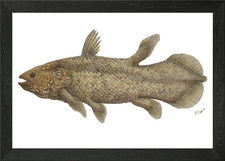
Current eBay listing
Coelacanth Latimeria Framed Wall Art Poster Canvas Print Picture
Current eBay listing
Coelacanth Watercolor Framed Wall Art Poster Canvas Print Picture
Endnotes
1.
Source: whc.unesco.org
Title: World Heritage Centre Ecosystèmes Marins de l’Archipel des Comores
Link:https://whc.unesco.org/en/tentativelists/5107/
Source snippet
UNESCO World Heritage CentreEcosystèmes Marins de l'Archipel des Comores - UNESCO World Heritage Centre...
2.
Source: whc.unesco.org
Link:https://whc.unesco.org/en/tentativelists/6974/
Source snippet
Marin de Mohéli (PMM) - UNESCO World Heritage CentreMarch 19, 2026 — PARC MARIN DE MOHÉLI (PMM) Comoros Date of Submission: 19/03/2026 Cr...
Published: March 19, 2026
3.
Source: whc.unesco.org
Link:https://whc.unesco.org/en/statesparties/km/
5.
Source: nhm.ac.uk
Link:https://www.nhm.ac.uk/discover/coelacanths-the-fish-that-outdid-the-loch-ness-monster.html
6.
Source: ocean.si.edu
Title: Smithsonian Ocean Coelacanth | Smithsonian Ocean
Link:https://ocean.si.edu/ocean-life/fish/coelacanth
7.
Source: nhm.ac.uk
Link:https://www.nhm.ac.uk/press-office/press-releases/150-year-old-museum-specimen-revealed-as-missing-link-in-evoluti.html
8.
Source: nhm.at
Title: Naturhistorisches Museum Wien
Link:https://www.nhm.at/presse/top10/coelacanth
9.
Source: si.edu
Title: Coelacanth Fish, NMNH | Smithsonian Institution
Link:https://www.si.edu/object/coelacanth-fish-nmnh%3Asiris_sic_7497
Additional References
10.
Source: nature.com
Link:https://www.nature.com/articles/s41598-025-90287-7
Source snippet
April 23, 2025 — First record of a living coelacanth from North Maluku, Indonesia Download PDF Download PDF * Article * Open access *...
Published: April 23, 2025
11.
Source: port.ac.uk
Link:https://www.port.ac.uk/news-events-and-blogs/news/150-year-old-museum-specimen-revealed-as-missing-link-in-evolution-of-ancient-fish
Source snippet
April 21, 2026 — 150-YEAR-OLD MUSEUM SPECIMEN REVEALED AS MISSING LINK IN EVOLUTION OF ANCIENT FISH Image: The fossilised specimen 21 Apr...
Published: April 21, 2026
12.
Source: nektonmission.org
Title: The fish that came back from the dead: Ceolacanth in the Comoros
Link:https://nektonmission.org/news/the-fish-that-came-back-from-the-dead-ceolacanths-in-the-comoros/
Published: October 23, 2025
13.
Source: youtube.com
Link:https://www.youtube.com/watch?v=8uJDRodDADo
Source snippet
Animated Life: The Living Fossil Fish | HHMI BioInteractive Video...
14.
Source: youtube.com
Title: Animated Life: The Living Fossil Fish | HHMI Bio Interactive Video
Link:https://www.youtube.com/watch?v=HJ3yLh_CYg4
Source snippet
The coelacanth: A living fossil of a fish - Erin Eastwood...
15.
Source: youtube.com
Title: ‘Finding Old Fourlegs’ presented by Prof Mike Bruton
Link:https://www.youtube.com/watch?v=KfHElNjbthc
Source snippet
AFCON 2025: The coelacanth, Comoros' national symbol in football and beyond...
16.
Source: youtube.com
Title: The coelacanth: A living fossil of a fish
Link:https://www.youtube.com/watch?v=ujKL1pUHDfo
Source snippet
John E. McCosker: Coelacanth | California Academy of Sciences...
17.
Source: museon-omniversum.nl
Link:https://www.museon-omniversum.nl/en/discover-at-home/coelacanth-a-living-fossil
18.
Source: mnhn.fr
Link:https://www.mnhn.fr/fr/coelacanthe
19.
Source: learningzone.oumnh.ox.ac.uk
Link:https://learningzone.oumnh.ox.ac.uk/coelacanth