Within Iraq Curiosities
Inside Iraq Museum's Strange Ancient Treasures
The Iraq Museum preserves objects that reveal how Mesopotamian societies understood protection, ritual and the unseen world.
On this page
- Ritual objects and protective beliefs
- Mythical beings and archaeological finds
- The museum's survival and collections
Page outline Jump by section
Introduction
The Iraq Museum in Baghdad is one of the world’s most important collections of ancient objects connected with humanity’s earliest ideas about gods, protection and the unseen world. It is not a “magic museum” in the modern fantasy sense, but its galleries preserve real objects that show how Mesopotamian people tried to influence forces they could not see: illness, demons, bad luck, divine judgement and spiritual danger. The museum’s treasures include ritual objects, religious images, inscriptions and archaeological finds from Sumerian, Akkadian, Babylonian, Assyrian and later Iraqi cultures.[theiraqmuseum.com]theiraqmuseum.comAbout the Museum | The Iraq MuseumAbout the Museum | The Iraq Museum
What makes these collections unusual is the way they blur boundaries between religion, medicine, folklore and early science. A carved figure, a written tablet or a small protective object was not merely decorative. For many ancient communities, words, images and rituals could create a relationship between humans and invisible powers. The Iraq Museum allows visitors to see these beliefs through physical evidence rather than later legends.[theiraqmuseum.com]theiraqmuseum.comAbout the Museum | The Iraq MuseumAbout the Museum | The Iraq Museum
Ritual objects that reveal ancient protective beliefs
Mesopotamian “magic” was not a separate activity hidden away from ordinary life. It was closely connected with religion, healing and attempts to maintain order in a dangerous world. People used rituals and objects because they believed the correct words, symbols and ceremonies could restore balance when sickness, misfortune or supernatural threats appeared.
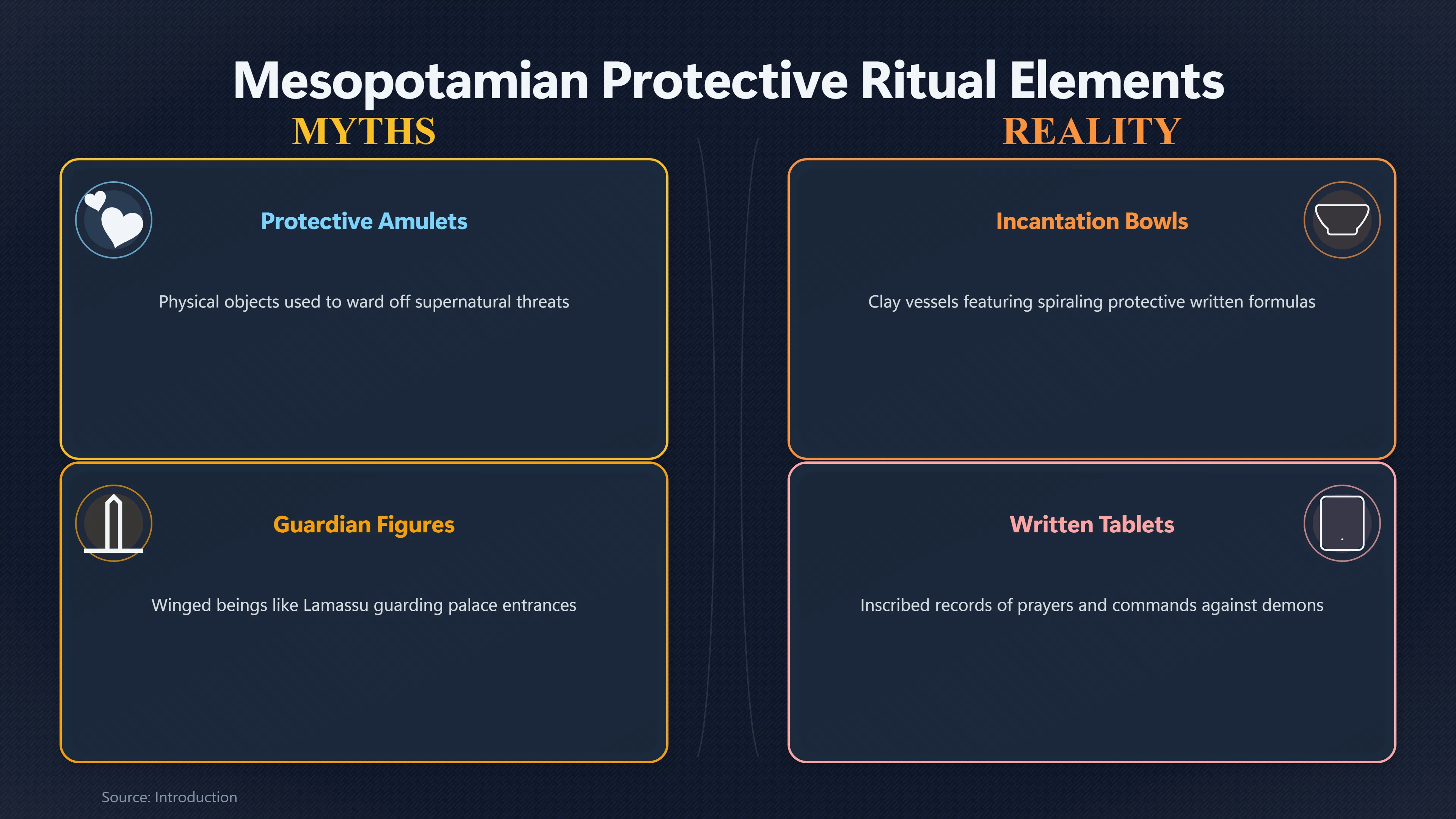
Among the most fascinating objects linked to this tradition are protective amulets and ritual pieces associated with demons and divine guardians. Ancient Mesopotamian beliefs included many harmful supernatural beings, but these were not simply monsters from stories. They were part of explanations for real human fears, including disease, childbirth complications and unexplained suffering.
A well-known example from Mesopotamian culture is the demon Lamashtu, associated with danger to mothers and infants. Protective objects sometimes showed Lamashtu alongside Pazuzu, a powerful demon figure whose image could be used against her. Modern museums interpret these objects as evidence of ancient protective practices rather than proof that supernatural forces existed. Their importance lies in showing how people in the ancient Near East explained and managed fear.[The Metropolitan Museum of Art]metmuseum.orgThe Metropolitan Museum of Art Amulet with a Lamashtu demonThe Metropolitan Museum of ArtAmulet with a Lamashtu demon - The Metropolitan Museum of Art…
The Iraq Museum’s significance comes from keeping these traditions within their original Iraqi archaeological setting. Instead of displaying isolated “curiosities”, it presents the wider world that produced them: cities, temples, royal courts and households where beliefs about protection shaped daily life.[theiraqmuseum.com]theiraqmuseum.comAbout the Museum | The Iraq MuseumAbout the Museum | The Iraq Museum
The strange world of incantation bowls and written protection
One of the most unusual categories of ancient magical objects connected with Iraq is the incantation bowl. These simple clay vessels appear ordinary at first glance, but their surfaces carry spiralling inscriptions containing protective formulas. Many were produced in Mesopotamia during late antiquity, especially between the sixth and eighth centuries CE.[British Museum]britishmuseum.orgBritish Museumincantation bowl | British MuseumBritish Museumincantation bowl | British Museum
The bowls are sometimes called “magic bowls” because their texts were intended to provide protection. Some contain prayers, commands against harmful beings or references to supernatural threats. Archaeologists and historians understand them as evidence of religious and magical practice among communities living in Mesopotamia, including Jewish, Christian, Mandaean and other groups who used written ritual traditions.[Iris]iris.unict.itIris Two Incantation Bowls from the Iraq Museum (BaghdadTwo Incantation Bowls from the Iraq Museum (Baghdad)January 1, 2005…
Their design adds to their mystery. The writing often spirals from the outside towards the centre, creating the impression of words physically enclosing or trapping danger. Some scholars have interpreted this layout as part of the ritual idea behind the objects: the harmful force was symbolically drawn into the centre and controlled by the inscription.[British Museum]britishmuseum.orgBritish Museumincantation bowl | British MuseumBritish Museumincantation bowl | British Museum
The Iraq Museum holds a significant collection of incantation bowls, including examples studied by specialists in ancient languages and Mesopotamian culture. Research on these objects is valuable because the bowls reveal everyday beliefs rather than only official royal religion. They show ordinary people seeking protection for homes, families and personal problems.[Iris]iris.unict.itIris Two Incantation Bowls from the Iraq Museum (BaghdadTwo Incantation Bowls from the Iraq Museum (Baghdad)January 1, 2005…
For modern visitors, these objects are among the clearest examples of why the Iraq Museum feels unusual. They are not mysterious because their purpose is unknown; they are mysterious because they preserve a worldview in which written words could act as a form of defence.
Mythical beings hidden inside archaeological treasures
The Iraq Museum’s ancient collections also reveal a world filled with hybrid creatures and symbolic beings. Mesopotamian art frequently combined human, animal and supernatural features to express ideas about power, protection and divine authority.
A famous example is the tradition of protective guardian figures such as the lamassu, winged beings with human heads and animal bodies that stood at the entrances of important Assyrian buildings. These figures were not monsters in the modern sense. They were protective symbols designed to guard important spaces and communicate royal strength.
Although some of the best-known lamassu sculptures are connected with Assyrian palace sites such as Nimrud and Nineveh, the Iraq Museum places such imagery within the broader story of Iraqi civilisation. The museum’s collections include Assyrian, Babylonian and Sumerian material that shows how supernatural imagery was used across thousands of years.[UNESCO]unesco.orgRe-opening of the National Museum of Bagdad | UNESCORe-opening of the National Museum of Bagdad | UNESCO…
Another important treasure is the Warka Vase from ancient Uruk, one of the earliest surviving examples of narrative art. Found in a temple complex associated with the goddess Inanna, it shows scenes of offerings and ritual order rather than “magic” in the later occult sense. Its importance is that it reveals a world where religion, kingship, agriculture and divine relationships were closely connected.[World History Encyclopedia]worldhistory.orgWorld History Encyclopedia The Warka Vase at the Iraq MuseumWorld History EncyclopediaThe Warka Vase at the Iraq Museum - World History EncyclopediaMarch 21, 2019…
These objects demonstrate that ancient Mesopotamian beliefs were not divided neatly into religion on one side and magic on the other. Protection rituals, temple ceremonies and images of supernatural beings all belonged to a shared understanding of how the universe worked.
Why the Iraq Museum’s survival matters
The story of the Iraq Museum is also part of the meaning of its unusual treasures. The institution has survived war, political upheaval and major losses. Established in the 1920s, it became the central public home for Iraq’s archaeological heritage, preserving objects from thousands of years of Mesopotamian history.[theiraqmuseum.com]theiraqmuseum.comAbout the Museum | The Iraq MuseumAbout the Museum | The Iraq Museum
The museum suffered severe damage and looting after the 2003 invasion of Iraq, when many artefacts disappeared from its collections. International efforts later helped recover some stolen objects, while Iraqi specialists continued the work of documenting and protecting what remained.[UNESCO]unesco.orgRe-opening of the National Museum of Bagdad | UNESCORe-opening of the National Museum of Bagdad | UNESCO…
This history gives the museum’s ancient protective objects a modern relevance. Items once created to guard homes and communities now require protection themselves. The survival of tablets, bowls, statues and ritual objects allows researchers to study beliefs that would otherwise survive only through fragmented texts.
The museum’s collections therefore represent more than strange historical objects. They preserve evidence of how people thousands of years ago responded to uncertainty. Ancient Mesopotamian “magic” was a system of ideas about safety, health, fate and the relationship between humans and invisible powers. The Iraq Museum makes that world tangible through objects that still carry traces of the fears and hopes of their original owners.[theiraqmuseum.com]theiraqmuseum.comAbout the Museum | The Iraq MuseumAbout the Museum | The Iraq Museum
Amazon book picks
Further Reading
Books and field guides related to Inside Iraq Museum's Strange Ancient Treasures. Use these as the next step if you want deeper reading beyond the article.
Ancient Iraq
Book provides an introduction to the history of ancient Mesopotamia and its civilizations, incorporating archaeological and historical fi...
Babylon: Mesopotamia and the Birth of Civilization
In Babylon, Paul Kriwaczek tells the story of ancient Mesopotamia from the earliest settlements around 5400 BC, to the eclipse of Babylon...
The Ancient Near East: A Very Short Introduction
This book explores the lands of the ancient Near East from around 3200 BCE to 539 BCE. The earth-shaking changes that marked this era inc...
Mesopotamia: The Invention of the City
Painting a colorful picture of everyday lives, this remarkable book is an engaging account of the rise and fall of one of the greatest an...
eBay marketplace picks
Marketplace Samples
Live-tested eBay searches with available results related to this page.
Selected fromancient art print oneBay.co.uk.
Endnotes
1.
Source: theiraqmuseum.com
Title: About the Museum | The Iraq Museum
Link:https://www.theiraqmuseum.com/pages/about-the-museum.html
2.
Source: unesco.org
Title: Re-opening of the National Museum of Bagdad | UNESCO
Link:https://www.unesco.org/en/articles/re-opening-national-museum-bagdad
Source snippet
Re-opening of the National Museum of Bagdad | UNESCO...
3.
Source: unesco.org
Title: UNESC O supports Iraq National Museum to protect and preserve its
Link:https://www.unesco.org/en/articles/unesco-supports-iraq-national-museum-protect-and-preserve-its-collection
4.
Source: theiraqmuseum.com
Link:https://www.theiraqmuseum.com/pages/exhibitions-and-publications.html
5.
Source: theiraqmuseum.com
Link:https://www.theiraqmuseum.com/index.html
6.
Source: metmuseum.org
Title: The Metropolitan Museum of Art Amulet with a Lamashtu demon
Link:https://www.metmuseum.org/art/collection/search/326961
Source snippet
The Metropolitan Museum of ArtAmulet with a Lamashtu demon - The Metropolitan Museum of Art...
7.
Source: britishmuseum.org
Title: British Museumincantation bowl | British Museum
Link:https://www.britishmuseum.org/collection/object/W
8.
Source: britishmuseum.org
Title: British Museumincantation bowl | British Museum
Link:https://www.britishmuseum.org/collection/object/W
9.
Source: iris.unict.it
Title: Iris Two Incantation Bowls from the Iraq Museum (Baghdad)
Link:https://www.iris.unict.it/handle/20.500.11769/53977
Source snippet
Two Incantation Bowls from the Iraq Museum (Baghdad)January 1, 2005...
Published: January 1, 2005
10.
Source: worldhistory.org
Title: World History Encyclopedia The Warka Vase at the Iraq Museum
Link:https://www.worldhistory.org/image/10269/the-warka-vase-at-the-iraq-museum/
Source snippet
World History EncyclopediaThe Warka Vase at the Iraq Museum - World History EncyclopediaMarch 21, 2019...
Published: March 21, 2019
11.
Source: worldhistory.org
Title: World History Encyclopedia Offering Scene, Warka Vase [Top Register]
Link:https://www.worldhistory.org/image/10594/offering-scene-warka-vase-top–register/
Source snippet
World History EncyclopediaOffering Scene, Warka Vase [Top Register] - World History Encyclopedia...
12.
Source: worldhistory.org
Title: Warka Vase [Bottom Register]
Link:https://www.worldhistory.org/image/10536/warka-vase-bottom-register/
13.
Source: worldhistory.org
Title: Warka Vase [Middle Register]
Link:https://www.worldhistory.org/image/10597/warka-vase-middle-register/
14.
Source: worldhistory.org
Title: Offering to Inanna, Warka Vase [Top Register]
Link:https://www.worldhistory.org/image/10591/offering-to-inanna-warka-vase-top-register/
15.
Source: britishmuseum.org
Link:https://www.britishmuseum.org/collection/object/W
16.
Source: britishmuseum.org
Link:https://www.britishmuseum.org/collection/object/W
17.
Source: britishmuseum.org
Link:https://www.britishmuseum.org/collection/object/W
18.
Source: britishmuseum.org
Link:https://www.britishmuseum.org/collection/object/W
19.
Source: britishmuseum.org
Link:https://www.britishmuseum.org/collection/object/W_1851-0903-1?selectedImageId=711107001
20.
Source: britishmuseum.org
Title: girsu project
Link:https://www.britishmuseum.org/research/projects/girsu-project
21.
Source: britishmuseum.org
Link:https://www.britishmuseum.org/collection/object/W
22.
Source: britishmuseum.org
Link:https://www.britishmuseum.org/collection/object/W
23.
Source: britishmuseum.org
Link:https://www.britishmuseum.org/collection/object/W
24.
Source: britishmuseum.org
Link:https://www.britishmuseum.org/collection/object/W
25.
Source: britishmuseum.org
Link:https://www.britishmuseum.org/collection/object/W
26.
Source: britishmuseum.org
Link:https://www.britishmuseum.org/collection/object/W
27.
Source: britishmuseum.org
Title: W Rm IV 467
Link:https://www.britishmuseum.org/collection/object/W_Rm-IV-467
28.
Source: britishmuseum.org
Link:https://www.britishmuseum.org/collection/object/W
29.
Source: hist1039-16.omeka.fas.harvard.edu
Link:https://hist1039-16.omeka.fas.harvard.edu/items/show/1
30.
Source: diskoproject.kelsey.lsa.umich.edu
Title: incantation bowl
Link:https://diskoproject.kelsey.lsa.umich.edu/object/incantation-bowl/
31.
Source: khanacademy.org
Title: warka vase
Link:https://www.khanacademy.org/humanities/ancient-art-civilizations/ancient-near-east1/sumerian/a/warka-vase
32.
Source: metmuseum.org
Title: Pendant with the head of Pazuzu
Link:https://www.metmuseum.org/art/collection/search/327485
33.
Source: metmuseum.org
Title: Amulet with a Lamashtu demon
Link:https://www.metmuseum.org/art/collection/search/321626
34.
Source: metmuseum.org
Title: Stele of the protective goddess Lama
Link:https://www.metmuseum.org/art/collection/search/325092
35.
Source: collections.penn.museum
Link:https://collections.penn.museum/collections/object/275285
36.
Source: sbah.gov.iq
Link:https://sbah.gov.iq/museums/
Additional References
37.
Source: reuters.com
Title: Iraq exhibits ancient artefacts returned by U.S
Link:https://www.reuters.com/world/middle-east/iraq-exhibits-ancient-artefacts-returned-by-us-other-countries-2024-07-08/
Source snippet
and other countriesIraq displayed various ancient artefacts on Monday that had been returned from the United States and other countries...
38.
Source: youtube.com
Title: Lamashtu’s Shadow: Protecting Infants in Mesopotamian Myths
Link:http://www.youtube.com/watch?v=1m-zBRQmwFI
Source snippet
Iraq Museum Mesopotamian magic ritual artifacts 📸 The Statue That Watches You — A 4,500-Year-Old Mystery #ancientegypt #egyptianmuseum Se...
39.
Source: youtube.com
Title: EP: 3. Lamashtu: The Mesopotamian Birth-Demon and the Amulets Against Her
Link:http://www.youtube.com/watch?v=lt9FpR7V99o
Source snippet
The Sumerian Curse Tablets: Spells, Spirits, and the First Demons in History | Episode 11...
40.
Source: commons.wikimedia.org
Title: Category:Mask of Warka
Link:https://commons.wikimedia.org/wiki/Category%3AMask_of_Warka
Source snippet
wikimedia.orgCategory:Mask of Warka - Wikimedia CommonsMarch 18, 2022 — CATEGORY:MASK OF WARKA Help * Category * Discussion [Input] Engli...
Published: March 18, 2022
41.
Source: youtube.com
Link:http://www.youtube.com/watch?v=qeJcLTMZgwk
Source snippet
EP: 3. Lamashtu: The Mesopotamian Birth-Demon and the Amulets Against Her...
42.
Source: youtube.com
Link:http://www.youtube.com/watch?v=fr60HDLTMfo
Source snippet
Lamashtu’s Shadow: Protecting Infants in Mesopotamian Myths...
43.
Source: youtube.com
Title: The World’s Oldest Demons: Lamashtu & Pazuzu Explained
Link:http://www.youtube.com/watch?v=BjYkD9zSZVQ
Source snippet
Pazuzu's Protection Incantation: Ancient Mesopotamian Mythology (Halloween Special)...
44.
Source: alriyad.iq
Link:https://www.alriyad.iq/arabic/iraq-national-museum
45.
Source: alriyad.iq
Link:https://www.alriyad.iq/english/our-portfolio/iraq-national-museum
46.
Source: commons.wikimedia.org
Link:https://commons.wikimedia.org/wiki/File%3AIncantation_bowl%2C_from_Iraq%2C_Aramaic_inscription_with_a_human_figure%2C3rd_to_7th_century_CE._Iraq_Museum.jpg