Why Does Iceland Museumise the Unbelievable?
Iceland’s strangest museums are not simply novelty stops. Together, they preserve a distinctive curiosity culture shaped by isolation, fishing communities, manuscript traditions, supernatural folklore, practical collecting and an unusually strong appetite for turning private obsessions into public institutions.
Page outline Jump by section
Introduction
The best examples also make clear distinctions between evidence and story. The Museum of Icelandic Sorcery and Witchcraft connects gruesome folklore to documented seventeenth-century prosecutions. The Icelandic Sea Monster Museum presents reported encounters without pretending that cryptids have been scientifically verified. The Icelandic Phallological Museum mixes zoological specimens with deliberately playful folklore. Smaller institutions explore prophecy, outsider art and the emotional value of everyday objects. Iceland’s odd museums matter because they show how a small country can preserve marginal histories without forcing them into the mould of a conventional national museum.[visiticeland.com]visiticeland.comPhoto credit: The Witchcraft Museum…Read more…
Witchcraft beyond the spectacle
The Museum of Icelandic Sorcery and Witchcraft in Hólmavík is the clearest starting point for understanding Iceland’s uncanny heritage. Opened in 2000 as a community project, it combines historical interpretation with reconstructed magical objects and stories collected from later folklore. Its displays address seventeenth-century prosecutions, magical symbols, handwritten books of spells and alleged methods for finding thieves, raising the dead or acquiring wealth. The museum’s operators also conduct and support research into the witch trials, local folklore and the cultural heritage of the Strandir region.[Galdrasyning]galdrasyning.isThis award winning exhibition presents the history of the witch-huntings in 17th century Iceland as well as various aspects of magic from…
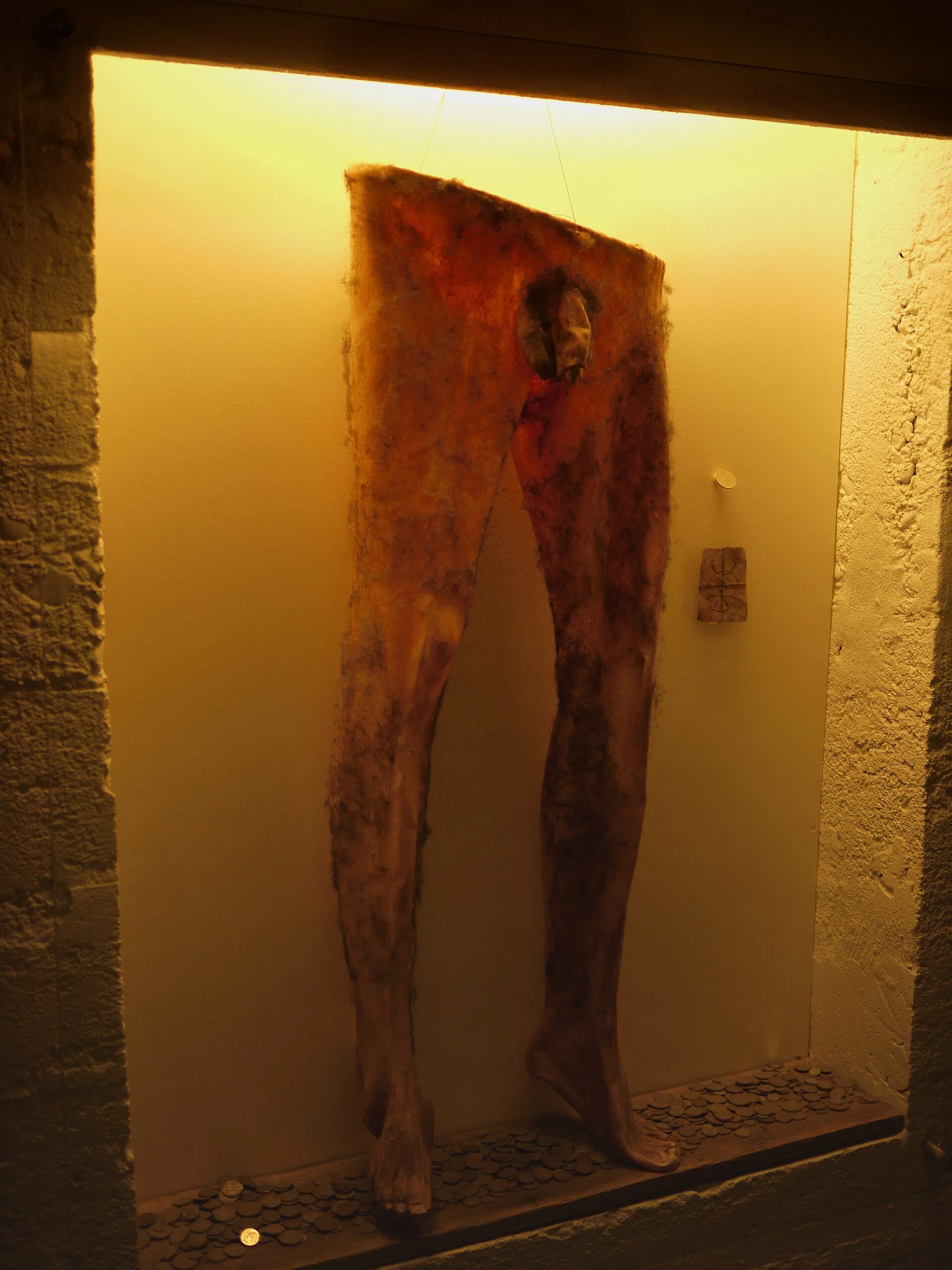
Its most famous exhibit is a reconstruction of “necropants”: trousers supposedly made from the skin of a dead man and used in a complicated ritual intended to produce money. Another memorable figure is a milk-stealing creature assembled through an equally grotesque folk ritual. These objects are visitor magnets, but they should not be mistaken for authenticated surviving magical artefacts. They are material interpretations of stories and instructions preserved in folklore and magical manuscripts. That distinction is crucial: the museum is strongest when the shocking reconstruction prompts visitors to ask why such stories circulated, rather than whether someone definitely wore the trousers.[westfjords.is]westfjords.isThe exhibition tells the story of the witchcraze in Iceland in the 17th century and how witchcraft is presented in our folklore.Guests wi…
The documented history is unusual in its own right. According to the museum’s account, roughly 170 people were accused during Iceland’s witch-hunting period, and only about a tenth were women. Just one woman was among those burned. This sharply contrasts with the predominantly female pattern associated with many European witch persecutions. Icelandic cases frequently concerned harmful magic, written signs, learned formulas and possession of magical texts, linking suspicion to forms of knowledge more commonly associated with men in that society.[Galdrasyning]galdrasyning.isOpen source on galdrasyning.is.
That makes Hólmavík more than a horror-themed attraction. It is a privately operated, publicly accessible museum that uses theatrical presentation to communicate a serious social history. Its credibility does not depend on accepting the spells as effective. It depends on differentiating court records, manuscript evidence, oral tradition and modern reconstruction—and on showing how accusations of magic became tools of fear, authority and punishment.
Monsters preserved as testimony
At Bíldudalur in the Westfjords, the Icelandic Sea Monster Museum collects reports of strange creatures seen around the coast, especially in nearby Arnarfjörður. The region has long been promoted as one of Iceland’s richest areas for monster sightings, and the museum turns that local reputation into an audiovisual exhibition of stories, images, film and interactive displays.[Visit Westfjords]westfjords.isToday, these elusive creatures have been given a worthy home at the Icelandic Sea Monster Museum, located in the village of Bildudalur on…
The important “collection” here is not a cabinet of authenticated monster remains. It is a body of testimony: descriptions of unfamiliar shapes in the water, creatures approaching boats and things reportedly crawling ashore. Such accounts sit between folklore, environmental observation and community memory. A visitor should expect interpretation and atmosphere rather than zoological proof.
This makes the museum more credible, not less, when approached on its own terms. Sea-monster reports often emerge where working knowledge of dangerous waters meets uncertainty about what has been seen. Seals, whales, drifting material, waves and poor visibility may explain some encounters; others remain too thinly documented to assess. The museum’s value lies in preserving how witnesses described them and how repeated stories helped Arnarfjörður acquire a monster-haunted identity.
It is also a good example of folklore becoming local economic infrastructure. A remote fishing settlement has converted an intangible tradition into a public attraction without needing to resolve whether the creatures were biologically real. The result belongs as much to oral-history culture as to cryptozoology.
When a private collection becomes a national curiosity
The Icelandic Phallological Museum in Reykjavík is Iceland’s most internationally famous odd museum. Its core collection began with founder Sigurður Hjartarson’s personal specimens and expanded through gifts and donations into a public display devoted to animal reproductive anatomy. The museum describes itself as an institution for collecting, studying and presenting phalluses and related material, and its holdings include specimens from Icelandic land and marine mammals as well as animals from elsewhere.[Icelandic Phallological Museum]phallus.isStarting as a modest personal collection, the Icelandic Phallological Museum has grown into the world's only museum dedicated to phallolo…
The museum’s origin story reveals the mechanics of obsessive collecting. Hjartarson received an initial specimen and then further examples as joke gifts, including material connected with Iceland’s whaling industry. The joke developed into a classification project: acquiring more species, filling gaps and creating a collection comprehensive enough to justify public display. It opened as a museum in 1997 and subsequently moved between locations before settling in Reykjavík.[Icelandic Phallological Museum]phallus.isIcelandic Phallological Museum HistoryIcelandic Phallological Museum History
Visitors encounter genuine preserved biological material alongside art, popular culture and a folklore section. That last category reportedly includes organs attributed to invisible or legendary beings. These are knowingly playful exhibits rather than zoological claims; their humour depends on the convention that an invisible creature would leave an invisible specimen. The contrast between labelled anatomy and fabricated folklore is central to the museum’s personality.[museumguide.is]museumguide.isThe Icelandic Phallological MuseumThe Icelandic Phallological Museum
Its status is therefore mixed but legible. It is commercial and tourist-facing, yet it is not merely an adult joke shop. Much of the collection is real animal material arranged around species, scale and comparative anatomy. At the same time, the museum embraces souvenirs, visual puns and the embarrassment of its subject. Its cultural interest lies in the refusal to treat one part of mammalian anatomy as unsuitable for systematic collecting.
The collection also raises ordinary museum questions in an unusually visible form: who donated the material, how it was preserved, what counts as a complete specimen and when private collecting becomes research. Even the well-publicised pursuit of a human specimen illustrates the collector’s desire to eliminate a taxonomic gap, although media coverage often presented it as a comic competition rather than a curatorial decision.[Time]time.comIceland's Penis Museum Got a New SpecimenIceland's Penis Museum Got a New Specimen
Prophecy as local heritage
The Museum of Prophecies in Skagaströnd centres on a fortune-teller remembered as the settlement’s first named inhabitant, dating her story to the late tenth century. A painted narrative presents her life, while the wider exhibition introduces prophecy, palm reading and different forms of divination. Visitors may also request a fortune or palm reading, making the museum partly interpretive and partly participatory.[North Iceland Travel Guide]northiceland.isOpen source on northiceland.is.
This is not an academic archive attempting to prove that foresight works under controlled conditions. It is a small, public-facing heritage attraction built around the historical and folkloric identity of one place. The fortune-telling service blurs museum display with performance, but it does so openly. Visitors are entering a setting where storytelling, entertainment and belief are meant to overlap.
Its strongest cultural point is that prophecy is presented as a social role. The central figure is not merely a supernatural character but a remembered woman through whom a community explains its beginnings. The museum shows how personal reputation can become settlement history and, centuries later, a tourism identity.
Current visitor information describes seasonal summer opening, with access at other times generally requiring an arrangement. This pattern is common among Iceland’s smaller regional museums and should be checked before travelling, particularly outside the main season.[Visit Iceland]visiticeland.comVisit Iceland Museum of Prophecies Opening hours: JuneVisit Iceland Museum of Prophecies Opening hours: June
Punk history in a former lavatory
Reykjavík’s Icelandic Punk Museum is unusual before a visitor even examines the collection: it occupies disused underground public toilets at Bankastræti 0. The confined stalls and tiled surfaces have been adapted into a dense archive of photographs, clothing, instruments, clippings, recordings and chronologies of Iceland’s punk movement.[Wikipedia]WikipediaIcelandic Punk MuseumIcelandic Punk Museum
The setting is more than a gimmick. Punk museums face an obvious curatorial problem: placing anti-establishment culture in polished galleries can make it seem domesticated. A cramped former lavatory, covered with photocopied material and improvised displays, retains something of the movement’s do-it-yourself texture. The visitor experience is correspondingly intimate rather than monumental.
Its narrative concentrates on the formative period beginning in the late 1970s and follows the scene into the era when Icelandic alternative music gained wider international recognition. This gives the museum value beyond celebrity association. It documents the small venues, networks, bands and subcultural experiments from which better-known Icelandic musicians emerged.[Wikipedia]WikipediaIcelandic Punk MuseumIcelandic Punk Museum
The collection is public, enthusiast-led and highly curated, but not conventionally academic. Its authority comes from scene memory, surviving ephemera and close identification with the culture it records. It feels less like a retrospective imposed from outside than a self-archive built by participants and admirers.

The strange power of collecting ordinary things
Some of Iceland’s most revealing curiosity museums are not supernatural at all. They are devoted to the impulse to gather objects that conventional museums would normally ignore.
The Nonsense Museum in Flateyri has been associated with collections including police caps, badges, model aircraft and machinery, Pez dispensers, teaspoons, sugar packets and other mass-produced items. The attraction is accumulation itself: an ordinary object becomes visually and culturally strange when dozens or hundreds of variants are placed together.[today.is]guide.today.isGuide.is The Nonsense-MuseumGuide.is The Nonsense-Museum
Such displays occupy a borderland between museum, hobby room and cabinet of curiosity. Their importance is not that every item is rare. It is that the collector has created relationships between objects that were never designed to be seen as a group. A sugar packet records branding, travel and changing graphic design; a police cap hints at international institutions and exchange; a miniature excavator reflects both industrial work and the desire to possess the world in reduced form.
Information about small private or semi-private collections can become outdated quickly, and opening arrangements may be seasonal or informal. Travellers should therefore verify current access rather than assuming that an older travel article confirms present operation.
The Museum of Everyday Life in Ísafjörður takes a more deliberately interpretive approach. Rather than concentrating on valuable artefacts, it has exhibited local voices, memories, story fragments and sensory experiences designed to make ordinary life feel newly visible. Regional visitor information has described seasonal opening and access by arrangement outside summer.[Vestfjarðaleiðin]vestfjardaleidin.isOpen source on vestfjardaleidin.is.
Its subject is the material and emotional residue that formal history often discards: habits, winters, domestic routines, private photographs and seemingly minor recollections. The museum’s strangeness comes from reversing the usual hierarchy of significance. Instead of great events, it asks visitors to treat daily existence as something mysterious enough to preserve.
Outsider art and the limits of the museum canon
The Icelandic Folk and Outsider Art Museum in northern Iceland broadens the country’s curiosity culture beyond folklore and novelty. It collects work by self-taught artists and others historically positioned outside the recognised art establishment, while also exhibiting it in dialogue with contemporary art. The collection spans work by hundreds of people from the nineteenth century onwards.[northiceland.is]northiceland.isOpen source on northiceland.is.
“Outsider art” is an imperfect category, often used for work made beyond formal training, commercial galleries or accepted cultural networks. A specialist museum can rescue such work from disappearance, but classification can also freeze artists into the role of eccentric outsiders. The Icelandic institution’s decision to place marginal and established practices together helps challenge the assumption that self-taught work belongs in a separate, lesser realm.
This museum is less theatrical than the witchcraft or monster attractions, yet it addresses the same underlying question: who decides what deserves preservation? The answer has consequences. Without active collecting, art made away from professional institutions may remain in homes, workshops or local memory until it is lost. By researching and presenting it, the museum turns overlooked personal production into part of Iceland’s cultural record.
How to judge Iceland’s odd museums
Iceland’s unusual attractions vary greatly in purpose, and a visitor will understand them better by asking what kind of claim each one is making.
- Historical museums use records and research to explain real events. The witchcraft museum’s trials and accused people belong here, even when reconstructed folk objects appear beside them.
- Folklore museums preserve stories without needing to prove their supernatural content. The sea-monster accounts and prophecy traditions are culturally significant whether or not visitors accept them literally.
- Natural-history curiosity collections present genuine specimens but may surround them with humour or theatrical presentation, as at the Phallological Museum.
- Community and private collections derive much of their value from the collector’s choices. Their displays may be idiosyncratic, seasonal and less formally documented.
- Participatory attractions invite performance as part of the visit. A fortune reading is an experience offered by a museum, not evidence that prophecy has been scientifically confirmed.
- Specialist cultural archives preserve scenes or artists neglected by larger institutions, as seen in the punk and outsider-art museums.
The most trustworthy venues make these categories easy to recognise. Problems arise only when modern reconstruction is presented as an ancient artefact, tourism marketing is mistaken for historical consensus, or a reported sighting is treated as proof of an unknown species. Iceland’s better curiosity museums usually gain interest by keeping those boundaries visible rather than erasing them.

Why Iceland’s curiosity culture matters
Iceland’s strange museums reflect the scale and geography of the country. Small communities can build institutions around highly local stories, while individuals can turn intense private interests into collections significant enough to attract an international audience. The Westfjords are particularly rich in this pattern: witchcraft, monsters, everyday memories and obsessive collecting become reasons to stop in settlements that lie far from the main concentrations of national cultural institutions.[WorldWideWriter]worldwidewriter.co.ukWorld Wide Writer Discover The Small Museums Of IcelandWorld Wide Writer Discover The Small Museums Of Iceland
They also preserve forms of knowledge that sit awkwardly inside conventional museums. Court testimony about spells, eyewitness descriptions of unknown creatures, punk flyers, self-taught paintings and packets of sugar are all vulnerable materials. None fits neatly into the traditional categories of fine art, archaeology or state history, yet each records how people imagined, feared, classified or entertained themselves.
The result is not a single national museum tradition but an archipelago of curiosity. Some venues are scholarly, others commercial; some protect painful histories, while others celebrate jokes and compulsions. Taken together, they show Iceland not merely as a landscape of volcanoes and sagas, but as a country unusually willing to give its marginal stories, implausible creatures and eccentric collectors a room of their own.
Amazon book picks
Further Reading
Books and field guides related to Why Does Iceland Museumise the Unbelievable?. Use these as the next step if you want deeper reading beyond the article.

Icelandic Folk and Fairy Tales
Collection of popular Icelandic folk and fairy tales translated into English. Arranged under three headings: elves and trolls, ghosts and...
The Almost Nearly Perfect People: Behind the Myth of the Scan...
The Danes are the happiest people in the world, and pay the highest taxes. 'Neutral' Sweden is one of the biggest arms manufacturers in t...
The Sagas of Icelanders
In Iceland, the age of the Vikings is also known as the Saga Age. A unique body of medieval literature, the Sagas rank with the world’s g...
eBay marketplace picks
Marketplace Samples
Live-tested eBay searches with available results related to this page.
Selected fromtravel poster oneBay.co.uk.
Endnotes
1.
Source: galdrasyning.is
Link:https://galdrasyning.is/en/museum-of-sorcery-and-witchcraft-holmavik/
Source snippet
This award winning exhibition presents the history of the witch-huntings in 17th century Iceland as well as various aspects of magic from...
2.
Source: westfjords.is
Link:https://www.westfjords.is/en/experiences/culture-heritage/museums/the-icelandic-sea-monster-museum
Source snippet
Today, these elusive creatures have been given a worthy home at the Icelandic Sea Monster Museum, located in the village of Bildudalur on...
3.
Source: galdrasyning.is
Link:https://galdrasyning.is/en/galdraglettur/
Source snippet
The Museum of Icelandic Sorcery and Witchcraft was opened for the first time on Midsummer's Day, June 23rd 2000.... The English name for...
4.
Source: galdrasyning.is
Link:https://galdrasyning.is/en/um-okkur/
Source snippet
Much effort goes into disseminating stories and facts about history and culture.... The Museum of Icelandic Sorcery and Witchcraft was a...
5.
Source: westfjords.is
Link:https://www.westfjords.is/en/service/the-icelandic-sorcery-and-witchcraft-museum
Source snippet
The exhibition tells the story of the witchcraze in Iceland in the 17th century and how witchcraft is presented in our folklore.Guests wi...
6.
Source: shop.galdrasyning.is
Link:https://shop.galdrasyning.is/products/angurgapi-the-witch-hunts-in-iceland
7.
Source: galdrasyning.is
Link:https://galdrasyning.is/en/the-witch-hunts-in-iceland/
8.
Source: museumguide.is
Title: The Icelandic Phallological Museum
Link:https://www.museumguide.is/icelandic-phallological-museum/
9.
Source: time.com
Title: Iceland’s Penis Museum Got a New Specimen
Link:https://time.com/64021/iceland-penis-museum-documentary-final-member/
10.
Source: Wikipedia
Link:https://en.wikipedia.org/wiki/Icelandic_Phallological_Museum
11.
Source: Wikipedia
Title: Icelandic Punk Museum
Link:https://en.wikipedia.org/wiki/Icelandic_Punk_Museum
12.
Source: museum.de
Title: The Icelandic Phallological Museum @museum.de
Link:https://www.museum.de/en/museen/the-icelandic-phallological-museum
13.
Source: galdrasyning.is
Title: the executed
Link:https://galdrasyning.is/en/the-executed/
14.
Source: galdrasyning.is
Link:https://galdrasyning.is/en/viskubrunnur/
15.
Source: galdrasyning.is
Link:https://galdrasyning.is/en/
16.
Source: galdrasyning.is
Link:https://galdrasyning.is/en/klemus-bjarnason/
17.
Source: galdrasyning.is
Link:https://galdrasyning.is/museum-of-sorcery-and-witchcraft-holmavik/
18.
Source: galdrasyning.is
Link:https://galdrasyning.is/en/galdrar/
19.
Source: galdrasyning.is
Title: home islenska
Link:https://galdrasyning.is/en/home-islenska/
20.
Source: galdrasyning.is
Link:https://galdrasyning.is/en/soguslodir-a-strondum/
21.
Source: westfjords.is
Link:https://www.westfjords.is/en/service/the-icelandic-sea-monster-museum
22.
Source: westfjords.is
Link:https://www.westfjords.is/en/experiences/culture-heritage/exhibitions
23.
Source: westfjords.is
Link:https://www.westfjords.is/en/experiences/tours/day-tour-provider/the-icelandic-sorcery-and-witchcraft-museum
24.
Source: Wikipedia
Title: Safnasafnid Icelandic Folk and Outsider Art Museum
Link:https://en.wikipedia.org/wiki/Safnasafnid_Icelandic_Folk_and_Outsider_Art_Museum
25.
Source: museums.eu
Link:https://museums.eu/museum/details/14727/icelandic-phallological-museum
26.
Source: youtube.com
Title: Museum of Sorcery & Witchcraft
Link:https://www.youtube.com/watch?v=98vZ_287KU0
Source snippet
The Icelandic Phallological Museum - Icelandic Times...
27.
Source: youtube.com
Title: The Icelandic Phallological Museum
Link:https://www.youtube.com/watch?v=R90G0CVpxZg
Source snippet
Worlds Only Phallological (PENIS) Museum.. Iceland's weirdest place...
28.
Source: visiticeland.com
Link:https://www.visiticeland.com/article/strange-museums/
Source snippet
Photo credit: The Witchcraft Museum...Read more...
29.
Source: phallus.is
Link:https://www.phallus.is/
Source snippet
Starting as a modest personal collection, the Icelandic Phallological Museum has grown into the world's only museum dedicated to phallolo...
30.
Source: visiticeland.com
Link:https://www.visiticeland.com/article/bildudalur/
31.
Source: phallus.is
Title: Icelandic Phallological Museum History
Link:https://www.phallus.is/history
32.
Source: northiceland.is
Link:https://www.northiceland.is/en/service/the-museum-of-prophecies
33.
Source: visiticeland.com
Title: Visit Iceland Museum of Prophecies Opening hours: June
Link:https://www.visiticeland.com/service-provider/5ec7d096a90548233654E301
34.
Source: guide.today.is
Title: Guide.is The Nonsense-Museum
Link:https://guide.today.is/places/detail/the-nonsense-museum-places-of-interest-culture-galleries-museum-westfjords-iceland
35.
Source: odysseytraveller.com
Title: Odyssey Traveller Iceland Museums
Link:https://www.odysseytraveller.com/articles/iceland-museum-collection/
36.
Source: vestfjardaleidin.is
Link:https://www.vestfjardaleidin.is/en/moya/travel-vest/service/museum-of-everyday-life
37.
Source: northiceland.is
Link:https://www.northiceland.is/en/service/safnasafnid-museum
38.
Source: safnasafnid.is
Link:https://safnasafnid.is/english/
39.
Source: worldwidewriter.co.uk
Title: World Wide Writer Discover The Small Museums Of Iceland
Link:https://www.worldwidewriter.co.uk/discover-small-museums-of-iceland.html
40.
Source: visitorsguide.is
Title: The Icelandic Phallological Museum
Link:https://visitorsguide.is/the-icelandic-phallological-museum/
41.
Source: atlasobscura.com
Title: museum of prophecies
Link:https://www.atlasobscura.com/places/museum-of-prophecies
42.
Source: visiticeland.com
Link:https://www.visiticeland.com/service-provider/5ec7d096a90548233654E095
43.
Source: visiticeland.com
Link:https://www.visiticeland.com/service-provider/5ec7d096a90548233654DBC4
45.
Source: ferdalag.is
Title: Museums | Ferdalag.is Summer opening is 10-17 From the 1st May
Link:https://www.ferdalag.is/en/culture/museums/1000
46.
Source: ferdalag.is
Title: the icelandic sea monster museum
Link:https://www.ferdalag.is/en/service/the-icelandic-sea-monster-museum
47.
Source: vestfjardaleidin.is
Link:https://www.vestfjardaleidin.is/en/moya/travel-vest/category/exhibitions
48.
Source: vestfjardaleidin.is
Link:https://www.vestfjardaleidin.is/en/moya/travel-vest/service/the-icelandic-sorcery-and-witchcraft-museum
49.
Source: icelandtravel.is
Link:https://www.icelandtravel.is/attractions/the-icelandic-sea-monster-museum/
50.
Source: tripadvisor.co.uk
Link:https://www.tripadvisor.co.uk/Attraction_Review-g189954-d2068005-Reviews-Safnasafnid_The_Folk_and_Outsider_Art_Museum-Akureyri_Northeast_Region.html
51.
Source: atthemuseum.org
Title: The Icelandic Phallological Museum
Link:https://atthemuseum.org/museums/the-icelandic-phallological-museum
52.
Source: atthemuseum.org
Title: Museum of Icelandic Sorcery and Witchcraft
Link:https://atthemuseum.org/museums/museum-of-icelandic-sorcery-and-witchcraft
53.
Source: tripadvisor.com
Title: The Museum of Prophecies in Skagaströnd
Link:https://www.tripadvisor.com/Attraction_Review-g2291802-d6519272-Reviews-The_Museum_of_Prophecies_in_Skagastrond-Skagastrond_Northwest_Region.html
54.
Source: visitreykjavik.is
Title: icelandic phallological museum
Link:https://visitreykjavik.is/service/icelandic-phallological-museum
55.
Source: visitorsguide.is
Title: Museum of Prophecies
Link:https://visitorsguide.is/spakonuhof/
56.
Source: artfacts.net
Link:https://artfacts.net/institution/safnasafnid-the-icelandic-folk-and-outsider-art-museum-akureyri
57.
Source: b14.is
Title: The Icelandic Phallological Museum
Link:https://b14.is/things-to-do/the-icelandic-phallological-museum/
58.
Source: maps.apple.com
Link:https://maps.apple.com/place?place-id=I2D06E68EFE7F404
59.
Source: sigvaldibooks.com
Title: safnasafnid icelandic folk and outsider art museum
Link:https://sigvaldibooks.com/products/safnasafnid-icelandic-folk-and-outsider-art-museum
60.
Source: outsiderartassociation.eu
Link:https://outsiderartassociation.eu/member/p-w/safnasafni
Additional References
61.
Source: youtube.com
Title: Inside The World’s Only Penis Museum
Link:https://www.youtube.com/watch?v=lfeYFrXL9N4
Source snippet
Seamonsters in Iceland?! Sea Monster Museum -Bíldudalur, Iceland || Skrimslasetur...
62.
Source: researchgate.net
Link:https://www.researchgate.net/publication/327129491_Secondary_targets_Male_witches_on_trial
63.
Source: panoramaglasslodge.com
Link:https://panoramaglasslodge.com/exploring-icelands-captivating-museums-a-journey-into-rich-cultural-heritage/
64.
Source: snaebjornsdottirwilson.com
Link:https://snaebjornsdottirwilson.com/biography/artworks-in-collections/
65.
Source: atlasobscura.com
Link:https://www.atlasobscura.com/experiences/magic-museum-icelandic-sorcery-witchcraft
66.
Source: atlasobscura.com
Link:https://www.atlasobscura.com/things-to-do/iceland/museums
67.
Source: tripadvisor.com
Link:https://www.tripadvisor.com/Attraction_Review-g189970-d11842261-Reviews-or140-The_Icelandic_Punk_Museum-Reykjavik_Capital_Region.html
68.
Source: tripadvisor.com
Link:https://www.tripadvisor.com/Attraction_Review-g189970-d11842261-Reviews-or75-The_Icelandic_Punk_Museum-Reykjavik_Capital_Region.html
69.
Source: facebook.com
Link:https://www.facebook.com/100057082885162/posts/did-you-know-iceland-has-so-many-museums-some-rather-unconventionalyou-can-visit/1594254035820677/
70.
Source: icelandtravel.is
Link:https://www.icelandtravel.is/attractions/flateyri/