Within Japan Curiosities
How Japanese Monsters Became Cultural Treasures
Japan's yokai collections preserve monster stories, artworks, and objects that reveal how communities imagined the unknown across generations.
On this page
- The history of yokai as folklore
- Scrolls prints toys and collected traditions
- From feared spirits to modern icons
Page outline Jump by section
Introduction
Japanese yokai collections preserve something more unusual than a catalogue of monsters: they preserve the changing ways communities have imagined the unknown. Rather than proving that supernatural beings exist, these collections show how fears, jokes, local legends, religious ideas, and artistic invention were transformed into stories, images, objects, and eventually cultural heritage. The best-known example is the Yumoto Koichi Memorial Japan Yokai Museum (Miyoshi Mononoke Museum) in Hiroshima, where more than 5,000 yokai-related objects, including picture scrolls, woodblock prints, ceramics, and toys, reveal how these creatures moved from folklore into art and popular culture.[Miyoshi DMO]miyoshi-dmo.jpMiyoshi Association of Tourism and Town Development Official WebsiteMiyoshi Association of Tourism and Town Development Official WebsiteJ…
For visitors, yokai collections offer a different kind of strange-history experience. The displays are not monster evidence in the scientific sense; they are archives of human imagination. A frightening spirit from an old village tale, a strange creature in an Edo-period illustration, and a modern character from entertainment can all appear in the same cultural timeline. These collections matter because they show how Japan preserved uncertainty itself: the stories people created when they encountered unexplained events, dangerous landscapes, social fears, and everyday mysteries.
The history of yokai as folklore
The history of yokai collecting is closely tied to the way Japanese communities recorded unusual experiences. Yokai is a broad category rather than a single group of creatures. It can include spirits, strange animals, transformed objects, monsters, and unexplained phenomena. Some were feared, some were humorous, and some existed mainly as imaginative inventions by artists and storytellers.
During the Edo period (1603–1868), illustrated books helped transform many local and oral traditions into recognisable visual forms. Artists did not simply copy existing beliefs; they reorganised, expanded, and sometimes invented new creatures. One of the most influential figures was Toriyama Sekien (1712–1788), whose illustrated yokai books turned supernatural beings into something resembling encyclopaedic collections. His 1776 work Gazu Hyakki Yagyo (“The Illustrated Night Parade of a Hundred Demons”) presented individual yokai with names and images, helping establish visual identities that later artists and writers reused.[YOKAI.JP]yokai.jpgazu hyakki yakouGazu Hyakki Yagyo: Toriyama Sekien’s Yokai Compendium (1776) | YOKAI.JPJuly 11, 2026…
This artistic process explains why modern yokai collections are best understood as cultural archives rather than records of fixed beliefs. A creature such as a kappa, tengu, or fox spirit may have different meanings depending on region, period, and storyteller. Museums preserve those changes: the same being can appear as a frightening warning in one source, a comic character in another, and a popular design motif today.[YOKAI.JP]yokai.jpgazu hyakki yakouGazu Hyakki Yagyo: Toriyama Sekien’s Yokai Compendium (1776) | YOKAI.JPJuly 11, 2026…
Why collecting yokai became important
Collecting yokai materials became a way of saving traditions that might otherwise disappear. Folklore was often carried through local storytelling, seasonal customs, and family memories rather than formal records. Once these traditions were collected into books, museums, and archives, they became available for historical study and public education.
The collector and researcher Koichi Yumoto is a major example of this transition. His collection brought together historical artworks and everyday objects connected with yokai culture, ranging from paintings and hand-painted scrolls to woodblock prints, handicrafts, and toys. The collection later became the foundation of the Miyoshi Mononoke Museum, turning a private passion for folklore into a public cultural resource.[Toledo Museum Library]library.toledomuseum.orgToledo Museum Library Details for Yōkai › TMA Library and Archives catalogToledo Museum Library Details for Yōkai › TMA Library and Archives catalog
Scrolls, prints, toys and collected traditions
Yokai collections are unusual because they rarely consist of a single type of object. They combine fine art, popular culture, religious imagery, entertainment materials, and ordinary objects. This mixture reflects the way folklore actually worked: supernatural stories were not separated from daily life but appeared in books, decorations, games, performances, and household items.
The Miyoshi Mononoke Museum provides one of the clearest examples. Its collection includes thousands of objects selected from Yumoto’s holdings, including picture scrolls, coloured woodblock prints, pottery, and toys. It also highlights Ino Mononoke Roku, an Edo-period picture scroll connected with local stories of strange events in Miyoshi.[Miyoshi DMO]miyoshi-dmo.jpMiyoshi Association of Tourism and Town Development Official WebsiteMiyoshi Association of Tourism and Town Development Official WebsiteJ… The scroll is important not because it verifies supernatural events, but because it shows how communities recorded and circulated stories about encounters with the mysterious.
The role of illustrated books
Illustrated books were especially powerful in shaping the modern idea of yokai. Earlier traditions often described spirits through stories and local beliefs, but Edo-period artists gave them memorable appearances that could be copied and recognised.
Sekien’s illustrated collections became reference points for later generations. His works included famous creatures alongside more obscure figures, creating a visual vocabulary that influenced later art. Some yokai images familiar today owe much of their appearance to artistic interpretation rather than a single ancient tradition.[YOKAI.JP]yokai.jpgazu hyakki yakouGazu Hyakki Yagyo: Toriyama Sekien’s Yokai Compendium (1776) | YOKAI.JPJuly 11, 2026…
This makes yokai collections fascinating for researchers and visitors alike. They reveal not only what people believed, but also how artists shaped belief. The museum object is often evidence of a creative conversation between folklore, imagination, and changing audiences.

From private collecting to public heritage
The move from private collections to museums changed the role of yokai. A story once told locally could become part of a wider national and international heritage display. The Yumoto Koichi Collection demonstrates this shift: objects originally gathered by an individual collector now form a museum collection that introduces visitors to the history of Japanese supernatural art. Parts of the collection have also appeared in exhibitions beyond Japan.[Toledo Museum Library]library.toledomuseum.orgToledo Museum Library Details for Yōkai › TMA Library and Archives catalogToledo Museum Library Details for Yōkai › TMA Library and Archives catalog
This public presentation also requires careful interpretation. Museums must explain that yokai belong to folklore and cultural history, not to the same category as archaeological evidence or scientific specimens. Their value lies in showing how people understood the world around them.
From feared spirits to modern icons
The most striking feature of yokai collections is the transformation of monsters into cultural treasures. Many yokai were once associated with danger, misfortune, or unexplained events. Over time, they became characters in literature, illustration, manga, animation, games, and tourism.
Modern displays often embrace this long evolution. A visitor may encounter an old scroll beside a playful modern interpretation, showing that yokai survive because they adapt. They are not preserved as frozen relics but as living cultural symbols.
The Miyoshi Mononoke Museum presents this connection directly by combining historical materials with interactive exhibitions designed for contemporary audiences. Its displays explore how yokai developed from ideas about nature, fear, and mystery into familiar cultural icons.[Miyoshi DMO]miyoshi-dmo.jpMiyoshi Association of Tourism and Town Development Official WebsiteMiyoshi Association of Tourism and Town Development Official WebsiteJ…
What visitors can understand from yokai collections
A visit to a yokai collection reveals several layers of Japanese folklore tradition:
- Local memory: Many yokai stories are tied to particular landscapes, villages, mountains, rivers, and unusual events.
- Artistic invention: Artists often reshaped older stories, creating new appearances and personalities.
- Social commentary: Yokai could represent worries about behaviour, nature, outsiders, or the unknown.
- Modern reinvention: Contemporary media has transformed many creatures into approachable characters without removing their historical roots.
The result is a collection type unlike a conventional history museum. Instead of preserving only what happened, yokai collections preserve how people imagined what might have happened.

Why yokai collections matter in Japan’s strange-history landscape
Yokai collections occupy a distinctive place among Japan’s unusual museums and curiosity traditions because they sit between folklore, art, history, and entertainment. They do not ask visitors to choose between belief and disbelief. Instead, they document the human need to explain strange experiences and give shape to uncertainty.
Their importance is also a reminder that “monsters” are cultural records. A yokai image can reveal environmental fears, artistic trends, regional identity, and changing attitudes towards the supernatural. The objects preserved in these collections are therefore not simply strange curiosities; they are evidence of how societies create meaning around things they cannot fully explain.
By preserving scrolls, prints, toys, and other traces of monster traditions, Japan’s yokai collections show how the unknown can become heritage. The creatures may have changed from frightening spirits into beloved cultural figures, but the deeper tradition remains the same: using stories and images to explore the mysteries of everyday life.
Amazon book picks
Further Reading
Books and field guides related to How Japanese Monsters Became Cultural Treasures. Use these as the next step if you want deeper reading beyond the article.
The Book of Yokai: Mysterious Creatures of Japanese Folklore
Monsters, ghosts, fantastic beings, and supernatural phenomena of all sorts haunt the folklore and popular culture of Japan. Broadly labe...
Pandemonium and Parade: Japanese Monsters and the Culture of...
Monsters known as yōkai have long haunted the Japanese cultural landscape. This history of the strange and mysterious in Japan seeks out...
Yokai Attack!: The Japanese Monster Survival Guide
Yokai Attack! is a nightmare-inducing one-stop guide to Japan's traditional monsters and creepy-crawlies. Yokai are ethereal sorts of bei...

The World of the Shining Prince: Court Life in Ancient Japan
First published 1964. Subjects: Civilization, Court and courtiers, Courts and courtiers, Court and countries, Japan.
eBay marketplace picks
Marketplace Samples
Live-tested eBay searches with available results related to this page.
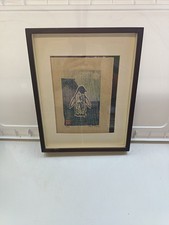
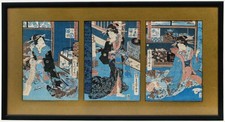
Selected fromJapanese woodblock art oneBay.co.uk.
Endnotes
1.
Source: miyoshi-dmo.jp
Link:https://www.miyoshi-dmo.jp/en/miyoshi-mononoke-museum/
Source snippet
Miyoshi Association of Tourism and Town Development Official WebsiteMiyoshi Association of Tourism and Town Development Official WebsiteJ...
2.
Source: yokai.jp
Title: gazu hyakki yakou
Link:https://yokai.jp/en/collections/gazu-hyakki-yakou
Source snippet
Gazu Hyakki Yagyo: Toriyama Sekien’s Yokai Compendium (1776) | YOKAI.JPJuly 11, 2026...
Published: July 11, 2026
3.
Source: miyoshi-dmo.jp
Link:https://www.miyoshi-dmo.jp/en/mononoke-museum/
Source snippet
Miyoshi Association of Tourism and Town Development Official WebsiteMiyoshi Association of Tourism and Town Development Official Website...
4.
Source: yokai.jp
Title: Home 2. / 3. Collections 4. / 5. Hyakkai Zukan (Illustrat
Link:https://yokai.jp/en/collections/hyakkai-zukan
Source snippet
Hyakkai Zukan: 1737 Yokai Picture Scroll by Sawaki Suushi | YOKAI.JPJuly 11, 2026 — Image: Hyakkai Zukan (Illustrated Scroll of a Hundred...
Published: July 11, 2026
5.
Source: yokai.jp
Title: Konjaku Gazu Zoku Hyakki – Toriyama Sekien’s Yokai Anthology | YOKAI.JP
Link:https://yokai.jp/en/collections/konjaku-gazu-zoku-hyakki
6.
Source: yokai.jp
Title: Konjaku Hyakki Shūi (Later Gleanings of a Hundred Ghosts)
Link:https://yokai.jp/en/collections/konjaku-hyakki-shui
7.
Source: miyoshi-dmo.jp
Title: Activities & Experiences
Link:https://www.miyoshi-dmo.jp/en/category/activity/
8.
Source: miyoshi-mononoke.jp
Link:https://www.miyoshi-mononoke.jp/exhibition/
9.
Source: miyoshi-dmo.jp
Link:https://www.miyoshi-dmo.jp/en/tag/museum/
10.
Source: miyoshi-mononoke.jp
Link:https://miyoshi-mononoke.jp/guide/
11.
Source: miyoshi-mononoke.jp
Link:https://miyoshi-mononoke.jp/museumguide/
12.
Source: yokai.jp
Link:https://yokai.jp/en/yokai/series/summer/hyakki-yagyo
13.
Source: miyoshi-dmo.jp
Link:https://www.miyoshi-dmo.jp/en/
14.
Source: miyoshi-mononoke.jp
Link:https://miyoshi-mononoke.jp/?eo_month=2026-07
15.
Source: library.toledomuseum.org
Title: Toledo Museum Library Details for Yōkai › TMA Library and Archives catalog
Link:https://library.toledomuseum.org/bib/117638
16.
Source: etnografiskamuseet.se
Link:https://www.etnografiskamuseet.se/en/exhibitions/yokai2/
17.
Source: worldofbooks.com
Link:https://www.worldofbooks.com/en-gb/products/yokai-book-koichi-yumoto-9784756254641
18.
Source: pie.co.jp
Title: YOKA I | PIE International
Link:https://pie.co.jp/book/i/5464/?lang=asia
19.
Source: historyofjapan.co.uk
Title: gazu hyakki yagyo
Link:https://historyofjapan.co.uk/wiki/gazu-hyakki-yagyo/
20.
Source: library.toledomuseum.org
Title: opac ISBDdetail.pl
Link:https://library.toledomuseum.org/cgi-bin/koha/opac-ISBDdetail.pl?biblionumber=117638
21.
Source: j-muse.or.jp
Link:https://www.j-muse.or.jp/introduction/detail/?mid=5676
Additional References
22.
Source: youtube.com
Link:http://www.youtube.com/watch?v=T69Bf8ISod4
Source snippet
"Miyoshi Mononoke Museum" OR "Japan Yokai Museum" 広島・三次の「もののけミュージアム」入館者40万人達成 広島市のカップルに記念品 開館5年、妖怪の魅力発信続く RCC NEWS DIG Powered by JNN...
23.
Source: youtube.com
Title: Yokai Yesterdays -Toriyama Sekien
Link:http://www.youtube.com/watch?v=Dn_zal_-dwY
Source snippet
Sekien Toriyama 鳥山 石燕 (1712-1788): Yokai Artist - Japanese Cultural Icons Series...
24.
Source: the-kansai-guide.com
Title: The approximately 80
Link:https://www.the-kansai-guide.com//en/directory/item/11634/
Source snippet
Mizuki Shigeru Museum | Official Kansai Tourism Information | The KANSAI Guide - The Origin of Japan, KANSAIJuly 15, 2026 — MIZUKI SHIGER...
Published: July 15, 2026
25.
Source: youtube.com
Link:http://www.youtube.com/watch?v=6P5Gwka0QcA
Source snippet
Kadokawa’s Japanese Anime Town & Yokai Museum (Sakura Town)...
26.
Source: youtube.com
Title: Kadokawa’s Japanese Anime Town & Yokai Museum (Sakura Town)
Link:http://www.youtube.com/watch?v=Z13k4bPm68Y
Source snippet
Yokai Yesterdays -Toriyama Sekien - First Yokai Bestiary - Night Parade of A Hundred Demons...
27.
Source: books.google.com
Title: Books Japandemonium Illustrated: The Yokai Encyclopedias of Toriyama Sekien
Link:https://books.google.com/books/about/Japandemonium_Illustrated.html?id=KkGjDQAAQBAJ
Source snippet
Google BooksJapandemonium Illustrated: The Yokai Encyclopedias of Toriyama Sekien - Toriyama Sekien - Google Books...
28.
Source: books.google.com
Title: Books Japandemonium Illustrated: The Yokai Encyclopedias of Toriyama Sekien
Link:https://books.google.com/books?id=Hj9-rgEACAAJ
Source snippet
Google BooksJapandemonium Illustrated: The Yokai Encyclopedias of Toriyama Sekien - Toriyama Sekien - Google Books...
29.
Source: youtube.com
Title: The World of Yōkai − Mysterious Spirit Allies
Link:http://www.youtube.com/watch?v=X9uJWsangXQ
Source snippet
Exploring Japan’s Spookiest Town Where Yokai Appear | Fukusaki in Hyogo | Gajiro Kappa...
30.
Source: artpark.or.jp
Link:https://artpark.or.jp/en/exhibition-event/shigeru-mizuki-exhibition/
31.
Source: artscape.jp
Link:https://artscape.jp/artscape/eng/ht/1101.html