Within Curious Angola
Why Angola's Masks Are Not Witchcraft Props
Luanda's anthropology collections show why masks, chiefly objects and everyday tools cannot be reduced to tourist ideas about witchcraft.
On this page
- What masks and chiefly objects communicated
- What disappears when ritual objects enter glass cases
- How provenance and careful labels challenge exotic myths
Page outline Jump by section
Introduction
Visitors entering Luanda’s National Museum of Anthropology often expect to find displays of “tribal masks” linked to magic or witchcraft. Instead, the museum presents a much broader picture. Its mask gallery sits alongside collections of musical instruments, farming tools, iron-working equipment, jewellery, textiles and objects of everyday life, encouraging visitors to understand masks as part of complete social worlds rather than as isolated curiosities. The result is an important corrective to one of the most persistent myths about Central African material culture: that carved masks exist primarily as mysterious ritual props.[Wikipedia]WikipediaMuseu Nacional de Antropologia (AngolaMuseu Nacional de Antropologia (Angola
In Angola, ceremonial masks were created for specific communities, ceremonies and forms of social education. Their meanings varied between regions and ethnic groups, and many were connected with initiation, leadership, performance, memory and the transmission of knowledge. Reducing every carved face to “witchcraft” ignores both the diversity of Angolan cultures and the careful work museums now undertake to explain where objects came from and what they originally communicated.[Wikipedia]WikipediaMuseu Nacional de Antropologia (AngolaMuseu Nacional de Antropologia (Angola
What masks and chiefly objects communicated
The National Museum of Anthropology deliberately places ritual objects within a much wider ethnographic collection. Visitors encounter hunting equipment, fishing gear, pottery, musical instruments, iron-smelting technology and domestic artefacts alongside ceremonial masks. This arrangement makes an important point: masks belonged to functioning societies with political systems, skilled crafts, economies and artistic traditions, not isolated worlds of supernatural belief.[Wikipedia]WikipediaMuseu Nacional de Antropologia (AngolaMuseu Nacional de Antropologia (Angola
Chiefly objects tell a similar story. Ceremonial staffs, jewellery, prestige items and other symbols of authority reflected political leadership and social rank. Their importance lay as much in public authority and community identity as in religious meaning. Displaying these objects together helps visitors see how authority, craftsmanship, music and ritual formed interconnected parts of everyday life.
Even where masks appeared in religious or initiation ceremonies, they fulfilled multiple purposes simultaneously. Across western and central Angola, documented examples show masks being used in initiation schools, educational performances and public ceremonies that marked changes in social status. Rather than representing anonymous spirits or frightening magic, they often embodied ancestors, cultural heroes or moral lessons recognised by the communities participating in the performances. Comparable initiation masks from Angola’s Zombo region, for example, are documented as part of circumcision ceremonies rather than evidence of indiscriminate “witchcraft”.[British Museum]britishmuseum.orgBritish Museummask | British MuseumBritish Museummask | British Museum
The same principle applies across neighbouring cultural traditions represented in museum collections. Masks associated with initiation frequently emphasised growth, community continuity and teaching rather than fear or occult power. Their visual forms carried social messages that would have been understood by participants familiar with local traditions.[National Museum of African Art]africa.si.eduNational Museum of African Art Cap mask | National Museum of African ArtNational Museum of African Art Cap mask | National Museum of African Art
What disappears when ritual objects enter glass cases
Museums inevitably change the way these objects are experienced.
Inside a display case, a carved mask becomes a silent artwork. Originally, however, it may have been inseparable from dance, music, costume, movement, spoken performance and restricted ceremonial knowledge. Wood survives more easily than songs, choreography or oral explanation, meaning visitors naturally notice the sculpture while missing much of the original event that gave it meaning.
The National Museum of Anthropology partly addresses this limitation by surrounding masks with musical instruments and other aspects of material culture. Demonstrations of instruments such as the marimba remind visitors that performance traditions involved sound as well as visual appearance. The museum therefore presents masks as one element within larger cultural systems instead of treating them as mysterious standalone relics.[Wikipedia]WikipediaMuseu Nacional de Antropologia (AngolaMuseu Nacional de Antropologia (Angola
There is another layer of loss. Many museum collections in Angola were assembled during periods of colonial administration, when European collectors often classified unfamiliar objects under broad labels such as “fetish”, “magic” or “primitive religion”. Those categories frequently obscured local explanations and collapsed distinct traditions into simplistic stereotypes. Modern anthropology increasingly challenges those inherited descriptions by restoring cultural context wherever documentation survives.[Wikipedia]WikipediaMuseu Nacional de Antropologia (AngolaMuseu Nacional de Antropologia (Angola

How provenance and careful labels challenge exotic myths
One of the museum’s greatest strengths is that it identifies objects by community, function and cultural setting rather than presenting them simply as exotic African carvings.
Provenance matters because masks that look superficially similar may have originated in different regions and served entirely different purposes. A visitor who learns where an object came from, who made it and how it was used is far less likely to assume that every carved face belonged to a single continent-wide belief system.
Recent cooperation between Angola’s National Museum of Anthropology and museums in Berlin reflects this changing approach. Projects examining collections gathered during the colonial period have focused on improving documentation, translating object records and reassessing how collections were formed. The goal is not only conservation but also greater transparency about collecting histories and more accurate interpretation of cultural heritage.[Wikipedia]WikipediaMuseu Nacional de Antropologia (AngolaMuseu Nacional de Antropologia (Angola
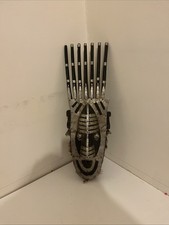
This emphasis on provenance also helps distinguish authentic historical artefacts from the tourist market. Modern decorative carvings inspired by famous Angolan styles circulate widely, often stripped of their original meanings. Museum labels that identify documented origins, communities and functions help visitors recognise the difference between historical cultural objects and commercial reproductions made for export or souvenir markets.[Reddit]reddit.comSeeking info on this maskSeeking info on this maskDecember 17, 2025…
Why this matters in Angola’s curiosity landscape
For travellers interested in Angola’s unusual museums, the National Museum of Anthropology offers something more rewarding than tales of hidden magic. It demonstrates how easily unfamiliar objects can be misunderstood when removed from their original settings and interpreted through colonial stereotypes or popular fascination with the occult.
The museum’s mask displays become genuinely intriguing not because they promise evidence of secret supernatural practices, but because they reveal how art, politics, education, music and ritual intersected in different Angolan communities. By presenting masks alongside ordinary technologies and carefully documenting their cultural origins, the museum replaces exotic myth with a richer understanding of how ceremonial objects once functioned within living societies.
That makes Luanda’s anthropology collections unusual in precisely the right way: they invite curiosity while showing why curiosity should begin with context rather than stereotype.
Amazon book picks
Further Reading
Books and field guides related to Why Angola's Masks Are Not Witchcraft Props. Use these as the next step if you want deeper reading beyond the article.
A History of Art in Africa
This comprehensive work considers and presents the arts of Africa as art history, rather than as expressions of anthropological and socie...
Africa Adorned
A documentation of the incredible panoply of African jewelry and body adornment, surveying every major tribal style and every material used.
African Ceremonies
A newly designed, affordable one-volume edition of this definitive work on the traditional rituals of Africa, containing more than half t...
eBay marketplace picks
Marketplace Samples
Live-tested eBay searches with available results related to this page.
Selected fromAfrican wall decor oneBay.co.uk.
Endnotes
1.
Source: Wikipedia
Title: Museu Nacional de Antropologia (Angola)
Link:https://en.wikipedia.org/wiki/Museu_Nacional_de_Antropologia_%28Angola%29
2.
Source: reddit.com
Title: Seeking info on this mask
Link:https://www.reddit.com/r/AfricanArt/comments/1pp637b/seeking_info_on_this_mask/
Source snippet
Seeking info on this maskDecember 17, 2025...
Published: December 17, 2025
3.
Source: reddit.com
Title: Which country could this mask be from?
Link:https://www.reddit.com/r/Masks/comments/1lf8pgx
Source snippet
Which country could this mask be from?...
4.
Source: hoteisangola.com
Title: National Museum of Anthropology
Link:https://www.hoteisangola.com/en/nao-perder/luanda/museu-nacional-antropologia.html
5.
Source: britishmuseum.org
Title: British Museummask | British Museum
Link:https://www.britishmuseum.org/collection/object/E_Af1905
6.
Source: africa.si.edu
Title: National Museum of African Art Cap mask | National Museum of African Art
Link:https://africa.si.edu/collection/object/nmafa
7.
Source: africa.si.edu
Title: National Museum of African Art Face mask | National Museum of African Art
Link:https://africa.si.edu/collection/object/nmafa
8.
Source: musicinafrica.net
Title: It features an array of tradi
Link:https://www.musicinafrica.net/directory/national-museum-anthropology
Source snippet
National Museum of Anthropology | Music In AfricaSeptember 10, 2015 — NATIONAL MUSEUM OF ANTHROPOLOGY BIO Founded in November 1976, Natio...
Published: September 10, 2015
9.
Source: africa.si.edu
Link:https://africa.si.edu/collection/object/nmafa
10.
Source: africa.si.edu
Link:https://africa.si.edu/collection/object/nmafa
11.
Source: africa.si.edu
Link:https://africa.si.edu/collection/object/nmafa
12.
Source: africa.si.edu
Link:https://africa.si.edu/collection/object/nmafa_84-6-6.1
13.
Source: africa.si.edu
Link:https://africa.si.edu/collection/object/nmafa
14.
Source: si.edu
Title: face mask:nmafa 85 15 22
Link:https://www.si.edu/object/face-mask%3Anmafa
15.
Source: hoteisangola.com
Title: National Museum of Anthropology
Link:https://www.hoteisangola.com/inner.php/en/nao-perder/luanda/museu-nacional-antropologia.html?print=1
16.
Source: britishmuseum.org
Link:https://www.britishmuseum.org/collection/object/E_Af1905
17.
Source: britishmuseum.org
Link:https://www.britishmuseum.org/collection/object/E_Af1905
18.
Source: britishmuseum.org
Link:https://www.britishmuseum.org/collection/object/E_Af1954
19.
Source: thingstodoinluanda.com
Title: National Museum of Anthropology
Link:https://thingstodoinluanda.com/landmark/national-museum-of-anthropology/
Additional References
20.
Source: revistas.usp.br
Title: br Cilende: the mask dance at the Luvale Culture Festival (Angola) | GIS
Link:https://revistas.usp.br/gis/en/article/view/142391
Source snippet
usp.brCilende: the mask dance at the Luvale Culture Festival (Angola) | GIS - Gesture, Image and Sound - Anthropology JournalJuly 23, 201...
21.
Source: smb.museum
Title: Conservation Department: Museu Nacional de Antropologia in Angola
Link:https://www.smb.museum/en/whats-new/detail/the-goethe-institut-and-the-ethnologisches-museum-initiate-a-conservation-department-at-the-museu-nacional-de-antropologia-in-angola/
Source snippet
September 30, 2020 — Image: Workshop zum Aufbau einer Abteilung für Konservierung und Restaurierung am Museu Nacional de Antropologia in...
Published: September 30, 2020
22.
Source: youtube.com
Title: African Masquerades: Spirits or Myth? Here’s What Cultures Say
Link:https://www.youtube.com/watch?v=kv3zfb0C6Ec
Source snippet
Angola Luanda - Museu nacional de antropologia...
23.
Source: siarchives.si.edu
Title: siris arc 385397
Link:https://siarchives.si.edu/collections/siris_arc_385397
Source snippet
11-009 [71-2163] Creator: Neufeld, Harry B Form/Genre: Black-and-white negatives Date: 1971 Citation: Smith...
24.
Source: youtube.com
Title: When white people arrived in Africa, this is how they were “tested”
Link:https://www.youtube.com/watch?v=-BrdHHB41dM
Source snippet
Female (pwo) mask (Chokwe peoples)...
25.
Source: youtube.com
Title: The Makishi Masquerade
Link:https://www.youtube.com/watch?v=2FVSFE5pRks
Source snippet
African Masquerades: Spirits or Myth? Here's What Cultures Say...
26.
Source: ich.unesco.org
Title: sona drawings and geometric figures on sand 01994
Link:https://ich.unesco.org/en/RL/sona-drawings-and-geometric-figures-on-sand-01994?RL=01994
27.
Source: youtube.com
Title: Female (pwo) mask (Chokwe peoples)
Link:https://www.youtube.com/watch?v=AVNuN89x090
Source snippet
The Makishi Masquerade...
28.
Source: hoteisangola.com
Title: Museu Nacional de Antropologia
Link:https://www.hoteisangola.com/nao-perder/luanda/museu-nacional-antropologia.html
29.
Source: hoteisangola.com
Title: Museu Nacional de Antropologia
Link:https://www.hoteisangola.com/nao-perder/museu-nacional-antropologia.html