Within Congo Curiosities
Which Unusual Congolese Collections Can Visitors Actually See?
Beyond Kinshasa and Lubumbashi, mission collections and royal holdings offer unusual objects but often require local access checks.
On this page
- Reliable national museums in Kinshasa and Lubumbashi
- Bukavu's mission collection and its colonial context
- Kuba royal objects and uncertain regional access
Page outline Jump by section
Introduction
The Democratic Republic of the Congo does not have a well-publicised trail of quirky regional museums. Instead, many of its most intriguing collections are dispersed between national museums, former mission compounds and traditional royal centres, where access can be less predictable than in major tourist destinations. That makes careful planning important: some collections are fully public, others operate by appointment, and a few are known more from historical documentation than from reliable modern visitor reports.
For travellers interested in unusual heritage rather than conventional sightseeing, the greatest rewards often come from collections that preserve ritual objects, royal regalia, archaeological discoveries and ethnographic material in their original cultural regions rather than in overseas museums. The challenge is distinguishing places with dependable public access from those that require advance local enquiries or may no longer function as regular museums.[IMNC - Musées Nationaux du Congo]imnc.cdMusées Nationaux du Congo IMNCMusées Nationaux du CongoIMNC - Institut des Musées Nationaux du Congo…
Which Congolese collections are the most reliable to visit?
The safest starting point remains the network managed by the Institut des Musées Nationaux du Congo (IMNC). While these are not hidden in the literal sense, they provide the strongest foundation before seeking out smaller regional collections.
Kinshasa: the national reference collection
The National Museum of the Democratic Republic of the Congo in Kinshasa offers the country’s most comprehensive public display of archaeological material, traditional sculpture, ritual objects, musical instruments and artefacts from many different cultural regions. Rather than presenting these as exotic curiosities, the museum deliberately places them within their historical and social context, helping visitors understand how ceremonial objects, masks and power figures functioned within Congolese societies.[IMNC - Musées Nationaux du Congo]imnc.cdMusées Nationaux du Congo IMNCMusées Nationaux du CongoIMNC - Institut des Musées Nationaux du Congo…
For visitors interested in unusual collections, this is also the most dependable place to encounter objects connected with royal courts, ritual specialists and regional traditions that are otherwise scattered across the country.
Lubumbashi: a broader scientific collection
The National Museum of Lubumbashi is smaller but offers a different perspective. Alongside ethnographic collections, it has long incorporated archaeological and natural history material, making it one of the country’s few museums where cultural history intersects with scientific collecting.
Although Lubumbashi lacks the international profile of Kinshasa’s museum, it often appeals to travellers who enjoy eclectic collections rather than single-theme exhibitions. As part of the IMNC network, it also has more predictable visitor arrangements than many smaller institutions.[IMNC - Musées Nationaux du Congo]imnc.cdMusées Nationaux du Congo IMNCMusées Nationaux du CongoIMNC - Institut des Musées Nationaux du Congo…
Bukavu’s mission collection and its colonial legacy
One of eastern Congo’s lesser-known collections is the Kivu Museum in Bukavu, traditionally associated with the Catholic mission of the Xaverian Fathers. It represents a different museum tradition from the national institutions.
Mission museums in central Africa often accumulated objects during decades of missionary activity, preserving ceremonial masks, everyday tools, musical instruments, carvings and religious material that reflected both local cultures and missionary interests. These collections can be historically valuable because they contain objects gathered before rapid social and political change transformed many communities.
At the same time, visitors should recognise the colonial context in which such collections were assembled. Mission museums frequently interpreted Congolese beliefs through European religious perspectives, and many displays reflected colonial-era ideas that modern scholarship has substantially revised. Rather than treating these museums as neutral records, it is useful to view them as historical documents in their own right, revealing both Congolese cultural traditions and the attitudes of those who collected them.
The principal difficulty today is practical rather than historical. Reliable, current public information about opening hours, staffing and visitor arrangements is limited. Before travelling specifically to see the collection, visitors should verify local access through regional contacts or institutions rather than assuming regular museum operations.[Wikipedia]WikipediaList of museums in the Democratic Republic of the CongoList of museums in the Democratic Republic of the Congo

Can visitors see Kuba royal collections?
Among Congo’s most fascinating heritage is the artistic tradition of the Kuba Kingdom, centred on Mushenge in Kasai. The Kuba royal court developed some of central Africa’s most distinctive ceremonial art, including elaborate masks, throne carvings, prestige weapons, textiles, drums and royal portrait sculptures.
Unlike many royal collections elsewhere, however, the Kuba heritage remains closely connected with living traditional authority rather than existing solely inside a museum. Historical photographs and museum records document royal regalia, court ceremonies and ceremonial buildings at Mushenge, demonstrating the continuing importance of the royal centre into the modern period.[National Museum of African Art]africa.si.eduOpen source on si.edu.
Visitors should not expect a conventional museum experience. Although a Mushenge Museum has appeared in museum listings for many years, dependable contemporary information about regular exhibitions, opening schedules and visitor facilities is scarce. In practice:
- the royal centre itself remains culturally significant;
- access may depend on local authorities or community arrangements;
- exhibitions may be temporary, informal or unavailable;
- advance local enquiries are strongly recommended.
This uncertainty should not be mistaken for a lack of heritage. Instead, it reflects the reality that important cultural objects remain embedded within living communities rather than being permanently displayed in purpose-built museums.[Wikipedia]WikipediaList of museums in the Democratic Republic of the CongoList of museums in the Democratic Republic of the Congo
Why are so many remarkable Congolese objects found abroad?
Anyone searching for Congo’s royal collections quickly encounters an unavoidable reality: many internationally famous Congolese objects are now preserved in European and North American museums.
Kuba royal drums, ceremonial regalia, portrait sculptures and court objects entered overseas collections during the colonial period and afterwards. Modern provenance research increasingly examines how these objects were acquired, whether export regulations were followed and whether their removal reflected unequal colonial relationships. One documented example is a royal Kuba drum purchased directly from the reigning king in 1995, where later museum documentation openly discusses both the legal and ethical questions surrounding its acquisition.[collectioncms.africamuseum.be]collectioncms.africamuseum.beMO.1995.16.1 | HERKOMSTPARCOURS…
This broader context makes visits to museums inside the Democratic Republic of the Congo particularly valuable. Even when local collections are smaller than those abroad, they present Congolese heritage within its original historical and cultural landscape rather than as isolated works of art.
Planning a visit to hidden collections
Travellers seeking unusual Congolese collections should approach regional museums differently from large international institutions.
A practical strategy is to:
- begin with the national museums in Kinshasa or Lubumbashi, where opening arrangements are relatively dependable;
- treat Bukavu’s mission collection as a worthwhile but locally verified destination;
- regard Mushenge primarily as a cultural and royal heritage site rather than expecting a fully developed museum;
- confirm access shortly before travelling, as staffing, security conditions and opening arrangements can change.
For enthusiasts of unusual museums, the reward lies less in discovering eccentric curiosities than in encountering collections that remain closely connected to living traditions, regional identities and royal history. In the Democratic Republic of the Congo, the country’s hidden collections are unusual precisely because many have never become conventional tourist attractions, preserving a stronger connection between artefacts, communities and the landscapes from which they came.

Amazon book picks
Further Reading
Books and field guides related to Which Unusual Congolese Collections Can Visitors Actually See?. Use these as the next step if you want deeper reading beyond the article.
Kuba
-A fascinating and essential overview of the Kuba people and their art through fifty exemplary pieces This volume explores the intriguing...
The Scramble for Art in Central Africa
Western attitudes to Africa have been influenced to an extraordinary degree by the arts and artefacts that were brought back by the early...
The Brutish Museums
New York Times 'Best Art Books' 2020 'Essential' – Sunday Times 'Brilliantly enraged' - New York Review of Books 'A real game-changer'– E...
eBay marketplace picks
Marketplace Samples
Example marketplace items related to this page. Use the search link to explore similar finds on eBay.
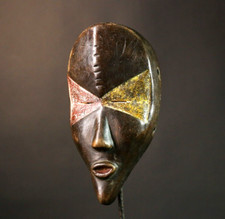
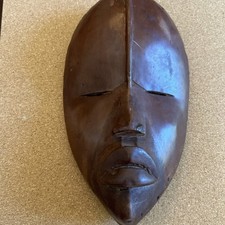
Selected fromCongo mask replica oneBay.co.uk.
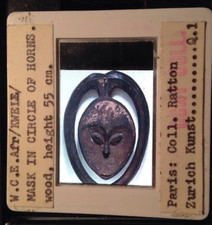
Current eBay listing
Kwele Congo-mask In Horn Circle- African Tribal Art 35mm Slide
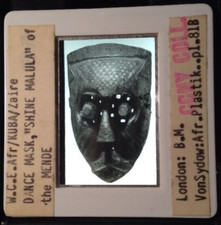
Current eBay listing
Kuba Congo-Dance Mask "Shine Malula" African Tribal Art 35mm Slide
Endnotes
1.
Source: imnc.cd
Title: Musées Nationaux du Congo IMNC
Link:https://imnc.cd/
Source snippet
Musées Nationaux du CongoIMNC - Institut des Musées Nationaux du Congo...
2.
Source: Wikipedia
Title: List of museums in the Democratic Republic of the Congo
Link:https://en.wikipedia.org/wiki/List_of_museums_in_the_Democratic_Republic_of_the_Congo
3.
Source: collectioncms.africamuseum.be
Link:https://collectioncms.africamuseum.be/en/node/10
Source snippet
MO.1995.16.1 | HERKOMSTPARCOURS...
4.
Source: africamuseum.be
Title: Collections, archives and libraries | Royal Museum for Central Africa
Link:https://www.africamuseum.be/research/collections_libraries
5.
Source: africamuseum.be
Title: Origin of the collections | Royal Museum for Central Africa
Link:https://www.africamuseum.be/en/discover/origin_collections
6.
Source: africa.si.edu
Link:https://africa.si.edu/archives/object/sova-eepa-1973-001-ref28273
7.
Source: africa.si.edu
Link:https://africa.si.edu/archives/object/sova-eepa-1973-001-ref28265
8.
Source: si.edu
Link:https://www.si.edu/object/archives/components/sova-eepa-1973-001-ref28262
Source snippet
Kuba titleholder at the royal court, Mushenge, Congo (Democratic Republic) | Smithsonian InstitutionKUBA TITLEHOLDER AT THE ROYAL COURT...
9.
Source: africa.si.edu
Link:https://africa.si.edu/archives?edan_fq%5B0%5D=-object_type%3A%22Postcards+%5B32056000022255%5D%22&edan_fq%5B1%5D=culture%3A%22Kuba+%28African+people%29%22&edan_fq%5B2%5D=-place%3A%22Nigeria%22&page=3
Source snippet
National Museum of African ArtARCHIVES EXPLORE THE ELIOT ELISOFON PHOTOGRAPHIC ARCHIVES Browse a wealth of digitized images that trace...
10.
Source: africa.si.edu
Title: sova eepa 1973 001 ref30490
Link:https://africa.si.edu/archives/object/sova-eepa-1973-001-ref30490
Source snippet
Nyim (ruler) Kot a-Mbweeky III's drum of reign and royal basket, Mushenge, Congo (Democratic Republic) | National Museum of African ArtKU...
11.
Source: africa.si.edu
Title: sova eepa 1973 001 ref13702
Link:https://africa.si.edu/archives/object/sova-eepa-1973-001-ref13702
Additional References
12.
Source: youtube.com
Title: Hidden [DR Congo]({{ ‘what-makes-the-dr-congos-collections-so/’ | relative_url }}) Museum Safeguards Endangered Tradition
Link:https://www.youtube.com/watch?v=BXyL8koiT5g
Source snippet
One of the most beautiful museums in Africa? My opinion! National Museum of the DR Congo...
13.
Source: congovirtuel.com
Link:https://www.congovirtuel.com/page_rapport_travaux/page_memoire_kingana.php
14.
Source: youtube.com
Link:https://www.youtube.com/watch?v=xWn-ullFguE
Source snippet
Kinshasa National Museum...
15.
Source: youtube.com
Title: NATIONAL MUSEUM OF DRC
Link:https://www.youtube.com/watch?v=emtta3Pu5d8
Source snippet
Hidden DR Congo Museum Safeguards Endangered Tradition...
16.
Source: afrikamuseum.be
Title: Cultural heritage Collections | Royal Museum for Central Africa
Link:https://www.afrikamuseum.be/en/research/discover/collections_management/cultural_heritage_collections
17.
Source: youtube.com
Title: The DRC National Museum in Kinshasa
Link:https://www.youtube.com/watch?v=GuYxpkVljH8
Source snippet
NATIONAL MUSEUM OF DRC...
18.
Source: youtube.com
Title: Kinshasa National Museum
Link:https://www.youtube.com/watch?v=8BzmPCkQKMc