Where Mali Keeps Its Strangest Cultural Treasures
Mali does not have a large circuit of purpose-built “weird museums” devoted to ghosts, monsters, crime or medical oddities.
Page outline Jump by section
Introduction
These collections require careful interpretation. Objects frequently described abroad as “fetishes”, “tribal art” or mysterious sculptures may have been active elements in ceremonies rather than decorative curiosities. Others were excavated illegally, exported without reliable records or removed during colonial expeditions. Mali’s unusual heritage is therefore not simply a catalogue of uncanny things. It is also a story about what happens when living ritual, private knowledge and archaeological evidence are turned into museum objects.

Where to see Mali’s most unusual collections
The National Museum of Mali
The National Museum in Bamako is the clearest starting point for understanding Mali’s strange and ceremonial material culture. Its remit is archaeological and ethnographic rather than sensational: collections cover excavated objects, textiles, musical instruments, clothing, masks and ritual artefacts from different communities. The museum also maintains archives and conservation facilities, while models of major earthen buildings help place portable objects within the landscapes and religious architecture from which they came.[musee-national-mali.org]musee-national-mali.orgA l’indépendance, le musée soudanais de Bamako devint Musée National du Mali avec pour vocation la promotion d’une culture authentique et…
For an offbeat-history visitor, the masks and ritual pieces are likely to be the most immediately compelling. Yet they are also the easiest to misunderstand. A carved mask displayed on a wall is only one component of an event that may originally have included a full costume, music, controlled movements, initiation knowledge and obligations towards ancestors. Museums outside Mali have increasingly acknowledged that isolating the wooden head can strip such an object of much of its meaning.[National Museum of African Art]africa.si.eduMali… Traditionally Dogon masks are controlled by the Awa society, a group of predominantly male initiates who conduct the public rite…
The archaeological material offers a different kind of mystery. Ancient settlements around the inland Niger delta produced terracotta figures, beads, metal objects and other remains that reveal complex urban societies. Many figures lack secure excavation records because sites were heavily looted, making it difficult to establish where an object was found, what surrounded it or whether it is genuine. A visually impressive statuette without archaeological context may be more enigmatic, but it is less useful as historical evidence.[issafrica.org]issafrica.orginstability is decimating malis cultural heritageinstability is decimating malis cultural heritage
The museum is a public national institution rather than an eccentric private cabinet. Its unusualness lies in the material itself and in the difficult questions surrounding it: which objects were sacred, which were theatrical, which came from documented excavations and which traditions can be explained publicly without exposing restricted knowledge.
The Kôrè Museum in Ségou
The Kôrè Museum of Arts and Crafts, part of the Kôrè Cultural Centre in Ségou, is especially relevant to readers interested in masks, puppets and performance traditions. The centre describes the museum as a place for conserving tangible and intangible heritage, with particular attention to music, dance, masks, puppets, artistic skills and practices at risk of disappearing.[Kôrè Cultural Center]koresegou.orgThe Kôrè Museum of Arts and Crafts in Ségou is a major site of memory, conservation of the tangible and intangible cultural heritage of M…
This emphasis matters because some of Mali’s strangest-looking figures were built to move. Along the Niger and in the Ségou region, performances have featured human characters, animals and imagined creatures represented through masks, articulated figures and large structures carried by concealed performers. Costumes may incorporate fabric, fibres, mirrors, sheet metal and reused manufactured materials. Drumming, songs and carefully ordered appearances transform the figures into characters with particular virtues, weaknesses and social meanings.[unima.org]wepa.unima.orgWorld Encyclopedia of Puppetry Arts MaliWorld Encyclopedia of Puppetry Arts Mali
A hippopotamus, antelope, bird or hybrid beast in this tradition is not the Malian equivalent of a cryptid specimen. It belongs to theatre, communal memory and moral commentary. The creatures can represent human behaviour, local history, relationships between age groups or the dangers and benefits associated with the river and surrounding environment. Their appearance may be fantastical, but presenting them as evidence of monster belief would be misleading.
The Kôrè approach is consequently closer to a performance museum than a conventional sculpture gallery. Its strongest interpretive value comes from connecting physical figures with the dance, music, craftsmanship and storytelling that make them intelligible.
Masks, ancestors and objects of power
Dogon masks from the Bandiagara region are among Mali’s most recognisable objects, but their fame has encouraged oversimplification. Different forms can represent people, animals or more abstract beings, while their use is associated with organised ceremonial societies and funerary rites. In some ceremonies, masked performers assist in managing the relationship between the living, the dead and the wider spiritual order.[emory.edu]digitalprojects.carlos.emory.eduOpen source on emory.edu.
A famous example is the tall cross-shaped kanaga mask. Museum labels often offer a neat symbolic explanation for its geometry, but meanings may vary, and some knowledge belongs to initiated participants rather than outside observers. The safest interpretation is functional as well as visual: it was worn with a costume and performed through demanding movements during ceremonies connected with death and remembrance. It was not designed as a static modern artwork.[metmuseum.org]metmuseum.orgThe Metropolitan Museum of Art Dogon artistThe Metropolitan Museum of Art Dogon artist
Even more difficult to classify are objects commonly called boli: compact, sometimes animal-like ritual forms constructed around an inner core and repeatedly coated with mixtures that could include earth and organic substances. Such an object accumulated importance through its making, treatment and use. Its rough or encrusted surface was not unfinished decoration but part of its identity as a charged ritual object.
One particularly contested example was taken from Diabougou during the French Dakar–Djibouti expedition of 1931–33. Contemporary documentation by expedition member Michel Leiris described coercive collection practices. Later research involving the National Museum of Mali revisited both French records and local memories. The case complicates any simple restitution story: descendants associated with the community reportedly regarded the object as ritually compromised and did not necessarily want it returned to its former religious setting, although return to Mali as national heritage remained a separate possibility.[Le Monde.fr]lemonde.frOpen source on lemonde.fr.
This is a useful warning for curiosity-seekers. A disturbing-looking object may be sacred rather than macabre; a museum description may preserve only the knowledge collectors were able or permitted to obtain; and returning an object does not automatically restore the world of practice from which it was removed.
Timbuktu’s libraries as cabinets of knowledge
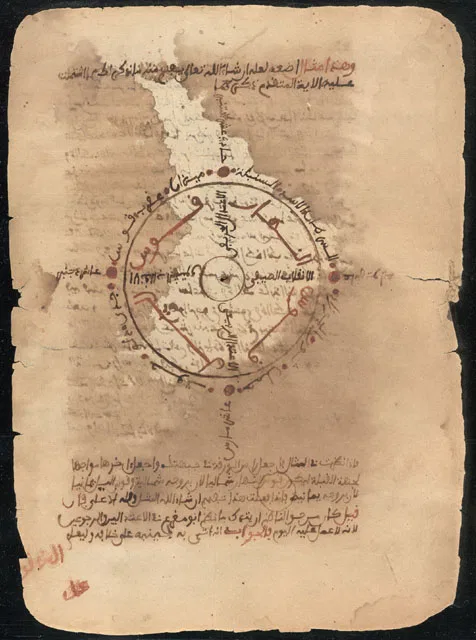
Timbuktu’s manuscript collections are Mali’s most extraordinary unusual archives. They are not single treasure rooms resembling a European medieval library. The manuscripts have historically been distributed among public institutions and private family libraries, with ownership, scholarship and custodianship passing through generations. The state-founded Ahmed Baba Institute, established in 1973 under an earlier name, became the best-known institutional repository, but it represents only part of the wider manuscript tradition.[tombouctoumanuscripts.uct.ac.za]tombouctoumanuscripts.uct.ac.zaHe would sometimes pay US$200 for a single-page document and sometimes US$300 for a complete manuscript…. The manuscripts at the Ahmed…
The contents overturn the familiar idea that the collections consist only of copies of religious scripture. Surviving texts address law, theology, grammar and poetry, but also astronomy, medicine, remedies, trade, slavery and social disputes. A 1733 astronomy manuscript and a work discussing diseases and treatments were among the items shown in a Library of Congress exhibition. Such material reveals Timbuktu not as an isolated desert curiosity, but as a centre connected to wide intellectual and commercial networks.[The Library of Congress]loc.govOpen source on loc.gov.
Their modern history is almost as remarkable as their contents. When armed Islamist groups occupied Timbuktu in 2012, custodians moved large numbers of manuscripts through covert networks, using ordinary containers and transport to conceal them. Some material was destroyed or lost, but the broader rescue was far more successful than early reports suggested. Beginning in 2025, batches held in Bamako were returned to Timbuktu, partly because the capital’s greater humidity created conservation problems for documents adapted to a dry desert environment.[AP News]apnews.comAP News Timbuktu's famed manuscripts escaped al-Qaida but the threat remainsAP News Timbuktu's famed manuscripts escaped al-Qaida but the threat remains
These archives are not straightforward tourist attractions. Access can depend on security, conservation work, institutional arrangements and the wishes of private owners. Their significance within Mali’s curiosity landscape comes from the combination of physical fragility, hidden family collections and unexpected subject matter. A small handwritten volume may contain a legal opinion, an astronomical diagram or a recipe for treating illness rather than a mysterious spell.
Nor should the manuscripts be romanticised as a single “lost library”. That phrase obscures the decentralised reality and the work of named families, librarians, scholars and conservators. The most credible interpretation treats the collection as a living archival network whose survival has depended on local custodianship as much as international digitisation and conservation support.
Looting, replicas and uncertain provenance
Mali’s archaeological and ritual objects have long been attractive to international collectors. Demand for wooden sculpture developed during the colonial period, while ancient terracottas from the Djenné region later became highly prized. Economic hardship, weak site protection, political instability and overseas demand combined to encourage destructive digging. Researchers have estimated that an extremely high proportion of known archaeological locations have suffered some form of looting.[issafrica.org]issafrica.orginstability is decimating malis cultural heritageinstability is decimating malis cultural heritage
The damage goes beyond the loss of attractive objects. Archaeology depends on relationships: the depth at which an item was found, nearby buildings, burials, charcoal, pottery fragments and other materials. Once a figure is removed secretly, much of that evidence disappears. The result is a paradox particularly relevant to museums of curiosity: the more mysterious an unrecorded object appears, the more likely it is that the evidence needed to explain it has been destroyed.
Uncertain provenance also creates space for copies, composites and outright forgeries. An object described in a market as “old Dogon”, “ritual” or “excavated near Djenné” may be authentic, recently made for sale or deliberately aged. Style alone rarely settles the matter. Responsible museums look for documented collection history, legal export records, scientific testing where appropriate and comparison with securely excavated material.
Colonial collecting presents a related problem. The Dakar–Djibouti expedition gathered thousands of objects across Africa, including sacred material from what was then French Sudan. Written accounts show that at least some acquisitions involved pressure, deception or direct seizure. Objects collected in this way may now be carefully conserved and extensively studied, but good curation cannot erase the conditions of removal.[The Times]thetimes.comThe bill under debate would remove the need for special legislation for each restitution, streamlining the process. Campaigners like Mari…
For visitors, provenance is therefore part of the exhibit rather than an administrative detail. The most trustworthy displays distinguish clearly between excavated finds, purchased objects, donations, commissioned replicas and pieces with incomplete histories.

What visitors can realistically expect
Mali’s principal museums and cultural institutions preserve exceptional material, but a visit cannot currently be treated like an ordinary independent museum holiday. As of July 2026, the UK Foreign, Commonwealth and Development Office advises against all travel to Mali because of severe security risks. Other governments maintain comparable warnings, and restrictions can affect movement well beyond Bamako.[gov.uk]GOV.UKMali travel adviceMali travel advice
Published opening details on commercial travel sites and older visitor reviews should not be treated as confirmation that a museum is currently accessible. Hours, exhibitions and local entry arrangements may change without being reflected promptly online. The National Museum maintains an official website, while the Kôrè Cultural Centre publishes information about its heritage programmes, but practical access still needs direct verification through authoritative local channels.[musee-national-mali.org]musee-national-mali.orgA l’indépendance, le musée soudanais de Bamako devint Musée National du Mali avec pour vocation la promotion d’une culture authentique et…
Readers exploring Mali remotely can nevertheless find substantial material through institutional digital exhibitions and international museum databases. The Library of Congress provides an accessible introduction to selected Timbuktu manuscripts, while museums including the Metropolitan Museum of Art, the Smithsonian and the Menil Collection publish detailed records for Malian masks and sculptures. These overseas holdings are useful for close study, provided their collecting histories and the limitations of object-only interpretation remain visible.[loc.gov]loc.govOpen source on loc.gov.
Mali’s most distinctive curiosity collections are therefore neither freak shows nor commercial rooms of manufactured mystery. They preserve evidence of performance, death ritual, religious authority, scholarship, vanished cities and contested collecting. Their strangeness is genuine, but it comes from encountering systems of knowledge that do not fit neatly inside the modern glass case.
Amazon book picks
Further Reading
Books and field guides related to Where Mali Keeps Its Strangest Cultural Treasures. Use these as the next step if you want deeper reading beyond the article.
A History of Zimbabwe
The first single-volume history of Zimbabwe with detailed coverage from pre-colonial times to the present, this book examines Zimbabwe's...
A History of African Archaeology
First published 1990. Subjects: History, Antiquities, Archaeology, Archéologie, Antiquités.
eBay marketplace picks
Marketplace Samples
Live-tested eBay searches with available results related to this page.
Selected fromAfrican archaeology decor oneBay.co.uk.

Endnotes
1.
Source: musee-national-mali.org
Link:https://musee-national-mali.org/
Source snippet
A l’indépendance, le musée soudanais de Bamako devint Musée National du Mali avec pour vocation la promotion d’une culture authentique et...
2.
Source: tombouctoumanuscripts.uct.ac.za
Link:https://tombouctoumanuscripts.uct.ac.za/manuscript-libraries/ahmed-baba-institute-higher-learning-and-islamic-research-iheri-ab
Source snippet
He would sometimes pay US$200 for a single-page document and sometimes US$300 for a complete manuscript.... The manuscripts at the Ahmed...
3.
Source: unesdoc.unesco.org
Link:https://unesdoc.unesco.org/ark%3A/48223/pf0000044720
Source snippet
UNESCO DocumentsBirth of a museum at Bamako, MaliThe Bamako Museum will have the task of compiling an inventory of expat- riated Malian a...
4.
Source: smarthistory.org
Link:https://smarthistory.org/cultural-heritage-risk-mali/
5.
Source: digitalprojects.carlos.emory.edu
Link:https://digitalprojects.carlos.emory.edu/exhibits/show/2022-masks-and-movement/kanaga-mask/about
6.
Source: menil.org
Title: Mask (Emina, Kanaga)
Link:https://www.menil.org/collection/objects/4040-mask-emina-kanaga
7.
Source: tombouctoumanuscripts.uct.ac.za
Link:https://tombouctoumanuscripts.uct.ac.za/manuscript-libraries
8.
Source: GOV.UK
Title: Mali travel advice
Link:https://www.gov.uk/foreign-travel-advice/mali
9.
Source: travel.state.gov
Link:https://travel.state.gov/en/international-travel/travel-advisories/mali.html
10.
Source: menil.org
Link:https://www.menil.org/exhibition/recollecting-dogon
11.
Source: whc.unesco.org
Link:https://whc.unesco.org/en/documents/139085/
12.
Source: whc.unesco.org
Link:https://whc.unesco.org/fr/etatsparties/ml
13.
Source: unesco.org
Link:https://www.unesco.org/en/articles/unesco-iccrom-boost-global-network-cultural-first-aiders-trained-rescue-culture-emergencies
14.
Source: unesdoc.unesco.org
Link:https://unesdoc.unesco.org/ark%3A/48223/pf0000127347
15.
Source: whc.unesco.org
Link:https://whc.unesco.org/fr/evenements/749/
16.
Source: unesdoc.unesco.org
Link:https://unesdoc.unesco.org/ark%3A/48223/pf0000146898
17.
Source: unesco.org
Link:https://www.unesco.org/fr/articles/le-bureau-de-lunesco-au-mali-participe-au-lancement-de-la-3-edition-du-programme-city-tour
18.
Source: unesdoc.unesco.org
Link:https://unesdoc.unesco.org/ark%3A/48223/pf0000049846
19.
Source: unesdoc.unesco.org
Link:https://unesdoc.unesco.org/ark%3A/48223/pf0000085971
20.
Source: whc.unesco.org
Link:https://whc.unesco.org/document/123373
21.
Source: unesco.org
Link:https://www.unesco.org/fr/articles/lunesco-soutient-la-14eme-edition-des-rencontres-de-bamako-biennale-africaine-de-la-photographie
22.
Source: unesdoc.unesco.org
Link:https://unesdoc.unesco.org/ark%3A/48223/pf0000056708
23.
Source: unesco.org
Title: lunesco contribue la lutte contre le trafic illicite des biens culturels
Link:https://www.unesco.org/fr/articles/lunesco-contribue-la-lutte-contre-le-trafic-illicite-des-biens-culturels
24.
Source: unesdoc.unesco.org
Link:https://unesdoc.unesco.org/ark%3A/48223/pf0000072851
25.
Source: whc.unesco.org
Link:https://whc.unesco.org/document/106558
26.
Source: unesdoc.unesco.org
Link:https://unesdoc.unesco.org/ark%3A/48223/pf0000368351
27.
Source: unesco.org
Link:https://www.unesco.org/fr/articles/concours-national-darchitecture-pour-la-reconstruction-du-monument-al-farouk-le-jury-annonce-lequipe
28.
Source: whc.unesco.org
Link:https://whc.unesco.org/en/list/516/
29.
Source: whc.unesco.org
Link:https://whc.unesco.org/en/events/749/
30.
Source: whc.unesco.org
Link:https://whc.unesco.org/en/list/116/
31.
Source: africa.com
Title: Museums of Africa
Link:https://africa.com/museums-of-burkina-faso
32.
Source: africa.com
Link:https://africa.com/countries-of-africa/east-africa/malawi
33.
Source: africa.com
Link:https://africa.com/mali
34.
Source: assets.publishing.service.gov.uk
Title: FCDO TA 026 Mali Travel Advice Ed5 1
Link:https://assets.publishing.service.gov.uk/media/651e9d405f7e68000dfabda7/FCDO__TA__026-_Mali_Travel_Advice_Ed5__1.pdf
35.
Source: GOV.UK
Link:https://www.gov.uk/foreign-travel-advice
36.
Source: malawi.gov.mw
Title: Malawi Government Information and Services
Link:https://www.malawi.gov.mw/
37.
Source: koresegou.org
Link:https://koresegou.org/en/patrimony/
Source snippet
The Kôrè Museum of Arts and Crafts in Ségou is a major site of memory, conservation of the tangible and intangible cultural heritage of M...
38.
Source: Wikipedia
Title: National Museum of Mali
Link:https://en.wikipedia.org/wiki/National_Museum_of_Mali
39.
Source: africa.si.edu
Link:https://africa.si.edu/collection/object/nmafa
Source snippet
Mali... Traditionally Dogon masks are controlled by the Awa society, a group of predominantly male initiates who conduct the public rite...
40.
Source: lemonde.fr
Link:https://www.lemonde.fr/en/culture/article/2026/04/16/at-lyon-s-musee-des-confluences-the-loeb-donation-celebrates-mali-s-living-arts_6752476_30.html
Source snippet
These vibrant masks, puppets, and instruments—mainly from the Bozo, Somono, Marka, and Bamanan peoples of Mali—were traditionally used in...
41.
Source: issafrica.org
Title: instability is decimating malis cultural heritage
Link:https://issafrica.org/iss-today/instability-is-decimating-malis-cultural-heritage
42.
Source: koresegou.org
Title: Kôrè Cultural Center Achievements of the Kôrè Cultural Center
Link:https://koresegou.org/en/achievements-of-the-kore-cultural-center/
43.
Source: wepa.unima.org
Title: World Encyclopedia of Puppetry Arts Mali
Link:https://wepa.unima.org/en/mali/
44.
Source: theatreroomasia.com
Link:https://theatreroomasia.com/wp-content/uploads/2013/07/malianpuppetrytradition.pdf
45.
Source: metmuseum.org
Title: The Metropolitan Museum of Art Dogon artist
Link:https://www.metmuseum.org/art/collection/search/310850
46.
Source: metmuseum.org
Title: The Metropolitan Museum of Art Dogon artist
Link:https://www.metmuseum.org/art/collection/search/309859
47.
Source: metmuseum.org
Title: The Metropolitan Museum of Art Dogon artist
Link:https://www.metmuseum.org/art/collection/search/315061
48.
Source: lemonde.fr
Link:https://www.lemonde.fr/afrique/article/2025/08/14/fetiche-star-des-surrealistes-le-boli-de-diabougou-n-est-plus-le-bienvenu-dans-son-village-malien_6629213_3212.html
49.
Source: thetimes.com
Link:https://www.thetimes.com/world/europe/article/french-art-bill-restitution-colonial-looting-m59kpbmsz
Source snippet
The bill under debate would remove the need for special legislation for each restitution, streamlining the process. Campaigners like Mari...
50.
Source: loc.gov
Link:https://www.loc.gov/exhibits/mali/
51.
Source: loc.gov
Title: The Library of Congress Exhibition
Link:https://www.loc.gov/exhibits/mali/mali-exhibit.html
52.
Source: loc.gov
Link:https://www.loc.gov/item/prn-03-109/
53.
Source: apnews.com
Title: AP News Timbuktu’s famed manuscripts escaped al-Qaida but the threat remains
Link:https://apnews.com/article/5d67428058eeaadd9445a4d460fa78d2
54.
Source: unima.org
Title: UNIM A Mali – Unima
Link:https://www.unima.org/en/centres-unima/unima-mali-2/
55.
Source: Wikipedia
Link:https://pt.wikipedia.org/wiki/Mali
56.
Source: Wikipedia
Link:https://en.wikipedia.org/wiki/Mali
57.
Source: loc.gov
Link:https://www.loc.gov/exhibits/mali/mali-overview.html
58.
Source: metmuseum.org
Title: Dogon artist
Link:https://www.metmuseum.org/art/collection/search/314148
59.
Source: metmuseum.org
Title: Marionette: Ram’s Head
Link:https://www.metmuseum.org/art/collection/search/310165
60.
Source: metmuseum.org
Title: Arts of Africa
Link:https://www.metmuseum.org/exhibitions/arts-of-africa/inside-the-exhibition
61.
Source: koresegou.org
Link:https://koresegou.org/en/
62.
Source: africa.si.edu
Link:https://africa.si.edu/collection/object/nmafa
63.
Source: africa.si.edu
Link:https://africa.si.edu/collection/object/nmafa
64.
Source: africa.si.edu
Link:https://africa.si.edu/collection/object/nmafa
65.
Source: africa.si.edu
Link:https://africa.si.edu/archives?edan_fq%5B%5D=-place%3A%22Kano+%28Nigeria%29%22&edan_fq%5B%5D=-place%3A%22Uganda%22&edan_fq%5B%5D=-topic%3A%22Ritual+and+celebration%22&edan_fq%5B%5D=set_name%3A%22African+Postcard+Collection%22
66.
Source: wepa.unima.org
Title: burkina faso
Link:https://wepa.unima.org/en/burkina-faso/
67.
Source: slam.org
Link:https://www.slam.org/collection/objects/27858/
68.
Source: en.wikivoyage.org
Link:https://en.wikivoyage.org/wiki/S%C3%A9gou
69.
Source: steller.co
Title: National Museum
Link:https://steller.co/p/national-museum-yBJEa2baFSEg6kMFpPMqK6
Additional References
70.
Source: youtube.com
Link:https://www.youtube.com/watch?v=4NDzaCxyiZ8
Source snippet
Timbuktu's Lost Treasures | Unreported World...
71.
Source: youtube.com
Title: Coming forth of the masks and puppets in Markala
Link:https://www.youtube.com/watch?v=6TqOsnchuSE
Source snippet
UNESCO · 7.1K views Puppet master entertains Mali children with ancient tradition AP Archive · 5.1K views...
72.
Source: youtube.com
Title: Dive into the epic story of Africa’s greatest written legacy
Link:https://www.youtube.com/watch?v=DsFSm8UBDEg
Source snippet
Coming forth of the masks and puppets in Markala...
73.
Source: archivesfemmesmali.com
Link:https://www.archivesfemmesmali.com/about
74.
Source: muzeum.szczecin.pl
Link:https://muzeum.szczecin.pl/en/exhibitions/permanent/art-of-africa-between-a-mask-and-a-fetish.html
75.
Source: davidrumsey.com
Link:https://www.davidrumsey.com/amica/amico1093138-5588.html
76.
Source: wmf.org
Link:https://www.wmf.org/projects/djenn%C3%A9-djeno-archaeological-site
77.
Source: maskmuseum.org
Link:https://www.maskmuseum.org/mask/dogon-kanaga-1/
78.
Source: facebook.com
Link:https://www.facebook.com/groups/864940017584377/posts/1774197439991959/
79.
Source: traveladder.co.uk
Link:https://www.traveladder.co.uk/fcdo-updates/