Where Albania Preserves Its Strangest History
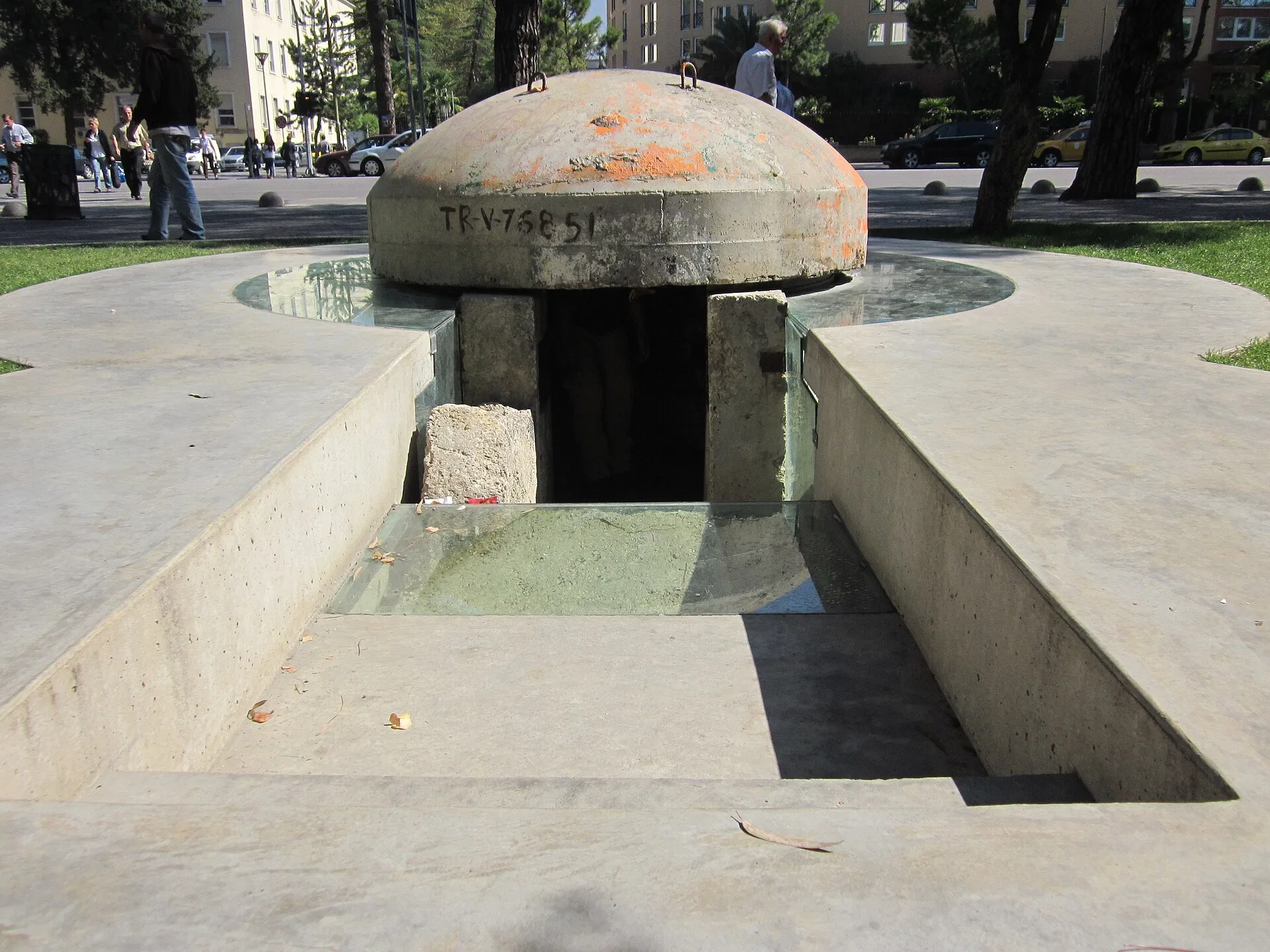
Albania’s strangest collections are not dominated by witchcraft cabinets, cryptid displays or carnival curiosities. Its most distinctive “odd museums” preserve the physical machinery of isolation: nuclear bunkers, surveillance equipment, prison remains, blood-feud towers, excavated graves, devotional icons and an extraordinary photographic archive.
Page outline Jump by section
Introduction
For visitors, the strongest route begins in Tirana, where underground command centres and a former secret-police building have become museums of communist rule. Beyond the capital, the picture widens: a ruined forced-labour camp at Spaç, a fortified refuge associated with blood feuds in Theth, prehistoric burials at Kamenica, densely displayed Orthodox icons in Korçë and Berat, and more than half a million historic photographic negatives in Shkodër. Some are polished national museums; others are fragile heritage sites or locally interpreted attractions. Together they show how Albania has turned once-hidden places and objects into public evidence.
Why Albania’s bunkers became museums
Albania’s most recognisable curiosities are its communist-era bunkers. They were products of Enver Hoxha’s increasingly isolationist state, which prepared for invasion on a vast scale even though the anticipated attack never came. Many surviving bunkers have since been demolished, abandoned or adapted for new uses, but the largest museum conversions use the architecture itself as the principal exhibit: visitors do not merely see documents about the dictatorship; they enter its concrete infrastructure.[Condé Nast Traveler]cntraveler.comCondé Nast Traveler Exploring Albania, Europe's Hidden Gem in the BalkansKnown for its hospitality, Albania is also an easy destination for travelers as it is not part of the Schengen Area. Not yet crowded with…
BUNK’ART 1: the state beneath the ground
BUNK’ART 1 occupies a huge underground shelter built to protect Albania’s political and military leadership during a nuclear or conventional attack. Accounts describe a five-storey complex containing more than 100 rooms, including quarters intended for Hoxha, command spaces and an assembly hall designed to accommodate the country’s parliament in an emergency. The museum now combines surviving rooms with historical interpretation, art installations and material about military life and everyday existence under communist rule.[The Australian]theaustralian.com.auThe article recounts the author’s journey through Tirana, Berat, and Gjirokastra, highlighting the stark contrast between Albania’s oppre…
What makes it unusual is the mismatch between scale and use. The complex was engineered as an alternative seat of government, yet its threatening architecture largely records preparations for a war that did not arrive. Corridors, sealed doors and underground chambers provide a more immediate understanding of state paranoia than a conventional display case could. The atmosphere is authentic because the structure is authentic, although parts of the visitor experience use reconstructed scenes and artistic interpretation rather than untouched historic rooms.
BUNK’ART 1 is a major tourist attraction, but it should not be treated simply as an entertaining “secret bunker”. Its real subject is the way fear became architecture and national policy. That distinction matters because the dramatic setting can otherwise overwhelm the stories of the people who lived under the system.
BUNK’ART 2: policing, interrogation and internal enemies
BUNK’ART 2, in central Tirana, uses another underground shelter to examine the Ministry of Internal Affairs and the institutions responsible for policing, imprisonment and political repression. Its displays include reconstructed detention or interrogation spaces, photographs, records and installations concerned with the political police. Compared with BUNK’ART 1, it concentrates less on national defence and more on the state’s treatment of its own citizens.[Condé Nast Traveler]cntraveler.comCondé Nast Traveler Exploring Albania, Europe's Hidden Gem in the BalkansKnown for its hospitality, Albania is also an easy destination for travelers as it is not part of the Schengen Area. Not yet crowded with…
The site is highly visitor-facing and carefully staged. That makes it accessible, but also means that readers should distinguish between surviving fabric, transferred objects, documentary evidence and modern scenography. Its value lies less in possessing a single extraordinary artefact than in assembling architecture, testimony and images into a compressed account of institutional terror.
House of Leaves: surveillance made visible
The House of Leaves is Albania’s most focused museum of secret surveillance. The apparently ordinary villa in central Tirana was built in 1931 as a medical clinic and was later used by the communist-era security apparatus. Its discreet domestic appearance was part of what made it effective: a centre of listening and observation could operate behind the façade of a private home.[Visit Tirana]visit-tirana.comVisit TiranaHouse of Leaves MuseumHouse of Leaves is one of the most unusual museums in Albania. It is considered to be the equivalent of…
Inside, visitors encounter equipment and interpretation relating to intercepted communications, microphones, recording, informants, files and the wider culture of suspicion created by the security services. It is an unusual collection because mundane technologies become instruments of intimidation. Wires, tape machines and office rooms may look less dramatic than a prison cell, but they reveal how political control entered private conversations and ordinary relationships.
The museum opened in 2017 and received the 2020 Council of Europe Museum Prize. The award indicates that it is not merely a novelty attraction: it has been recognised for using a difficult site to address human rights, memory and democratic values. Its development involved historians, engineers, craftspeople and organisations representing victims, giving it a stronger curatorial foundation than many commercially branded “spy museums”.[eumiesawards.com]eumiesawards.comeadquarters of the Sigurimi, the secret service agency…
Postbllok: three objects carrying a national history
Postbllok is not a museum building but a compact open-air memorial in Tirana. Its three principal elements are a communist bunker, concrete girders taken from Spaç prison and a section of the Berlin Wall. The combination links Albania’s internal repression with the wider history of divided Europe while retaining a specifically Albanian material witness in the prison beams.[Wikipedia]WikipediaPostbllok MemorialPostbllok Memorial
Its strength is also its limitation. With few objects and little enclosed interpretation, it works best for visitors who already understand what the bunker and Spaç remains signify. It is less comprehensive than the bunker museums or House of Leaves, but unusually effective as a public cabinet of political relics: three fragments stand in for surveillance, confinement and international isolation.
Where prison heritage remains unresolved
Spaç is one of Albania’s most important and most difficult sites of dark heritage. Established in 1968 beside copper and pyrite mines, it functioned as a prison and forced-labour camp for political detainees. Its remote mountain location combined confinement with exhausting industrial work, and in May 1973 prisoners staged a revolt that was violently suppressed.[World Monuments Fund]wmf.orgspaç prisonspaç prison
Unlike Tirana’s polished museums, Spaç remains a deteriorating historic site rather than a fully realised national museum. It was abandoned after the communist period, declared a cultural monument in 2007 and subsequently damaged by neglect, looting and structural decay. The World Monuments Fund placed it on the 2016 World Monuments Watch, arguing for its preservation as a place of memory.[wmf.org]wmf.orgspaç prisonspaç prison
This unresolved condition is central to its meaning. Spaç is not strange because it presents lurid prison props; it is strange because the evidence is still embedded in a ruined industrial landscape. Cell blocks, work areas and the surrounding mine terrain survive without the protective systems expected at a conventional museum. Visitors may therefore encounter a more powerful sense of abandonment, but also fewer safeguards, less interpretation and uncertainty over access or conservation.
Spaç exposes a broader tension in Albania’s treatment of the communist past. Some sites have been converted into successful cultural attractions, while places where victims actually lived, laboured and resisted remain vulnerable. Postbllok’s transferred girders preserve a fragment of the prison in central Tirana, but they cannot replace the historical force of the original location.
A tower built around blood-feud tradition
The fortified lock-in tower at Theth is one of Albania’s best-known examples of a historic building interpreted through customary law and blood-feud narratives. The small stone tower is presented as a refuge where men threatened by retaliatory killing could remain protected while mediation or reconciliation was attempted. Today it functions as a modest visitor attraction rather than a large institutional museum.[Atlas Obscura]atlasobscura.comAtlas Obscura Lock-In Tower of ThethAtlas Obscura Lock-In Tower of Theth
Its appeal comes from the relationship between architecture and social rule. Narrow openings, thick walls and confined upper rooms make sense only when explained through the system of honour, obligation, hospitality and revenge traditionally associated with northern Albania. The building therefore acts as a three-dimensional exhibit about how a community attempted to contain violence without a modern state justice system.
Visitors should approach the interpretation carefully. Blood feuds are real, but they are frequently sensationalised in tourism, journalism and asylum narratives. The tower’s popular story can make the practice appear timeless, universal or uniquely Albanian, when it was historically variable and has changed substantially. Even modern legal assessments emphasise that active feuds exist but are limited rather than an everyday condition across the country.[Migrant & Refugee Children's Legal Unit]miclu.orgOpen source on miclu.org.
The tower is most credible when understood as a locally interpreted heritage building connected with a specific regional tradition. It is least credible when promoted as proof that contemporary Albania remains governed by medieval vengeance. Its strongest museum value lies in demonstrating how customary law could shape domestic space, personal movement and collective memory.
Albania’s museum of the dead
Near Korçë, the Kamenica Tumulus combines an excavated prehistoric burial mound with a small archaeological museum. The site developed over centuries from the Late Bronze Age into the Iron Age and eventually contained hundreds of graves. Archaeological work recovered human remains and thousands of objects after the monument had suffered extensive looting in the late 1990s.[wikipedia.org]WikipediaKamenica TumulusKamenica Tumulus
For curious-history visitors, Kamenica is one of Albania’s closest equivalents to a museum of death. The attraction is not a theatrical reconstruction of ancient burial but an excavated funerary landscape in which the arrangement of graves reveals how a community repeatedly returned to the same mound. The museum has used panels and replica graves to explain the excavation, while original human remains have also formed part of the presentation.[Wikipedia]WikipediaKamenica TumulusKamenica Tumulus
One especially memorable feature is evidence interpreted as ancient cranial surgery. Such material is sometimes exaggerated into claims of mysterious lost medicine, but trepanation—the intentional opening of the skull—is known from many prehistoric and ancient societies. At Kamenica, its importance is archaeological rather than paranormal: it provides evidence about treatment, bodily intervention and survival in an early community.
The site is valuable because it shows both discovery and damage. Looting destroyed context before professional excavation began, meaning that the collection also records what archaeology loses when objects are removed from their graves without documentation. Kamenica is therefore part burial museum, part rescue-archaeology case study and part warning about the fragility of apparently durable ancient monuments.
Sacred objects between devotion and art
Albania does not have a major public museum devoted to magic or the occult, but its religious collections contain objects once understood as spiritually active rather than merely decorative. Orthodox icons, altar furnishings, crosses, textiles and liturgical metalwork belong to a world in which images mediated prayer, protection, sacred presence and communal identity.
Korçë’s concentrated icon collection
The National Museum of Medieval Art in Korçë holds one of Albania’s largest collections of icons and related religious art. Official Albanian sources describe a collection numbering roughly 8,000 works, while other institutional descriptions give totals above 7,000; only a selection is exhibited at any one time. The holdings include icons, liturgical objects, textiles, carved wood, metalwork and fresco fragments associated with Byzantine and post-Byzantine Christianity.[Museu.MS]museu.msOpen source on museu.ms.
Its installation is visually unusual. Hundreds of faces and sacred scenes are arranged in dense ranks, making the displays feel closer to a treasury or icon repository than to a sparse modern gallery. Works attributed to major painters, including Onufri, David Selenica and the Zografi brothers, sit beside anonymous objects produced for churches and monasteries.[Museu.MS]museu.msOpen source on museu.ms.
These are not occult objects, and treating them as such would misrepresent their religious purpose. Their relevance to curiosity culture comes from the changing status of the collection. Images originally made for worship have been transferred into a national museum, where they are conserved, classified and admired as art. The visitor therefore sees both sacred heritage and the modern state’s attempt to gather dispersed devotional material into a controlled archive.
The collection also has a difficult provenance history. Religious buildings across the region have suffered theft and illicit trafficking, particularly during periods of political disorder. In 2013 Albanian police seized more than 1,000 suspected stolen religious and secular objects, and in 2023 Albania returned 20 icons identified as having been stolen from North Macedonia. Such cases underline why storage history, church ownership and documentation matter as much as artistic attribution.[AP News]apnews.comAP News Albania returns 20 stolen icons to neighboring North MacedoniaAP News Albania returns 20 stolen icons to neighboring North Macedonia
Berat’s icons inside a church
The Onufri Iconographic Museum in Berat is housed in the Church of the Dormition of St Mary within the castle quarter. Its setting creates a different experience from Korçë: visitors encounter icons and liturgical objects within historic ecclesiastical architecture rather than in a purpose-built national gallery. The museum displays a selection from a much larger fund of objects associated with Albanian churches and monasteries.[Wikipedia]WikipediaOnufri Iconographic MuseumOnufri Iconographic Museum
The building preserves the connection between image, ritual space and religious community more clearly than a neutral gallery can. An iconostasis, painted panels and church fittings are not isolated curiosities but parts of a system directing worship and dividing sacred space. For readers interested in reliquaries, sacred objects or supernatural belief, Berat is important precisely because the collection resists the modern assumption that every old image was created as an autonomous artwork.
The archive that holds half a million vanished moments
The Marubi National Museum of Photography in Shkodër is Albania’s most extraordinary archive-based collection. UNESCO describes its holdings as more than half a million negatives on glass plates, roll film and sheet film, together with cameras, documents and other objects connected with fifteen photographers. The early core derives from the work of Pietro Marubbi, Mati Marubi and Kel Marubi, whose photographs trace the development of studio and documentary photography in Albania from the nineteenth century into the twentieth.[UNESCO]unesco.orgOpen source on unesco.org.
The collection is unusual less because of any single bizarre photograph than because of its scale and continuity. It preserves portraits, costumes, political events, ceremonies, urban life and social types across periods in which Albania underwent Ottoman decline, independence, monarchy, occupation and communist transformation. Faces and customs that might otherwise survive only in written description remain fixed in fragile layers of photographic emulsion.
UNESCO’s Memory of the World recognition in 2025 confirmed the archive’s international documentary significance. The listing identifies the Marubi material as evidence for the emergence of photography in Albania at almost the same time as the medium was developing elsewhere in Europe.[UNESCO]unesco.orgOpen source on unesco.org.
For a strange-museum itinerary, Marubi offers a quieter form of uncanniness. Glass negatives are physical shadows of vanished people: reversed images capable of generating new prints long after their subjects have died. The museum is also an archival institution rather than a nostalgic private collection, with scientific and national responsibilities for preservation. Albanian heritage law formally defines it as both a scientific and archiving institution with national-museum status.[UNESCO]media.unesco.orglaw 27 2018 official english version 0law 27 2018 official english version 0
Folklore museums without invented monsters
Albania’s ethnographic museums are sometimes overlooked because they appear conventional beside bunkers and prisons. Yet the best of them preserve the material background needed to understand the country’s legends, household beliefs and customary practices. The National Ethnographic Museum in Krujë occupies an eighteenth-century Ottoman house formerly associated with the Toptani family and displays domestic rooms, clothing, craft tools and household production.[Ambasadat]ambasadat.gov.alAmbasadat MuseumsAmbasadat Museums
These collections rarely isolate “supernatural” objects in the manner of a modern witchcraft museum. Protective symbols, ritual customs, wedding clothing, domestic tools and ideas about luck or the evil eye are normally embedded within broader accounts of family and village life. This makes the displays less sensational but often more accurate. Belief appears as part of ordinary culture rather than as a separate cabinet labelled magic.
The same principle applies to regional collections elsewhere in Albania. Their value depends heavily on interpretation: an unexplained costume or carved cradle may look picturesque, while a well-documented display can reveal gender roles, life-cycle rituals, craft knowledge and local symbolic systems. Visitors seeking folklore should therefore favour museums with detailed labels or informed guides over attractions that merely decorate rooms with “traditional” objects.

How credible are Albania’s unusual attractions?
Albania’s offbeat heritage ranges from internationally recognised museums to vulnerable ruins and lightly interpreted private or local sites. They should not all be judged by the same standard.
Strongly curated national institutions: House of Leaves, Marubi and the National Museum of Medieval Art have clear institutional roles, professional collections and conservation responsibilities. Their displays may still reflect choices about national memory, but their objects and archives are not presented primarily as tourist folklore.[coe.int]coe.inthouse of leaves in tirana receives 2020 council of europe museum prizePortal“House of Leaves” in Tirana receives 2020 Council of Europe…3 Nov 2020 — The Museum of Secret Surveillance in Tirana, known to e…
Immersive interpretation in authentic structures: BUNK’ART 1 and 2 use real underground spaces but combine surviving architecture with reconstructions, multimedia and art. They are credible introductions to the dictatorship, provided visitors recognise that atmosphere and historical evidence are not the same thing.
Historic sites with limited museum infrastructure: Spaç and Kamenica derive their importance from the original landscape. Their vulnerability, incomplete interpretation or exposed remains can make visits more demanding. Spaç in particular should not be assumed to operate like a staffed urban museum.[World Monuments Fund]wmf.orgspaç prisonspaç prison
Locally narrated heritage: The Theth tower is memorable but susceptible to simplified storytelling. Its interpretation should be cross-checked against serious historical and legal work on customary law rather than accepted as a complete account of Albanian society.
Devotional objects in museum custody: Albania’s icon collections require sensitivity to original religious use, removal from churches, conservation and provenance. They are neither occult displays nor merely decorative galleries.
Practical information can change rapidly, especially outside Tirana. Seasonal opening, restoration, road conditions, staffing and ticket arrangements should be checked with the institution or local tourism authority before travelling. This is particularly important for remote archaeological and prison sites, where an online listing may describe historical significance more reliably than present-day visitor access.
What Albania’s strange collections reveal
Albania’s unusual museums are strongest when they refuse the boundary between container and exhibit. A bunker is both building and evidence; a surveillance villa is both domestic architecture and a machine for secrecy; a burial mound is both landscape and collection; a church museum is both gallery and former ritual space.
They also reveal how rapidly the meaning of an object can change. Concrete shelters built to resist foreign enemies now receive international tourists. Secret-police equipment once hidden from citizens is publicly labelled. Icons removed from worship become protected national art, while stolen icons become evidence in cross-border restitution cases. Photographic negatives made for private customers become a record of national memory.
This gives Albania a distinctive place in Europe’s strange-history landscape. Its most compelling collections are not built around doubtful creatures or theatrical mysteries. They are museums of things that were deliberately concealed, feared, confined, buried or made sacred—and which now require careful public interpretation precisely because their original meanings remain politically and emotionally charged.
Amazon book picks
Further Reading
Books and field guides related to Where Albania Preserves Its Strangest History. Use these as the next step if you want deeper reading beyond the article.
Free: Coming of Age at the End of History
THE SUNDAY TIMES BESTSELLER WINNER OF THE ONDAATJE PRIZE 'The best book I read last year by a mile. . . so beautifully written that anyon...
The Albanians: A Modern History
This is the first full account of a country that, following decades of isolation, has undergone unprecedented changes to its political sy...
Modern Albania: From Dictatorship to Democracy in Europe
""The canon on modern Albanian political history in English is small but Fred Abraham's book is now a large contribution to it. Excellent...
eBay marketplace picks
Marketplace Samples
Live-tested eBay searches with available results related to this page.
Selected fromAlbania poster oneBay.co.uk.
Endnotes
1.
Source: visit-tirana.com
Link:https://www.visit-tirana.com/locations/house-of-leaves-museum/
Source snippet
Visit TiranaHouse of Leaves MuseumHouse of Leaves is one of the most unusual museums in Albania. It is considered to be the equivalent of...
2.
Source: Wikipedia
Title: Postbllok Memorial
Link:https://en.wikipedia.org/wiki/Postbllok_Memorial
3.
Source: visit-tirana.com
Link:https://www.visit-tirana.com/locations/postbllok-checkpoint-tirana/
4.
Source: tiranatimes.com
Link:https://www.tiranatimes.com/spac-prison-included-among-the-worlds-50-at-risk-cultural-heritage-sites/
5.
Source: Wikipedia
Title: Kamenica Tumulus
Link:https://en.wikipedia.org/wiki/Kamenica_Tumulus
6.
Source: museu.ms
Link:https://museu.ms/museum/details/18373
7.
Source: Wikipedia
Title: Onufri Iconographic Museum
Link:https://en.wikipedia.org/wiki/Onufri_Iconographic_Museum
8.
Source: unesco.org
Link:https://www.unesco.org/en/memory-world/marubi-national-museum-photography-archive-negatives-objects-and-documents-pietro-marubbi-and-kel
9.
Source: unesco.org
Link:https://www.unesco.org/en/memory-world/register2025
10.
Source: unesco.org
Title: Mémoire du monde
Link:https://www.unesco.org/fr/memory-world/register2025
11.
Source: media.unesco.org
Title: law 27 2018 official english version 0
Link:https://media.unesco.org/sites/default/files/webform/mhm001/law_27-2018_official_english_version_0.pdf
12.
Source: Wikipedia
Link:https://en.wikipedia.org/wiki/Albania
13.
Source: Wikipedia
Title: Museum of Secret Surveillance
Link:https://en.wikipedia.org/wiki/Museum_of_Secret_Surveillance
14.
Source: Wikipedia
Link:https://en.wikipedia.org/wiki/Official
15.
Source: Wikipedia
Title: Albanian blood feud
Link:https://en.wikipedia.org/wiki/Albanian_blood_feud
16.
Source: Wikipedia
Title: House (TV series)
Link:https://en.wikipedia.org/wiki/House_%28TV_series%29
17.
Source: Wikipedia
Title: Special purpose acquisition company
Link:https://en.wikipedia.org/wiki/Special-purpose_acquisition_company
18.
Source: Wikipedia
Link:https://en.wikipedia.org/wiki/SPAC
19.
Source: Wikipedia
Link:https://en.wikipedia.org/wiki/House
20.
Source: Wikipedia
Title: Spaç Prison
Link:https://en.wikipedia.org/wiki/Spa%C3%A7_Prison
21.
Source: media.unesco.org
Title: dosja marubi compressed
Link:https://media.unesco.org/sites/default/files/webform/mow001/dosja-marubi-compressed.pdf
22.
Source: unesco.org
Link:https://www.unesco.org/en/countries/al/lists-and-nominations
23.
Source: unesco.org
Link:https://www.unesco.org/fr/memory-world/marubi-national-museum-photography-archive-negatives-objects-and-documents-pietro-marubbi-and-kel
24.
Source: unesco.org
Title: leads exhibition egypts living heritage egyptian museum
Link:https://www.unesco.org/en/articles/unesco-leads-exhibition-egypts-living-heritage-egyptian-museum
25.
Source: unesdoc.unesco.org
Link:https://unesdoc.unesco.org/ark%3A/48223/pf0000367710
26.
Source: cntraveler.com
Title: Condé Nast Traveler Exploring Albania, Europe’s Hidden Gem in the Balkans
Link:https://www.cntraveler.com/story/where-to-go-in-albania
Source snippet
Known for its hospitality, Albania is also an easy destination for travelers as it is not part of the Schengen Area. Not yet crowded with...
27.
Source: theaustralian.com.au
Link:https://www.theaustralian.com.au/travel/inside-the-bunkers-and-cafes-of-albania-a-nation-transformed-by-hospitality/news-story/24df2891be710207d0cf481f63d7efd2
Source snippet
The article recounts the author’s journey through Tirana, Berat, and Gjirokastra, highlighting the stark contrast between Albania’s oppre...
28.
Source: eumiesawards.com
Link:https://eumiesawards.com/heritageobject/the-house-of-leaves-national-museum-of-secret-surveillance/
Source snippet
eadquarters of the Sigurimi, the secret service agency...
29.
Source: coe.int
Title: house of leaves in tirana receives 2020 council of europe museum prize
Link:https://www.coe.int/en/web/tirana/-/-house-of-leaves-in-tirana-receives-2020-council-of-europe-museum-prize
Source snippet
Portal“House of Leaves” in Tirana receives 2020 Council of Europe...3 Nov 2020 — The Museum of Secret Surveillance in Tirana, known to e...
30.
Source: coe.int
Title: the house of leaves tirana wins 2020 museum prize
Link:https://www.coe.int/en/web/tirana/-/the-house-of-leaves-tirana-wins-2020-museum-prize
Source snippet
PortalThe “House of Leaves” (Tirana) wins 2020 Museum Prize6 Dec 2019 — The 2020 Council of Europe Museum Prize has been awarded to The N...
31.
Source: wmf.org
Title: spaç prison
Link:https://www.wmf.org/monuments/spa%C3%A7-prison
32.
Source: atlasobscura.com
Title: Atlas Obscura Lock-In Tower of Theth
Link:https://www.atlasobscura.com/places/defense-tower-of-theth-albania
33.
Source: miclu.org
Link:https://miclu.org/assets/uploads/2018/07/Albanian-blood-feuds-and-asylum-seminar-paper.pdf
34.
Source: persee.fr
Title: imea 1000 1000 2004 act 4 1 998
Link:https://www.persee.fr/doc/imea_1000-1000_2004_act
35.
Source: en.ata.gov.al
Title: kamenica tumulus summer archaeological destination
Link:https://en.ata.gov.al/2024/06/29/kamenica-tumulus-summer-archaeological-destination/
36.
Source: ambasadat.gov.al
Title: Ambasadat National History Museum, Tirana
Link:https://ambasadat.gov.al/usa/en/muzete/
37.
Source: apnews.com
Title: AP News Albania returns 20 stolen icons to neighboring North Macedonia
Link:https://apnews.com/article/d546e4da91f05c6dd891754acc62a5b4
38.
Source: ambasadat.gov.al
Title: Ambasadat Museums
Link:https://ambasadat.gov.al/kosova/en/muzete/
39.
Source: dictionary.cambridge.org
Link:https://dictionary.cambridge.org/dictionary/english/official
40.
Source: dictionary.cambridge.org
Link:https://dictionary.cambridge.org/dictionary/english/house
41.
Source: tripadvisor.co.uk
Title: Museum of Secret Surveillance
Link:https://www.tripadvisor.co.uk/Attraction_Review-g294446-d13535321-Reviews-Museum_of_Secret_Surveillance-Tirana_Tirana_County.html
42.
Source: youtube.com
Link:https://www.youtube.com/watch?v=RhPafaSqEuQ
43.
Source: facebook.com
Link:https://www.facebook.com/worldmonuments/photos/spa%C3%A7-prison-was-a-notorious-labor-camp-established-in-1968-by-the-communist-gove/10153259593840886/?locale=hu_HU
44.
Source: instagram.com
Link:https://www.instagram.com/explore/locations/2398857927065816/postbllok-checkpoint-monument/
45.
Source: atlasobscura.com
Link:https://www.atlasobscura.com/things-to-do/albania/museums
46.
Source: atlasobscura.com
Title: postbllok memorial
Link:https://www.atlasobscura.com/places/postbllok-memorial
47.
Source: tripadvisor.com
Title: Kamenica Tumulus
Link:https://www.tripadvisor.com/Attraction_Review-g12118145-d12958774-Reviews-Kamenica_Tumulus-Kamenice_Korce_County.html
48.
Source: paganplaces.com
Title: kamenica tumulus
Link:https://paganplaces.com/places/kamenica-tumulus/
49.
Source: getyourguide.com
Title: museums exhibitions tc132
Link:https://www.getyourguide.com/en-gb/albania-l169053/museums-exhibitions-tc132/
50.
Source: GOV.UK
Link:https://www.gov.uk/foreign-travel-advice/albania
51.
Source: vocabulary.com
Link:https://www.vocabulary.com/dictionary/official
52.
Source: en.ata.gov.al
Title: museum of medieval art has undertaken restoration of 21 icons
Link:https://en.ata.gov.al/2026/01/08/museum-of-medieval-art-has-undertaken-restoration-of-21-icons/
53.
Source: ebsco.com
Link:https://www.ebsco.com/research-starters/geography-and-cartography/albania
54.
Source: akt.gov.al
Title: Kamenica Tumulus
Link:https://akt.gov.al/en/kulture/tuma-e-kamenices/
55.
Source: muzeugjethi.gov.al
Link:https://muzeugjethi.gov.al/?lang=en
56.
Source: spottedbylocals.com
Link:https://www.spottedbylocals.com/tirana/postbllok-checkpoint/
Additional References
57.
Source: youtube.com
Link:https://www.youtube.com/watch?v=1aef2fchrgQ
Source snippet
Marubi photographs: A portrait of Albania - BBC News...
58.
Source: youtube.com
Title: Former inmates call for prison to be preserved as a memorial
Link:https://www.youtube.com/watch?v=-zIRkRkBuVE
Source snippet
The House of Leaves (officially the National Museum of Secret Surveillance) in Tirana, Albania...
59.
Source: youtube.com
Title: Theth Albania’s Historic Vendetta Tower: Inside the Blood Feud Tradition
Link:https://www.youtube.com/watch?v=97O4F-BEke4
Source snippet
Bunk'Art 1 – Secret Bunker in Tirana, Albania from the Cold War...
60.
Source: investor.gov
Link:https://www.investor.gov/introduction-investing/investing-basics/glossary/spacs
61.
Source: youtube.com
Title: Marubi photographs: A portrait of Albania
Link:https://www.youtube.com/watch?v=S3KSgot4nsA
Source snippet
Theth Albania's Historic Vendetta Tower: Inside the Blood Feud Tradition...
62.
Source: nationalgeographic.com
Link:https://www.nationalgeographic.com/travel/destination/albania
63.
Source: wegotravel.co.uk
Link:https://www.wegotravel.co.uk/destinations/albania
64.
Source: instagram.com
Link:https://www.instagram.com/houseofleavesalbania/
65.
Source: dark-tourism.com
Link:https://www.dark-tourism.com/index.php/1455-houseofleaves
66.
Source: pwc.com
Link:https://www.pwc.com/us/en/services/consulting/deals/library/spac-merger.html