Within Romania Curiosities
When Everyday Objects Become Entire Romanian Museums
Spoons, eggs, irons and corkscrews become records of craft and daily life when collectors preserve them by the thousand.
On this page
- Why repetition changes an object's meaning
- Spoons and eggs as regional archives
- Collector vision, access and interpretation
Page outline Jump by section
Introduction
Romania’s most distinctive private museums are often devoted not to royal treasures or archaeological masterpieces but to objects that once belonged in kitchens, workshops and village homes. A wooden spoon, a painted egg, a flat iron or a corkscrew seems ordinary in isolation. Gather several thousand examples together, however, and patterns begin to emerge: regional carving styles, forgotten household customs, changing materials, religious symbolism and the ingenuity of everyday craft.

These collector-led museums occupy an important place within Romania’s wider curiosity culture because they transform domestic objects into historical archives. Most began as personal passions rather than state-funded institutions, and visitors often encounter not only the collections themselves but also the personality, research interests and stories of the people who assembled them.[cimec.ro]ghidulmuzeelor.cimec.roGhidul Muzeelor Romanian Museums and Collections DatabaseGhidul MuzeelorRomanian Museums and Collections Database - INP (cIMeC)June 30, 2026…
Why repetition changes an object’s meaning
Private collections built from thousands of similar objects invite visitors to look differently at familiar things. A single carved spoon is simply a utensil. Six thousand spoons, carefully arranged by region, age and function, become evidence for local woodworking traditions, pastoral life, social customs and changing domestic technology.
This shift from object to archive is one reason such collections matter. Instead of displaying isolated masterpieces, they preserve variation. Small differences in carving, decoration or wear reveal how neighbouring communities solved practical problems in different ways. Many collectors also record where each item came from and how it was used, turning household tools into documents of social history rather than decorative curiosities alone.[Ghidul Muzeelor]ghidulmuzeelor.cimec.roGhidul Muzeelor Romanian Museums and Collections DatabaseGhidul MuzeelorRomanian Museums and Collections Database - INP (cIMeC)June 30, 2026…
Unlike many public ethnographic museums, these collections frequently retain the perspective of their founders. Visitors see not only the artefacts but also the collector’s own decisions about what deserves attention, making the museum itself part of the story.
Spoons and eggs as regional archives
The Wooden Spoon Collection at Câmpulung Moldovenesc
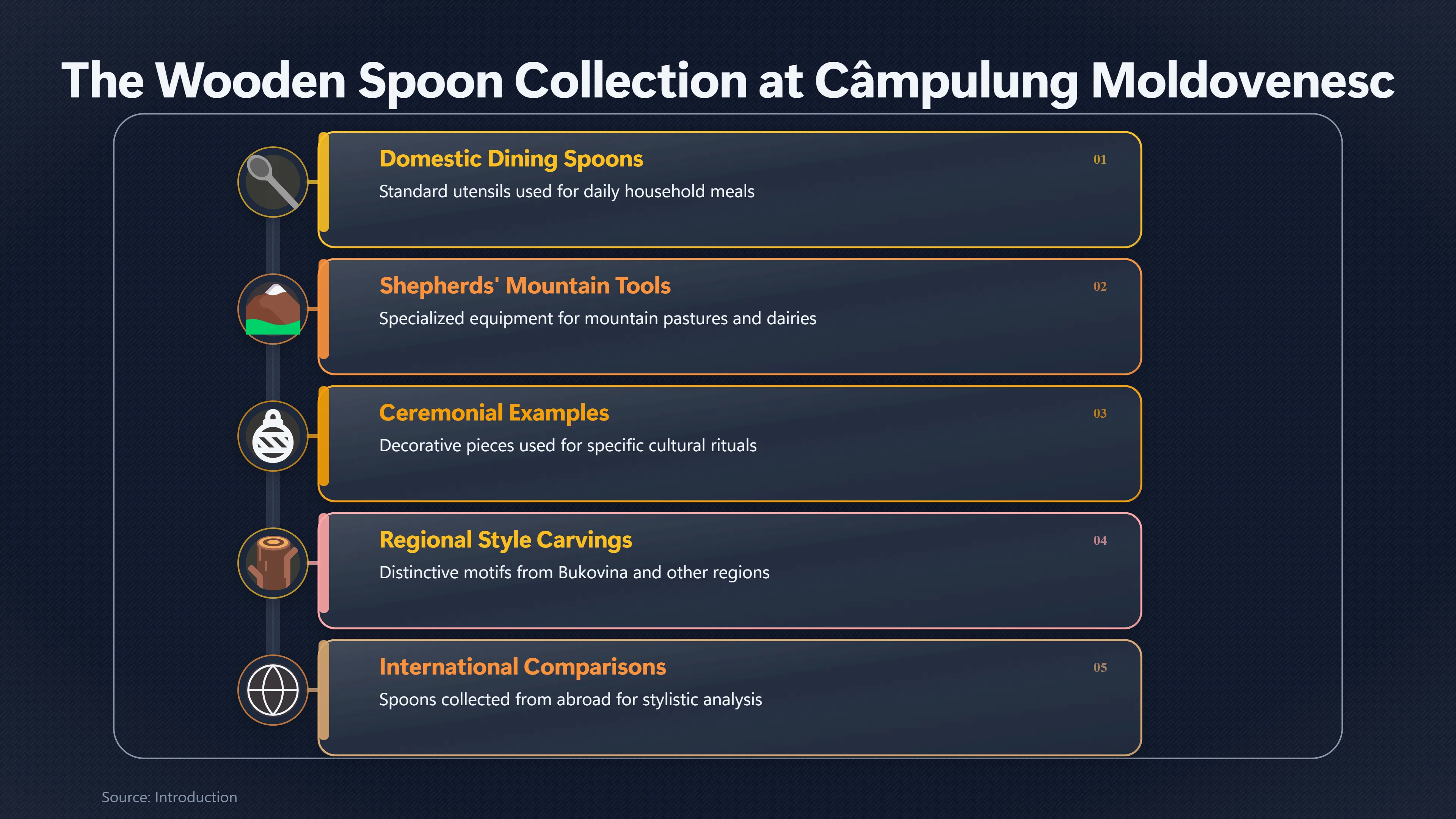
Perhaps Romania’s best-known example is the private Wooden Spoon Collection created by history teacher Ion Ţugui in Câmpulung Moldovenesc. Official museum records describe a collection of more than 6,000 wooden spoons, ranging from everyday eating utensils to specialised tools used in shepherds’ camps, dairies and traditional rural households. Alongside them are textiles, pottery and coins, but the spoons remain the defining feature.[Ghidul Muzeelor]ghidulmuzeelor.cimec.roGhidul Muzeelor Romanian Museums and Collections DatabaseGhidul MuzeelorRomanian Museums and Collections Database - INP (cIMeC)June 30, 2026…
What makes the collection unusual is not simply its scale but its attention to functional diversity. Visitors encounter:
- domestic dining spoons;
- ceremonial and decorative examples;
- shepherds’ spoons used in mountain pastures;
- carved regional styles from Bukovina and elsewhere in Romania;
- examples collected from abroad for comparison.
Seen together, these reveal that the humble spoon carried strong regional identities. Different woods, handle shapes and carved motifs reflected available materials, occupations and local artistic traditions rather than merely personal taste.[Ghidul Muzeelor]ghidulmuzeelor.cimec.roGhidul Muzeelor Romanian Museums and Collections DatabaseGhidul MuzeelorRomanian Museums and Collections Database - INP (cIMeC)June 30, 2026…

Painted eggs beyond Easter
Decorated eggs occupy a similar position within Romanian folk culture. Although associated with Easter, they also preserve older symbolic traditions involving fertility, protection and seasonal renewal. Private museums founded by artists such as Lucia Condrea transformed these fragile objects into large-scale documentary collections rather than seasonal displays.[muzeuloualorluciacondrea.ro]en.muzeuloualorluciacondrea.roOpen source on muzeuloualorluciacondrea.ro.
The International Museum of Painted Eggs founded by Lucia Condrea contains thousands of exhibits organised into three complementary sections:
- Condrea’s own artistic creations;
- historic painted eggs collected from the Bucovina region, especially communities preserving older decorative traditions;
- international examples illustrating how egg decoration developed across many cultures.[en.muzeuloualorluciacondrea.ro]en.muzeuloualorluciacondrea.roOpen source on muzeuloualorluciacondrea.ro.
The result is not simply an art gallery but a comparative archive. Visitors can trace recurring symbols—crosses, solar motifs, plants, geometric patterns and protective signs—and see how individual communities developed distinctive visual languages over generations. Official descriptions also stress that many motifs preserve pre-Christian symbolism later absorbed into Christian Easter traditions.[en.muzeuloualorluciacondrea.ro]en.muzeuloualorluciacondrea.roOpen source on muzeuloualorluciacondrea.ro.
Everyday tools become cultural records
Romania also contains collections centred on other domestic objects whose historical importance becomes apparent only when viewed in large numbers.
The Museum of Romanian Records in Bucharest illustrates this approach particularly clearly. Rather than concentrating on elite artefacts, it brings together nationally significant collections of corkscrews, flat irons, vintage cameras, Romanian philatelic material and dozens of smaller themed collections. Curators emphasise that these ordinary tools reveal forgotten craftsmanship, industrial design and aspects of everyday life that conventional history museums often overlook.[Radio România Internațional]rri.roRadio România Internațional The Museum of Romanian RecordsRadio România InternaționalThe Museum of Romanian Records - Radio Romania International…
Similarly, the privately founded museum at Craidorolţ assembles more than 3,000 objects ranging from household electrical appliances and agricultural implements to folk furniture and tools from different ethnic communities. While broader than a single-object museum, it demonstrates the same collecting philosophy: ordinary domestic possessions become evidence of changing lifestyles, technologies and regional identities when preserved systematically.[Ghidul Muzeelor]ghidulmuzeelor.cimec.roGhidul Muzeelor Romanian Museums and Collections DatabaseGhidul MuzeelorRomanian Museums and Collections Database - INP (cIMeC)June 30, 2026…
Collector vision, access and interpretation
These museums differ from national institutions in several important ways.
First, they usually originate from decades of individual collecting rather than official acquisition policies. Ion Ţugui spent years documenting spoons before his house became a recognised private museum, while Lucia Condrea built her museum after decades exhibiting painted eggs internationally. The collections therefore reflect sustained personal expertise as much as institutional curation.[Ghidul Muzeelor]ghidulmuzeelor.cimec.roGhidul Muzeelor Romanian Museums and Collections DatabaseGhidul MuzeelorRomanian Museums and Collections Database - INP (cIMeC)June 30, 2026…
Second, access can vary. Some operate with regular opening hours and multilingual interpretation, while others require appointments or depend on the availability of the owner or family members. Official museum databases classify several of these institutions as private museums or private collections, making clear that visitor arrangements may differ from those of large state museums.[Ghidul Muzeelor]ghidulmuzeelor.cimec.roGhidul Muzeelor Romanian Museums and Collections DatabaseGhidul MuzeelorRomanian Museums and Collections Database - INP (cIMeC)June 30, 2026…
Finally, interpretation often combines scholarship with personal narrative. Collectors frequently explain why particular pieces were acquired, how they were identified and what memories local donors attached to them. This gives visitors a more intimate experience than many conventional museum displays.
Why these collections matter within Romania’s curiosity culture
Romania’s private object museums demonstrate that curiosity does not always depend on the bizarre or supernatural. Their fascination comes from accumulation, comparison and close observation. Thousands of spoons reveal hidden regional craftsmanship. Thousands of decorated eggs preserve symbolic traditions that might otherwise disappear. Collections of irons, corkscrews or household appliances chart changing technologies through the objects people handled every day.
Within Romania’s landscape of unusual museums, these collections occupy a distinctive place because they show how ordinary domestic life can become extraordinary through careful preservation. Rather than celebrating rarity alone, they celebrate repetition—proving that everyday objects, collected patiently over decades, can become some of the country’s richest records of regional identity, craftsmanship and cultural memory.
Amazon book picks
Further Reading
Books and field guides related to When Everyday Objects Become Entire Romanian Museums. Use these as the next step if you want deeper reading beyond the article.

Material Culture and Mass Consumption
First published 1987. Subjects: Consumption (Economics), Material culture, Object (Philosophy), Philosophy, Social archaeology.

The Social Life of Things: Commodities in Cultural Perspective
First published 1986. Subjects: Social aspects, Commerce, Economic anthropology, History, Commodity exchanges.
Material Culture and Mass Consumerism
Exploring materialism and social relationships in modern culture Material Culture and Mass Consumption offers an in-depth exploration of...
The World of Goods
In this pioneering work, a leading anthropologist & an economist join forces to bridge the gap between what anthropologists know about wh...
eBay marketplace picks
Marketplace Samples
Live-tested eBay searches with available results related to this page.
Selected fromwooden spoon collectible oneBay.co.uk.
Current eBay listing
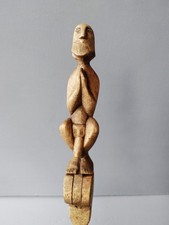
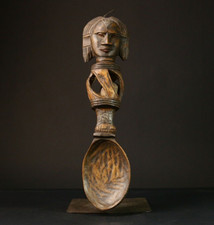
Hand Carved Wooden Folding Spoon, Erotic Antique Collectible
Current eBay listing
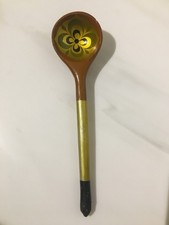
Vintage Russian Painted Wooden Spoon Antique Collectible Khokhloma
Current eBay listing
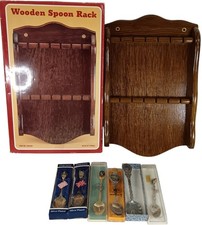
Wooden Spoon Rack with Collectible Souvenir Spoons Made in Taiwan
Endnotes
1.
Source: en.muzeuloualorluciacondrea.ro
Link:https://en.muzeuloualorluciacondrea.ro/index.php/museum
2.
Source: bucharest.ro
Link:https://www.bucharest.ro/articles/nicolae-minovici-museum-of-folk-art-a-century-of-history-from-the-bell-villa-to-today-s-folkloric-treasure-808
3.
Source: en.muzeuloualorluciacondrea.ro
Link:https://en.muzeuloualorluciacondrea.ro/
4.
Source: ghidulmuzeelor.cimec.ro
Title: Ghidul Muzeelor Romanian Museums and Collections Database
Link:https://ghidulmuzeelor.cimec.ro/idEN.asp?-colectia-de-linguri-de-lemn-ioan-si-elisabeta-tugui-campulung-moldovenesc-suceava=&k=2014
Source snippet
Ghidul MuzeelorRomanian Museums and Collections Database - INP (cIMeC)June 30, 2026...
Published: June 30, 2026
5.
Source: rri.ro
Title: Radio România Internațional The Museum of Romanian Records
Link:https://www.rri.ro/en/features-and-reports/travellers-guide/the-museum-of-romanian-records-id827232.html
Source snippet
Radio România InternaționalThe Museum of Romanian Records - Radio Romania International...
6.
Source: ghidulmuzeelor.cimec.ro
Title: Ghidul Muzeelor Romanian Museums and Collections Database
Link:https://ghidulmuzeelor.cimec.ro/idEN.asp?-muzeul-oualor-incondeiate-lucia-condrea-moldovita-suceava=&k=2013
Source snippet
Museums and Collections Database - INP (cIMeC)June 30, 2026 — MUSEUMS AND COLLECTIONS IN ROMANIA MUSEUM OF PAINTED EGGS "LUCIA CONDREA" P...
Published: June 30, 2026
7.
Source: ghidulmuzeelor.cimec.ro
Title: Ghidul Muzeelor Romanian Museums and Collections Database
Link:https://ghidulmuzeelor.cimec.ro/idEN.asp?-muzeul-privat-craidorolt-satu-mare=&k=2042
Source snippet
Ghidul MuzeelorRomanian Museums and Collections Database - INP (cIMeC)June 30, 2026...
Published: June 30, 2026
8.
Source: ghidulmuzeelor.cimec.ro
Title: ro Romanian Museums and Collections Database
Link:https://ghidulmuzeelor.cimec.ro/idEN.asp?-Muzeul-Privat-Craidorolt-Craidorolt-Satu-Mare=&k=2042
Source snippet
Museums and Collections Database - INP (cIMeC)June 30, 2026 — PRIVATE MUSEUM CRAIDOROLŢ Photo: 1 Photo: 2 Photo: 3 Photo: 4 Photo: 5 Phot...
Published: June 30, 2026
9.
Source: ghidulmuzeelor.cimec.ro
Title: ro Romanian Museums and Collections Database
Link:https://ghidulmuzeelor.cimec.ro/idEN.asp?-muzeul-de-arta-populara-nicolae-minovici-bucuresti=&k=7
10.
Source: rri.ro
Title: The Ethnography Museum in Ciocanesti
Link:https://www.rri.ro/en/features-and-reports/inside-romania/the-ethnography-museum-in-ciocanesti-id1006944.html
11.
Source: tripadvisor.com
Title: Museum Of Romanian Records
Link:https://www.tripadvisor.com/Attraction_Review-g294458-d27978275-Reviews-Museum_Of_Romanian_Records-Bucharest.html
12.
Source: lovinromania.com
Title: Museum Of Romanian Records
Link:https://lovinromania.com/attractions/bucharest-municipality/bucharest/museum-of-romanian-records/
Additional References
13.
Source: youtube.com
Title: Muzeul Ouălor Încondeiate
Link:https://www.youtube.com/watch?v=_K7MTFWPf3Y
Source snippet
Museum of Wooden Spoons Cimpulung Moldovenesc MUZEUL LINGURILOR DE LEMN (Câmpulung Moldovenesc, Bucovina, România) Lucian Ionescu...
14.
Source: youtube.com
Title: Communist Consumer Museum in Timișoara, Romania | Travel with Harry Mitsidis
Link:https://www.youtube.com/watch?v=tqnGTN2NyN8
Source snippet
Living Communist History in the Living-Room: The Case of the Communist Consumer Museum...
15.
Source: youtube.com
Link:https://www.youtube.com/watch?v=00CRxWy6NbA
Source snippet
MUZEUL LINGURILOR DE LEMN (Câmpulung Moldovenesc, Bucovina, România)...
16.
Source: youtube.com
Title: MUZEUL OULUI din Vama
Link:https://www.youtube.com/watch?v=Jo6UNhVA2MQ
Source snippet
Muzeul Ouălor Încondeiate - LUCIA CONDREA - Eggs Museum (Moldovita, Bucovina, Romania)...
17.
Source: muzeul-satului.ro
Title: Muzeul Satului Arta Ouălor Încondeiate în România
Link:https://muzeul-satului.ro/en/events/arta-oualor-incondeiate-in-romania/
Source snippet
Muzeul SatuluiArta Ouălor Încondeiate în România - Muzeul Național al Satului „Dimitrie Gusti”...
18.
Source: youtube.com
Title: MUZEUL LINGURILOR DE LEMN (Câmpulung Moldovenesc, Bucovina, România)
Link:https://www.youtube.com/watch?v=2spBrARUwa4
Source snippet
MUZEUL OULUI din Vama - Colecția internațională (Vama, Bucovina, România)...
19.
Source: dragaicarosie.com
Link:https://dragaicarosie.com/about/
20.
Source: muzeuloului-vama.com
Link:https://www.muzeuloului-vama.com/
21.
Source: mtariicrisurilor.ro
Link:https://mtariicrisurilor.ro/en/ethnography/
22.
Source: muzeultaranuluiroman.ro
Link:https://muzeultaranuluiroman.ro/en/foreign-countries/