Within Haiti Curiosities
How Haiti's Ethnology Bureau Explains Vodou
The Bureau National d'Ethnologie presents Vodou objects as part of a living Haitian tradition rather than as exotic curiosities.
On this page
- What the Bureau Collects
- Sacred Objects Beyond Horror Stereotypes
- What Visitors Can Realistically Expect
Page outline Jump by section
Introduction
Haiti’s Bureau National d’Ethnologie (National Bureau of Ethnology) is one of the country’s most important places for understanding Vodou through history, anthropology and cultural heritage rather than through horror clichés. Founded in Port-au-Prince in 1941 by the writer and ethnologist Jacques Roumain, the institution was created to study, preserve and interpret Haiti’s material and intangible culture. Its collections include ritual objects associated with Vodou, but these are presented as evidence of a living religious tradition that has shaped Haitian identity, not as mysterious curiosities or supernatural props.[Bureau National d'États Civils]bne.gouv.htBureau National d'États Civils AccueilBureau National d'États CivilsAccueil - Bureau National d'Ethnologie…
For visitors interested in Haiti’s unusual collections, this makes the Bureau distinctive. It does display objects that outsiders might regard as strange or uncanny, yet its central aim is to explain what those objects mean within Haitian society. The museum’s interpretation deliberately challenges sensational images of “voodoo” that became popular in foreign books and films during the twentieth century, replacing them with historical, cultural and religious context.[Bureau National d'États Civils]bne.gouv.htBureau National d'États Civils MuséeBureau National d'États CivilsMusée - Bureau National d'Ethnologie…
What the Bureau Collects
The Bureau’s museum combines archaeology, ethnology and cultural history rather than separating them into unrelated displays. Permanent collections include archaeological material from Haiti’s Indigenous past, ethnographic objects, musical instruments, ceremonial artefacts, devotional clothing and ritual items associated with Vodou. These collections are intended to show how Haiti’s modern culture developed through Indigenous, African, colonial and post-independence experiences.[Bureau National d'États Civils]bne.gouv.htBureau National d'États Civils MuséeBureau National d'États CivilsMusée - Bureau National d'Ethnologie…
Recent exhibitions illustrate this approach particularly clearly. Rather than displaying ritual objects in isolation, the Bureau has organised exhibitions around broader historical narratives such as Haïti, Terre de tous les commencements (“Haiti, Land of All Beginnings”), where ceremonial altars, ritual clothing, sacred poles and other objects are interpreted as parts of an interconnected cultural landscape. According to the museum, these artefacts embody memory, resistance, spirituality and everyday life rather than functioning simply as decorative or exotic objects.[Bureau National d'États Civils]bne.gouv.htBureau National d'États Civils MuséeBureau National d'États CivilsMusée - Bureau National d'Ethnologie…
The institution’s broader mission also extends beyond physical collections. Its ethnology department documents oral traditions, music, dance, religious practice and other forms of intangible cultural heritage, treating museum objects as only one part of a much larger cultural record.[Bureau National d'États Civils]bne.gouv.htBureau National d'États Civils EthnologieBureau National d'États CivilsEthnologie - Bureau National d'Ethnologie…
Sacred Objects Beyond Horror Stereotypes
Perhaps the Bureau’s most important contribution is not what it displays but how it explains those displays.
Outside Haiti, Vodou has often been reduced to zombies, curses, dolls and sensational stories. Those stereotypes developed through colonial prejudice, travel writing and popular entertainment rather than through careful study of Haitian religion. Haitian intellectuals during the twentieth century increasingly challenged these distortions, arguing that Vodou should be understood as a complex religious and cultural system deeply connected to the nation’s history.[Bureau National d'États Civils]bne.gouv.htBureau National d'États Civils AccueilBureau National d'États CivilsAccueil - Bureau National d'Ethnologie…
The Bureau reflects that intellectual tradition. Ritual objects are interpreted within religious practice, historical memory and community life instead of being presented as magical oddities. A ceremonial altar, for example, is not displayed primarily because it appears mysterious to outsiders, but because it illustrates how families and religious communities express devotion, commemorate ancestors and maintain spiritual traditions.[Bureau National d'États Civils]bne.gouv.htBureau National d'États Civils MuséeBureau National d'États CivilsMusée - Bureau National d'Ethnologie…
This shift in interpretation changes how visitors read the collection:
- Objects become historical evidence, showing how African traditions survived enslavement and adapted within Haitian society.
- Ritual items are treated as religious heritage, comparable to sacred objects found in churches, temples or shrines elsewhere.
- Artistic craftsmanship receives attention, highlighting carving, textiles, metalwork and symbolic design instead of focusing solely on ritual use.
- Cultural continuity is emphasised, presenting Vodou as an active part of Haitian identity rather than as a vanished or secret practice.[Bureau National d'États Civils]bne.gouv.htBureau National d'États Civils MuséeBureau National d'États CivilsMusée - Bureau National d'Ethnologie…
The result is a museum experience that asks visitors to understand meaning before appearance. An object that might seem unsettling when viewed without context often becomes more understandable once placed within Haitian religious life and historical experience.

How Interpretation Shapes the Visitor Experience
Unlike museums built around shock value, the Bureau adopts an ethnographic approach. Interpretation is designed to explain relationships between people, beliefs and objects rather than encouraging visitors simply to admire unusual artefacts.
Recent exhibitions have deliberately connected Vodou with wider themes of identity and national history. Museum displays move across Indigenous Caribbean heritage, African cultural inheritance and the development of Haitian society before arriving at ritual spaces representing different Vodou traditions. Museum leadership has described these installations as exploring both the memory of slavery and the sacred dimensions of everyday Haitian life.[Bureau National d'États Civils]bne.gouv.htBureau National d'États Civils AccueilBureau National d'États CivilsAccueil - Bureau National d'Ethnologie…
This interpretive framework also helps explain why many ritual objects appear visually complex. Mirrors, fabrics, bottles, carved wood, ceremonial clothing and symbolic arrangements are not random decorative choices. They are presented as material expressions of belief, memory and communal practice whose significance depends on cultural context rather than visual appearance alone.[Bureau National d'États Civils]bne.gouv.htBureau National d'États Civils MuséeBureau National d'États CivilsMusée - Bureau National d'Ethnologie…
What Visitors Can Realistically Expect
Visitors expecting a museum devoted exclusively to occult artefacts may be surprised. The Bureau is an ethnological museum with a much wider scope than Vodou alone.
A typical visit is more likely to include:
- archaeological collections relating to Haiti’s earliest inhabitants;
- exhibitions tracing the formation of Haitian cultural identity;
- ritual objects interpreted alongside music, clothing, art and social history;
- educational displays explaining cultural traditions rather than promoting supernatural claims; and
- temporary exhibitions exploring particular themes within Haitian heritage.[Bureau National d'États Civils]bne.gouv.htBureau National d'États Civils MuséeBureau National d'États CivilsMusée - Bureau National d'Ethnologie…
Interpretation has historically been strongest for readers of French, although exhibition formats continue to evolve. As with many Haitian cultural institutions, practical access can vary because of political instability and security conditions in Port-au-Prince, so visitors should always verify current opening arrangements before planning a visit.[Bureau National d'États Civils]bne.gouv.htBureau National d'États Civils EthnologieBureau National d'États CivilsEthnologie - Bureau National d'Ethnologie…
Why the Bureau Matters Within Haiti’s Curiosity Culture
Among Haiti’s unusual collections, the Bureau occupies a distinctive position because it refuses to separate curiosity from culture. Many of its most visually striking objects would easily fit into museums devoted to magic, folklore or the occult elsewhere in the world. Instead, the Bureau deliberately reframes them as part of Haiti’s intellectual, religious and historical heritage.
That approach makes the collection unusual in its own right. Rather than encouraging visitors to marvel at supposedly mysterious artefacts, it encourages them to understand how those artefacts carry memory, identity and belief. In doing so, the Bureau transforms objects that have often been misunderstood abroad into evidence of a living tradition central to Haiti’s cultural history.[Bureau National d'États Civils]bne.gouv.htBureau National d'États Civils MuséeBureau National d'États CivilsMusée - Bureau National d'Ethnologie…
Amazon book picks
Further Reading
Books and field guides related to How Haiti's Ethnology Bureau Explains Vodou. Use these as the next step if you want deeper reading beyond the article.
Divine Horsemen
Reprint. Originally published: London; New York: Thames and Hudson, c1953.
Mama Lola
Karen McCarthy Brown's classic book shatters stereotypes of Vodou by offering an intimate portrait of African-based religion in everyday...
Haiti, history, and the gods
First published 1995. Subjects: Civilization, History, Nationalism, Philosophy, Religion.
Sacred Arts of Haitian Vodou
This abundantly illustrated anthology brings together sixteen essays by artists, scholars and ritual experts who examine the sacred arts...
eBay marketplace picks
Marketplace Samples
Live-tested eBay searches with available results related to this page.
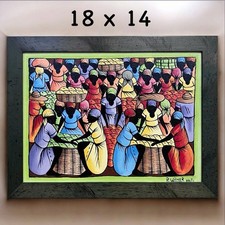
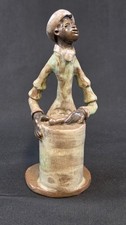
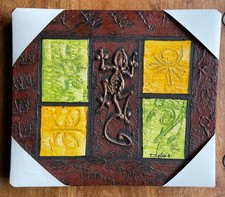
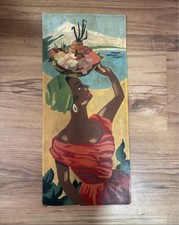
Selected fromCaribbean folk art oneBay.co.uk.
Endnotes
1.
Source: bne.gouv.ht
Title: Bureau National d’États Civils Accueil
Link:https://www.bne.gouv.ht/
Source snippet
Bureau National d'États CivilsAccueil - Bureau National d'Ethnologie...
2.
Source: bne.gouv.ht
Title: Bureau National d’États CivilsÀ propos du BNE
Link:https://www.bne.gouv.ht/about-us/
Source snippet
Bureau National d'Ethnologie...
3.
Source: bne.gouv.ht
Title: Bureau National d’États Civils Musée
Link:https://www.bne.gouv.ht/musee/
Source snippet
Bureau National d'États CivilsMusée - Bureau National d'Ethnologie...
4.
Source: bne.gouv.ht
Title: Bureau National d’États Civils Ethnologie
Link:https://www.bne.gouv.ht/ethnologie/
Source snippet
Bureau National d'États CivilsEthnologie - Bureau National d'Ethnologie...
5.
Source: bne.gouv.ht
Link:https://www.bne.gouv.ht/realisation-de-lexposition-haiti-terre-de-tous-les-commencements-en-collaboration-avec-lambassade-mexique-et-en-partenariat-avec-la-galerie-monnin-du-12-au-20-ju/
Source snippet
Image VERNISSAGE DE L’EXPOSITION Image Le staff technique de l’exposition « Haïti terre de...
6.
Source: ispan.gouv.ht
Title: departement de louest
Link:https://ispan.gouv.ht/departement-de-louest/
7.
Source: smb.museum
Link:https://www.smb.museum/en/museums-institutions/ethnologisches-museum/exhibitions/detail/vodou/
8.
Source: bne.gouv.ht
Link:https://www.bne.gouv.ht/documentation/
9.
Source: bne.gouv.ht
Link:https://www.bne.gouv.ht/anthropologie/
10.
Source: bne.gouv.ht
Link:https://www.bne.gouv.ht/culture/
11.
Source: bne.gouv.ht
Title: Archives des Recherches ethnologiques
Link:https://www.bne.gouv.ht/category/recherches-ethnologiques/
12.
Source: bne.gouv.ht
Link:https://www.bne.gouv.ht/actualites-2/
13.
Source: bne.gouv.ht
Link:https://www.bne.gouv.ht/entrevues/
14.
Source: servicespublics.gouv.ht
Link:https://www.servicespublics.gouv.ht/site/rsmo/BNE
Additional References
15.
Source: letemoinhaiti.com
Link:https://letemoinhaiti.com/bureau-national-dethnologie-comprendre-preserver-et-valoriser-la-culture-haitienne/
Source snippet
Accueil 2. Blog 3. Société 4. Bureau National d’Ethnologie: comprendre, préserver et valoriser la culture haïtienne Image Credit Photo...
16.
Source: lenational.org
Link:https://www.lenational.org/post_article.php?cul=1586
Source snippet
February 22, 2024 — «SENS ET SUBSTANCE» UNE EXPOSITION AU BNE POUR SAISIR LE MÉTISSAGE CULTUREL D'HAÏTI Écrit par: Schultz Laurent Junio...
Published: February 22, 2024
17.
Source: visithaiti.com
Title: Visit a museum dedicated to Vodou · Visit Haiti
Link:https://visithaiti.com/things-to-do/visit-a-museum-dedicated-to-vodou/
Source snippet
September 13, 2019 — Image: large museum building decorated with snake paintingsThe Bureau of Ethnology, Port-au-Prince Photo: Anton Lau...
Published: September 13, 2019
18.
Source: visithaiti.com
Title: Visitez un musée dédié au Vodou · Visit Haiti
Link:https://visithaiti.com/fr/quoi-faire/visitez-un-musee-dedie-au-vodou/
Source snippet
September 13, 2019 — Les façades extérieures du Bureau National d’Ethnologie abritent une exposition permanente de photographies sur plus...
Published: September 13, 2019
19.
Source: reddit.com
Title: How and why did Vodou (‘voodoo’) acquire its evil reputation?
Link:https://www.reddit.com/r/AskHistorians/comments/qq2yod
Source snippet
How and why did Vodou ('voodoo') acquire its evil reputation?...
20.
Source: youtube.com
Title: Wendy Asquith, Kafou: Haiti, Art and Vodou
Link:https://www.youtube.com/watch?v=wyhig4pBi4s
Source snippet
Lecture: Mermaids, Ancestors & Saints:The Dynamism of Myrlande Constant's Haitian Vodou Ritual Flags...
21.
Source: youtube.com
Title: Kafou: Haiti, Art and Vodou
Link:https://www.youtube.com/watch?v=I3__rNBd3mA
Source snippet
Wendy Asquith, Kafou: Haiti, Art and Vodou...
22.
Source: youtube.com
Title: Lowe Connects: Vodou en Vogue
Link:https://www.youtube.com/watch?v=kRu7uamanms
Source snippet
"Bureau National d'Ethnologie" Haiti vodou Zoom sur Bureau National d'Ethnologie Ministère de la Culture - Haiti...
23.
Source: youtube.com
Link:https://www.youtube.com/watch?v=9scHiRm1PYI
Source snippet
Sequin Arts: The Flagmakers of Haiti...
24.
Source: unesco.org
Title: odette mennesson rigaud fonds 1944 1969
Link:https://www.unesco.org/en/memory-world/lac/odette-mennesson-rigaud-fonds