Venezuela's Strangest Collections Beyond Ordinary Museums
Venezuela does not have a well-documented national circuit of witchcraft, UFO or cryptid museums.
Page outline Jump by section
Introduction
The most rewarding places therefore sit on the boundary between museum, archive, sacred site and personal creation. Some are conventional public institutions; others are research collections or fragile, locally run attractions whose access can change. Visitors should also distinguish genuine artefacts from interpretation. A reduced head in a scientific collection, for example, raises questions about colonial collecting and human remains, while the horned masks of Venezuela’s Dancing Devils belong to a living Catholic tradition rather than evidence of occult worship.[gob.ve]mincultura.gob.veOpen source on gob.ve.

Where Venezuela’s strangest collections are found
The Museum of Sciences: mummies, reduced heads and bones
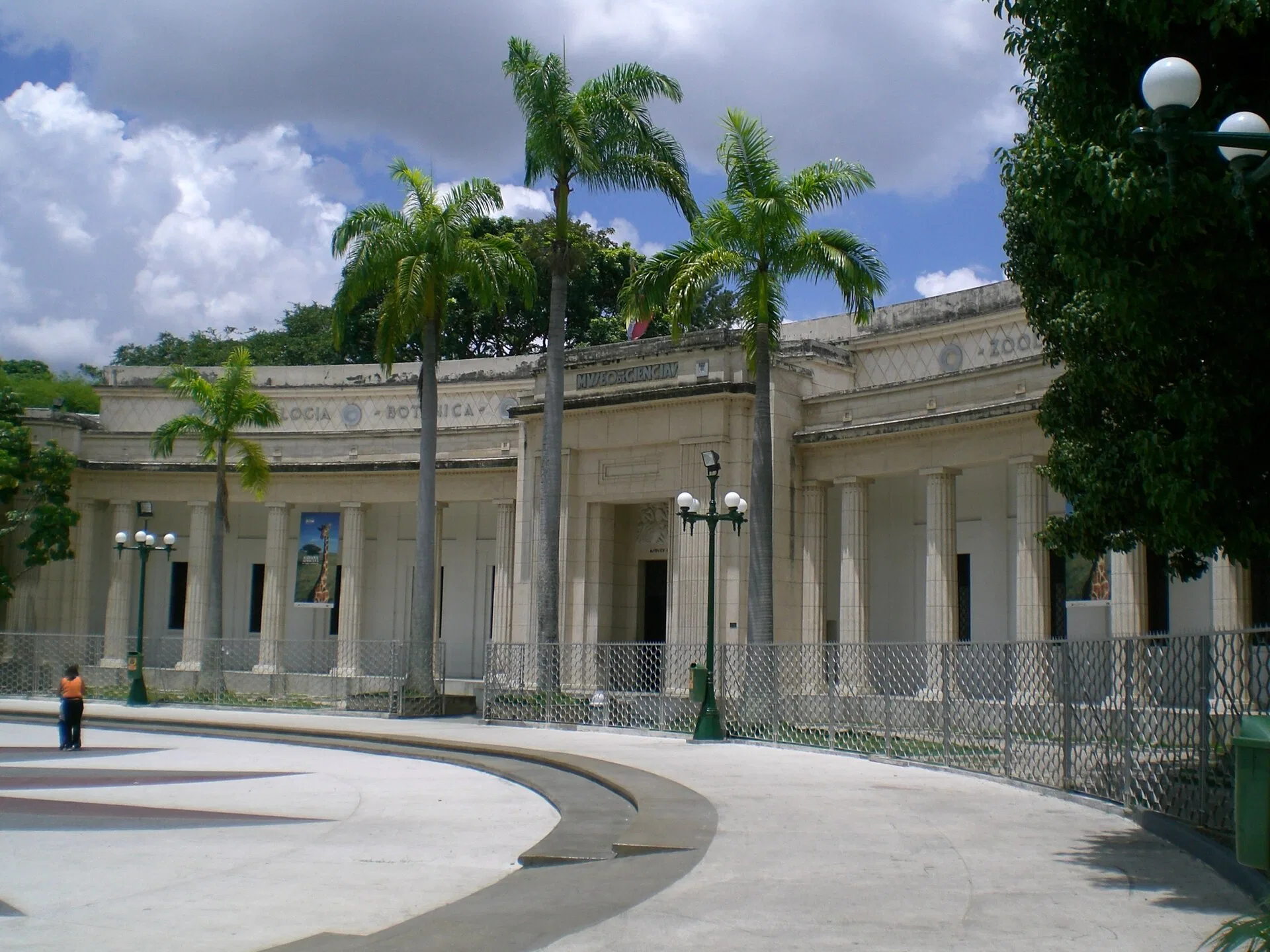
The Museum of Sciences in Caracas is the clearest starting point for unusual collections in Venezuela. Founded in the nineteenth century and now associated with the National Museums Foundation, it combines zoology, palaeontology, archaeology, ethnography and physical anthropology. Published descriptions place its total holdings at roughly 150,000 objects across numerous scientific departments, although only a fraction can be displayed at any one time.[mincultura.gob.ve]mincultura.gob.veOpen source on gob.ve.
Its anthropology stores are considerably stranger than the family-friendly natural-history galleries might suggest. Collection descriptions identify human skulls and other skeletal remains, naturally and artificially preserved bodies, funerary vessels, plaster casts of hominin and primate skulls, and reduced heads attributed to Shuar and Achuar makers from Ecuador and Peru. The reduced heads are therefore not Venezuelan folk objects, even though they are held in a Venezuelan institution. They belong to a wider history of collecting Indigenous remains and ritual objects across northern South America.[Wikipedia]WikipediaLos fondos de colección constan de 45.839 ejemplares; donde encontraremos diferentes tipos de huesos craneales y postcraneales, este últi…
A visitor should not assume that all of this material is permanently exhibited. Scientific museums normally hold far more in storage than they place in public galleries, and displays can change after refurbishments or temporary exhibitions. Recent cultural listings confirm that the Caracas museum remains an active visitor institution, but opening patterns have varied around holidays and special events. Checking current information before travelling is essential.[gob.ve]mincultura.gob.veOpen source on gob.ve.
The deeper interest here is ethical as much as macabre. Reduced heads and human remains were often collected under unequal colonial or commercial conditions. Contemporary museums increasingly face questions about provenance, consent, respectful display and possible repatriation. Venezuela’s collection is therefore best understood not as a chamber of horrors, but as evidence of how older scientific institutions classified both the natural world and human cultures.
The Sacred Museum of Caracas: art above a burial ground
The Sacred Museum of Caracas offers a more atmospheric encounter with death. It occupies a historic ecclesiastical site beside Caracas Cathedral, in an area formerly used as the cathedral cemetery. The museum’s official description emphasises colonial and republican religious sculpture, devotional images, paintings, liturgical metalwork, vestments and church documents. It is an active public museum administered by the Archdiocese of Caracas rather than a commercial haunted attraction.[Arquidiócesis Caracas]arquidiocesiscaracas.comOpen source on arquidiocesiscaracas.com.
What makes it unusual is the building itself. The complex preserves an ossuary, burial niches and the remains of the former ecclesiastical prison. Archaeological work in the central courtyard reportedly uncovered a communal grave containing about 25 bodies, along with older routes and structures associated with the cemetery. Some local accounts connect the remains with people killed during the violent independence-era occupation of Caracas, but this identification is generally presented as a supposition rather than a conclusively demonstrated forensic result.[Wikipedia]WikipediaMuseo Sacro de CaracasMuseo Sacro de Caracas
The prison, dating from the early eighteenth century, adds another layer. It reportedly held clergy accused of offences against church discipline, morality or religious authority. Stories also circulate about markings on its walls, including symbols interpreted as Masonic, although such claims require caution: old graffiti is easily romanticised when a prison becomes a heritage attraction.[Aleteia]es.aleteia.orgmuseo sacro de caracas la historia del catolicismo desde el corazon de la ciudadmuseo sacro de caracas la historia del catolicismo desde el corazon de la ciudad
For visitors, the strongest experience is the collision of devotional beauty and physical mortality. Saints’ images, church silver and ceremonial clothing are displayed within a place where bodies were buried and religious offenders confined. Unlike a purpose-built death museum, it preserves these elements because they belong to the site’s institutional history. The Archdiocese currently advertises public opening from Tuesday to Sunday, although hours should still be confirmed locally.[Arquidiócesis Caracas]arquidiocesiscaracas.comOpen source on arquidiocesiscaracas.com.
The Phelps Ornithological Collection: a private archive of birds
The William Phelps Ornithological Collection in Caracas is unusual through scale rather than horror. Established in 1937, it is a private, non-profit scientific institution devoted to Venezuelan and American bird life. Alongside preserved specimens, it maintains an ornithological library and historical archive documenting expeditions, species distribution and the development of bird research in Venezuela.[fundacionwhphelps.org]fundacionwhphelps.orgContamos con una amplia y completa biblioteca ornitológica así como con un Archivo histórico con material de interés para el estudio de l…
For a general visitor, rows of study skins can feel like entering an old cabinet of natural history: birds preserved not in dramatic poses but as carefully labelled scientific specimens, often stored in drawers for comparison. Their value lies in the information attached to them—where and when each bird was collected, by whom, and under what conditions. Taken together, these specimens allow researchers to track changes in species distribution, appearance and habitat across decades.
This is not an ordinary walk-in attraction with theatrical galleries. The foundation’s own contact information treats visits to the collection, library and archive as arranged access, and its services are primarily directed towards researchers and serious enquiries. A 2025 visit by representatives of the International Council of Museums confirms that the collection remains institutionally active, but prospective visitors should make contact rather than simply arriving.[fundacionwhphelps.org]fundacionwhphelps.orgOpen source on fundacionwhphelps.org.
The Phelps collection matters to Venezuela’s curiosity culture because it preserves a type of museum experience that is increasingly hidden from public view: the dense scientific archive behind the polished exhibition case. It is less a gallery of exotic birds than a working memory bank for one of the world’s richest avifaunas.
Stone environments and personal museums
One of Venezuela’s more eccentric attractions is the Museum of Dreaming Marine Stones in the Galipán area above La Guaira. Accounts describe it as an ecological art environment created by the artist and self-described philosopher Gonzalo Barrios Pérez, known as Zóez. Stones, sculpture, landscape and spiritual interpretation are combined into a highly personal setting overlooking the Caribbean coast.[Diario La Verdad de Vargas]laverdaddevargas.comDiario La Verdad de Vargas Museo de Las Piedras Soñadoras icono de La Guaira yDiario La Verdad de Vargas Museo de Las Piedras Soñadoras icono de La Guaira y
This is not an archaeological museum, despite the importance of stone to its identity. The objects should not be confused with scientifically excavated Indigenous artefacts or ancient petroglyphs. Its interest comes from assemblage: natural forms are selected, arranged and interpreted by an individual maker, turning the site into something between sculpture garden, environmental artwork, private cosmology and roadside cabinet of curiosities.
Descriptions of the museum often use mystical language, but that is part of its artistic presentation rather than proof that the stones possess unexplained properties. Visitors attracted by anomalous objects should approach it as outsider or visionary art: the meaning rests largely in what the creator saw in the material and how he constructed a world around it.
The practical difficulty is documentation. The site has appeared in tourism listings and local reporting, but reliable current information about management, condition and regular access is limited. Social-media material associated with the attraction has also referred to changes involving the property. It is therefore an example of a vulnerable personal museum whose continuity may depend upon owners, relatives or local custodians rather than a large public institution.[Instagram]instagram.comOpen source on instagram.com.
Devils, monsters and masks without an occult museum
The horned masks of Venezuela’s Dancing Devils are among the country’s most visually uncanny cultural objects. Yet interpreting them as satanic or occult would fundamentally misunderstand the tradition. The dancers appear during the Catholic feast of Corpus Christi, ultimately submitting before the Eucharist to represent the triumph of good over evil. UNESCO added the associated brotherhoods and ceremonies to its Representative List of the Intangible Cultural Heritage of Humanity in 2012.[ICH UNESCO]ich.unesco.orgICH UNESCODiablos Danzantes de VenezuelaEn el momento culminante de la celebración, los diablos se rinden sumisos ante el Santísimo, simbolizando así el triunfo del bien sobre e…
Each brotherhood develops its own costumes, ranks and mask styles. In Yare, the number of horns can indicate position within the organisation. In coastal Naiguatá, masks may evoke marine and mountain creatures, binding local geography to religious imagery. The masks can resemble demons, dragons or hybrid monsters, but they belong to a disciplined devotional performance involving crosses, rosaries, blessed palms, music and vows.[mincultura.gob.ve]mincultura.gob.veOpen source on gob.ve.
Venezuela does not appear to maintain one definitive national museum devoted exclusively to these masks. Instead, they survive through brotherhood houses, private ownership, workshops, temporary exhibitions, craft production and the annual ritual itself. Museums and cultural authorities periodically exhibit related photography, paintings and objects, while specialist mask collections outside Venezuela also preserve examples made by recognised Venezuelan craftspeople.[gob.ve]mincultura.gob.veOpen source on gob.ve.
This dispersed model is important. A mask placed permanently in a glass case may show its carving and paint, but the full object only makes sense when linked to movement, music, hierarchy and worship. Venezuela’s devil masks are therefore a case where the living ceremony functions as the real museum.

Prisons, forts and preserved cells
Venezuela’s colonial forts and independence museums sometimes preserve the architecture of punishment more effectively than dedicated prison museums would. Santa Rosa de la Eminencia Castle in La Asunción, on Margarita Island, is the best-known example because of its association with independence heroine Luisa Cáceres de Arismendi. Her cell has been preserved as part of the fortress’s historical interpretation. Displays have also included weapons, chains or iron restraints and other military objects.[Wikipedia]WikipediaLa AsunciónLa Asunción
The power of such a site lies less in a large collection than in the room itself. The confinement space turns national history into something bodily: a visitor can see the scale of the cell, the thickness of the walls and the defensive structure surrounding it. At the same time, heroic storytelling can simplify complicated colonial and republican histories, so labels should be read as commemorative interpretation rather than neutral evidence.
Nearby heritage institutions on Margarita Island also combine archaeology, colonial government and imprisonment. The New Cádiz Museum in La Asunción occupies a former civic building whose ground floor once served as a prison. Its displays have included pre-colonial material, regional crafts and a sculpture representing the sixteenth-century conquistador and rebel Lope de Aguirre.[Wikipedia]WikipediaLa AsunciónLa Asunción
These places are not macabre museums in the modern commercial sense. They preserve punishment within a patriotic heritage framework, where cells and restraints support stories of sacrifice, resistance and national independence.
Rock art as an open-air mystery archive
Venezuela’s most important mysterious “collection” may not be inside a building at all. Archaeologists working in Canaima National Park have reported clusters of previously undocumented rock paintings and engravings, including geometric and figurative designs made with red pigment. Researchers have suggested that some could be several thousand years old, but dating rock art is difficult and claims about an entirely unknown culture remain provisional.[Live Science]livescience.com4000 year old rock art in venezuela may be from a previously unknown culture4000 year old rock art in venezuela may be from a previously unknown culture
The temptation is to turn such finds into lost-civilisation stories. The evidence does not justify that. Archaeologists can document style, pigment, location and relationships with nearby sites, but they cannot automatically identify the artists’ language, beliefs or ethnic identity. “Previously unknown” usually means unknown to present archaeological classification, not evidence of a vanished technologically advanced people.
The landscape itself may have been central to meaning. Paintings positioned among dramatic cliffs, waterfalls and highlands suggest that natural landmarks and images formed a connected cultural environment. This makes Canaima closer to an open-air sacred archive than a conventional museum. Its value depends upon leaving the marks in place, recording them carefully and avoiding uncontrolled tourism or amateur attempts to touch, wet or enhance the pigment.[National Geographic]nationalgeographic.comcanaima national park venezuela rock artcanaima national park venezuela rock art
Recent publicity around other Venezuelan petroglyph discoveries shows why caution matters. Announcements can circulate with striking age estimates before detailed documentation, peer review or secure archaeological context is available. In 2026, claims that carvings in Monagas might be around 8,000 years old were reported alongside questions about how the date had been established.[Art Newspaper]theartnewspaper.comvenezuela petroglyph discovery questionsvenezuela petroglyph discovery questions
What is credible, and what needs caution?
Venezuela’s strange collections are credible in different ways. The Museum of Sciences, the Sacred Museum and the Phelps collection are established institutions with identifiable custodians and documented holdings. The Dancing Devils are supported by community practice and international heritage documentation. Forts and prisons are physical historical sites, although the stories attached to particular rooms may be shaped by patriotic memory.[fundacionwhphelps.org]fundacionwhphelps.orgContamos con una amplia y completa biblioteca ornitológica así como con un Archivo histórico con material de interés para el estudio de l…
More caution is needed with personal museums, mystical interpretations of natural objects and dramatic archaeological claims. A site can be culturally valuable without its supernatural language being literally true. Similarly, a newly recorded carving can be genuinely ancient without supporting claims about aliens, giants, vanished super-civilisations or other ideas not demonstrated by archaeological evidence.
A useful way to judge any Venezuelan curiosity attraction is to ask four questions:
- Who controls the collection? A national foundation, church authority, university, research charity, community brotherhood or private family will have different standards and priorities.
- Is the object documented? Labels should ideally explain origin, date, collector, archaeological context and uncertainties.
- Is it normally public? Research collections and personal museums may require appointments or may close without broad notice.
- Is the claim material or interpretive? A human bone, prison cell or painted rock is physical evidence; stories about miraculous power, secret symbols or unknown civilisations are interpretations that require separate support.
Why these collections matter
Venezuela’s unusual museums reveal a national curiosity culture built less around commercial novelty than around overlapping systems of authority. Science preserves bodies, birds and archaeological material. The Church preserves devotional art, burial spaces and disciplinary architecture. Communities preserve frightening masks through ritual rather than static display. Artists transform stones and landscapes into personal mythologies. Archaeologists encounter ancient images that remain partly unreadable.
That mixture makes Venezuela rewarding for readers interested in strange heritage, but it also demands patience. The country’s most memorable curiosities are rarely packaged as a single “weird museum” itinerary. They are scattered through working scientific collections, sacred buildings, fortress rooms, mountain settlements and protected landscapes. Their strangeness comes not merely from what is displayed, but from the unresolved question of how the object should be understood: specimen, ancestor, relic, artwork, evidence, sacred instrument or tourist attraction.
Amazon book picks
Further Reading
Books and field guides related to Venezuela's Strangest Collections Beyond Ordinary Museums. Use these as the next step if you want deeper reading beyond the article.

A Companion to Museum Studies
A Companion to Museum Studies captures the multidisciplinary approach to the study of the development, roles, and significance of museums...
eBay marketplace picks
Marketplace Samples
Live-tested eBay searches with available results related to this page.
Selected fromVenezuela art print oneBay.co.uk.
Endnotes
1.
Source: mincultura.gob.ve
Link:https://www.mincultura.gob.ve/eventos/inauguracion-del-museo-de-ciencias-en-caracas/
2.
Source: rnv.gob.ve
Title: Tags caracas museo de ciencia Parque Los Caobos
Link:https://rnv.gob.ve/museo-de-ciencias-una-opcion-para-toda-la-familia-en-este-2019/
3.
Source: ich.unesco.org
Title: ICH UNESCODiablos Danzantes de Venezuela
Link:https://ich.unesco.org/es/RL/diablos-danzantes-de-venezuela-00639
Source snippet
En el momento culminante de la celebración, los diablos se rinden sumisos ante el Santísimo, simbolizando así el triunfo del bien sobre e...
4.
Source: fundacionwhphelps.org
Link:https://www.fundacionwhphelps.org/nosotros/
Source snippet
Contamos con una amplia y completa biblioteca ornitológica así como con un Archivo histórico con material de interés para el estudio de l...
5.
Source: Wikipedia
Link:https://es.wikipedia.org/wiki/Museo_de_Ciencias_%28Venezuela%29
Source snippet
Los fondos de colección constan de 45.839 ejemplares; donde encontraremos diferentes tipos de huesos craneales y postcraneales, este últi...
6.
Source: inparques.gob.ve
Link:https://www.inparques.gob.ve/cms/main/verCalendarioV/1634
Source snippet
Posteriormente, se fueron incorporando diferentes muestras de restos óseos humanos, generadas por la incipiente actividad de investigació...
7.
Source: eluniversal.com
Link:https://www.eluniversal.com/venezuela/223153/en-caracas-los-museos-abriran-sus-puertas-en-horario-especial-a-finales-de-este-2025
8.
Source: Wikipedia
Title: Museo Sacro de Caracas
Link:https://es.wikipedia.org/wiki/Museo_Sacro_de_Caracas
9.
Source: es.aleteia.org
Title: museo sacro de caracas la historia del catolicismo desde el corazon de la ciudad
Link:https://es.aleteia.org/2019/09/02/museo-sacro-de-caracas-la-historia-del-catolicismo-desde-el-corazon-de-la-ciudad/
10.
Source: fundacionwhphelps.org
Link:https://www.fundacionwhphelps.org/contacto/
11.
Source: instagram.com
Link:https://www.instagram.com/museodelaspiedras/?hl=en
12.
Source: unesco.org
Link:https://www.unesco.org/archives/multimedia/document-3769
13.
Source: mincultura.gob.ve
Link:https://www.mincultura.gob.ve/noticias/diablos-danzantes-de-corpus-christi-patrimonio-cultural-inmaterial-de-la-humanidad-y-simbolo-de-la-identidad-venezolana/
14.
Source: mincultura.gob.ve
Link:https://www.mincultura.gob.ve/noticias/de-generacion-en-generacion-naiguata-mantiene-viva-la-tradicion-de-sus-diablos-danzantes/
15.
Source: mincultura.gob.ve
Link:https://www.mincultura.gob.ve/noticias/taller-de-elaboracion-de-mascaras-de-diablos-danzantes-se-realizo-en-plaza-bolivar-de-valencia/
16.
Source: maskmuseum.org
Link:https://www.maskmuseum.org/mask/venezuela-yare-diablo-1/
17.
Source: mincultura.gob.ve
Link:https://www.mincultura.gob.ve/noticias/gabriel-pinto-exhibira-sus-retratos-y-patrones-de-los-diablos-danzantes-de-naiguata-en-el-museo-de-bellas-artes/
18.
Source: Wikipedia
Title: La Asunción
Link:https://en.wikipedia.org/wiki/La_Asunci%C3%B3n
19.
Source: mincultura.gob.ve
Link:https://www.mincultura.gob.ve/noticias/tigre-dientes-de-sable-y-tecnologia-litica-protagonizan-nueva-exposicion-del-museo-de-ciencias/
20.
Source: mincultura.gob.ve
Link:https://www.mincultura.gob.ve/noticias/documental-kueka-memoria-ancestral-se-estreno-en-el-museo-de-bellas-artes-como-simbolo-de-la-venezolanidad/
21.
Source: mincultura.gob.ve
Link:https://www.mincultura.gob.ve/noticias/calabozo-celebro-con-cultura-sus-301-anos/
22.
Source: mincultura.gob.ve
Link:https://www.mincultura.gob.ve/noticias/el-maccar-abrio-las-puertas-de-la-exposicion-colectiva-aviario-jaula-deconstruida/
23.
Source: mincultura.gob.ve
Link:https://www.mincultura.gob.ve/noticias/cuerpos-sagrados-se-inaugura-en-el-museo-nacional-de-arquitectura-juan-pedro-posani/
24.
Source: mincultura.gob.ve
Link:https://www.mincultura.gob.ve/noticias/diablos-danzantes-de-yare-reafirmaron-su-herencia-ancestral-como-patrimonio-cultural-de-venezuela/
25.
Source: rnv.gob.ve
Title: Diablos Danzantes de Venezuela enaltecen la tradición ancestral
Link:https://rnv.gob.ve/diablos-danzantes-de-venezuela-enaltecen-la-tradicion-ancestral/
26.
Source: rnv.gob.ve
Title: Museo de Ciencias expone sus colecciones
Link:https://rnv.gob.ve/museo-de-ciencias-expone-sus-colecciones/
27.
Source: fundacionwhphelps.org
Title: William H. Phelps Jr
Link:https://www.fundacionwhphelps.org/william-h-phelps-jr-28-anos-de-su-muerte/
28.
Source: unesdoc.unesco.org
Link:https://unesdoc.unesco.org/ark%3A/48223/pf0000066306
29.
Source: unesdoc.unesco.org
Link:https://unesdoc.unesco.org/ark%3A/48223/pf0000049846
30.
Source: unesdoc.unesco.org
Link:https://unesdoc.unesco.org/ark%3A/48223/pf0000081988
31.
Source: unesdoc.unesco.org
Link:https://unesdoc.unesco.org/ark%3A/48223/pf0000073637
32.
Source: unesdoc.unesco.org
Link:https://unesdoc.unesco.org/ark%3A/48223/pf0000055810
33.
Source: unesdoc.unesco.org
Link:https://unesdoc.unesco.org/ark%3A/48223/pf0000114214
34.
Source: unesdoc.unesco.org
Link:https://unesdoc.unesco.org/ark%3A/48223/pf0000127368
35.
Source: unesdoc.unesco.org
Link:https://unesdoc.unesco.org/ark%3A/48223/pf0000034208
36.
Source: unesdoc.unesco.org
Link:https://unesdoc.unesco.org/ark%3A/48223/pf0000084862
37.
Source: whc.unesco.org
Link:https://whc.unesco.org/en/list/
38.
Source: cultura.gob.es
Title: Tsantsa (shrunken head)
Link:https://www.cultura.gob.es/museodeamerica/en/coleccion/etnologia/tsantsa.html
39.
Source: cultura.gob.es
Title: El Museo
Link:https://www.cultura.gob.es/mnantropologia/museo/museo.html
40.
Source: cultura.gob.es
Title: Mapa Web
Link:https://www.cultura.gob.es/mnantropologia/comun/mapa-web.html
41.
Source: cultura.gob.es
Link:https://www.cultura.gob.es/mnantropologia/
42.
Source: cultura.gob.es
Link:https://www.cultura.gob.es/mnantropologia/en/
43.
Source: mincultura.gob.ve
Link:https://www.mincultura.gob.ve/eventos/inauguracion-del-museo-bolivariano-en-caracas/
44.
Source: instagram.com
Link:https://www.instagram.com/reel/DZLy0AzxPN4/
45.
Source: instagram.com
Link:https://www.instagram.com/p/DJhgJmqvXuz/
46.
Source: instagram.com
Link:https://www.instagram.com/reel/DW2YJMLj1ea/
47.
Source: mnhn.gob.cl
Link:https://www.mnhn.gob.cl/antropologia
48.
Source: Wikipedia
Title: List of museums with Egyptian mummies in their collections
Link:https://en.wikipedia.org/wiki/List_of_museums_with_Egyptian_mummies_in_their_collections
49.
Source: Wikipedia
Title: Archivo:Museo de las Piedras.jpg
Link:https://es.wikipedia.org/wiki/Archivo%3AMuseo_de_las_Piedras.jpg
50.
Source: mna.inah.gob.mx
Link:https://mna.inah.gob.mx/index.php/museums/74-distrito-federal/el_museo.php
51.
Source: mna.inah.gob.mx
Link:https://mna.inah.gob.mx/informacion_general.php/el_museo.php
52.
Source: mintur.gob.ve
Title: MINTU R
Link:https://www.mintur.gob.ve/news/9f479a03-e4e0-4878-9ccf-08c62121b3ef
53.
Source: arquidiocesiscaracas.com
Link:https://arquidiocesiscaracas.com/museo-sacro/
54.
Source: icom-venezuela.com
Link:https://www.icom-venezuela.com/en/eventos
55.
Source: laverdaddevargas.com
Title: Diario La Verdad de Vargas Museo de Las Piedras Soñadoras icono de La Guaira y
Link:https://laverdaddevargas.com/museo-de-las-piedras-sonadoras-icono-de-la-guaira-y-unico-en-el-mundo/
56.
Source: livescience.com
Title: 4000 year old rock art in venezuela may be from a previously unknown culture
Link:https://www.livescience.com/archaeology/4000-year-old-rock-art-in-venezuela-may-be-from-a-previously-unknown-culture
57.
Source: nationalgeographic.com
Title: canaima national park venezuela rock art
Link:https://www.nationalgeographic.com/history/article/canaima-national-park-venezuela-rock-art
58.
Source: theartnewspaper.com
Title: venezuela petroglyph discovery questions
Link:https://www.theartnewspaper.com/2026/02/23/venezuela-petroglyph-discovery-questions
59.
Source: archaeologymag.com
Title: 4000 year old rock art in venezuela
Link:https://archaeologymag.com/2024/07/4000-year-old-rock-art-in-venezuela/
60.
Source: icom-venezuela.com
Link:https://www.icom-venezuela.com/eventos
61.
Source: eluniversal.com
Link:https://www.eluniversal.com/caracas/178169/museo-sacro-de-caracas-ofrece-una-ruta-de-tradicion-catolica-en-semana-santa
62.
Source: museosefardidecaracas.org.ve
Link:https://www.museosefardidecaracas.org.ve/historia.html
63.
Source: arquidiocesiscaracas.com
Title: parroquia el sagrario
Link:https://arquidiocesiscaracas.com/parroquia-el-sagrario/
Additional References
64.
Source: youtube.com
Link:https://www.youtube.com/watch?v=ewEd3V9fNAo
Source snippet
The Devils of Yare - One More Dance by Cristóbal Valecillos...
65.
Source: youtube.com
Title: Dancing Devils Chase Children to Their First Communion in Venezuela
Link:https://www.youtube.com/watch?v=bIoxVzNpyCM
Source snippet
Venezuela's Colorful Dancing Devils Chase Children During Corpus Christi Rite At Tarmas...
66.
Source: youtube.com
Title: Venezuela Dancing Devils: A celebration of tradition and folklore
Link:https://www.youtube.com/watch?v=xLz4nDbfAzY
Source snippet
Dancing Devils Chase Children to Their First Communion in Venezuela...
67.
Source: youtube.com
Title: The Devils of Yare
Link:https://www.youtube.com/watch?v=AVxvgd149RE
Source snippet
Venezuela's Dancing Devils of Corpus Christi...
68.
Source: youtube.com
Title: Venezuela’s Dancing Devils of Corpus Christi
Link:https://www.youtube.com/watch?v=rIZ3J24rk-8
Source snippet
Venezuela Dancing Devils: A celebration of tradition and folklore...
69.
Source: weirdhistorian.com
Link:https://www.weirdhistorian.com/atlas-of-paranormal-places-enlightens-dark-tourists/
70.
Source: researchgate.net
Link:https://www.researchgate.net/publication/319289842_Coleccion_de_aves_y_mamiferos_provenientes_de_Venezuela_depositados_en_el_Museo_de_Ciencias_Naturales_de_Madrid
71.
Source: researchgate.net
Link:https://www.researchgate.net/publication/333087957_Vibrant_pasts_in_museum_drawers_Advances_in_the_study_of_late_precolonial_AD_800-1500_materials_collected_from_north-central_Venezuela
72.
Source: facebook.com
Link:https://www.facebook.com/colombiaone/videos/-a-700-year-old-mummy-is-hidden-here-most-visitors-come-to-barichara-for-its-col/27631757253088070/
73.
Source: docsity.com
Link:https://www.docsity.com/es/docs/arqueologia-en-el-museo-sacro-de-caracas/5752450/