Within Turkey Curiosities
The Hidden Cities Beneath Cappadocia
Cappadocia's underground cities reveal vast hidden settlements where communities carved homes, storage and sacred spaces into volcanic rock.
On this page
- How underground settlements were built
- Life inside Derinkuyu and Kaymakli
- Myths compared with archaeology
Page outline Jump by section
Introduction
Beneath the valleys of Cappadocia in central Turkey lies a hidden landscape of underground cities, carved rooms and survival spaces that transformed soft volcanic rock into places for living, storage, worship and refuge. The most famous examples, Derinkuyu and Kaymaklı, are not simply caves or hiding places: they are complex subterranean settlements with ventilation systems, food areas, animal spaces, communal rooms and defensive features. They form part of the wider Göreme National Park and the Rock Sites of Cappadocia, a UNESCO World Heritage landscape recognised for its rock-cut villages, churches and underground cities.[UNESCO World Heritage Centre]whc.unesco.orgWorld Heritage Centre Göreme National Park and the Rock Sites of CappadociaUNESCO World Heritage CentreGöreme National Park and the Rock Sites of Cappadocia - UNESCO World Heritage Centre…
Their mystery comes from a combination of genuine archaeological achievement and modern storytelling. Visitors often imagine lost civilisations or secret underground worlds, but the strongest evidence points instead to generations of local communities adapting to Cappadocia’s unusual geology and periods of insecurity. The underground cities are remarkable not because they break the rules of history, but because they show how ordinary people created extraordinary spaces when the surface world became dangerous.[UNESCO World Heritage Centre]whc.unesco.orgWorld Heritage Centre Göreme National Park and the Rock Sites of CappadociaUNESCO World Heritage CentreGöreme National Park and the Rock Sites of Cappadocia - UNESCO World Heritage Centre…
How underground settlements were built
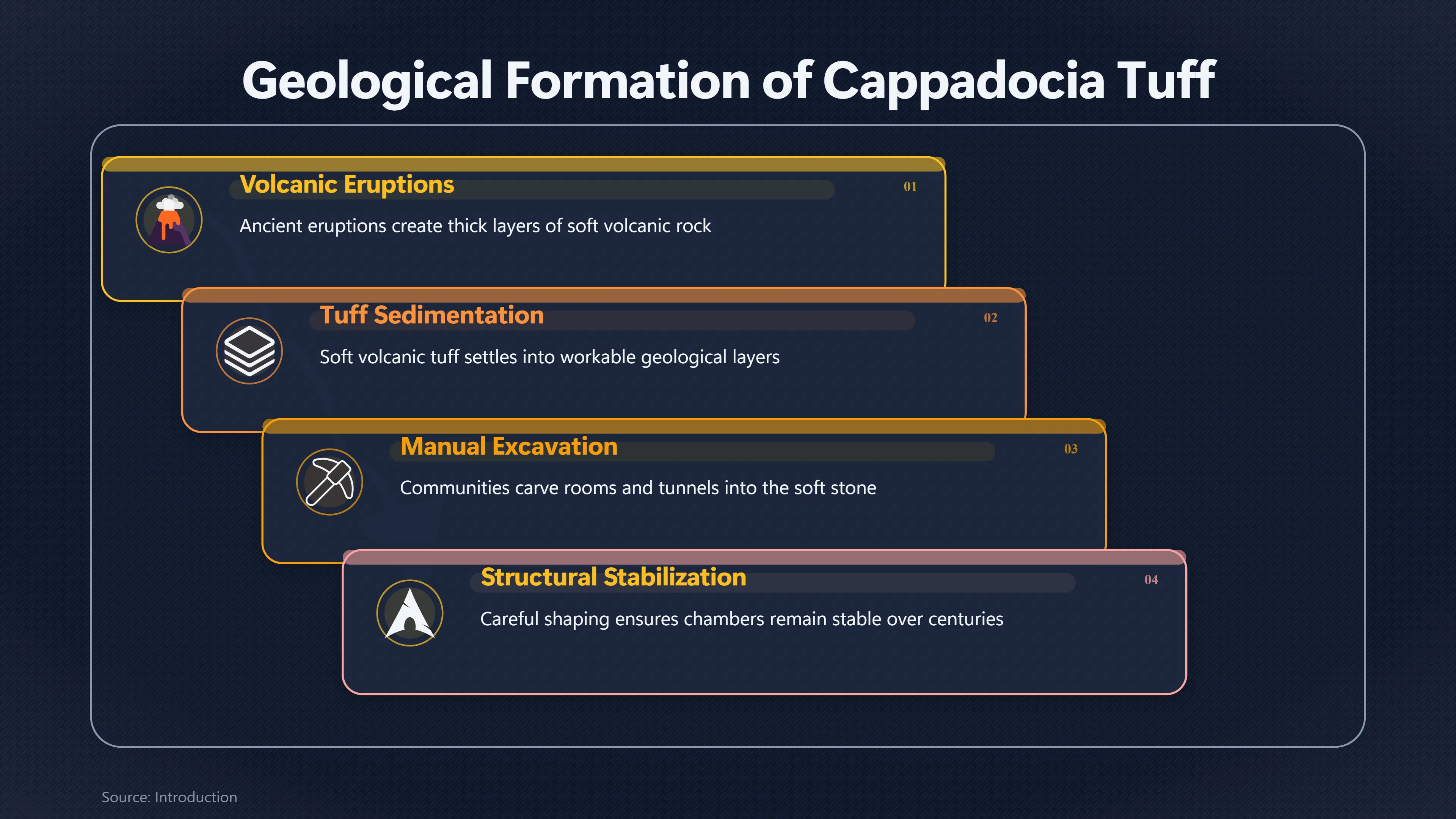
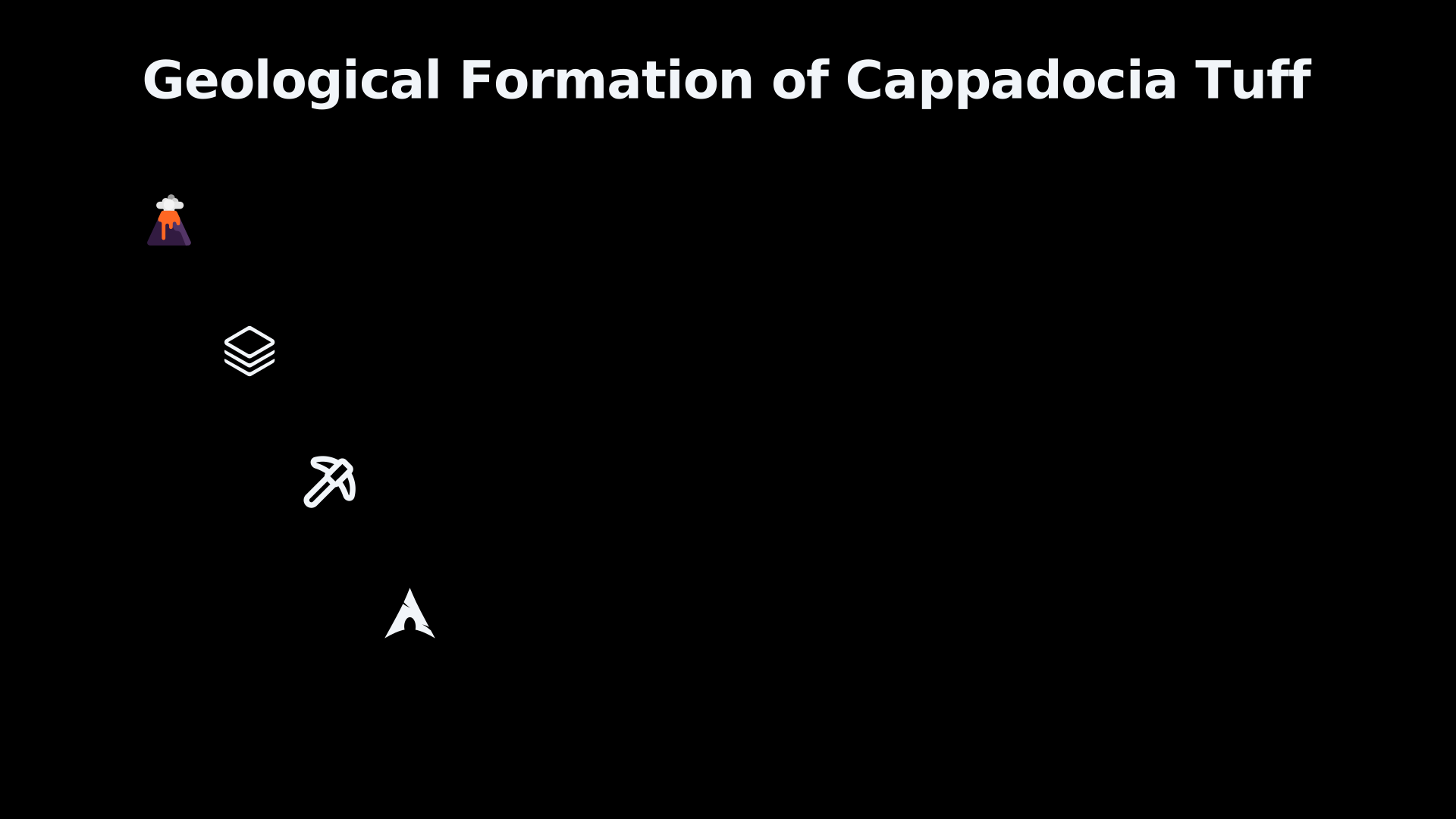
Cappadocia’s underground cities were made possible by the region’s volcanic landscape. Ancient eruptions created layers of soft volcanic rock, known as tuff, which could be cut relatively easily while still allowing stable chambers when carefully shaped. This geology explains why Cappadocia developed such a distinctive tradition of rock-cut architecture, from cave homes and churches to entire subterranean settlements.[UNESCO World Heritage Centre]whc.unesco.orgWorld Heritage Centre Göreme National Park and the Rock Sites of CappadociaUNESCO World Heritage CentreGöreme National Park and the Rock Sites of Cappadocia - UNESCO World Heritage Centre…
The construction was not a single dramatic act of excavation. Instead, underground spaces were expanded over long periods as communities carved new rooms, tunnels and storage areas. The result was a practical network rather than a planned underground city in the modern sense. Different areas served different purposes: some rooms were domestic, some agricultural, some religious, and others defensive.[Visit Cappadocia]visitcappadocia.comVisit CappadociaCappadocia's Underground Cities: Derinkuyu & Kaymaklı Guide | Visit CappadociaJanuary 1, 2024…
Survival through design, not legend
The most impressive feature of these settlements is their ability to support human life below ground. Derinkuyu, one of the deepest known examples, contains multiple levels connected by narrow passages. Archaeological features include kitchens, storage areas, livestock spaces, wells, communal rooms and places of worship. Its ventilation shafts were essential because long-term occupation would have been impossible without a reliable supply of fresh air.[Visit Cappadocia]visitcappadocia.netOpen source on visitcappadocia.net.
Large circular stone doors are among the features that most capture visitors’ imagination. These heavy stones could block passages and help protect communities during periods of danger. They were not evidence of a mysterious underground civilisation, but practical defensive devices created for a population that understood the risks of conflict and invasion.[Visit Cappadocia]visitcappadocia.netOpen source on visitcappadocia.net.
The exact origins of every underground chamber remain debated. Some popular accounts attribute the earliest digging to very ancient peoples such as the Hittites, while others emphasise later expansion by Christian and Byzantine communities. What is clearer is that underground settlements were repeatedly adapted, especially during periods when communities sought protection from raids and political instability. UNESCO identifies Kaymaklı and Derinkuyu among the subterranean cities associated with Cappadocia’s refuge traditions during periods of conflict.[UNESCO World Heritage Centre]whc.unesco.orgWorld Heritage Centre Göreme National Park and the Rock Sites of CappadociaUNESCO World Heritage CentreGöreme National Park and the Rock Sites of Cappadocia - UNESCO World Heritage Centre…
Life inside Derinkuyu and Kaymaklı
The underground cities were not permanent underground capitals where everyone lived their entire lives. They were survival spaces designed to allow communities to retreat below the surface when necessary. This distinction matters because modern descriptions sometimes exaggerate them as complete hidden cities disconnected from life above ground. In reality, they were closely linked to surface settlements, farms and villages.[UNESCO World Heritage Centre]whc.unesco.orgWorld Heritage Centre Göreme National Park and the Rock Sites of CappadociaUNESCO World Heritage CentreGöreme National Park and the Rock Sites of Cappadocia - UNESCO World Heritage Centre…
Derinkuyu: the deepest refuge
Derinkuyu is the most famous of Cappadocia’s underground cities because of its scale. The accessible areas descend deep below ground and reveal a carefully organised environment of passages, chambers and ventilation routes. The site includes spaces associated with everyday life, including food storage, animal areas, kitchens and religious rooms.[Visit Cappadocia]visitcappadocia.netOpen source on visitcappadocia.net.
What makes Derinkuyu unusual is the combination of depth and practicality. A visitor moving through its tunnels is not simply seeing carved rock; they are seeing evidence of planning under difficult conditions. Rooms had to be positioned around airflow, movement, water access and security. The underground environment created challenges, but it also offered protection from attack and harsh surface conditions.[Visit Cappadocia]visitcappadocia.netOpen source on visitcappadocia.net.
The modern discovery story has added to Derinkuyu’s reputation as a mystery site. The complex became widely known after a hidden passage was uncovered during renovation work in the 1960s, revealing a much larger underground structure beneath the settlement. Since then, it has become one of Turkey’s most recognisable archaeological attractions.[The Times of India]timesofindia.indiatimes.comCurious, he expanded the opening and uncovered one of the most remarkable archaeological discoveries in the Cappadocia region: the ancien…
Kaymaklı: a wider underground community
Kaymaklı offers a different experience. Rather than focusing only on depth, it demonstrates how underground space could be organised horizontally into connected living areas. The accessible sections include rooms linked with storage, domestic activities, religious use and agricultural production.[Visit Cappadocia]visitcappadocia.comOpen source on visitcappadocia.com.
Together, Derinkuyu and Kaymaklı show that Cappadocia’s underground architecture was not one isolated wonder but part of a wider tradition. UNESCO includes both sites within the broader heritage landscape of Cappadocia, where rock-cut settlements developed alongside monasteries, churches and villages.[UNESCO World Heritage Centre]whc.unesco.orgWorld Heritage Centre Göreme National Park and the Rock Sites of CappadociaUNESCO World Heritage CentreGöreme National Park and the Rock Sites of Cappadocia - UNESCO World Heritage Centre…
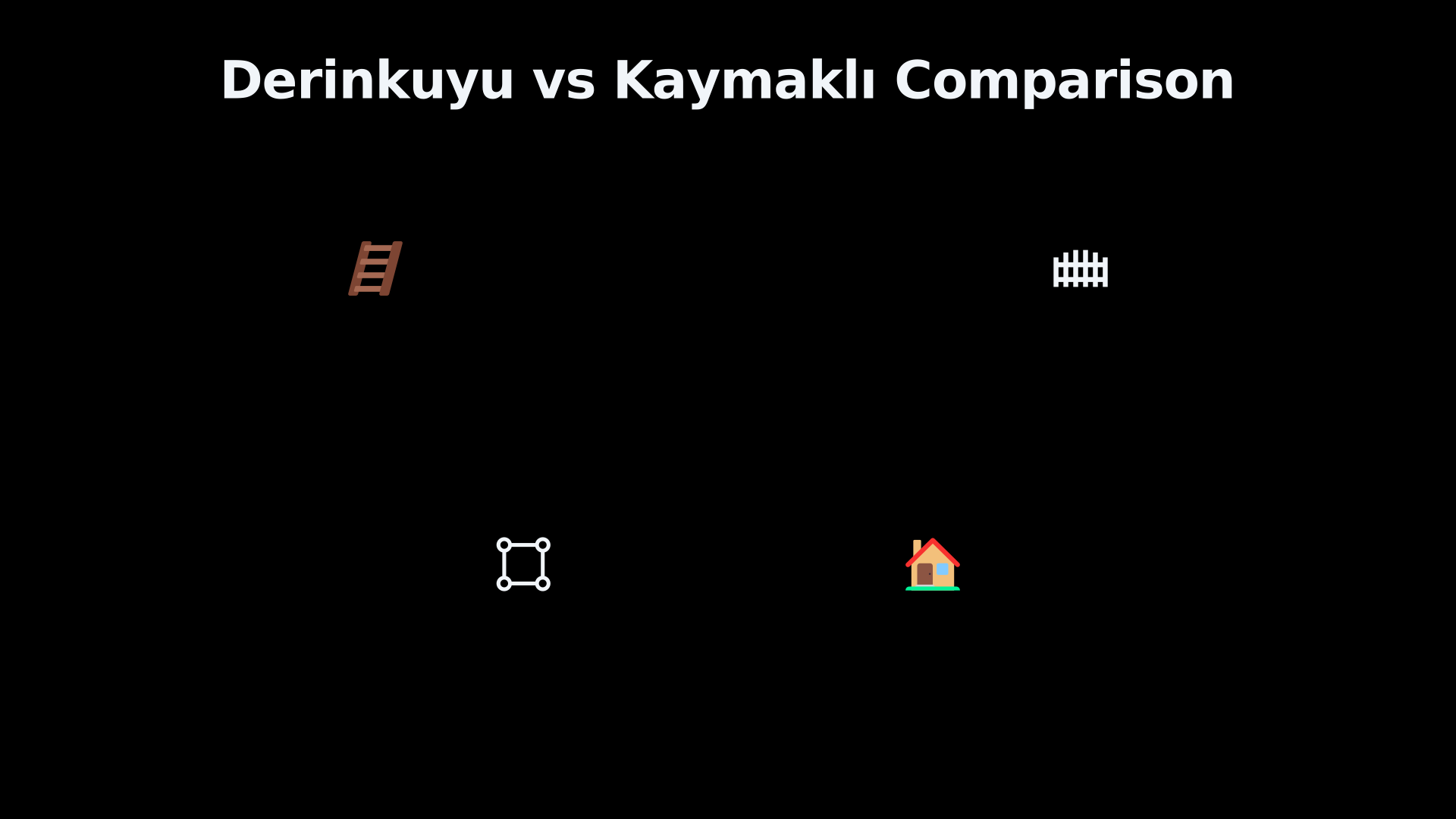
For modern visitors, the contrast between the two is part of their appeal. Derinkuyu creates a stronger impression of depth and defensive planning, while Kaymaklı provides a clearer sense of how people could organise daily activities in a carved environment. Both reveal the same underlying idea: survival depended on adapting architecture to the landscape rather than fighting against it.[Visit Cappadocia]visitcappadocia.netOpen source on visitcappadocia.net.
Myths compared with archaeology
Cappadocia’s underground cities are among Turkey’s most popular “mysterious” heritage sites because they appear to challenge ordinary ideas about ancient life. Stories often present them as forgotten worlds, hidden networks or evidence of unknown technologies. These interpretations are part of modern fascination, but archaeological evidence provides a more grounded explanation.
The strongest interpretation is that the underground cities were responses to real human needs: protection, storage, worship and community survival. Their engineering is impressive precisely because it was achievable with historical tools and knowledge. The achievement lies in the organisation of space, ventilation and social planning, not in unexplained technology.[Reddit]reddit.comDerinkuyu: Cappadocia’s underground city and its long history of reuseDerinkuyu: Cappadocia’s underground city and its long history of reuseJune 18, 2026…
Another common misunderstanding is that the underground cities were designed only as hiding places. Their rooms show a more complex picture. Storage areas, presses, kitchens and animal spaces indicate that communities needed to maintain ordinary life underground for extended periods. These were not empty shelters waiting for disaster; they were prepared environments connected to the economic and religious life of Cappadocian communities.[Visit Cappadocia]visitcappadocia.comVisit CappadociaCappadocia's Underground Cities: Derinkuyu & Kaymaklı Guide | Visit CappadociaJanuary 1, 2024…
The biggest unanswered questions concern chronology rather than basic purpose. Archaeologists continue to investigate how early different sections are, who first carved them and how they changed over centuries. The uncertainty adds to their fascination, but it does not remove the clear evidence that later communities expanded and reused these spaces as part of Cappadocia’s changing history.[UNESCO World Heritage Centre]whc.unesco.orgWorld Heritage Centre Göreme National Park and the Rock Sites of CappadociaUNESCO World Heritage CentreGöreme National Park and the Rock Sites of Cappadocia - UNESCO World Heritage Centre…

Why Cappadocia’s hidden cities matter today
The underground cities occupy an unusual place in Turkey’s strange-history landscape because they sit between archaeology, folklore and tourism. They are not museums of curiosities in the traditional sense, but preserved environments where the visitor enters directly into a historical puzzle. The “collection” is the place itself: tunnels, tools, architecture and traces of human adaptation carved into the landscape.
Their importance comes from showing how communities respond creatively to uncertainty. Cappadocia’s underground spaces preserve a memory of survival without relying on legend alone. They demonstrate that some of history’s most extraordinary places are not built as monuments to power, but as practical solutions created by people trying to protect their homes, families and traditions.[UNESCO World Heritage Centre]whc.unesco.orgWorld Heritage Centre Göreme National Park and the Rock Sites of CappadociaUNESCO World Heritage CentreGöreme National Park and the Rock Sites of Cappadocia - UNESCO World Heritage Centre…
For visitors interested in unusual heritage, Derinkuyu and Kaymaklı offer something different from a conventional museum display. Instead of looking at objects behind glass, visitors move through the physical remains of a hidden way of life. The result is one of Turkey’s most distinctive encounters between archaeology, architecture and mystery.[UNESCO World Heritage Centre]whc.unesco.orgWorld Heritage Centre Göreme National Park and the Rock Sites of CappadociaUNESCO World Heritage CentreGöreme National Park and the Rock Sites of Cappadocia - UNESCO World Heritage Centre…
Amazon book picks
Further Reading
Books and field guides related to The Hidden Cities Beneath Cappadocia. Use these as the next step if you want deeper reading beyond the article.
A Traveller's History of Turkey
The Traveller's History series is designed for travellers who want more historical background on the country they are visiting than can b...
Stuff
The New York Times bestseller. "Gripping . . . By turns fascinating and heartbreaking . . . Stuff invites readers to reevaluate their des...
The Silk Roads
Far more than a history of the Silk Roads, this book is truly a revelatory new history of the world, promising to destabilize notions of...
eBay marketplace picks
Marketplace Samples
Live-tested eBay searches with available results related to this page.
Selected fromCappadocia poster oneBay.co.uk.



Endnotes
1.
Source: whc.unesco.org
Title: World Heritage Centre Göreme National Park and the Rock Sites of Cappadocia
Link:https://whc.unesco.org/en/list/357
Source snippet
UNESCO World Heritage CentreGöreme National Park and the Rock Sites of Cappadocia - UNESCO World Heritage Centre...
2.
Source: reddit.com
Title: Derinkuyu: Cappadocia’s underground city and its long history of reuse
Link:https://www.reddit.com/r/AncientWorld/comments/1u9a8m9/derinkuyu_cappadocias_underground_city_and_its/
Source snippet
Derinkuyu: Cappadocia’s underground city and its long history of reuseJune 18, 2026...
Published: June 18, 2026
3.
Source: cappadocia.help
Title: underground cities of cappadocia
Link:https://cappadocia.help/2024/04/19/underground-cities-of-cappadocia/
4.
Source: whc.unesco.org
Link:https://whc.unesco.org/en/documents/118593
5.
Source: whc.unesco.org
Link:https://whc.unesco.org/en/list/357/maps/
6.
Source: whc.unesco.org
Link:https://whc.unesco.org/en/list/357/documents/
8.
Source: visitcappadocia.com
Link:https://visitcappadocia.com/underground-cities-cappadocia/
Source snippet
Visit CappadociaCappadocia's Underground Cities: Derinkuyu & Kaymaklı Guide | Visit CappadociaJanuary 1, 2024...
Published: January 1, 2024
9.
Source: visitcappadocia.net
Link:https://visitcappadocia.net/en/travel-guide/derinkuyu-underground-city
10.
Source: timesofindia.indiatimes.com
Link:https://timesofindia.indiatimes.com/world/rest-of-world/in-1963-a-man-renovating-his-home-in-turkey-noticed-his-chickens-kept-disappearing-into-a-crack-in-his-basement-wall-when-he-dug-it-open-he-found-the-ancient-city-of-derinkuyu-an-18-level-city-85m-underground-that-could-shelter-20000-people/articleshow/132366073.cms
Source snippet
Curious, he expanded the opening and uncovered one of the most remarkable archaeological discoveries in the Cappadocia region: the ancien...
11.
Source: visitcappadocia.com
Link:https://visitcappadocia.com/kaymakli-underground-city/
12.
Source: visitcappadocia.net
Link:https://visitcappadocia.net/en/travel-guide/derinkuyu-vs-kaymakli-comparison
13.
Source: visitcappadocia.net
Title: cappadocia underground cities complete list and guide
Link:https://visitcappadocia.net/en/blog/cappadocia-underground-cities-complete-list-and-guide
14.
Source: visitcappadocia.net
Title: kaymakli vs derinkuyu vs ozkonak complete comparison
Link:https://visitcappadocia.net/en/blog/kaymakli-vs-derinkuyu-vs-ozkonak-complete-comparison
15.
Source: visitcappadocia.net
Title: Kaymakli vs Derinkuyu: Which Underground City to Visit | Visit Cappadocia
Link:https://visitcappadocia.net/en/blog/kaymakli-underground-city-vs-derinkuyu-which-to-visit
16.
Source: heritagedaily.com
Link:https://www.heritagedaily.com/2020/04/derinkuyu-the-underground-city/127748
Additional References
17.
Source: disclosurefiles.org
Title: derinkuyu underground city hh 26001
Link:https://disclosurefiles.org/cases/derinkuyu-underground-city-hh-26001/
Source snippet
Derinkuyu Underground City // DISCLOSURE FILESJune 20, 2026 — CONFIDENTIAL HH-26001 DERINKUYU UNDERGROUND CITY Incident 1963-01-01 Locati...
Published: June 20, 2026
18.
Source: youtube.com
Link:https://www.youtube.com/watch?v=F1KW36oywZk
Source snippet
Why Does This Ancient 20,000 person Underground City Exist? (Derinkuyu)...
19.
Source: youtube.com
Title: Why Does This Ancient 20,000 person Underground City Exist? (Derinkuyu)
Link:https://www.youtube.com/watch?v=y53MxHzK_ec
Source snippet
Kaymakli Underground City: Cappadocia, Turkey Travel...
20.
Source: nevsehir.gov.tr
Title: Nevşehir Valiliği
Link:https://www.nevsehir.gov.tr/kaymakli-yeralti-sehri
Source snippet
mesafede bulunan Kaymaklı kasabasındadır. 8 katlı olup ilk katı erken dönem tarihlenmektedir. Roma ve Bizans dönemlerinde de diğer alanla...
21.
Source: youtube.com
Title: Kaymakli Underground City: Cappadocia, Turkey Travel
Link:https://www.youtube.com/watch?v=3w17Bx0RssI
Source snippet
Underground Mega-City | Derinkuyu Is Much Older Than You Think...
22.
Source: youtube.com
Title: Underground Mega-City | Derinkuyu Is Much Older Than You Think
Link:https://www.youtube.com/watch?v=QpGxAhYrSXI
Source snippet
The underground cities of Cappadocia, Turkey...
23.
Source: muze.gov.tr
Link:https://muze.gov.tr/Language/Index/EN?url=%2Fmuze-detay%3FSectionId%3DKYY01%26DistId%3DKYY%26fbclid%3DIwAR3k4OdwAbS
24.
Source: ktb.gov.tr
Link:https://www.ktb.gov.tr/EN-113739/kaymakli-underground-city.html
25.
Source: muze.gov.tr
Link:https://www.muze.gov.tr/muze-detay?DistId=KYY&SectionId=KYY01
26.
Source: muze.gov.tr
Link:https://muze.gov.tr/urun-detay?CatalogNo=WEB-KYY01