Within Curious India
Why Does Delhi Have a Toilet Museum?
Delhi's toilet museum turns an eccentric subject into a serious story about sanitation, caste, labour, technology and public health.
On this page
- What visitors actually see
- Sanitation, caste and social reform
- Novelty versus public health purpose
Page outline Jump by section
Introduction
Delhi’s Sulabh International Museum of Toilets is one of India’s most unusual museums, but its real subject is not plumbing. Instead, it uses the history of toilets to explore how sanitation has shaped health, technology, social status and human dignity. Founded in 1992 by social reformer Dr Bindeshwar Pathak, the museum belongs to the wider Sulabh International movement, which has campaigned for affordable sanitation, the replacement of dry latrines and the eradication of manual scavenging.[sulabhtoiletmuseum.org]sulabhtoiletmuseum.orgAbout | SulabhmuseumAbout | Sulabhmuseum
That combination makes it distinctive within India’s landscape of curious museums. Visitors arrive expecting novelty, antique commodes and eccentric lavatory designs, but leave having encountered a much broader story about caste, labour, urban infrastructure and public health. Rather than treating toilets as comic objects, the museum argues that sanitation is a question of equality and citizenship as much as engineering.[sulabhtoiletmuseum.org]sulabhtoiletmuseum.orgAbout | SulabhmuseumAbout | Sulabhmuseum
Why Does Delhi Have a Toilet Museum?
The museum was established to support a social reform campaign rather than to celebrate unusual antiques. Dr Bindeshwar Pathak founded Sulabh International to improve sanitation across India and to eliminate the degrading practice of manually removing human waste from dry latrines. The museum became an educational extension of that mission, using history to persuade visitors that sanitation systems reflect how societies value health, labour and dignity.[sulabhtoiletmuseum.org]sulabhtoiletmuseum.orgAbout | SulabhmuseumAbout | Sulabhmuseum
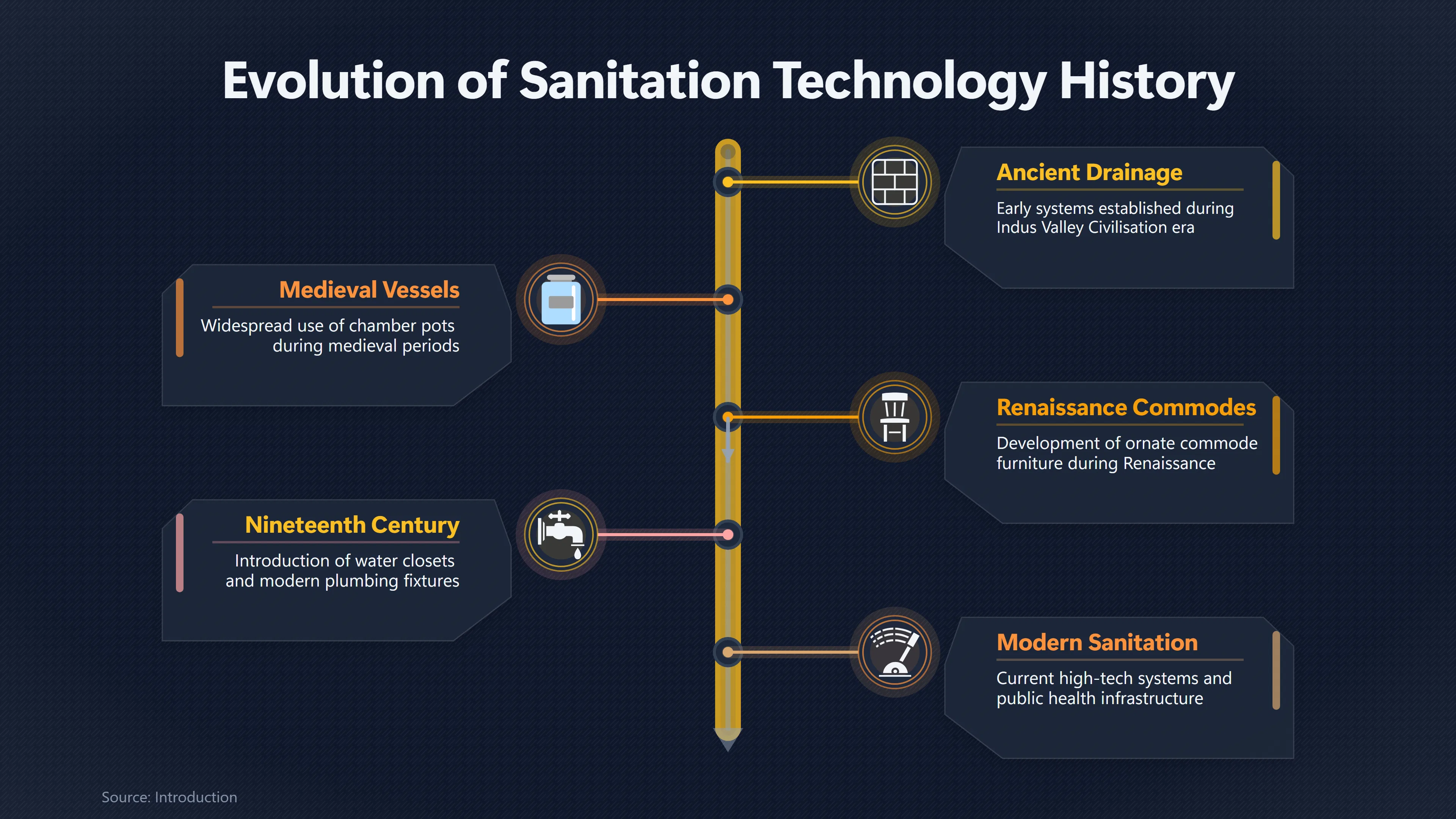
Its galleries follow the development of toilets over roughly five thousand years, from drainage systems in the Indus Valley Civilisation through medieval chamber pots, Renaissance commodes and nineteenth-century water closets to modern sanitation technology. The displays combine original artefacts, replicas, illustrations, photographs, engineering diagrams and historical anecdotes from around the world, presenting sanitation as a cultural history rather than merely a technical subject.[sulabhtoiletmuseum.org]sulabhtoiletmuseum.orgAbout | SulabhmuseumAbout | Sulabhmuseum
The museum is therefore unusual not because toilets are inherently strange museum objects, but because it asks visitors to reconsider something that is normally hidden from public discussion.
What Visitors Actually See
Many travel articles describe the museum as a collection of bizarre toilets, but that gives only a partial picture. The physical collection includes decorative chamber pots, historic commodes, bidets, water closets, toilet furniture and models showing changing sanitation technology. Some pieces are deliberately eye-catching, including ornate European toilet designs and reproductions of royal commodes.[sulabhtoiletmuseum.org]sulabhtoiletmuseum.orgAbout | SulabhmuseumAbout | Sulabhmuseum
Much of the exhibition, however, consists of interpretation rather than objects. Visitors encounter:
- chronological displays explaining the evolution of sanitation technology;
- illustrations of historic sewerage systems, including those associated with the Indus Valley Civilisation;
- explanations of changing hygiene practices and toilet etiquette across cultures;
- material on legislation, engineering and public sanitation;
- examples of Sulabh’s own sanitation technologies and community projects.[sulabhtoiletmuseum.org]sulabhtoiletmuseum.orgAbout | SulabhmuseumAbout | Sulabhmuseum
This emphasis on explanation reflects the museum’s purpose. As museum historian Peter Stanley observed, the institution relies more on photographs, graphics and educational displays than on vast numbers of rare artefacts because the parent organisation directs most of its resources towards sanitation projects rather than collecting antiques.[recollections.nma.gov.au]recollections.nma.gov.aure CollectionsSulabh International Museum of Toilets, New Delhi…

Sanitation, Caste and Social Reform
The museum’s most important political message concerns the relationship between sanitation infrastructure and social inequality.
For centuries, many Indian dry latrines required human waste to be removed manually, work traditionally imposed upon communities placed at the bottom of the caste hierarchy. Those workers—particularly women—experienced severe social exclusion alongside dangerous and degrading working conditions. Although legislation has prohibited manual scavenging, enforcement has been uneven and the practice has persisted in some areas despite repeated legal reforms.[Sulabh International]sulabhinternational.orgOpen source on sulabhinternational.org.
Sulabh’s wider programme sought to remove the underlying technological problem rather than only condemn the practice. Its twin-pit pour-flush toilet system was designed to eliminate the need for manual handling of fresh waste while using relatively little water, making it suitable for many areas without conventional sewer networks. According to Sulabh, replacing dry latrines formed the foundation of rehabilitation efforts for former manual scavengers alongside education, vocational training and social integration.[Sulabh International]sulabhinternational.orgSulabh International Sanitation – Sulabh InternationalSulabh International Sanitation – Sulabh International
Seen in this context, the museum functions almost as a public policy exhibition. Historic toilets are used to explain why engineering choices affect human rights, occupational safety and social equality.
Novelty Versus Public-Health Purpose
The museum frequently appears on lists of the world’s strangest museums, and it undoubtedly benefits from that reputation. Antique toilets, royal chamber pots and humorous historical anecdotes attract media attention that a conventional sanitation exhibition might never receive. Time magazine has also recognised it among notable unusual museums, helping reinforce its international profile.[Sulabh International]sulabhinternational.orgOpen source on sulabhinternational.org.
Yet reducing it to a comic attraction risks missing its central argument.
Throughout the galleries, the museum links sanitation to issues that remain highly relevant:
- disease prevention through improved hygiene;
- safe disposal of human waste;
- affordable sanitation technologies;
- dignity for sanitation workers;
- access to toilets as an element of public health rather than personal convenience.[sulabhtoiletmuseum.org]sulabhtoiletmuseum.orgAbout | SulabhmuseumAbout | Sulabhmuseum
This educational purpose distinguishes it from museums that simply display eccentric objects for amusement. The unusual exhibits become conversation starters for topics that many societies still find uncomfortable to discuss openly.
Why It Matters in India’s Curiosity Landscape
India contains several museums that surprise visitors by transforming overlooked subjects into cultural history. The Sulabh International Museum of Toilets is perhaps the clearest example because it demonstrates how an apparently comic collection can become a vehicle for discussing some of the country’s most significant social challenges.
Within India’s wider landscape of unusual museums, it occupies a distinctive position. It is simultaneously an educational museum, a campaigning institution, a technological history collection and a memorial to social reform. Rather than inviting visitors to laugh at historic toilets, it encourages them to recognise sanitation as an essential part of human dignity.
That combination explains why the museum continues to stand out internationally. Its most memorable exhibits are not the ornate chamber pots or antique commodes, but the argument that the design of something as ordinary as a toilet can influence health, equality, labour and the everyday experience of citizenship.[sulabhtoiletmuseum.org]sulabhtoiletmuseum.orgAbout | SulabhmuseumAbout | Sulabhmuseum
Amazon book picks
Further Reading
Books and field guides related to Why Does Delhi Have a Toilet Museum?. Use these as the next step if you want deeper reading beyond the article.
India
The most authoritative and highly regarded single-volume history of India - from ancient time to the modern day. Five millennia of the su...
The Idea of India
This Long Essay Makes An Eloquent And Persuasive Argument For Nehru'S Idea Of Nationhood In India. At A Time When The Relevance Of Nehru'...
The Big Necessity: The Unmentionable World of Human Waste and...
Produced behind closed doors, disposed of discreetly, hidden by euphemism, shit is rarely out in the open in 'civilized' society, but the...
The Last Taboo: Opening the Door on the Global Sanitation Crisis
Except in schoolboy jokes, the subject of human waste is rarely aired. We talk aboutwater-related diseases when most are sanitation-relat...
eBay marketplace picks
Marketplace Samples
Live-tested eBay searches with available results related to this page.
Selected fromtoilet collectible oneBay.co.uk.


Endnotes
1.
Source: sulabhtoiletmuseum.org
Title: About | Sulabhmuseum
Link:https://www.sulabhtoiletmuseum.org/about
2.
Source: recollections.nma.gov.au
Title: re Collections
Link:https://recollections.nma.gov.au/issues/volume_9_number_1/commentary/sulabh-international-museum-toilets
Source snippet
Sulabh International Museum of Toilets, New Delhi...
3.
Source: sulabhtoiletmuseum.org
Link:https://www.sulabhtoiletmuseum.org/gallery
4.
Source: sulabhtoiletmuseum.org
Link:https://www.sulabhtoiletmuseum.org/book-online
5.
Source: sulabhtoiletmuseum.org
Link:https://www.sulabhtoiletmuseum.org/items
6.
Source: delhitourism.gov.in
Link:https://delhitourism.gov.in/entertainment/sulabh_international_museum_of_toilets.html
7.
Source: sulabhinternational.org
Link:https://www.sulabhinternational.org/
8.
Source: sulabhinternational.org
Link:https://www.sulabhinternational.org/liberation-and-rehabilitation-of-manual-scavengers/
9.
Source: sulabhinternational.org
Title: Sulabh International Sanitation – Sulabh International
Link:https://www.sulabhinternational.org/our-work/sanitation/
10.
Source: sulabhinternational.org
Link:https://www.sulabhinternational.org/timeline/sulabhinternational/en/sulabh/the-timeline/
11.
Source: sulabhinternational.org
Title: This unique exhibition, now op
Link:https://www.sulabhinternational.org/sulabh-international-opens-new-gallery-toilet-tales/
Source snippet
Sulabh International Opens New Gallery: Toilet Tales – Sulabh InternationalNovember 27, 2025 — Nov272025 Sulabh International Social Serv...
Published: November 27, 2025
12.
Source: sulabhinternational.org
Title: Dr Bindeshwar Pathak Memorial – Sulabh International
Link:https://www.sulabhinternational.org/dr-bindeshwar-pathak-memorial/
Source snippet
April 2, 2025 — DR BINDESHWAR PATHAK MEMORIAL A Living Tribute to a Visionary Who Transformed Sanitation in India Sulabh International So...
Published: April 2, 2025
13.
Source: sulabhinternational.org
Title: Home – Sulabh International
Link:https://www.sulabhinternational.org/homepage/
Source snippet
January 25, 2024 — Sulabh International Social Service Organisation Image: padhma-bhushan-dr-bindeshwar-pathak-1b.png On January 25, 2024...
Published: January 25, 2024
14.
Source: 2019.sulabhinternational.org
Title: manual scavenging
Link:https://2019.sulabhinternational.org/manual-scavenging/
15.
Source: sulabhinternational.org
Link:https://www.sulabhinternational.org/our-work/manual-scavengers/
16.
Source: sulabhinternational.org
Link:https://www.sulabhinternational.org/about-sulabh-international-social-service-organisation-new/
17.
Source: 2019.sulabhinternational.org
Title: about sulabh international social service organisation
Link:https://2019.sulabhinternational.org/about-sulabh-international-social-service-organisation/
18.
Source: sulabhinternational.org
Link:https://www.sulabhinternational.org/our-work/
19.
Source: 2019.sulabhinternational.org
Title: about sulabh international social service organisation 2
Link:https://2019.sulabhinternational.org/about-sulabh-international-social-service-organisation-2/
Additional References
20.
Source: youtube.com
Title: World’s First Toilets Museum | Sulabh International Museum of Toilets
Link:https://www.youtube.com/watch?v=qYxfQV4XTR4
Source snippet
Discover the history of privies at Sulabh International toilet museum...
21.
Source: youtube.com
Title: International Sulabh Museum of toilets in Delhi
Link:https://www.youtube.com/watch?v=YpFmMeRAD2Y
Source snippet
World's First Toilets Museum | Sulabh International Museum of Toilets...
22.
Source: journals.library.brandeis.edu
Link:https://journals.library.brandeis.edu/index.php/caste/article/view/429
Source snippet
Human Dignity Argument against Manual Scavenging in India | CASTE / A Global Journal on Social ExclusionMay 15, 2023 — THE HUMAN DIGNITY...
Published: May 15, 2023
23.
Source: youtube.com
Title: Meet Bindeshwar Pathak, India’s Toilet Man
Link:https://www.youtube.com/watch?v=oRLc1bU9hLI
Source snippet
International Sulabh Museum of toilets in Delhi...
24.
Source: youtube.com
Title: Discover the history of privies at Sulabh International toilet museum
Link:https://www.youtube.com/watch?v=p-04sI61HVU
Source snippet
IN CONVERSATION- DR. BINDESHWAR PATHAK...
25.
Source: youtube.com
Title: IN CONVERSATION- DR. BINDESHWAR PATHAK
Link:https://www.youtube.com/watch?v=Yw2lkeGQJA8
Source snippet
Meet Bindeshwar Pathak, India's Toilet Man...
26.
Source: pmc.ncbi.nlm.nih.gov
Link:https://pmc.ncbi.nlm.nih.gov/articles/PMC6515731/
27.
Source: papers.ssrn.com
Link:https://papers.ssrn.com/sol3/papers.cfm?abstract_id=4391142
28.
Source: gh.bmj.com
Link:https://gh.bmj.com/content/7/7/e008733
29.
Source: academic.oup.com
Link:https://academic.oup.com/hrlr/article-abstract/22/3/ngac019/6648334