Within Nigeria Curiosities
What Happens When Sacred Objects Enter Museums?
Charms and ancestral figures reveal how sacred objects change when churches, museums and collectors redefine their meaning.
On this page
- Charms at Madonna University's Elele museum
- Ancestral figures and memory at Oron
- Who controls meaning, ownership and display
Page outline Jump by section
Introduction
Sacred objects often change meaning when they leave the communities that created and used them. In Nigeria, charms, ancestral figures and ritual objects have been collected by churches, universities and museums that interpret them in very different ways from their original custodians. Rather than serving as active religious objects, they may become evidence of history, examples of craftsmanship, educational exhibits or symbols of cultural identity. That shift is not simply about moving an artefact into a display case. It raises questions about who has the authority to explain the object, whether sacred power is believed to remain within it, and how museums should present objects that some visitors regard as heritage while others see them as religiously dangerous or spiritually significant.
Nigeria offers particularly revealing examples because traditional religions, Christianity and Islam continue to coexist alongside one another. Museums therefore do not merely preserve the past; they become places where competing understandings of sacred objects are negotiated.
How sacred objects acquire new meanings
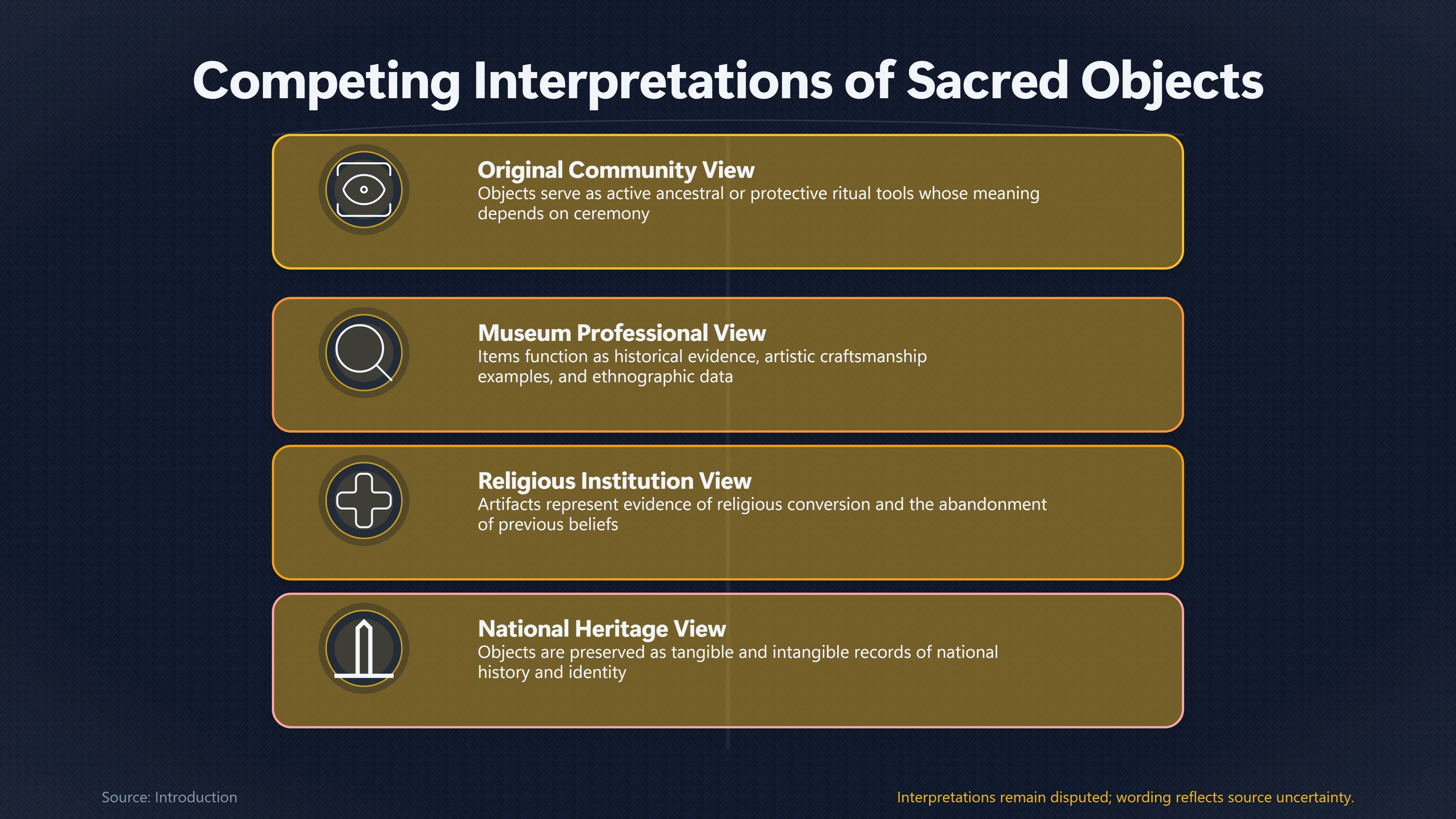
When a ritual object enters a museum, three different interpretations often exist at the same time.
- The original community may regard it as an ancestral, protective or ceremonial object whose meaning depends on ritual use.
- Museum professionals usually interpret it as evidence of history, artistic skill, archaeology or ethnography, emphasising documentation and conservation rather than spiritual function.
- Religious institutions, particularly Christian organisations that collect former ritual objects, may display the same items as evidence of religious conversion or the abandonment of earlier beliefs.
These competing interpretations do not necessarily cancel one another out. Instead, they reveal how an object’s significance depends on the setting in which it is encountered. Nigeria’s National Commission for Museums and Monuments (NCMM), for example, defines its role as collecting, conserving and interpreting cultural heritage for education while preserving both tangible and intangible aspects of Nigerian history.[Nat'l Commission for Museums & Monuments]museum.ngNat'l Commission for Museums & Monuments HomeNat'l Commission for Museums & MonumentsHome - National Commission for Museums and Monuments…
Charms at Madonna University’s Elele museum
One of Nigeria’s most unusual religious collections is associated with the International Sanctuary of Jesus the Saviour and Mother Mary at Elele in Rivers State, closely linked with Madonna University.
Conference information published by the university describes a Museum of Charms and Fetish Objects containing ritual objects surrendered by people who converted from traditional religious practice to Christianity. According to the university, the collection has also been used for academic research.[Madonna University]madonnauniversity.edu.ngMadonna University International ConferenceMadonna UniversityInternational ConferenceDecember 5, 2023…
This makes the collection distinctive because it occupies two roles simultaneously.
First, it functions as a Christian testimony. Visitors are encouraged to understand the charms as objects abandoned after religious conversion rather than as continuing ritual instruments. Their presence supports a narrative of spiritual transformation.
Secondly, the objects are also treated as ethnographic material. Once catalogued and displayed, they become evidence for researchers studying local religious practice, material culture and changing beliefs. The physical artefacts remain, but their institutional meaning shifts from ritual effectiveness to historical documentation.
That transformation is significant because it demonstrates how museums connected to religious organisations may preserve objects that they simultaneously reject as active religious instruments. Instead of celebrating the original ritual system, the display reframes the objects as records of a previous religious life.
Ancestral figures and memory at Oron
The National Museum at Oron presents a very different example of reframing sacred objects.[Wikipedia]WikipediaOron MuseumOron Museum
The museum was established largely to preserve hundreds of Ekpu ancestral figures carved by the Oron people. These wooden sculptures originally commemorated deceased ancestors and were closely connected with lineage, remembrance and community identity rather than being decorative artworks.[Wikipedia]WikipediaOron MuseumOron Museum
By the mid-twentieth century, many Ekpu figures had already ceased to be used in their original ritual context. Colonial-era preservation efforts sought to document and rescue surviving carvings before they disappeared completely. Later, theft and extensive losses during the Nigerian Civil War further altered the collection’s history, making the museum itself part of the story of preservation.[Smithsonian Institution]si.eduOpen source on si.edu.
Visitors therefore encounter the sculptures through several overlapping narratives:
- as masterpieces of historic wood carving;
- as records of Oron ancestry and social organisation;
- as survivors of war, looting and dispersal;
- as museum objects whose present identity differs from their original ceremonial role.
Unlike the Elele collection, the Oron Museum does not primarily reinterpret the figures through Christian conversion. Instead, it presents them as cultural heritage whose importance extends beyond active religious practice. The sacred dimension is acknowledged as part of historical context rather than as an ongoing ritual function.
Who controls meaning, ownership and display?
These collections raise wider questions extending beyond Nigeria.
Is preservation the same as respect?
Removing sacred objects from ritual use can protect them from deterioration, theft or destruction. Museums provide climate control, conservation and public access that communities may find difficult to sustain.
Yet preservation also changes the relationship between people and objects. An ancestor figure behind glass is no longer approached in the same way as one standing within a lineage shrine. The object survives physically while its original social role may disappear.
Who has the authority to interpret?
Museum labels often explain objects using archaeology, anthropology or art history. Community members may instead emphasise genealogy, oral history or continuing spiritual significance.
Religious institutions introduce another perspective, interpreting surrendered ritual objects through narratives of conversion and faith. None of these viewpoints is entirely neutral. Each reflects the institution displaying the collection.
Should sacred objects be displayed at all?
Some communities welcome museum display because it safeguards endangered heritage and introduces younger generations to local history.
Others argue that ritual objects lose important aspects of their meaning when removed from ceremonies, sacred landscapes or family custodianship. For them, documentation cannot fully replace lived tradition.
These debates increasingly influence museum practice worldwide, encouraging consultation with source communities and greater transparency about how collections were acquired and interpreted.
A broader Nigerian pattern
The issues visible at Elele and Oron also appear in wider discussions about Nigerian cultural heritage. National museums increasingly present artefacts not simply as artistic masterpieces but as expressions of living cultures whose meanings continue to evolve.
Recent debates surrounding the return of the Benin Bronzes illustrate similar questions. Beyond legal ownership, discussions increasingly concern who should interpret sacred and royal objects, whether they belong primarily in national museums or under traditional custodians, and how museums can display them without separating them entirely from their cultural context.[Reuters]reuters.comNigeria's museum agrees with royal ruler on custody of Benin BronzesThese artifacts, stolen during a British raid in 1897, are significant African heritage objects currently held mostly in Europe. A 2023 d…
This broader conversation highlights that museums are not neutral storehouses. They actively shape public understanding of religion, history and identity through the stories they choose to tell.
Why these collections matter
Nigeria’s unusual religious collections reveal that sacred objects rarely remain fixed in meaning. A charm surrendered after conversion, an ancestral carving rescued from neglect or a ritual object preserved by a national museum all continue to exist physically, but they speak differently depending on who is interpreting them.
For visitors interested in Nigeria’s stranger collections, this is one of the country’s most distinctive themes. The fascination lies not only in the objects themselves but in watching their identities change—from ritual tools to historical artefacts, from family memorials to museum exhibits, and from living religious practice to subjects of scholarship and public debate.
Amazon book picks
Further Reading
Books and field guides related to What Happens When Sacred Objects Enter Museums?. Use these as the next step if you want deeper reading beyond the article.
Decolonizing Museums: Representing Native America in National...
Museum exhibitions focusing on Native American history have long been curator controlled. However, a shift is occurring, giving Indigenou...
The Brutish Museums: The Benin Bronzes, Colonial Violence and...
New York Times 'Best Art Books' 2020 'Essential' – Sunday Times 'Brilliantly enraged' - New York Review of Books 'A real game-changer'– E...
Museums, Heritage and Indigenous Voice: Decolonizing Engagement
Current discourse on Indigenous engagement in museum studies is often dominated by curatorial and academic perspectives, in which communi...
Museum Frictions: Public Cultures/Global Transformations
Museum Frictions is the third volume in a bestselling series on culture, society, and museums. The first two volumes in the series, Exhib...
eBay marketplace picks
Marketplace Samples
Live-tested eBay searches with available results related to this page.
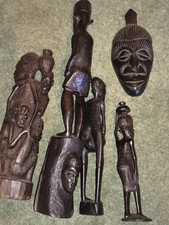
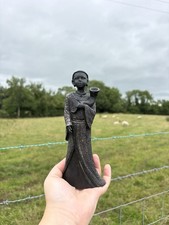
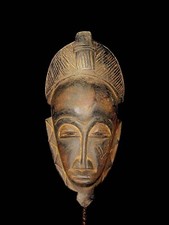
Selected fromAfrican collectible oneBay.co.uk.
Endnotes
1.
Source: museum.ng
Title: Nat’l Commission for Museums & Monuments Home
Link:https://museum.ng/
Source snippet
Nat'l Commission for Museums & MonumentsHome - National Commission for Museums and Monuments...
2.
Source: museum.ng
Title: Nat’l Commission for Museums & Monuments About Us
Link:https://museum.ng/about-us/
Source snippet
Nat'l Commission for Museums & MonumentsAbout Us - National Commission for Museums and Monuments...
3.
Source: Wikipedia
Title: Oron Museum
Link:https://en.wikipedia.org/wiki/Oron_Museum
4.
Source: reuters.com
Title: Nigeria’s museum agrees with royal ruler on custody of Benin Bronzes
Link:https://www.reuters.com/world/africa/nigerias-museum-agrees-with-royal-ruler-custody-benin-bronzes-2025-02-26/
Source snippet
These artifacts, stolen during a British raid in 1897, are significant African heritage objects currently held mostly in Europe. A 2023 d...
5.
Source: museum.ng
Link:https://museum.ng/museums/
6.
Source: collection.museum.ng
Title: ng Home
Link:https://collection.museum.ng/
7.
Source: museum.ng
Title: National Monuments
Link:https://museum.ng/national-monuments-in-nigeria/national-monuments/
8.
Source: museum.ng
Title: Functions of NCMM
Link:https://museum.ng/functions-of-ncmm/
9.
Source: madonnauniversity.edu.ng
Title: Madonna University International Conference
Link:https://www.madonnauniversity.edu.ng/wp-content/uploads/2023/12/Conference-Practical-Information.pdf
Source snippet
Madonna UniversityInternational ConferenceDecember 5, 2023...
Published: December 5, 2023
10.
Source: si.edu
Link:https://www.si.edu/object/epic-ekpu-ancestor-figures-oron-south-east-nigeria%3Asiris_sil_737146
11.
Source: madonnauniversity.edu.ng
Title: Department Of Fine Arts
Link:https://www.madonnauniversity.edu.ng/department-of-fine-arts/
Source snippet
Madonna University, NigeriaJuly 8, 2026 — DEPARTMENT OF FINE ARTS ARTISTRY Faculty of Education and Arts • Fine Arts Faculty of Education...
Published: July 8, 2026
12.
Source: madonnauniversity.edu.ng
Title: About Us
Link:https://www.madonnauniversity.edu.ng/about-us/
13.
Source: madonnauniversity.edu.ng
Title: The Chancellor
Link:https://www.madonnauniversity.edu.ng/the-chancellor/
14.
Source: madonnauniversity.edu.ng
Link:https://www.madonnauniversity.edu.ng/
15.
Source: news.uzh.ch
Link:https://www.news.uzh.ch/en/articles/media/2026/Benin.html
16.
Source: si.edu
Link:https://www.si.edu/object/siris_sil_768947
17.
Source: horniman.ac.uk
Link:https://www.horniman.ac.uk/object/nn3789/
Additional References
18.
Source: apnews.com
Link:https://apnews.com/article/78eab1381f1e219507e2d7607ed41d4f
Source snippet
These cultural items—including human and animal figures, plaques, royal regalia, and a bell—were taken during the 1897 British colonial r...
19.
Source: musethno.uzh.ch
Title: UP UNTIL MARCH TH
Link:https://www.musethno.uzh.ch/en/About-us/News/benin-bronzes-home.html
Source snippet
"Benin Bronzes" have returned home | Ethnographic Museum | UZHJune 30, 2026 — 30.06.2026 THE "BENIN BRONZES" HAVE RETURNED HOME Ethnograp...
Published: June 30, 2026
20.
Source: youtube.com
Title: Exhibition on art, Spirit & Power in Yoruba Woodcarving
Link:https://www.youtube.com/watch?v=wrkh0p-RDdE
Source snippet
Benin Artefacts: When Research Leads to Restitution...
21.
Source: youtube.com
Title: Nigeria’s mysterious art treasures | DW Documentary
Link:https://www.youtube.com/watch?v=QXFkB_o5vX8
Source snippet
Odua Museum Tour | The Hidden History Inside Cocoa House...
22.
Source: youtube.com
Title: Odua Museum Tour | The Hidden History Inside Cocoa House
Link:https://www.youtube.com/watch?v=qMaYxhqnrsA
Source snippet
Nigeria's battle to reclaim looted Benin Bronzes...
23.
Source: youtube.com
Title: Benin Artefacts: When Research Leads to Restitution
Link:https://www.youtube.com/watch?v=ScKnwVFiVrw
Source snippet
This Museum Has Something From Every State in Nigeria...
24.
Source: youtube.com
Title: Nigeria’s battle to reclaim looted Benin Bronzes
Link:https://www.youtube.com/watch?v=BFbEU6pDlVw
Source snippet
Exhibition on art, Spirit & Power in Yoruba Woodcarving...
25.
Source: cam.ac.uk
Link:https://www.cam.ac.uk/stories/benin-artefacts-return
26.
Source: fatheredeh.org
Link:https://www.fatheredeh.org/peace-center/museum-of-charms-voodoo/
27.
Source: mfa.org
Link:https://www.mfa.org/news/nigeria-transfer