Where Italy's Weirdest Histories Come Alive
Italy is one of the richest countries in the world for strange museums, unusual collections and places where history meets legend.
Page outline Jump by section
Introduction
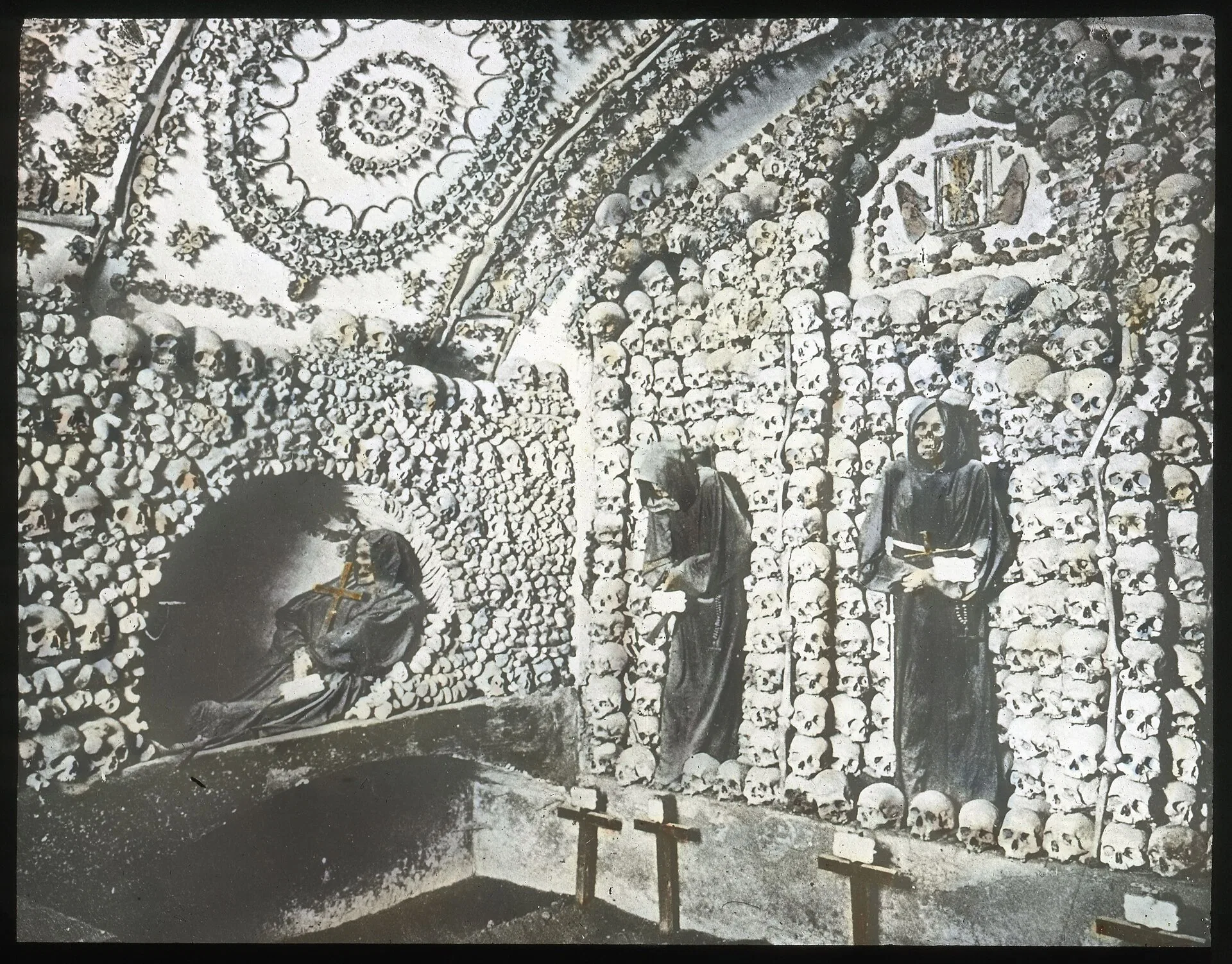
For visitors interested in strange history, Italy’s unusual collections are less about proving supernatural claims and more about understanding how people have interpreted death, fear, faith, science, crime, magic and human imagination. The country’s most memorable oddities often sit between fact and folklore: a crypt decorated with human bones, a village associated with witch trials, or a museum that asks how societies create and spread false beliefs.[Italia.it]italia.itMuseum and Crypt of the Capuchin Friars, RomaMuseum and Crypt of the Capuchin Friars, Roma
Why Italy has such a rich culture of unusual collections
Italy’s strange collections often come from the country’s long history of religious institutions, aristocratic collecting, scientific study and regional traditions. Renaissance and early modern collectors created cabinets of curiosities, known as collections of remarkable natural and artificial objects, which helped shape the development of the modern museum. These collections mixed art, natural specimens, rare objects and items believed to have unusual properties.[CAMeC]camec.museilaspezia.itCAMe CCabinet of CuriositiesCabinet of Curiosities - CAMeCOctober 13, 2019…
Religious culture has also played a major role. Churches, monasteries and confraternities preserved relics, devotional objects and reminders of mortality. In Italy, the boundary between museum, pilgrimage site and heritage monument is sometimes blurred: a place may be both a religious space and a public display of unusual historical material. The Capuchin Crypt in Rome is one of the clearest examples, combining religious reflection with one of Europe’s most striking displays of human remains.[Italia.it]italia.itMuseum and Crypt of the Capuchin Friars, RomaMuseum and Crypt of the Capuchin Friars, Roma
Regional identity is another important factor. Many unusual collections are not national institutions but small local projects preserving a town’s distinctive story, whether that involves folk traditions, craftsmanship, historic professions or legends. This gives Italy’s curiosity culture a very local character: the strange thing is often connected to a specific landscape and community memory.[Atlas Obscura]atlasobscura.comAtlas Obscura69 Unusual Museums in ItalyAtlas Obscura69 Unusual Museums in Italy
The Capuchin Crypt: Rome’s famous meditation on death
The Museum and Crypt of the Capuchin Friars in Rome is among Italy’s best-known macabre heritage sites. Located beneath the church of Santa Maria della Concezione on Via Veneto, the crypt contains the bones of around 4,000 Capuchin friars who died between the 16th century and 1870. Their remains were arranged into elaborate decorative patterns, including walls, symbols and designs made from human bones.[Italia.it]italia.itMuseum and Crypt of the Capuchin Friars, RomaMuseum and Crypt of the Capuchin Friars, Roma
What makes the crypt unusual is that it was not created as a horror attraction. Its purpose was religious and philosophical: to remind visitors of human mortality and the temporary nature of earthly life. The famous message associated with the site — that the living and the dead are connected by the same fate — reflects the Christian tradition of remembering death as a way of encouraging humility.[Italia.it]italia.itMuseum and Crypt of the Capuchin Friars, RomaMuseum and Crypt of the Capuchin Friars, Roma
Visitors should therefore expect something closer to a meditation on mortality than a conventional museum of the macabre. The unusual display raises questions about how societies handle human remains: when does preservation become memory, ritual or art? The Capuchin Crypt remains one of Italy’s strongest examples of a historical collection that is strange because of its meaning rather than because it is designed to shock.[Italia.it]italia.itMuseum and Crypt of the Capuchin Friars, RomaMuseum and Crypt of the Capuchin Friars, Roma
Museums of torture: history, reconstruction and controversy
Italy has several museums dedicated to torture and punishment, reflecting a broader European interest in medieval justice, religious persecution and state violence. One example is the Museum of Torture in Naples, which presents instruments associated with periods including the Inquisition and displays both historic objects and reconstructions. The museum states that its purpose is to encourage reflection on cruelty and oppression rather than simply provide a spectacle.[Museo delle Torture di Napoli]museodelletorture.itMuseo delle Torture di Napoli CollectionMuseo delle Torture di NapoliCollection - Torture Museum…
These collections require careful interpretation because the subject is complicated. Some famous “medieval torture devices” displayed in popular exhibitions have uncertain histories, and many modern presentations mix authentic objects with later reconstructions. Serious visitors should treat such museums as cultural interpretations of punishment and fear, not assume that every dramatic object represents a documented historical event.[Museo delle Torture]torturemuseum.itOpen source on torturemuseum.it.
The appeal of these museums lies partly in their ability to reveal how societies used public punishment as a demonstration of power. They connect to wider themes in Italy’s unusual heritage: crime, law, religious authority and the darker side of political control.[Museo delle Torture di Napoli]museodelletorture.itMuseo delle Torture di Napoli The MuseumMuseo delle Torture di NapoliThe Museum - Torture Museum…
Triora and Italy’s witchcraft folklore
Italy does not have a single national witchcraft museum comparable to some northern European examples, but it has several places where witch legends, trials and folk traditions remain central to local identity. The mountain village of Triora in Liguria is one of the best-known examples. It became associated with witchcraft because of a major witch trial in the late 16th century, when local women were accused of causing famine and misfortune through magical practices.
Today, Triora’s reputation as a “witch village” is largely a cultural and tourism interpretation of this history rather than evidence that witchcraft accusations reflected real supernatural activity. The interest lies in understanding how communities created explanations for disasters and how women accused of witchcraft became part of local memory.[Reddit]reddit.comHello from Triora, the Salem of ItalyHello from Triora, the Salem of ItalyNovember 3, 2024…
Other Italian regions have similar folklore traditions. Benevento, for example, has long been linked with legends of witches, especially stories surrounding the mythical gatherings of witches beneath a sacred walnut tree. Modern celebrations and cultural projects often reinterpret these stories as folklore and heritage rather than literal belief.[The Times]thetimes.co.ukThe Times Witch festival is devil's work, say exorcistsThe event, featuring activities like face painting, and a planned witches' theme park, has prompted criticism from the International Asso…
These traditions show an important feature of Italy’s strange-history landscape: the unusual often survives not because people accept the original explanation, but because the story itself becomes historically and culturally significant.
The Museum of Falsehoods: when the strange thing is a lie
One of Italy’s most distinctive modern curiosity museums is Falseum, the Museum of Falsehood and Deception at Verrone Castle in Piedmont. Instead of displaying monsters, relics or supernatural objects, it focuses on a different kind of mystery: how humans create, spread and believe false information.[Museo Falseum]falseum.comOpen source on falseum.com.
Opened in 2015, Falseum presents deception as a historical and social phenomenon, exploring famous false stories, misleading claims, tricks and misunderstandings. The museum is unusual because its “collection” is not simply a group of objects; it is a collection of ideas, narratives and examples of how perception can be manipulated.[Museo Falseum]falseum.comOpen source on falseum.com.
This places it within a modern tradition of curiosity museums that examine not only unusual things but also unusual ways of thinking. In a world shaped by misinformation, the museum’s subject has become increasingly relevant: the mystery is not whether an object is strange, but why people believe strange things.
Mechanical wonders and living traditions: the Museo dei Misteri
In Campobasso, the Museo dei Misteri preserves one of Italy’s most unusual combinations of religious tradition, engineering and performance. The museum is dedicated to the “Ingegni” — elaborate mechanical structures created in the 18th century by Paolo Saverio Di Zinno and still used in the city’s Corpus Christi procession.[MiBACT]cultura.gov.itMi BACTMuseo dei MisteriMiBACTMuseo dei Misteri - Ministero della culturaSeptember 15, 2021…
The structures carry performers high above the ground, creating the appearance of living statues moving through the streets. The museum allows visitors to examine the machines when they are not being used in the annual procession, preserving both the craftsmanship and the cultural memory surrounding them.[MiBACT]cultura.gov.itMi BACTMuseo dei MisteriMiBACTMuseo dei Misteri - Ministero della culturaSeptember 15, 2021…
This is a different kind of oddity from a crypt or torture museum. Its strangeness comes from the survival of a centuries-old mechanical tradition that remains part of community life. It shows how unusual collections in Italy are often not frozen displays of the past but parts of continuing local rituals.[MiBACT]cultura.gov.itMi BACTMuseo dei MisteriMiBACTMuseo dei Misteri - Ministero della culturaSeptember 15, 2021…
Cabinets of curiosity and overlooked collections
Italy also preserves many smaller collections that fit the tradition of the curiosity cabinet. These include unusual specialist museums devoted to everyday objects, forgotten professions, music technology, crafts and eccentric personal collections.[Atlas Obscura]atlasobscura.comAtlas Obscura27 Unusual Collections in ItalyAtlas Obscura27 Unusual Collections in Italy
A curiosity cabinet is valuable because it changes the way visitors think about what deserves preservation. A collection does not need to contain gold, famous paintings or archaeological treasures to reveal something important about human culture. A room full of old tools, mechanical objects or strange specimens can tell stories about work, imagination and changing ideas of knowledge.[CAMeC]camec.museilaspezia.itCAMe CCabinet of CuriositiesCabinet of Curiosities - CAMeCOctober 13, 2019…
This tradition remains particularly strong in Italy because many towns have preserved highly specific aspects of local life. The result is a scattered but fascinating network of small collections that rarely appear on standard tourist routes.[Atlas Obscura]atlasobscura.comAtlas Obscura69 Unusual Museums in ItalyAtlas Obscura69 Unusual Museums in Italy
What makes Italy’s strange collections different?
Italy’s unusual museums stand out because they rarely separate history from storytelling. A visitor may encounter a genuine historical object, a religious tradition, a local legend and a modern tourist interpretation in the same place. The challenge is understanding which parts belong to documented history, which belong to folklore and which have been shaped by later presentation.[Italia.it]italia.itMuseum and Crypt of the Capuchin Friars, RomaMuseum and Crypt of the Capuchin Friars, Roma
The strongest examples are those that use curiosity as a way to explore bigger questions: how people deal with death, why societies create monsters and witches, how power is displayed through punishment, and why humans collect unusual things. Italy’s strange collections matter because they show that museums are not only places for famous masterpieces; they are also places where communities preserve fears, beliefs, memories and the everyday objects that reveal how people have understood the world.
Amazon book picks
Further Reading
Books and field guides related to Where Italy's Weirdest Histories Come Alive. Use these as the next step if you want deeper reading beyond the article.
Italian Folktales
Meticulously selected and artfully recreated, the selection of stories in Italian is vast and ranges geographically from Corsica and Sici...
The Italians
The 'fatal charm of Italy' has held Lord Byron — and millions of tourists ever since — in its spell. Yet, beneath 'the brilliant and viva...
The Food of Italy
A guide to the culinary highlights of Italy and their histories, describing their variations and their cultural contexts.
The Italian Renaissance
"There may not be any book on architecture so delightful to dip into; one wishes there were a pocket edition to take on an Italian vacati...
eBay marketplace picks
Marketplace Samples
Live-tested eBay searches with available results related to this page.
Selected fromItalian heritage art oneBay.co.uk.

Current eBay listing
Italian Heritage Pride Framed Wall Art Poster Canvas Print Picture
Current eBay listing
ITALIAN CATHEDRAL 14x11 MODERN ART COLLECTIBLE INTERIOR DESIGN
Endnotes
1.
Source: italia.it
Title: Museum and Crypt of the Capuchin Friars, Roma
Link:https://www.italia.it/en/lazio/rome/monuments/museum-and-crypt-of-the-cappuccini-friars
2.
Source: falseum.com
Link:https://www.falseum.com/
3.
Source: reddit.com
Title: Hello from Triora, the Salem of Italy
Link:https://www.reddit.com/r/witchcraft/comments/1gis2fm
Source snippet
Hello from Triora, the Salem of ItalyNovember 3, 2024...
Published: November 3, 2024
4.
Source: italia.it
Title: Things to do in Troia, Puglia
Link:https://www.italia.it/en/liguria/triora
5.
Source: italia.it
Title: Leo Preti Puppet Museum, Crevalcore
Link:https://www.italia.it/en/emilia-romagna/crevalcore/museums/leo-preti-puppet-museum
6.
Source: falseum.com
Title: Chi Siamo
Link:https://www.falseum.com/chi-siamo/
7.
Source: atlasobscura.com
Title: Atlas Obscura69 Unusual Museums in Italy
Link:https://www.atlasobscura.com/things-to-do/italy/museums
8.
Source: camec.museilaspezia.it
Title: CAMe CCabinet of Curiosities
Link:https://camec.museilaspezia.it/en/exhibition-archive/cabinet-of-curiosities/
Source snippet
Cabinet of Curiosities - CAMeCOctober 13, 2019...
Published: October 13, 2019
9.
Source: atlasobscura.com
Title: Atlas Obscura27 Unusual Collections in Italy
Link:https://www.atlasobscura.com/things-to-do/italy/collections
10.
Source: museodelletorture.it
Title: Museo delle Torture di Napoli Collection
Link:https://www.museodelletorture.it/collection?lang=en
Source snippet
Museo delle Torture di NapoliCollection - Torture Museum...
11.
Source: museodelletorture.it
Title: Museo delle Torture di Napoli The Museum
Link:https://www.museodelletorture.it/the-museum?lang=en
Source snippet
Museo delle Torture di NapoliThe Museum - Torture Museum...
12.
Source: torturemuseum.it
Link:https://www.torturemuseum.it/
13.
Source: thetimes.co.uk
Title: The Times Witch festival is devil’s work, say exorcists
Link:https://www.thetimes.co.uk/article/witch-festival-is-devils-work-say-exorcists-kbnw5lcg3
Source snippet
The event, featuring activities like face painting, and a planned witches' theme park, has prompted criticism from the International Asso...
14.
Source: cultura.gov.it
Title: Mi BACTMuseo dei Misteri
Link:https://cultura.gov.it/luogo/museo-dei-misteri
Source snippet
MiBACTMuseo dei Misteri - Ministero della culturaSeptember 15, 2021...
Published: September 15, 2021
15.
Source: cultura.gov.it
Link:https://cultura.gov.it/evento/gep-2023-apertura-straordinaria-del-museo-dei-misteri-di-campobasso-nei-giorni-di-23-e-24-settembre-2023
16.
Source: cultura.gov.it
Link:https://cultura.gov.it/evento/apertura-straordinaria-del-museo-dei-misteri-di-campobasso-nei-giorni-25-e-26-settembre-2021
17.
Source: cultura.gov.it
Title: Museo S’omo ‘e sa majarza
Link:https://cultura.gov.it/luogo/museo-s-omo-e-sa-majarza
18.
Source: museodelletorture.it
Link:https://www.museodelletorture.it/
19.
Source: museodelletorture.it
Title: Museums in Naples
Link:https://www.museodelletorture.it/?lang=en
20.
Source: museodelletorture.it
Title: Museos en Nápoles
Link:https://www.museodelletorture.it/?lang=es
21.
Source: museodelletorture.it
Link:https://www.museodelletorture.it/musees-a-naples?lang=fr
22.
Source: atlasobscura.com
Link:https://www.atlasobscura.com/things-to-do/italy/mummies
23.
Source: atlasobscura.com
Link:https://www.atlasobscura.com/things-to-do/italy/museums?page=4
24.
Source: museumofwitchcraftandmagic.co.uk
Link:https://museumofwitchcraftandmagic.co.uk/history/
Additional References
25.
Source: youtube.com
Title: The Mysterious Anatomical Machines of the Prince of Sansevero
Link:https://www.youtube.com/watch?v=H6BjZUBXtnc
Source snippet
The CULT of the SKULLS - I've Waited 6 Years To Join Them...
26.
Source: youtube.com
Title: The CULT of the SKULLS
Link:https://www.youtube.com/watch?v=c2QnkkgNrqM
Source snippet
A village in Italy known for its witches prepares for Halloween...
27.
Source: museum-of-witchcraft-and-magic.myshopify.com
Link:https://museum-of-witchcraft-and-magic.myshopify.com/pages/about
28.
Source: misterietradizioni.com
Link:https://www.misterietradizioni.com/
29.
Source: centrostoricocb.it
Link:https://www.centrostoricocb.it/pagine/museo%20misteri.htm
30.
Source: italytraveller.com
Link:https://www.italytraveller.com/en/e/italy-strangest-museums
31.
Source: museodellestranezze.com
Link:https://museodellestranezze.com/
32.
Source: visitsanmarino.com
Link:https://www.visitsanmarino.com/pub2/VisitSM/luogo/Divertimenti-e-attrazioni/Museo-delle-Curiosit%C3%A0.html
33.
Source: misterietradizioni.com
Link:https://www.misterietradizioni.com/museo/
34.
Source: turismoroma.it
Link:https://turismoroma.it/en/node/222/1000