Where Benin's Strangest Collections Are Still Alive
Benin’s strangest collections are not neatly contained within conventional museums. They are spread across royal palaces, sacred groves, serpent temples, ethnographic displays and historical sites where objects may still possess religious, ancestral or political meaning.
Page outline Jump by section
Introduction
The strongest centres are Ouidah, Porto-Novo and Abomey. Ouidah combines the history of Atlantic slavery with public-facing Vodun sites; Porto-Novo holds ethnographic and royal collections and is building a major museum devoted to Vodun; Abomey preserves the palaces, symbolic creatures and ritual possessions of the former Kingdom of Dahomey. Some attractions are well-established museums, others are active places of worship, and several ambitious institutions remain under development. This distinction matters: Benin’s unusual heritage is most rewarding when treated as living culture rather than exotic spectacle.
Why Benin’s curiosity culture is different
Many countries display ritual objects only after they have been removed from their original setting. In Benin, masks, portable altars, royal emblems, sacred trees and animal symbols may still be connected to practising communities. Vodun is not simply an old belief system reconstructed for tourists. UNESCO describes it as a body of beliefs, social practices and ways of living in which divinities are associated with natural forces including water, earth, air and fire.[ICH UNESCO]ich.unesco.orgICH UNESCOBeninUNESCO Intangible Cultural HeritageJune 11, 2025 — # Benin… ## Vodun, beliefs, social practices and ways of living…
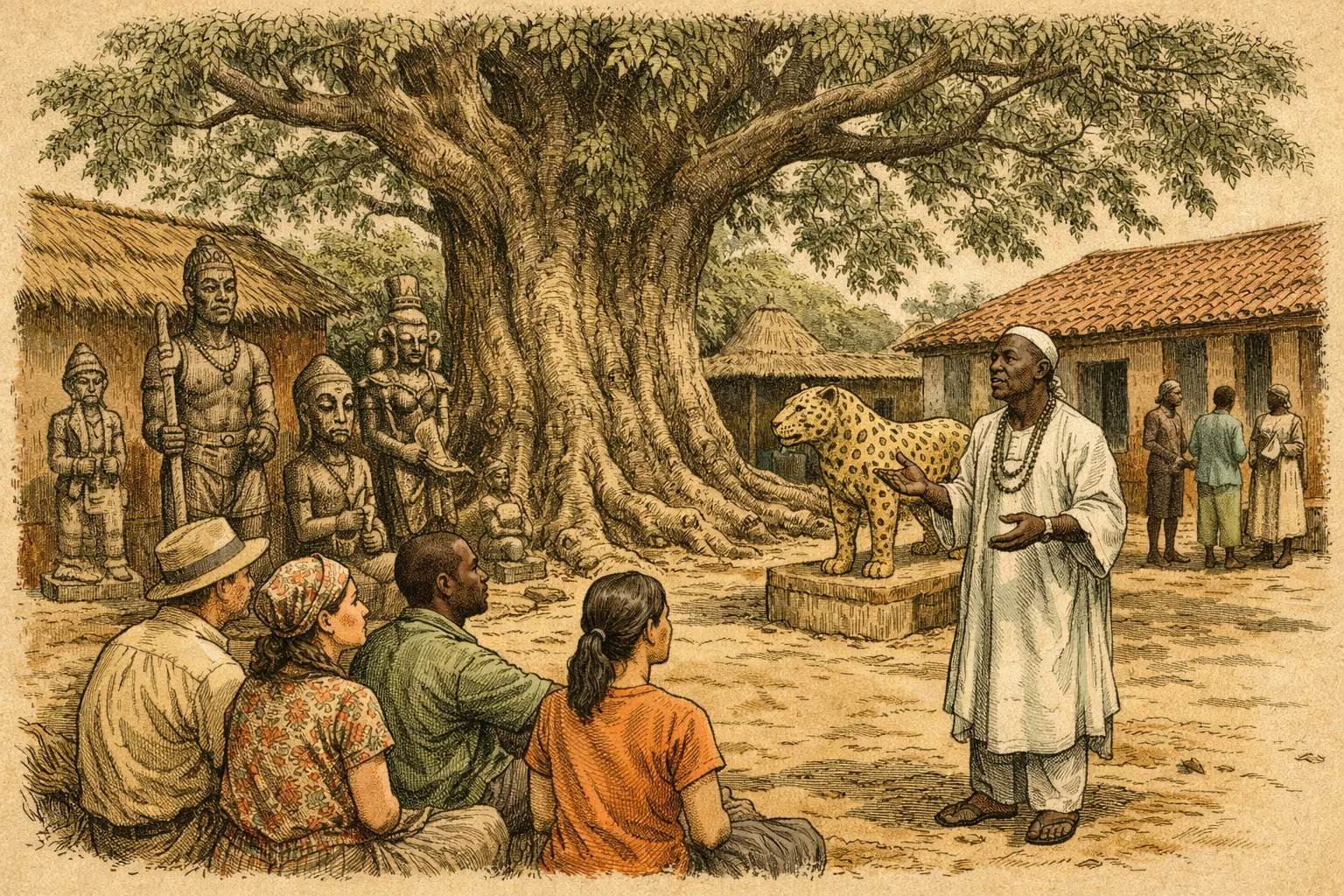
This makes classification difficult. A serpent enclosure may resemble a small animal attraction but function as a temple. A grove filled with statues may resemble an open-air folklore museum but remain sacred ground. A royal palace may contain museum cases alongside spaces where ceremonies continue. The unusual quality lies not only in what is displayed, but in the survival of different ideas about what an object, creature or landscape can be.
Visitors should also avoid confusing the Republic of Benin with the historic Kingdom of Benin centred on Benin City in present-day Nigeria. The famous “Benin Bronzes” looted by British forces in 1897 belong principally to that Nigerian kingdom. Benin’s major restitution story concerns royal objects taken from Abomey by French colonial forces in 1892. The names are similar, but the histories and collections are distinct.
Ouidah: temples, sacred trees and difficult memory
Ouidah is the clearest starting point for Benin’s unusual heritage. It brings together Vodun practice, colonial architecture and the memorial landscape of the Atlantic slave trade. The result is not one museum but a chain of sites in which religion, historical interpretation and tourism overlap.
The Temple of Pythons
The Temple of Pythons is one of Benin’s most recognisable visitor attractions. Its central feature is a group of live pythons kept within a religious compound. The snakes are presented not as monsters or biological specimens but as sacred beings associated with protection and spiritual power.
The experience is modest in physical scale. Visitors generally enter with a guide, hear an explanation of the snakes’ place within local belief and may be invited to see or handle one. Visitor reports repeatedly describe the enclosure as small, making it better understood as a functioning temple that receives tourists than as a zoological museum.[Tripadvisor]tripadvisor.co.ukTripadvisor TEMPLE DES PYTHONSTEMPLE DES PYTHONS - All You SHOULD Know Before…The Temple was small but the history of the voodoo religion in Benin is one…
Stories about the temple’s exact age, the number of snakes and how freely they move through Ouidah vary considerably between travel sources. Such details should be treated cautiously unless confirmed locally. The reliable core is simpler: pythons are venerated at the site, the compound is publicly visitable, and religious significance remains more important than conventional museum interpretation.
The temple’s strangeness therefore depends on the visitor’s expectations. It is not a fabricated haunted attraction or a cabinet of preserved reptiles. It is an active sacred place that has also become part of Ouidah’s tourism economy.

The Sacred Forest
Ouidah’s Sacred Forest operates partly like an outdoor museum. Visitors encounter sculptural representations linked to spirits, deities and remembered traditions among mature trees. Yet the forest should not be reduced to a sculpture park. Sacred forests in Benin are connected to ritual rules, initiation and beliefs about spiritual forces inhabiting particular natural places.
Reporting on Benin’s sacred groves describes them as places where access may be restricted and where knowledge is guarded by initiated practitioners. Believers commonly associate powerful spirits with particular trees, especially old baobabs and iroko trees.[AP News]apnews.comBetween 2005 and 2015, Benin's forest area decreased by over 20%, and this trend continues, threatening Voodoo traditions deeply intertwi… The publicly accessible portions of Ouidah’s forest therefore offer only a mediated encounter with a much wider religious landscape.
This is one reason the site can feel less systematically curated than a formal museum. Sculptures, oral explanation and the physical setting carry much of the interpretation. The visitor is shown a cultural threshold, not given complete access to sacred knowledge.
The forests also matter environmentally. Research using evidence from Benin has found a positive relationship between adherence to African traditional religions and forest-cover conservation, while journalism has documented both the destruction of sacred woodland and attempts to protect forests and mangroves through religious restrictions.[arxiv.org]arxiv.orgarXiv Sacred Ecology: The Environmental Impact of African Traditional ReligionsSacred Ecology: The Environmental Impact of African Traditional ReligionsNovember 9, 2023… These are therefore living ecological collections as well as spiritual landscapes: trees, prohibitions, stories and ritual authority are preserved together.
The Ouidah Museum of History
The Ouidah Museum of History occupies a former Portuguese fort and offers the most conventional curatorial setting in the city. Its collections cover the fort itself, the kingdoms that controlled the region, the slave trade, Vodun and the historical links between Benin, Brazil and the Caribbean.[Africa.com]africa.comOpen source on africa.com.
For readers interested in strange collections, the museum’s value lies in the way it places ritual culture beside colonial and Atlantic history. Objects associated with religion cannot be separated from the movement of people, ideas and practices across the ocean. Traditions carried from the region contributed to religious cultures in the Caribbean and the Americas, while return migration helped shape the distinctive Afro-Brazilian architecture and social history of coastal Benin.
The museum is also important as a corrective to purely supernatural treatments of Vodun. A visitor who sees only temples, animal offerings or festival performances may leave with an exaggerated image of mystery. The historical museum supplies the political, economic and diasporic framework needed to understand why these traditions developed and travelled.
Its status, however, is changing within a much larger redevelopment of Ouidah’s memory landscape. Benin is constructing an International Museum of Memory and Slavery, intended to expand interpretation of the slave trade and its legacies. Sources disagree about previous projected opening dates, and current material points towards a later completion than early promotional reports suggested. It should therefore be treated as an evolving project rather than assumed to be fully operational without checking locally.[Reuters]reuters.comBenin offers citizenship to African diaspora, with help from Spike LeeBenin offers citizenship to African diaspora, with help from Spike Lee
A city becoming an open-air museum
Benin’s government has increasingly presented Ouidah itself as a heritage environment rather than a collection of isolated attractions. The route associated with enslaved people, the Door of No Return, public monuments, reconstructed historical installations and the annual Vodun celebrations now form a connected visitor landscape. Government reporting on the 2026 Vodun Days explicitly described the historic city as an open-air museum. Gouvernement de la République du Bénin[gouv.bj]gouv.bjOpen source on gouv.bj.
This approach can make history vivid, but it raises questions about commercialisation. Religious rituals, slavery memorials and heritage hotels may stand within the same tourism zone. The result can be thoughtful public history, spectacle or an uneasy mixture of both, depending on the quality of guiding and interpretation.
Abomey: royal creatures, sacred objects and returned treasures
The Royal Palaces of Abomey form Benin’s most important historical museum complex. UNESCO describes the site as the former centre of the Kingdom of Dahomey, with the palaces of Kings Ghézo and Glélé housing a historical museum devoted to the kingdom’s history, symbolism, independence and resistance to colonial occupation. Sacred spaces remain part of the complex and continue to be respected by royal families and local communities.[UNESCO World Heritage Centre]whc.unesco.orgWorld Heritage Centre Royal Palaces of AbomeyWorld Heritage Centre Royal Palaces of Abomey
The palaces are unusual because royal identity was often communicated through animals, hybrid figures and visual emblems. Bas-reliefs depict rulers, warfare, power and dynastic symbols in a direct, almost emblematic visual language. Royal statues may combine human bodies with creatures such as lions, birds or sharks. These forms were not whimsical decoration. They condensed political authority, personal mottos and spiritual force into memorable images.
The museum complex also complicates the idea of a dead royal past. Courtyards, craft traditions, ceremonial areas and family authority remain connected to the site. Visitors are not simply walking through the abandoned residence of an extinct dynasty; they are entering a heritage landscape in which royal memory is still socially active.
The restitution collection
In 2021, France returned 26 royal objects taken during the colonial conquest of Abomey in 1892. They include thrones, palace doors, portable altars and monumental royal statues. Benin displayed the returned works in a major 2022 exhibition at the presidential palace alongside contemporary art.[expoartbenin.bj]expoartbenin.bjBenin Art Today L'expositionBenin Art Today L'exposition
These objects are among the country’s most compelling unusual collections because their meanings have repeatedly changed. They began as royal, ritual or political possessions; became colonial trophies; entered a European ethnographic museum; then returned as national treasures, evidence of historical injustice and symbols of cultural renewal.
The exhibition reportedly attracted more than 200,000 visitors, demonstrating that restitution was not merely a diplomatic transaction but a major public event.[Financial Times]ft.comFinancial Times Restitution, wrangling and renewal in BeninFinancial Times Restitution, wrangling and renewal in Benin A further royal ceremonial stool held in Finland was returned in 2025, completing the recovery of an object closely connected to the previously returned group.[El País]elpais.comOpen source on elpais.com.
The eventual permanent display of these treasures is tied to Benin’s wider museum-building programme. Because construction, conservation and exhibition plans have changed over time, visitors should verify where particular returned objects are currently displayed rather than assuming they have all been installed permanently inside the older Abomey museum.
Porto-Novo: ethnography, masks and palace collections
Benin’s capital contains two older institutions that are especially relevant to unusual collection culture: the Alexandre Sènou Adandé Ethnographic Museum and the Honmè royal palace museum.
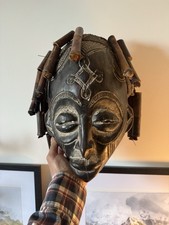
The ethnographic museum preserves masks, weapons, ritual and domestic objects, ceramics and tools connected with fishing and hunting. Published research on its holdings specifically identifies Gèlèdè masks, traditional firearms and ritual material among the collection.[UAC]bec.uac.bjAlexandre Sènou Adandé Museum and the IntangibleAlexandre Sènou Adandé Museum and the Intangible These are not “oddities” in their home culture, but they can appear mysterious when detached from performance, oral history and social use.
That problem has been recognised by museum scholars. Research concerning the institution has examined how a museum can represent intangible heritage — performance, ritual knowledge and community memory — rather than presenting masks and ceremonial objects merely as static art.[Academia]academia.eduAlexandre Sènou Adandé Ethnographic Museum in PortoAlexandre Sènou Adandé Ethnographic Museum in Porto For visitors, the quality of the experience may therefore depend heavily on explanation. A mask in a case reveals far less than a mask interpreted through the dance, society or spiritual practice for which it was made.
The Honmè Museum occupies the former palace of Porto-Novo’s kings. It is principally a site museum, preserving royal rooms and courtyards as well as objects including portable altars, musical instruments, pottery, furniture, photographs and a bronze bust of King Toffa. Parts of the palace retain sacred significance and are used for ceremonies.[Wikipedia]WikipediaMusée HonmèMusée Honmè
Honmè is especially valuable for understanding how royal and devotional collections overlap. Household furnishings, ceremonial objects and ancestral memory appear within the architecture that once organised court life. Rather than presenting a polished parade of masterpieces, it preserves the atmosphere and structure of a royal compound.
The International Vodun Museum: ambition and uncertainty
Benin’s most important forthcoming institution for this subject is the International Vodun Museum in Porto-Novo. Its stated purpose is to give visitors intellectual and visual tools for understanding Vodun through objects, stories, myths, legends and contemporary creativity.[news.itb.com]news.itb.combenin museumsbenin museums
This is a significant curatorial challenge. Vodun has often been distorted by horror films, colonial writing and sensational tourism. A serious museum must explain theology, natural forces, divination, healing, ritual authority, music, dance, diaspora and everyday practice without revealing knowledge that communities regard as restricted. It must also decide whether sacred objects should be treated as artworks, historical evidence, active religious entities or all three.
The project has received international architectural attention, but the building was still under construction during an official government inspection on 27 November 2025. Gouvernement de la République du Bénin[gouv.bj]gouv.bjOpen source on gouv.bj. Promotional claims describing it as already open or assigning it confident earlier completion dates should therefore be treated cautiously. No sufficiently authoritative evidence found for this report confirms that the museum was fully open to the public by July 2026.
Its eventual importance could be considerable. At present, visitors often learn about Vodun through individual temples, guides, festivals or old ethnographic displays. A major purpose-built museum could connect those fragments while challenging the idea that Vodun is simply witchcraft, superstition or theatrical spectacle.
What visitors should expect
Benin does not currently offer a dense network of specialist museums devoted to cryptids, UFOs, medical anomalies, crime or fabricated monsters. Its unusual-heritage strength lies elsewhere: sacred animals, royal hybrid figures, masks, portable altars, ritual landscapes, colonial trophies and objects whose spiritual status may remain active.
Several practical distinctions help make sense of what is being visited:
- Formal museums such as the Ouidah Museum of History and the Abomey historical museum use recognisable exhibitions, collections and historical interpretation.
- Site museums such as Honmè preserve architecture, objects and living ceremonial associations together.
- Visitor-facing sacred sites such as the Temple of Pythons receive tourists but are not primarily museums.
- Open-air religious landscapes such as Ouidah’s Sacred Forest use trees, sculptures and oral guidance rather than systematic labels.
- Temporary or changing displays include the returned royal treasures, whose locations may shift as new museums are completed.
- Future institutions should not be treated as open merely because architectural plans or promotional articles describe them in the present tense.
Guides are often essential, especially where written interpretation is limited. Their accounts may combine history, community tradition, religious teaching and tourism-friendly legend. This does not make them worthless, but visitors should distinguish between documented dates, theological explanations, local oral history and stories told chiefly for dramatic effect.
Photography and physical access may also be restricted. Permission should never be assumed at shrines, during ceremonies or around sacred objects. Some spaces are public only in a limited sense: entry may depend on a guide, religious authority, gender, initiation status or the timing of rituals.

Credibility, spectacle and respectful curiosity
Benin is frequently marketed through the language of “mystery”, “magic” and “dark tourism”. Such framing can attract attention, but it often flattens a complex religious and historical landscape into snakes, skulls and sacrifice. Reputable reporting stresses that practitioners understand Vodun as a disciplined and positive religious system, while outsiders commonly confuse it with evil magic or witchcraft.[AP News]apnews.comBetween 2005 and 2015, Benin's forest area decreased by over 20%, and this trend continues, threatening Voodoo traditions deeply intertwi…
This does not mean uncomfortable elements should be concealed. Animal offerings, spiritual prohibitions, divination and objects made from organic remains may genuinely form part of ritual practice or market culture. The responsible approach is to ask what an object does within its belief system, who has authority to interpret it and whether it was created for worship, sale, display or tourists.
The same caution applies to slavery heritage. Ouidah’s monuments and museums preserve the suffering of enslaved people, but the city’s history also includes African political actors, commercial intermediaries and local participation in the trade. Recent public policy has attempted to address this difficult history while building connections with descendants of enslaved Africans.[AP News]apnews.comOpen source on apnews.com. A good museum visit should leave room for complexity rather than offering a single story of villains, victims or redemption.
Benin’s place in the world of strange museums
Benin’s contribution to global curiosity culture is not a collection of theatrical freaks or implausible mysteries. It is a set of institutions and sacred places that challenge the museum habit of turning every unusual thing into a lifeless exhibit.
A python can be both a living animal and a sacred presence. A forest can be a conservation system, ritual territory and open-air display. A carved royal creature can be a political portrait rather than a monster. A portable altar can be an artwork, an ancestral instrument and contested colonial property. A palace can operate simultaneously as archaeological evidence, museum and ceremonial ground.
That ambiguity is what makes Benin distinctive. Its most memorable collections do not simply preserve strange objects. They preserve competing ways of understanding what objects, animals, ancestors and landscapes are — and why some things can never be fully explained by a label inside a glass case.
Amazon book picks
Further Reading
Books and field guides related to Where Benin's Strangest Collections Are Still Alive. Use these as the next step if you want deeper reading beyond the article.
African Vodun: Art, Psychology, and Power
Throughout, Blier pushes African art history to a new height of cultural awareness that recognizes the complexity of traditional African...
The Slave Coast of West Africa,
This book studies the impact of the Atlantic slave trade on the 'Slave Coast' of West Africa, an area covering modern south-eastern Ghana...
The Kingdom of Benin
Presents the history and culture of the kingdom which 500 years ago outshone all others on Africa's west coast and which is now part of N...
The Scramble for Art in Central Africa
Western attitudes to Africa have been influenced to an extraordinary degree by the arts and artefacts that were brought back by the early...
eBay marketplace picks
Marketplace Samples
Live-tested eBay searches with available results related to this page.
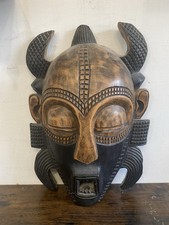
Selected fromAfrican mask decor oneBay.co.uk.

Endnotes
1.
Source: ich.unesco.org
Title: ICH UNESCOBenin
Link:https://ich.unesco.org/en/state/benin-BJ
Source snippet
UNESCO Intangible Cultural HeritageJune 11, 2025 — # Benin... ## Vodun, beliefs, social practices and ways of living...
Published: June 11, 2025
2.
Source: ich.unesco.org
Title: ICH UNESCOVodun, beliefs, social practices and ways of living
Link:https://ich.unesco.org/en/assistances/vodun-beliefs-social-practices-and-ways-of-living-02386
Source snippet
Vodun deities are organized according to the natural elements, namely water (associated with the deity Tôhôssou), earth (associated with...
3.
Source: arxiv.org
Title: arXiv Sacred Ecology: The Environmental Impact of African Traditional Religions
Link:https://arxiv.org/abs/2401.13673
Source snippet
Sacred Ecology: The Environmental Impact of African Traditional ReligionsNovember 9, 2023...
Published: November 9, 2023
4.
Source: africa.com
Link:https://africa.com/museums-of-benin
5.
Source: reuters.com
Title: Benin offers citizenship to African diaspora, with help from Spike Lee
Link:https://www.reuters.com/world/africa/benin-offers-citizenship-african-diaspora-with-help-spike-lee-2026-01-14/
6.
Source: whc.unesco.org
Title: World Heritage Centre Royal Palaces of Abomey
Link:https://whc.unesco.org/en/list/323
7.
Source: bec.uac.bj
Title: Alexandre Sènou Adandé Museum and the Intangible
Link:https://bec.uac.bj/uploads/publication/eb594ea8ea9fc2c6df35ef21f128513b.pdf
8.
Source: academia.edu
Title: Alexandre Sènou Adandé Ethnographic Museum in Porto
Link:https://www.academia.edu/3541873/Alexandre_S%C3%A8nou_Adand%C3%A9_Ethnographic_Museum_in_Porto_Novo_Benin_and_the_Intangible_Heritage_some_Ethical_Points_for_Community_Involvement
9.
Source: Wikipedia
Title: Musée Honmè
Link:https://fr.wikipedia.org/wiki/Mus%C3%A9e_Honm%C3%A8
10.
Source: news.itb.com
Title: benin museums
Link:https://news.itb.com/topics/cultural-tourism/benin-museums/
11.
Source: whc.unesco.org
Title: World Heritage Centre Sites marquants de la Route de l’Esclave au Bénin
Link:https://whc.unesco.org/en/tentativelists/6512/
12.
Source: whc.unesco.org
Link:https://whc.unesco.org/fr/listesindicatives/6512/
13.
Source: whc.unesco.org
Link:https://whc.unesco.org/en/documents/124460/
14.
Source: whc.unesco.org
Link:https://whc.unesco.org/en/tentativelists/488/
15.
Source: Wikipedia
Link:https://en.wikipedia.org/wiki/Benin
16.
Source: Wikipedia
Title: Kingdom of Benin
Link:https://en.wikipedia.org/wiki/Kingdom_of_Benin
17.
Source: Wikipedia
Title: Benin City
Link:https://en.wikipedia.org/wiki/Benin_City
18.
Source: Wikipedia
Title: Alexandre Sènou Adandé Ethnographic Museum
Link:https://en.wikipedia.org/wiki/Alexandre_S%C3%A8nou_Adand%C3%A9_Ethnographic_Museum
19.
Source: benin.bj
Link:https://benin.bj/en/sectors/art-and-culture
20.
Source: whc.unesco.org
Link:https://whc.unesco.org/en/list/323/documents/
21.
Source: whc.unesco.org
Link:https://whc.unesco.org/en/documents/133487/
22.
Source: whc.unesco.org
Link:https://whc.unesco.org/en/documents/120907
23.
Source: whc.unesco.org
Link:https://whc.unesco.org/en/list/323/gallery/
24.
Source: ich.unesco.org
Title: vodun beliefs social practices and ways of living 02386
Link:https://ich.unesco.org/en/assistances/vodun-beliefs-social-practices-and-ways-of-living-02386?cote_new=02386
25.
Source: whc.unesco.org
Link:https://whc.unesco.org/en/activities/734/
26.
Source: whc.unesco.org
Link:https://whc.unesco.org/en/documents/133465
27.
Source: whc.unesco.org
Link:https://whc.unesco.org/en/documents/120903
28.
Source: whc.unesco.org
Link:https://whc.unesco.org/en/documents/129350
29.
Source: whc.unesco.org
Link:https://whc.unesco.org/en/documents/120904
30.
Source: whc.unesco.org
Link:https://whc.unesco.org/en/decisions/7567/
31.
Source: ich.unesco.org
Title: benin BJ
Link:https://ich.unesco.org/en/state/benin-BJ?info=projects
32.
Source: ich.unesco.org
Title: benin BJ
Link:https://ich.unesco.org/fr-etat/benin-BJ
33.
Source: whc.unesco.org
Link:https://whc.unesco.org/en/documents/120902
34.
Source: ich.unesco.org
Title: vodun croyances pratiques sociales et art de vie 02386
Link:https://ich.unesco.org/fr/assistances/vodun-croyances-pratiques-sociales-et-art-de-vie-02386
35.
Source: whc.unesco.org
Link:https://whc.unesco.org/en/statesparties/bj/laws/
36.
Source: whc.unesco.org
Link:https://whc.unesco.org/fr/activites/734
37.
Source: unesco.org
Link:https://www.unesco.org/en/network-places-history-memory?hub=74447
38.
Source: tripadvisor.com
Link:https://www.tripadvisor.com/Attractions-g293764-Activities-c49-Benin.html
39.
Source: ar.tripadvisor.com
Title: comzangbeto a porto-novo
Link:https://ar.tripadvisor.com/LocationPhotoDirectLink-g293765-d479680-i169145269-Musee_Honme_Palais_Royal-Porto_Novo_Oueme_Department.html
40.
Source: tripadvisor.fr
Link:https://www.tripadvisor.fr/Attraction_Review-g293765-d479677-Reviews-Ethnographique_Museum_of_Porto_Novo-Porto_Novo_Oueme_Department.html
41.
Source: africa.com
Link:https://africa.com/countries-of-africa/west-africa/benin
42.
Source: tripadvisor.co.uk
Title: Tripadvisor TEMPLE DES PYTHONS
Link:https://www.tripadvisor.co.uk/Attraction_Review-g479758-d5018948-Reviews-Temple_des_Pythons-Ouidah_Atlantique_Department.html
Source snippet
TEMPLE DES PYTHONS - All You SHOULD Know Before...The Temple was small but the history of the voodoo religion in Benin is one...
43.
Source: apnews.com
Link:https://apnews.com/article/9c8737ad86d15e1503f3fc908c6c2518
Source snippet
Between 2005 and 2015, Benin's forest area decreased by over 20%, and this trend continues, threatening Voodoo traditions deeply intertwi...
44.
Source: gouv.bj
Link:https://www.gouv.bj/article/3406/succes-eclatant-vodun-days-2026-benin-assume-statut-grande-nation-culture-traditions-ancestrales/
45.
Source: expoartbenin.bj
Title: Benin Art Today L’exposition
Link:https://www.expoartbenin.bj/en/lexpo/
46.
Source: gouv.bj
Link:https://www.gouv.bj/article/1667/exposition-evenement-benin-hier-aujourd-restitution-revelation-/
47.
Source: expoartbenin.bj
Title: Benin Art Today Royal Treasures
Link:https://www.expoartbenin.bj/en/tresors-royaux/
48.
Source: ft.com
Title: Financial Times Restitution, wrangling and renewal in Benin
Link:https://www.ft.com/content/af133939-e6da-411b-9404-217d2a6ae6a2
49.
Source: elpais.com
Link:https://elpais.com/planeta-futuro/2025-05-16/benin-celebra-el-retorno-del-tesoro-de-dahomey-133-anos-despues-del-saqueo.html
50.
Source: gouv.bj
Link:https://www.gouv.bj/article/3365/
51.
Source: apnews.com
Link:https://apnews.com/article/8b076652fbaac17761ff002992f2b604
52.
Source: pmepe.gouv.bj
Link:https://pmepe.gouv.bj/article/92/valorisation-iode-local-benin-renforce-resilience-salicultrices-djegbadji
53.
Source: sgg.gouv.bj
Link:https://sgg.gouv.bj/cm/2026-05-13/
54.
Source: tourisme.gouv.bj
Title: exposition projection kancc 0
Link:https://tourisme.gouv.bj/articles/actualite/exposition-projection-kancc-0/home
55.
Source: tourisme.gouv.bj
Title: bj Ouidah accueille Dhawa, une nouvelle signature hôtelière internationale
Link:https://tourisme.gouv.bj/articles/actualite/ouidah-accueille-dhawa-une-nouvelle-signature-htelire-internationale-0/home
56.
Source: tourisme.gouv.bj
Title: prvisions budgtaires du ministre du tourisme au titre de 2026 0
Link:https://tourisme.gouv.bj/articles/actualite/prvisions-budgtaires-du-ministre-du-tourisme-au-titre-de-2026-0/home
57.
Source: tourisme.gouv.bj
Link:https://www.tourisme.gouv.bj/articles/actualite/prvisions-budgtaires-du-ministre-du-tourisme-au-titre-de-2026-0/actualites
58.
Source: gouv.bj
Link:https://www.gouv.bj/article/3214/
59.
Source: gouv.bj
Link:https://www.gouv.bj/article/3208/journee-internationale-souvenir-traite-negriere-abolition-benin-honore-memoire-transmission-historique-aout-2025-ouidah/
60.
Source: gouv.bj
Link:https://www.gouv.bj/article/3164/
61.
Source: tourisme.gouv.bj
Title: bj Inauguration de la Maison de la culture de Ouidah: Un nouvel élan culturel
Link:https://www.tourisme.gouv.bj/articles/actualite/inauguration-de-la-maison-de-la-culture-de-ouidah-un-nouvel-lan-culturel-0/actualites
62.
Source: tourisme.gouv.bj
Title: bj Erection du Musée international du Vodun à Porto-Novo
Link:https://www.tourisme.gouv.bj/articles/actualite/erection-du-muse-international-du-vodun-porto-novo-0/actualites
63.
Source: gouv.bj
Link:https://www.gouv.bj/article/2027/
64.
Source: sgg.gouv.bj
Link:https://sgg.gouv.bj/cm/2022-09-28/
65.
Source: gouv.bj
Link:https://www.gouv.bj/article/1808/reouverture-exposition-benin-hier-aujourd-restitution-revelation-/
66.
Source: gouv.bj
Link:https://www.gouv.bj/article/1791/
67.
Source: sgg.gouv.bj
Link:https://sgg.gouv.bj/cm/2022-05-25/
68.
Source: gouv.bj
Link:https://www.gouv.bj/article/1668/musee-international-vodun-porto-novo-gouvernement-receptionne-86-oeuvres-culturelles-cultuelles/
69.
Source: sgg.gouv.bj
Link:https://sgg.gouv.bj/cm/2021-11-10/
70.
Source: tourisme.gouv.bj
Title: bj Effectivité de la restitution des œuvres d’art au Bénin
Link:https://www.tourisme.gouv.bj/articles/actualite/effectivit-de-la-restitution-des-oeuvres-d-art-au-bnin-0/actualites
71.
Source: gouv.bj
Link:https://www.gouv.bj/article/1337/
72.
Source: gouv.bj
Title: Rupture An 4: Secteur Tourisme, Culture et Arts
Link:https://www.gouv.bj/actualite/619/rupture-4—secteur-tourisme–culture-arts-marche-vers-revolution-culturelle-touristique-benin/
73.
Source: gouv.bj
Link:https://www.gouv.bj/secteur/art-culture/
74.
Source: tourisme.gouv.bj
Link:https://tourisme.gouv.bj/projects/20/projets-phares__autres-projets/home
75.
Source: gouv.bj
Link:https://www.gouv.bj/actualites/gouvernement/4eme-edition-de-la-journee-internationale-des-sourds-marie-laurence-sranon-communie-avec-les-enfants-sourds-du-centre-dagla/
76.
Source: gouv.bj
Link:https://www.gouv.bj/articles/?offset=4
77.
Source: sgg.gouv.bj
Link:https://sgg.gouv.bj/documentheque/22/
78.
Source: gouv.bj
Link:https://www.gouv.bj/articles//?offset=7
79.
Source: gouv.bj
Title: comptes rendus
Link:https://www.gouv.bj/articles/comptes-rendus/?offset=6
80.
Source: tourisme.gouv.bj
Link:https://tourisme.gouv.bj/projects/11/projets-phares__autres-projets/home
81.
Source: tripadvisor.co.uk
Title: MUSE E HONME (PALAIS ROYAL)
Link:https://www.tripadvisor.co.uk/Attraction_Review-g293765-d479680-Reviews-Musee_Honme_Palais_Royal-Porto_Novo_Oueme_Department.html
82.
Source: expoartbenin.bj
Link:https://www.expoartbenin.bj/
83.
Source: expoartbenin.bj
Title: Trésors royaux
Link:https://www.expoartbenin.bj/tresors-royaux/
84.
Source: instagram.com
Link:https://www.instagram.com/p/DQeZJFcCqAU/
85.
Source: chateau-vodou.com
Title: the collection
Link:https://www.chateau-vodou.com/en/the-collection/
86.
Source: GOV.UK
Link:https://www.gov.uk/foreign-travel-advice/benin
87.
Source: re-entanglements.net
Link:https://re-entanglements.net/tag/museums/
88.
Source: roguewanderers.com
Link:https://www.roguewanderers.com/blog/benin
Additional References
89.
Source: lemonde.fr
Link:https://www.lemonde.fr/en/environment/article/2024/09/03/benin-s-voodoo-deities-take-care-of-precious-mangroves_6724551_114.html
Source snippet
The mangrove forests, protected by deities like Zangbeto, became a sanctuary where fishing, hunting, and logging are forbidden. Restorati...
90.
Source: getyourguide.com
Link:https://www.getyourguide.com/en-gb/ouidah-l236431/sacred-python-temple-experience-in-ouidah-t1236755/
Source snippet
Sacred Python Temple Experience in OuidahDiscover the Python Temple in Ouidah, a sacred Vodun site where pythons symbolize pr...
91.
Source: youtube.com
Link:https://www.youtube.com/watch?v=kiPWSaeMtFw
Source snippet
Benin Voodoo Festival: remembering enslaved ancestors...
92.
Source: youtube.com
Title: Exploring the Majestic Royal Palaces of Abomey, Benin
Link:https://www.youtube.com/watch?v=1v4Dzd4-GS4
Source snippet
The African Town That Worships Snakes! Exploring Mysterious Voodoo Culture in Benin...
93.
Source: atlasobscura.com
Link:https://www.atlasobscura.com/things-to-do/benin
94.
Source: momaa.org
Link:https://momaa.org/directory/alexandre-senou-adande-ethnographic-museum/?srsltid=AfmBOor8sC4ZsmY62OW0Thy5gYVsX83TG2Dl0skRBpRLSFYiBeTTz_Oy
95.
Source: instagram.com
Link:https://www.instagram.com/p/DavuXsNDrHK/
96.
Source: instagram.com
Link:https://www.instagram.com/p/DavthG8iOIa/
97.
Source: facebook.com
Link:https://www.facebook.com/africanfolder/posts/benin-is-building-the-worlds-largest-museum-dedicated-to-vodun-as-part-of-effort/1008666268442546/
98.
Source: linkedin.com
Link:https://www.linkedin.com/posts/rebrandafrica_benin-is-building-the-worlds-largest-vodun-activity-7481824625509740545-j3gT