Within Venezuela Curiosities
A Caracas Museum Built Over Buried History
The Sacred Museum of Caracas blends religious art, former burial spaces and prison history into one of Venezuela's most atmospheric heritage sites.
On this page
- Religious art inside a historic complex
- Burials, ossuary and prison remains
- Legend, evidence and visitor experience
Page outline Jump by section
Introduction
The Sacred Museum of Caracas is unusual because its most important exhibit is not only what it displays, but the ground beneath it. Built on the former cemetery of Caracas Cathedral, the museum combines colonial religious art with physical traces of burial, an ossuary, archaeological remains and the surviving spaces of an old ecclesiastical prison. Rather than a “haunted” attraction, it is a church heritage museum where death, devotion and urban history overlap. The building was declared a National Historic Monument in 1981 and opened as the Museo Sacro in 1993 after restoration.[Arquidiócesis Caracas]arquidiocesiscaracas.comArquidiócesis Caracas MUSEO SACROArquidiócesis Caracas MUSEO SACRO
For visitors interested in unusual collections in Venezuela, the museum represents a different kind of curiosity site: not a cabinet of strange objects, but a place where a historic building itself becomes the collection. Its fascination comes from the layers preserved in one location — Catholic artworks from the colonial and republican periods, the remains of earlier burial practices, and evidence of how Caracas managed faith, punishment and memory over several centuries.[Arquidiócesis Caracas]arquidiocesiscaracas.comArquidiócesis Caracas MUSEO SACROArquidiócesis Caracas MUSEO SACRO

Religious art inside a historic complex
The Sacred Museum was created to preserve the religious heritage of Caracas, especially objects connected with the city’s churches and Catholic traditions. Its collections include colonial and republican sculptures, devotional images, paintings, liturgical metalwork, priestly garments and historical documents. These objects place the museum within the wider tradition of ecclesiastical museums, where religious artefacts are interpreted not only as works of art but also as records of worship, social organisation and political power.[Arquidiócesis Caracas]arquidiocesiscaracas.comArquidiócesis Caracas MUSEO SACROArquidiócesis Caracas MUSEO SACRO
The setting changes how visitors understand these objects. A colonial crucifix or religious painting displayed in an ordinary gallery would mainly be viewed as artwork; inside the Sacred Museum, the same type of object is connected to the spaces where generations of Caracas residents prayed, were buried and marked important stages of life. The museum therefore links material culture with the everyday religious world of colonial Caracas rather than presenting isolated treasures.[Arquidiócesis Caracas]arquidiocesiscaracas.comArquidiócesis Caracas MUSEO SACROArquidiócesis Caracas MUSEO SACRO
The collection also reflects the role of the Church as a historical archive. Alongside objects of worship, the broader ecclesiastical heritage preserved by the Archdiocese includes documentary collections that record religious administration and aspects of Venezuelan social history. This gives the museum importance beyond its visual displays: it is part of a network preserving institutional memory from the colonial period onwards.[Archivo Histórico]archivo.museosacroccs.orgOpen source on museosacroccs.org.
Burials, ossuary and prison remains
The museum’s most distinctive feature is the survival of the former cathedral cemetery beneath and around the building. The cemetery dates to the seventeenth century, when a burial ground was established next to Caracas Cathedral. It later ceased operating after nineteenth-century reforms moved urban burials away from churches and inner-city cemeteries.[IAM Venezuela]iamvenezuela.orgIAM Venezuela Museo Sacro, antiguo cementerio de La CatedralIAM VenezuelaMuseo Sacro, antiguo cementerio de La Catedral - IAM Venezuela…
The resulting museum environment is unusual because visitors encounter a religious collection inside a former funerary landscape. The site preserves an ossuary — a place where human bones were gathered after earlier burials to make space for new interments — as well as crypt structures and archaeological traces connected to the old cemetery. The Archdiocese describes the museum as preserving crypts, ossuaries and archaeological remains that reveal the relationship between faith, death and Caracas’s historic development.[Arquidiócesis Caracas]arquidiocesiscaracas.comArquidiócesis Caracas MUSEO SACROArquidiócesis Caracas MUSEO SACRO
Archaeological work in the late twentieth century added another layer to the site’s story. Excavations carried out in the patio area during 1988 and 1989 revealed remains associated with earlier use of the complex, including a burial area traditionally linked in local accounts to victims of the violent events surrounding José Tomás Boves’s entry into Caracas in 1813. Such interpretations form part of the site’s historical memory, although the exact identification of individual remains is difficult to prove.[Diccionarios Académico]es-academic.comDiccionarios Académico Museo Sacro de CaracasDiccionarios Académico Museo Sacro de Caracas
The museum also preserves remains of an ecclesiastical prison dating from 1713. This was not a modern state prison but a church-controlled detention space connected with the religious authorities of the colonial period. Its presence makes the site especially unusual: the same complex contains objects of devotion, spaces associated with death, and evidence of religious discipline and punishment.[Arquidiócesis Caracas]arquidiocesiscaracas.comArquidiócesis Caracas MUSEO SACROArquidiócesis Caracas MUSEO SACRO

Legend, evidence and visitor experience
The Sacred Museum’s atmosphere has encouraged stories about hidden burials, forgotten prisoners and mysterious traces left in the building. These stories are part of why the site appeals to visitors interested in unusual heritage, but they need to be separated from what can be historically demonstrated. The strongest evidence concerns the building’s documented functions: cemetery, ecclesiastical institution, historic monument and museum.[Arquidiócesis Caracas]arquidiocesiscaracas.comArquidiócesis Caracas MUSEO SACROArquidiócesis Caracas MUSEO SACRO
Some features invite speculation. A wall containing a series of crypts is often associated with early bishops of Caracas, but published descriptions note that the exact origin of these burials is uncertain. Likewise, the presence of human remains gives the museum a dramatic character, but the site is best understood as a historical and religious memorial rather than as a place built around mystery claims.[Diccionarios Académico]es-academic.comDiccionarios Académico Museo Sacro de CaracasDiccionarios Académico Museo Sacro de Caracas
For visitors, the appeal lies in seeing how different histories occupy the same space. The museum offers religious art galleries, historic architecture and access to elements that reveal the building’s earlier purposes. The experience is closer to exploring a layered archaeological site than visiting a conventional art museum: the walls, floors and preserved remains are part of the interpretation.[Arquidiócesis Caracas]arquidiocesiscaracas.comArquidiócesis Caracas MUSEO SACROArquidiócesis Caracas MUSEO SACRO
Within Venezuela’s unusual heritage landscape, the Sacred Museum stands out because its “curiosity” is not an exotic object or unexplained phenomenon. Its rarity comes from a genuine historical overlap: a colonial burial ground transformed into a museum, where religious art is displayed alongside the physical evidence of how Caracas remembered the dead, governed belief and organised urban life.[Arquidiócesis Caracas]arquidiocesiscaracas.comArquidiócesis Caracas MUSEO SACROArquidiócesis Caracas MUSEO SACRO
Amazon book picks
Further Reading
Books and field guides related to A Caracas Museum Built Over Buried History. Use these as the next step if you want deeper reading beyond the article.
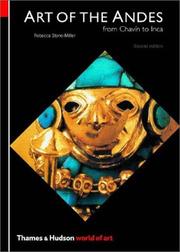
Art of the Andes
First published 1995. Subjects: Andean Art, Andes Region, Antiquities, Art, Andean, Indian art.
The Archaeology of Death and Burial
The archaeology of death and burial is central to our attempts to understand vanished societies. Through the remains of funerary rituals...

The Sacred Made Real: Spanish Painting and Sculpture
First published 2009. Subjects: Christian art and symbolism, Spanish Sculpture, Exhibitions, Painting, spanish, Sculpture, spain.

Raw Creation: Outsider Art and Beyond
First published 1996. Subjects: Art, Primitive, Art, Modern, Primitive Art, Outsider art, Art and society.
eBay marketplace picks
Marketplace Samples
Live-tested eBay searches with available results related to this page.
Selected fromchurch art print oneBay.co.uk.

Current eBay listing
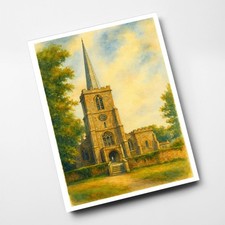
A4 PRINT - Parish Church of St Mary, Walsingham - Vintage Art Style
Current eBay listing
Henry Morton A5 Art Print Greeting Cards - 8 Artwork Choices
Endnotes
1.
Source: arquidiocesiscaracas.com
Title: Arquidiócesis Caracas MUSEO SACRO
Link:https://arquidiocesiscaracas.com/museo-sacro/
2.
Source: iamvenezuela.org
Title: IAM Venezuela Museo Sacro, antiguo cementerio de La Catedral
Link:https://iamvenezuela.org/2015/09/museo-sacro-antiguo-cementerio-de-la-catedral/
Source snippet
IAM VenezuelaMuseo Sacro, antiguo cementerio de La Catedral - IAM Venezuela...
3.
Source: archivo.museosacroccs.org
Link:https://archivo.museosacroccs.org/
4.
Source: es-academic.com
Title: Diccionarios Académico Museo Sacro de Caracas
Link:https://es-academic.com/dic.nsf/eswiki/835971
5.
Source: arquidiocesiscaracas.com
Link:https://arquidiocesiscaracas.com/palacio-arzobispal-inaugura-tres-exposiciones-sobre-la-fe-y-la-devocion-popular/
6.
Source: arquidiocesiscaracas.com
Link:https://arquidiocesiscaracas.com/archivo-historico/
7.
Source: arquidiocesiscaracas.com
Link:https://arquidiocesiscaracas.com/
8.
Source: museosacroccs.org
Link:https://museosacroccs.org/?page_id=431
Additional References
9.
Source: historiaregional.org
Title: Muchos cadáveres, pocas soluciones
Link:https://historiaregional.org/ojs/index.php/historiaregional/article/download/809/1456?inline=1
Source snippet
Muertes masivas y cementerios en Caracas: 1764-1856April 4, 2023 — La fusión iglesia-terreno bendito-cementerio quedó clara con Alfonso X...
Published: April 4, 2023
10.
Source: youtube.com
Title: Visitamos el lugar donde estuvieron 5 CEMENTERIOS de CARACAS en el SIGLO XIX
Link:https://www.youtube.com/watch?v=cqwTqlJL_UQ
Source snippet
De la mano con la Iglesia 329: Reinauguración del Museo Sacro y del Palacio Arzobispal de Caracas...
11.
Source: es.scribd.com
Title: brief sitios historicos
Link:https://es.scribd.com/document/815659093/brief-sitios-historicos
Source snippet
El edificio, que actualmente es la sede del Museo Sacro de Caracas, fue mandado construir en 1888 por el entonces Arzobispo de Caracas...
12.
Source: youtube.com
Title: La Catedral y el Museo Sacro de Caracas esconden tesoros de arte
Link:https://www.youtube.com/watch?v=DJw8XsZXtR8
Source snippet
Visitamos el lugar donde estuvieron 5 CEMENTERIOS de CARACAS en el SIGLO XIX...
13.
Source: youtube.com
Title: De la mano con la Iglesia 322: Museo Sacro de Caracas
Link:https://www.youtube.com/watch?v=po2_3BVRL84
Source snippet
La Catedral y el Museo Sacro de Caracas esconden tesoros de arte...
14.
Source: venezuelaa.com
Link:https://www.venezuelaa.com/articulos/3.asp
Source snippet
EL MUSEO SACRO / Venezuela AApril 8, 2026 — ARTÍCULOS EL MUSEO SACRO Página 3 Fuente consultada: www.cibernetic.com/sacro/sacro.htm Image...
Published: April 8, 2026
15.
Source: youtube.com
Title: Testimonio de la Fe: El Museo Sacro de Caracas
Link:https://www.youtube.com/watch?v=Ie205dCI4s0
Source snippet
De la mano con la Iglesia 322: Museo Sacro de Caracas...
16.
Source: docsity.com
Link:https://www.docsity.com/es/docs/arqueologia-en-el-museo-sacro-de-caracas/5752450/
17.
Source: camaradecaracas.com
Link:https://camaradecaracas.com/la-camara-caracas-y-sus-historias/ocurrio-aqui/la-quinta-anauco/
18.
Source: tripadvisor.co.uk
Link:https://www.tripadvisor.co.uk/Attraction_Review-g316066-d315653-Reviews-Museo_Sacro_de_Caracas-Caracas_Capital_Region.html