What Makes Spain's Strangest Museums Worth Visiting?
Spain’s strangest museums are not a single, tidy category. They range from a publicly supported witchcraft museum that examines a real seventeenth-century panic to private cabinets packed with antique cameras, occult tableaux and theatrical torture devices.
Page outline Jump by section
Introduction
What makes Spain especially interesting is the tension between evidence and spectacle. Some collections are archaeological or scientific institutions with carefully documented objects. Others preserve working equipment that became obsolete. A third group uses replicas, mannequins and immersive scenery to sell an atmosphere. The most rewarding visits are therefore not necessarily the most frightening. They are the places that make clear whether the visitor is looking at an original artefact, a reconstruction, a local belief, a disputed interpretation or deliberate entertainment.

Where Spain’s curiosity culture comes from
Spain’s unusual collections reflect the country’s regional variety. Witchcraft history is strongest in Navarre, where local memory is tied to the Basque witch trials. Mummification has different meanings in Aragon and the Canary Islands: one museum grew from an unexpected church excavation, while the other preserves the funerary culture of Tenerife’s Indigenous population. Barcelona’s oddities often emerge from modern urban history, popular entertainment and municipal services. Private museums in heavily visited historic towns tend to combine antiques with darker, more theatrical attractions.
Several broad traditions overlap:
- Religious fear and popular belief, including witch accusations, protective customs, pilgrimage objects and stories about the supernatural.
- Death and the human body, represented by mummies, cemetery heritage, historic funerals and medical study.
- Mechanical wonder, especially automata, stage magic, optical devices and early entertainment technology.
- Private collecting, where one person’s taste produces an eccentric mixture that would rarely appear in a conventional public museum.
- Tourist spectacle, including torture displays, horror scenery, film replicas and exhibitions whose atmosphere matters as much as their historical content.
This mixture explains why credibility varies sharply. An institution may be academically valuable, commercially theatrical or both at once. The label “museum” alone does not tell visitors how rigorously an exhibition has been researched.
Zugarramurdi: witchcraft without pretending witches were real
The Witchcraft Museum at Zugarramurdi in Navarre is Spain’s clearest example of an unusual museum built around a documented historical catastrophe rather than a collection of supposedly magical objects. It opened in 2007 in the village’s former hospital and interprets the events that culminated in the Inquisition proceedings of 1610. The surrounding area was affected by accusations, confessions and investigations far beyond the village itself; surviving records show that the panic spread through numerous communities.[xareta.eus]xareta.eusWitchcraft Museum, ZugarramurdiMost visitors are drawn to Zugarramurdi by the history and legends surrounding the Inquisition tribunal of…
The wider Basque witch hunt was enormous by the standards of European witch trials. Yale Law Library’s account notes that six people were executed at the 1610 public sentencing ceremony and five more were represented by effigies because they had already died. Thousands of further suspects were subsequently examined, generating a vast documentary record.[Lillian Goldman Law Library]library.law.yale.edulargest witch hunt world history basque witch trialsWitch Hunt in World History: The Basque Witch Trials… death, between 2,000 and 7,000 accused were examined for the practice of witchcraft…
The museum’s real subject is therefore not proof of supernatural activity. It is the process by which dreams, rumours, religious pressure, communal conflicts and coerced testimony became an official narrative of organised witchcraft. Displays use folklore imagery and atmospheric devices, but the stronger interpretation distinguishes village belief from inquisitorial accusation. Visitors should expect an account of local society, mythology and persecution rather than a cabinet of authenticated spell books or ritual equipment.[Atlas Obscura]atlasobscura.comThe museum, which is housed in the town's formerAtlas ObscuraMuseo de las Brujas (Witches Museum) in ZugarramurdiOctober 31, 2013 — 30 Oct 2013 — A museum dedicated to the Spanish occul…
The nearby caves are essential to understanding the museum’s appeal. They have become inseparable from the popular image of witches’ gatherings, even though the stories recorded by investigators cannot be treated as reliable descriptions of events. Together, cave and museum show how a place associated with terror can later be reclaimed as heritage, identity and tourism.
Zugarramurdi matters because it avoids the simplest version of the “witch museum” formula. The accused are not presented merely as colourful occult characters. They emerge as people caught in a system that converted folklore and suspicion into prosecution.
Mummies in their original burial place
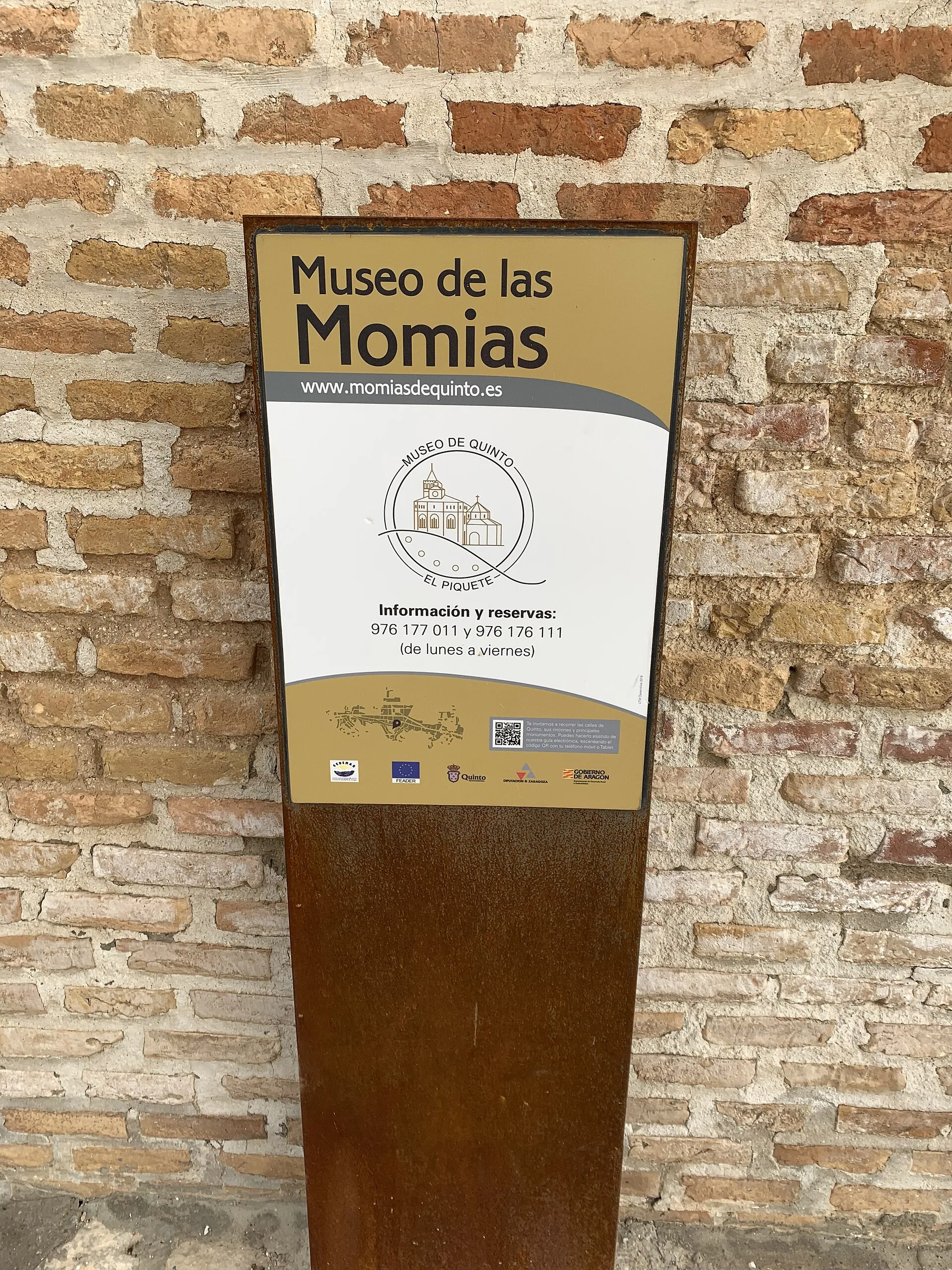
The Museum of the Mummies of Quinto, near Zaragoza, offers one of Spain’s most unusual encounters with human remains. It occupies a former fortified church and displays 15 naturally mummified bodies in the building where they were buried and later excavated. The museum describes itself as the first Spanish institution of its kind, with the unusual advantage that the remains have not been detached from their archaeological setting.[Momias de Quinto]momiasdequinto.esMomias de QuintoLive a unique experience in the first mummy museum…24 Feb 2025 — The Mummies Museum is located inside an old church…
The bodies were not deliberately embalmed in the manner of ancient Egyptian mummies. Their preservation resulted from environmental conditions. Clothing, footwear and other funerary materials help reconstruct the identities and social world of people buried there between the eighteenth and early nineteenth centuries. The effect is inevitably unsettling, but the principal value lies in archaeology and physical anthropology rather than horror.[Go Aragón EN]goaragon.euOpen source on goaragon.eu.
Quinto also illustrates how an extraordinary discovery can become a tool for rural regeneration. The museum was developed partly as a response to economic decline and depopulation, turning local remains and a restored historic building into a distinctive cultural attraction.[interregeurope.eu]interregeurope.euquinto mummy museum zaragozaquinto mummy museum zaragoza
The museum nevertheless raises questions that apply to every public display of human bodies. Visitors are looking at named or potentially identifiable members of a past community, not decorative curiosities. The best interpretation treats them as archaeological individuals, explains why they survived and avoids suggesting that natural preservation is inherently mysterious.
The Guanche dead: science, identity and contested ownership
Tenerife’s Museum of Nature and Archaeology holds Spain’s most important collections relating to the Indigenous Guanche population of the island. Its displays include mummified remains and funerary material, but these are part of a much wider archaeological account of life in Tenerife before European conquest. The institution describes its holdings as the largest surviving collection devoted to Guanche culture.[Museos de Tenerife]museosdetenerife.orgMuseos de Tenerife Los GuanchesMuseos de Tenerife Los Guanches
Here mummies are not simply rare preserved bodies. They are evidence for funerary practice, health, diet, disease and social organisation. Museum research has used medical imaging and digital reconstruction to investigate preservation methods without relying entirely on invasive examination.[Museos de Tenerife]museosdetenerife.orgOpen source on museosdetenerife.org.
The collection also carries the legacy of removal. Guanche remains were historically taken from the Canary Islands into royal, medical, anthropological and private collections. Several bodies have since been returned to Tenerife, including three transferred from a forensic and medical anthropology collection in Madrid in 2011.[Museos de Tenerife]museosdetenerife.orgOpen source on museosdetenerife.org.
Debate over the location and display of a Guanche mummy formerly shown in Madrid demonstrates that these remains remain politically and ethically sensitive. Arguments concern physical fragility, regional identity, colonial collecting and whether human remains should be exhibited at all.[The Times]thetimes.co.ukThe Times Canaries furious as Madrid removes mummy to 'decolonise' museumThe Times Canaries furious as Madrid removes mummy to 'decolonise' museum
For the visitor, the crucial distinction is between a “mummy attraction” and an archaeological museum that happens to care for mummified people. Tenerife belongs firmly in the second category. Its strangeness comes from the survival and scientific study of the bodies, but its importance lies in restoring context to people long treated as specimens.
Private cabinets where categories collapse
Museo Lara in Ronda is closer to the traditional cabinet of curiosities. Established from the private collection of Juan Antonio Lara Jurado, it occupies a historic town house and contains more than 2,000 works and antiquities arranged across several themes. Provincial tourism information describes it as a major private museum, while the museum itself identifies the collection broadly as art and antiques.[Málaga]malaga.esMálaga Lara MuseumMálaga Lara Museum
Its appeal is the collision of unrelated objects. Visitors encounter clocks, watches, weapons, scientific and communications equipment, early photography and cinema apparatus, carriages, dolls and decorative arts. The lower rooms shift towards witchcraft and the Inquisition, with dark scenery, mannequins and punishment devices.[Tripadvisor]tripadvisor.co.ukTripadvisor ConsolationTripadvisor Consolation
This makes Museo Lara memorable, but it should not be approached like a specialist historical institute. Its governing logic is the collector’s fascination, not a single academic discipline. The antique technologies are often more convincing as material history than the theatrical torture tableaux, where provenance and historical specificity may be less visible.
That distinction is particularly important in torture museums. European attractions frequently display objects labelled as “medieval” or “inquisitorial” even when the item is a modern reconstruction, a later invention or a generic punishment device with no documented connection to the place. The iron maiden is the best-known example of a supposedly medieval apparatus whose popular image owes much to later display culture.
Museo Lara is therefore valuable partly because it reveals what private museums do differently. They preserve objects overlooked by national institutions and create highly personal experiences, but their labels, replicas and reconstructions deserve closer scrutiny.
Torture museums: history or horror attraction?
Spain has several visitor-facing exhibitions devoted to torture and the Inquisition, including displays in Santillana del Mar, Toledo, Guadalest, Granada and Ronda. Granada’s Palace of the Forgotten currently advertises an exhibition of historic instruments of torture, while Guadalest promotes more than 70 devices distributed through 11 rooms.[Destino Guadalest]destinoguadalest.comOpen source on destinoguadalest.com.
These attractions answer an obvious tourist demand: they provide a dramatic physical form for stories about medieval cruelty and religious persecution. Racks, cages, restraints, spiked devices and costumed figures are easy to understand without much reading. Yet this accessibility creates a risk. Objects assembled from different centuries and jurisdictions can imply that there was a standard European torture system or that every spectacular device was routinely used by the Spanish Inquisition.
The historical Inquisition did use coercion and torture, but the reality is better understood through court records, legal procedures, imprisonment and testimony than through an undifferentiated line-up of sinister machines. Even images commonly used to illustrate inquisitorial torture may be later artistic representations rather than direct documentary evidence.[Berkeley News]news.berkeley.eduOpen source on berkeley.edu.
A credible torture exhibition should answer four questions:
- Is the object original, reconstructed or merely illustrative?
- Where and when is it documented as having been used?
- Was it associated with the Inquisition, secular justice or another institution?
- Does the display explain legal procedure and victims, or merely stage bodily suffering?
Where those answers are absent, the experience is closer to historical horror entertainment. That does not make it worthless, but visitors should recognise the difference.
Machines that perform: Tibidabo’s automata
Barcelona’s Tibidabo amusement park contains a museum of more than 40 automata and mechanical models dating mainly from the nineteenth and twentieth centuries. The collection includes machines from several countries and remains part of a functioning entertainment site rather than being isolated in a conventional museum building.[Tibidabo]tibidabo.catOpen source on tibidabo.cat.
Automata occupy a revealing border between engineering, theatre and illusion. Coin-operated figures, miniature scenes and mechanical performers were designed to create wonder before cinema and digital effects became ordinary. Their mechanisms may be visible or concealed, but the emotional response depends on the imitation of intention: a figure appears to predict, play, gesture or think.
Tibidabo’s collection is unusual because these objects retain their amusement-park context. They are not simply examples of industrial design. They belong to a history of public spectacle in which visitors paid to watch a machine behave like a living performer.
The collection has also continued to evolve rather than being frozen as a display of antique machinery. The park records modern additions produced by its curator, demonstrating that automaton-making remains a creative practice rather than a vanished curiosity.[Tibidabo]tibidabo.catOpen source on tibidabo.cat.
Barcelona’s funeral carriages
Barcelona’s publicly displayed collection of funeral carriages preserves vehicles that once formed part of the city’s working funeral service. The collection opened in 1970 and was later moved to facilities associated with Montjuïc Cemetery. The carriages had served Barcelona for roughly 90 years before motor vehicles made them obsolete.[Cementiris de Barcelona]cementiris.ajuntament.barcelona.catfloat collectionfloat collection
This is not a collection created by hunting for macabre antiques. The objects survived because a municipal service had to decide what to do with obsolete working equipment. Their preservation produced what Barcelona Cemeteries describes as Europe’s first and only publicly exhibited collection devoted specifically to funeral carriages.[Cementiris de Barcelona]cementiris.ajuntament.barcelona.catOpen source on barcelona.cat.
The vehicles reveal how death once moved through the streets as a highly visible social performance. Different carriages, decoration and accompanying arrangements communicated status, profession and communal respect. Their replacement by motor hearses marks not only technological change but also a shift towards faster, less conspicuous urban funerals.
Combined with Montjuïc Cemetery, the collection provides a broader account of Barcelona from the nineteenth century through the Civil War period. It is unusual, but not sensationalist: its real subject is how a modern city organised mourning.[Cementiris de Barcelona]cementiris.ajuntament.barcelona.catla coleccion de carrozas funebres y el cementerio de montjuicla coleccion de carrozas funebres y el cementerio de montjuic
Commercial immersion and modern fandom
Not every strange Spanish museum deals with old folklore or historic objects. Barcelona’s privately run Alien Museum recreates environments from the Alien film series using replicas, original pieces and immersive sets. Its official presentation emphasises moving through reconstructed film locations rather than viewing a traditional chronological display.[museoalien.com]museoalien.comOpen source on museoalien.com.
This kind of attraction belongs to fan culture and experiential tourism. Its authority comes less from academic research than from the maker’s detailed knowledge of production design, props and screen imagery. A replica may be entirely legitimate because reproduction is part of the stated purpose. The key is transparency: visitors know they are entering a constructed fictional world.
Lanzarote’s Museo Atlántico takes a very different form but is similarly dependent on immersion. More than 300 life-sized sculptures were installed beneath the sea at a depth accessible to divers. The works address migration, environmental change and contemporary society, turning an underwater site into both an art installation and a tourism experience.[Museo Atlantico Lanzarote]underwatermuseumlanzarote.comOpen source on underwatermuseumlanzarote.com.
Neither site fits the old idea of a museum as labelled objects in glass cases. Both show how Spain’s curiosity culture increasingly depends on entering a staged environment, whether a spacecraft corridor or a submerged crowd of human figures.
How to judge an unusual museum
Spain’s eccentric attractions are most rewarding when visitors separate three kinds of truth.
Historical truth concerns documented people, objects and events. Zugarramurdi’s trials, Quinto’s burials and Barcelona’s funeral vehicles belong here, although interpretation can still be debated.
Cultural truth concerns what communities believed or later chose to remember. Witch stories, funerary customs and regional claims over ancestral remains may matter even where supernatural claims cannot be verified.
Theatrical truth concerns the effectiveness of an experience. A reconstructed torture chamber or science-fiction set may communicate fear and atmosphere without proving that its objects are original.
Before visiting, it is sensible to check whether the site is publicly managed, privately operated or accessible only through guided tours. Small collections often change hours, close seasonally or require advance booking. Official institutional and municipal pages are generally more reliable for access information than undated travel lists.
Inside the museum, useful signs of strong curation include clear dates, named lenders, excavation context, catalogue numbers, explanations of replicas and acknowledgement of uncertainty. Warning signs include universal claims about “medieval torture”, supernatural stories presented without attribution and dramatic objects whose origin is never stated.
Why these collections matter
Spain’s strange museums are more than a collection of entertaining detours. They show how a country deals with material that conventional museum categories often struggle to contain: persecuted villagers remembered as witches, bodies that became archaeological evidence, machines made to imitate life, obsolete tools of mourning and private collections assembled according to obsession rather than discipline.
They also reveal a continuing argument about ownership and presentation. Should human remains be displayed? Can a town turn a history of persecution into a tourist identity without trivialising the victims? When does a replica clarify the past, and when does it create a false one? Does a commercial attraction become a museum simply by collecting objects?
Spain offers no single answer. Its strongest unusual collections are those that let the strangeness survive while explaining where it comes from. The weakest rely on darkness, spikes and legends without enough context. For travellers interested in witchcraft, death, automata, private cabinets and uncanny heritage, that difference is the real key to understanding what is on display.
Amazon book picks
Further Reading
Books and field guides related to What Makes Spain's Strangest Museums Worth Visiting?. Use these as the next step if you want deeper reading beyond the article.
Cabinets of Curiosities
"Maurie`s' tour of strange objects is entertaining and fascinating." --Antiques And The Arts Weekly

The Book of Symbols: Reflections on Archetypal Images
First published 2010. Subjects: Signs and symbols, Symbolism, Archetype (psychology), Dictionaries, Zeichen.
eBay marketplace picks
Marketplace Samples
Live-tested eBay searches with available results related to this page.
Selected fromSpain museum poster oneBay.co.uk.
Endnotes
1.
Source: xareta.eus
Link:https://www.xareta.eus/en/quehacer/witchcraft_museum_zugarramurdi/2
Source snippet
Witchcraft Museum, ZugarramurdiMost visitors are drawn to Zugarramurdi by the history and legends surrounding the Inquisition tribunal of...
2.
Source: guide-du-paysbasque.com
Title: witches museum 9038
Link:https://www.guide-du-paysbasque.com/en/tourism/discover/tourist-sites/museums/zugarramurdi-692/witches-museum-9038.html
Source snippet
Guide du Pays BasqueWITCHES' MUSEUM - History of witchcraft in ZugarramurdiThe Zugarramurdi Witch Museum, dedicated to the history of wit...
3.
Source: library.law.yale.edu
Title: largest witch hunt world history basque witch trials 1609 1614
Link:https://library.law.yale.edu/news/largest-witch-hunt-world-history-basque-witch-trials
Source snippet
Witch Hunt in World History: The Basque Witch Trials... death, between 2,000 and 7,000 accused were examined for the practice of witchcraft...
4.
Source: goaragon.eu
Link:https://www.goaragon.eu/spain-aragon-goaragon-tourism-museum-of-the-mummies-of-quinto-a-unique-way-to-travel-to-the-past/
5.
Source: interregeurope.eu
Title: quinto mummy museum zaragoza
Link:https://www.interregeurope.eu/good-practices/quinto-mummy-museum-zaragoza
6.
Source: tripadvisor.com
Title: Museo Lara Ronda
Link:https://www.tripadvisor.com/Attraction_Review-g265784-d3294882-Reviews-or10-Museo_Lara_Ronda-Ronda_Costa_del_Sol_Province_of_Malaga_Andalucia.html
7.
Source: news.berkeley.edu
Link:https://news.berkeley.edu/2022/07/20/the-tortures-of-the-spanish-inquisition-hold-dark-lessons-for-our-time/
8.
Source: tibidabo.cat
Link:https://tibidabo.cat/en/amusement/rides/museu-dautomats
9.
Source: tibidabo.cat
Link:https://tibidabo.cat/en/plan-your-visit/prepare-visit/amusement?language=en
10.
Source: tibidabo.cat
Link:https://tibidabo.cat/en/amusement-park/rides/talaia?language=en
11.
Source: tibidabo.cat
Link:https://tibidabo.cat/en/node/100
12.
Source: tibidabo.cat
Link:https://tibidabo.cat/en/tibidabo/history/emblematic-rides
13.
Source: cementiris.ajuntament.barcelona.cat
Title: float collection
Link:https://cementiris.ajuntament.barcelona.cat/en/float-collection
14.
Source: cementiris.ajuntament.barcelona.cat
Link:https://cementiris.ajuntament.barcelona.cat/es/node/54
15.
Source: cementiris.ajuntament.barcelona.cat
Link:https://cementiris.ajuntament.barcelona.cat/index.php/es/rutas/coleccion-de-carrozas-funebres?fecha=2026
16.
Source: cementiris.ajuntament.barcelona.cat
Link:https://cementiris.ajuntament.barcelona.cat/en/node/54
17.
Source: cementiris.ajuntament.barcelona.cat
Title: la coleccion de carrozas funebres y el cementerio de montjuic
Link:https://cementiris.ajuntament.barcelona.cat/index.php/es/servei_educatiu/la-coleccion-de-carrozas-funebres-y-el-cementerio-de-montjuic
18.
Source: cementiris.ajuntament.barcelona.cat
Title: la coleccion de carrozas funebres y el cementerio de montjuic
Link:https://cementiris.ajuntament.barcelona.cat/es/servei_educatiu/la-coleccion-de-carrozas-funebres-y-el-cementerio-de-montjuic
19.
Source: museoalien.com
Link:https://museoalien.com/index.asp?LANG=EN
20.
Source: spain.info
Link:https://www.spain.info/en/discover-spain/dramatised-and-unusual-tours-in-spain/
21.
Source: spain.info
Link:https://www.spain.info/en/top/cemeteries-route-spain/
22.
Source: spain.info
Link:https://www.spain.info/en/discover-spain/facts-spain-food-drink/
23.
Source: spain.info
Link:https://www.spain.info/en/game/general-knowledge-spain-quiz/
24.
Source: spain.info
Link:https://www.spain.info/export/sites/segtur/.content/Folletos/folletos/Costa-mediterranea-EN.pdf
25.
Source: spain.info
Link:https://www.spain.info/en/activities/private-walking-tour-in-cadiz/
26.
Source: spain.info
Link:https://www.spain.info/en/
27.
Source: cementiris.ajuntament.barcelona.cat
Title: nit dels museus 2026
Link:https://cementiris.ajuntament.barcelona.cat/es/rutas/nit-dels-museus-2026
28.
Source: bcnroc.ajuntament.barcelona.cat
Link:https://bcnroc.ajuntament.barcelona.cat/jspui/handle/11703/98701
29.
Source: cementiris.ajuntament.barcelona.cat
Title: nit dels museus 2026
Link:https://cementiris.ajuntament.barcelona.cat/ca/rutes/nit-dels-museus-2026
30.
Source: cementiris.ajuntament.barcelona.cat
Link:https://cementiris.ajuntament.barcelona.cat/ca/rutes/colleccio-de-carrosses-funebres
31.
Source: cementiris.ajuntament.barcelona.cat
Link:https://cementiris.ajuntament.barcelona.cat/ca/colleccio-carrosses
32.
Source: cementiris.ajuntament.barcelona.cat
Title: catalogo agenda cultural
Link:https://cementiris.ajuntament.barcelona.cat/es/catalogo-agenda-cultural?f%5B0%5D=cementerio%3A26&f%5B1%5D=cementerio%3A27&f%5B2%5D=cementerio%3A28&f%5B3%5D=cementerio%3A29&f%5B4%5D=cementerio%3A30&f%5B5%5D=cementerio%3A31&f%5B6%5D=cementerio%3A31&f%5B7%5D=libre%3A0&field_fecha_1%5Bmax%5D=2026-08-31&field_fecha_1%5Bmin%5D=2026
33.
Source: tripadvisor.com
Title: A great torture museum
Link:https://www.tripadvisor.com/ShowUserReviews-g319796-d2437568-r274465705-Museo_de_la_Tortura-Santillana_del_Mar_Cantabria.html
34.
Source: tibidabo.cat
Link:https://tibidabo.cat/en/more-products/tibitour
35.
Source: tibidabo.cat
Link:https://tibidabo.cat/en/plan-the-visit/agenda/tibitour?language=en
36.
Source: tibidabo.cat
Link:https://tibidabo.cat/es/parque-atracciones/atracciones/museu-automatas?language=en
37.
Source: tibidabo.cat
Link:https://tibidabo.cat/ca/parc-atraccions/atraccions/museu-automats?language=es
38.
Source: tibidabo.cat
Link:https://tibidabo.cat/index.php/en/node?page=0
39.
Source: tibidabo.cat
Link:https://tibidabo.cat/es/node?language=ca
40.
Source: tibidabo.cat
Link:https://tibidabo.cat/es/parque-atracciones/atracciones/museu-automatas
41.
Source: atlasobscura.com
Title: The museum, which is housed in the town’s former
Link:https://www.atlasobscura.com/places/witches-museum
Source snippet
Atlas ObscuraMuseo de las Brujas (Witches Museum) in ZugarramurdiOctober 31, 2013 — 30 Oct 2013 — A museum dedicated to the Spanish occul...
Published: October 31, 2013
42.
Source: momiasdequinto.es
Link:https://momiasdequinto.es/en/
Source snippet
Momias de QuintoLive a unique experience in the first mummy museum...24 Feb 2025 — The Mummies Museum is located inside an old church...
43.
Source: museosdetenerife.org
Title: into the first mummy museum in all of Spain: the mummies
Link:https://www.museosdetenerife.org/muna-museo-de-naturaleza-y-arqueologia/wp-content/uploads/sites/2/2022/04/57_661-667.pdf
Source snippet
Museos de TenerifeBecoming reality: The first Museum of Mummies in Spainby P Prieto — “Museo de las Momias de Quinto” was founded, the fi...
44.
Source: museosdetenerife.org
Title: Museos de Tenerife Los Guanches
Link:https://www.museosdetenerife.org/muna-museo-de-naturaleza-y-arqueologia/guanches/
45.
Source: museosdetenerife.org
Title: Museos de Tenerife Momias, un viaje hacia la eternidad
Link:https://www.museosdetenerife.org/muna-museo-de-naturaleza-y-arqueologia/portfolio-item/momias-un-viaje-hacia-la-eternidad/
46.
Source: museosdetenerife.org
Link:https://www.museosdetenerife.org/muna-museo-de-naturaleza-y-arqueologia/el-muna-muestra-los-nuevos-descubrimientos-de-las-momias-guanches-a-traves-de-la-ultima-tecnologia-medica/
47.
Source: museosdetenerife.org
Title: Museos de Tenerife El mundo funerario
Link:https://www.museosdetenerife.org/muna-museo-de-naturaleza-y-arqueologia/portfolio-item/el-mundo-funerario/
48.
Source: museosdetenerife.org
Title: Museos de Tenerife Tras el cristal: “Cráneo momificado”
Link:https://www.museosdetenerife.org/muna-museo-de-naturaleza-y-arqueologia/tras-el-cristal-craneo-momificado/
49.
Source: museosdetenerife.org
Link:https://www.museosdetenerife.org/blog/presentacion-al-publico-de-las-momias-guanches-procedentes-de-la-universidad-complutense-de-madrid/
50.
Source: museosdetenerife.org
Link:https://www.museosdetenerife.org/blog/visitando-las-colecciones-momias-guanches-de-la-universidad-complutense-de-madrid/
51.
Source: thetimes.co.uk
Title: The Times Canaries furious as Madrid removes mummy to ‘decolonise’ museum
Link:https://www.thetimes.co.uk/article/canaries-furious-as-madrid-removes-mummy-to-decolonise-museum-0kzhvdrxz
52.
Source: malaga.es
Title: Málaga Lara Museum
Link:https://www.malaga.es/en/laprovincia/patrimonio/lis_cd-3992/lara-museum
53.
Source: tripadvisor.co.uk
Title: Tripadvisor Consolation
Link:https://www.tripadvisor.co.uk/ShowUserReviews-g265784-d3294882-r399502014-Museo_Lara-Ronda_Costa_del_Sol_Province_of_Malaga_Andalucia.html
54.
Source: destinoguadalest.com
Link:https://www.destinoguadalest.com/en/apartment-services/what-to-visit/46/medieval-torture—museums-in-guadalest.html
55.
Source: underwatermuseumlanzarote.com
Link:https://underwatermuseumlanzarote.com/en/
56.
Source: museosdetenerife.org
Link:https://www.museosdetenerife.org/muna-museo-de-naturaleza-y-arqueologia/dos-momias-guanches-del-museo-de-la-naturaleza-y-el-hombre-viajan-a-granada-a-la-exposicion-internacional-%C2%93momias-testigos-del-pasado%C2%94/
57.
Source: museosdetenerife.org
Title: “Las momias guanches de Necochea”
Link:https://www.museosdetenerife.org/muna-museo-de-naturaleza-y-arqueologia/las-momias-guanches-de-necochea-2/
58.
Source: Wikipedia
Link:https://en.wikipedia.org/wiki/Spain
59.
Source: Wikipedia
Link:https://en.wikipedia.org/wiki/Official
60.
Source: Wikipedia
Title: Basque witch trials
Link:https://en.wikipedia.org/wiki/Basque_witch_trials
61.
Source: dictionary.cambridge.org
Link:https://dictionary.cambridge.org/dictionary/english/official
62.
Source: atlasobscura.com
Title: museo lara
Link:https://www.atlasobscura.com/places/museo-lara
63.
Source: atlasobscura.com
Link:https://www.atlasobscura.com/things-to-do/spain/torture-museums
64.
Source: atlasobscura.com
Link:https://www.atlasobscura.com/things-to-do/spain/museums
65.
Source: athanatos.museosdetenerife.org
Title: chronos galery
Link:https://athanatos.museosdetenerife.org/en/chronos-galery/
66.
Source: athanatos.museosdetenerife.org
Link:https://athanatos.museosdetenerife.org/en/
67.
Source: museosdetenerife.org
Title: guanche archivos
Link:https://www.museosdetenerife.org/muna-museo-de-naturaleza-y-arqueologia/tag/guanche/
68.
Source: tripadvisor.co.uk
Title: MUSE O DE LAS BRUJAS DE ZUGARRAMURDI
Link:https://www.tripadvisor.co.uk/Attraction_Review-g1930418-d3405534-Reviews-Museo_de_las_Brujas_de_Zugarramurdi-Zugarramurdi_Navarra.html
69.
Source: tripadvisor.co.uk
Title: MUSE O ALIEN
Link:https://www.tripadvisor.co.uk/Attraction_Review-g187497-d21304662-Reviews-Museo_Alien-Barcelona_Catalonia.html
70.
Source: tripadvisor.co.uk
Title: Visit the Inquisition torture devices
Link:https://www.tripadvisor.co.uk/ShowUserReviews-g265784-d3294882-r170587132-Museo_Lara-Ronda_Costa_del_Sol_Province_of_Malaga_Andalucia.html
71.
Source: instagram.com
Link:https://www.instagram.com/spain/?hl=en
72.
Source: kids.nationalgeographic.com
Link:https://kids.nationalgeographic.com/geography/countries/article/spain
73.
Source: vocabulary.com
Link:https://www.vocabulary.com/dictionary/official
Additional References
74.
Source: carameltrail.com
Title: the mystery of witches of zugarramurdi
Link:https://carameltrail.com/the-mystery-of-witches-of-zugarramurdi/
Source snippet
The Mystery of the Witches of Zugarramurdi30 Sept 2025 — Zugarramurdi's Witch Museum offers an insightful journey into the ev...
75.
Source: skysports.com
Link:https://www.skysports.com/football/news/12098/13564318/2026-world-cup-spain-1-0-argentina-aet-ferran-torres-extra-time-winner-secures-spains-second-title
76.
Source: reddit.com
Link:https://www.reddit.com/r/LV426/comments/1fpsjqz/alien_museum_barcelona_spain/
77.
Source: facebook.com
Link:https://www.facebook.com/FascinatingSpain/posts/discover-the-most-unusual-museums-of-spain-a-giant-squid-museum-a-torture-museum/2083972288519001/
78.
Source: alamy.com
Link:https://www.alamy.com/human-mummy-at-the-museum-of-mummies-quinto-aragon-spain-image468895723.html
79.
Source: visitwales.com
Link:https://www.visitwales.com/attraction/museum/morbitorium-550371
80.
Source: morbitorium.co.uk
Link:https://www.morbitorium.co.uk/?srsltid=AfmBOopGjSzakuoc-Er5sqP5aXU5Zz-Wc83JaYdDF7jjldptnAZi3O1U
81.
Source: museolara.org
Link:https://museolara.org/
82.
Source: facebook.com
Link:https://www.facebook.com/groups/ancientcivilizations.st/posts/823606125282764/
83.
Source: dictionary.com
Link:https://www.dictionary.com/browse/official