Where Cape Verde Keeps Its Strangest Stories
Cape Verde does not have a well-documented museum of witchcraft, cryptids, UFOs or medical oddities.
Page outline Jump by section
Introduction
The most unusual collections are therefore not novelty attractions in the conventional sense. They grow from Cape Verde’s position at an Atlantic crossroads shaped by migration, colonial rule, trade and dangerous sea passages. Some are state museums with archaeological or ethnographic collections; others are private, community-led or attached to difficult historic sites. Together they show how the country turns submerged cargo, improvised rural tools, ceremonial objects, religious dissent and political trauma into public memory. Evidence is uneven, so visitors should distinguish formally catalogued museums from community workshops and tourist-facing heritage experiences.
Shipwreck museums and objects from the seabed
Cape Verde’s richest seam of strange museum material is underwater archaeology. The islands stood close to major Atlantic sailing routes, and their reefs, currents and poorly charted waters contributed to numerous wrecks. The resulting collections can feel like maritime cabinets of curiosity: cannons, coins, buckles, bottles, medical containers, personal grooming equipment and fragments of ships whose passengers never expected their belongings to end up behind glass.
The Archaeology Museum in Praia
The national Archaeology Museum in Praia was inaugurated in 2008 after earlier programmes to collect, conserve and study objects from land and underwater sites. Its holdings include navigation equipment, pieces of ship structure, weapons, coins, amphorae, ivory, bones, watches, beads, cufflinks, pipes and domestic objects used aboard vessels. Particularly intimate items include toothbrushes, chamber pots, medicine bottles, mortars and syringes. Chains and handcuffs place the collection within the harsher history of Atlantic shipping as well as its commercial story.[ipc.cv]ipc.cvAs a result of the work of collecting and treating terrestrial and underwater archaeological artefacts, the Archeology Museum, inaugurate…
What makes the museum unusual is this mixture of treasure-like material and mundane bodily life. Cannons and coins may initially attract attention, but the smaller objects reveal how people ate, washed, dressed, became ill and maintained social status at sea. The collection also includes material connected with early settlements at Cidade Velha and other sites, linking shipwreck archaeology to colonisation, religion and the development of Cape Verdean society.[ipc.cv]ipc.cvAs a result of the work of collecting and treating terrestrial and underwater archaeological artefacts, the Archeology Museum, inaugurate…
The museum should not be treated as a display of mysterious sunken treasure without context. Cape Verde has become an important location for developing underwater archaeological practice, including a UNESCO-supported field school held at Cidade Velha in 2024. That work emphasised scientific recording and the protection of submerged heritage from looting and inappropriate commercial exploitation. As Nações Unidas em Cabo Verde[caboverde.un.org]caboverde.un.orgA Convenção sobre a Proteção do Património Cultural…Read more…
There is nevertheless a genuine curatorial tension behind some of Cape Verde’s maritime collections. Earlier underwater investigations involved Arqueonautas Worldwide, a private company that began operating in the archipelago under an exclusive agreement in the 1990s. Commercial salvage and the sale or division of recovered material are controversial among archaeologists because objects can lose much of their historical meaning when separated from their exact find locations and associated wreck assemblages. UNESCO has warned more broadly that legalising commercial exploitation under the label of archaeology can endanger submerged heritage. This does not make Cape Verde’s displayed objects fraudulent, but it does mean that provenance, excavation records and conservation history matter as much as visual appeal.[Asuch]asuch.orgcape verdeCape VerdeCape Verde marks the beginning of the maritime archaeology activities of Arqueonautas Worldwide (AWW). In 1995, an exclusi…
Five wrecks in Boa Vista
The Archaeology Museum of Boa Vista offers an even more concentrated encounter with wreck material. Its collection is largely drawn from five ships: the Leijmudeen, wrecked in 1770; the Hartwell in 1787; the Lady Burgess in 1806; the Santo André in 1856; and an unidentified or incompletely documented wreck associated with Varandinha. Exhibits include structural pieces, weapons, coins, ceramics, kitchen utensils, personal possessions and objects connected with life aboard ship. Finds from the Duque de Bragança fort are also represented.[ipc.cv]ipc.cvOpen source on ipc.cv.
This is one of Cape Verde’s clearest curiosity collections because each wreck functions like a sealed, accidental time capsule. The museum can be read almost as a collection of interrupted journeys: objects left together not by a collector’s taste but by catastrophe. Official museum sources record the institution’s inauguration in June 2023, making it a comparatively recent addition to the country’s public museum network.[Museus de Cabo Verde]museus.cvMuseus de Cabo VerdeNotíciasCom a inauguração do Museu de Arqueologia da Boa Vista estamos a adicionar mais um património reabilitado, re…
Visitors should resist the temptation to imagine every coin or weapon as pirate treasure. Wrecks occurred for many reasons, including navigational mistakes, storms, currents, damaged hulls, fire and incomplete charts. Their value is archaeological rather than supernatural: the unusual quality comes from the survival of ordinary things in an extraordinary environment.
Boa Vista’s private castaway museum
The Museum of the Castaways in Sal Rei is probably Cape Verde’s most consciously eccentric museum. It is a private institution combining cultural anthropology, underwater finds, contemporary art and architecture made partly from reused or locally found materials. Its permanent exhibition moves through three broad ideas: Cape Verdean history and culture, art as a universal language, and the metaphorical journey of a castaway towards safety.[Museu dos Naufragos]museudosnaufragos.comOpen source on museudosnaufragos.com.
The museum is not simply a local shipwreck collection. Its creators use shipwreck as a philosophical image for displacement, loss and cultural survival. Across three floors, the visitor progresses from imagery associated with wreckage, piracy and slavery towards mosaics, stained glass, sculpture, paintings and a garden. The interpretation is deliberately poetic rather than strictly chronological.[Boavista Official]boavistaofficial.comOpen source on boavistaofficial.com.
That approach is its main attraction and its main limitation. Visitors expecting a conventional archaeological museum with labels, wreck plans and systematic cataloguing may find the presentation highly personal. Those interested in outsider environments, recycled architecture and immersive storytelling are more likely to appreciate it. It belongs as much to the tradition of the artist-built curiosity house as to formal museology.
The institution is recognised within Cape Verde’s museum directory as a private museum, rather than a state archaeological branch. A Boa Vista tourism source lists morning opening hours and closures on Sundays and Tuesdays, but practical details should be checked close to the visit because small private institutions can alter schedules.[Museus de Cabo Verde]museus.cvOpen source on museus.cv.
The contrast with Boa Vista’s public archaeology museum is useful. The state museum organises artefacts around identified wrecks and archaeological heritage; the private museum turns the castaway into an artistic and moral symbol. Seeing both reveals two very different ways of commercialising and interpreting the islands’ relationship with the sea.
Ritual objects at the Museum of Tabanca
On Santiago, the Museum of Tabanca preserves material connected with a communal tradition that blends African and European influences. The practice combines music, processions, devotional activity, social organisation and performance. Cape Verde’s Cultural Heritage Institute describes it as an ancestral expression practised particularly on Santiago and Maio and rooted in the cultural mixture from which Cape Verdean society developed.[ipc.cv]ipc.cvMuseu da TabancaMuseu da Tabanca
The museum was established in 2000 as part of an institutional effort to rescue a tradition then considered at risk of disappearing. Its significance is therefore different from that of an ordinary musical-instrument display. The objects belong to a living ritual system whose meaning depends on procession, sound, hierarchy, religious devotion and community participation.[ipc.cv]ipc.cvMuseu da TabancaMuseu da Tabanca
For a visitor interested in unusual collections, the most important question is whether the exhibits are being presented as exotic relics or as components of an active cultural practice. Official heritage policy now treats Tabanca as nationally important intangible heritage, and government support continues to focus on the community organisations that sustain it. The tradition received national cultural-heritage classification in 2019.[ipc.cv]ipc.cvgoverno reforca valorizacao da tabancagoverno reforca valorizacao da tabanca
This makes the museum a bridge between stored objects and living performance. Drums, clothing, emblems and other ceremonial material cannot fully explain the tradition when isolated in cases. A visit is most rewarding when paired with reliable local interpretation or, where appropriate, a public cultural event. The museum is public but comparatively small, and the heritage authority provides a reservation contact, suggesting that advance confirmation is sensible rather than assuming continuous walk-in access.[ipc.cv]ipc.cvMuseu da TabancaMuseu da Tabanca
A religious rebellion turned into community art
The Rabelados community of Espinho Branco offers a more complicated kind of visitor-facing collection. It is not best understood as a conventional museum. The Rabelados emerged during religious conflict in the 1940s, rejecting reforms introduced by the Roman Catholic hierarchy and becoming socially and geographically isolated. Contemporary visitor experiences commonly centre on the community’s homes, workshops and distinctive paintings rather than on a formally catalogued institutional collection.[Barceló Hotel Group]barcelo.comOpen source on barcelo.com.
Their art has become a visual archive of community memory. Paintings depict agricultural work, musicians, riddles, washing clothes, education and symbolic figures including mermaids. The style is frequently marketed as naïve or self-taught art, but reducing it to colourful folk decoration misses its deeper function. It records religious endurance, daily labour and a group’s changing relationship with the wider Cape Verdean state and tourist economy.[bantumen.com]bantumen.comarte decolonial rabelados cabo verdearte decolonial rabelados cabo verde
This is a case where visitors must distinguish cultural access from a museum ticket. Tours and workshops can provide meaningful encounters, but they are also commercial experiences taking place within a living community. The people encountered are not exhibits, and religious difference should not be framed as primitive survival or occult mystery. The unusual collection lies in the paintings and handmade objects through which the community has chosen to represent itself.
The Rabelados also illustrate a broader feature of Cape Verde’s curiosity culture: some of the most distinctive material remains outside formal museums. It survives through community ownership, craft sales, oral explanation and domestic display. That can make provenance more direct, but interpretation may vary according to the guide, artist or tour operator.
Marine specimens, cables and carnival at Mindelo’s Sea Museum
Mindelo’s Sea Museum brings together subjects that would normally be divided among natural-history, industrial and social-history institutions. It holds endemic marine species, underwater archaeological artefacts and ethnographic material connected with São Vicente. Its themes include fishing and other maritime work, carnival, the island’s history as a coal-supply station and Cape Verde’s role in the development of intercontinental communications cables.[ipc.cv]ipc.cvOpen source on ipc.cv.
The endemic specimens provide the museum’s clearest natural-curiosity element. Cape Verde’s isolated waters support distinctive marine environments ranging from open ocean to deep seamounts and sheltered island slopes. In the museum, preserved organisms can be viewed not merely as biological oddities but as evidence of the archipelago’s unusual ocean geography.[GEOMAR]geomar.deOpen source on geomar.de.
The more surprising exhibit story may be the communications infrastructure. Undersea cables are easily overlooked beside ship models or marine life, yet they made the islands part of a physical network carrying messages between continents. The museum therefore presents the sea both as a dangerous graveyard of ships and as a medium through which Cape Verde became globally connected.
This is a state-run public museum with published weekday and Saturday hours. As with other small institutions, visitors should confirm current arrangements, particularly around public holidays.[ipc.cv]ipc.cvOpen source on ipc.cv.
Tarrafal: the prison preserved as evidence
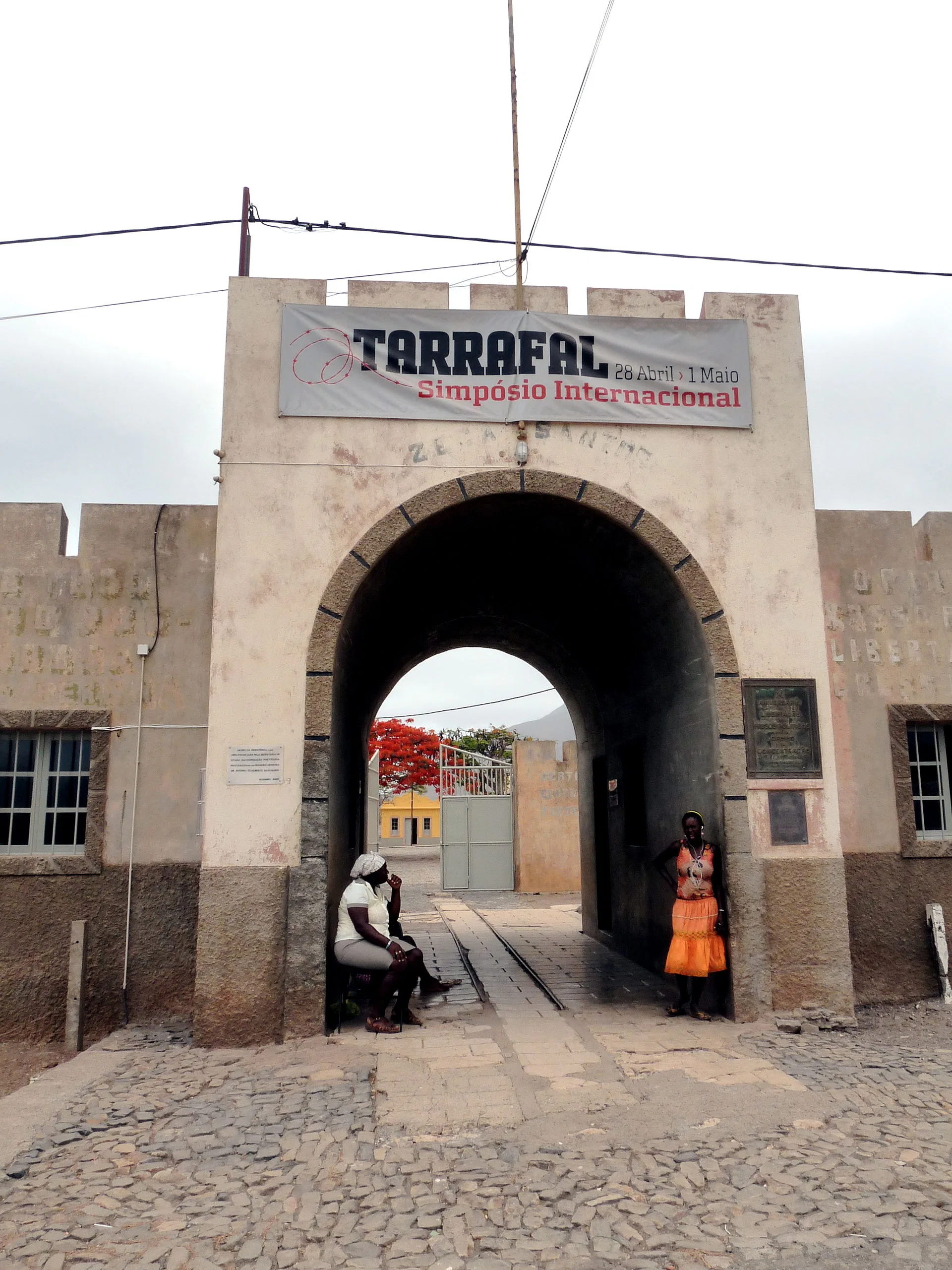
The former concentration camp at Tarrafal is Cape Verde’s darkest museum site. Built by the Portuguese dictatorship in 1936, it first imprisoned Portuguese anti-fascists between 1936 and 1956. It reopened from 1962 to 1974 for anti-colonial prisoners from Portugal’s African territories. The Museum of Resistance, inaugurated in 2000, occupies the former camp itself.[ipc.cv]ipc.cvmuseu da resistenciamuseu da resistencia
This is not an “oddity museum”, and treating its punishment cells as macabre entertainment would be inappropriate. Its relevance to strange-history travel comes from the survival of the carceral environment: barracks, walls, photographs, plaques, personal material and spaces designed to isolate or break prisoners. The architecture is itself the central collection.[World Monuments Fund]wmf.orgOpen source on wmf.org.
Tarrafal was designed to make distance, heat, disease and deprivation part of the punishment. Thirty-two of the Portuguese anti-fascist prisoners died during the camp’s first period. Later detainees connected the site to independence struggles in Cape Verde, Angola and Guinea-Bissau, giving it a significance that extends across several national histories.[Sciences Po]sciencespo.frpreliminary report inscription tarrafal concentration camppreliminary report inscription tarrafal concentration camp
Archaeological work continues to change what can be displayed and understood. Recent investigations have reported the recovery or identification of the notorious punishment structure often translated as the “Frying Pan” or “Skillet”, a confined space associated with extreme heat and isolation. Such discoveries matter because physical evidence can confirm, refine or challenge later reconstructions of how repression operated.[Cabo Verde]cabo-verde.cvCabo Verde Archaeologists Find ‘The Frying Pan’ at Tarrafal Camp – Cabo VerdeCabo Verde Archaeologists Find ‘The Frying Pan’ at Tarrafal Camp – Cabo Verde
The former camp appears on Cape Verde’s UNESCO World Heritage Tentative List, but tentative status is not the same as full World Heritage inscription. Visitors and tourism material sometimes blur that distinction. Its strongest claim to importance does not depend on a label: it is one of the most substantial preserved sites for understanding Portuguese fascism, colonial imprisonment and resistance across the Portuguese-speaking Atlantic.[UNESCO World Heritage Centre]whc.unesco.orgOpen source on unesco.org.
Everyday objects that become strange with distance
The Ethnographic Museum in Praia is not inherently eccentric, but many of its objects acquire a cabinet-of-curiosity quality for visitors unfamiliar with Cape Verde’s rural past. Its collections were assembled through organised campaigns between 1992 and 1995 on Santiago, Santo Antão, Boa Vista and Brava. They document agriculture, livestock keeping, fishing, weaving, basketry, pottery and household adaptation to limited local materials.[ipc.cv]ipc.cvOpen source on ipc.cv.
The museum’s value lies in showing ingenious responses to scarcity rather than presenting isolated “primitive” tools. Handmade containers, woven cloth, farming equipment and domestic utensils demonstrate how communities adapted to drought, island geography and irregular access to imported goods. A temporary exhibition programme has also included traditional medicine, indicating that the museum can provide a route into healing knowledge and plant use, although this should not be confused with a permanent medical-oddities collection.[Museus de Cabo Verde]museus.cvOpen source on museus.cv.
The Museum of Sal works in a similar way but focuses on one island’s transformation. Its permanent displays address water scarcity, salt production, aviation, hotels and migration from other islands. The juxtaposition is unusual: salt-working tools and water systems sit beside evidence of airports and resort development, showing how an austere extraction landscape became an international tourism centre.[ipc.cv]ipc.cvMuseu do Sal – Page 2Museu do Sal – Page 2
These museums are useful correctives to treasure-centred history. Cape Verde’s strangest objects are not always rare. A water vessel, improvised tool or fragment of woven cloth may carry more explanatory power than a coin from a wreck because it records the daily mechanics of survival.
What Cape Verde does not appear to have
No credible current evidence supports the existence of a dedicated public museum in Cape Verde centred on witchcraft, ceremonial magic, ghosts, cryptids, UFOs, mummies, anatomical specimens or famous hoaxes. Folkloric beliefs in harmful magic and supernatural beings are recorded in popular accounts, but that does not establish the existence of a curated occult collection. Tourism pages that discuss legends should not be mistaken for museum documentation.[Sal Cabo Verde]salcaboverde.comSal Cabo Verde Cape Verdean Folklore: Tales and Legends of the IslandsSal Cabo Verde Cape Verdean Folklore: Tales and Legends of the Islands
This absence is informative. Cape Verde’s museum network has developed primarily around national identity, anti-colonial memory, music, maritime archaeology, local industries and ethnography. The official network lists institutions devoted to subjects including archaeology, salt, coffee, pottery, music, documents and political figures, but no specialist occult or paranormal museum.[Museus de Cabo Verde]museus.cvMuseus de Cabo VerdeRede de MuseusMuseum Image Museu de Arqueologia da Boa Vista · Museum Image Memorial Amílcar Cabral · Museum Image Mu…
There may be privately held devotional objects, family archives, ritual material and uncatalogued curiosities that are poorly represented online. Small institutions may also open irregularly or change location. Claims about hidden museums or supernatural collections therefore require direct verification rather than repetition from travel blogs.
How to explore Cape Verde’s curiosity culture
The most rewarding route is thematic rather than comprehensive. Praia offers the national archaeology and ethnography collections. Santiago’s interior adds the Museum of Tabanca and the community art of the Rabelados, while Tarrafal preserves the country’s most severe site of political memory. Mindelo’s Sea Museum combines natural specimens, maritime labour and communications history. Boa Vista provides the strongest pairing of public wreck archaeology and private, artist-led interpretation.
Visitors should approach each type of collection differently:
- For archaeological museums, look for identified wrecks, excavation context and clear provenance rather than judging objects by their resemblance to treasure.
- For private museums, expect a more personal narrative and verify opening arrangements directly.
- For community visits, remember that workshops and homes are living cultural spaces, not reconstructed exhibits.
- For ritual heritage, distinguish sacred or communal meaning from tourist performance.
- For Tarrafal, allow time for historical interpretation and avoid treating punishment spaces as spectacle.
- For natural-history material, connect preserved specimens with Cape Verde’s unusual marine isolation rather than viewing them merely as curiosities.
Cape Verde’s strange collections are ultimately collections of survival. Ships were lost but their smallest possessions endured. Ritual traditions threatened with decline were placed in museums while remaining alive in communities. Political prisoners left testimony in architecture intended to silence them. Rural tools made for necessity became records of ingenuity. The country’s offbeat museum landscape is modest in size, but unusually coherent: again and again, it preserves what the Atlantic, colonial power, environmental hardship or rapid modernisation might otherwise have erased.

Amazon book picks
Further Reading
Books and field guides related to Where Cape Verde Keeps Its Strangest Stories. Use these as the next step if you want deeper reading beyond the article.
The Sea and Civilization: A Maritime History of the World
SHORTLISTED FOR THE MARITIME MEDIA AWARDS 2014 A monumental, wholly accessible work of scholarship that retells human history through the...
The Slave Ship: A Human History
The slave ship was the instrument of history's greatest forced migration and a key to the origins and growth of global capitalism, yet mu...
Atlantic History: A Critical Appraisal
This title offers an incisive look at how interpretations of the Atlantic world have changed over time and from a variety of national per...
eBay marketplace picks
Marketplace Samples
Live-tested eBay searches with available results related to this page.
Selected frommaritime collectible oneBay.co.uk.
Endnotes
1.
Source: ipc.cv
Link:https://ipc.cv/en/museus/museu-de-arqueologia/
Source snippet
As a result of the work of collecting and treating terrestrial and underwater archaeological artefacts, the Archeology Museum, inaugurate...
2.
Source: asuch.org
Title: cape verde
Link:https://asuch.org/archaeology/cape-verde/
Source snippet
Cape VerdeCape Verde marks the beginning of the maritime archaeology activities of Arqueonautas Worldwide (AWW). In 1995, an exclusi...
3.
Source: unesdoc.unesco.org
Link:https://unesdoc.unesco.org/ark%3A/48223/pf0000181554
Source snippet
UNESCO DocumentsThe Impact of commercial exploitation on the preservation...In short, any legalization of commercial salvage under the g...
4.
Source: ipc.cv
Link:https://ipc.cv/museus/museu-de-arqueologia-da-boa-vista/
5.
Source: museus.cv
Link:https://www.museus.cv/news
Source snippet
Museus de Cabo VerdeNotíciasCom a inauguração do Museu de Arqueologia da Boa Vista estamos a adicionar mais um património reabilitado, re...
6.
Source: museus.cv
Link:https://museus.cv/en/museum_net
Source snippet
Museus de Cabo VerdeRede de MuseusMuseum Image Museu de Arqueologia da Boa Vista · Museum Image Memorial Amílcar Cabral · Museum Image Mu...
7.
Source: museus.cv
Link:https://www.museus.cv/private_museum
8.
Source: ipc.cv
Title: Museu da Tabanca
Link:https://ipc.cv/museus/museu-da-tabanca/
9.
Source: ipc.cv
Title: governo reforca valorizacao da tabanca
Link:https://ipc.cv/noticias/governo-reforca-valorizacao-da-tabanca/
10.
Source: bantumen.com
Title: arte decolonial rabelados cabo verde
Link:https://www.bantumen.com/en/artigo/arte-decolonial-rabelados-cabo-verde/
11.
Source: ipc.cv
Link:https://ipc.cv/en/museus/museu-do-mar/
12.
Source: geomar.de
Link:https://www.geomar.de/en/centre/research-in-cape-verde/marine-biodiversity
13.
Source: ipc.cv
Title: museu da resistencia
Link:https://ipc.cv/museus/museu-da-resistencia/
14.
Source: ipc.cv
Link:https://ipc.cv/en/museus/museu-da-resistencia/
15.
Source: cabo-verde.cv
Title: Cabo Verde Archaeologists Find ‘The Frying Pan’ at Tarrafal Camp – Cabo Verde
Link:https://cabo-verde.cv/archaeologists-find-the-frying-pan-at-tarrafal-camp/
16.
Source: cabo-verde.cv
Link:https://cabo-verde.cv/archaeologists-uncover-notorious-punishment-cell-at-tarrafal/
17.
Source: cabo-verde.cv
Link:https://cabo-verde.cv/torture-chamber-unearthed-at-tarrafal-camp-in-cape-verde/
18.
Source: whc.unesco.org
Link:https://whc.unesco.org/en/tentativelists/6102/
19.
Source: ipc.cv
Link:https://ipc.cv/en/museus/museu-etnografico-da-praia/
20.
Source: museus.cv
Link:https://www.museus.cv/
21.
Source: ipc.cv
Title: Museu do Sal – Page 2
Link:https://ipc.cv/en/museus/museu-do-sal/2/
22.
Source: ipc.cv
Title: Museu do Sal
Link:https://ipc.cv/museus/museu-do-sal/
23.
Source: cabo-verde.cv
Title: Shadows of Cabo Verde: Legends & Myths of the Islands – Cabo Verde
Link:https://cabo-verde.cv/shadows-of-cabo-verde-legends-myths-of-the-islands/
24.
Source: museus.cv
Title: de Cabo Verde FAQS * * * [BUTTON: #1
Link:https://museus.cv/en/faqs
25.
Source: museus.cv
Link:https://museus.cv/en/about
26.
Source: museus.cv
Link:https://museus.cv/news/?page=4
27.
Source: museus.cv
Link:https://www.museus.cv/en/news/?page=5
28.
Source: museus.cv
Link:https://museus.cv/museum_net
29.
Source: ipc.cv
Link:https://ipc.cv/en/
30.
Source: ipc.cv
Link:https://ipc.cv/en/museus/museu-etnografico-da-praia/2/
31.
Source: ipc.cv
Link:https://ipc.cv/en/museus/
32.
Source: ipc.cv
Link:https://ipc.cv/en/museus/museu-do-mar/2/
33.
Source: ipc.cv
Link:https://ipc.cv/noticias/apresentacao-do-catalogo-3-ritmos-batuku-tabanka-funana/
34.
Source: ipc.cv
Title: Museu Norberto Tavares
Link:https://ipc.cv/en/museus/museu-norberto-tavares/
35.
Source: ipc.cv
Link:https://ipc.cv/fr/2024/12/02/
36.
Source: ipc.cv
Title: Museu Norberto Tavares
Link:https://ipc.cv/museus/museu-norberto-tavares/2/
37.
Source: ipc.cv
Link:https://ipc.cv/
38.
Source: ipc.cv
Title: Museu do Sal – Página 2
Link:https://ipc.cv/museus/museu-do-sal/2/
39.
Source: ipc.cv
Link:https://ipc.cv/noticias/promocao-de-livros-do-ipc/
40.
Source: cabo-verde.cv
Title: rabelados uma comunidade que resiste as mudancas da modernidade
Link:https://cabo-verde.cv/pt-pt/rabelados-uma-comunidade-que-resiste-as-mudancas-da-modernidade/
41.
Source: whc.unesco.org
Link:https://whc.unesco.org/en/news/1374
42.
Source: caboverde.un.org
Link:https://caboverde.un.org/pt/271528-%C3%A0-descoberta-da-hist%C3%B3ria-da-humanidade-na-%C3%A1frica-atrav%C3%A9s-do-mar-que-nos-une
Source snippet
A Convenção sobre a Proteção do Património Cultural...Read more...
43.
Source: museudosnaufragos.com
Link:https://www.museudosnaufragos.com/?lang=en&page_id=208
44.
Source: museudosnaufragos.com
Title: about us
Link:https://www.museudosnaufragos.com/en/about-us/
45.
Source: boavistaofficial.com
Link:https://www.boavistaofficial.com/explore/museu-dos-naufragos/
46.
Source: barcelo.com
Link:https://www.barcelo.com/guia-turismo/en/cape-verde/praia-cabo-verde/things-to-do/rabelados/
47.
Source: caboverdegreen.com
Title: Cabo Verde Green A Day With Rabelados and Lunch At Family Home
Link:https://www.caboverdegreen.com/pt/product/a-day-at-the-rabelados-rebels-of-cape-verde-santiago/
48.
Source: sciencespo.fr
Title: preliminary report inscription tarrafal concentration camp
Link:https://www.sciencespo.fr/histoire/en/news/preliminary-report-inscription-tarrafal-concentration-camp/
49.
Source: wmf.org
Link:https://www.wmf.org/monuments/tarrafal-concentration-camp
50.
Source: governo.cv
Title: de Cabo Verde Ministério da Cultura reabre Museu Etnográfico da Praia
Link:https://www.governo.cv/ministerio-da-cultura-reabre-museu-etnografico-da-praia/
51.
Source: salcaboverde.com
Title: Sal Cabo Verde Cape Verdean Folklore: Tales and Legends of the Islands
Link:https://salcaboverde.com/cape-verdean-folklore-tales-and-legends-of-the-islands/
52.
Source: clubofmozambique.com
Title: cabo verde former concentration camp among eight sites seeking unesco status
Link:https://clubofmozambique.com/news/cabo-verde-former-concentration-camp-among-eight-sites-seeking-unesco-status/
53.
Source: youtube.com
Link:https://www.youtube.com/watch?v=XcwcfcThS6s
54.
Source: atthemuseum.org
Title: Museu Dos Naufragos
Link:https://atthemuseum.org/museums/museu-dos-naufragos
55.
Source: museudosnaufragos.com
Link:https://www.museudosnaufragos.com/en/plan-your-visit/
56.
Source: museudosnaufragos.com
Link:https://www.museudosnaufragos.com/?item=122243394
Additional References
57.
Source: instagram.com
Link:https://www.instagram.com/reel/CnkRUl0q-Dh/?hl=en
58.
Source: facebook.com
Link:https://www.facebook.com/BoaVistaCapeVerde/posts/this-week-i-will-post-about-some-museums-and-cultural-places-that-you-can-find-o/1512355230895529/
59.
Source: capeverdeanmuseum.org
Link:https://capeverdeanmuseum.org/
60.
Source: tripadvisor.com
Link:https://www.tripadvisor.com/Attraction_Review-g186235-d24829409-Reviews-Gwithti_an_Pystri_a_Cabinet_of_Folklore_and_Magic-Falmouth_Cornwall_England.html
61.
Source: instagram.com
Link:https://www.instagram.com/reel/DOmXGSvjKGB/
62.
Source: academia.edu
Link:https://www.academia.edu/43516148/Maritime_Archaeology_in_Cabo_Verde_wrecks_interventions_report
63.
Source: cabokaitours.com
Link:https://cabokaitours.com/en/pages/museu-dos-naufragos
64.
Source: tripadvisor.com
Link:https://www.tripadvisor.com/Attractions-g293774-Activities-c49-Cape_Verde.html
65.
Source: mooseum.app
Link:https://mooseum.app/museums/cape-verde
66.
Source: bucountrytours.com
Link:https://www.bucountrytours.com/about-rabelados-community-island-cape-verde