Within Strange Argentina
Inside Buenos Aires' Hidden Medical Collections
Buenos Aires preserves unsettling teaching and forensic specimens in institutions where access, purpose and dignity matter.
On this page
- Pathology specimens as medical teaching tools
- Forensic collections inside a working morgue
- Visitor access, distress and ethical interpretation
Page outline Jump by section
Introduction
Argentina’s most unsettling medical collections are not designed as horror attractions. Instead, they exist inside working academic and judicial institutions where preserved human remains, pathological specimens and forensic evidence serve teaching, research and legal investigation. In Buenos Aires especially, these collections blur the line between museum, laboratory and archive. Some can be visited through guided tours or special arrangements, while others remain largely inaccessible because they continue to support medical education or forensic practice.

Their unusual character comes not from sensationalism but from purpose. Every preserved organ, congenital abnormality or forensic specimen represents a real patient or legal case. Modern curators increasingly emphasise that these collections should be understood as historical records of disease, changing medical knowledge and professional training rather than spectacles of death. At the same time, they raise difficult questions about consent, dignity, privacy and whether specimens collected under older medical practices should continue to be displayed.[uba.ar]fmed.uba.arPatrimonio | Facultad de Medicina UBAPatrimonio | Facultad de Medicina UBA
Pathology specimens as medical teaching tools
The best-known example is the Museum of Pathology at the University of Buenos Aires Faculty of Medicine. Founded in 1887 alongside the university’s pathology department, it is regarded as the university’s oldest museum and one of Argentina’s most significant historical pathology collections. Rather than presenting curiosities for entertainment, the museum documents the development of disease before modern treatments transformed medicine.[fmed.uba.ar]fmed.uba.arHistoria | Facultad de Medicina UBAHistoria | Facultad de Medicina UBA
Its collection contains around 2,000 anatomical pathology specimens on display, with a similar number held in storage. Many originated from autopsies carried out at the Hospital de Clínicas and were later supplemented by material transferred from other Buenos Aires hospitals whose own teaching museums disappeared during the twentieth century. The result is an unusually comprehensive record of disease patterns across several generations of Argentine medicine.[fmed.uba.ar]fmed.uba.arPatrimonio | Facultad de Medicina UBAPatrimonio | Facultad de Medicina UBA
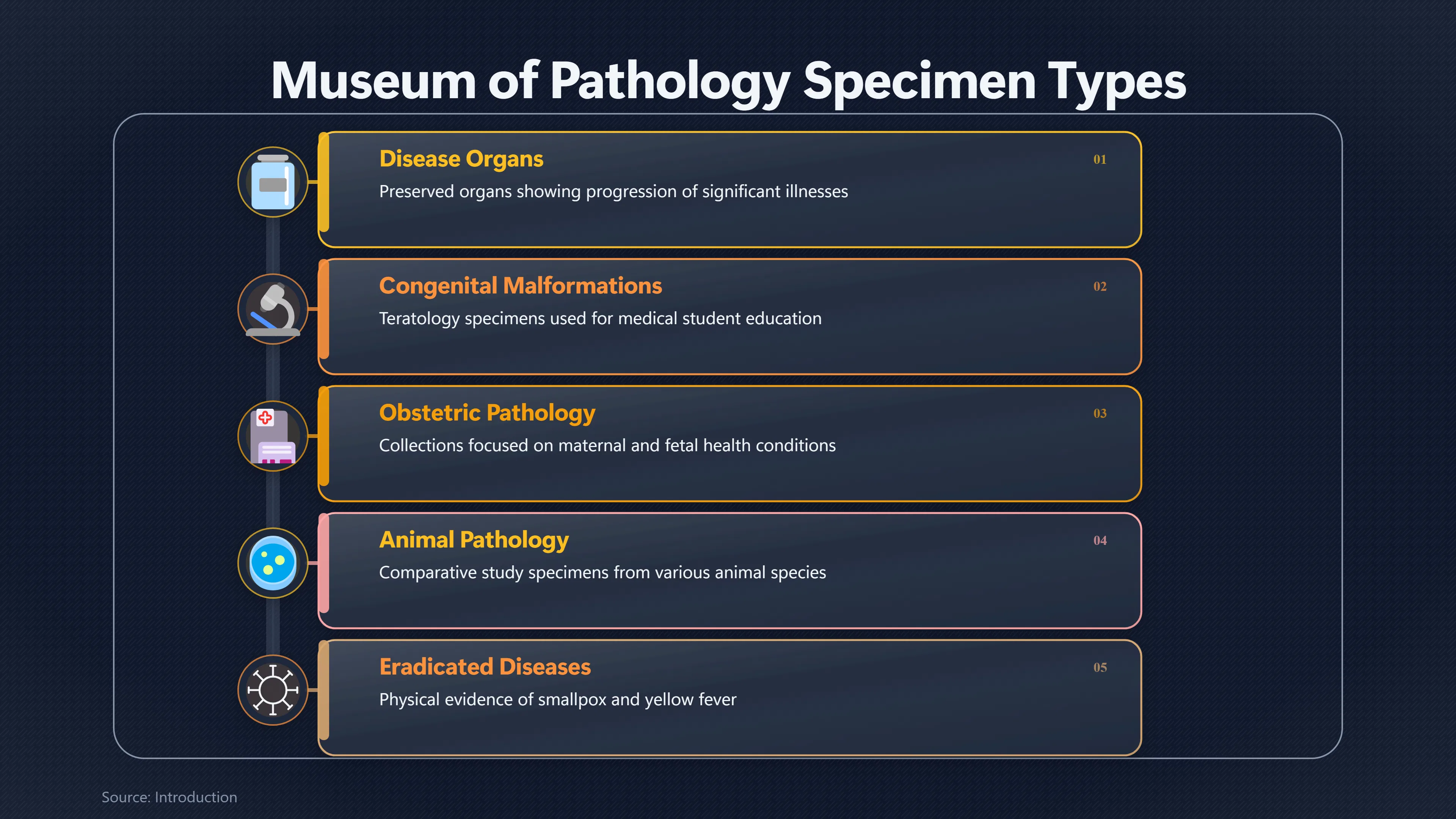
Among the most striking exhibits are:
- Preserved organs showing the progression of major diseases.
- Congenital malformations and teratology specimens used in medical education.
- Obstetric pathology collections.
- Animal pathology used for comparative study.
- Rare or now largely eradicated infectious diseases, including smallpox and yellow fever.
These displays are unsettling because they preserve conditions that modern doctors may rarely encounter. Instead of illustrating textbook diagrams, they preserve the physical evidence of diseases that shaped Argentina’s public health history before vaccination programmes, antibiotics and improved sanitation dramatically reduced many of them.[fmed.uba.ar]fmed.uba.arPatrimonio | Facultad de Medicina UBAPatrimonio | Facultad de Medicina UBA
The museum’s importance extends beyond preserved organs. Its holdings include nineteenth-century medical books, historical photographs, autopsy protocols dating back to 1898, microscope collections, teaching slides and glass photographic negatives that document the evolution of pathology as a scientific discipline. Together these archives make the museum as much a historical research centre as a specimen collection.[fmed.uba.ar]fmed.uba.arPatrimonio | Facultad de Medicina UBAPatrimonio | Facultad de Medicina UBA
Forensic collections inside a working morgue
An even more unusual institution operates within Argentina’s National Judicial Morgue in Buenos Aires. The Forensic Museum “Dr Juan Bautista Bafico”, established in 1935, forms part of the country’s principal medico-legal service rather than an independent museum. It was created primarily to train forensic physicians, judges and specialists involved in criminal investigations.[csjn.gov.ar]csjn.gov.arCuerpo Medico ForenseArgentina…
Its collections differ significantly from university pathology museums. Instead of illustrating disease, they focus on injuries, trauma and medico-legal interpretation. Preserved anatomical specimens demonstrate wounds, fractures and other forensic findings, while plaster casts, photographs and specialised teaching materials help explain how forensic experts distinguish natural death, accidents and criminal violence.[csjn.gov.ar]csjn.gov.arCuerpo Medico ForenseArgentina…
Because the museum sits inside an operational forensic institution, visitors encounter an environment where education remains closely connected to contemporary casework. The surrounding departments continue to carry out autopsies, forensic imaging, anthropology and laboratory examinations for the justice system. The museum therefore functions as an educational extension of an active medico-legal service rather than a historical curiosity preserved in isolation.[csjn.gov.ar]csjn.gov.arCuerpo Medico ForenseArgentina…
This institutional setting also explains why public access has traditionally been more limited than conventional museums. Guided visits generally require advance booking and are organised around educational purposes rather than casual tourism. The institution itself warns that many images and specimens may be unsuitable for children or sensitive visitors because they depict genuine forensic injuries.[csjn.gov.ar]csjn.gov.arCuerpo Medico ForenseArgentina…
Why these collections remain largely behind closed doors
Unlike many unusual museums elsewhere, Buenos Aires’ medical collections deliberately limit access for practical and ethical reasons.
First, many remain integrated into working universities or forensic services. Teaching, diagnosis and legal investigations continue alongside historical preservation, making unrestricted public access difficult.
Second, human remains require careful ethical handling. Specimens collected during the late nineteenth and early twentieth centuries were often acquired under standards that differ markedly from modern expectations regarding informed consent. Contemporary curators increasingly frame these collections through medical history and education rather than spectacle.[fmed.uba.ar]fmed.uba.arMuseo de Patología | Facultad de Medicina UBAMuseo de Patología | Facultad de Medicina UBA
Third, forensic institutions have additional legal responsibilities. Evidence connected to criminal investigations, personal records and medico-legal documentation must be protected by confidentiality rules. The museum represents only a carefully selected educational component of a much larger working forensic system.[csjn.gov.ar]csjn.gov.arCuerpo Medico ForenseArgentina…
Visitor access, distress and ethical interpretation
Visitors expecting a conventional museum experience may be surprised by the atmosphere. These collections are quiet, highly structured and organised around scientific classification rather than dramatic presentation. Labels typically explain pathological processes or forensic principles instead of emphasising shocking details.
Even so, the emotional impact can be considerable. Preserved human organs, congenital abnormalities and forensic injuries confront visitors with the physical reality of illness and mortality in ways that photographs rarely can. The educational value depends on maintaining respect for the individuals represented, recognising that every specimen originated from a real person’s life rather than an anonymous curiosity.
Modern interpretation increasingly reflects this shift. The University of Buenos Aires describes its pathology museum as a scientific and educational institution intended to connect historical collections with contemporary learning and public understanding, not simply to preserve unusual objects. Likewise, the judicial forensic museum presents its collections as teaching resources for medico-legal education, illustrating professional practice rather than encouraging morbid fascination.[fmed.uba.ar]fmed.uba.arMuseo de Patología | Facultad de Medicina UBAMuseo de Patología | Facultad de Medicina UBA
Within Argentina’s wider landscape of unusual collections, these institutions stand apart because they were never assembled to entertain. Their enduring significance lies in preserving the material history of medicine, public health and forensic science while continually forcing visitors to confront the ethical responsibilities that accompany the preservation and display of human remains.
Amazon book picks
Further Reading
Books and field guides related to Inside Buenos Aires' Hidden Medical Collections. Use these as the next step if you want deeper reading beyond the article.
Working Stiff
Fearless memoir of a forensic pathologist's "rookie season" as a NYC medical examiner, and the cases that shaped her as both a physician...
Forensics: What Bugs, Burns, Prints, Dna, and More Tell Us ab...
Crime writer Val McDermid takes readers behind the scenes of real forensic investigations: from bugs that reveal time of death to DNA tha...
Unnatural Causes
Dr Richard Shepherd is the UK's foremost forensic pathologist. At medical school, while performing his first autopsy, he held the heart o...
eBay marketplace picks
Marketplace Samples
Live-tested eBay searches with available results related to this page.
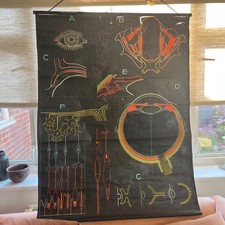
Selected fromvintage anatomy poster oneBay.co.uk.
Endnotes
1.
Source: fmed.uba.ar
Title: Patrimonio | Facultad de Medicina UBA
Link:https://www.fmed.uba.ar/index.php/departamentos_y_catedras/museo-de-patologia/patrimonio
2.
Source: muba.uba.ar
Title: Museo de Patología
Link:https://muba.uba.ar/museo-patologia/
3.
Source: csjn.gov.ar
Title: Cuerpo Medico Forense
Link:https://www.csjn.gov.ar/cmfcs/files/museo.htm
Source snippet
Argentina...
4.
Source: fmed.uba.ar
Title: Historia | Facultad de Medicina UBA
Link:https://www.fmed.uba.ar/index.php/departamentos_y_catedras/museo-de-patologia/historia
5.
Source: fmed.uba.ar
Title: Museo de Patología | Facultad de Medicina UBA
Link:https://www.fmed.uba.ar/index.php/departamentos_y_catedras/departamento-de-patologia/museo-de-patologia
6.
Source: cnba.uba.ar
Link:https://www.cnba.uba.ar/novedades/visita-museos-y-colecciones-de-la-facultad-de-medicina
Source snippet
a museos y colecciones de la Facultad de Medicina | Colegio Nacional de Buenos AiresJune 26, 2026 — VISITA A MUSEOS Y COLECCIONES DE LA F...
Published: June 26, 2026
7.
Source: csjn.gov.ar
Link:https://www.csjn.gov.ar/novedades/detalle/12242
Source snippet
Corte Suprema de Justicia de la NaciónDecember 30, 2025 — 30 de diciembre de 2025 LA MORGUE JUDICIAL INCORPORÓ EL EQUIPAMIENTO DE HISTOPA...
Published: December 30, 2025
8.
Source: csjn.gov.ar
Title: Image: Imagen ilustrativa de: Avanza
Link:https://www.csjn.gov.ar/novedades/detalle/10924
Source snippet
Avanza el plan de renovación integral de la Morgue - Corte Suprema de Justicia de la NaciónSeptember 1, 2025 — 1 de septiembre de 2025 AV...
Published: September 1, 2025
9.
Source: csjn.gov.ar
Title: Image: Imagen ilustrativa de: Renovación en la Morgue J
Link:https://www.csjn.gov.ar/novedades/detalle/9184
Source snippet
Renovación en la Morgue Judicial - Corte Suprema de Justicia de la NaciónDecember 10, 2024 — 10 de diciembre de 2024 RENOVACIÓN EN LA MOR...
Published: December 10, 2024
10.
Source: fmed.uba.ar
Link:https://fmed.uba.ar/la-facultad/historia
11.
Source: uba.ar
Link:https://www.uba.ar/red-museos
12.
Source: fmed.uba.ar
Link:https://www.fmed.uba.ar/departamentos_y_catedras/museo-de-patologia/informacion-general
13.
Source: fmed.uba.ar
Link:https://www.fmed.uba.ar/departamentos_y_catedras/museo-de-patologia/bienvenidos
14.
Source: apiwebuba.uba.ar
Title: red de museos
Link:https://apiwebuba.uba.ar/comunidad/red-de-museos/
15.
Source: fmed.uba.ar
Link:https://fmed.uba.ar/departamentos_y_catedras/departamento-de-patologia/informacion-general
16.
Source: mpba.gov.ar
Title: Ministerio Público
Link:https://www.mpba.gov.ar/laboratorios
17.
Source: csjn.gov.ar
Title: Cuerpo Medico Forense
Link:https://www.csjn.gov.ar/cmfcs/files/instituto.htm
18.
Source: cij.gov.ar
Link:https://www.cij.gov.ar/nota-33457-Museo-Forense–un-espacio-de-inter-s-jur-dico-y-cient-fico.html
Additional References
19.
Source: youtube.com
Title: Mike Rowe Learns About Anatomical Oddities | Mütter Museum
Link:https://www.youtube.com/watch?v=b2yZhTieVsI
Source snippet
The Cabinet of Death: Tales of Conservation and Stories from the Mütter Abditory...
20.
Source: consejo.jusbaires.gob.ar
Title: Dirección de Medicina Forense
Link:https://consejo.jusbaires.gob.ar/institucional/organigrama/secretaria-de-apoyo-administrativo-jurisdiccional/direccion-de-medicina-forense/
Source snippet
Portal del Consejo de la Magistratura de la Ciudad de Buenos Aires...
21.
Source: youtube.com
Title: King’s College London: Gordon Museum of Pathology
Link:https://www.youtube.com/watch?v=BobdK4tnqo8
Source snippet
Mike Rowe Learns About Anatomical Oddities | Mütter Museum...
22.
Source: buenosaires.gob.ar
Link:https://buenosaires.gob.ar/tramites/aviso-de-traslado-morgue-judicial
23.
Source: barcelo.edu.ar
Link:https://www.barcelo.edu.ar/novedades-Visita-al-Museo-Forense-de-la-Morgue-Judicial
24.
Source: youtube.com
Title: Queen Mary’s Hidden Gems
Link:https://www.youtube.com/watch?v=hIniTYmw-hk
Source snippet
King's College London: Gordon Museum of Pathology...
25.
Source: youtube.com
Title: The Cabinet of Death: Tales of Conservation and Stories from the Mütter Abditory
Link:https://www.youtube.com/watch?v=Zkm77zI40bc
26.
Source: buenosaires.gob.ar
Title: Aviso de traslado a morgue judicial | Buenos Aires Ciudad
Link:https://buenosaires.gob.ar/gcaba_historico/tramites/aviso-de-traslado-morgue-judicial
27.
Source: youtube.com
Title: A short
Link:https://www.youtube.com/watch?v=wfY81xFfhQY
Source snippet
Queen Mary's Hidden Gems...
28.
Source: buenosaires.gob.ar
Title: División Anatomía Patológica | Buenos Aires Ciudad
Link:https://buenosaires.gob.ar/gcaba_historico/salud/hospitalgutierrez/division-anatomia-patologica