Within Strange Australia
Why MONA Feels Like a Cabinet of Curiosities
MONA turns digestion, death, antiquities and contemporary art into a deliberately unsettling version of the old collector's cabinet.
On this page
- How MONA mixes old and new objects
- The Cloaca machine and bodily spectacle
- Artistic provocation versus scientific authority
Page outline Jump by section
Introduction
The Museum of Old and New Art (MONA), near Hobart in Tasmania, is not a cabinet of curiosities in the historical sense, yet it deliberately recreates many of the feelings that made Renaissance and Enlightenment curiosity cabinets so compelling. Instead of arranging objects by period, civilisation or artistic style, MONA places Egyptian antiquities beside provocative contemporary installations, scientific-looking machines beside ritual objects, and works about death, sex, belief and bodily functions in the same underground spaces. The result is a museum that encourages visitors to make their own connections rather than follow an official narrative.[mona.net.au]mona.net.auMona Mona – Museum of Old and New Art | Hobart, TasmaniaMona Mona – Museum of Old and New Art | Hobart, Tasmania

Within Australia’s landscape of unusual collections, MONA occupies a distinctive position. It is neither a medical museum nor a folklore archive, but a deliberately unsettling environment where collecting itself becomes part of the exhibition. Its approach echoes the old Wunderkammer, or cabinet of curiosities, while questioning how museums create authority, classify knowledge and decide what deserves cultural value.[recollections.nma.gov.au]recollections.nma.gov.aure CollectionsRun David run…
Why MONA feels like a cabinet of curiosities
Early cabinets of curiosities gathered rare natural specimens, antiquities, scientific instruments and exotic objects into rooms designed to provoke wonder rather than deliver systematic education. Visitors were expected to compare, speculate and argue about relationships between objects.
MONA adopts this same intellectual strategy using contemporary museum design. Founder David Walsh assembled a collection that mixes ancient artefacts with modern artworks without presenting a conventional chronological journey. Visitors descend into dark subterranean galleries where artworks emerge unexpectedly from tunnels and chambers, with interpretation delivered primarily through the museum’s digital guide rather than wall labels. The absence of traditional explanatory panels means visitors must actively construct meaning instead of simply accepting institutional authority.[wikipedia.org]WikipediaMuseum of Old and New ArtMuseum of Old and New Art
Rather than celebrating encyclopaedic knowledge, MONA embraces uncertainty. Themes of mortality, desire, religion, gambling, violence and bodily existence recur across thousands of years, making ancient funerary objects appear surprisingly contemporary while modern conceptual art can resemble archaeological relics removed from their original context. This deliberate collapse of historical categories gives the museum much of its cabinet-of-curiosities atmosphere.[recollections.nma.gov.au]recollections.nma.gov.aure CollectionsRun David run…
How MONA mixes old and new objects
The museum’s title—Museum of Old and New Art—describes its organising principle. Ancient Egyptian antiquities, classical coins and archaeological objects share space with ambitious contemporary installations from internationally recognised artists.[Wikipedia]WikipediaMuseum of Old and New ArtMuseum of Old and New Art
The effect is less about historical comparison than about recurring human obsessions. Across different galleries, visitors encounter:
- Ancient funerary objects alongside artworks exploring death and memory.
- Religious imagery beside works questioning belief, ritual and morality.
- Scientific-looking installations beside deliberately irrational or emotional works.
- Objects associated with civilisation displayed alongside works centred on bodily waste, violence or decay.
Because the objects are not arranged as evidence of historical progress, no single interpretation dominates. Ancient artefacts become contemporary again, while contemporary art acquires the aura of mysterious relics. The collection therefore resembles a modern curiosity cabinet more than a conventional art museum, despite being carefully curated rather than randomly accumulated.[Wikipedia]WikipediaMuseum of Old and New ArtMuseum of Old and New Art
The Cloaca machine and bodily spectacle
Perhaps no work captures MONA’s philosophy better than Belgian artist Wim Delvoye’s Cloaca Professional, commissioned specifically for the museum.
Suspended within its own purpose-built gallery, the installation functions as an artificial digestive system. Food is placed into the machine, moved through a sequence of chemically controlled chambers that imitate human digestion, and eventually emerges as material indistinguishable in appearance and smell from human faeces. Feeding sessions themselves become scheduled public events.[wimdelvoye.be]wimdelvoye.beWim Delvoye Cloaca Professional • wimdelvoye.beWim Delvoye Cloaca Professional • wimdelvoye.be
The machine deliberately confuses familiar categories.
From one perspective it resembles laboratory equipment, with pumps, tubes, vessels and controlled chemical reactions suggesting scientific precision. From another, it behaves like performance art. It also recalls the nineteenth-century fascination with scientific demonstration, where machinery itself became public entertainment.
The installation raises uncomfortable questions:
- If an object performs genuine biological chemistry, is it scientific equipment or sculpture?
- Does faithfully reproducing digestion produce knowledge, humour or simply spectacle?
- Why are museum visitors comfortable admiring ancient human remains yet often shocked by the biological processes shared by every living person?
Rather than answering these questions, Cloaca exposes how museums influence emotional responses through context. Identical equipment in a laboratory would be viewed differently from the same equipment presented inside an art museum.[edu.au]unsw.edu.auUNSW Sites Blending science, art and other excrementUNSW Sites Blending science, art and other excrement
Artistic provocation versus scientific authority
MONA repeatedly borrows the visual language of science without claiming scientific authority.
Several installations resemble laboratories, archives or research collections, encouraging visitors to assume they possess objective meaning. Yet the museum frequently undermines that expectation by pairing factual objects with symbolic, emotional or provocative works. This strategy makes visitors aware that museums do not simply display reality—they construct narratives through selection, arrangement and interpretation.[nma.gov.au]recollections.nma.gov.aure CollectionsRun David run…
This distinguishes MONA from Australia’s university pathology museums or natural-history collections. Institutions such as medical museums present specimens primarily to educate through documented scientific evidence. MONA instead uses similar visual cues to explore philosophical questions about knowledge, value and belief. The goal is reflection rather than instruction.
Even the museum’s interpretive approach reinforces this distinction. By replacing conventional wall labels with digital interpretation that visitors choose to access—or ignore—MONA reduces the authoritative voice traditionally associated with museums. Visitors encounter uncertainty as part of the exhibition itself.[Wikipedia]WikipediaMuseum of Old and New ArtMuseum of Old and New Art

Why MONA matters within Australia’s curiosity culture
Australia has relatively few institutions devoted entirely to occult collections, cryptids or cabinets of curiosities. MONA fills part of that cultural space without pretending to be a museum of mysteries or paranormal artefacts.
Instead, it demonstrates how the curiosity cabinet can be reinvented for the twenty-first century. The museum preserves genuine antiquities and internationally significant contemporary artworks, but their significance comes less from rarity than from the surprising conversations created between them. Ancient religion meets biotechnology; archaeology meets conceptual art; scientific imagery meets theatrical provocation.
For visitors interested in Australia’s stranger cultural landscape, MONA is significant because it transforms the act of collecting into its central subject. Rather than asking only what individual objects mean, it asks why humans collect extraordinary things at all, why certain objects become museum pieces while others remain ordinary, and how institutions shape what societies consider worthy of wonder.[nma.gov.au]recollections.nma.gov.aure CollectionsRun David run…
Amazon book picks
Further Reading
Books and field guides related to Why MONA Feels Like a Cabinet of Curiosities. Use these as the next step if you want deeper reading beyond the article.
Atlas Obscura
Je čas vylézt z ulity a vyrazit po nevyšlapaných cestičkách. Vydejte se za zázraky přírody, bizarními lidskými a přírodními výtvory i na...
Cabinets of Curiosities
"Maurie`s' tour of strange objects is entertaining and fascinating." --Antiques And The Arts Weekly
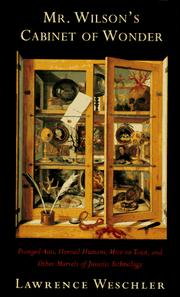
Mr. Wilson's Cabinet of Wonder
First published 1995. Subjects: Collectors and collecting, History, Museum of Jurassic Technology, Museums, Philosophy.
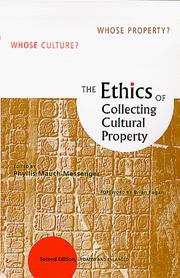
The Ethics of Collecting Cultural Property
First published 1991. Subjects: Cultural property, protection, Antiquities, collection and preservation.
eBay marketplace picks
Marketplace Samples
Live-tested eBay searches with available results related to this page.
Selected fromTasmania art poster oneBay.co.uk.

Endnotes
1.
Source: Wikipedia
Title: Museum of Old and New Art
Link:https://en.wikipedia.org/wiki/Museum_of_Old_and_New_Art
2.
Source: recollections.nma.gov.au
Title: re Collections
Link:https://recollections.nma.gov.au/issues/volume_9_number_2/papers/run_david_run
Source snippet
Run David run...
3.
Source: Wikipedia
Title: Cloaca (art installation)
Link:https://en.wikipedia.org/wiki/Cloaca_%28art_installation%29
4.
Source: mona.net.au
Title: Mona Mona – Museum of Old and New Art | Hobart, Tasmania
Link:https://mona.net.au/?cmp=1
5.
Source: theartnewspaper.com
Link:https://www.theartnewspaper.com/2011/03/01/sex-death-and-models-of-down-under-down-under-newly-opened-mona-already-a-success
Source snippet
Art NewspaperSex, death and models of down under, down under: Newly opened Mona already a success - The Art Newspaper - International art...
6.
Source: wimdelvoye.be
Title: Wim Delvoye Cloaca Professional • wimdelvoye.be
Link:https://wimdelvoye.be/work/cloaca/cloaca-professional/
7.
Source: unsw.edu.au
Title: UNSW Sites Blending science, art and other excrement
Link:https://www.unsw.edu.au/newsroom/news/2016/02/blending-science–art-and-other-excrement
8.
Source: wimdelvoye.be
Title: mona hobart tasmania 2011
Link:https://wimdelvoye.be/work/exhibition-images/mona-hobart-tasmania-2011/
Additional References
9.
Source: flickr.com
Title: MUSEU M OF OLD & NEW ART (MONA) Installation: Professional … | Flickr
Link:https://www.flickr.com/photos/16938270%40N00/53348312834
Source snippet
MUSEUM OF OLD & NEW ART (MONA) Installation: Professional … | FlickrNovember 22, 2023 — Image: MUSEUM OF OLD & NEW ART (MONA) Installatio...
Published: November 22, 2023
10.
Source: youtube.com
Title: David Walsh in Conversation
Link:https://www.youtube.com/watch?v=PitTfW1haK0
Source snippet
Inside Mona provides an in-depth tour of the subterranean layout and unconventional exhibit juxtapositions that define the Museum of Old...
11.
Source: oculus.info
Title: Museum of Old and New Art (MONA) – OCULUS
Link:https://www.oculus.info/projects/mona
Source snippet
Image Peter Bennetts The Museum of Old and New Art (MO...
12.
Source: collectiana.org
Link:https://www.collectiana.org/bloc-notes/david-walsh.html
13.
Source: artguide.com.au
Link:https://artguide.com.au/exhibition/monanism/
14.
Source: broadsheet.com.au
Title: Broadsheet Wim Delvoye – The Guy Who Made the Cloaca at MONA | Broadsheet
Link:https://www.broadsheet.com.au/sydney/art-and-design/article/wim-delvoye-guy-who-made-cloaca-mona
15.
Source: youtube.com
Title: Mona Founder David Walsh Opens Personal Library to Public
Link:https://www.youtube.com/watch?v=u8rpIdAqTHw
Source snippet
David Walsh: A Bone of Fact...
16.
Source: youtube.com
Title: Inside Mona
Link:https://www.youtube.com/watch?v=2wjT4x0lLlc
Source snippet
Mona Founder David Walsh Opens Personal Library to Public...
17.
Source: youtube.com
Title: David Walsh: A Bone of Fact
Link:https://www.youtube.com/watch?v=1BzD08BXmpw
Source snippet
David Walsh in Conversation...
18.
Source: townandcountrymag.com
Title: mona review fall 2012
Link:https://www.townandcountrymag.com/leisure/arts-and-culture/reviews/a901/mona-review-fall-2012/