Within Curious Gambia
Why Are Kachikally's Crocodiles Considered Sacred?
Kachikally brings crocodiles, family custodianship, fertility beliefs and ethnographic objects together in one extraordinary public site.
On this page
- The Bojang family and the pool's origin tradition
- Fertility rituals, offerings and living belief
- What visitors encounter at the museum and sanctuary
Page outline Jump by section
Introduction
Kachikally Crocodile Pool in Bakau is one of The Gambia’s most unusual heritage sites because it combines three roles that are rarely found together: a living sacred sanctuary, a small ethnographic museum and a managed tourist attraction. Rather than presenting local beliefs behind glass, Kachikally places visitors inside an active religious landscape where crocodiles, family custodianship and fertility traditions remain part of everyday cultural practice. The museum exists to explain the site, but the pool itself is the principal exhibit, with living animals, ritual spaces and oral traditions forming the heart of the experience.[Gambia Daily]gambiadaily.gov.gmOpen source on gambiadaily.gov.gm.
For anyone interested in unusual museums, Kachikally demonstrates that a “museum” need not be limited to displaying historical objects. Here, interpretation, belief and wildlife management overlap. Visitors encounter traditional artefacts alongside a place that many Gambians continue to regard as spiritually powerful, making it one of the country’s clearest examples of living heritage rather than reconstructed history.[Gambia Daily]gambiadaily.gov.gmOpen source on gambiadaily.gov.gm.
Why are Kachikally’s crocodiles considered sacred?
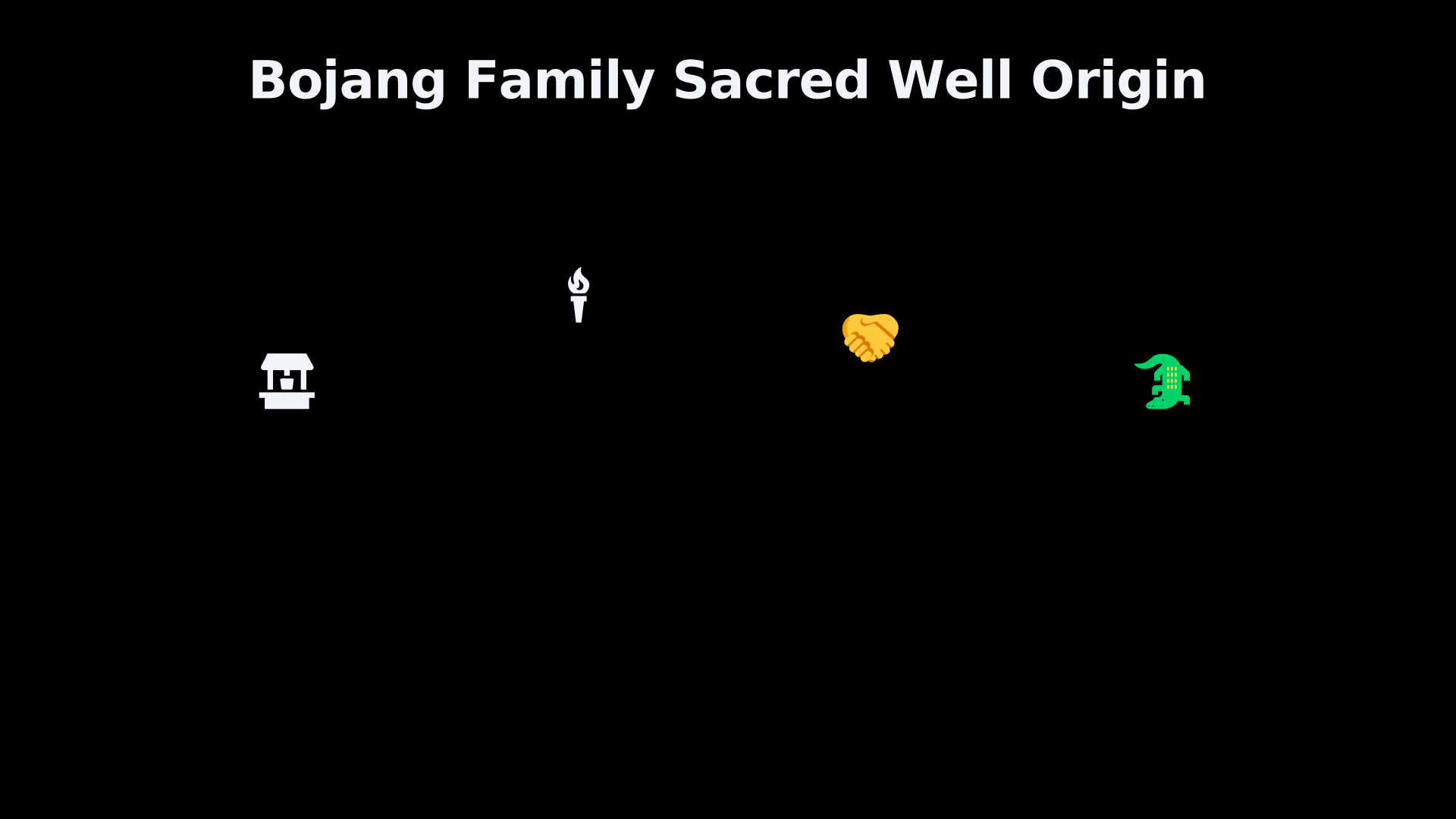
The sacred status of Kachikally’s crocodiles comes from an origin tradition preserved by the Bojang family, who have acted as custodians of the site for generations. According to family tradition, their ancestor was approached by a mysterious woman asking for help rescuing a child from a well. After the family willingly assisted, the woman revealed herself as the spirit associated with the place and entrusted the sacred well—and its powers—to the Bojang family. The spirit, remembered as Kachikally, instructed that crocodiles should inhabit the pool, establishing the relationship between the family, the reptiles and the sanctuary that continues today.[NATIONAL CENTRE FOR ARTS & CALTURE]ncac.gmNATIONAL CENTRE FOR ARTS & CALTURESacred SitesNATIONAL CENTRE FOR ARTS & CALTURE…
Within this tradition, the crocodiles are not worshipped as gods. Instead, they are regarded as guardians of a spiritually significant place where blessings may be sought. Their presence symbolises continuity with ancestral authority and reinforces the family’s inherited responsibility for maintaining the sanctuary. This distinction matters because visitors sometimes mistake the site for a wildlife attraction with an unusual legend attached, when in reality the spiritual tradition is the organising principle around which the crocodile pool developed.[NATIONAL CENTRE FOR ARTS & CALTURE]ncac.gmNATIONAL CENTRE FOR ARTS & CALTURESacred SitesNATIONAL CENTRE FOR ARTS & CALTURE…
The pool is also one of only three crocodile pools in The Gambia recognised in national heritage material as sacred fertility shrines, alongside Folonko at Kartong and Berending. Kachikally has become the best known largely because it developed public visitor facilities and an interpretive museum while the underlying traditions remained active.[NATIONAL CENTRE FOR ARTS & CALTURE]ncac.gmNATIONAL CENTRE FOR ARTS & CALTURESacred SitesNATIONAL CENTRE FOR ARTS & CALTURE…
The Bojang family and the pool’s origin tradition
Unlike a state museum managed by government curators, Kachikally remains under the stewardship of the Bojang family, one of Bakau’s founding families. Their authority is presented not simply as ownership but as inherited custodianship, with knowledge of rituals, oral history and responsibilities passed between generations. This family role shapes almost every aspect of the visitor experience, from storytelling to supervision of the crocodiles and the conduct of ceremonies.[NATIONAL CENTRE FOR ARTS & CALTURE]ncac.gmNATIONAL CENTRE FOR ARTS & CALTURESacred SitesNATIONAL CENTRE FOR ARTS & CALTURE…
This family-based management also explains why Kachikally occupies an unusual position between heritage preservation and living religion. The museum interprets history for tourists, yet the custodians continue to regard the site as spiritually active rather than as an archaeological relic. That combination makes it quite different from museums that display religious objects removed from their original setting.
Because the site’s history is preserved primarily through oral tradition rather than written documentation, historians distinguish between documented ownership and the legendary narratives explaining the sanctuary’s origins. The historical existence of the Bojang family’s custodianship is well established, while the encounters with the spirit belong to local religious tradition rather than evidence that can be independently verified. Respecting that distinction helps explain the site’s importance without presenting belief as historical proof.[NATIONAL CENTRE FOR ARTS & CALTURE]ncac.gmNATIONAL CENTRE FOR ARTS & CALTURESacred SitesNATIONAL CENTRE FOR ARTS & CALTURE…

Fertility rituals, offerings and living belief
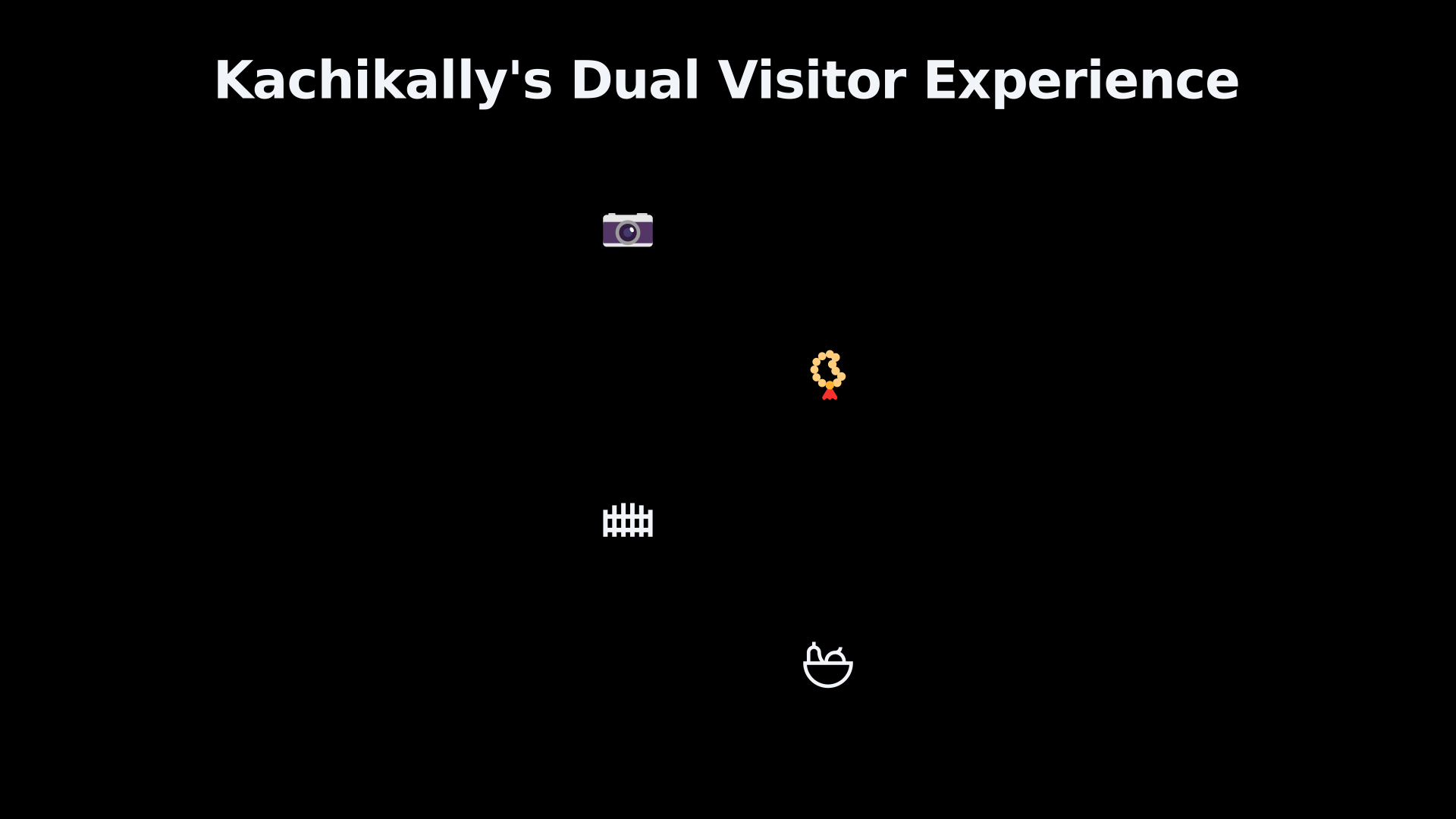
Kachikally is most closely associated with fertility, although people also visit seeking blessings for health, family wellbeing, prosperity and protection. Women hoping to conceive have traditionally come to the pool carrying offerings, often including kola nuts and sometimes milk or other gifts. Members of the Bojang family receive the offerings, offer prayers and conduct ritual washing using water from the sacred pool. According to local belief, the blessing should be acknowledged by returning to the site if the request is fulfilled.[NATIONAL CENTRE FOR ARTS & CALTURE]ncac.gmNATIONAL CENTRE FOR ARTS & CALTURESacred SitesNATIONAL CENTRE FOR ARTS & CALTURE…
These practices remain part of living religious tradition rather than historical re-enactment. While tourists frequently observe the pool, local worshippers may visit for entirely different reasons, treating it as a place of prayer rather than entertainment. The coexistence of pilgrims and visitors is one of the site’s defining characteristics.
It is important to distinguish between cultural belief and medical evidence. Kachikally’s reputation for helping infertility reflects longstanding spiritual practice and community tradition. There is no scientific evidence that the rituals themselves improve fertility, and the site’s importance lies in its religious and cultural meaning rather than in demonstrated medical effectiveness.[NATIONAL CENTRE FOR ARTS & CALTURE]ncac.gmNATIONAL CENTRE FOR ARTS & CALTURESacred SitesNATIONAL CENTRE FOR ARTS & CALTURE…
What visitors encounter at the museum and sanctuary
The visitor experience is carefully designed to connect the museum with the sacred landscape rather than treating them as separate attractions. The complex includes an ethnographic museum, shaded grounds and nature trail, and the crocodile pool itself. Guides explain how traditional beliefs, local history and crocodile care relate to one another, allowing the museum to function as an interpretive introduction to the sanctuary beyond.[Gambia Daily]gambiadaily.gov.gmOpen source on gambiadaily.gov.gm.
The museum galleries display everyday objects from Gambian life, including agricultural tools, musical instruments, domestic equipment and items connected with traditional culture. These collections are modest in size, but they provide context for understanding why Kachikally matters within local society instead of presenting the crocodiles as an isolated curiosity. According to site guides, the museum was established in 2004 specifically to complement the sacred pool by explaining its cultural background to visitors.[Gambia Daily]gambiadaily.gov.gmOpen source on gambiadaily.gov.gm.
Many visitors are surprised that supervised contact with some crocodiles is permitted. The animals have become accustomed to the managed environment and are handled only under the guidance of experienced custodians. This should not be interpreted as meaning crocodiles are naturally tame or safe in the wild. The close encounters are a feature of this specific sanctuary, where feeding practices, long-term management and experienced handlers make limited visitor interaction possible.[TravelDojo]traveldojo.comTravel Dojo Kachikally Museum and Crocodile Pool | Travel DojoTravel Dojo Kachikally Museum and Crocodile Pool | Travel Dojo
A museum where belief is still active
Kachikally stands apart from many unusual museums because its most significant exhibits are neither rare artefacts nor preserved specimens but continuing relationships between people, animals and place. The ethnographic displays help visitors understand Gambian culture, yet they deliberately remain secondary to the sacred pool itself.
That combination of museum interpretation, inherited family custodianship, active religious practice and carefully managed wildlife makes Kachikally one of the most distinctive heritage sites in West Africa. It illustrates how museums can preserve intangible cultural traditions as well as physical collections, allowing visitors to encounter a place where folklore, spirituality, conservation and tourism continue to coexist rather than belonging only to the past.[gambiadaily.gov.gm]gambiadaily.gov.gmOpen source on gambiadaily.gov.gm.
Amazon book picks
Further Reading
Books and field guides related to Why Are Kachikally's Crocodiles Considered Sacred?. Use these as the next step if you want deeper reading beyond the article.

African Religions and Philosophy
First published 1970. Subjects: Religion, African Philosophy.
The Golden Bough
The work of Sir James G. Frazer (1854-1941) ranged widely across classics, cultural history, folklore and literary criticism as well as a...
The Forest of Symbols
First published 1967. Subjects: Ndembu (African tribe), Ndembu (African people), Ndembu, Rites and ceremonies, Ethnology.
Purity and Danger
In this classic work Mary Douglas identifies the concern for pirity as a key theme at the heart of every society. She reveals its wide-ra...
eBay marketplace picks
Marketplace Samples
Live-tested eBay searches with available results related to this page.
Selected fromwildlife collectible oneBay.co.uk.

Endnotes
1.
Source: ncac.gm
Title: NATIONAL CENTRE FOR ARTS & CALTURESacred Sites
Link:https://ncac.gm/sacred-sites/
Source snippet
NATIONAL CENTRE FOR ARTS & CALTURE...
2.
Source: traveldojo.com
Title: Travel Dojo Kachikally Museum and Crocodile Pool | Travel Dojo
Link:https://www.traveldojo.com/kachikally-museum-and-crocodile-pool/
3.
Source: kachikally.com
Link:https://kachikally.com/
4.
Source: africa.com
Link:https://africa.com/museums-of-the-gambia
5.
Source: traveldojo.com
Link:https://www.traveldojo.com/bakau/
6.
Source: youtube.com
Title: Kachikally Crocodile Pool | My Gambia | My Magazine
Link:http://www.youtube.com/watch?v=xYzp3BKzcJQ
Source snippet
Exploring West Africa | Kachikally Crocodile Pool and Museum | Bakau, The Gambia...
7.
Source: gambiadaily.gov.gm
Link:https://www.gambiadaily.gov.gm/veil-behind-kachikally-crocodile-pool?gvas=blue
8.
Source: mytravels.hdf.net
Link:https://mytravels.hdf.net/2017/10/kachikally/
Additional References
9.
Source: perchancetoroam.com
Title: What to Know About Visiting The Gambia’s Sacred Crocodile Pools
Link:https://perchancetoroam.com/2025/04/26/visiting-the-gambias-sacred-crocodile-pools/
Source snippet
Perchance to RoamApril 26, 2025 — THE GAMBIA WHAT TO KNOW ABOUT VISITING THE GAMBIA’S SACRED CROCODILE POOLS Posted on April 26, 2025Apri...
Published: April 26, 2025
10.
Source: visitgambia.com
Link:https://visitgambia.com/gambia/travel-guides/things-to-do/kachikally-crocodile-pool-in-bakau-a-visitor-s-guide
Source snippet
Kachikally Crocodile Pool in Bakau: A Visitor's GuideMarch 2, 2026 — Kachikally Crocodile Pool in Bakau, 12 km from Banjul, dates back to...
Published: March 2, 2026
11.
Source: takeyourbackpack.com
Title: Kachikally Crocodile Pool and Museum Attraction Guide
Link:https://www.takeyourbackpack.com/backpacking-in-gambia/visit-kachikally-crocodile-pool-and-museum/
Source snippet
May 13, 2026 — THE GAMBIA🇬🇲 | ATTRACTIONSKACHIKALLY CROCODILE POOL AND MUSEUM SACRED POOL, LIVE CROCODILES, ETHNOGRAPHIC DISPLAYS | THING...
Published: May 13, 2026
12.
Source: wadr.org
Title: GUES T INTEVIEW MYTHS OF KACHIKALLY
Link:https://wadr.org/guest-inteview-myths-of-kachikally/
Source snippet
GUEST INTEVIEW MYTHS OF KACHIKALLY - WADRNovember 6, 2025 — GUEST INTEVIEW MYTHS OF KACHIKALLY * M D * Daybreak West Africa, Features * N...
Published: November 6, 2025
13.
Source: youtube.com
Title: Exploring West Africa | Kachikally Crocodile Pool and Museum | Bakau, The Gambia
Link:http://www.youtube.com/watch?v=Q-usuuE9Bkg
Source snippet
Kachikally Crocodile Pool Tour in Bakau - Gambia April 2023 Roots & Culture Journey...
Published: April 2023
14.
Source: youtube.com
Title: Kachikally Crocodile Pool Tour in Bakau
Link:http://www.youtube.com/watch?v=5Xzf4rSqWpU
Source snippet
Exploring the Sacred Kachikally Crocodile Pool in Bakau...
Published: April 2023
15.
Source: researchgate.net
Link:https://www.researchgate.net/publication/374635383_Impacts_of_COVID-19_on_Ecotourism_A_Study_in_Bijilo_Monkey_Forest_and_Kachikally_Crocodile_Pool_The_Gambia
16.
Source: gambianexcursions.com
Link:https://www.gambianexcursions.com/tourist-trips/kachikally-museum-and-crocodile-pool/
17.
Source: researchgate.net
Link:https://www.researchgate.net/figure/Rating-by-Visitors-Kachikally-Crocodile-Pool_tbl2_374635383
18.
Source: visitgambiatosupportgambia.com
Title: A Sacred Place: Visiting Kachikally Crocodile Pool in Gambia
Link:https://visitgambiatosupportgambia.com/culture-in-gambia/kachikally-crocodile-pool/