Where Panama Keeps Its Strangest Cultural Objects
Panama does not have a large, clearly branded circuit of occult museums, cryptid collections or old-fashioned cabinets of curiosity.
Page outline Jump by section
Introduction
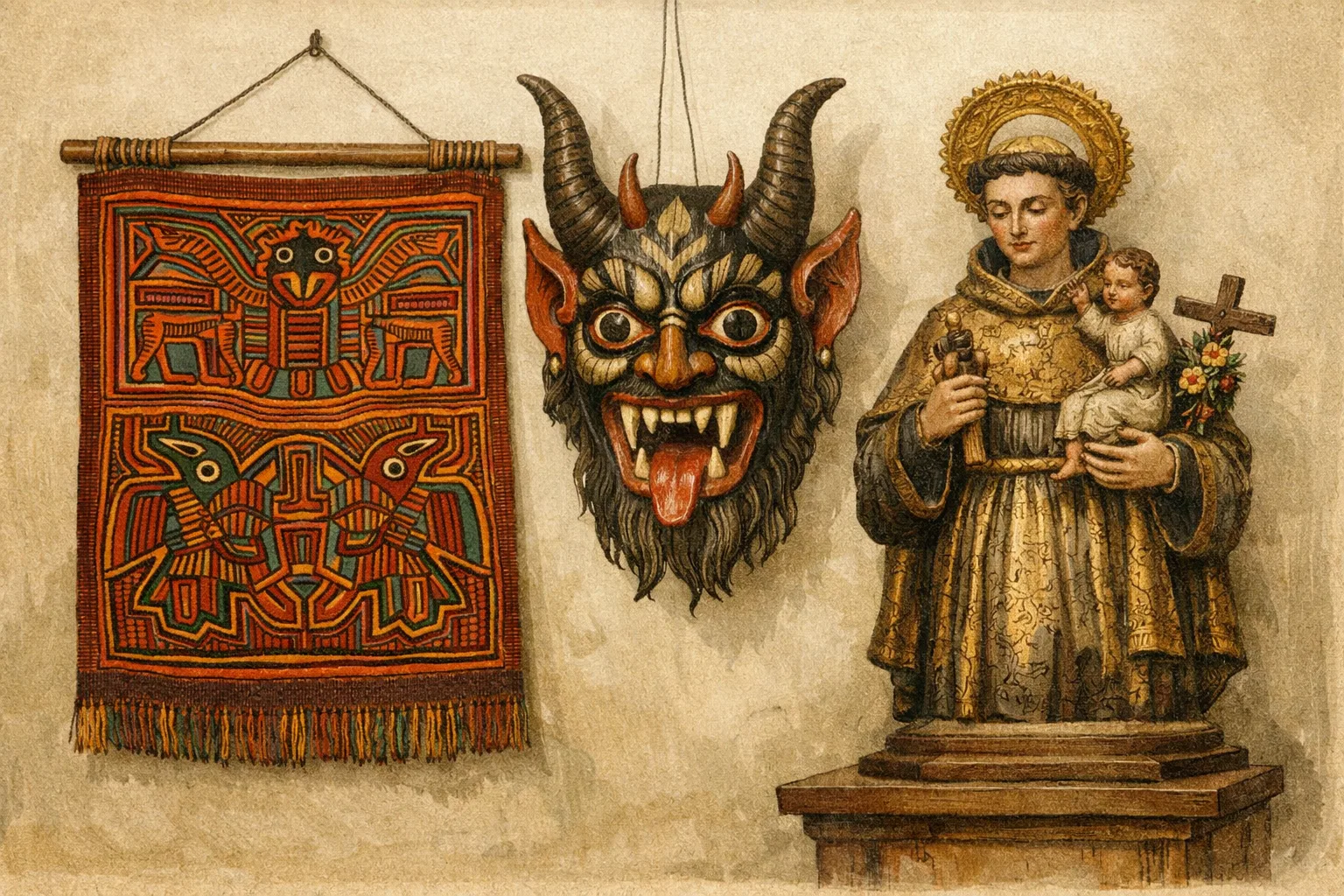
The best starting point is Panama City’s Mola Museum, where layered cloth panels become records of Guna identity, spirituality and political survival. Beyond the capital, the Manuel F. Zárate Museum preserves costumes and objects linked to folk performance, while Portobelo’s Congo culture turns masks, ritual combat and symbolic devils into living heritage. Colonial religious art supplies reliquary-like objects and unsettling sacred sculpture; Coiba offers the remains of an island penal colony reclaimed by forest. Together, these places show that Panama’s curiosity culture is less about manufactured mystery than about objects whose meanings remain active, contested or difficult to separate from ritual life.
Where Panama’s strangest collections are found
The country’s unusual heritage is dispersed across several types of institution. Some are conventional museums with catalogued objects and fixed galleries. Others are community cultural centres, archaeological sites or landscapes where ruins and traditions matter more than glass cases. Panama’s Ministry of Culture maintains a national network that includes regional, biographical and folklore museums, but opening arrangements and the condition of individual sites can vary; current official listings or reservations should therefore be checked before travelling.[Mi Cultura]micultura.gob.paMi CulturaMUSEOS – 020725Folklore · Derechos Culturales · Centros Culturales · Contacto · Concursos… MUSEO DE LA NACIONALIDAD. MUSEO F…
For travellers interested specifically in strange history, the strongest themes are:
- Indigenous visual knowledge, especially Guna textile art whose patterns carry social, historical and spiritual meanings.
- Masked folklore, including theatrical devils, animal figures and reversals of religious authority.
- Colonial devotion, preserved in statues, paintings, silverwork, bells and other church objects.
- Burial and archaeological material, including funerary urns, gold ornaments and hybrid animal imagery.
- Carceral ruins, most notably the remains of the Coiba penal colony.
- Tropical natural curiosities, from threatened frogs to displays explaining how Panama reshaped global biodiversity.
None of these should be treated as a simple “weird attractions” list. A mask used in a living festival, for example, is not equivalent to a commercial horror prop. A mola is not merely an exotic pattern. The interest comes from understanding why objects that may look uncanny to outsiders carry specific cultural, religious or political meanings within Panama.
The Mola Museum: cloth as cosmology and memory
The Mola Museum in Panama City’s historic district is Panama’s clearest example of a small, specialised collection that rewards curiosity. It is devoted to the layered textile panels associated with Guna women and presents them through five exhibitions dealing with technique, historical development, surroundings, storytelling, protection and worldview. Admission is currently advertised as free, and the museum’s own site describes the collection as an artistic exploration rather than a souvenir display.[Museo de la mola]museodelamola.orgMuseo de la mola Home | Mola MuseumMuseo de la molaHome | Mola Museum - Panama29 Jan 2026 — MuMo invites visitors to explore and learn about the mola from an artistic viewp…
Molas are constructed by layering cloth, cutting through selected sections and sewing the exposed edges to create intricate designs. The resulting images may be geometric, botanical, animal, political, religious or drawn from modern popular culture. More than 200 pieces have been reported in the museum’s displays, allowing visitors to compare closely controlled stitching with bolder narrative scenes.[Americas Quarterly]americasquarterly.orga communitys life told in textilesAmericas QuarterlyA Community's Life, Told in Textiles25 Jul 2023 — More than 200 molas are exhibited in the Museo de la Mola, opened in…
What makes the museum unusual is not simply the visual density of the textiles. It treats cloth as a means of recording experience. Guna makers have used molas to represent daily life, contact with outsiders, environmental change and understandings of the visible and spiritual worlds. One account of the collection describes molas as a form of writing through which Guna women portray their community’s reality.[Americas Quarterly]americasquarterly.orga communitys life told in textilesAmericas QuarterlyA Community's Life, Told in Textiles25 Jul 2023 — More than 200 molas are exhibited in the Museo de la Mola, opened in…
The museum also changes the meaning of objects commonly sold to tourists. Removed from their cultural setting, mola panels can be reduced to colourful handicrafts. Displayed alongside explanations of dress, identity and Guna history, they become evidence of women’s artistic authority and of a people’s resistance to cultural assimilation. Broader museum scholarship describes the mola as both a cultural marker and an art form through which women help construct Guna identity.[Cleveland Museum of Art]clevelandart.orgfashioning identity mola textiles panamaCleveland Museum of ArtFashioning Identity: Mola Textiles of Panamá8 Oct 2020 — These blouses, called molas, are so visually striking and…
Visitors should nevertheless remember that this is a privately initiated museum interpreting a living Indigenous tradition, not a sealed record of a vanished culture. The most responsible reading is to see its exhibits as an introduction to Guna art and history, then recognise that the tradition continues in communities, clothing, commerce and political life beyond the museum.
Folklore museums and Panama’s masked devils
Panama’s richest concentration of uncanny imagery appears in folklore rather than in horror museums. Costumes, masks and dance traditions from the central provinces and the Caribbean coast populate a world of devils, queens, animals, mock authorities and ritual confrontations. These figures may appear visually sinister, but their meanings are theatrical, religious and historical rather than simply frightening.
The Manuel F. Zárate Museum in Guararé is the most important museum anchor for this material. Opened in 1969, it honours folklorist Manuel F. Zárate and his study of Panamanian popular culture. The institution preserves clothing, documents and objects associated with national and regional traditions.[Mi Cultura]micultura.gob.pamuseo exhibe nuevo busto en honor a dora perez de zaratemuseo exhibe nuevo busto en honor a dora perez de zarate
One of its notable exhibits is an old ceremonial dress reported by the Ministry of Culture to be about 160 years old. Its exact age is presented as an estimate rather than a firmly documented date, which is a useful reminder that folklore collections often contain objects whose family histories are clearer than their formal provenance.[Mi Cultura]micultura.gob.paantigua pollera se mantiene expuesta en el museo manuel f zarateantigua pollera se mantiene expuesta en el museo manuel f zarate
The wider fascination lies in how such museums preserve the material half of traditions that only make full sense in performance. Devil masks may be displayed as carved or painted objects, but during festivals they become characters within dramas of temptation, resistance, disorder and Christian triumph. Costumes can encode social rank, comic exaggeration or racial history. A static case therefore shows only one stage in an object’s life.
Portobelo’s Congo tradition
On Panama’s Caribbean coast, Congo culture offers the country’s most compelling meeting of masks, historical memory and ritual theatre. The tradition grew among Afro-Panamanian communities shaped by slavery, resistance and cultural survival. Its performances combine music, dance, improvised speech, mock courts and symbolic battles. Panama’s tourism authority directs visitors towards the Casa de la Cultura Congo in the Portobelo region for workshops and cultural interpretation.[Visit Panama]visitpanama.comOpen source on visitpanama.com.
The devil figures within Congo performance are especially relevant to strange-history travellers. UNESCO documentation describes ritual sequences in which Congo rulers overcome the devils, remove their masks and symbolically baptise or neutralise them. The imagery is vivid, but the devils are not evidence of occult worship. They belong to a dramatic system in which evil, colonial authority and social inversion can be mocked, confronted and defeated.[ICH UNESCO]ich.unesco.org38918 EN.doc38918 EN.doc
This distinction matters. Commercial descriptions may sell masked dances as exotic spectacle, while purely religious descriptions can flatten their humour and historical resistance. The strongest interpretation holds both together: Congo performance is a living cultural practice with Catholic elements, African-derived expression, memories of enslavement and a deliberate use of disorder as theatre.
Colonial religious objects: devotion, fear and disputed survival
Panama’s Colonial Religious Art Museum provides another form of curiosity collection: sacred objects whose emotional power survives even when their original devotional setting has changed. Its holdings have included paintings, polychrome sculpture, carved wood, medallions, bells and objects made from ivory, marble, silver and stone, with material spanning several colonial centuries.[Recorriendo Panamá]recorriendopanama.comRecorriendo PanamáColonial Religious Art Museum in Casco AntiguoRecorriendo PanamáColonial Religious Art Museum in Casco Antiguo
To a modern secular visitor, colonial saints and suffering figures can look severe or macabre. Wounds, martyrdom, humility and divine punishment were deliberately made visible because sacred images were expected to teach and move worshippers. These works were not created as gothic entertainment. Their intensity belongs to a religious culture in which material objects mediated between earthly life and the divine.
The collection also raises questions about provenance and cultural mixture. Colonial church art in Panama reflects European styles, local craftsmanship and Indigenous labour, but the documentary record is incomplete. Research on the museum’s baroque works notes substantial gaps in the historiography of Panamanian colonial art, particularly regarding art produced by Indigenous makers.[ResearchGate]researchgate.netResearch Gate(PDF) mirada al arte barroco del Museo de Arte ReligiosoResearch Gate(PDF) mirada al arte barroco del Museo de Arte Religioso
Visitors should verify the museum’s present location and opening status before relying on older guidebooks. Accounts of closure, structural problems and later relocation have circulated over time, and official cultural institutions have continued preservation work. This is a case where the collection is real and historically important, but practical information can lag behind administrative change.[Lonely Planet]lonelyplanet.comLonely Planet Museo de Arte Religioso ColonialLonely Planet Museo de Arte Religioso Colonial
The museum matters within Panama’s strange-history landscape because it preserves objects at the point where art, belief and fear overlap. Bells, statues and silver church vessels were never curiosities to their first users. They became museum objects only after changes in worship, architecture and heritage policy separated them from everyday ritual use.

Coiba: a prison ruin inside a natural sanctuary
Coiba is not a conventional prison museum. It is a vast Pacific island and national park containing the remains of a penal colony that operated for much of the twentieth century. Its unusual power comes from the collision between human violence and ecological abundance: abandoned buildings and prison traces sit within a landscape now promoted for forests, reefs, sharks, whales and other wildlife.
Panama’s official tourism information states that Coiba served as a prison for almost 100 years. The island’s enforced isolation restricted settlement and development, inadvertently protecting large areas of forest and surrounding marine habitat. Today, Coiba National Park covers 38 islands and more than 270,000 hectares of terrestrial and marine environments.[Tourism Panama]tourismpanama.comOpen source on tourismpanama.com.
The former colony is often marketed as Panama’s answer to Alcatraz, but this comparison can obscure more than it explains. Coiba was not designed as a visitor attraction, and the surviving prison area is a ruin rather than a polished institution with a stable exhibition narrative. Commercial operators do advertise visits to the former prison, usually as an addition to boat, wildlife or diving excursions, but access depends on permits, conditions and tour arrangements.[Atlas Obscura]atlasobscura.comAtlas Obscura Coiba Island Penal Colony in El TrapicheAtlas Obscura Coiba Island Penal Colony in El Trapiche
That lack of conventional curation is part of the site’s appeal and its problem. Visitors may encounter deteriorating structures with limited interpretation, leaving dramatic stories to circulate through guides and tourism copy. Claims about brutality, political prisoners and notorious inmates should be treated carefully unless tied to documentary evidence. The physical remains are authentic; individual stories attached to them may be unevenly sourced.
Coiba matters because it demonstrates how uncomfortable heritage can be absorbed into a new national story. The prison’s isolation helped preserve the ecosystems for which the island is now celebrated, so conservation and incarceration cannot be neatly separated. Nature has not erased the penal colony; it has grown around it.
Archaeological creatures, graves and canal relics
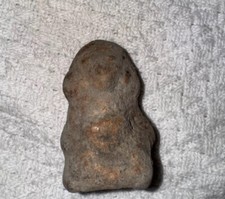
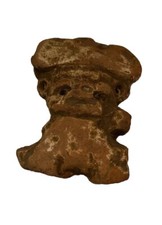
Panama’s archaeological collections contain some of the country’s most visually extraordinary objects, particularly funerary pieces decorated with bats, crocodiles and composite beings. Such imagery can look cryptid-like to a modern audience, but it belongs to pre-Columbian systems of status, transformation and animal symbolism rather than to evidence of unknown creatures.
The Panama Canal Museum is not an oddities museum, yet its collection of more than 30,000 objects includes an unusually broad mixture: cannonballs, French lighthouse equipment, funerary urns, treaties, maps, industrial material and the Panamanian flag associated with the events of 9 January 1964. Museo del Canal Interoceánico de Panamá[museodelcanal.com]museodelcanal.comMuseo del Canal Interoceánico de PanamáExhibitionsMuseo del Canal Interoceánico de PanamáExhibitions
This range makes it closer to a modern cabinet of national curiosities than its name suggests. The canal story required archaeology, engineering, disease control, imperial ambition, migration and political conflict. A visitor may move from ancient burial objects to machinery and diplomatic documents within a single institutional narrative.
The museum is strongly curated rather than mysterious. Its objects are intended to explain how Panama’s position between oceans became both an engineering opportunity and a source of foreign intervention. The strange effect comes from scale and juxtaposition: human remains and urns belong to one historical world, French industrial relics to another, while flags and treaties show how physical objects can become politically charged national symbols.
Frogs, extinction and scientific wonder
For natural curiosities, the Smithsonian’s Punta Culebra Nature Center is more relevant than a conventional taxidermy hall. Its exhibits combine marine organisms, forest ecology and living animals, including a programme devoted to Panama’s frogs. The Smithsonian notes that the country has nearly 200 frog species and that its frog exhibit includes critically endangered animals.[Smithsonian Tropical Research Institute]stri.si.eduOpen source on si.edu.
The experience is scientific and family-oriented rather than macabre, but threatened amphibians bring an uncomfortable element to the displays. Visitors are not merely seeing unusual shapes and colours; they are encountering species affected by habitat loss and disease. The collection therefore sits between public attraction, research outreach and conservation warning.
The Biomuseo expands this natural-history theme on a much larger scale. Its eight principal galleries explain biodiversity, the geological formation of the isthmus, the movement of animals between continents and the separation of two oceans. Displays include a multi-level projection space, an aquarium and a large sculptural representation of ecological relationships.[Biomuseo]biomuseo.orgOpen source on biomuseo.org.
Neither institution is “strange” in the occult sense. Their relevance comes from presenting Panama itself as a biological anomaly: a narrow land bridge whose formation altered ocean currents, migration routes and the distribution of life. The most surprising exhibit is ultimately the country’s geography.
Commercial illusion versus cultural mystery
Panama City also has a Museum of Illusions, part of an international entertainment model based on optical tricks, distorted rooms and interactive photographs. It openly describes itself as an educational-entertainment attraction, and visitors should understand it as commercial leisure rather than as a collection rooted in Panamanian folklore or museum scholarship.[Museum of Illusions Panama]moipanama.comOpen source on moipanama.com.
It can still suit travellers seeking playful oddity, but it occupies a different category from the Mola Museum, Coiba or the folklore institutions. Nothing in an illusion room claims historical authenticity. The attraction engineers temporary sensory confusion; Panama’s culturally significant collections preserve objects whose meanings developed over generations.
That contrast offers a useful test for evaluating unusual attractions:
- Is the object original, reproduced or purpose-built for photographs?
- Does interpretation identify the community or belief system behind it?
- Is uncertainty admitted when provenance is weak?
- Is a living tradition being explained or merely decorated?
- Does the institution preserve material, stage an experience or combine both?
These questions are especially important in Panama, where the most memorable “strange” material often belongs to communities whose art and ritual have been repeatedly commercialised.

What Panama’s curiosity culture reveals
Panama’s unusual collections are strongest when they reveal how objects move between worlds. A mola can be clothing, storytelling, political identity, fine art and tourist merchandise. A devil mask can be sculpture in a museum and a dangerous comic character in performance. A colonial saint can shift from an object of prayer to an art-historical exhibit. A prison can become a ruin inside a biodiversity reserve.
This mobility explains why Panama does not need a grand museum of the paranormal to possess a distinctive strange-history landscape. Its most compelling curiosities are not presented as unexplained relics. They are objects whose meanings have accumulated through colonial rule, Indigenous resistance, African diasporic memory, Catholic devotion, archaeological discovery and tourism.
The Mola Museum offers the most coherent visitor experience, while the Manuel F. Zárate Museum and Portobelo’s cultural institutions provide routes into living folklore. Colonial religious collections supply the darker visual language of sacred art. Coiba preserves a difficult history without fully transforming it into a museum, and Panama’s scientific centres turn frogs, reefs and continental change into natural wonder.
The result is a curiosity culture grounded less in hoaxes and monsters than in transformation. Panama’s strangest collections ask what happens when belief becomes heritage, when ritual objects enter display cases and when places created for control are reclaimed by memory, tourism or nature.
Amazon book picks
Further Reading
Books and field guides related to Where Panama Keeps Its Strangest Cultural Objects. Use these as the next step if you want deeper reading beyond the article.
The Path Between the Seas
From the Pulitzer Prize-winning author of "Truman," here is the national bestselling epic chronicle of the creation of the Panama Canal....
The Art of Being Kuna
The remarkable arts and culture of the Kuna of Panama are accessible in this comprehensive, illustrated volume. From the familiar reverse...
Panama: A Legendary Hat
First published 1995. Subjects: Panama hats, Pictorial works, History, Panama.
SMITHSONIAN ATLAS AMAZON
Presents 150 color maps of the Amazon River and its thirteen major tributaries, accompanied by three hundred photos of the river and surr...
eBay marketplace picks
Marketplace Samples
Live-tested eBay searches with available results related to this page.
Selected fromPanama collectible oneBay.co.uk.
Endnotes
1.
Source: ich.unesco.org
Title: 38918 EN.doc
Link:https://ich.unesco.org/doc/src/38918-EN.doc
2.
Source: researchgate.net
Title: Research Gate(PDF) mirada al arte barroco del Museo de Arte Religioso
Link:https://www.researchgate.net/publication/366510322_mirada_al_arte_barroco_del_Museo_de_Arte_Religioso_Colonial_Ciudad_de_Panama_el_Senor_de_la_Paciencia_y_la_Humildad_la_Inmaculada_Concepcion_y_santa_Barbara
3.
Source: biomuseo.org
Link:https://biomuseo.org/en/permanentes/
4.
Source: biomuseo.org
Link:https://biomuseo.org/en/
5.
Source: biomuseo.org
Link:https://biomuseo.org/
6.
Source: biomuseo.org
Link:https://biomuseo.org/permanentes/
7.
Source: biomuseo.org
Link:https://biomuseo.org/en/page/2/
8.
Source: biomuseo.org
Link:https://biomuseo.org/temporales/
9.
Source: ich.unesco.org
Title: 47963 EN.doc
Link:https://ich.unesco.org/doc/src/47963-EN.doc
10.
Source: ich.unesco.org
Link:https://ich.unesco.org/doc/src/Signed%20periodic%20report%20-%20Periodic%20report-50608.pdf
11.
Source: ich.unesco.org
Link:https://ich.unesco.org/doc/src/37045.pdf
12.
Source: unesdoc.unesco.org
Link:https://unesdoc.unesco.org/ark%3A/48223/pf0000265488
13.
Source: micultura.gob.pa
Link:https://micultura.gob.pa/museos/
Source snippet
Mi CulturaMUSEOS – 020725Folklore · Derechos Culturales · Centros Culturales · Contacto · Concursos... MUSEO DE LA NACIONALIDAD. MUSEO F...
14.
Source: micultura.gob.pa
Title: Mi Cultura Museos de Mi Cultura tendrán entrada gratuita con reserva
Link:https://micultura.gob.pa/museos-de-micultura-tendran-entrada-gratuita-con-reserva/
Source snippet
Museo Manuel F. Zárate de 8am a 4pm. En horario de martes a sábados de 8am a 4pm, usted puede hacer su recorrido por el Museo Regional de...
15.
Source: museodelamola.org
Title: Museo de la mola Home | Mola Museum
Link:https://museodelamola.org/en/
Source snippet
Museo de la molaHome | Mola Museum - Panama29 Jan 2026 — MuMo invites visitors to explore and learn about the mola from an artistic viewp...
16.
Source: americasquarterly.org
Title: a communitys life told in textiles
Link:https://americasquarterly.org/article/a-communitys-life-told-in-textiles/
Source snippet
Americas QuarterlyA Community's Life, Told in Textiles25 Jul 2023 — More than 200 molas are exhibited in the Museo de la Mola, opened in...
17.
Source: clevelandart.org
Title: fashioning identity mola textiles panama
Link:https://www.clevelandart.org/articles/fashioning-identity-mola-textiles-panama
Source snippet
Cleveland Museum of ArtFashioning Identity: Mola Textiles of Panamá8 Oct 2020 — These blouses, called molas, are so visually striking and...
18.
Source: clevelandart.org
Title: indigenous tradition meets artistic ingenuity mola textiles guna women
Link:https://www.clevelandart.org/about/press/indigenous-tradition-meets-artistic-ingenuity-mola-textiles-guna-women
19.
Source: micultura.gob.pa
Title: museo exhibe nuevo busto en honor a dora perez de zarate
Link:https://micultura.gob.pa/museo-exhibe-nuevo-busto-en-honor-a-dora-perez-de-zarate/
20.
Source: micultura.gob.pa
Title: antigua pollera se mantiene expuesta en el museo manuel f zarate
Link:https://micultura.gob.pa/antigua-pollera-se-mantiene-expuesta-en-el-museo-manuel-f-zarate/
21.
Source: micultura.gob.pa
Link:https://micultura.gob.pa/category/museos/
22.
Source: visitpanama.com
Link:https://visitpanama.com/a-donde-ir/colon/
23.
Source: recorriendopanama.com
Title: Recorriendo PanamáColonial Religious Art Museum in Casco Antiguo
Link:https://recorriendopanama.com/en/colonial-religious-art-museum/
24.
Source: lonelyplanet.com
Title: Lonely Planet Museo de Arte Religioso Colonial
Link:https://www.lonelyplanet.com/points-of-interest/museo-de-arte-religioso-colonial/432916
25.
Source: tourismpanama.com
Link:https://www.tourismpanama.com/outdoors-and-nature/nature-parks/national-parks/coiba-national-park/
26.
Source: atlasobscura.com
Title: Atlas Obscura Coiba Island Penal Colony in El Trapiche
Link:https://www.atlasobscura.com/places/coiba-island-penal-colony
27.
Source: museodelcanal.com
Title: Museo del Canal Interoceánico de PanamáExhibitions
Link:https://museodelcanal.com/en/exhibition-history/
28.
Source: museodelcanal.com
Title: Museo del Canal Interoceánico de PanamáColecciones
Link:https://museodelcanal.com/en/in-the-galleries/
29.
Source: stri.si.edu
Link:https://stri.si.edu/visit/punta-culebra
30.
Source: stri.si.edu
Link:https://stri.si.edu/facility/punta-culebra
31.
Source: tourismpanama.com
Link:https://www.tourismpanama.com/culture-cuisine/historical-sites/biomuseo/
32.
Source: moipanama.com
Link:https://moipanama.com/en/
33.
Source: atp.gob.pa
Title: Fósiles del Canal: una nueva exhibición temporal del Biomuseo
Link:https://www.atp.gob.pa/fosiles-del-canal-una-nueva-exhibicion-temporal-del-biomuseo/
34.
Source: sicultura.gob.pa
Title: museo del canal interoceanico de panama
Link:https://sicultura.gob.pa/espacios-culturales/museos-otros-espacios-exhibicion-interpretacion-patrimonial/museo-del-canal-interoceanico-de-panama
35.
Source: files.sicultura.gob.pa
Title: museo del canal interoceanico de panama
Link:https://files.sicultura.gob.pa/espacios-culturales/museos-otros-espacios-exhibicion-interpretacion-patrimonial/museo-del-canal-interoceanico-de-panama
36.
Source: files.sicultura.gob.pa
Link:https://files.sicultura.gob.pa/espacios-culturales/monumentos-sitios-declarados-patrimonio/conjunto-monumental-historico-de-panama-viejo-sitio-arqueologico-de-panama-viejo
37.
Source: stri.si.edu
Title: fabulous frogs panama
Link:https://stri.si.edu/story/fabulous-frogs-panama
38.
Source: Wikipedia
Link:https://en.wikipedia.org/wiki/Panama
39.
Source: Wikipedia
Title: Panama City
Link:https://en.wikipedia.org/wiki/Panama_City
40.
Source: tripadvisor.co.uk
Title: MUSE O DE LA MOLA
Link:https://www.tripadvisor.co.uk/Attraction_Review-g294480-d19694995-Reviews-Museo_de_la_Mola-Panama_City_Panama_Province.html
41.
Source: visitpanama.com
Title: casco antiguo
Link:https://visitpanama.com/destino/casco-antiguo/
42.
Source: visitpanama.com
Link:https://visitpanama.com/kosher
43.
Source: visitpanama.com
Link:https://www.visitpanama.com/things-to-do/city/
44.
Source: micultura.gob.pa
Title: actividades culturales gratuitas en el mes de los museos
Link:https://micultura.gob.pa/actividades-culturales-gratuitas-en-el-mes-de-los-museos/
45.
Source: micultura.gob.pa
Link:https://micultura.gob.pa/category/las-artes/folklore/page/3/
46.
Source: micultura.gob.pa
Link:https://micultura.gob.pa/wp-content/uploads/2025/02/Memoria-2025.pdf
47.
Source: micultura.gob.pa
Link:https://micultura.gob.pa/category/las-artes/page/8/
48.
Source: micultura.gob.pa
Title: 11.2 Designaciones
Link:https://micultura.gob.pa/wp-content/uploads/2025/01/11.2-Designaciones.pdf
49.
Source: micultura.gob.pa
Title: INFOME DE GESTION 2019 2020 1
Link:https://micultura.gob.pa/wp-content/uploads/2020/06/INFOME-DE-GESTION-2019-2020-1.pdf
50.
Source: museodelcanal.com
Title: About us
Link:https://museodelcanal.com/en/we/
51.
Source: museodelcanal.com
Title: Nuestras Exposiciones
Link:https://museodelcanal.com/en/nuestras-exposiciones/
52.
Source: museodelcanal.com
Title: About Us
Link:https://museodelcanal.com/en/plan-your-visit/
53.
Source: museodelcanal.com
Link:https://museodelcanal.com/en/buy-tickets/
54.
Source: museodelcanal.com
Link:https://museodelcanal.com/
55.
Source: striresearch.si.edu
Title: punta culebra
Link:https://striresearch.si.edu/physical-monitoring/punta-culebra/
56.
Source: nationalzoo.si.edu
Link:https://nationalzoo.si.edu/center-for-species-survival/amphibians
57.
Source: stri.si.edu
Title: education visits
Link:https://stri.si.edu/education-visits
58.
Source: stri.si.edu
Title: punta culebra
Link:https://stri.si.edu/es/visitenos/punta-culebra
59.
Source: tourismpanama.com
Link:https://www.tourismpanama.com/
60.
Source: pt.tourismpanama.com
Link:https://pt.tourismpanama.com/cultura-culinaria/locais-historicos/biomuseu/
61.
Source: GOV.UK
Link:https://www.gov.uk/foreign-travel-advice/panama
62.
Source: kids.nationalgeographic.com
Link:https://kids.nationalgeographic.com/geography/countries/article/panama
63.
Source: ebsco.com
Link:https://www.ebsco.com/research-starters/geography-and-cartography/panama
64.
Source: eird.org
Link:https://eird.org/regional-platform/about-panama.pdf
65.
Source: pinta.art
Link:https://www.pinta.art/Panama/Editorial/Editorial-2026/Museo-de-la-Mola-a-showcase-of-the-Guna-tradition-in-art-objects
66.
Source: thevisitorpanama.info
Title: museo de la mola a tribute to the culture and art of the guna people
Link:https://www.thevisitorpanama.info/eng/2023/09/23/museo-de-la-mola-a-tribute-to-the-culture-and-art-of-the-guna-people/
67.
Source: lonelyplanet.com
Title: Panama travel
Link:https://www.lonelyplanet.com/destinations/panama
68.
Source: maps.tourismcares.org
Link:https://maps.tourismcares.org/en/panama/resource/biomuseo
Additional References
69.
Source: panama-stopover.com
Link:https://panama-stopover.com/en/know-panama/culture-history/museo-de-la-mola-mumo/
Source snippet
Panama StopoverMuseo de la Mola (MuMo)The museum invites you to explore and learn about molas from an artistic viewpoint through its five...
70.
Source: taketwopty.com
Link:https://taketwopty.com/the-mola-museum-taken-to-the-next-level/
Source snippet
h designs ranging from geometric patterns and scenes from everyday life...
71.
Source: youtube.com
Title: River of Gold: Precolumbian Treasures from Sitio Conte
Link:https://www.youtube.com/watch?v=0x2MD8RUPEw
Source snippet
What It Was Like To Be Held On The Most Dangerous Island Prison Colony In History...
72.
Source: youtube.com
Title: Corpus Christi English version
Link:https://www.youtube.com/watch?v=6YZhpW1nDGk
Source snippet
MUSEO ORDEN DE LA MERCED, ANIVERSARIO ESCUELA NICANOR VILLALAZ - PROGRAMA 60 Folclore Latino JM Tv · 314 views...
73.
Source: ifdb.org
Link:https://ifdb.org/showtags?cloud=1
74.
Source: visitcentroamerica.com
Link:https://www.visitcentroamerica.com/en/visit/biomuseum/
75.
Source: emaze.com
Link:https://www.emaze.com/%40aottzrtoc/-Colonial-Religious-Art-Museum-in-Panama
76.
Source: patronatopanamaviejo.org
Link:https://www.patronatopanamaviejo.org/en-accion/conserva/
77.
Source: patronatopanamaviejo.org
Link:https://www.patronatopanamaviejo.org/conocenos/
78.
Source: penn.museum
Link:https://www.penn.museum/sites/expedition/peopling-the-past/