Where Australia Keeps Its Strangest Things
Australia’s strangest museum culture is not centred on one national museum of witchcraft, monsters or paranormal lore. Instead, it is scattered across university pathology collections, former prisons and asylums, provocative art museums, natural-history institutions, roadside attractions and small regional displays.
Page outline Jump by section
Introduction
This variety matters because Australian curiosity culture repeatedly crosses the boundary between evidence and storytelling. Some collections are academic and carefully documented; others use theatrical interpretation, folklore or tourism marketing. A few once-famous oddity attractions have declined or disappeared altogether. The most rewarding way to explore them is therefore not simply to ask whether an exhibit is “true”, but to consider who collected it, why it is displayed, whose history it represents and how openly the institution distinguishes fact from legend.

Where Australia’s strongest oddity collections are found
Australia has relatively few permanent institutions devoted exclusively to witchcraft, cryptids, UFOs or occult objects. Its most substantial unusual collections usually sit inside broader museums whose main purposes are scientific, artistic or historical. That arrangement can make the strange material more credible and revealing: a preserved organ belongs to a pathology teaching collection; an alleged Egyptian antiquity may become a lesson in forgery; a legendary animal is interpreted through zoology and local history rather than simply presented as a monster.
Several types of institution dominate:
- University and medical collections, where human tissues, instruments and disease specimens were assembled for research and teaching.
- Crime and punishment museums, often occupying surviving prisons, police courts or psychiatric institutions.
- Natural-history collections, filled with extinct animals, taxidermy, fossils and specimens whose identities sometimes change as science advances.
- Provocative art museums, which deliberately revive the atmosphere of the cabinet of curiosities by mixing antiquities, bodily processes, death and contemporary spectacle.
- Regional folklore and roadside attractions, where yowies, aliens, giant animals and local legends become part of tourism identity.
The distinction between these categories is important. An academic specimen collection is governed by medical ethics and educational aims, while a roadside alien display may be commercial entertainment assembled from stories, props and visitor testimony. Both can illuminate Australian attitudes towards the uncanny, but they should not be treated as equivalent forms of evidence.

Human bodies, disease and medical unease
The clearest example of a serious medical oddity collection is the Museum of Human Disease at the University of New South Wales in Sydney. Established in 1959, it holds roughly 1,500 preserved human tissues and organs illustrating conditions including cancer, stroke, heart disease, diabetes, genetic disorders, HIV/AIDS and damage associated with substance use. These are not theatrical waxworks: they are genuine donated specimens maintained primarily for education.[UNSW Sites]unsw.edu.auUNSW SitesMuseum of Human Disease | Faculty of Medicine & HealthThe UNSW Museum of Human Disease holds a comprehensive collection of huma…
For visitors, the unusual quality lies in seeing disease physically rather than through a diagram. Healthy and damaged organs can be compared directly, turning an abstract diagnosis into something material. That directness can be disturbing, especially where specimens show severe injury or terminal illness, but the museum’s tone is clinical rather than sensational. Public access and opening arrangements should be checked before travelling, as university teaching and school programmes remain central to its operation.[UNSW Sites]unsw.edu.auUNSW SitesVisiting | Museum of Human diseaseDiscover how to visit us at the Museum of Human Disease, including our address, visiting hour…
Medical collections also expose a larger ethical issue in Australian museums: not every human remain entered an institution through modern, informed donation. During the colonial period, Aboriginal and Torres Strait Islander ancestral remains and secret sacred objects were removed, exchanged and sometimes traded as scientific curiosities. Australian government policy now supports their return to communities of origin, while major museums have adopted repatriation policies that place Indigenous authority at the centre of decisions.[arts.gov.au]arts.gov.auOffice for the Arts Australian Government Policy on Indigenous RepatriationOffice for the Arts Australian Government Policy on Indigenous Repatriation
This history changes how “cabinet of curiosity” displays should be understood. Objects that once signified scientific prestige or imperial collecting may also represent grave robbery, cultural violation and the separation of ancestors from Country. Repatriation is therefore not the disappearance of interesting museum material; it is a correction to the assumption that everything collected may legitimately remain available for public inspection.
MONA and the modern cabinet of curiosities
The Museum of Old and New Art, usually known as MONA, near Hobart is Australia’s best-known contemporary reinvention of the curiosity cabinet. It combines antiquities, contemporary installations, bodily imagery and deliberately confrontational interpretation. Rather than arranging art into a conventional chronological survey, MONA encourages collisions between objects that might otherwise be separated into archaeology, religion, erotica, technology or conceptual art.[Mona]mona.net.auOpen source on mona.net.au.
Its most famous oddity is Wim Delvoye’s Cloaca Professional, a machine designed to imitate human digestion. Food is introduced at one end, processed through connected vessels and eventually expelled as faecal matter. MONA itself openly markets it as a simulated human “shit machine”, so there is little attempt to disguise the work’s comic and repellent appeal. Yet it is also a serious artwork about industrial systems, consumption, bodily functions and the prestige mechanisms of the art market.[Mona Shop]shop.mona.net.aucloaca jigsaw puzzlecloaca jigsaw puzzle
The wider collection includes objects such as a mummified Egyptian cat alongside contemporary works. That mixture gives MONA the texture of an old collector’s private chamber while refusing the old cabinet’s claim to organise the world neatly. Visitors should expect low lighting, adult themes and displays designed to provoke personal reactions rather than deliver a single authoritative interpretation.
MONA is highly curated and professionally operated, but its authority is artistic rather than scientific. Its oddities are selected for ambiguity, confrontation and emotional effect. That makes it different from a pathology museum, even when both display material connected with bodies or death.
Crime, prisons and the material remains of punishment
Australia’s colonial history produced a large number of prison, courthouse and police museums. Their most effective displays are not simply collections of shackles and uniforms; they preserve the architecture, documents and personal objects through which systems of punishment operated.
Sydney’s Justice and Police Museum occupies former legal and police buildings and interprets bushranging, organised crime, forensic investigation and the development of policing in New South Wales. Its collection includes a substantial archive of police photography, while individual objects include the death mask of bushranger Andrew George Scott, better known as Captain Moonlite, who was executed in 1880.[Sydney Living Museums]sydneylivingmuseums.com.auSydney Living MuseumsJustice & Police MuseumThe museum draws you into a world of crime, policing and punishment, from bushrangers and raz…
Crime-scene photographs and death masks occupy an uncomfortable position between historical evidence and morbid attraction. They can reveal how authorities classified offenders and documented violence, but they also turn real suffering into viewable material. Responsible interpretation identifies the people behind the images and explains the institutions that created them, rather than treating criminals and victims as characters in a Gothic sideshow.
Fremantle Prison in Western Australia offers a larger, site-based encounter. Constructed with convict labour and used as a prison until 1991, it is now a World Heritage attraction with public tours. Its collection contains about 12,000 items spanning the prison’s operational life, including photographs, correspondence, uniforms, tools, weapons, furnishings, artworks, archaeological finds and institutional equipment such as a straitjacket.[Fremantle Prison]fremantleprison.com.auOpen source on com.au.
The prison also demonstrates how grim heritage is commercialised. Different tours emphasise architecture, escapes, tunnels or darker episodes, and some experiences use night-time atmosphere. The physical cells and yards are genuine, but dramatic presentation can shape how visitors remember them. The strongest interpretation keeps punishment, forced labour and prisoner experience in view rather than reducing the site to ghost stories.
Former asylums: history, tourism and paranormal branding
Former psychiatric institutions occupy an especially contested part of Australia’s strange-tourism landscape. Their abandoned wards and institutional architecture attract paranormal tours, but their histories involve real patients whose lives were shaped by confinement, disability policy and changing medical practice.
Aradale at Ararat in Victoria opened in the nineteenth century and developed into a very large psychiatric complex. Public material describes dozens of surviving buildings, while the nearby J Ward interprets the history of offenders judged mentally ill or unfit for ordinary imprisonment. The site is now promoted through historical and paranormal visits, placing documented institutional history alongside supernatural entertainment.[aradale.com.au]aradale.com.auOpen source on com.au.
At the former Beechworth asylum, now generally known as Mayday Hills, historical exhibitions have drawn on surviving objects and records to reconstruct life inside and outside the institution. Victoria’s official archival guidance also provides access to records from the former hospital, though these sources may contain distressing language and descriptions reflecting past attitudes towards mental illness.[Victorian Government]vic.gov.aubeechworth lunatic asylumbeechworth lunatic asylum
These places require particular care. Claims of hauntings are usually based on tour narratives, anecdote and local folklore, not independently verified evidence. The buildings are historically significant regardless of whether visitors believe in ghosts. A useful visit should distinguish the documented experiences of patients and staff from later paranormal legends, especially where dramatic storytelling risks turning mental illness into a horror theme.
Extinct beasts, fossil monsters and legendary animals
Australia’s natural-history museums contain creatures that can appear more fantastical than folklore. Large institutional collections preserve millions of specimens, including extinct marsupials, unusual deep-sea animals, insects, fossils and taxidermied animals. The Australian Museum in Sydney alone reports more than 22 million scientific specimens and cultural objects, while the South Australian Museum holds more than five million items.[The Australian Museum]australian.museumOpen source on australian.museum.
The thylacine, or Tasmanian tiger, has become the country’s most culturally powerful extinct animal. Preserved skins, skeletons, photographs and film footage belong to scientific history, yet persistent reports of surviving animals have moved the thylacine into a zone between zoology, cryptozoology and environmental longing. No accepted scientific evidence demonstrates that the species survived beyond the twentieth century, but alleged sightings continue to sustain a folklore of rediscovery.[The New Yorker]newyorker.comThe New Yorker The Obsessive Search for the Tasmanian TigerThe New Yorker The Obsessive Search for the Tasmanian Tiger
Central Australia provides a more firmly evidenced form of monster hunting. Megafauna Central in Alice Springs displays fossils from enormous animals that lived in the region millions of years ago, including giant birds and crocodilians. Visitors can also see palaeontological work, grounding the spectacular reconstructions in excavated material and continuing research.[MAGNT]magnt.net.auMegafauna Central Alice SpringsMegafauna Central showcases the unique megafauna that roamed Central Australia 8 million years ago. M…
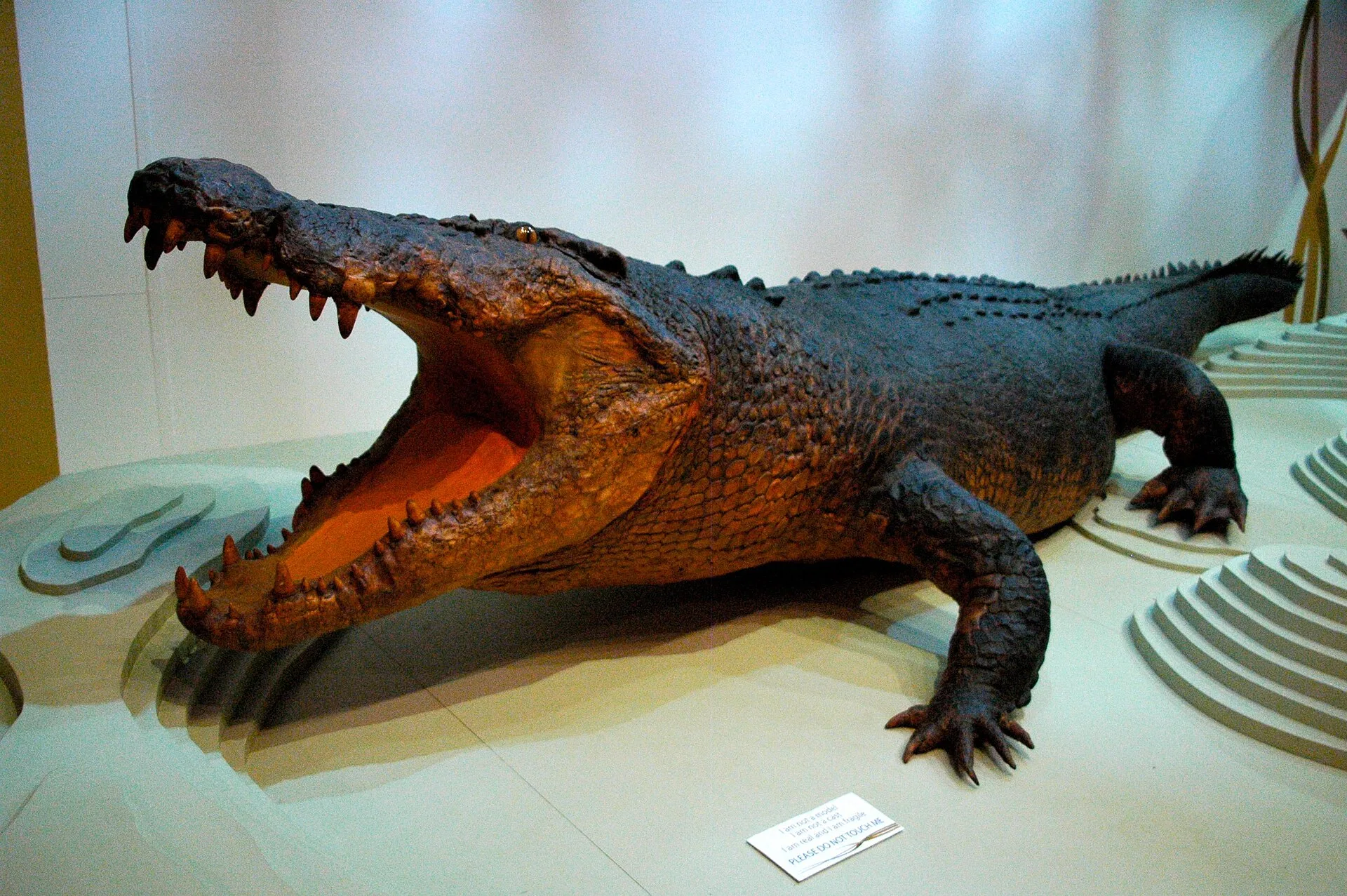
In Darwin, the Museum and Art Gallery of the Northern Territory displays Sweetheart, a large saltwater crocodile that became notorious in the 1970s for attacking dinghies. Although the animal overturned boats, no people were reported killed in those incidents. After Sweetheart died during an attempt to capture and relocate him, his body was preserved for the museum. The result is part zoological specimen, part regional legend and part warning about the behaviour of powerful wild animals.[MAGNT]magnt.net.auSweetheartSweetheart, a large male Saltwater (Estuarine) Crocodile, is a legendary part of recent Northern Territory history. The bo…
These displays show how an animal becomes an oddity through interpretation. Fossils are reconstructed as prehistoric giants; an extinct predator becomes a national mystery; an individual crocodile becomes a named character in Northern Territory folklore. The specimens may be authentic, but the cultural meanings surrounding them are continually remade.
Yowies, UFOs and tourist folklore
Australia has a vigorous tradition of cryptid and UFO stories, but it has produced relatively few stable, research-led museums devoted to them. The best-known examples tend to be small community displays or commercial attractions rather than scientific institutions.
Kilcoy in Queensland has embraced the yowie — Australia’s folkloric ape-like creature — as part of its local identity. The visitor information centre stands beside Yowie Park, making the legend visible through public art and tourism promotion. The setting is best understood as a community folklore attraction, not as a museum claiming zoological proof.[Queensland]queensland.comKilcoy Visitor Information CentreKilcoy Visitor Information Centre
The yowie tradition blends nineteenth-century newspaper tales, older descriptions of mysterious bush creatures and modern cryptozoological reports. Because stories recorded by settlers have sometimes been loosely connected to Aboriginal traditions, interpretation requires caution: “the yowie” as marketed today is not necessarily a faithful representation of any one First Nations belief. Visitor displays generally reveal more about modern storytelling, regional branding and the enduring imaginative power of remote bushland than about an undiscovered primate.
Wycliffe Well in the Northern Territory was once Australia’s most conspicuous UFO-themed roadside attraction. Its owners filled the roadhouse complex with alien statues, murals, souvenirs, purported sighting accounts and a large “Galaxy” restaurant, promoting the stop as the country’s UFO capital. The attraction depended on reported lights, visitor stories and playful commercial mythology rather than a verifiable archive of extraterrestrial evidence.[ABC News]abc.net.auABC News How a tiny outback NT roadhouse went from Australia'sABC News How a tiny outback NT roadhouse went from Australia's
That attraction is no longer a dependable visitor destination. Flooding in 2022 was followed by abandonment, vandalism and deterioration, and later reporting described broken buildings and damaged alien figures. It survives as an instructive example of how an eccentric private collection can become a celebrated landmark and then vanish when ownership, maintenance and roadside business conditions change.[ABC News]abc.net.auABC News How a tiny outback NT roadhouse went from Australia'sABC News How a tiny outback NT roadhouse went from Australia's

Fakes, mistaken identities and objects that change meaning
Museum oddities are not always inherently bizarre. Sometimes an object becomes fascinating because its label proves wrong. The Australian Museum has documented a supposedly ancient Egyptian cat figure that was determined to be a modern fake, turning it from an archaeological object into evidence about forgery, collecting and conservation science.[The Australian Museum]australian.museuma case of mistaken identitya case of mistaken identity
Scientific collections face similar problems. Specimens may be misidentified, poorly documented or separated from their original collecting information. Discovering an error does not necessarily make an object worthless: a fake can illuminate the antiquities trade, while a mislabelled animal can reveal how classification practices developed.
Australia has also experienced deliberate scientific deception. Researchers examining historic insect material have described an elaborate taxonomic fraud involving falsified specimens in a national collection. Such cases are unusual, but they demonstrate why provenance — the documented history of where an object came from — matters as much as appearance.[ANU Research School of Biology]biology.anu.edu.aumuseum heist 70 years ago still causing flutter butterfly science todaymuseum heist 70 years ago still causing flutter butterfly science today
For visitors, the useful question is not merely “Is this real?” but “What does the museum mean by real?” A physical object may be genuine while the story attached to it is false; a theatrical reconstruction may be openly artificial but historically informative; and an alleged paranormal artefact may exist without proving its supernatural interpretation.
How to judge an unusual Australian collection
The strongest unusual museums make their evidence level visible. They tell visitors whether an exhibit is an original object, a replica, a reconstruction, a work of art, a piece of folklore or an item with disputed provenance. They also explain how sensitive material was obtained and whether affected communities have authority over its care.
A practical credibility test is to consider four points:
- Who operates the collection? A university, government museum, community association, artist, private collector and roadside business will have different aims and standards.
- What is the provenance? Look for acquisition records, excavation information, donor history or an honest admission that an object’s origins are uncertain.
- How are claims worded? “Reported”, “believed”, “marketed as” and “according to local legend” are more responsible than presenting folklore as established fact.
- Are human and cultural sensitivities acknowledged? Ethical institutions discuss consent, repatriation, cultural restrictions and the identities of people represented.
Australia’s strange collections are most interesting when these differences remain visible. MONA uses shock and juxtaposition deliberately; the Museum of Human Disease uses genuine tissues for teaching; Fremantle Prison preserves the machinery and records of incarceration; Kilcoy turns a cryptid legend into civic identity; and ruined Wycliffe Well shows the fragility of privately created tourist mythology.
Why Australia’s curiosity culture matters
Australia’s unusual collections reveal a country negotiating several kinds of uncertainty at once: the boundary between science and folklore, the ethics of colonial collecting, fascination with dangerous landscapes, and the commercial appeal of prisons, ghosts and monsters. Its strangest displays are therefore rarely just isolated curiosities. They reflect larger questions about authority, memory and ownership.
The most credible institutions do not eliminate mystery. Instead, they show where the mystery begins: an extinct animal surrounded by unconfirmed sightings, a fake antiquity uncovered through conservation work, a prison object linked to a documented life, or a fossil reconstructed from incomplete remains. Less rigorous attractions can still be culturally valuable, provided their legends and marketing are not mistaken for proof.
Taken together, these places form a distinctly Australian curiosity trail: geographically dispersed, often grounded in harsh environments and colonial institutions, and divided between careful scholarship and exuberant roadside invention. Its central lesson is that strange objects do not speak for themselves. Museums, collectors, communities and tourists decide whether they become evidence, art, memorials, warnings, legends or entertainment.
Amazon book picks
Further Reading
Books and field guides related to Where Australia Keeps Its Strangest Things. Use these as the next step if you want deeper reading beyond the article.
Atlas Obscura
Je čas vylézt z ulity a vyrazit po nevyšlapaných cestičkách. Vydejte se za zázraky přírody, bizarními lidskými a přírodními výtvory i na...
Cabinets of Curiosities
"Maurie`s' tour of strange objects is entertaining and fascinating." --Antiques And The Arts Weekly
eBay marketplace picks
Marketplace Samples
Live-tested eBay searches with available results related to this page.
Selected fromAustralia travel poster oneBay.co.uk.


Endnotes
1.
Source: magnt.net.au
Link:https://www.magnt.net.au/sweetheart-crocodile
Source snippet
SweetheartSweetheart, a large male Saltwater (Estuarine) Crocodile, is a legendary part of recent Northern Territory history. The bo...
2.
Source: magnt.net.au
Link:https://www.magnt.net.au/megafauna-central
Source snippet
Megafauna Central Alice SpringsMegafauna Central showcases the unique megafauna that roamed Central Australia 8 million years ago. M...
3.
Source: aradale.com.au
Link:https://www.aradale.com.au/
4.
Source: australian.museum
Link:https://australian.museum/
5.
Source: queensland.com
Title: Kilcoy Visitor Information Centre
Link:https://www.queensland.com/gb/en/plan-your-holiday/information-services/p-56b26567aeeeaaf773cf82bd-kilcoy-visitor-information-centre
6.
Source: australian.museum
Title: a case of mistaken identity
Link:https://australian.museum/blog/museullaneous/a-case-of-mistaken-identity/
7.
Source: australian.museum
Link:https://australian.museum/about/history/exhibitions/death-the-last-taboo/
8.
Source: australian.museum
Link:https://australian.museum/learn/australia-over-time/extinct-animals/the-thylacine/
9.
Source: queensland.com
Title: The Crystal Caves
Link:https://www.queensland.com/gb/en/things-to-do/attractions/p-56b263d97b935fbe730e3580-the-crystal-caves
10.
Source: aradale.com.au
Link:https://www.aradale.com.au/book-your-visit/
11.
Source: museum.ie
Link:https://www.museum.ie/en-IE/Collections-Research/Collection/Documentation-Discoveries/Artefact/Thylacine-An-extinct-marsupial-from-Tasmania/74eba177-5292-4c5b-a403-9e613ea8d05a
12.
Source: unsw.edu.au
Link:https://www.unsw.edu.au/medicine-health/disease-museum
Source snippet
UNSW SitesMuseum of Human Disease | Faculty of Medicine & HealthThe UNSW Museum of Human Disease holds a comprehensive collection of huma...
13.
Source: mona.net.au
Title: Mona Monanism: Highlights of the collection
Link:https://mona.net.au/stuff-to-do/art/monanism
Source snippet
And lowlights....Cloaca Professional, a simulated human shit machine Mummified cat, Egypt, Late Period to Ptolemaic, c. 664–30 BCE Kitte...
14.
Source: sydneylivingmuseums.com.au
Link:https://sydneylivingmuseums.com.au/justice-police-museum/
Source snippet
Sydney Living MuseumsJustice & Police MuseumThe museum draws you into a world of crime, policing and punishment, from bushrangers and raz...
15.
Source: unsw.edu.au
Link:https://www.unsw.edu.au/medicine-health/disease-museum/about
Source snippet
UNSW SitesAbout us | Museum of Human diseaseThe Museum of Human Disease, located at UNSW in Kensington, houses a unique and invaluable co...
16.
Source: unsw.edu.au
Link:https://www.unsw.edu.au/medicine-health/disease-museum/visiting
Source snippet
UNSW SitesVisiting | Museum of Human diseaseDiscover how to visit us at the Museum of Human Disease, including our address, visiting hour...
17.
Source: arts.gov.au
Title: Office for the Arts Australian Government Policy on Indigenous Repatriation
Link:https://www.arts.gov.au/sites/default/files/documents/australian_government_policy_on_indigenous_repatriation.pdf
18.
Source: samuseum.sa.gov.au
Link:https://www.samuseum.sa.gov.au/the-museum/about/aboriginal-heritage-and-repatriation
19.
Source: nma.gov.au
Link:https://www.nma.gov.au/about/corporate/policies/aboriginal-torres-strait-islander-human-remains
20.
Source: mona.net.au
Link:https://mona.net.au/
21.
Source: shop.mona.net.au
Title: cloaca jigsaw puzzle
Link:https://shop.mona.net.au/products/cloaca-jigsaw-puzzle?srsltid=AfmBOopCzzzkOELuCfxcdv-V3QbbyZ3fyYRAnGHYcdc9YDBMkBrDmy6C
22.
Source: sydneylivingmuseums.com.au
Title: if these walls could talk justice police museum
Link:https://sydneylivingmuseums.com.au/stories/if-these-walls-could-talk-justice-police-museum?page=3
23.
Source: fremantleprison.com.au
Link:https://fremantleprison.com.au/
24.
Source: fremantleprison.com.au
Title: 20191111 fremantle prison collection policy
Link:https://fremantleprison.com.au/media/2463/20191111-fremantle-prison-collection-policy.pdf
25.
Source: fremantleprison.com.au
Link:https://fremantleprison.com.au/media/3142/fremantle-prison-collection-significance-assessment-2018.pdf
26.
Source: vic.gov.au
Title: beechworth lunatic asylum
Link:https://www.vic.gov.au/beechworth-lunatic-asylum
27.
Source: samuseum.sa.gov.au
Link:https://www.samuseum.sa.gov.au/collections
28.
Source: newyorker.com
Title: The New Yorker The Obsessive Search for the Tasmanian Tiger
Link:https://www.newyorker.com/magazine/2018/07/02/the-obsessive-search-for-the-tasmanian-tiger
29.
Source: blog.qm.qld.gov.au
Title: sweetheart the saltwater crocodile who became a legend of the northern territory
Link:https://blog.qm.qld.gov.au/2026/01/16/sweetheart-the-saltwater-crocodile-who-became-a-legend-of-the-northern-territory/
30.
Source: abc.net.au
Title: ABC News How a tiny outback NT roadhouse went from Australia’s
Link:https://www.abc.net.au/news/2024-07-22/wycliffe-well-alien-roadhouse-stuart-highway-ufo-capital/104102510
31.
Source: biology.anu.edu.au
Title: museum heist 70 years ago still causing flutter butterfly science today
Link:https://biology.anu.edu.au/news-events/news/museum-heist-70-years-ago-still-causing-flutter-butterfly-science-today
32.
Source: mona.net.au
Link:https://mona.net.au/search?q=Cloaca+Professional
33.
Source: mona.net.au
Link:https://mona.net.au/blog/parts
34.
Source: mona.net.au
Link:https://mona.net.au/stuff-to-do/art/wim-delvoye
35.
Source: mona.net.au
Link:https://mona.net.au/blog
36.
Source: mona.net.au
Title: COVI D-19 diary – Blog
Link:https://mona.net.au/blog/covid-19-diary
37.
Source: data.nsw.gov.au
Title: nsw.gov.au HIGHLIGHT S
Link:https://data.nsw.gov.au/data/dataset/456c3821-f30e-4287-9fd2-dd4685e20532/resource/2569309f-27c3-4b3c-b58b-f98ce87c0f34/download/document_10972.pdf
38.
Source: goulburn.nsw.gov.au
Link:https://www.goulburn.nsw.gov.au/files/sharedassets/public/other-files/heritage-study-review.pdf
39.
Source: nma.gov.au
Link:https://www.nma.gov.au/
40.
Source: nma.gov.au
Link:https://www.nma.gov.au/explore/collection/highlights/thylacine
41.
Source: digital-classroom.nma.gov.au
Link:https://digital-classroom.nma.gov.au/videos/australian-journey-episode-02-land-weird-and-monstrous-interview
42.
Source: data.qld.gov.au
Link:https://www.data.qld.gov.au/datastore/dump/71d98015-6742-452d-82a9-836cebf86fd6?bom=True
43.
Source: facebook.com
Link:https://www.facebook.com/australianmuseum/videos/australia-its-a-wild-place-to-call-home-from-tiny-critters-to-giants-of-the-anci/1556516598975798/
44.
Source: samuseum.sa.gov.au
Link:https://www.samuseum.sa.gov.au/
45.
Source: harbourtrust.gov.au
Link:https://www.harbourtrust.gov.au/media/1368/comp-plan-full.pdf
46.
Source: unsw.edu.au
Link:https://www.unsw.edu.au/medicine-health/disease-museum/disease-museum
47.
Source: unsw.edu.au
Title: going viral museum of human disease launches virtual museum
Link:https://www.unsw.edu.au/newsroom/news/2020/06/going-viral–museum-of-human-disease-launches-virtual-museum
48.
Source: unsw.edu.au
Title: Contact us | Museum of Human Disease Opening hours Weekdays: 10am
Link:https://www.unsw.edu.au/medicine-health/disease-museum/contact
49.
Source: medicalsciences.med.unsw.edu.au
Link:https://medicalsciences.med.unsw.edu.au/sites/default/files/soms/page/Museum/2015%20VOLUNTEER%20INFORMATION%20updated%20Sept%202015.pdf
50.
Source: unsw.edu.au
Link:https://www.unsw.edu.au/medicine-health/disease-museum/donate
51.
Source: inside.unsw.edu.au
Title: going viral museum human disease launches virtual museum
Link:https://www.inside.unsw.edu.au/innovation-and-engagement/going-viral-museum-human-disease-launches-virtual-museum
52.
Source: unsw.edu.au
Title: museum of human disease opens its doors
Link:https://www.unsw.edu.au/newsroom/news/2009/03/museum-of-human-disease-opens-its-doors-
53.
Source: hydeparkbarracks.sydneylivingmuseums.com.au
Link:https://hydeparkbarracks.sydneylivingmuseums.com.au/period/control/
54.
Source: sydneylivingmuseums.com.au
Link:https://sydneylivingmuseums.com.au/museum-of-sydney/whats-on
55.
Source: sydneylivingmuseums.com.au
Link:https://sydneylivingmuseums.com.au/susannah-place/stories
56.
Source: sydneylivingmuseums.com.au
Link:https://sydneylivingmuseums.com.au/vaucluse-house/whats-on
57.
Source: sydneylivingmuseums.com.au
Title: skint making do great depression
Link:https://sydneylivingmuseums.com.au/stories/skint-making-do-great-depression
58.
Source: sydneylivingmuseums.com.au
Title: rose seidler house
Link:https://sydneylivingmuseums.com.au/rose-seidler-house
59.
Source: tripadvisor.com
Title: Yowie Park
Link:https://www.tripadvisor.com/Attraction_Review-g499663-d15029574-Reviews-Yowie_Park-Kilcoy_Somerset_Brisbane_Region_Queensland.html
60.
Source: tripadvisor.com
Title: Museum and Art Gallery of the Northern Territory
Link:https://www.tripadvisor.com/Attraction_Review-g255063-d14988579-Reviews-Megafauna_Central_Museum_and_Art_Gallery_of_the_Northern_Territory-Alice_Springs.html
61.
Source: fremantleprison.com.au
Link:https://fremantleprison.com.au/about/links/
62.
Source: fremantleprison.com.au
Link:https://fremantleprison.com.au/media/2113/2015-romano-what-you-lookin-at-final-thesis.pdf
63.
Source: fremantleprison.com.au
Link:https://fremantleprison.com.au/media/1801/fp_masterplan_final-web.pdf
64.
Source: fremantleprison.com.au
Link:https://fremantleprison.com.au/media/2079/2021-fp_archaeological_management_plan_web2.pdf
65.
Source: fremantleprison.com.au
Link:https://fremantleprison.com.au/media/1662/fremantle-prison-cmp-feb-2010-appendicies-a-e.pdf
66.
Source: fremantleprison.com.au
Title: fremantle prison accessibilityandinclusionplan2023 web sml
Link:https://fremantleprison.com.au/media/2403/fremantle-prison_accessibilityandinclusionplan2023_web_sml.pdf
67.
Source: fremantleprison.com.au
Title: fremantle prison interpretation management plan 2022
Link:https://fremantleprison.com.au/media/2127/fremantle-prison-interpretation-management-plan-2022.pdf
68.
Source: Wikipedia
Title: Wycliffe Well
Link:https://en.wikipedia.org/wiki/Wycliffe_Well
69.
Source: Wikipedia
Title: Australian Museum
Link:https://en.wikipedia.org/wiki/Australian_Museum
70.
Source: agriculture.gov.au
Link:https://www.agriculture.gov.au/sites/default/files/documents/ahc-periodic-report07-10-app.pdf
71.
Source: sydney.edu.au
Title: sydney rare book week explore the treasures of the library
Link:https://www.sydney.edu.au/news-opinion/news/2021/10/22/sydney-rare-book-week–explore-the-treasures-of-the-library.html
72.
Source: awm.gov.au
Link:https://www.awm.gov.au/sites/default/files/patriotism.pdf
73.
Source: museum.wa.gov.au
Link:https://museum.wa.gov.au/whats-on/afterlife/curators-introduction
74.
Source: parliament.wa.gov.au
Link:https://www.parliament.wa.gov.au/hansard/daily/lh/2019-02-12/pdf/download
75.
Source: parliament.nt.gov.au
Title: DEBATES DAY 3 23 NOVEMBER 2017
Link:https://parliament.nt.gov.au/__data/assets/pdf_file/0017/463202/DEBATES-DAY-3-23-NOVEMBER-2017.pdf
Published: NOVEMBER 2017
76.
Source: nfsa.gov.au
Title: australian biography thomas keneally
Link:https://www.nfsa.gov.au/collection/item/australian-biography-thomas-keneally
77.
Source: hansardsearch.parliament.sa.gov.au
Link:https://hansardsearch.parliament.sa.gov.au/daily/lh/2025-06-18/pdf/download
78.
Source: arthist.net
Link:https://arthist.net/archive/23652
79.
Source: lighthouse.mq.edu.au
Title: Unearthing museum fakes critical for setting the historical record straight
Link:https://lighthouse.mq.edu.au/article/october/Unearthing-museum-fakes-critical-for-setting-the-historical-record-straight
80.
Source: policies.uq.edu.au
Link:https://policies.uq.edu.au/document/view-current.php?id=469
81.
Source: art-museum.uq.edu.au
Title: uq.edu.au Second Sight: Witchcraft, Ritual, Power
Link:https://art-museum.uq.edu.au/second-sight-witchcraft-ritual-power
82.
Source: explorequeensland.com.au
Title: Queensland Explore Centre
Link:https://www.explorequeensland.com.au/queensland-explore-centre-kilcoy
83.
Source: abc.net.au
Title: kilcoy yowie tourism queensland
Link:https://www.abc.net.au/news/2018-04-21/kilcoy-yowie-tourism-queensland/9675596
84.
Source: abc.net.au
Title: looking back in time at ararats mental asylum
Link:https://www.abc.net.au/news/2017-10-21/looking-back-in-time-at-ararats-mental-asylum/9072024
85.
Source: abc.net.au
Title: cydi hoaxes
Link:https://www.abc.net.au/listen/programs/rhiannapatrick/cydi-hoaxes/9249580
86.
Source: wa.gov.au
Link:https://www.wa.gov.au/system/files/2021-05/Submission-098-Communication-and-the-Arts%2C-Department-of.pdf
87.
Source: ntseniorscard.org.au
Link:https://ntseniorscard.org.au/discount/magnt-museum-of-central-australia-megafauna-central/
88.
Source: araratasylums.com
Title: About | Aradale
Link:https://www.araratasylums.com/copy-of-about-j-ward-aradale
89.
Source: trove.nla.gov.au
Title: nla.gov.au Cyclone Tracy exhibition and related events
Link:https://trove.nla.gov.au/event/cyclone-tracy-exhibition-and-related-events
90.
Source: news.leeds.gov.uk
Title: leeds specimens help solve mystery of tasmanian tiger s tale
Link:https://news.leeds.gov.uk/news/leeds-specimens-help-solve-mystery-of-tasmanian-tiger-s-tale
Additional References
91.
Source: youtube.com
Title: Inside the Old Melbourne Gaol
Link:https://www.youtube.com/watch?v=4an36cSAORg
Source snippet
provides a detailed look at one of Australia's most infamous historical prisons, showcasing how the site transitioned into a public museu...
92.
Source: dailymotion.com
Link:https://www.dailymotion.com/video/x8rizxb
93.
Source: atlasobscura.com
Link:https://www.atlasobscura.com/things-to-do/australia/museums
94.
Source: tripadvisor.co.uk
Link:https://www.tripadvisor.co.uk/Attraction_Review-g186235-d24829409-Reviews-Gwithti_an_Pystri_a_Cabinet_of_Folklore_and_Magic-Falmouth_Cornwall_England.html
95.
Source: facebook.com
Link:https://www.facebook.com/groups/australianarttrails/posts/1090003142539332/
96.
Source: britishmuseum.org
Link:https://www.britishmuseum.org/collection
97.
Source: maydayhills.org.au
Link:https://maydayhills.org.au/collections-exhibition/exhibition-collections-from-the-asylum/
98.
Source: crystalcaves.com.au
Link:https://crystalcaves.com.au/
99.
Source: experiencesomerset.com.au
Link:https://experiencesomerset.com.au/explore/visitor-information/
100.
Source: donsmaps.com
Link:https://www.donsmaps.com/hoax.html