What Makes Myanmar's Unusual Collections So Revealing?
Myanmar does not have a large, clearly branded circuit of “weird museums”.
Page outline Jump by section
Introduction
The most rewarding places therefore require careful interpretation. Some are conventional museums, while others are commercial collections, memorial institutions, propaganda spaces, archaeological shelters or active religious sites. Their labels may be limited, their opening arrangements uncertain and their stories politically contested. Taken together, however, they show how Myanmar preserves unusual things not simply to entertain visitors, but to assert authority, maintain devotion, record suffering and negotiate the boundary between history and belief.
The strongest unusual collections
The Drug Elimination Museum
Yangon’s Drug Elimination Museum is the closest Myanmar comes to a purpose-built museum of institutional strangeness. It is a large state-run complex devoted to narcotics, addiction, trafficking and government campaigns against drug production. Its official website currently advertises public opening from 9am to 4pm, except Mondays and government holidays, although third-party listings have sometimes described it as closed or neglected. Visitors should verify access directly rather than relying on an old guidebook or review.[Drug Elimination Museum]drugmuseum.gov.mmDrug Elimination MuseumDrug Elimination Museum: HomeOpening Hour/ပြတိုက်ဖွင့်ချိန် Daily (09:00)AM to (04:00)PM (Except Monday & Gazetted…
The displays make it more than a straightforward public-health museum. Accounts describe imitation drugs arranged almost like natural-history specimens, photographs of traffickers and people suffering from addiction, information about opium cultivation and drug manufacture, and melodramatic paintings depicting physical and moral decline. The experience has often been compared to entering a preserved piece of military-era political theatre.[Yangon Architectural Guide]yangongui.deYangon Architectural GuideDrugs Elimination Museum – Architectural Guide: YangonHaunting paintings adorn the walls, illustrating the medi…
That description matters because Myanmar has long been associated with opium-producing areas of the Golden Triangle. Yet the museum is not a neutral account of the drug economy. Its central story celebrates official eradication campaigns and presents the state as the principal force of rescue and order. It gives much less space to the complicated relationships among armed organisations, military authorities, poverty, displacement, border economies and drug production.
The museum is therefore best approached on two levels. The objects and diagrams provide information about narcotics and law enforcement, while the building itself reveals how an authoritarian state chose to display social danger. Its eerily quiet galleries, severe moral messages and monumental scale are part of the evidence. The unusual quality lies not simply in what is shown, but in the gap between the confident official narrative and Myanmar’s much more difficult drug history.
The Myanmar Amber Museum
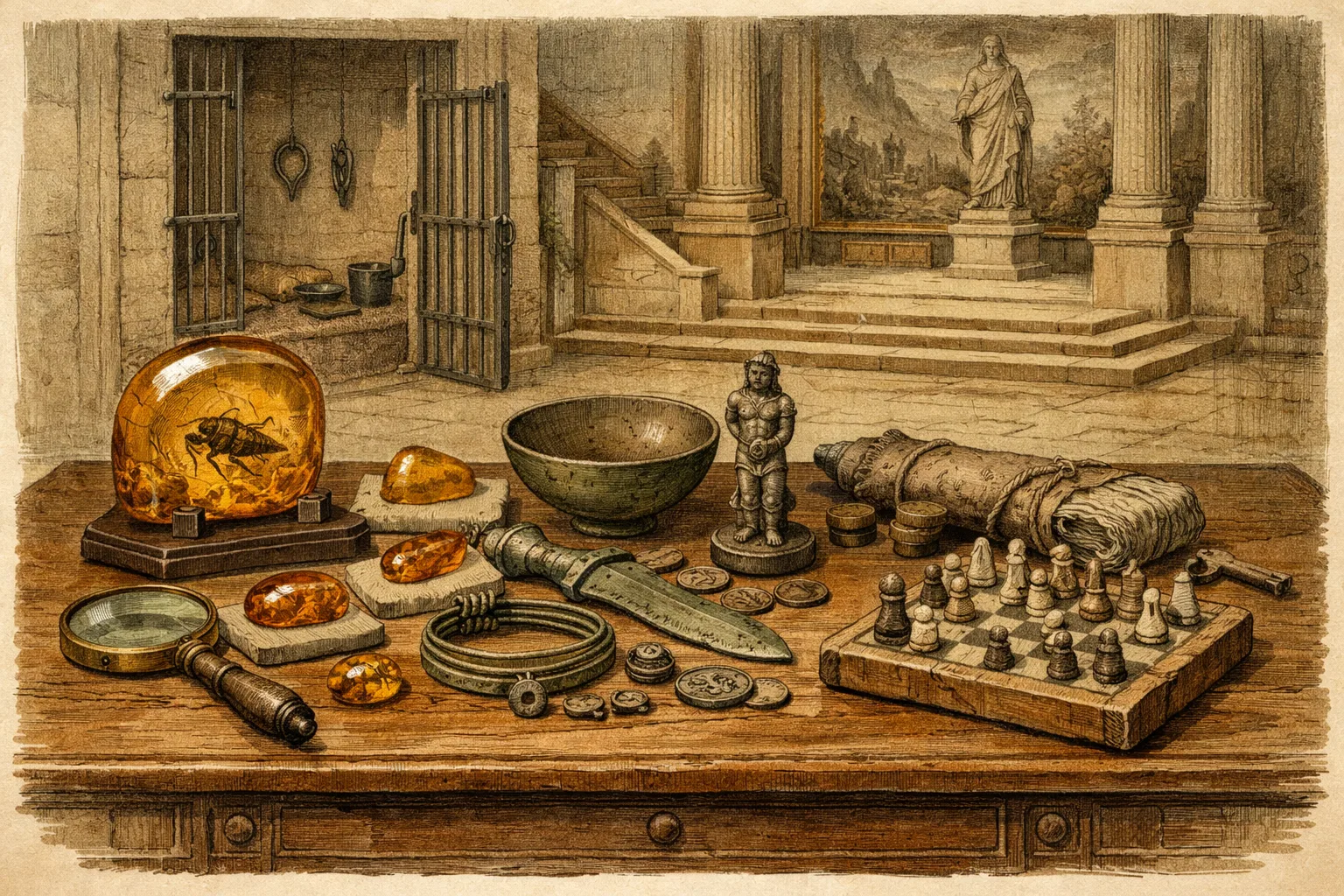
The privately operated Myanmar Amber Museum in Yangon concentrates on amber from northern Myanmar, including pieces containing ancient organisms. Its official material presents the venue as both an educational collection and a commercial enterprise, with fossil inclusions, amber art, jewellery and sales services brought together under one roof. One prominently promoted specimen is playfully presented as “Donald the Leech”, supposedly preserved after feeding on a dinosaur around 99 million years ago.[Myanmar Amber Museum]myanmarambermuseum.orgMyanmar Amber MuseumBurmite | Myanmar Amber Museum | Yangon Region | Burmite…Welcome to the Myanmar Amber Museum, located in Yangon, M…
The collection’s scientific appeal is genuine. Amber from Myanmar preserves an exceptionally varied Cretaceous ecosystem, including insects, arachnids and fragments of vertebrates, sometimes with anatomical detail that ordinary compression fossils cannot retain. For a visitor interested in miniature worlds, the experience can resemble looking into biological time capsules rather than viewing conventional gemstones.[PMC]pmc.ncbi.nlm.nih.govEthics, law, and politics in palaeontological research - PMCby EM Dunne · 2022 · Cited by 39 — Myanmar amber collection and study in p…
It is also one of Myanmar’s most ethically complicated collections. Much of the material comes from Kachin State, where amber extraction and trading have intersected with armed conflict, military control, unsafe working conditions and disputed export rules. Researchers have debated whether studying recently acquired specimens legitimises or financially supports harmful supply chains. Some academic journals and professional bodies have imposed restrictions, while other scientists argue that blanket bans can obstruct legitimate research and the study of older collections.[PMC]pmc.ncbi.nlm.nih.govEthics, law, and politics in palaeontological research - PMCby EM Dunne · 2022 · Cited by 39 — Myanmar amber collection and study in p…
This makes the museum a rare example of a curiosity collection in which provenance is central to the visit. A spectacular insect in amber is not merely a fossil. It is also a mined commodity, a scientific specimen and potentially a product of conflict. Labels that explain where and when an item was acquired, how it was legally exported and whether it has been scientifically examined are therefore as important as the inclusion itself.
The Nyaung-gan burial-site museum
At Nyaung-gan in central Myanmar, archaeology becomes unusually immediate. Excavations beginning in the late 1990s uncovered a prehistoric cemetery containing human burials and grave goods such as pottery, stone rings, beads and bronze tools. Several exposed skeletons were left in place, and a protective site museum was constructed over part of the excavation.[Burma Library]burmalibrary.orgMoore AP01Moore AP01
This is not a museum assembled from objects moved into display cases. The principal exhibit is the archaeological ground itself. Visitors encounter bodies in the positions in which they were excavated, surrounded by traces of funerary practice. That arrangement makes the site particularly valuable for understanding how archaeological interpretation is built from relationships between bones, artefacts, soil and orientation.
The cemetery helped establish evidence for a Bronze Age phase in Myanmar’s prehistory. Researchers identified numerous burials, including adults and children, and studied skeletal health, dental wear and grave placement. The absence of iron in the original assemblage, together with the presence of bronze objects, was important to its initial dating and classification, although later work across central Myanmar has continued to refine the region’s prehistoric chronology.[Wikipedia]WikipediaOpen source on wikipedia.org.
The display also raises questions familiar to museums that exhibit human remains. The bodies are archaeological evidence, but they were also people deliberately buried by their communities. A responsible visit should avoid treating the skeletons as grotesque entertainment. Their unusual power comes from the directness of the encounter and from the fact that the museum preserves an excavation rather than merely presenting selected treasures from it.
Museums of power, punishment and war
The Defence Services Museum
The Defence Services Museum in Naypyidaw is enormous, formal and often nearly empty. Its displays include weapons, aircraft, missiles, military equipment, battle paintings, illuminated models and photographic records of senior officers. An analysis published by the London School of Economics describes panoramic combat scenes beside miniature supply columns and displays extending even to official visits to military-run factories.[LSE Blogs]blogs.lse.ac.ukOpen source on lse.ac.uk.
As an unusual museum, its value lies less in rare technology than in its scale and narrative discipline. The institution presents Myanmar’s armed forces as the creator, defender and unifying centre of the nation. Internal conflicts appear principally as military campaigns against enemies, leaving limited room for civilian experiences, ethnic perspectives or competing accounts of state violence.
The result is a museum that functions as a monument to its own version of history. Its monumental spaces, orderly weapon displays and scarce visitors create a strange atmosphere: part armoury, part national shrine and part political stage. Scholars have argued that the wider design of Naypyidaw similarly combines security planning, religious symbolism and state-sponsored nationalism.[LSE Blogs]blogs.lse.ac.ukOpen source on lse.ac.uk.
Visitors should not mistake the museum for a balanced military history. It is better read as primary evidence of how the armed forces represent themselves. The omissions, heroic compositions and repeated institutional symbols are as informative as the machinery.
The political-prisoner museums
The Assistance Association for Political Prisoners operates small museums concerned with detention, protest and resistance. Its Yangon collection includes prisoner records, photographs, objects made or used in custody, a model of Insein Prison and a reconstructed cell. The organisation states that the museum is open on weekdays and by appointment at weekends, though present security conditions make advance contact essential.[aappb.org]aappb.orgOpen source on aappb.org.
The replica cell is the most memorable device. Rather than showing prison history through distant documents alone, it allows visitors to enter a confined space modelled on the conditions experienced by detainees. Journalistic accounts describe the cell as an attempt to communicate the physical reality of imprisonment under successive military governments.[Al Jazeera]aljazeera.comAl Jazeera Myanmar: 'No political prisoners' but dozens still behind barsAl Jazeera Myanmar: 'No political prisoners' but dozens still behind bars
This collection sits at the opposite pole from the Defence Services Museum. One institution celebrates state force; the other records what that force has done to political opponents. Its curatorial voice is openly activist rather than detached. That does not make the displayed records unimportant, but it does mean visitors should understand the museum as a memorial and human-rights project created by former prisoners and campaigners.
The organisation also maintains a museum in Mae Sot, Thailand. A newly rebuilt version opened there in 2025 after an earlier museum was destroyed by fire in 2023. Although outside Myanmar, it belongs to Myanmar’s wider memory landscape because political exile has pushed significant archives and memorial work across the border.[The Irrawaddy]irrawaddy.comThe Irrawaddy AAPP Museum: A Tribute to Myanmar's Political PrisonersThe Irrawaddy AAPP Museum: A Tribute to Myanmar's Political Prisoners
Thanbyuzayat and the Death Railway
Thanbyuzayat, in Mon State, marks the western end of the wartime railway built between Burma and Thailand under Japanese occupation. A museum and memorial landscape preserve photographs, models, sculptures and representations of prisoners and labourers, alongside a historic locomotive and a nearby Commonwealth war cemetery.[Wikipedia]WikipediaBurma RailwayBurma Railway
The railway was constructed through forced and brutally exploited labour. Allied prisoners of war and large numbers of Asian civilian workers endured disease, malnutrition, violence and extreme working conditions. Older reporting on the Thanbyuzayat museum described plans for realistic figures and reconstructed scenes illustrating daily suffering, although development and display arrangements have changed over time.[Daily Sabah]dailysabah.comDaily Sabah New museum in Myanmar highlights 'Death RailwayDaily Sabah New museum in Myanmar highlights 'Death Railway
For visitors familiar only with the “Bridge on the River Kwai” story, the Myanmar end corrects a geographical and historical imbalance. Much international remembrance is concentrated in Thailand, while the labour of Asian civilians has often received less attention than that of Western prisoners. Thanbyuzayat makes the railway visible as a cross-border system rather than a single famous bridge.
The site should be approached as a place of death and forced labour, not as a macabre attraction. Its unusual objects and reconstructions matter because they help restore physical scale to a history easily reduced to film imagery and wartime legend.
Living collections of spirits and sacred animals
Mount Popa’s spirit figures
At Mount Popa, a visitor encounters what resembles a museum of supernatural personalities, although it is an active religious landscape rather than a secular collection. Shrines around the mountain contain brightly dressed figures associated with powerful spirits, including a recognised group of 37. Offerings, stories, costumes and statues give individual spirits distinct identities, temperaments and biographies.[exotravel.com]exotravel.comWalk Amongst Myanmar's Revered Nats (Spirits) on MountWalk Amongst Myanmar's Revered Nats (Spirits) on Mount
Many are believed to be the spirits of people who died violently or unjustly. Their stories concern royal conflict, betrayal, execution, desire and misfortune. They may protect devotees, punish disrespect or intervene in everyday problems. The figures are therefore not simply illustrations of folklore. For worshippers, they remain socially and spiritually active.
This distinction is crucial. A tourist may see a colourful cabinet of legendary characters, but a devotee sees presences that can receive offerings and affect human life. The display has curatorial qualities — repeated figures, recognisable attributes and an implied sacred genealogy — yet its purpose is devotional rather than educational.
Mount Popa also demonstrates how religious traditions overlap. Spirit devotion exists alongside Buddhism, pilgrimage and monastic practice rather than in a sealed category labelled “pre-Buddhist superstition”. The site is valuable precisely because it resists the Western habit of separating folklore, religion and museum display into tidy compartments.
The snake pagodas
Several Myanmar pagodas are associated with large pythons treated as sacred residents. At Baungdawgyoke Pagoda near Yangon, reports have described snakes moving freely through the temple while pilgrims offer prayers and seek blessings. Religious inhabitants have explained that people visit in the hope that petitions made in the snakes’ presence will be fulfilled.[Buddhistdoor Global]buddhistdoor.netOpen source on buddhistdoor.net.
Elsewhere, individual pythons have acquired biographies linking them with deceased monks, royal figures or reincarnation. Such stories are difficult to verify and should be understood as devotional claims rather than zoological facts. One widely circulated account of a monastery python, for example, attributed an extraordinary age and a former life as a Shan princess to the animal.[Atlas Obscura]atlasobscura.comAtlas Obscura An Afternoon with a 14-Foot Python Covered in Cash,Atlas Obscura An Afternoon with a 14-Foot Python Covered in Cash,
These places belong in Myanmar’s curiosity landscape because the “exhibit” is alive, mobile and revered. Photographs, donations and visitor stories accumulate around the animals, creating an informal archive of encounters. Yet describing a pagoda simply as a snake attraction strips away its religious meaning.
Animal-welfare questions also deserve attention. A visitor should consider whether the animals can withdraw from crowds, whether handling is controlled and whether claims about diet, age or supernatural behaviour are supported by observation. Respect for worship does not require accepting every legend literally, just as scepticism does not justify treating a sacred animal as a novelty prop.
Strange treasures inside conventional museums
Myanmar’s national and regional museums are not oddity museums, but some of their objects fit naturally within a history of curiosity collecting. The most important is the Lion Throne in the National Museum in Yangon, the surviving royal throne associated with the last Burmese monarchy. Removed to India after the British annexation of Upper Burma and later returned, it is displayed as both a work of court craftsmanship and a concentrated symbol of lost sovereignty.[exotravel.com]exotravel.comOpen source on exotravel.com.
The throne is surrounded by royal regalia, ceremonial objects, manuscripts, musical instruments, marionettes, Buddhist images, costumes and natural-history material. The institution is therefore unusually broad, moving from kingship and sacred art to scripts, fossils, folk performance and ethnic dress. Current reporting indicates that the Yangon museum remains active and received visitors around International Museum Day in May 2026.[Wikipedia]WikipediaNational Museum of Myanmar (YangonNational Museum of Myanmar (Yangon
Regional cultural museums may contain objects that appear modest but carry distinctive local histories: ceremonial weapons, bronze drums, spirit-related material, traditional pipes, weights and craft tools. Myanmar museum specialists classify the national system into national, archaeological, regional-cultural and memorial museums, alongside religious and private collections. That structure explains why strange objects are often dispersed among general institutions rather than gathered in dedicated museums of folklore, medicine or the occult.[Academia]academia.eduMuseums in Myanmar: Brief History and Actual PerspectivesMuseums in Myanmar: Brief History and Actual Perspectives
The risk in these museums is over-compression. Displays that present many ethnic communities within a single national narrative may emphasise picturesque clothing and craft while underplaying political conflict, displacement and differences in historical experience. Visitors should treat the cases as curated representations of identity, not complete portraits of the communities concerned.
How credible are the displays?
Myanmar’s unusual collections vary sharply in reliability and purpose. A scientific label, a devotional story and a propaganda caption should not be judged by the same standard.
Archaeological claims are strongest when they can be traced to excavation reports, documented context and later peer-reviewed study. At Nyaung-gan, the arrangement of bodies and grave goods gives researchers evidence beyond the individual objects.
Natural-history claims require provenance and expert examination. Amber inclusions can be genuine and scientifically extraordinary, but commercial descriptions may exaggerate identifications. Claims that a specimen contains a particular animal, or evidence of feeding on a dinosaur, should be distinguished from published scientific findings.
Religious claims are evidence of belief even when they cannot be proved as physical events. A python’s reputed reincarnation is not established zoological fact, but the story remains important because it shapes devotion and visitor behaviour.
Memorial museums select evidence in support of remembrance and moral argument. The political-prisoner museum is explicit about its human-rights purpose, while the Death Railway museum frames objects through suffering and commemoration.
State museums may combine authentic artefacts with highly selective interpretation. The Drug Elimination Museum and Defence Services Museum are valuable partly because their narratives reveal official priorities, but their political claims require comparison with independent scholarship and reporting.
Commercial activity is another useful clue. The Myanmar Amber Museum combines display, education and sales, while the Gems Museum has historically been connected with a retail mart and state gem emporiums. That does not automatically discredit the objects, but it creates incentives to encourage fascination, prestige and purchase.[GPSmyCity]gpsmycity.comOpen source on gpsmycity.com.

Visiting in the present climate
Museum access in Myanmar cannot be separated from the country’s continuing conflict and political repression. As of July 2026, the UK Foreign, Commonwealth and Development Office advises against all travel to some parts of Myanmar and against all but essential travel to others. Conditions, checkpoints, transport routes and local restrictions can change quickly.[GOV.UK]GOV.UKSafety and securitySafety and security
Opening times on official sites may not reflect sudden closures, power cuts, security orders or staff shortages. Smaller museums and religious sites may have no dependable online presence. Contacting a venue locally before travelling is more reliable than assuming a listing is current.
Photography also requires judgement. Human remains, prison testimonies, worshippers, sacred animals and politically sensitive exhibits should not be treated as effortless social-media material. Permission may be legally required or culturally expected even when no sign is visible.
Finally, visitors should consider where their money goes. State museums, private commercial collections, community-run memorials and active temples have very different ownership structures. In a country where cultural heritage, extractive industries and political authority overlap, an entrance fee or purchase is never entirely separate from the institution displaying the object.
Why Myanmar’s curiosity culture matters
Myanmar’s most unusual collections are not united by a taste for novelty. They are united by struggles over who may define reality. The military museum defines national history through conquest. The anti-drug museum defines social disorder through state authority. Former prisoners reconstruct a cell so that official denial cannot erase confinement. Amber collectors transform deep time into specimens and commodities. Archaeologists preserve bodies in the ground, while devotees maintain relationships with spirits and sacred animals.
This makes Myanmar a particularly instructive country for readers interested in strange museums. The uncanny element rarely sits apart from politics, religion or commerce. A throne can be both furniture and a symbol of sovereignty. A snake can be both an animal and a reincarnated presence. A fossil can be both scientific evidence and a conflict-linked commodity. A reconstructed prison cell can be both display technique and testimony.
The country’s curiosity landscape is consequently less polished than a conventional museum trail, but more intellectually demanding. Its strongest sites ask visitors not merely to stare at unusual things, but to decide what kind of truth each institution is offering — scientific, devotional, memorial, commercial or political — and whose experience has been left outside the case.
Amazon book picks
Further Reading
Books and field guides related to What Makes Myanmar's Unusual Collections So Revealing?. Use these as the next step if you want deeper reading beyond the article.
The River of Lost Footsteps: Histories of Burma
When the prodemocracy uprising was finally crushed, there was a muted international response. The United States, Japan, the United Kingdo...
The Glass Palace
Rajkumar, in truly Dickensian style, succeeds at making a fortune from his logging busness, but never forgets Dolly, the girl he saw acco...
The Museum of Other People
A TLS BEST BOOK OF 2023 'A formidable work' Nigel Barley, author of The Innocent Anthropologist 'Should be required reading' Richard Lamb...
Burma '44: The Battle That Turned Britain's War in the East
'A thrilling blow-by-blow account' The Times 'A first-rate popular history of a fascinating and neglected battle... a veritable page-turn...
eBay marketplace picks
Marketplace Samples
Live-tested eBay searches with available results related to this page.
Selected fromMyanmar travel poster oneBay.co.uk.


Endnotes
1.
Source: drugmuseum.gov.mm
Link:https://drugmuseum.gov.mm/
Source snippet
Drug Elimination MuseumDrug Elimination Museum: HomeOpening Hour/ပြတိုက်ဖွင့်ချိန် Daily (09:00)AM to (04:00)PM (Except Monday & Gazetted...
2.
Source: pmc.ncbi.nlm.nih.gov
Link:https://pmc.ncbi.nlm.nih.gov/articles/PMC9522859/
Source snippet
Ethics, law, and politics in palaeontological research - PMCby EM Dunne · 2022 · Cited by 39 — Myanmar amber collection and study in p...
3.
Source: Wikipedia
Link:https://en.wikipedia.org/wiki/Nyaung-gan
4.
Source: aappb.org
Link:https://aappb.org/visit-museum/
5.
Source: irrawaddy.com
Title: The Irrawaddy AAPP Museum: A Tribute to Myanmar’s Political Prisoners
Link:https://www.irrawaddy.com/photo-essay/aapp-museum-a-tribute-to-myanmars-political-prisoners.html
6.
Source: Wikipedia
Title: Burma Railway
Link:https://en.wikipedia.org/wiki/Burma_Railway
7.
Source: exotravel.com
Title: Walk Amongst Myanmar’s Revered Nats (Spirits) on Mount
Link:https://www.exotravel.com/blog/en/mount-popa-and-salay-myanmar/
8.
Source: buddhistdoor.net
Link:https://www.buddhistdoor.net/news/buddhist-pagoda-in-myanmar-offers-refuge-to-snakes/
9.
Source: exotravel.com
Link:https://www.exotravel.com/blog/en/national-museum-yangon-myanmar/
10.
Source: Wikipedia
Title: National Museum of Myanmar (Yangon)
Link:https://en.wikipedia.org/wiki/National_Museum_of_Myanmar_%28Yangon%29
11.
Source: academia.edu
Title: Museums in Myanmar: Brief History and Actual Perspectives
Link:https://www.academia.edu/74845179/Museums_in_Myanmar_Brief_History_and_Actual_Perspectives
12.
Source: gpsmycity.com
Link:https://www.gpsmycity.com/attractions/myanmar-gems-museum-9535.html
13.
Source: GOV.UK
Title: Safety and security
Link:https://www.gov.uk/foreign-travel-advice/myanmar/safety-and-security
14.
Source: GOV.UK
Link:https://www.gov.uk/foreign-travel-advice/myanmar
15.
Source: admin.tourism.gov.mm
Link:https://admin.tourism.gov.mm/storage/Tourism%20Statistics/2009-2010.pdf
16.
Source: myanmar.com
Link:https://myanmar.com/travel/destinations/bagan/popa/
17.
Source: awm.gov.au
Link:https://www.awm.gov.au/articles/journal/j33/blackburn
18.
Source: Wikipedia
Title: Burmese amber
Link:https://en.wikipedia.org/wiki/Burmese_amber
19.
Source: Wikipedia
Title: Myanmar Gems Museum
Link:https://en.wikipedia.org/wiki/Myanmar_Gems_Museum
20.
Source: Wikipedia
Title: Yangon Drugs Elimination Museum
Link:https://en.wikipedia.org/wiki/Yangon_Drugs_Elimination_Museum
21.
Source: Wikipedia
Title: Mount Popa
Link:https://en.wikipedia.org/wiki/Mount_Popa
22.
Source: Wikipedia
Title: Assistance Association for Political Prisoners
Link:https://en.wikipedia.org/wiki/Assistance_Association_for_Political_Prisoners
23.
Source: aappb.org
Link:https://aappb.org/category/visitors-aapps-museum/
24.
Source: archaeology.org
Title: skeletons uncovered at thailands don yai thong burial site
Link:https://archaeology.org/news/2026/07/02/skeletons-uncovered-at-thailands-don-yai-thong-burial-site/
25.
Source: academia.edu
Link:https://www.academia.edu/37052629/A_Study_on_Ancient_Burial_Practice_of_Nyaung_Gon
26.
Source: academia.edu
Link:https://www.academia.edu/8579889/Nyaunggan_Burial_Site_the_Bronze_Age_Context_of_Myanmar
27.
Source: time.com
Title: burma myanmar political prisoners
Link:https://time.com/4418572/burma-myanmar-political-prisoners/
28.
Source: fihrmap.nhrm.gov.tw
Link:https://fihrmap.nhrm.gov.tw/views/?g=mb_content&sid=108
29.
Source: moi.gov.mm
Link:https://www.moi.gov.mm/moi%3Aeng/news/13732
30.
Source: assets.publishing.service.gov.uk
Link:https://assets.publishing.service.gov.uk/media/6931608f4bedc0e762304057/FCDO_TA_064_-_Myanmar_Ed10.pdf
31.
Source: tripadvisor.com
Title: Drug Elimination Museum
Link:https://www.tripadvisor.com/Attraction_Review-g294191-d6395224-Reviews-Drug_Elimination_Museum-Yangon_Rangoon_Yangon_Region.html
Source snippet
Drug Elimination Museum - All You SHOULD Know Before...This location was reported permanently closed Suggest ・ of Myanmar dru...
32.
Source: yangongui.de
Link:https://www.yangongui.de/drugs-elimination-museum/
Source snippet
Yangon Architectural GuideDrugs Elimination Museum – Architectural Guide: YangonHaunting paintings adorn the walls, illustrating the medi...
33.
Source: myanmarambermuseum.org
Link:https://www.myanmarambermuseum.org/
Source snippet
Myanmar Amber MuseumBurmite | Myanmar Amber Museum | Yangon Region | Burmite...Welcome to the Myanmar Amber Museum, located in Yangon, M...
34.
Source: myanmarambermuseum.org
Link:https://www.myanmarambermuseum.org/donald-leech
Source snippet
Myanmar Amber MuseumYangon Region | Donald the LeechMy name is Donald. I am a leech. Leeches have a bad reputation… just because we suck...
35.
Source: burmalibrary.org
Title: Moore AP01
Link:https://www.burmalibrary.org/docs/Moore_AP01.pdf
36.
Source: blogs.lse.ac.uk
Link:https://blogs.lse.ac.uk/seac/2023/07/07/the-nation-forgetting-rehabilitating-memory-in-the-defence-service-museum-in-myanmar/
37.
Source: aljazeera.com
Title: Al Jazeera Myanmar: ‘No political prisoners’ but dozens still behind bars
Link:https://www.aljazeera.com/news/2019/1/31/myanmar-no-political-prisoners-but-dozens-still-behind-bars
38.
Source: freudenthal.biz
Link:https://www.freudenthal.biz/myanmar/thanbyuzayat/
39.
Source: dailysabah.com
Title: Daily Sabah New museum in Myanmar highlights ‘Death Railway
Link:https://www.dailysabah.com/life/2016/01/06/new-museum-in-myanmar-highlights-death-railway-suffering
40.
Source: atlasobscura.com
Title: Atlas Obscura An Afternoon with a 14-Foot Python Covered in Cash,
Link:https://www.atlasobscura.com/articles/an-afternoon-with-a-14foot-python-covered-in-cash-believed-to-be-a-reincarnated-princess
41.
Source: myanmars.info
Title: gems museum
Link:https://myanmars.info/yangon/gems-museum.html
42.
Source: tripadvisor.com
Title: The Death Railway Museum
Link:https://www.tripadvisor.com/Attraction_Review-g469408-d14164630-Reviews-The_Death_Railway_Museum-Mawlamyine_Mon_State.html
43.
Source: tripadvisor.com
Title: Myanmar Amber Museum
Link:https://www.tripadvisor.com/Attraction_Review-g294191-d15856025-Reviews-Myanmar_Amber_Museum-Yangon_Rangoon_Yangon_Region.html
44.
Source: tripadvisor.com
Title: National Museum
Link:https://www.tripadvisor.com/Attraction_Review-g294191-d379344-Reviews-or505-National_Museum-Yangon_Rangoon_Yangon_Region.html
45.
Source: myanmarambermuseum.org
Link:https://www.myanmarambermuseum.org/scientific-studies
46.
Source: myanmarambermuseum.org
Link:https://www.myanmarambermuseum.org/copy-3-of-new-page
47.
Source: atlasobscura.com
Link:https://www.atlasobscura.com/lists/the-ultimate-list-of-wonderfully-specific-museums
48.
Source: atlasobscura.com
Title: snake pagoda
Link:https://www.atlasobscura.com/places/snake-pagoda
49.
Source: lonelyplanet.com
Link:https://www.lonelyplanet.com/points-of-interest/drug-elimination-museum/1543126
50.
Source: sydney.edu.au
Title: museum removes ancient body parts from display
Link:https://www.sydney.edu.au/news-opinion/news/2024/04/04/museum-removes-ancient-body-parts-from-display.html
51.
Source: myanmars.info
Link:https://myanmars.info/business/7435.html
52.
Source: myanmars.info
Title: national museum
Link:https://myanmars.info/yangon/national-museum.html
53.
Source: ethicsunwrapped.utexas.edu
Title: myanmar amber
Link:https://ethicsunwrapped.utexas.edu/case-study/myanmar-amber
54.
Source: meral.edu.mm
Link:https://meral.edu.mm/record/525/files/Typological%20investigation%20of%20spur%20pottery.pdf
55.
Source: meral.edu.mm
Link:https://www.meral.edu.mm/record/569/files/A%20comparative%20study.pdf
56.
Source: travelwarningcheck.com
Link:https://www.travelwarningcheck.com/travel-advisory/myanmar
57.
Source: wanderlog.com
Link:https://wanderlog.com/place/details/1718092/myanmar-amber-museum
58.
Source: tracesofwar.com
Title: The Death Railway Museum
Link:https://www.tracesofwar.com/sights/107057/The-Death-Railway-Museum.htm
59.
Source: anotherglobaleater.wordpress.com
Title: the national museum in yangon
Link:https://anotherglobaleater.wordpress.com/2016/12/06/the-national-museum-in-yangon/
60.
Source: cartogramme.com
Link:https://www.cartogramme.com/explore/drug-elimination-museum-yangon-myanmar/
61.
Source: travelfish.org
Link:https://www.travelfish.org/sight_profile/burma_myanmar/yangon_and_surrounds/yangon_region/yangon/2080
62.
Source: yangongui.de
Link:https://www.yangongui.de/national-museum-of-myanmar/
Additional References
63.
Source: frontiermyanmar.net
Title: yangons desolate monument to the war on drugs 2
Link:https://www.frontiermyanmar.net/en/yangons-desolate-monument-to-the-war-on-drugs-2/
Source snippet
Frontier MyanmarYangon's desolate monument to the war on drugs21 Dec 2016 — Open to the public but almost forgotten, Yangon's towering an...
64.
Source: youtube.com
Title: Museum opens to highlight efforts to tackle illicit drug trade
Link:https://www.youtube.com/watch?v=5pxWQSQ9gxw
Source snippet
BURMA BITES #14: Alternative Tourist Attractions - DRUG ELIMINATION MUSEUM...
65.
Source: youtube.com
Title: BURMA BITES #14: Alternative Tourist Attractions
Link:https://www.youtube.com/watch?v=CKQtFq4-Sd0
Source snippet
One Fine Day at Space Museum Yangon, Myanmar. (Burma)...
66.
Source: science.org
Title: fossils burmese amber offer exquisite view dinosaur times and ethical minefield
Link:https://www.science.org/content/article/fossils-burmese-amber-offer-exquisite-view-dinosaur-times-and-ethical-minefield
67.
Source: youtube.com
Title: Yangon’s neglected Drug Elimination Museum
Link:https://www.youtube.com/watch?v=mFZwIpp4FV8
Source snippet
Museum opens to highlight efforts to tackle illicit drug trade...
68.
Source: researchgate.net
Link:https://www.researchgate.net/publication/356442905_Burmese_Amber_Palaeontology%27s_Blood_Diamonds_Through_the_Lens_of_International_Law
69.
Source: researchgate.net
Link:https://www.researchgate.net/publication/357162568_Ethics_law_and_politics_in_palaeontological_research_The_case_of_Myanmar_amber
70.
Source: researchgate.net
Link:https://www.researchgate.net/publication/273292775_Bronze_Age_Myanmar_Burma_A_report_on_the_people_from_the_cemetery_of_Nyaunggan_Upper_Myanmar
71.
Source: researchgate.net
Link:https://www.researchgate.net/publication/380811485_Animal_Mummies_in_the_Collections_of_the_National_Museum_in_Krakow_and_the_Princes_Czartoryski_Museum
72.
Source: researchgate.net
Link:https://www.researchgate.net/publication/46734861_Nyaung-gan_A_Preliminary_Note_on_a_Bronze_Age_Cemetery_near_Mandalay_Myanmar_Burma